Tag Archives: Schools

The Student Newspaper

The Grizzly Growler was the long standing student newspaper.

Another relic of the past is the student newspaper. Anyhow, on with our story. In the mid-1930s the Lassen Union High School student body experienced some interesting happenings. The first was a student newspaper dubbed the Hi-Times. This was followed by a school emblem—-the Grizzly bear.

In the fall of 1935, Miss Morgan, the school’s journalist instructor announced a campaign to change the school newspaper name. One issue was there were a number of Northern California student newspapers that had a similar name to Lassen’s. In an effort to promote the school’s new emblem, the word Grizzly was required in the new name contest. On October 4, 1935 the renamed student newspaper Grizzly Growler made its debut. It was Eleanor Hansen, Class of 1939, that was the prize winning entry.

Fast forward by several decades, when I attended Lassen High the school newspaper was just the Grizzly, somewhere along the line the Growler was dropped. From what little research I have done, it appears sometime in the 1990s the student paper ceased to exist.
Spread the word, and encourage a friend to subscribe

Amedee School Dedication

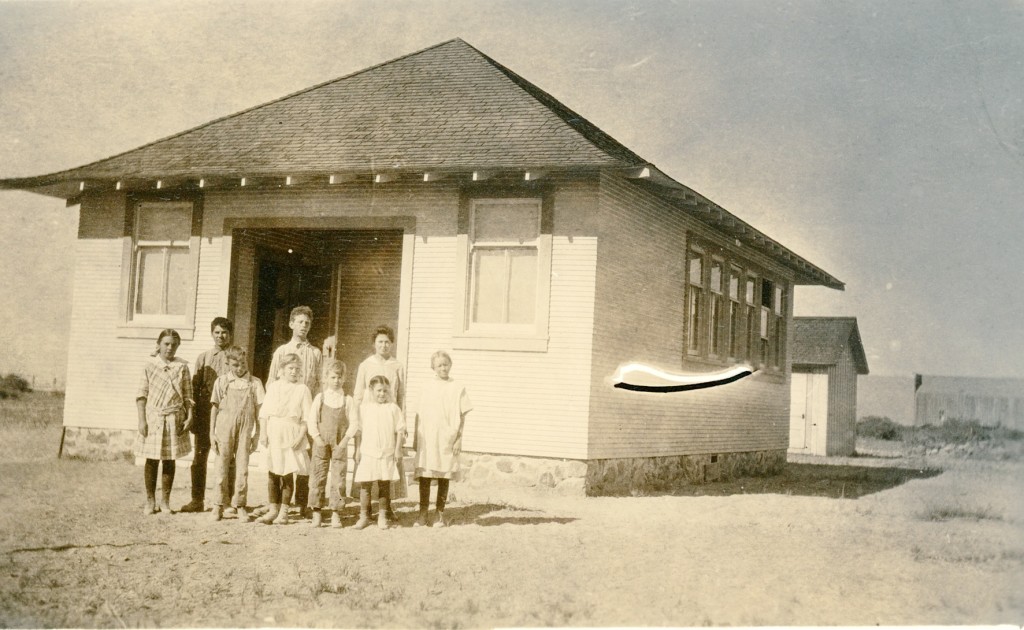
Amedee School, 1916. D.M. Durst Collection

It was a long time coming but on Saturday, September 23, 1916 the Amedee School house held a dedication with ninety-one people attending. The school district had been established in 1893, but it never had a school building to call its own.

On April 7, 1916 a $1,500 school bond election was held. It passed by a large margin with a voter turnout of 100 percent—16 yes and four no votes. The bungalow style building was built by J. C. Thornburg and was located a block north of the Hotel Amedee.

The life span of the school was short. In a few short years the region would experience a major de-population. In 1922, the school was closed and operations moved to Wendel. In 1936, Maybelle Johnson purchased the building, moved it eight miles to the east and converted it into a private residence. It stands today in a dilapidated state.

Spread the word, and encourage a friend to subscribe

Lincoln School – Then & Now

Lincoln School
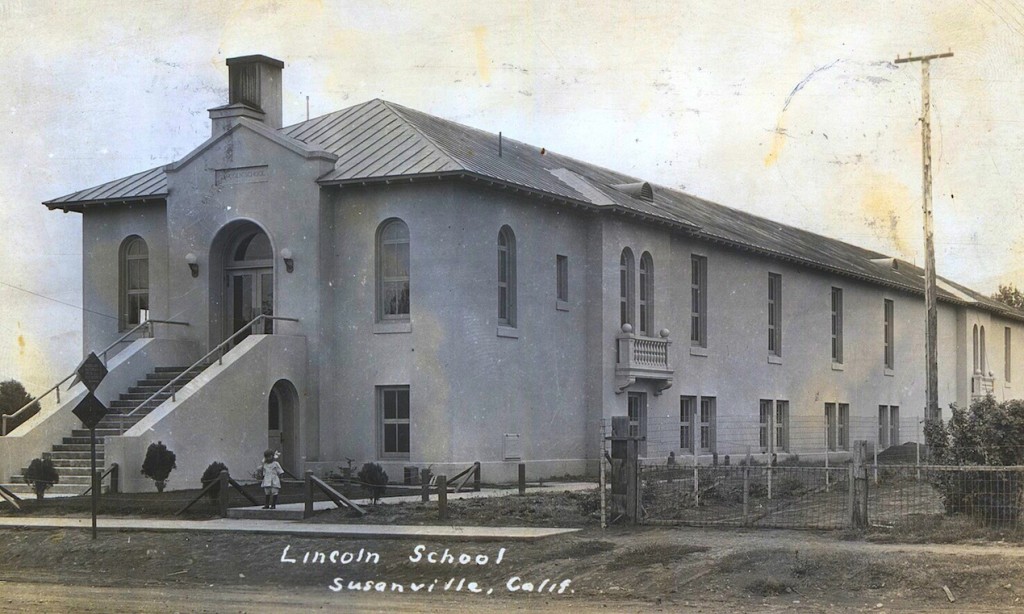
Lincoln School, 1924

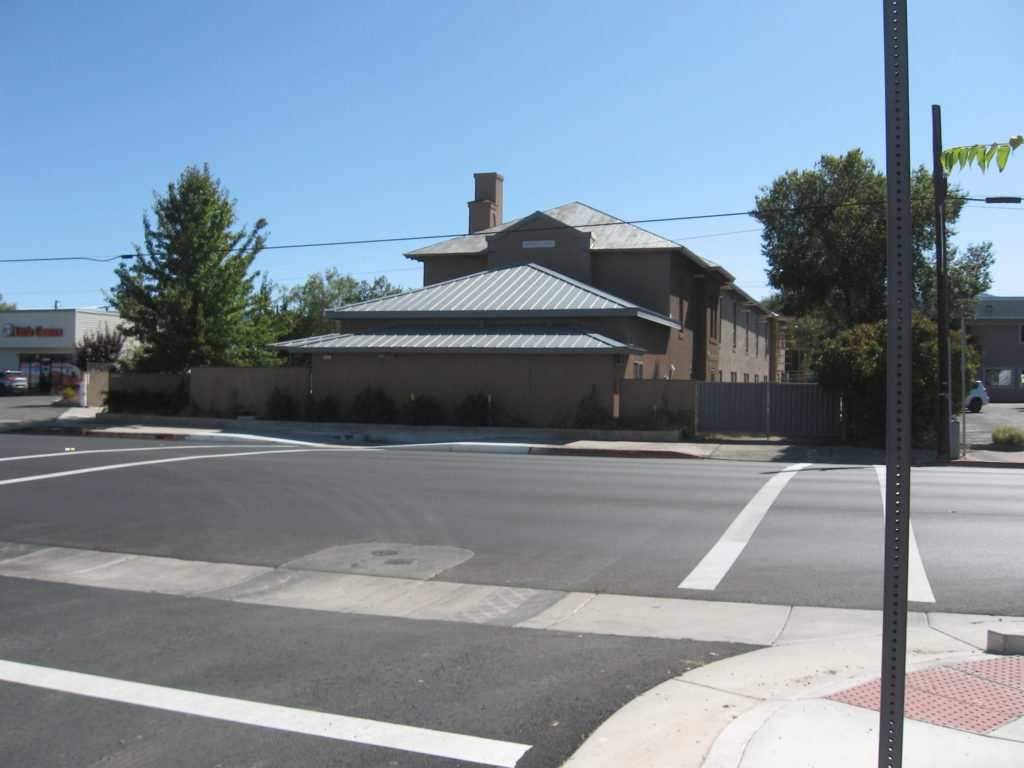
In 1922, Lincoln School was built for $35,000 on the south side of Main Street at the intersection of Hall Street. The school was completed and put into use in February 1923. It closed at the end of the 1966-67 school year being replaced by Diamond View on Richmond Road. In the early 1970s Lassen College used the facility until its new campus was built on Highway 139. It then found new life as the headquarters of the Lassen National Forest. For a number of years, it sat vacate and was heavily vandalized. It is slowly coming back to life again being converted into apartments

September 21, 2019

Subscribe

Lassen Union High School, 1936

Lassen Union High School, 1942

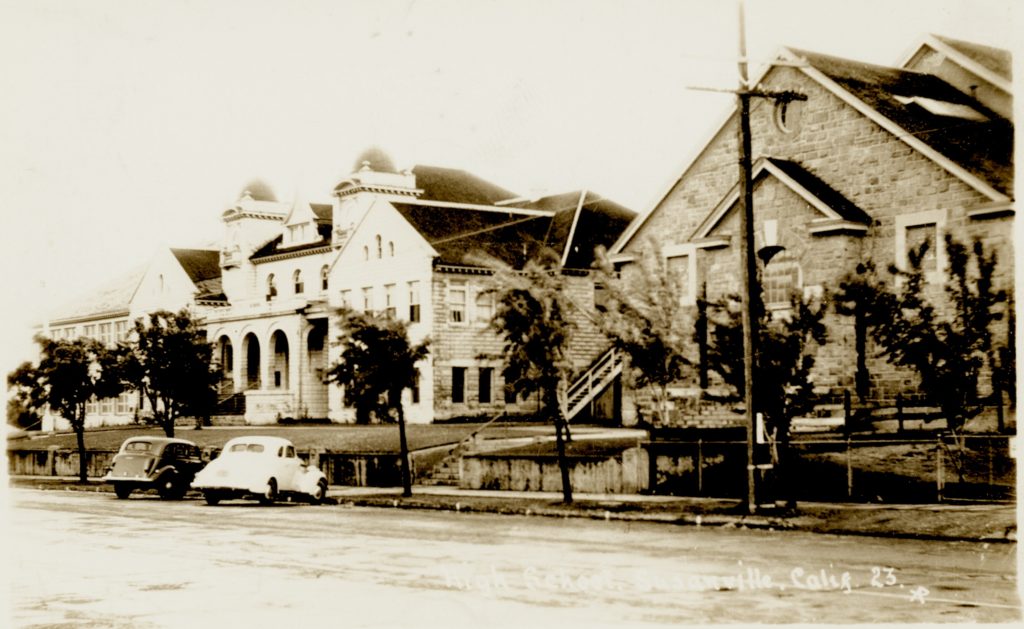
Schools are a perfect example of changes taking place all the time. On February 3, 1936, Lassen Union High School implemented a new schedule. Before the school trustees adopted the new program considerable input came from the faculty and the students.

School began at 8:45 a.m. The new schedule provide a thirty minute period prior to the noon hour. This enabled students on Monday, Tuesday and Wednesday an opportunity to work on their hobbies, learn new skills, take advantage of the typing room, study hall or to confer with teachers. Thursday and Fridays were devoted for students to participate in meetings of various school organizations. It was the general consensus this allowed the valley students to engage in more school activities than in past because because they were denied such, due to them departing on the bus schedule. 

It should be noted the lunch period was from noon to 12:45 p.m. The school day concluded at 3:38 p.m.

Support

The Winning Forestry Essay

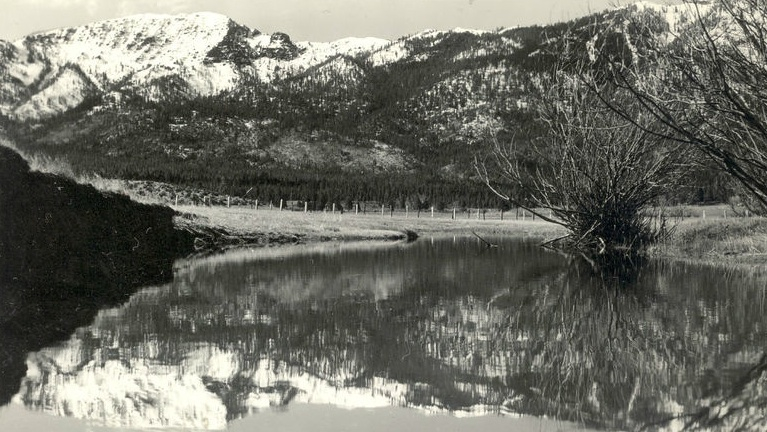
Baxter Creek, circa 1950s, with Thompson Peak in the background.

In 1935, Emma Lou Dakin, a Lassen Junior College student won that year’s contest. The Dakin name may be familiar to some, as her old home is now the Dakin Unit of the Honey Lake Wildlife Refuge.I am only publishing a small excerpt, but this will help to explain why so much of the Diamond Mountain range is privately owned. Once upon a time farmers were allowed to file for a 160 acre federal timberland patent. This provided the farmer wood for cooking/heating, fence posts etc. With that in mind, Emma Lou uses that as an example.

“Each one of us farmers own a little piece of timber land where we get our wood, fence posts and logs. There’s an old saying that ‘You can’t teach an old dog new tricks.’ My father is one of those old fashioned ranchers, but somehow for some unknown reason he did sell some logs to the Lassen Lumber & Box Company in 1929. From 300,000 feet of lumber we cleared $1,050, while in the same year from ninety head of cattle we got $3,000, but half of the $3,000 was put back into the cattle for feed, while nothing but our annual tax of $4.16 came out of our timber money. Besides making $1,050 we had enough slash left to furnish us wood for two years. From this experience I began to notice the economic value of the forests were to us people in Lassen County.”

Subscribe

An Answer to a Question

Miller’s Construction getting ready for the demolition, of the high school, June 1968.

A question was raised concerning an article about Lassen High School’s Experimental Farm of the 1930s and its location between the school buildings and the Susan River. How the high school campus evolved is an interesting tale. In the spring of 1905, the high school board was able to use a special levy tax to construct the high school. Now, that the financial issue was resolved the next order of business was to locate a suitable site to build the new school. Three properties were offered—the Brashear property at the end of South Gay Street, an empty lot of T.W. Wilson on North Roop Street and the Blake tract on Main Street, a short distance from Weatherlow Street. It was the latter that was purchased for $2,000 and became the foundation for today’s high school campus.

A decade later the whole region was transformed with the Fernley & Lassen Railroad and the Red River Lumber Company, which two other large lumber companies would follow. Adjoining the high school to the west was the Armstrong property. In 1920, the family subdivided making the Armstrong Addition, creating the streets—Berkeley, Pacific, Pomona, Stanford and Cornell. It was Cornell Street that created a major problem. At that time the street went from Weatherlow to Alexander and dissected today’s athletic field. In the 1920s, the high school acquired property from behind the school to Cornell. As enrollments continued to increase, the school finally acquired the remaining property to the river, but the process had its moment. The high school had to go through the formal abandonment of Cornell Street through the property they acquired. Two people objected, but by the early 1930s, the issue resolved and that is how the athletic field was assembled.

Spread the word, and encourage a friend to subscribe.

Lassen High’s Experimental Farm

A view of Diamond Mountain, from Lassen High School’s agriculture fields, 1916. Courtesy of D.M. Durst Collection

Early in the history of Lassen Union High School did stress an emphasis on agricultural, after many of its students were part of the ag community. In the 1930s, it had expanded the program. On Wednesday, April 29, 1936, E.F. McCarthy, the high school’s agricultural instructor held a visiting day for the public to the student’s experimental farm.

In a statement by McCarthy: “Irrigating of alfalfa has occupied the attention of the students during the past several days. Work at the farm had progressed rapidly and various projects have reached the stage where those who inspect the farm on visiting day will obtain a clear insight into the work being done.

“Seven hundred chickens including 250 New Hampshire Reds and 450 White Leghorns were recently received and the study of poultry has now been added to other subjects included in farm experimentation and demonstration. The farm already has been stocked with hogs and calves for study purposes.”

Never miss a story, click here to subscribe.

Night Classes at Lassen High School

Lassen Union High School

Beginning on January 4, 1926, Lassen Union High School inconjunction with Lassen Junior College instituted night classes for those 18 years and older. This was an outreach effort for those who had taken some high school, but due to circumstances had dropped out. The courses offered were bookkeeping, typing, woodwork and millinery. In addition, the schools met an additional need since there was a large workforce of immigrants who worked in the lumber mills. For this group two courses were offered, one for English and the other a Constitution class. Classes were taught twice a week, starting at 7:30 in the evening.

Support

Sierra Shangri-La – Noted Courses

Blacks Mountain Experimental Forest, 1958

This is the final installment of Harold Gilliam’s publication Sierra Shangri-La concerning Lassen County.

“Susanville is justly proud of its Lassen Junior College. It has earned a national reputation for gunsmithing and forestry courses. The Lassen J.C. Gunsmithing course of four years is one of only three in the entire nation.

“The forestry department offers both a vocational course, preparing students for entering the lumber industry directly. Or it gives two years of accredited study, after which students may transfer to major universities to earn their bachelor degrees in two more years. The forestry course has the advantage of practical observation of the varied lumber industry of the area; the college has its own experimental forest of 160 acres and a small sawmill of its own.

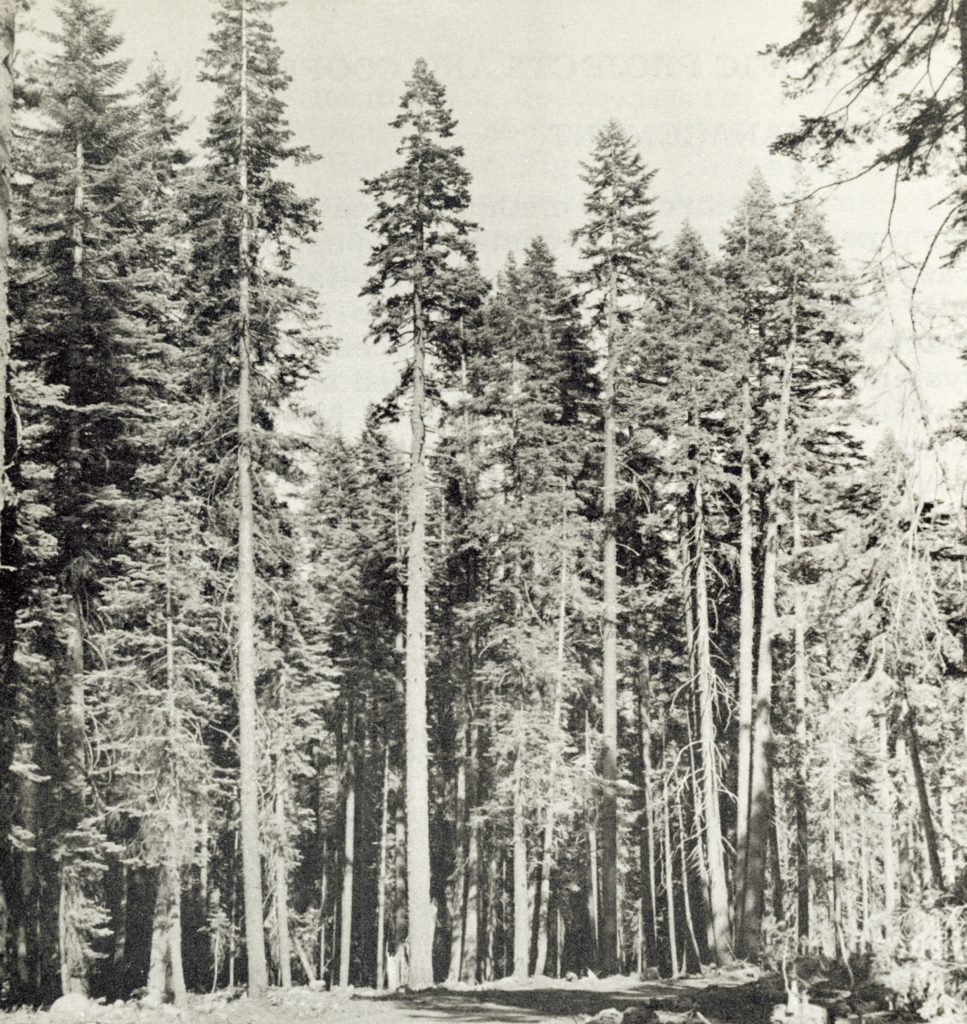
“Blacks Mountain Experimental Forest in the Lassen National Forest draws students as well as industry leaders to inspect new methods being developed in both logging and forestry techniques.”

Never miss a story, click here to subscribe.

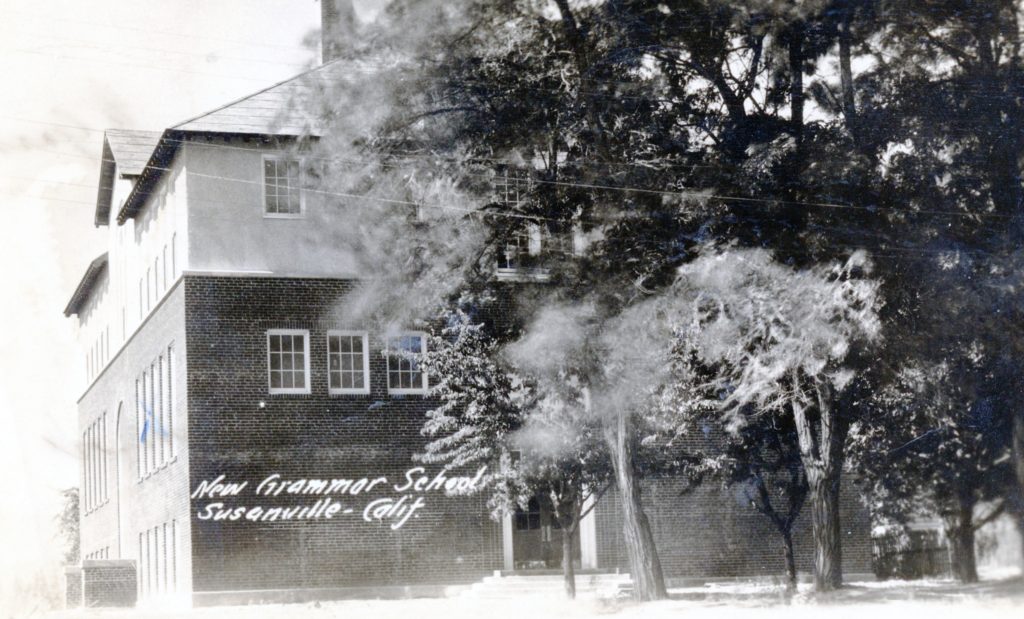
McKinley School

McKinley School, 1924

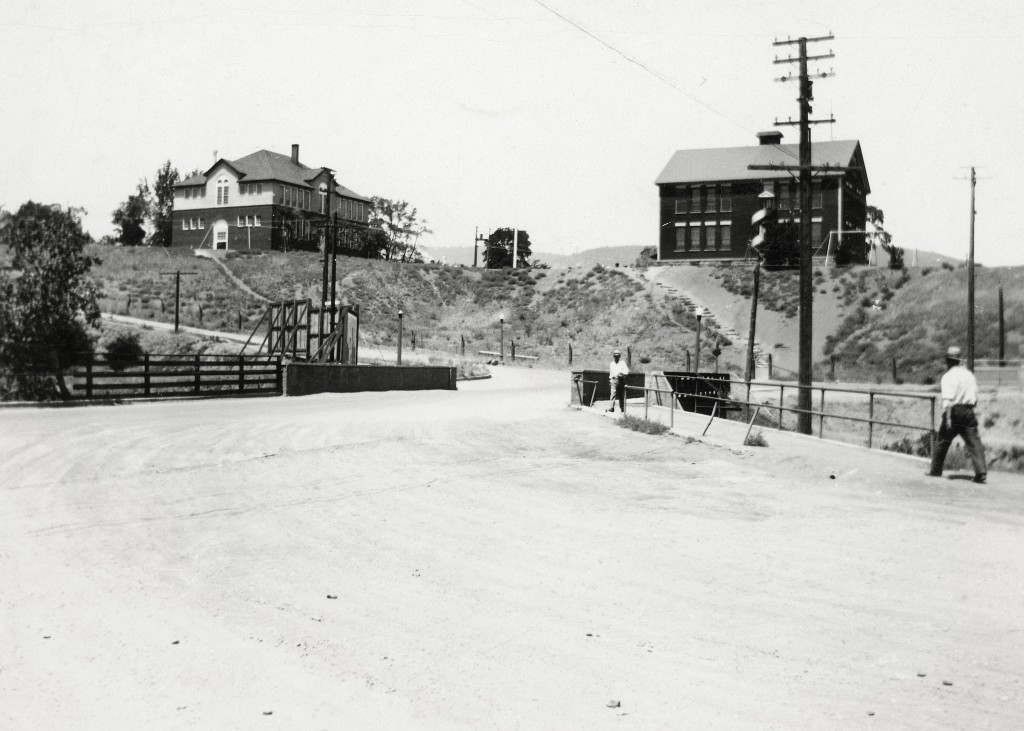
Most people assume that McKinley School has always been located on Fourth Street, but that was not the case. First a little background history. By 1920 the growth created by the arrival of the railroad and subsequent establishment of the lumber mills was more than Susanville’s one school could handle. That year the voters in the school district were asked to pass an $83,000 bond measure to build a second school. The school district trustees were stymied on the issue of where to build the second school. It was finally decided to build next to the current school. The district bought the Nathan residence on the corner of Cottage and Gay Streets and the house was moved across the street, which is now Elise’s Barbershop. In 1947, the Susanville Grammar now known as Washington was condemned and officials thought it was a matter of time McKinley would suffer the same fate. In 1950 a new McKinley school was built at the Fourth Street location.

Schools
McKinley School (left) and Washington School (right) as seen from Richmond Road, 1935.

Never miss a story, click here to subscribe.