Tag Archives: Railroads

Lassen Farm Bureau News

Sunflower demonstration on the A.F. Babcock Ranch, Bieber, 1923

During the 1920s, the Lassen Farm Bureau published weekly all the agricultural news of the county. All the rural communities had their own “Farm Center,” that held regular meetings to discuss a wide variety of topics. M.D. Collins who was the farm advisor then, kept very busy.  Here are two items, that some may find of interest.

May 1926 – J.H. McClure, assistant freight and passenger agent for the Southern Pacific with offices in Reno, spent two days in Lassen County this week. Mr. McClure states they are now giving Lassen County service in freight that has never been excelled. Freight leaving Reno in the evening arrives in Susanville the next morning. Mr. McClure states that an iced car is leaving Susanville twice a week to carry Lassen County products to the lower country markets. The service is being pushed to the highest possible degree of efficiency and the farmers will be able this season to ship out their products under better conditions than of former years. The rate on potatoes was reduced last fall.

May 1926 – Jack Menser, Arthur Kenyon and Peter Gerig, committeemen for the Big Valley flour mill, report that the money is being paid quite satisfactorily and it is hoped the larger portion will be collected in the near future. Alfred Jacks is ready to make the mill purchase as soon as the money is available.

August 1926 – The Big Valley flour committee has collected $2,450 of the $2,500 required to get the mill. The mill is being ordered by Alfred Jacks who is constructing the new building in which to house the machinery. Big Valley will have another flour mill for operation this fall.

September 1926 – The Red River Lumber Company has built a new hay barn near the dairy buildings which has a capacity  of 1000 tons of hay. The barn is practically full of hay at the present time. Other improvements have been made around the dairy barns and the market milk station. New  corrals for the dairy cows and feed racks are being installed.

Tim
Susanville’s First Railroad Depot

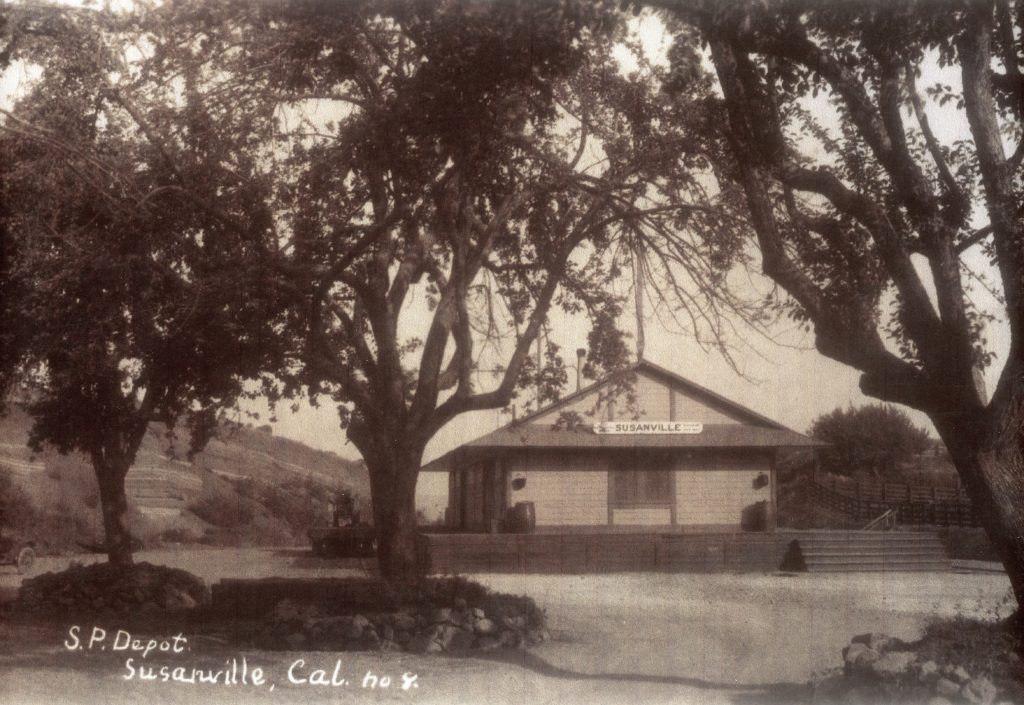
Susanville Depot, 1914

In the spring of 1913, the mighty iron horse finally arrived in Susanville and the community rejoiced. It was a long time coming, ever since the early 1880s they had done all they  could to attract a railroad, citing its untapped timber resources as an incentive. For awhile there was a glimmer of hope that the NCO Railroad would extends its line to Susanville on its journey north to Oregon. That was shattered when the railroad in 1887 decided to bypass Susanville and build its line along the east side of the Honey Lake Valley.

With the arrival of the Fernley & Lassen Railroad, in 1913, the residents wondered what kind of depot they would have. As far as the Southern Pacific, owners of the line,  were concerned it would be a modest structure, since in their opinion, Susanville was a small community that had no industry.  A wooden 26 foot by 62 foot depot was built, being part passenger depot and part frieght shed. It opened to the public on September 14, 1913 with C.B. Morton’s the first depot agent.

Subscribe

P.S. For those who want to know, yesterday the cast came off and pins removed, too. It will take time to fully function again, but its a start in the right direction. Thank you Dr. Mark for everything and for most pleasant and memorable office visit yesterday.


No Ground Hog in 1914, in these parts!

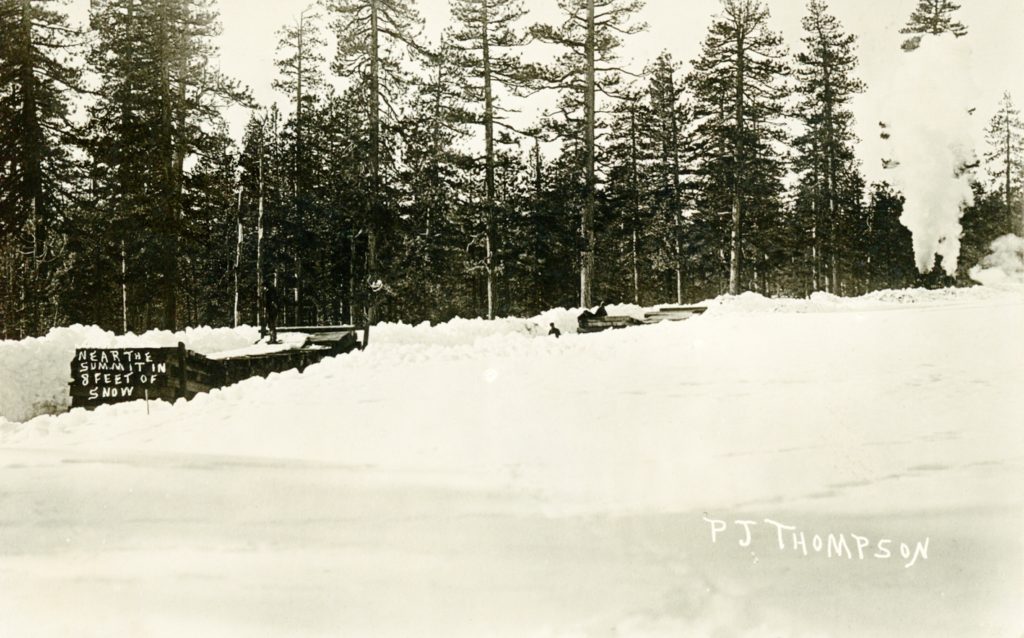
Approaching the summit of the Fernley & Lassen Railroad in 8 feet of snow, February, 1914—B.R. Zimmerman Collection

It was a very wet and snowy January 1914 in the Lassen region. There was so much snow on the ground, the ground hog, could not even make it to the surface, even if it wanted to see his shadow or not.

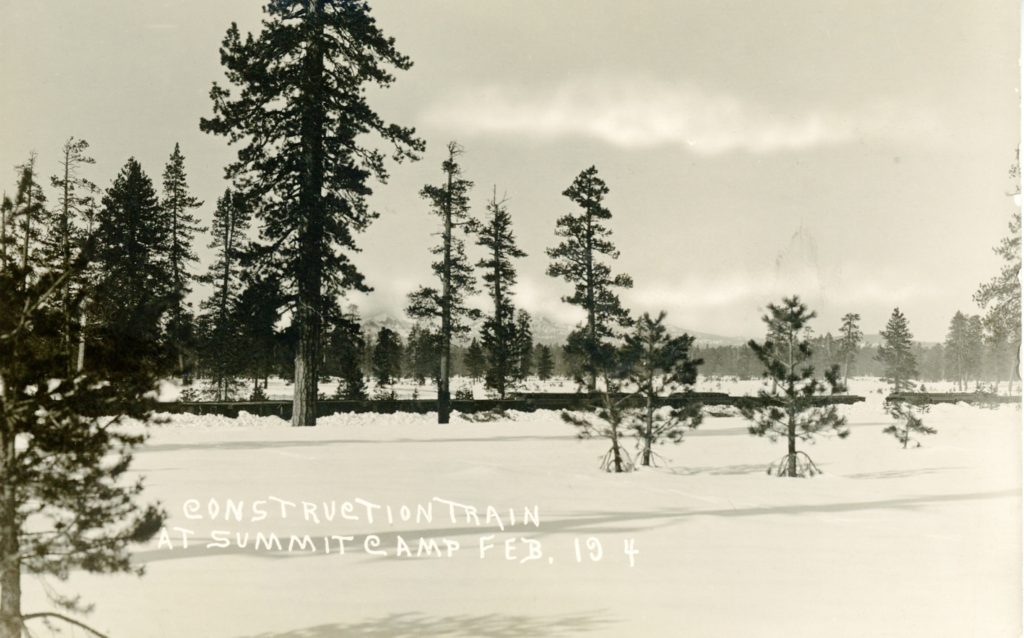
Summit, Fernley & Lassen Railroad, February1914—B.R. Zimmerman Collection

In January 1914 Susanville had received nine inches of rain, along with 93 inches of snow. The total precipitation for the month was 18.27 inches.

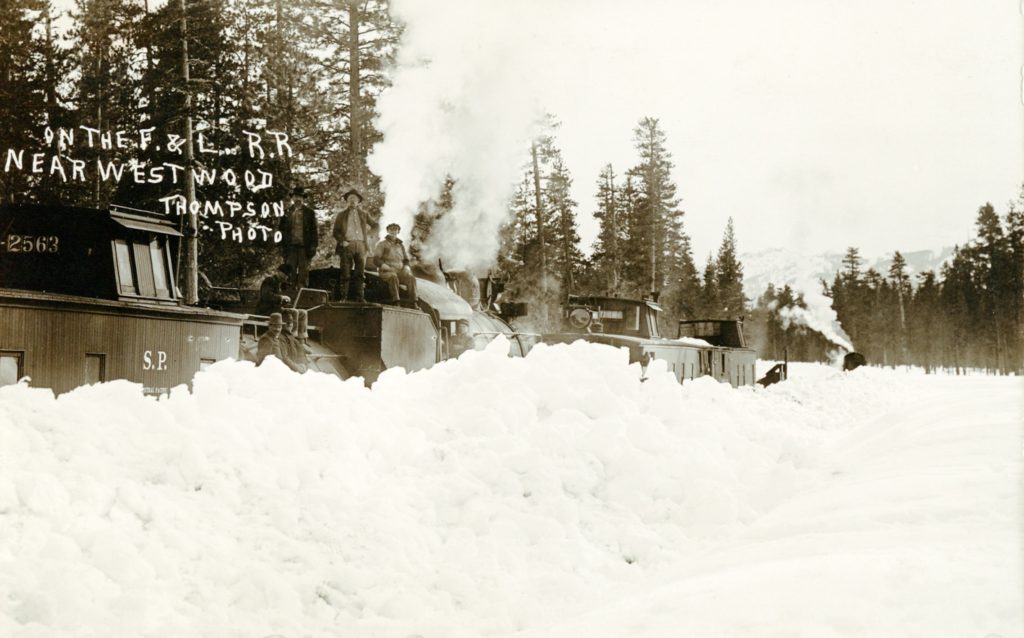
Approaching Westwood, the final destination, February 1914–B.R. Zimmerman Collection

This is a good day as any to showcase these photographs of the construction of the Fernley & Lassen Railroad between Susanville and Westwood during that time. The snow depths in early February 1914,  ranged from 8 to 10 feet.

In February 2012, a classified ad appeared in the Lassen County Times that a person had a small trunk of old photographs of the region. I called the number and it took several attempts. An elderly gentleman answered and said the trunk was found in an old barn in Richmond, Contra Costa County. It took several months before the trunk was shipped to me. It was twice the size, I was told, and when I examined the contents, which were photographs of the B.R. Zimmerman family, long time Susanville residents, I was thrilled. I did end up paying about $70 for the cost of sipping and it was worth every penny.

Tim

Amedee’s Southern Pacific Depot

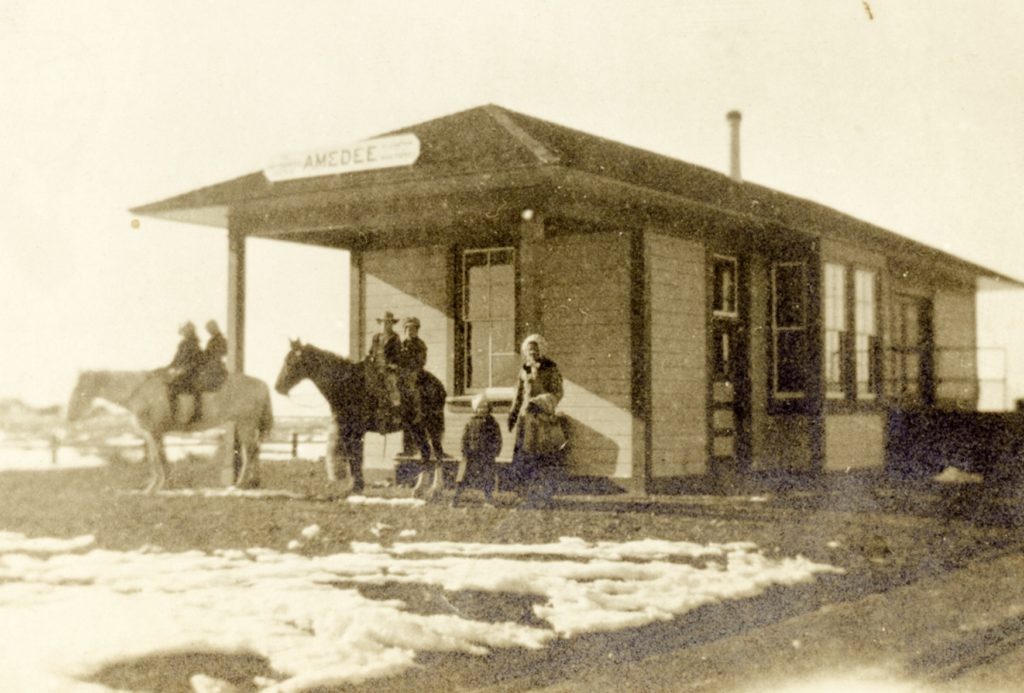
Southern Pacific Depot, Amedee, 1912–Marie Gould

In 1912, when the Southern Pacific Railroad began construction of its Fernley & Lassen branch line from Fernley to Westwood Junction, if graced the north side of Amedee. The Southern Pacific built a very small depot at Amedee, it measured 64 by 80 feet, which included the loading platform. Southern Pacific would build a much larger facility at Wendel, only five miles away, so there was no need for a large depot at Amedee. How long the depot operated, is not clear, though it does show on a 1919 timetable.  What became of it, I am not sure. There are some unsubstantiated claims that it was moved to Wendel and was incorporated with the depot there.

Subscribe

A Little Too Late

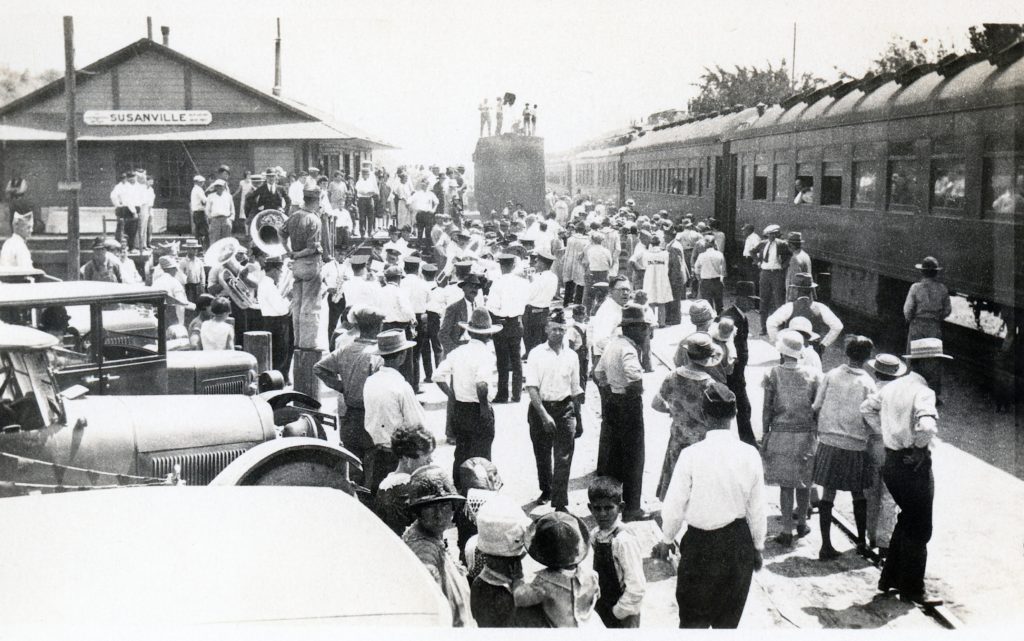
1926 American Legion Convention delegates arriving at the Susanville Depot. Courtesy of Nellygrace Stoll.

Yesterday, the topic was about the chamber of commerce wanting a new Susanville Depot, instead all they got was an addition to the existing depot.

The world was changing rapidly. Between the affordability of the automobile and the construction of highways changed the way the public traveled. The automobile provided freedom to go places whenever a person wanted to do so, and no longer restricted to train schedules. The golden era of passenger train travel was drawing to a close.

The increased use of automobiles and trucks began to take its toll on railroads. In 1933, Southern Pacific railroad officials studied those impacts on the Westwood Branch. To eliminate mail and passenger service it was estimated it would save the railroad $25,000 annually.

On September 29, 1933 a two-day public hearing was held to abandon passenger service. In the late October it was approved by the Interstate Commerce Commission. There was one stipulation. In times when highways were closed by winter storms, the railroad would be obligated to provide passenger service. The last passenger train left Susanville on November 30, 1933.

Susanville Depot, 1929—Hank Martinez

It should be noted, while regular passenger service was discontinued, there were on occasion into the 1950s were exceptions ,made and passengers rode in the caboose.

Support

Susanville Demands a New Railroad Depot

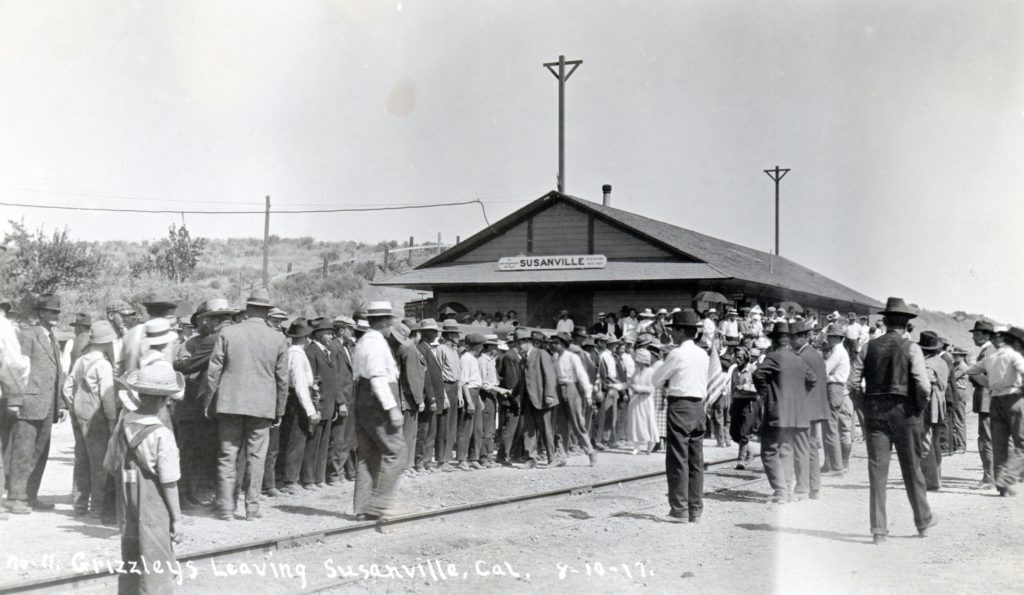
The send off of the first recruits of World War I from Lassen and Modoc Counties at the Susanville Depot. Courtesy of Lola L. Tanner

In February 1926, the Lassen County Chamber of Commerce sent a letter to Southern Pacific officials for their desire for a new depot in Susanville. It was their opinion that they had been short changed since day one. After all, the depots in Litchfield and Westwood were three times the size of Susanville. In their plea, the Chamber wrote:

”Susanville wants a new station and not a makeshift addition to the present one. It is recommended that this new station be of native wood with cedar logs for columns and its construction and architecture be typical of a lumbering community. In other words, the town does not want the stereotypical production of yellow stations which are turned  out like so many sausages or tin lizzies. It wants something distinctive and judging by the amount of business in sight, as the cinnamon bear said to the cinnamon bun, ‘I don’t see why we should not have one.’”

The Chamber put forth a strong argument, stating just the growth warranted such. The population had swelled to over 20,000 and prior to the railroad was only 4,000. The Chamber cited how inadequate the current depot in handling freight, citing numerous problems. The Chamber went on:

”Passenger Needs: Passengers require a new and separate passenger station. We believe that such a station should be built with the idea of the rate at which Susanville is growing and adequate for traffic needs not only for the present but for the next five years at least. We believe further that in-so-far as consistent with the general policy of the Southern Pacific, that such a station should be designed to meet the peculiar climatic conditions of the city which in this respect is so radically different than most cities of California.

“We believe these requests are reasonable and feasible and that they are justified by the volume of traffic. We request your earnest and earliest consideration of them.”

A month later, Southern Pacific officials arrived to make an inspection after the receipt of the Chamber’s letter. They took the matter under advisement. Later in the year, they announced they would build an addition to the depot, by extending the depot by 75 feet. It continued with the same buff (yellowish) color typical of Southern Pacific depots. If it was of any consolation, at least it was not a typical Southern Pacific depot.

Subscribe

Litchfield Depot Update

Litchfield Depot of the Fernley & Lassen Railroad, 1947. Courtesy of Camilla Moody

More progress has been made about the history of the Litchfield Depot. Bill Shippen, Jim Sweetser and Mike Yoakum were able to provide me with more information to make the search easier.

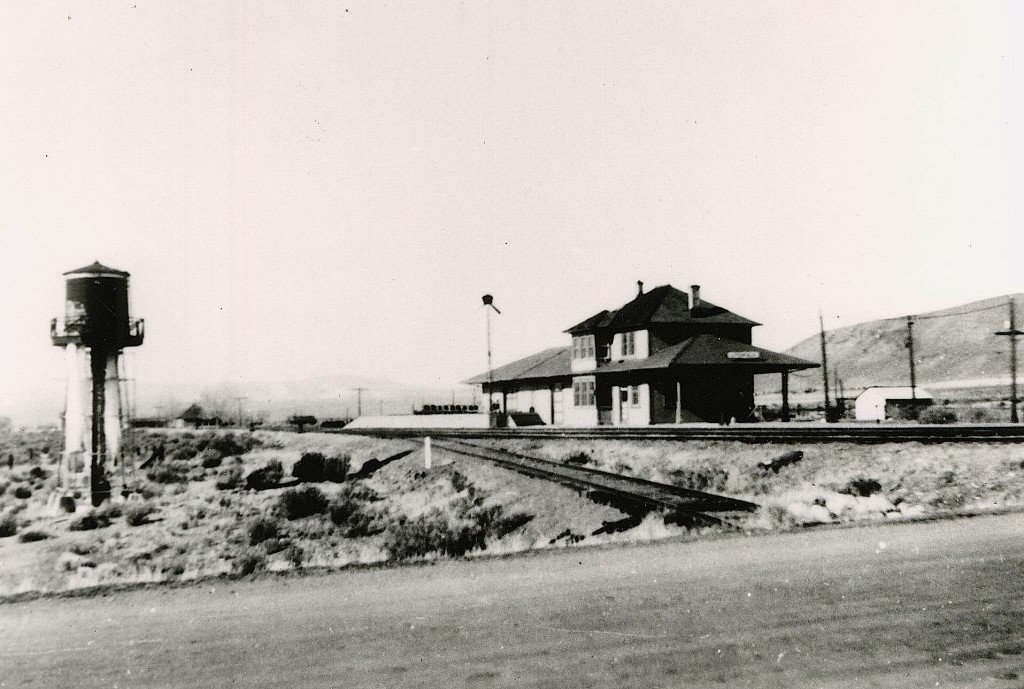
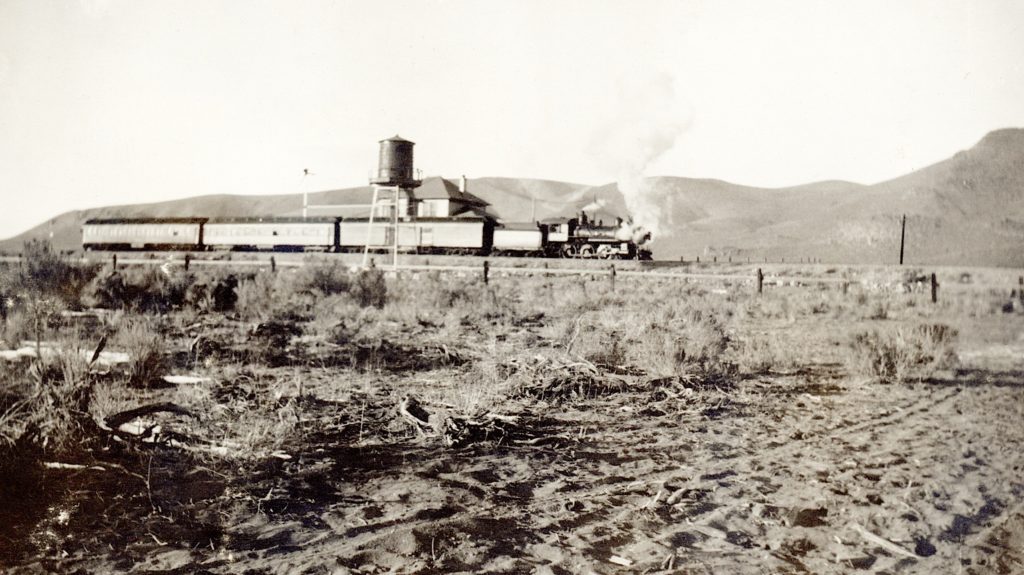
In October 1915, the Southern Pacific Railroad announced that a depot would be constructed at Litchfield. The company hired J.F. Steinman of Colfax as the contractor. The two-story  structure would have living quarters on the second floor. The building’s dimensions 40 feet by 105 feet, with a platform 70 feet long. By Christmas it was in operation. In mid-January 1916, the water tower was completed.

Litchfield Depot, 1920–Lola Tanner

It appears the depot closed sometime between the fall of 1953 and the spring of 1954 and probably torn down in 1956.

Donate

It Was Just A Matter of Time

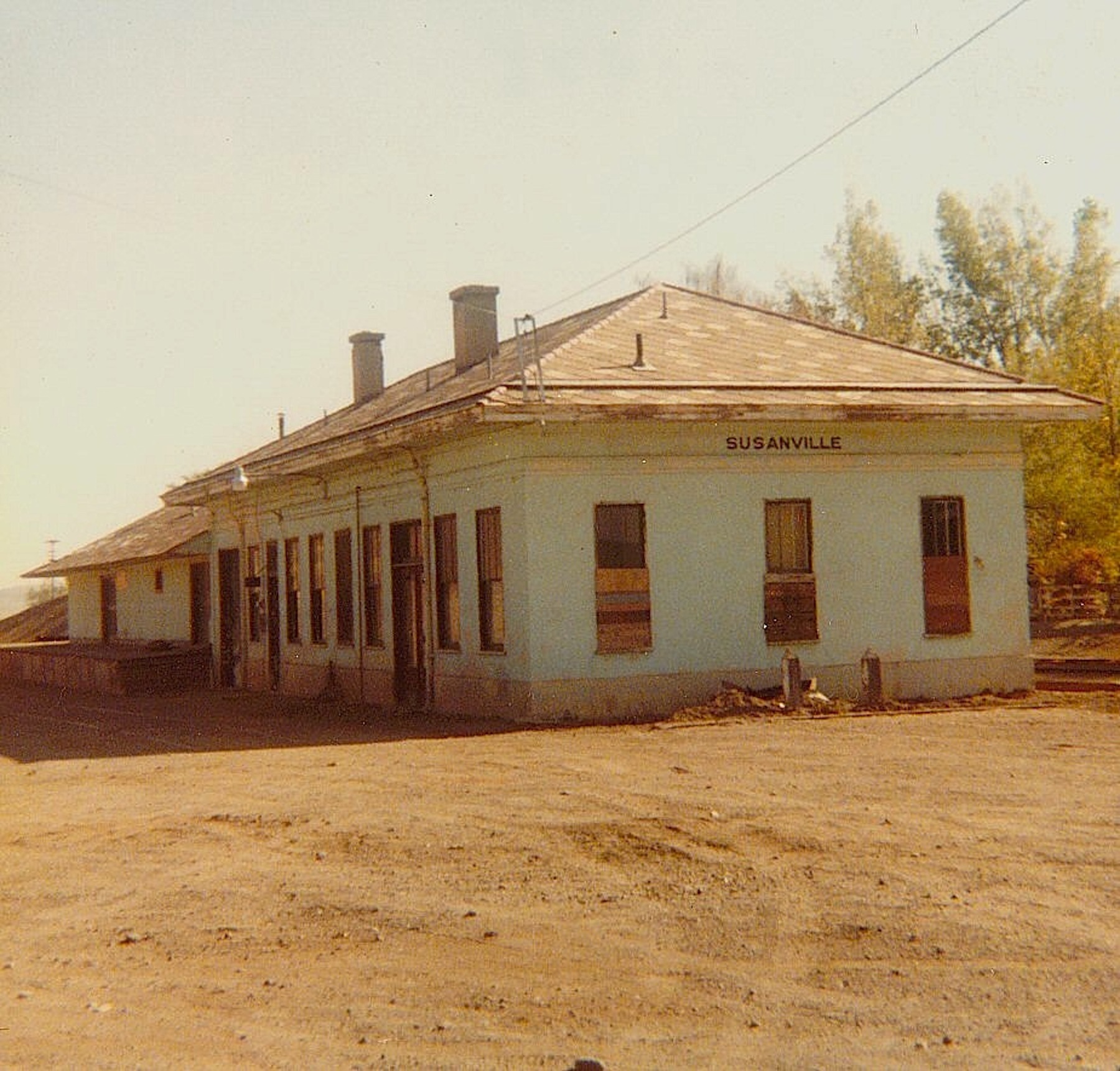
Susanville Depot, 1970.

In December 1955, the Southern Pacific Railroad track between Susanville and Westwood experienced severe damage from unusual winter flooding in the Susan River Canyon. Earlier that year, Fruit Growers Supply Company announced it was closing the sawmill at Westwood. With the closure of the mill, freight traffic from Westwood would be minimal, so the Southern Pacific decided it was not worth the cost to make the repairs and closed down that segment of the line between Westwood and Susanville.

Two decades later, witnessed the slow decline of lumber shipments by rail with Susanville’s two remaining sawmills, Coin Lumber and Sierra Pacific Industries. It was just a matter of time when the railroad would shutter the Susanville Depot. That day came on October 12, 1979.

Depot 78
Susanville Depot, September 1978.

Subscribe and support this site for as little as five dollars a month.


The NCO’s No. 2 Locomotive

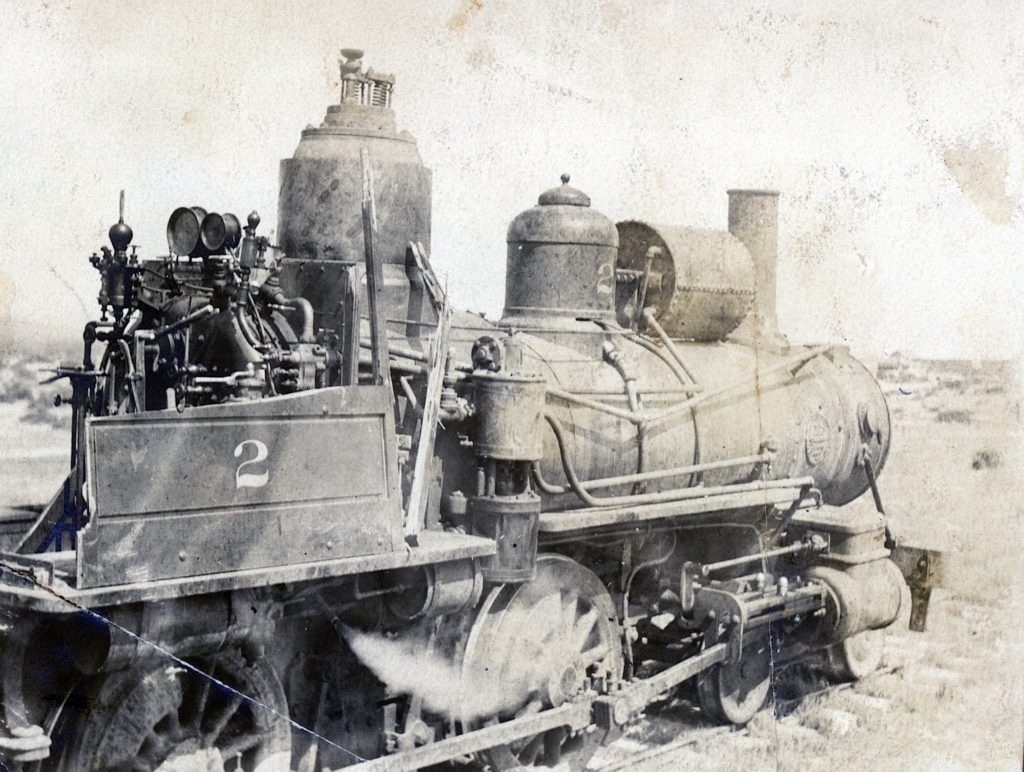
The No. 2 at Amedee, 1909—Marie Gould

While I periodically write about the Nevada-California-Oregon Railroad (NCO) that went from Reno, Nevada to Lakeview, Oregon, there are times  a bit of refresher is needed for those just tuned it. First it should be noted, it was a narrow gauge railroad, so its rolling stock is much small than the traditional standard gauge railroad that most people are familiar with. From the NCO’s inception in 1879, it went through a lot of changes in its early years. First and foremost, it was known as the Nevada & Oregon Railroad.  During its early evolution there were changes in ownership and direction. Whatever the case may be, it was not official until 1893 when it became the Nevada-California-Oregon Railroad.

Now, to the other topic at hand. In 1884, the Nevada & Oregon purchased its No 2 Baldwin locomotive new for $4,750. According to David Myrick’s NCO railroad locomotive roster the No. 2 was retired on December 31, 1918—presumably scrapped.

Support

Litchfield Depot Update

Litchfield Depot, 1920–Lola Tanner

First of all, I want to thank Dan Dieter and John Gibson for the information they provided. The first from Gibson, was about Litchfield Depot’s first agent, James “Jimmie” Barnes. In one sense, Barnes was better known as an operator of a dance hall across the tracks near the location of 7-Acres. The hall was on the second floor. According to many an attendee, such as John Theodore, the place would be so packed that it felt as though the building was swaying.  In 1931, Cindercone Dance Hall at Standish was the go to place.

Dieter provided me with a reference to a public hearing in 1953, about the closure of the depot. On January 20, 1953 the newly organized Standish Farm Center met with main topic being the proposed closure of the Litchfield Depot scheduled for February 13. Only days prior to the scheduled closing the California Public Utilities Commission, who regulated railroads in the state, informed the Southern Pacific Railway that due to the actions of the Standish Farm Center and the Lassen County Farm Bureau, that the Litchfield Depot would remain open.  When it finally closed and was dismantled is still something to research.

Support