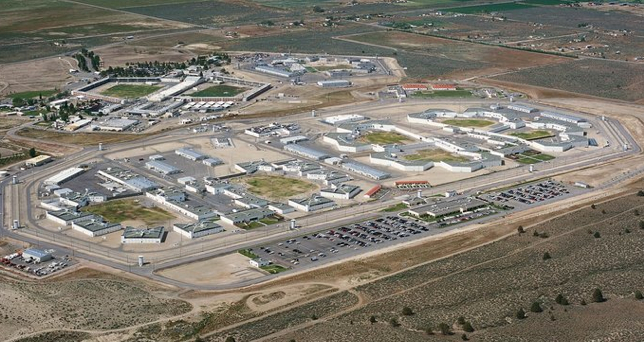
Earlier this year, the State of California announced plans to close the California Correctional Center at Susanville by June 30, 2022.
In the early 1950s discussions were being held among the progressives in the community that the lumber industry, that had such a profound economic impact, was now fading. The big question was what to replace with it. A state prison sounded like a worthy option that would also be stable. On October 13, 1953, the first public hearing was held in Susanville to discuss the merits. Earlier in the year, California Lt. Governor Goodwin Knight, toured the region and thought that Susanville was a favorable site for a future state prison. Not everyone was in agreement. There were some in the community who gave it tremendous support, while an equal number who were dead set against. As is customary, there was also a large segment in the community that had no opinion. Ten years later, a dedication ceremony was held for the nine million dollar California Correctional Center.
W.H. Weeks architectural rendering for the Lassen County High School. .
In 1892, California passed a progressive piece of education legislation enabling counties to establish public high schools. Many California counties, while embraced the concept, were slow to implement due to the financial crisis of 1893, which certain regions took decades to recover.
In the spring of 1902, Lassen County Superintendent of Schools, O.M. Doyle embarked on an ambitious campaign to form a Lassen County High School. He succeeded. On November 4, 1902 the voters approved the measure—637 Yes and 295 Opposed. The opposition came mainly from Big Valley, Madeline Plains and Long Valley, since there was no doubt the high school would be located in Susanville, and they resided such a great distance from there, it would not be beneficial in their opinion.
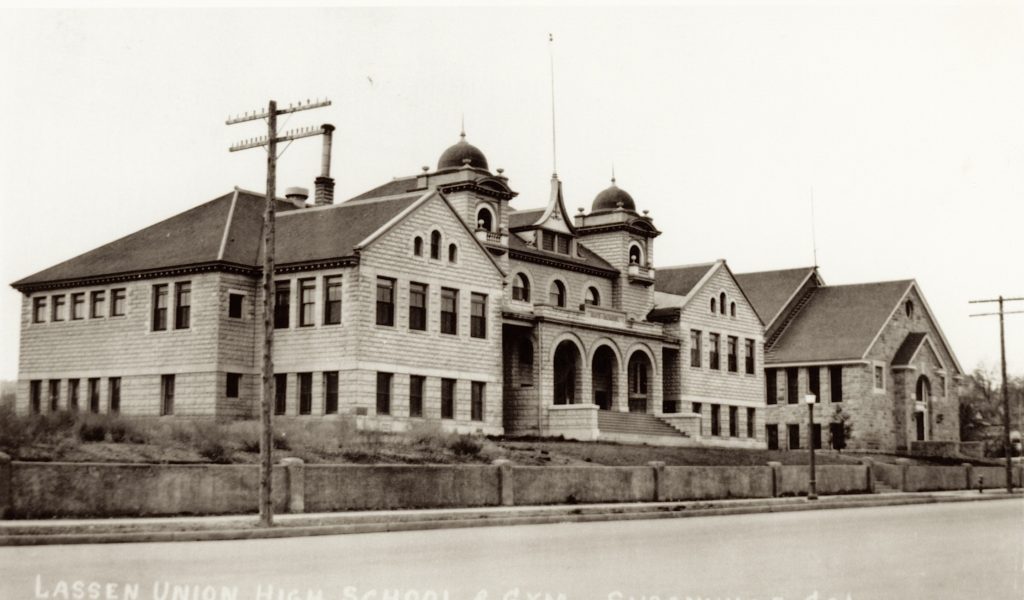
On September 14, 1903, the first session of the Lassen County High School was held. In attendance were approximately forty students, with two instructors, George Barton and F.C. Schofield, the latter also served as principal. In the summer of 1905, construction began on a high school, at a cost of sum $30,000. That iconic building on Main Street was torn down in 1968 and replaced with the current structures.
In November 1931 a Lassen County Farm Bureau committee was formed to see how to make cuts to the expenses of Lassen County government. One of their first recommendations was to make the Lassen County Assessor personally inspect every tax payers property to make sure nothing escaped assessment.
It was education they really set their sights on. J.H. Hunter of Westwood stated that 32 cents out of every state dollar went to education. It was Hunter’s opinion that colleges were turning out so many yearly graduates who could not find employment.
J.A. Pardee chimed in with his two-cents worth. He thought community colleges were a waste of time and money. Its was Pardee’s thought that a grammar and high school education was more than sufficient and that higher education was not necessary. Their consensus, “We are spending hundreds on ten-cent kids.”
The May 1907 meeting of the Lassen County Board of Supervisors was a lively one. The hot topic was a new county jail and courthouse. The board received numerous petitions from throughout the county. One common thread that residents was for better roads. Many thought the county should be investing in a rock crusher and replacing wooden bridges with steel. There was, of course, resentment from the public who resided far Susanville over the cost of the newly established Lassen County High School.
The petitions from Bieber and Standish had another odd twist. Both petitions urged the board that the county seat be relocated. It was their opinion that Standish be made the county seat on the grounds it was more centrally located. The board took no action on these topics. In addition, it would be some time before the board would even bring up the topic of a new jail and courthouse.
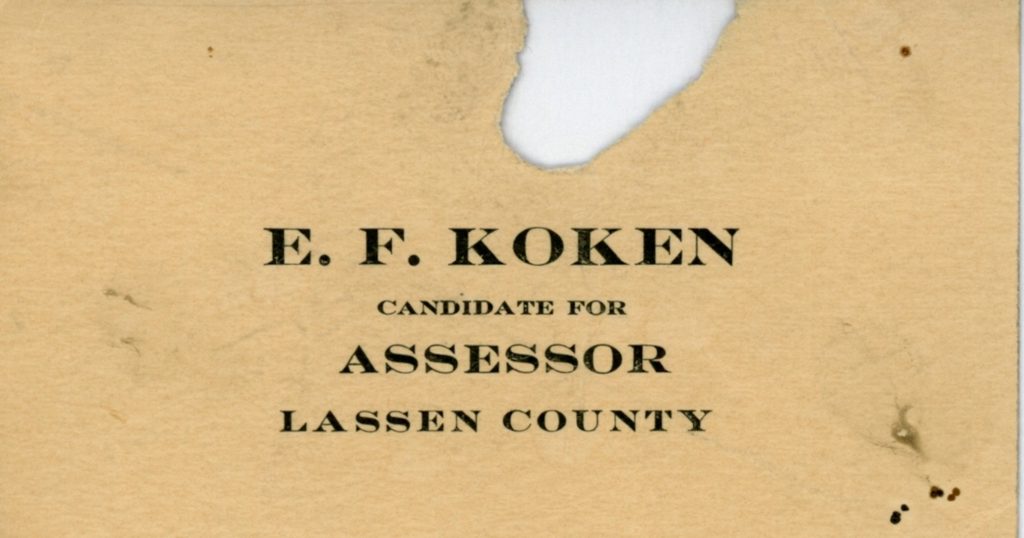
This is an accidental post, if there ever was one. Last December while in the garage to work on the Triumph, this came out of the owner’s manual. How it found its way there I do not know. Several months later while researching a 1926 topic, is when I stumbled across where Elmer Koken was a candidate for Lassen County Assessor.
In 1891, Koken came to the Honey Lake Valley from over the mountain from Taylorsville. He was involved in many activities and at one time managed the Standish Creamery. He entered politics in 1922 and was elected District Three, Lassen County Board of Supervisors. Four years later, he set his sights higher, instead of running for re-election as Supervisor, in March 1926 he took out papers to run for Lassen County Assessor. He was soon followed by Milford resident, Lyman Stiles. Next to enter the race was Frank Wemple. During the primary, the race was whittled down to two—Koken and Wemple. In the general election, Frank Wemple was victor, who would be re-elected to four additional terms. While Koken lost the election, he eventually found employment with Lassen County as its first Purchasing Agent.
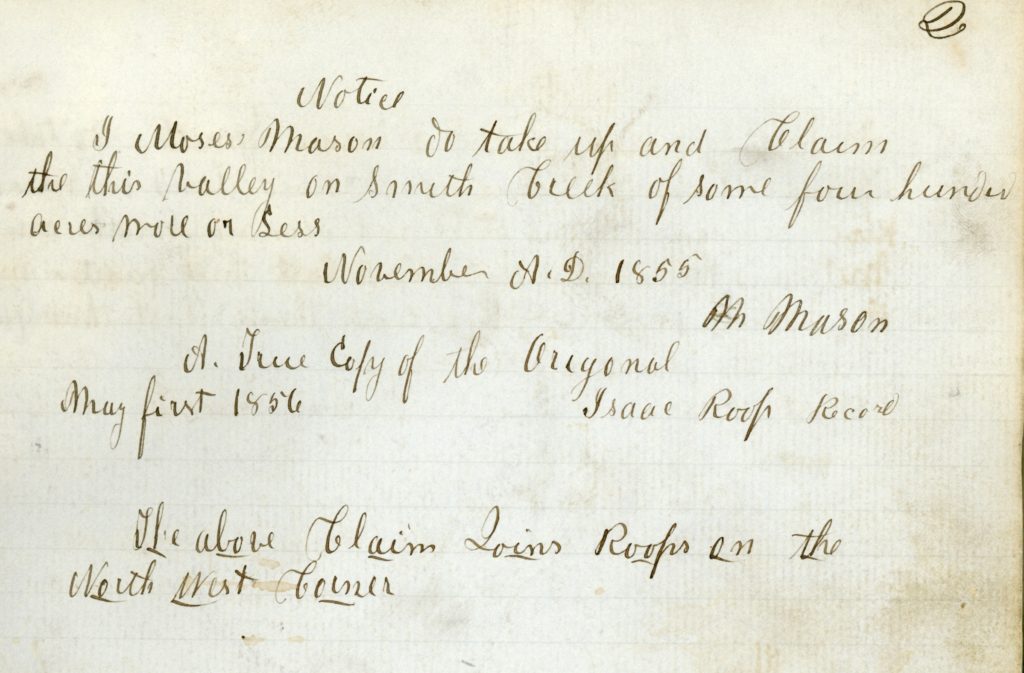
Moses Mason was the second claim recorded in Roop’s Land Register. He settled on present day Susanville Ranch Park and referred to Piute Creek as Smith’s Creek.
In the spring of 1856, with settlers arriving in the Honey Lake Valley they realized they needed to form some type of self-government. They did not believe they were part of California and did not want to be a part of the Utah Territory, there was no Nevada then. On April 26, 1856 a group of twenty-men assembled to form the Territory of Nataqua.
As to land matters, any male twenty-one years or older could claim 640 acres of land to be recorded with the Recorder, which Isaac Roop assumed that role. A number of claims had vague descriptions. Whatever, the case may be, it worked for them. In 1857, some individuals began documenting their claims or the sale of such in the form of a deed with the Plumas County Recorder. By 1859, a few hardy souls ventured all the way to Marysville to file a claim with the United States Government Land Office, the nearest one available. By 1861, the Roop Land Register was rarely used.
When Lassen County was formed in 1864, the original County Board of Supervisors did something unique. They paid Plumas County to transcribe all land transactions of Honey Lake and Long Valleys prior to the formation of the county. This is why Book A. Deeds, Lassen County starts in 1857.
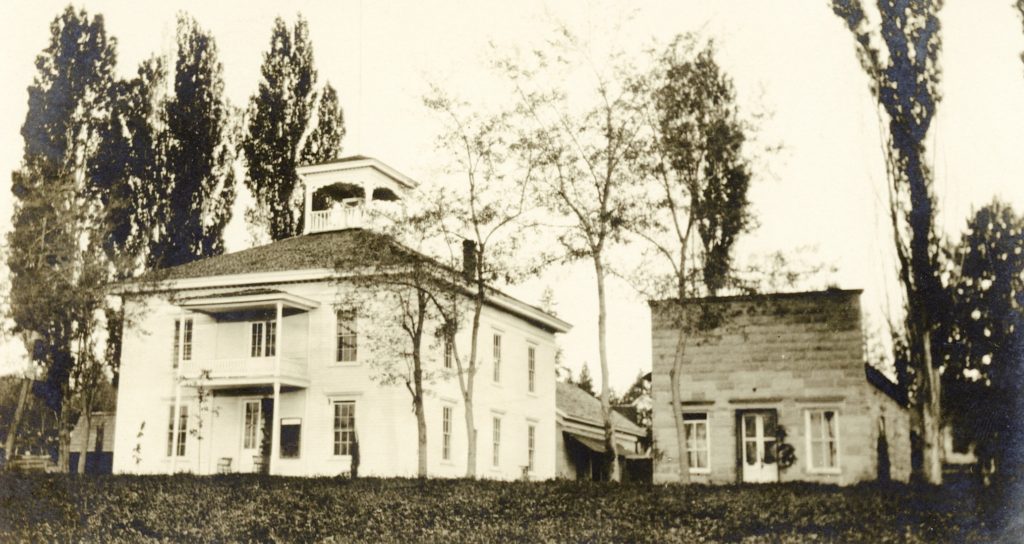
Lassen County Courthouse and Hall of Records, 1908–David Zoller
On June 18, 1864, the County of Lassen purchased Block 22, in Susanville for $100 from Isaac Roop. It was the only block on the south side of Main Street that was not subdivided into lots. It should be noted that many lots on Main Street sold for more than $100. In many ways it was a fair price. It did contain a stipulation that should the county no longer use it for a courthouse that the property would revert to Roop or his heirs. This was not unusual, as a number of school properties such as Lake and Willow Creek contained such stipulations, but when those properties were no longer used for their original purpose the stipulation was ignored. However, in the late 1970s Lassen County acquired property on North Mesa Street, in Susanville, as a possible new County complex site. When the courthouse stipulation was revealed it brought about some palace intrigue, especially since heirs of Roop still resided in the community. However, the Mesa Street proposal would be abandoned, thus ending that debate. The county could have challenged that stipulation and would have won, because Roop never owned the property in the first place. More about that later.
From time to time, I am asked about the Sagebrush War. While there are various accounts that go into great detail—even one person wrote a thesis about it—I will provide a simple version. The conflict also known as the Boundary War which was the result of John C. Fremont’s selection in 1850 of the 120th Meridian for California’s eastern boundary. The problem was no one knew where that was, and assumed it followed the crest of the Sierra Nevada Mountains. In the late 1850s, with the settlement of the Honey Lake Valley, officials of both California and the Nevada Territory, saw the uncollected tax dollars waiting to be had. Tensions escalated wherein an armed conflict on February 15, 1863 from the two states took place at Roop’s old trading post, in Susanville, which became dubbed as Roop’s Fort, but also known as Fort Defiance. In the end a truce was called when both sides agreed to conduct a boundary line survey to locate the 120th Meridian, in which it was determined the majority of the Honey Lake Valley was located in California. The outcome for the Honey Lakers was a draw, while they failed to become a part of Nevada, they at least prevailed with the creation of Lassen County.
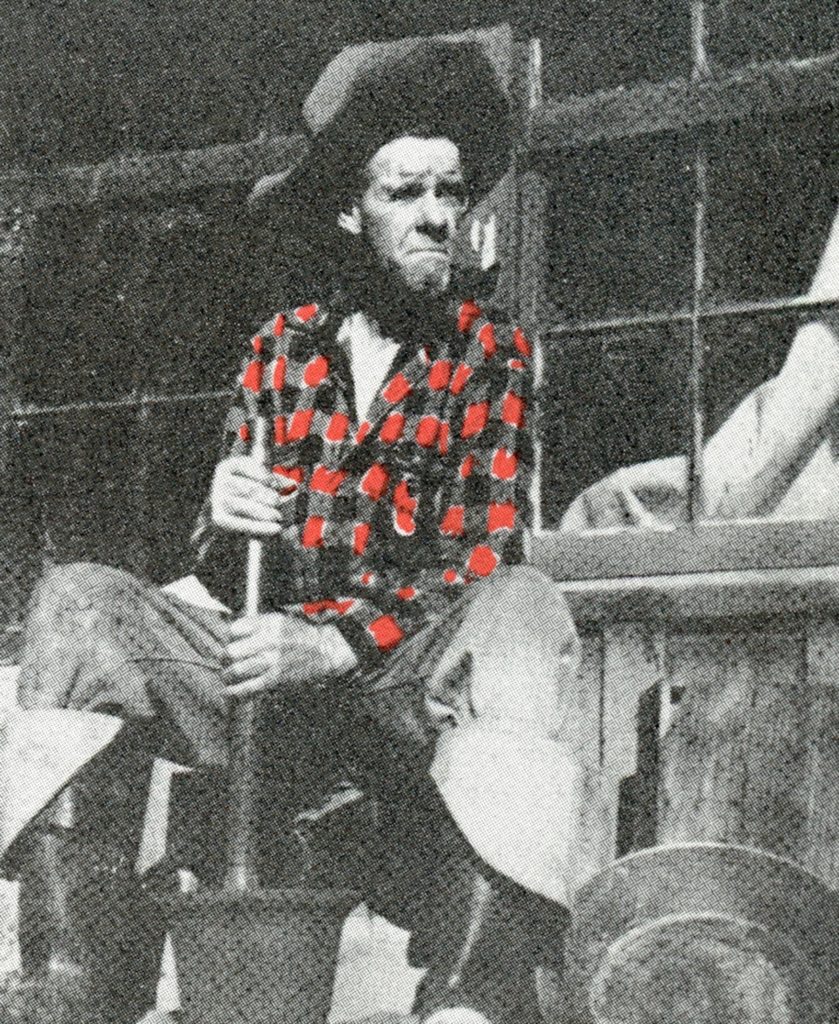
In 1964, Tex proclaimed he was the one time caretaker of Never Sweat Mine.
For whatever reason, the Honey Lakers embraced the monicker of Never Sweats. By the 1870s, visitors and new residents were perplexed by this name and some of them attempted to decipher its meaning. In 1878, one writer, who used the pseudonym of Rover, observed what a Never Sweat was not. “Honey Lakers are here designated Never Sweats.
Why not because of laziness, sickness or old age, nor previous condition of servitude, not for lack of possession of time or money; not from any physical imperfections, imaginary or real. It is no doubt a political or religious peculiarity.”
The term would drift in and out like the tides. However, when Asa Fairfield published his Pioneer History of Lassen County in 1916, he proclaimed Honey Lake Valley as the Land of the Never Sweats forever cementing the name in the area’s history. Since then, numerous organizations have used that name, and in 2000 in part of the City of Susanville’s Centennial used the slogan of Land of the Never Sweats.
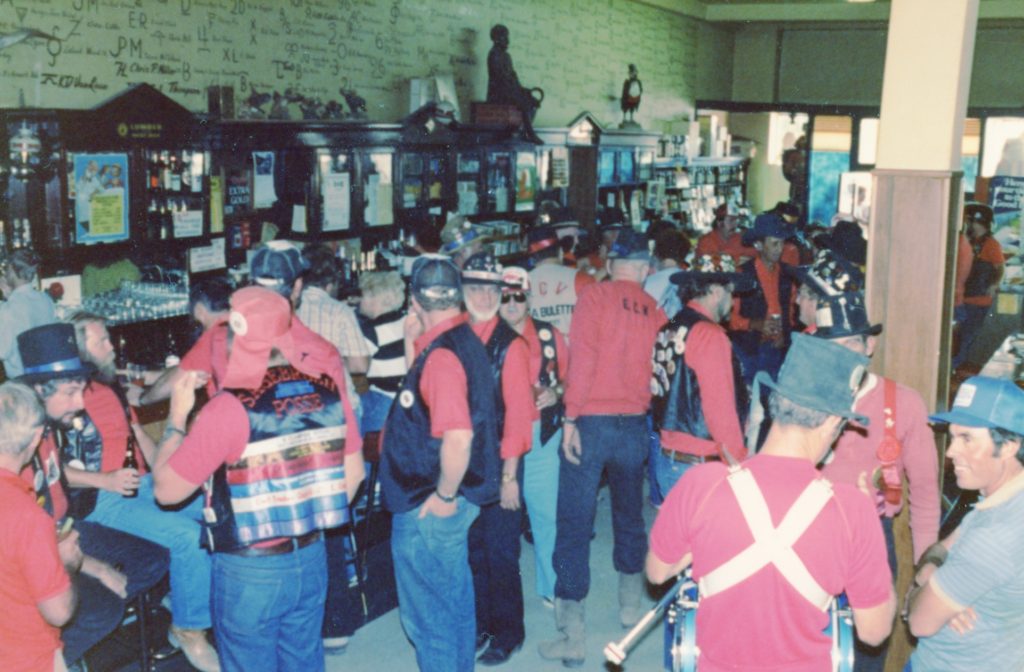
Neversweats chartering festivities at the Pioneer, August 4, 1984.
There is, of course, a landmark the Never Sweat Hills in eastern Honey Lake Valley on the Nevada side. Hopefully, one fine day I will make out there. It has best example of the lakeshore terrace effect from the receding waters of the ancient inland sea known as Lake Lahontan. Another feature near there, worth exploring again is Max’s Masoleum—another story for another time.
Spread the word, and encourage a friend to subscribe
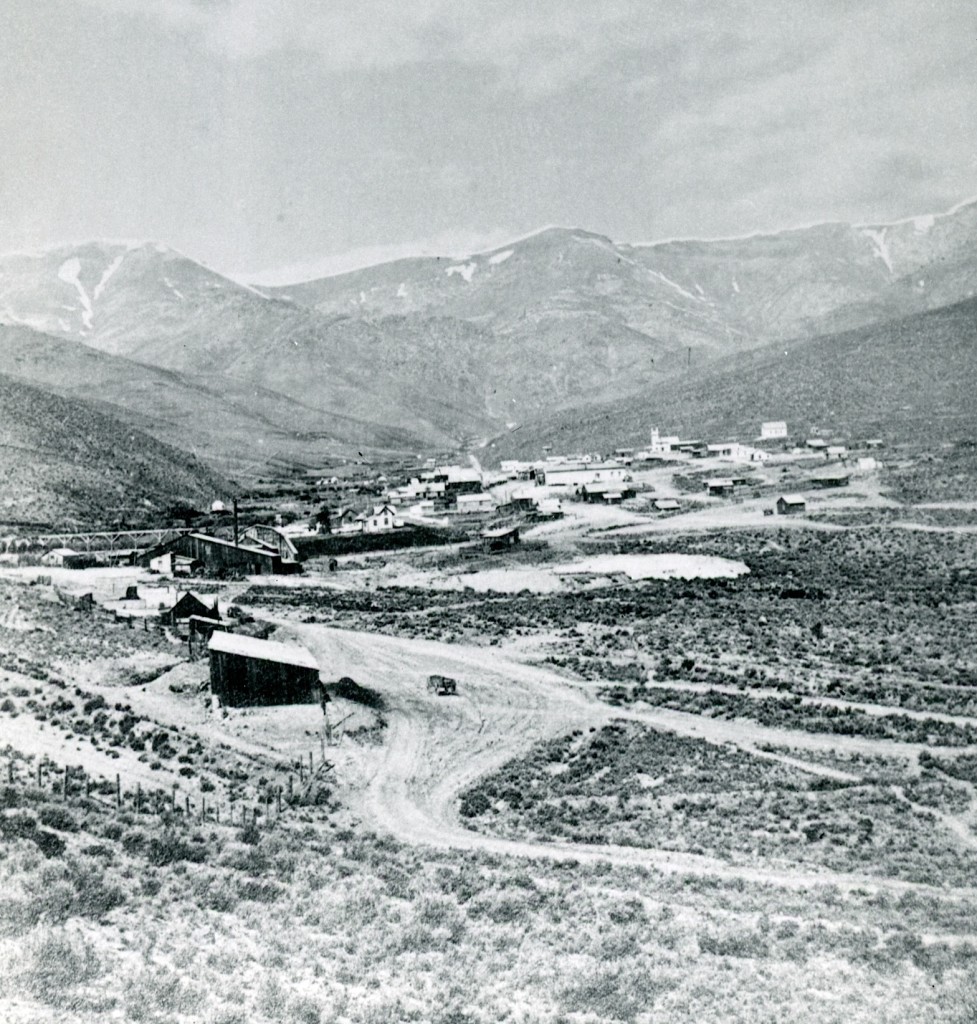
Unionville, Nevada, 1880—Nevada Historical Society
Whether you are an old timer, or a recent arrival, Honey Lake Valley is referred to the “Land of the Never Sweats.” Surprisingly, very few are aware of the origin of the name and its meaning. So as a public service I provide you with my research findings, that a visit to a museum in Victoria, British Columbia and some library research at Twin Falls, Idaho provided the following revelation.
For starters, it was an obscure mining term of the early 1860s. To be a Never Sweat was considered to be a non-conformist. In Nevada, for instance, one could hold an interest in a mining claim and not work it. One could wait for others to prove the claim. Should the prospects be favorable, the Never Sweat could recover his interest by paying an advance on the accumulated costs. In 1865, Nevada passed an “Act for the Encouragement of Mining.” That change in laws abolished the practice of a Never Sweat and the term faded into oblivion, with the exception of the bestowment on the Honey Lakers.
It was the Honey Lakers who used the Never Sweat practice in the political arena. A perfect example was in 1860, when the Honey Lakers petitioned California Governor M.S. Latham, requesting military assistance during the Pyramid Lake Indian War. Yet, at the same time, they refused to pay California taxes, claiming they were a part of the Utah Territory.
By 1863, the Honey Lakers were designated as the Never Sweats. The Humboldt Register of Unionville, Nevada of June 27, 1863, wrote about the Honey Lakers at the Prince Royal Mining District: “It is surpassing strange that these hard working callous backed gentlemen should answer the honest inquiry with a sneer and say there was a place somewhere in the mountains by the name of Prince Royal, but so little repute they had actually forgotten it for the moment. . .Because they were owned by a parcel of Honey Lake ‘never-sweats’! Ha! Ha! What a pity.”
Tomorrow: The terms enduring legacy
Spread the word, and encourage a friend to subscribe