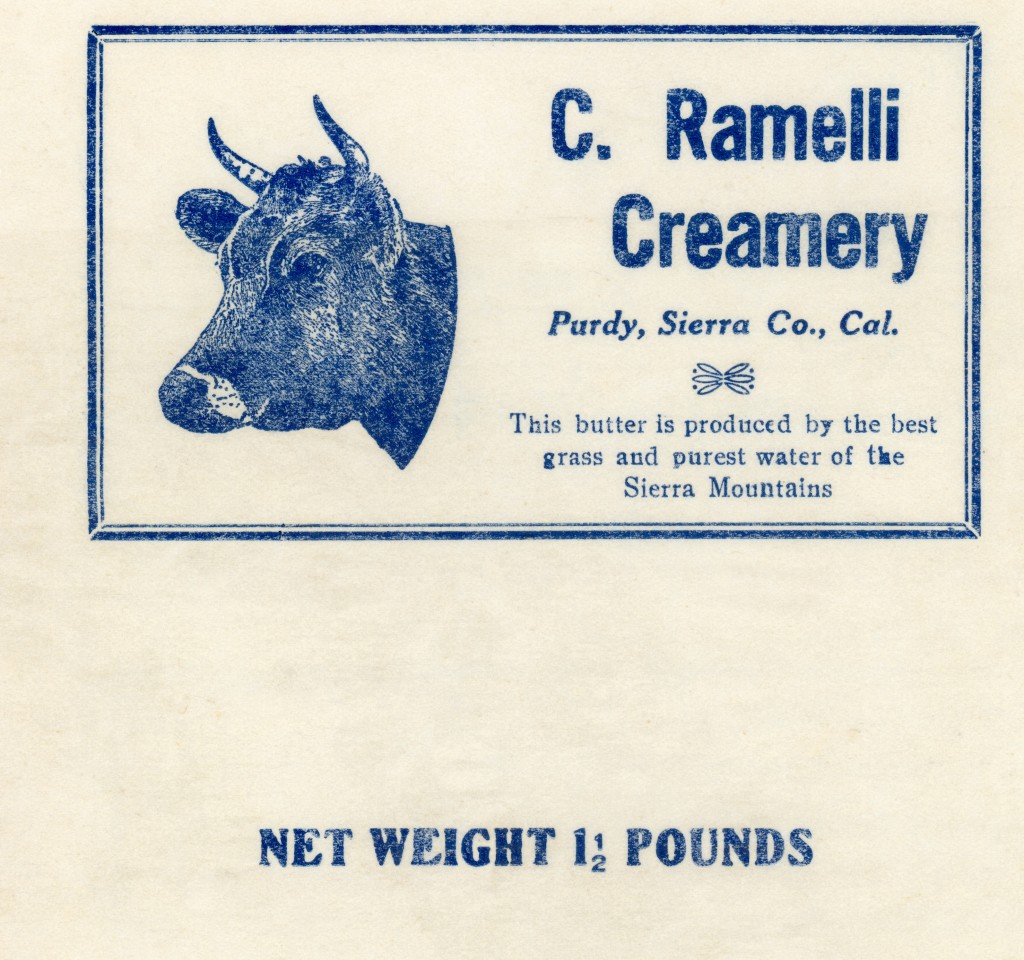
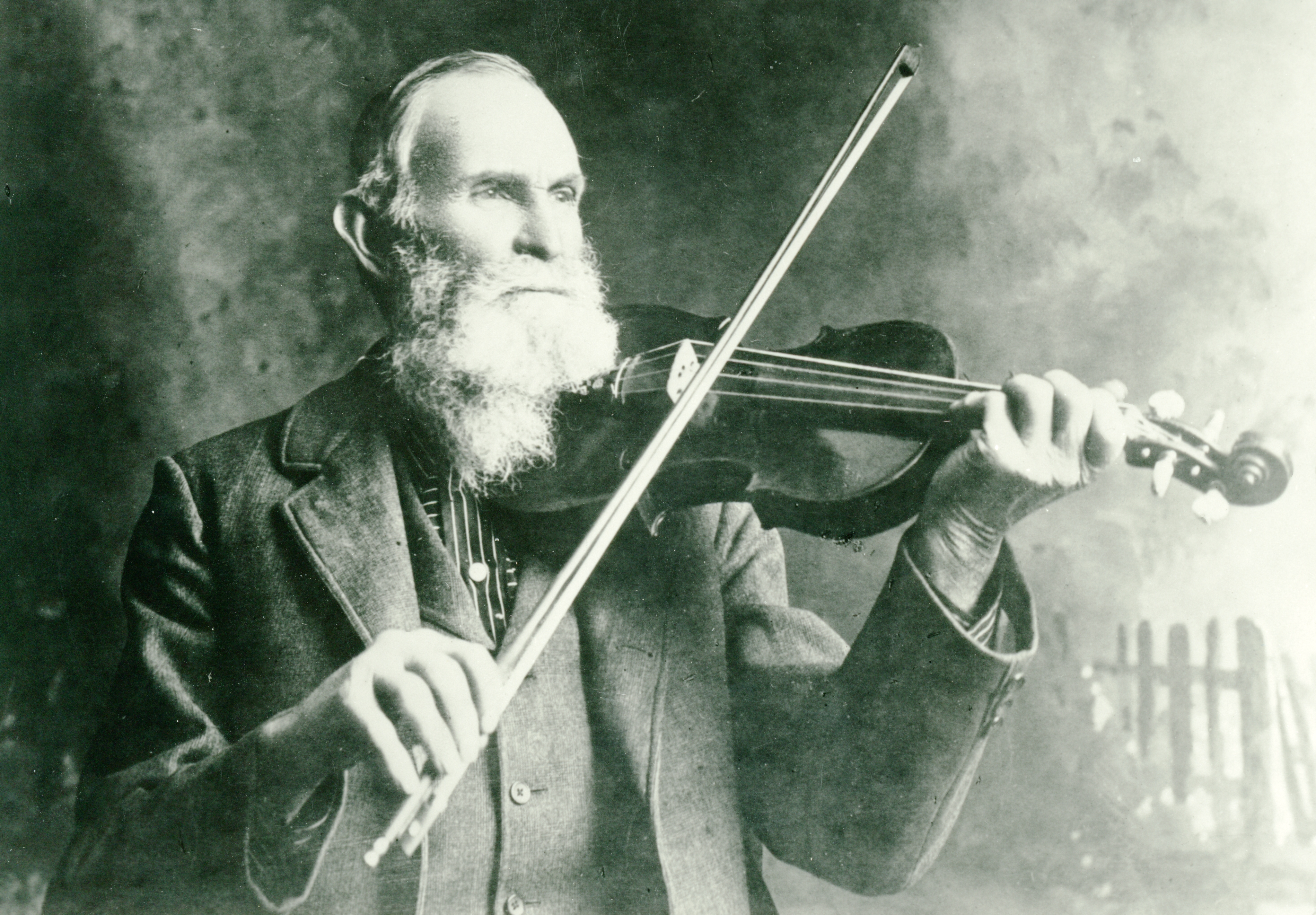
The Lassen County Library bookplate used several local iconic features representing the pioneer era.
One subscriber inquired about the traits of the original argonauts who settled California. Back in the early 1970s, I worked with Eleanor Vandeburgh at the William H. Pratt Memorial Museum in Susanville. Eleanor commented that the weak in mind never contemplated to endure the hardship to travel west; those who were weak physically died along the way and only those of a strong mind and physical traits survived. It is an interesting concept. Eleanor, however, left out another factor. Continue reading Pioneer Traits→
Wingfield’s Meadowbrook Ranch circa 1911. Courtesy of Fred and Alyce Bangham
On May 23, 1910, Nevada millionaire, George Wingfield purchased the 320-acre Clinton DeForest ranch at the base of Diamond Mountain to construct a summer home. This, of course, was unheard by the local populace.
No time was wasted and construction of the $25,000 home, complete with at that time, modern electric and plumbing fixtures. The house, was the project of Wingfield’s wife, Maude.
Besides the house, there was guest house, a greenhouse, blacksmith shop and two fish ponds, along with a wildlife preserve. In due time, Wingfield enlarged the holdings by another 1,300 acres. In one acquisition he purchased the timber holdings of the Lassen Mill & Lumber Company. Included was a tugboat used on Honey Lake. Wingfield which he converted the boat into a pleasure vessel and even had a special boathouse constructed on the shoreline of Honey Lake.
The landscaped grounds of Meadowbrook Ranch. Courtesy of Alphozene Terrill
On July 24, 1923, the Wingfields sold the property to the Lassen Mill & Lumber Company for an undisclosed amount. The latter’s sole interest was for the timber estimated at 20 million board feet. The following year the property was converted into the Susanville Country Club, but that is another story for another time.
Never miss a story, click here, and also support this site too.
Gerlach is Becoming a Metropolis. The town of Gerlach on the end of the Western Pacific is already the metropolis of northern Washoe County and is growing so rapidly that it will have a voting precinct of its own this fall.
It will be the old Salt Marsh precinct, but a change will be made of the polling place to that point. The Buffalo Meadows farmers are kicking about the additional twenty mile drive to the polls, but as they previously had to go thirty-five miles, it is thought that the extra distance will not hurt them.
There is a strong attraction possessed by Gerlach, which now boasts four saloons and more coming.
Long Valley, some forty miles to the north, is also settlig up rapidly. There is a reclamation scheme in progress there and it is forecasted that the valley will be thickly settled and prosperous before many years pass.
Gerlach is now the freight division point for the Western Pacific and is the shipping place for the southern end of Surprise Valley, California, to which place a county road was recently constructed.
Elk, with the Wingfield residence in the background. Courtesy of Alphozene Terrill
In 1910, George Wingfield established a summer residence south of Susanville, and more about that in a future article. He had a special interest in wildlife and established his own little preserve. That fall, he fenced off eighty acres for an elk and deer park. In 1914, he added four buffalo to his collection. This became a major attraction to local residents to view these creatures.
Wingfield also brought in such “exotic” species as peacocks and mammoth size frogs imported from New Orleans. He had two small lakes constructed on the property to plant with a wide variety of fish.
Where the buffalo and elk roam at Wingfield Ranch. Courtesy of Lola L. Tanner
In 1923 Wingfield sold the property to the Lassen Lumber & Box Company who were primarily interested in the timberland he owned there. The buffalo were shipped to Wingfield Park in Reno where they were on display for many years. The fenced enclosure to keep the elk in was no longer maintained and the animals began to roam the region, with spottings from nearby Bald Mountain to Willow Creek Valley. The elk were poached by hunters over the years, and were wiped out by the early 1940s.
Never miss a story and support this site, click here.
In 1887, Cesar A. Ramelli emigrated from Switzerland to the United States where he eventually located at Purdy, Long Valley, California. The area is best known to many as the region behind present day Bordertown. There, and later, with another location the Bella Vista in the Truckee Meadows, he along with his three sons, had seventy-five cows. From that herd, butter and cheese were made. The cheese was made into blocks of 10, 20 to 25 pounds which was sold in the Reno stores.
Long after the excitement of the gold rush, people were still lured to California. Numerous reports published back east extolled the health benefits of the golden state’s climate. In the spring of 1874, Iowa resident Sylvester Daniels ventured to the Honey Lake Valley to visit his sister, Polly Parks, and see if the change in climate might be beneficial to him. Like many in that era, Sylvester kept a journal. His journals were different in the sense, as he kept a record of his experiences so he could send them back to his fifteen-year-old daughter, Viroqua. Continue reading Sylvester Daniels→
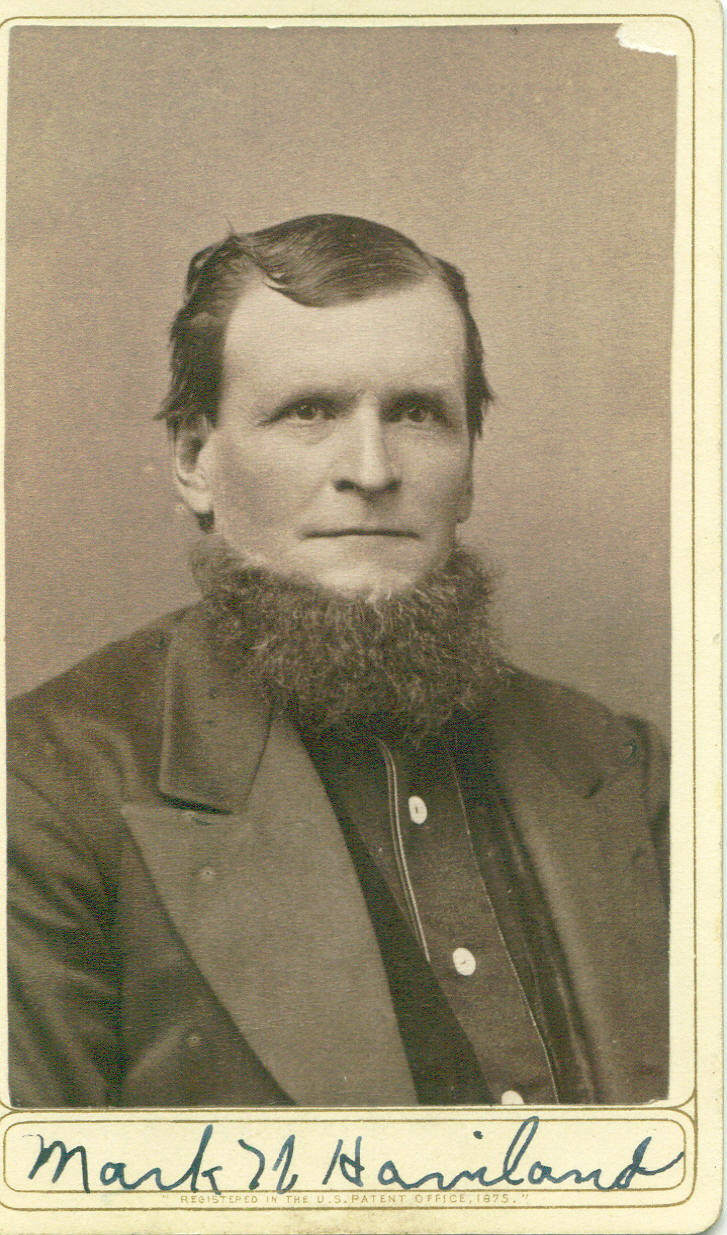
Mark W. Haviland. Courtesy of his great-great-grandson Kevin Allec
Mark W. Haviland was one of the many early Honey Lake Valley settlers of the 1850s who remained awhile, then moved on to the proverbial greener pastures. For him that was Paradise Valley, Nevada where he died in 1894. Continue reading Mark W. Haviland→
Smoke Creek Desert looking towards Sheepshead, fall, 1977
Just across the border lies this most interesting desert. It is a favorite of mine, so rich in history. It received its name back in 1844 when John C. Fremont explored the region. His party noted the dust storms created on the playa there cast a smokey hue.
Fremont was not the only explorer to the desert, as he was followed by William H. Nobles who created a new emigrant road that traversed Smoke Creek—it was a direct route to the Northern California mines. In 1865, the military established Fort Bidwell in Surprise Valley. The military plotted an unusual supply route that went along the west side of the Smoke Creek Desert and then followed Smoke Creek in a haphazard manner to Surprise Valley. This route was far from ideal, which was replaced by route through Buffalo Meadows. Traffic would diminish significantly when in 1890 Fort Bidwell was closed.
In forthcoming posts we will explore some of its agricultural and mining history.
Subscribe today and support this site for as little as $4.17 a month.
Stockton’s recorded map of his proposed toll road.
Three days after the Gold Run Road Company was organized, H.C. Stockton proposed a Honey Lake Black Rock Toll Road. His one page description of his road was quite vague to say the least. He proposed his new road starting at Wall Spring, and instead of following the old road and going around the base of the Granite Mountains, much like today’s road, he dreamed up some route over these rugged mountains. Like the Gold Run Road Company, after he had his claim recorded in Humboldt County, Nevada on March 2, 1866, nothing ever materialized.
Stockton is a colorful character of Lassen, and more on him in future posts.
Unionville, 1880. Courtesy of Nevada Historical Society
An obscure mining term of the early 1860s. To be a Never Sweat was considered to be a non-conformist. In Nevada, for instance, one could hold an interest in a mining claim and not work it. One could wait for others to prove the claim. Should the prospects be favorable, the Never Sweat could recover his interest by paying an advance on the accumulated costs. In 1865, Nevada passed an “Act for the Encouragement of Mining.” That change in laws abolished the practice of a Never Sweat and the term faded into oblivion, with the exception of the bestowment on the Honey Lakers. Continue reading Never Sweats→