Tag Archives: Natural History

Fruit Growers Fire Breaks

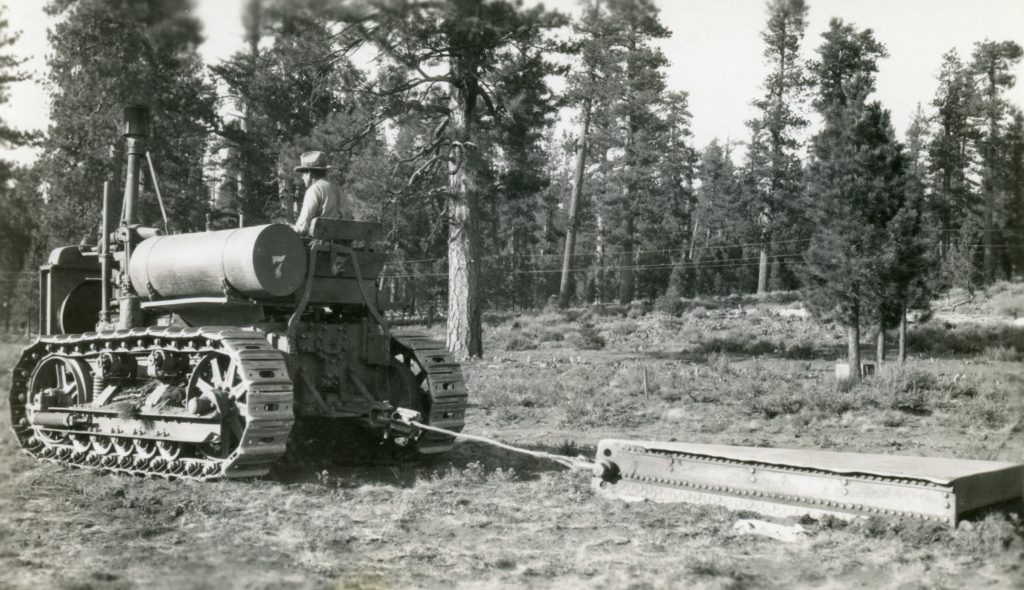
Fire trail V-drag plow, 1929. Courtesy of Fruit Growers Supply Company

After the 1924 fire on Antelope Mountain, west of Eagle Lake, Fruit Growers Supply Company (FGS) revaluated thier standard method of fire prevention. At that time they piled brush and slash (tree limbs and tops left behind once the logs were removed). They adopted a new method, building a series of fire lanes. The fire lanes were 100 feet wide and completely void of vegetation, each encircling 100-acre sections of timber. They were formed by a special V-drag plow hooked to a Caterpillar tractor which could clear up to six miles of fire lanes a day. The lanes not only served as firebreaks, but also provided quick access in case of a emergency.

After each 100-acre area was logged, all the dead trees, or snags were felled, because left standing, they deemed them a fire hazard. Once the snags were felled, however, they again became potential fuel, this time on the forest floor. After the first substantial snowfall, the fire crew burned the snags and slash.

During the fire season, two crews of eight to ten men work as a fire prevention team. It was their job to build fire lines, oversee brush and slash piling, remove dead snags and maintain the telephone lines. The telephone “boxes” were attached throughout the forest, to allow for daily monitoring between the logging camps and the mill. The telephone system was also used to report a fire or an accident when medical aid was required.
Never miss a story, click here to subscribe.

A Blue Lake State Park?

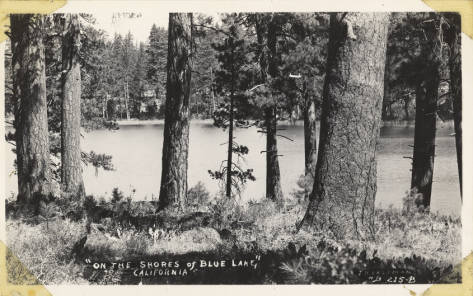
Blue Lake, 1936

Blue Lake located in the very far northeastern part of Lassen County, is one of the many hidden gems around these parts. In 1929, the Lassen County Chamber of Commerce sent a petition that it should be included in the state park system. It did not fare well, due to the fact the property surrounding the lake was privately owned. Of course, things change with time. In 1932, R.C. Turrittin attempted to cash in on the California State Park Bond Fund.  He offered to sell the property surrounding Blue Lake to make it a State Park, though the title was not in his name.  The California Division of Parks liked the proposal and deemed it an important addition to the State Park System.  Turrittin requested $12,000 cash–$8,000 from the State and $2,000 in matching grants each from Lassen and Modoc Counties.  There was a problem with the deal.While Turrittin negotiated with the State and Modoc County, he failed to include Lassen County, where the lake is located, though it was frequented more by Modoc residents due to its proximity to that county.  Lassen County politely stated that since they had never received the proposal and that their budget had been adopted, they could not consider the proposal until the next fiscal year.  The proposal was tabled and that was the end of it.

On a final note, in 1941 the Modoc National Forest acquired the Blue Lake property through a timberland exchange.

Subscribe 

B.F. Loomis and a story of jury duty

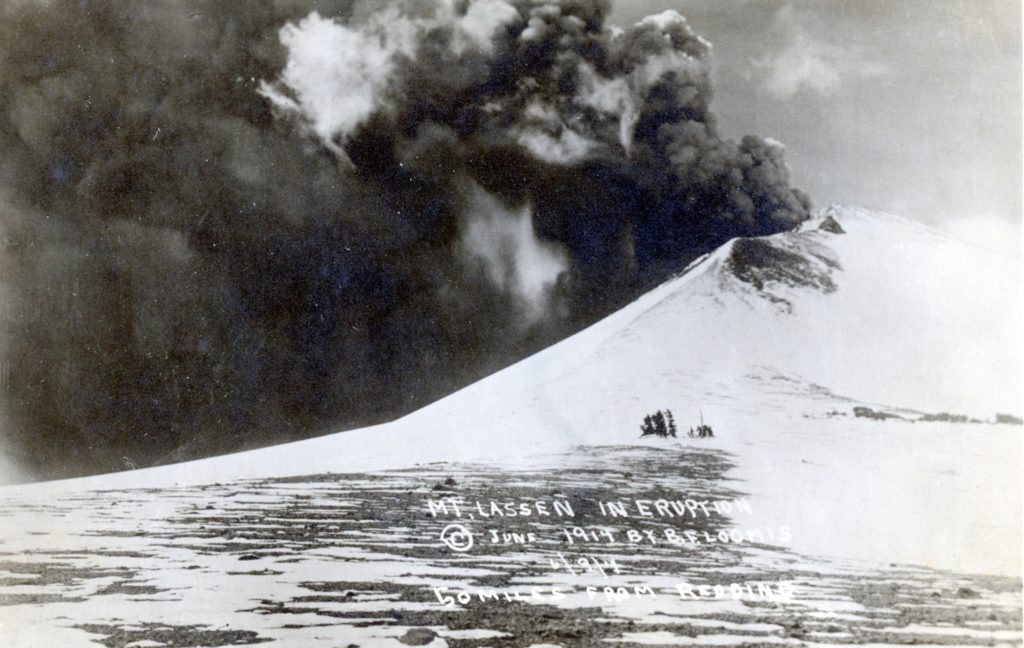
One of the many photographs Loomis took in June 1914

We are fortunate to have a bounty of museums in our region. Each one unique in their own special way. Equally important, all of them are worthy of a visit. Since this is July, there is no better time like the present to check them out.

One of the oldest museums is Loomis, located near the northern entrance of Lassen Volcanic National Park. Its founder, B.F. Loomis had an interesting association with the region. Actually, how the museum came to be is as intriguing as Loomis.

Initially, Loomis’ origins were rather typical of the era. He was born in Illinois and came to California as a child with his parents who settled in Tehama County. In 1874, Loomis had his first exposure in the area later to be destined Lassen Park. It was a camping trip to Manzanita Lake. The region suited him well and took up residence in nearby Viola. He made a living making wooden shakes, commonly used as roofing material. As he prospered he established a hotel at Viola.

In 1897, an event dramatically transformed his life—jury duty. Off to Redding Loomis went and there he met fellow jurist Leander V. Loomis. While the two men were not related, they both shared an interest in phrenology and astronomy. During a trial recess, Leander invited B.F. to his home. During his stay met Leander’s daughter, Estella. A romance ensued and they were married that fall. Leander had another child that influenced B.F.—Arthur who was a commercial photographer. Arthur introduced B.F. to the world of photography and years later B.F.’s photographs became widely known.

The next life changing event for B.F. Loomis came on June 14, 1914 after one of the volcanic eruptions of Lassen Peak. With camera in tow Loomis, as did other photographers captured the event on film. It should be noted the initial eruption occurred on May 30 and word spread like wildfire. Multiple news organizations were dispatched to report on the first active volcano in the continental United States. Loomis’ timing was impeccable and various news outlets used his images and Loomis gained a certain notoriety.

Subscribe

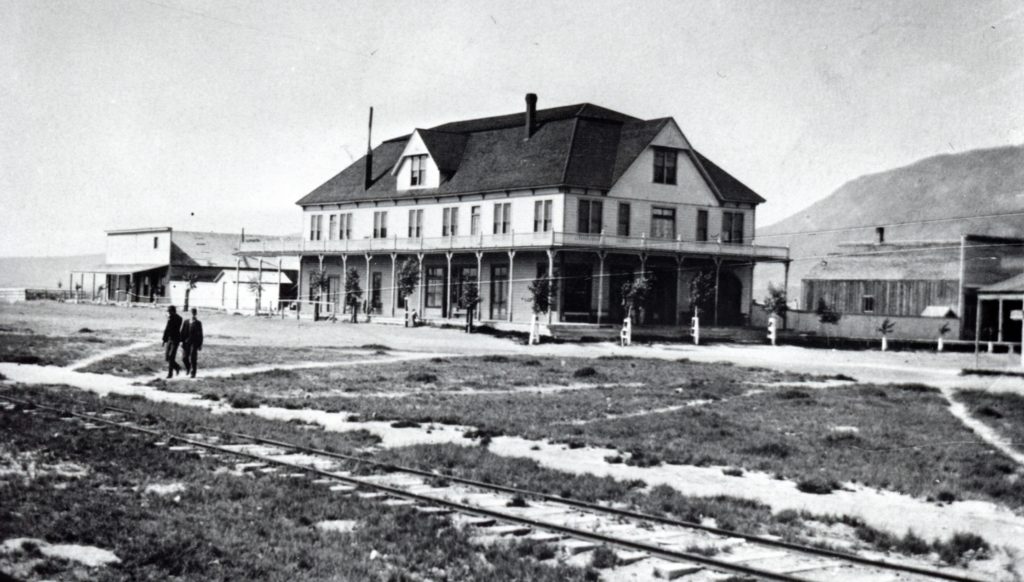
Answers to Some Questions

Amedee Hotel, 1910. Courtesy of Betty B.Deal

By coincidence I am working on feature article of the Amedee and Madeline Hotels for the Northern California Traveller. As to the Brubeck family, I am able to provide some insight, as years ago I corresponded with Leslie Brubeck, who was born at Amedee in 1900. In addition, a subscriber is going to make a journey to Brubeck Spring, so I will ask for a photograph to include in a future post.

As to the natural history of the flora fauna conditions prior to the settlement, that can be done in several installments. In the 1990s, I conducted extensive research of the vegetation of eastern Lassen County prior to extensive grazing of cattle and sheep. An interesting source were the field notes of the Government Land Office surveyors who included descriptions of what they observed during the initial surveys of the 1870s. Another example was when in 1854 Lt. E.G. Beckwith explored the region for a possible transcontinental railroad route. Members of his expedition studied and documented the flora and fauna they found.

Subscribe

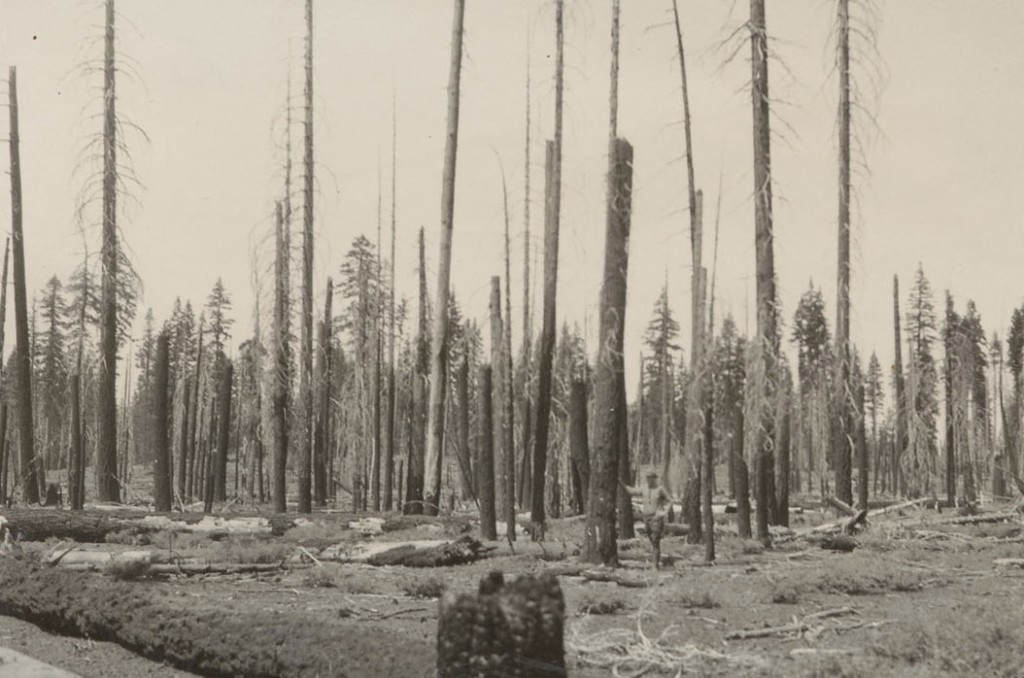
Early forest fire origins

Prattville Fire burn, 1925

In the fall of 1899 various Northern California newspapers pondered the question of the causes of forest fires, especially during fall. The San Jose Mercury News blamed it on hunters. The Oroville Register stated it was the cattlemen who set the fires every fall. Susanville’s Lassen Advocate chimed in with this response: “Over this way it is the custom to charge the sheepmen with the forest fires. Some of the fires are doubtless due these different agencies, but not all of them. An old hunter “a man who has lived long in the mountains” tells us many fires are set by Indians. He says that in seasons when deer are numerous, as they have been in this season, they may be found in numbers where the underbrush has been burned off, disporting in the soft warm ashes and fall easy victims to the Indian hunters.”

Subscribe

Whaleback Fire Revisited

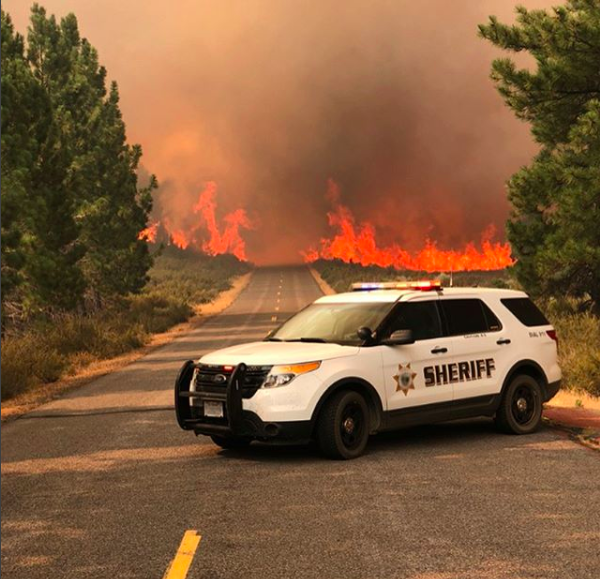
Whaleback Fire courtesy of InciWeb

It was a year ago, on July 27, 2018 that in the early afternoon a fire was spotted on Whaleback Mountain, just west of Eagle Lake. During its peak Spaulding Tract, Aspen Grove, Christie and Merrill campgrounds, along with the marina and Camp Ronald McDonald were evacuated. A voluntary notice was provided to Buck’s Bay and the Stones-Bengard subdivision. On August 8, 2018, the fire that destroyed 18,703 acres was fully contained. The origin of the fire was never determined or if it has not fully disclosed to the public.

Subscribe

A Sunday Drive – Antelope Lake

Antelope Lake, 2002

For many years, when my Mother was alive we would have the weekly ritual of a Sunday drive. During the summer months, we would make some extended loops. One of these featured Antelope Lake on the side of Diamond Mountain for those who reside on the eastern slope. This would entail leaving Susanville via Highway 36, then going along the east shore of Lake Almanor. Once in Indian Valley just past Crescent Mills is the turn off to Taylorsville and Antelope Lake. It is very scenic especially through Genesee Valley, then one makes the climb up the grade and at the top you are near the splilway of Antelope. The paved road meanders around the lake, eventually takes you to Janesville Grade.

Antelope Lake, by the way, is in Plumas County and is a popular recreational spot for a number of Honey Lake residents. It is part of the State Water Project of the California Department of Water Resources. The projects original intent was to provide water to Southern California to augment that of the Colorado River. Antelope Lake was constructed in 1964. There is a 113 foot tall earthen dam. The lake has a surface area of 931 acres with a maximum capacity of 47,466 acre feet.

Never miss a story, click here to support and subscribe.

First Impressions – Reno, Nevada

Sylvester Daniels. Courtesy of Jean Gorzell

On June 3, 1874, Sylvester Daniels arrived in Reno, Nevada by train from Iowa. It was his first stop on his way to tour Northeastern California. He was not impressed. Daniels wrote:

“Lots of drinking of all kinds of drinks. I have not seen anyone drunk enough to stagger, yet it is only eleven o’clock in the morning. They don’t know any money smaller than ten cents. Money making is all the rage here. Most every man has his pockets full of silver. It seems very strange to me, it is so different from what I have been used to.

“In this place, lodging is one place and eating is another, eat wherever you have a mind to. I took a walk this afternoon out to the west end of town. It is just sagebrush desert, but I saw some yards that is irrigated. The Truckee River runs along the south side of town. It runs very rapidly. It goes tumbling over the stones as though it was in a great hurry to go to some place right quick. The town is watered by the river.

“Saw a drunk squaw this afternoon. She was walking up the street swearing at an awful rate. A man told me they always talk in English when drunk. This is a terrible place for drinking and gambling to say the least. And I can not say any more that I have not seen any one drunk. I have come to the conclusion that the drinking men are drunk all the time, are never sober. I think it is different with the Merchants and they have nice stores here.”

Subscribe

Long Lake/Windy Hollow

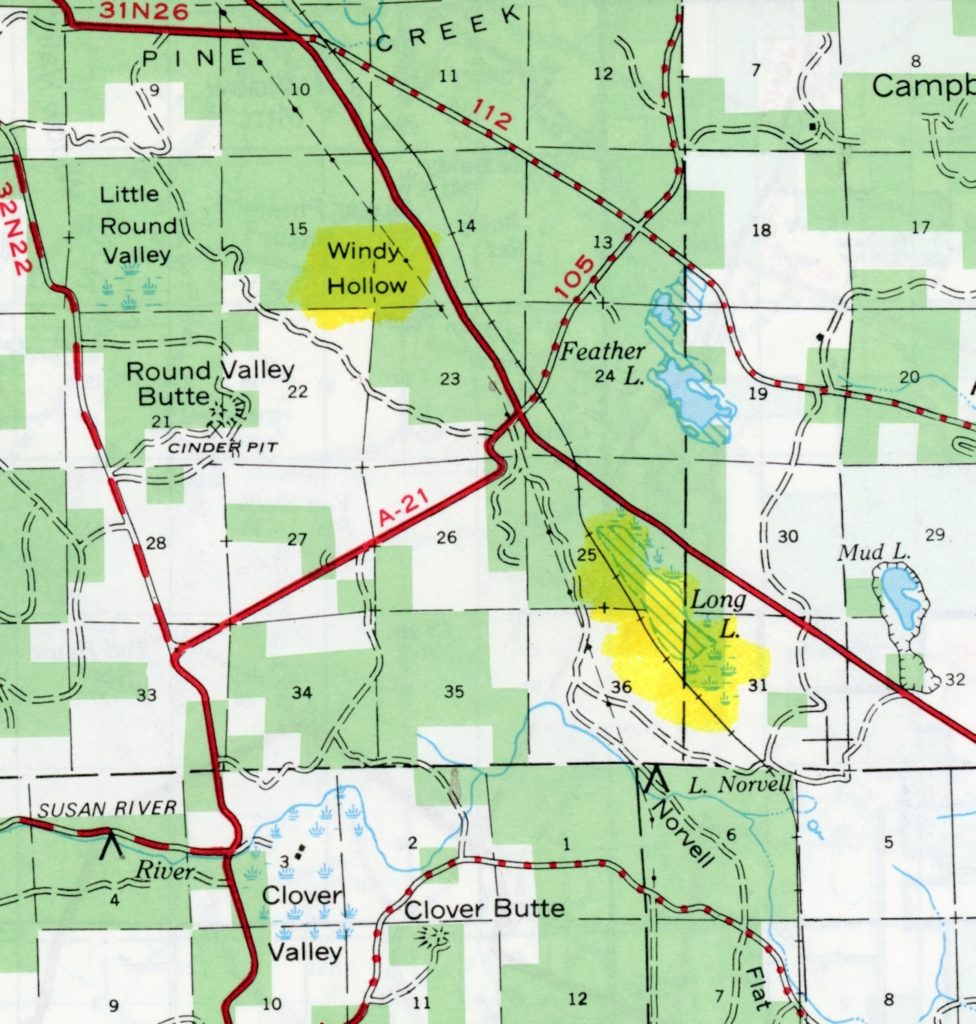
A 1971 Lassen National Forest Service in which both features are highlighted in yellow.

A reader raised concern about the location about an earlier post about Windy Hollow and its close proximity to Long Lake. Long Lake, which is an intermittent body of water is just south of where Highway 44 and the Western Pacific Railroad crossing, while Windy Hollow is just north from the same crossing.

Long Lake prior to 1900 was known as Anna Lake. George Best Long (1868-1925) had a homestead in the vicinity, hence its current name. He sold that property in 1925 for $500.

Never miss a story, click here to subscribe.

Kings Creek Falls

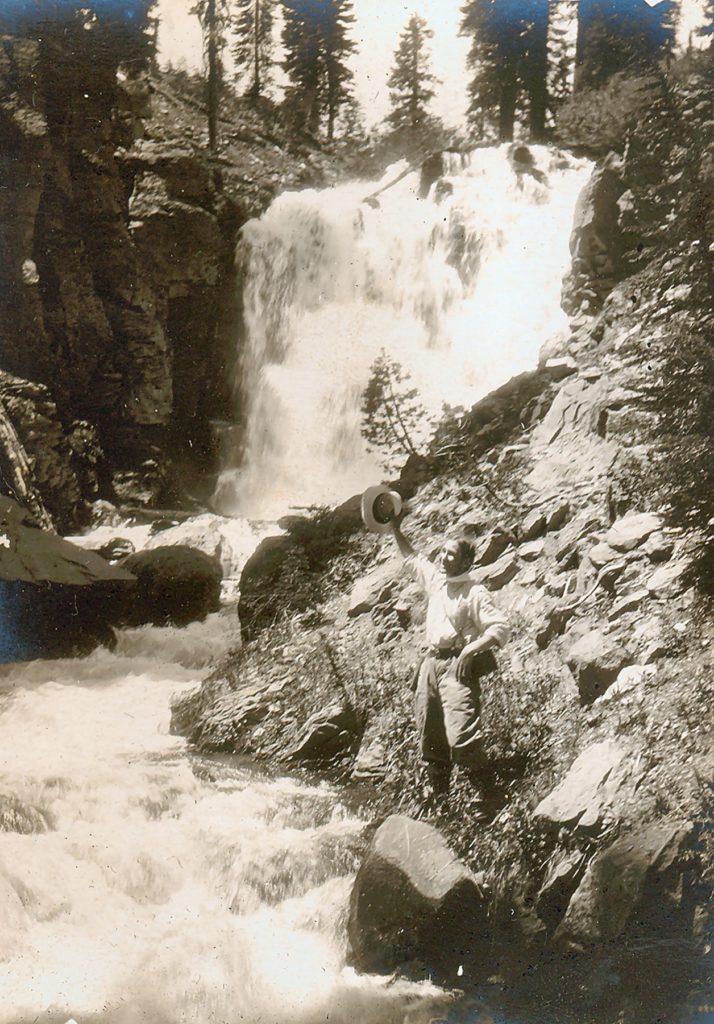
Kings Creek Falls, 1908–Sifford Collection

For those ambitious folks out there this summer you might want to include Kings Creek Falls in Lassen Volcanic National Park on your expedition list. Those familiar with Lassen Park, one of the major picnic areas on the Loop Highway is Kings Creeks Meadows. The creek, meadows and waterfall was so named for James and Jane King who in the 1870s had a squatters claim to the property, but never followed through the federal land patent process to acquire it. In 1879, their son Oscar was born at the meadows, making one, if not the first Anglo born child in what is known as Lassen Park today.

Never miss a story, click here to subscribe.