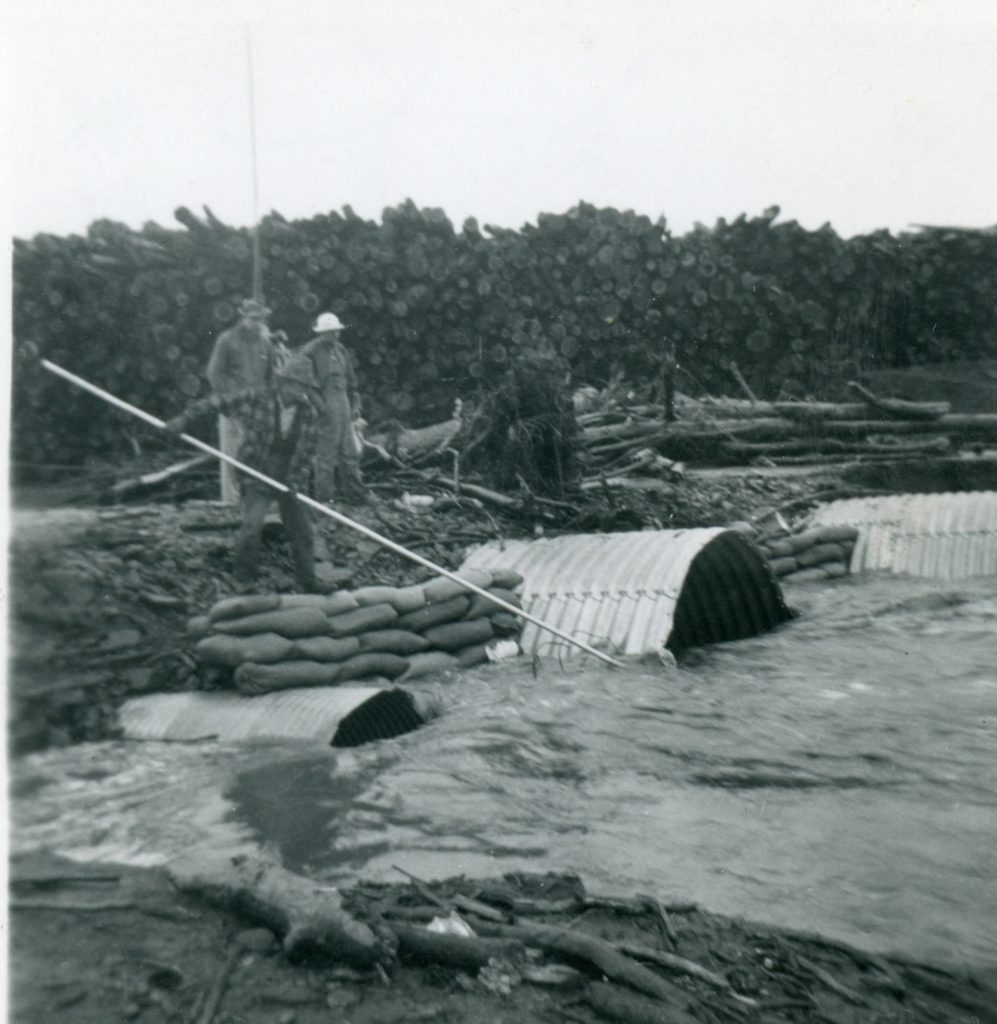
The City of Susanville, even before it became a municipality, always sought ways to alert the residents of a disaster. In the late 1800s, the most effective means was the ringing of the bell at the Methodist Church. Fast forward to January 19, 1938 at a special meeting of the City Council to devise a new plan when disaster strikes, as what had recently happened with a surprise flood. It was members of the Thomas Tucker Post of the American Legion who sought to address the issue. After some debate, it was decided that four long blasts from the city’s fire siren would be used to alert the citizens of a disaster.
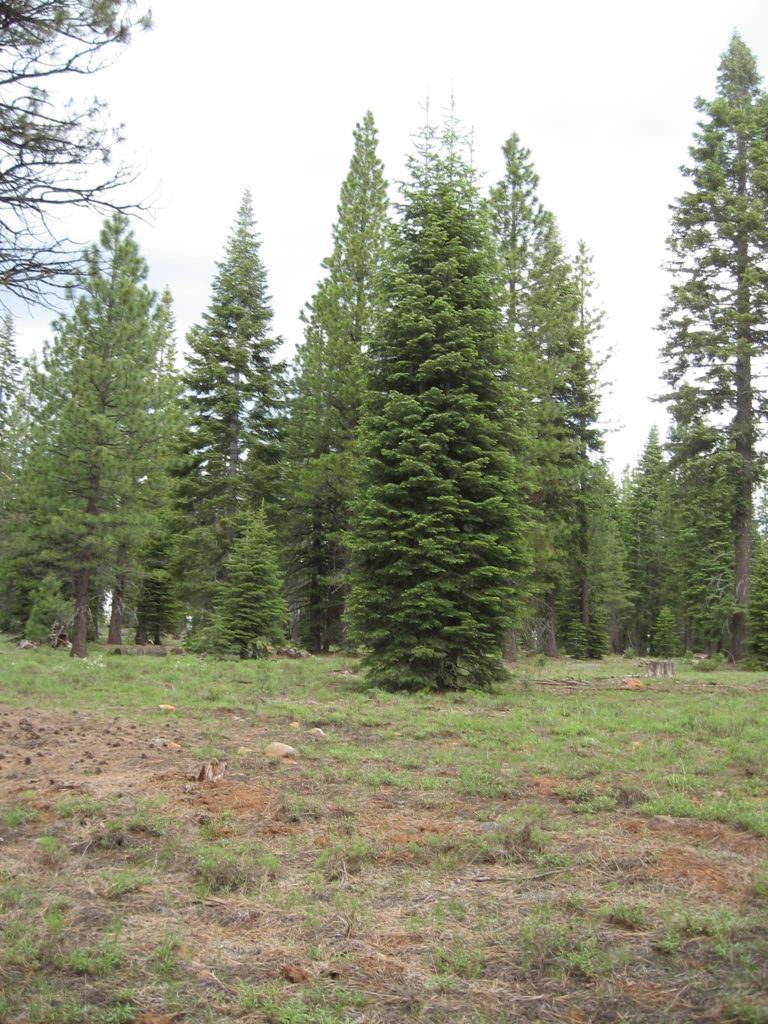
An interesting silver tip near McCoy Flat Reservoir, June 15, 2019
In December 1936, the Lassen National Forest issued a statement that 15,000 Christmas trees had been cut. The majority of the harvest were shipped to metropolitan areas for sell to “city dwellers.” The forest service stated, “The cutting serves to thin crowded stands and to stimulate growth of the remaining trees.” The most popular tree cut were “silver tip” fir.
Elk, with the Wingfield residence in the background. Courtesy of Alphozene Terrill
On May 23, 1910, Goldfield Nevada millionaire, George Wingfield purchased the 320-acre Clint DeForest ranch about eight miles south of Susanville. Besides an elaborate summer home, he created a wildlife preserve. During the fall of 1910, Wingfield had eighty acres fenced off for a elk and deer park, where he imported the elk from is not known. In 1914, he purchased four buffalo to add to his preserve. This was a popular local attraction to see the buffalo and elk. To round out the “exotic” species were numerous peacocks that roamed the grounds.
In July 1923, Wingfield sold the property to Lassen Lumber & Box Company. The buffalo were shipped to Wingfield Park in Reno, that were on display there for many years. Subsequent owners did not maintain the fenced enclosure, allowing the elk to escape the preserve. In the winter months the elk could be found foraging on nearby Bald Mountain and sightings of the elk were reported in Willow Creek Valley, north of Susanville. Of course, hunters delighted in this new game to pursue. It was sometime in the late 1930s or 1940s, when the last elk was killed.
Where the buffalo and elk roam at Wingfield Ranch. Courtesy of Lola L. Tanner
Since it is the holiday season and a portion of it focus on food, I thought some might find this story of interest.
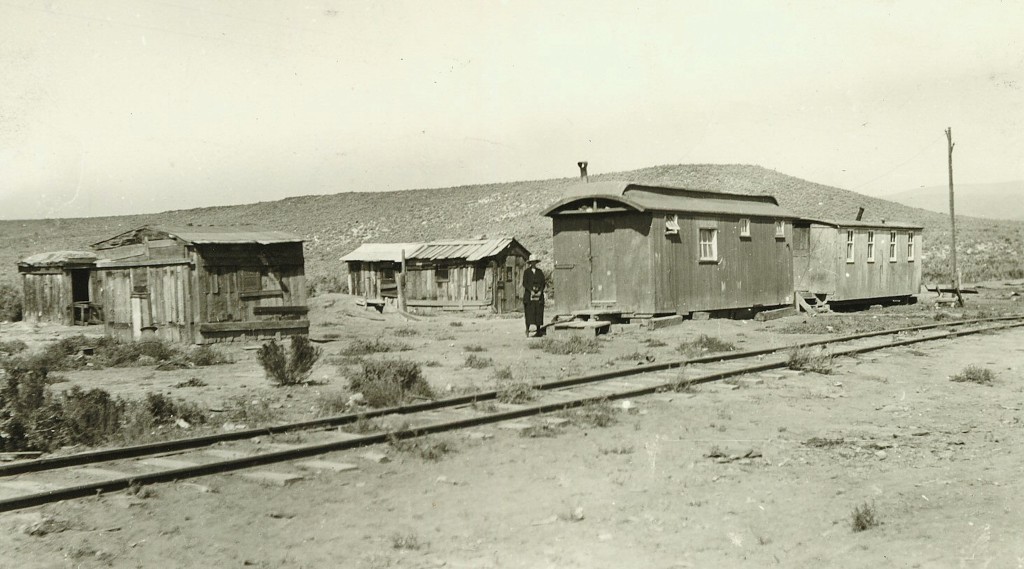
Now, let us venture to the tiny railroad outpost of Karlo in Secret Valley. In 1929, a scrappy ten-year-old by the name of Ed Allison arrived on the scene. Ed, in a sense, was an accidental visitor. He was originally living with his family in Sacramento. The family doctor thought he might have rheumatic fever and suggested Ed should live in a higher and drier climate. A family friend was Gilbert Menichetti who worked for the Southern Pacific Railroad at Karlo. It seemed an ideal location for Ed and off he went.
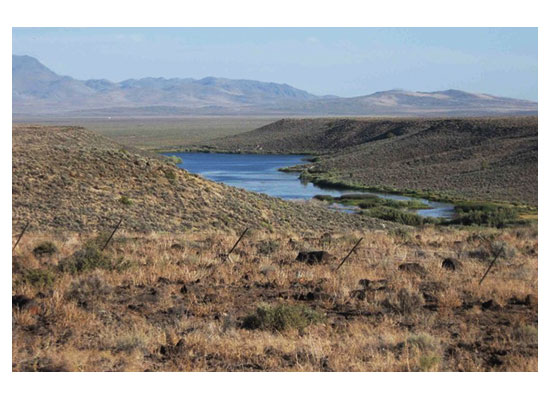
Upon his arrival the first order of business was to rent Ed a horse for him to attend the Secret Valley school several miles away. Of course this allowed him to explore the surroundings of his new home. For some reason, old time Secret Valley resident, Pete Biscar, of Biscar reservoir fame, took Ed under his tutelage. Biscar showed him many places, such as the petroglyphs in the canyon above the reservoir. Another feature that fascinated Ed was a particular lava cone. When one puts their ear down to it, one can hear a roaring noise—an underground river. Ed recalled that Gilbert Menichetti’s wife, Luella, was an excellent cook. Of course, Biscar was aware of that fact. Ed stated, “Biscar would bring sage hens that he shot in Secret Valley and bring them to her, because he knew she would process them to make ravioli. With that special ingredient, Biscar was always there at dinner time, for sage hen ravioli. He would be grinning ear to ear. They turned out to be very good. I don’t think really that sage hen ravioli was not that uncommon, but it was really good. At that time, when I was there the sage hen were plentiful.”
If you have just tuned in and are not familiar with the former railroad logging camp known as Camp Harvey, go to the front page of the website. There in the upper right hand corner is the search feature and just enter Camp Harvey and you will become well informed on the topic.
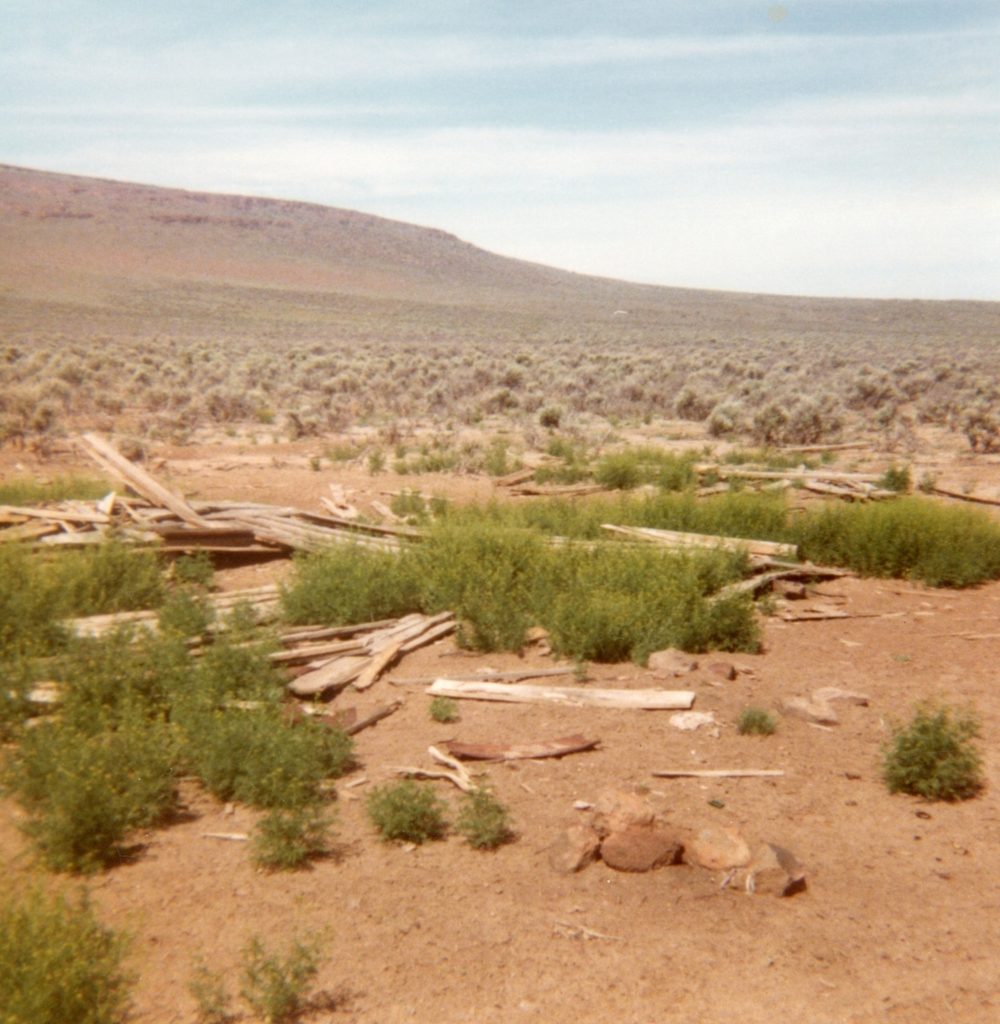
Camp Harvey site, July 11, 2019
Mother Nature has a way of reclaiming her territory and this is a perfect example, though there is still plenty of debris on the ground.
I happen to have a special fondness for Camp Harvey. My father, Leroy Purdy worked there and in essence launched his logging career. I spent many a summer working out in the woods logging which I enjoyed. However, dear old Dad made it clear that neither of his two sons would follow in his footsteps.
George Wrede’s old homestead at Bull Flat, June 1977
Initially, how the local wild horse population came to be was in the late 1800s, the settlers allowed their livestock, both cattle and horses, to roam freely during the winter months. Annual spring round ups, that became the origin of today’s rodeos were to capture and brand the animals. There were always some stray horses escaped from being caught, thus began the local wild horse population.
Back then, however, the population was kept to a minimal. This was due in part, like Standish resident, George Wrede and his fellow counterparts, who whether you want to call them a ranch hand, cowboy, buckaroo, or whatever, would find themselves out of work during the winter months. Wrede, a bachelor, like others, would file a desert homestead and make that his home for the winter. During the time spent there, he would capture wild horses, break and eventually sell them. The Marr Brothers of the Madeline Plains turned that into a fine art. In the 1930s, wild horses would be rounded up to be used in rodeos, which made for wild times. By 1940, the demand for horses dramatically decreased, thus allowing for the wild horse population to grow.
In 1978, the Sierra Club published The Wild Horse Gatherers. It is an illustrated story of BLM’s wild horse round-up locally.
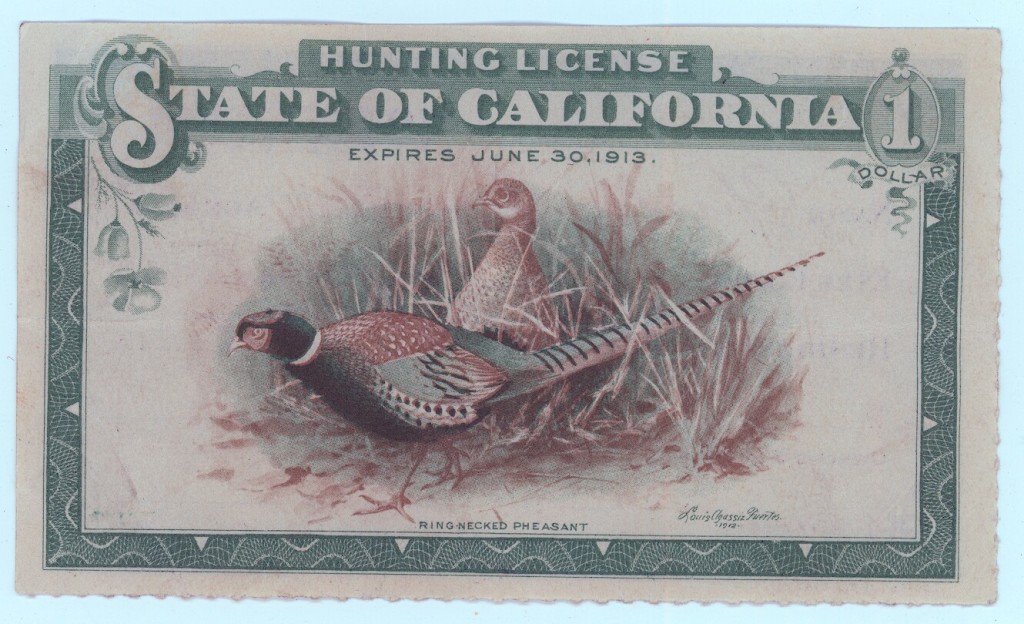
The month of November means many things to many people. For hunters it is beginning of pheasant season in Lassen County. It was not until the 1930s when there was a major push by the California Department of Fish & Game to introduce pheasants into the Honey Lake Valley. Conditions for the birds were exceptional as a considerable amount of grain was being grown. In 1934, the agency with the aid of the Lassen County Fish and Game Conservation League released 572 birds. It was repeated again in 1935 and 1936. During the late 1930s, Fish & Game paid ranchers to raise the birds. That practice ended in 1941 when Fish & Game purchased the Fleming Ranch and turned it into a wildlife refuge.
It should be noted, however, in 1929, the Westwood Rod & Gun Club had 800 pheasants planted on various ranches in the Honey Lake Valley.
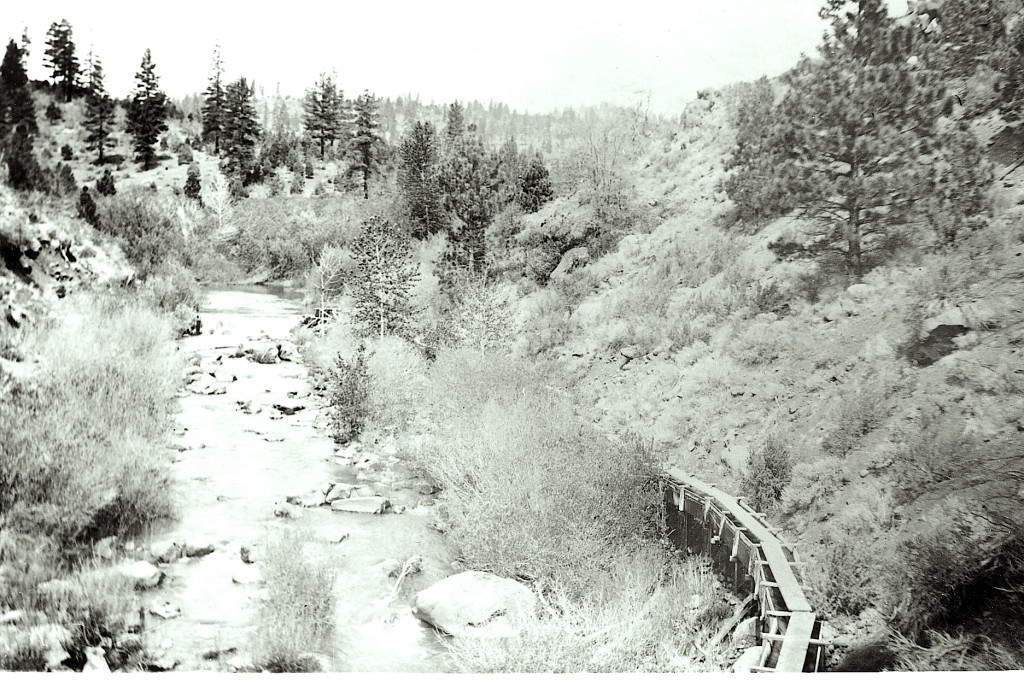
Susan River, 1899 just below Hobo Camp and prior to the construction of the railroad. Courtesy of Mary Dale Folsom
Hobo Camp is a popular recreational area on the Susan River, just a short distance west of Susanville. In 1913, it was referred to as the jungles or Jungletown when the Fernley & Lassen Railroad constructed its line through the area. It was a popular place for migrant workers to camp, and these homeless encampments back then were referred to as the “jungles.” For many years it was also known as Folsom Park, after M.O. Folsom, who owned the property at one time. In the 1950s, it was also referred to as Swedes Flat.
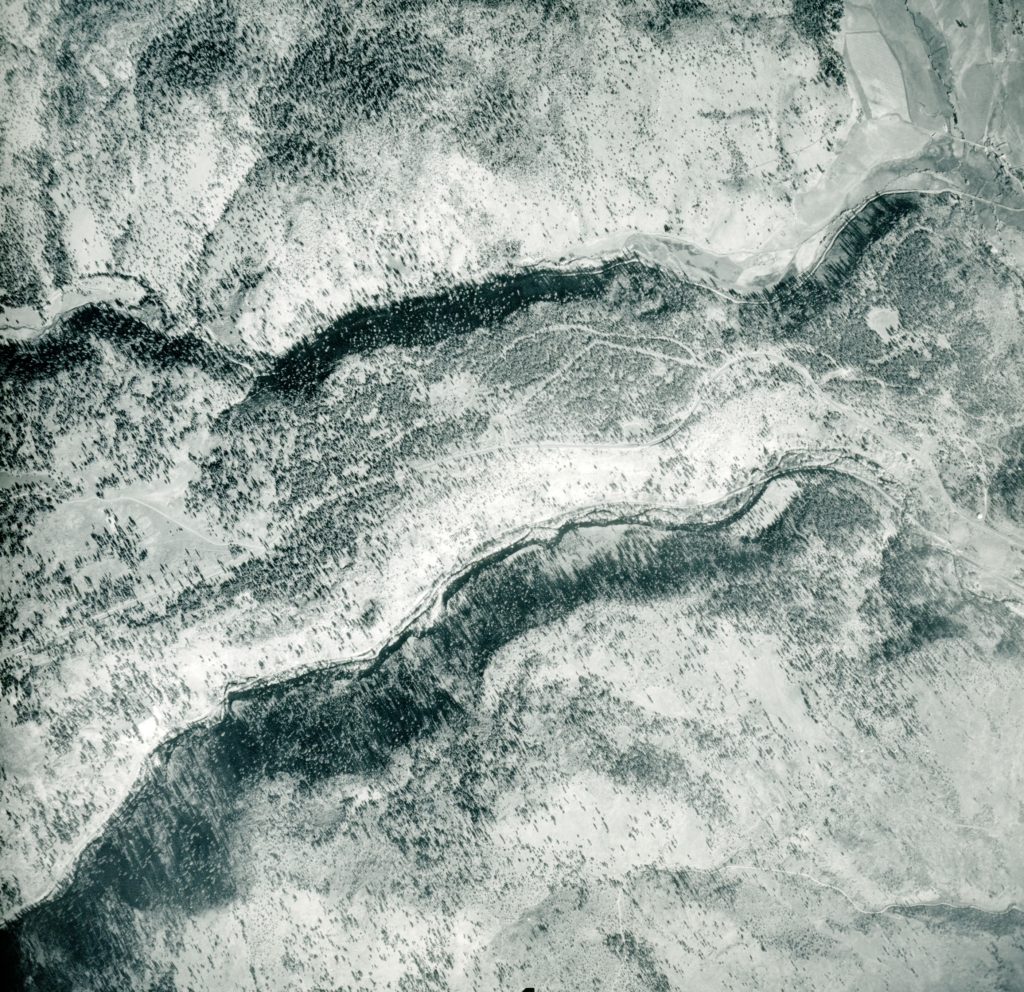
Piute Creek, upper, and Susan River, lower, just prior where the streams enter Susanville. Both canyon corridors had a railroad line at one time, though the Piute line was very brief. Personally, to me, it would have made better sense for the Southern Pacific Railroad to have selected to build its line to Westwood via Piute Creek. After all this would have eliminated the numerous trestles across the Susan River, plus two tunnels and would not had added any significant mileage increase.
Whatever the case may be, the two corridors today are popular with those who enjoy the scenery—whether by walking, running, biking, and horseback, or whatever means to explore nature.
Something from a different perspective. It is one of those items that you either recognize instantly or do not. These features do enhance the quality of life in the region.