Ever since the 1850s when Anglo settlement began in the Lassen region there would be reports from time to time of unusual noises being emitted, yet everyone pondered what it was and where it was coming from. Over time, many deduced it had come from the Lassen Peak region. An interesting account of such was reported on December 8, 1883 by the Susanville correspondent to the Reno Evening Gazette newspaper. The following is the published account of the same:
“For nearly a week a number of woodcutters some three miles west of town, have heard loud, heavy rumblings like distant thunder, or more properly like the firing of very heavy ordinance at a long distance away. The sound comes from a westerly direction, and as there is no mining or even an inhabitant for nearly a hundred miles in the direction from which the sounds proceeds, there seems to be no small amount of mystery connected with them. The sounds are heard at all times of the day and night and when not a cloud can be seen. Your correspondent has heard them in company of several others, every day for the past week and the only aparently possible solution of the mystery is, that the vast forces that formed Lassen Peak’s cinder cone and the other volcanoes to the west of here, and which have lain dormant for centuries, are once more coming to life and activity again.”
Spread the word, and encourage a friend to subscribe.
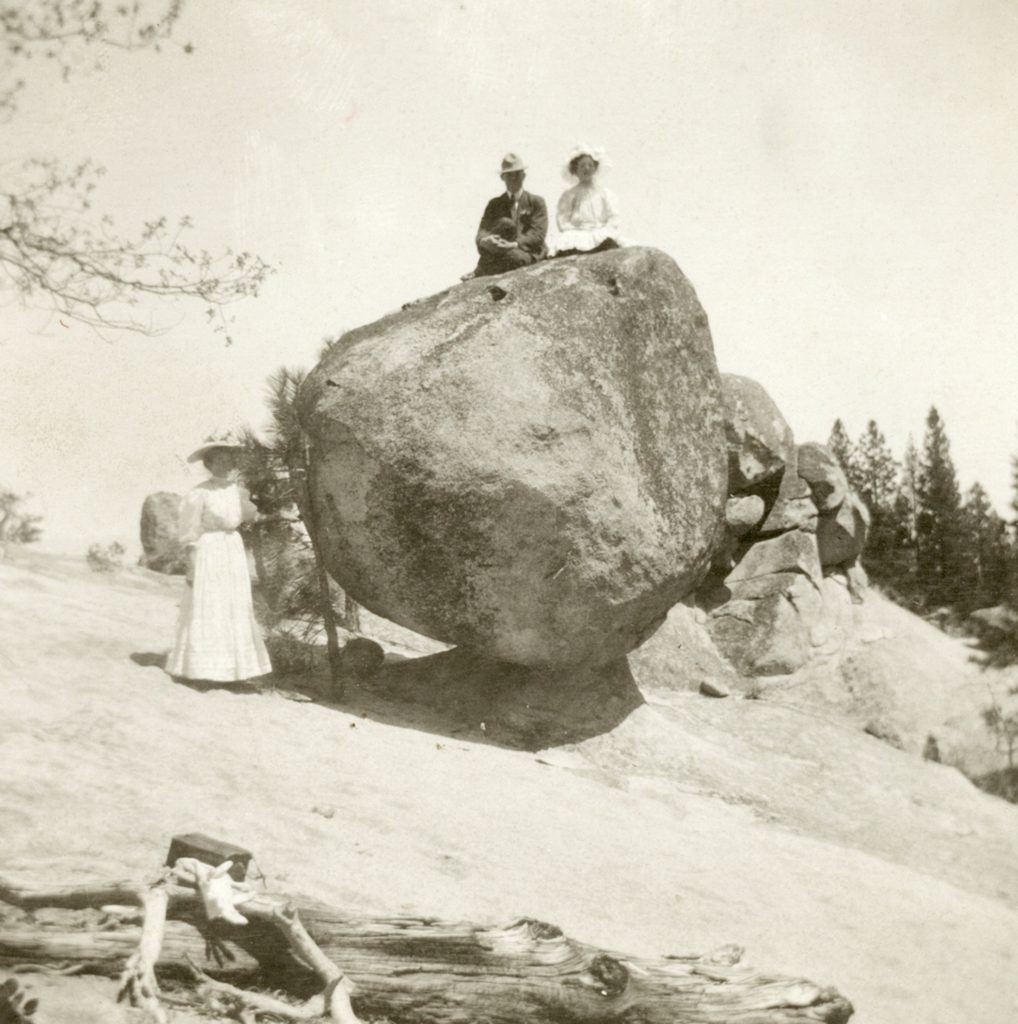
Balancing Rock, circa 1905. Courtesy of Marge C. Foster
There are many interesting natural formations that can be found throughout the region. After all one only needs to take into consideration that near Susanville four major geographical land masses merge—Sierra Nevada Mountains, Cascade Range, Great Basin and the Modoc Plateau.
Some features are well known, while many are not. Balancing Rock located near the summit of Janesville Grade was a popular spot in the early 1900s to have one’s photograph taken. During the summer months then, Janesville Grade saw a lot of traffic with residents of the Honey Lake Valley headed towards the higher elevations to relax and get away the summer’s heat.
Construction stalled on the gas station when Lassen Park Superintendent L.W. Collins paid Supan a visit. Collins was under the impression that Supan’s claim was no longer valid as no formal assessment work had been done, thus the property reverted to the park. Supan agreed to suspend construction until the matter was resolved.
It would be a long convoluted affair. The matter dragged on with no decision in favor or against. On June 5, 1931, park officials took matters into its own hands and filed a condemnation suit in an effort to resolve the matter. As required by law, the park placed $31,000 in escrow, the amount it deemed was the value Yellow Ochre Mine.
With no end in sight, the Supans demanded their day in court. A three day hearing was held in January 1933. In the ruling concessions were made for both sides. The southern portion of the Supan claim of sixty acres was declared non-mineral in character and the property adjudged to the park. The remaining 100 acres was deemed valid and awarded to the Supans.
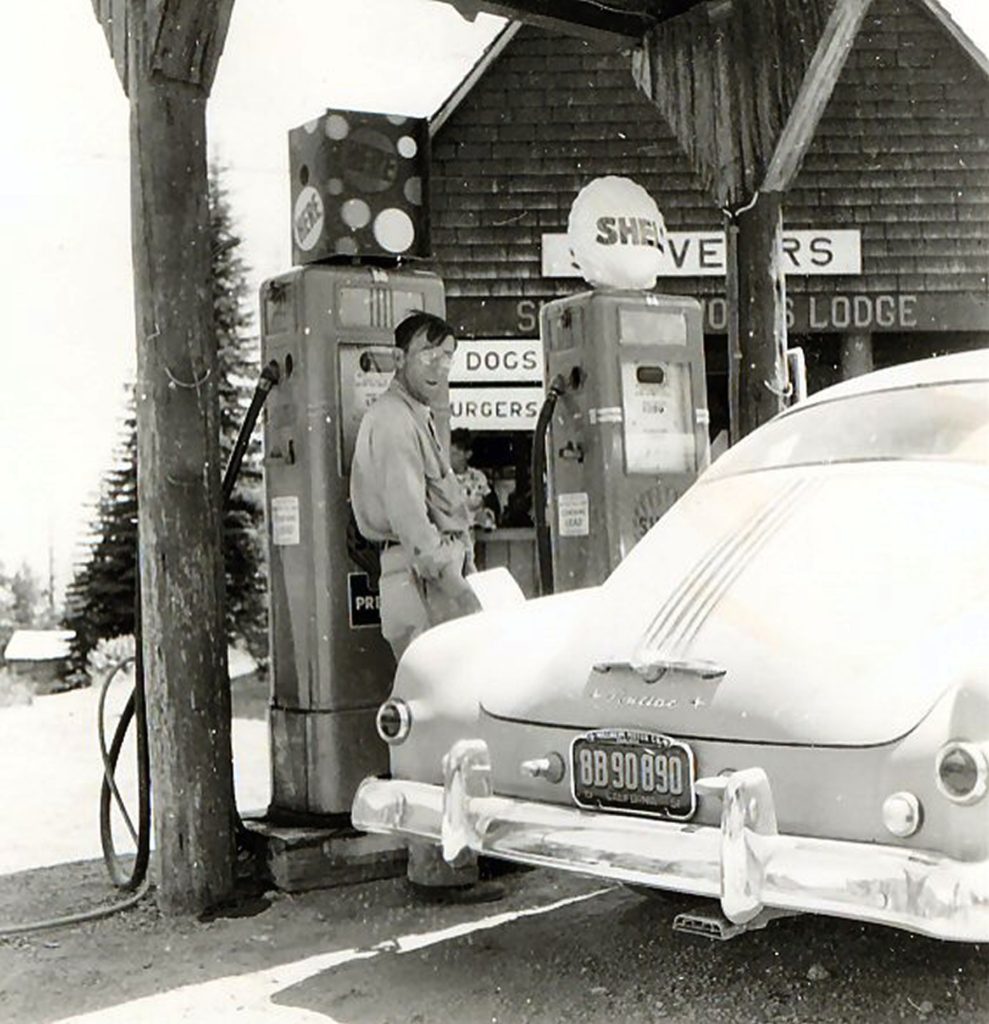
There were two major developments in 1941. First, Milton’s son, Adlai built a gas station and “lodge.” The lodge consisted of a store, that sold tourist related items such as camera film, postcards, and souvenirs, along with a lunch counter. That fall, Milton passed away leaving a wife and ten children. This was not a good omen for the park, who would have to deal with more people to negotiate with, and improvements increased the value of the property. The park was powerless with no funds to purchase the Supan property.
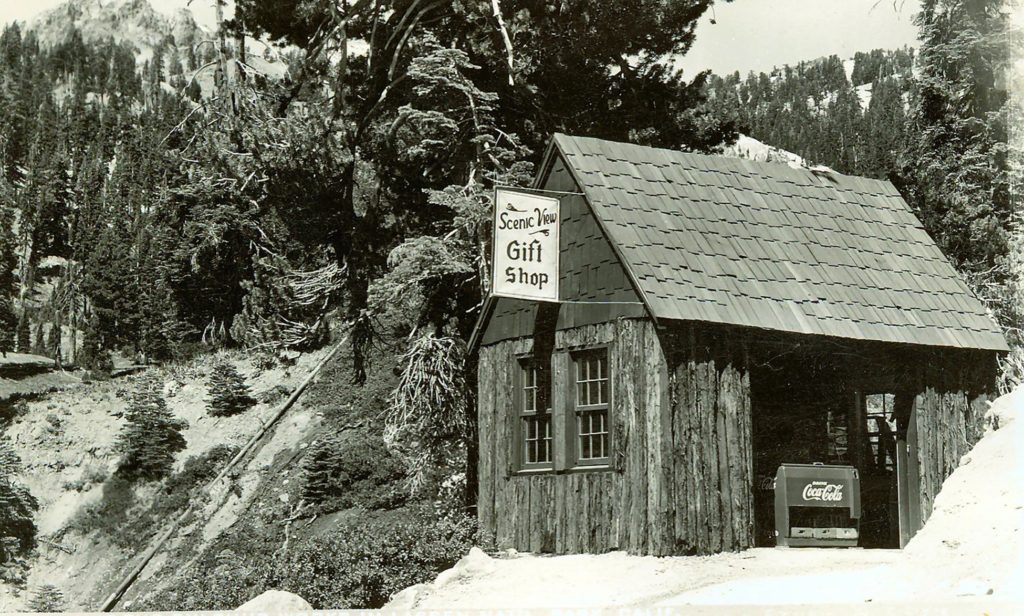
Scenic View Gift Shop—Courtesy of Don Supan
After World War II, Adlai expanded his operations to keep up with visitors needs at the park. His two sons, Don and Ed, built a small cabin dubbed the Scenic View Gift Shop. By this time, Adlai’s sister, Ada Herrick made her presence with a bathhouse, cabin rentals and a restaurant known as Sulfur Works Inn. In 1947, Adlai built a crude rope tow for winter skiing.
All of this development alarmed park officials. In 1949, the park sent letters to thirty-five Supan heirs with an offer to purchase Sulfur Works for $20,000. The family was divided, some willing to sell and others opposed. They were in complete agreement the offer was too low. It should be noted Milton Supan’s original offer was $100,000.
Discussions between the park and the heirs continued throughout most of the year. About the only thing that resulted in these talks that the value kept increasing to what the park considered “gold mine proportions”. In December 1949 with no solution on the horizon the park once again resorted to filing condemnation of the Sulfur Works and deposited $31,00 in escrow, their appraised value. The Supans immediately challenged that figure and placed the value at $525,500.
In 1952, after lengthy litigation, the court awarded the property to the park and Supans $48,950 in compensation. The park was confronted what to do with the improvements there. It was finally decided to demolish the thirteen buildings that consisted of the Sulfur Works Lodge and Inn.
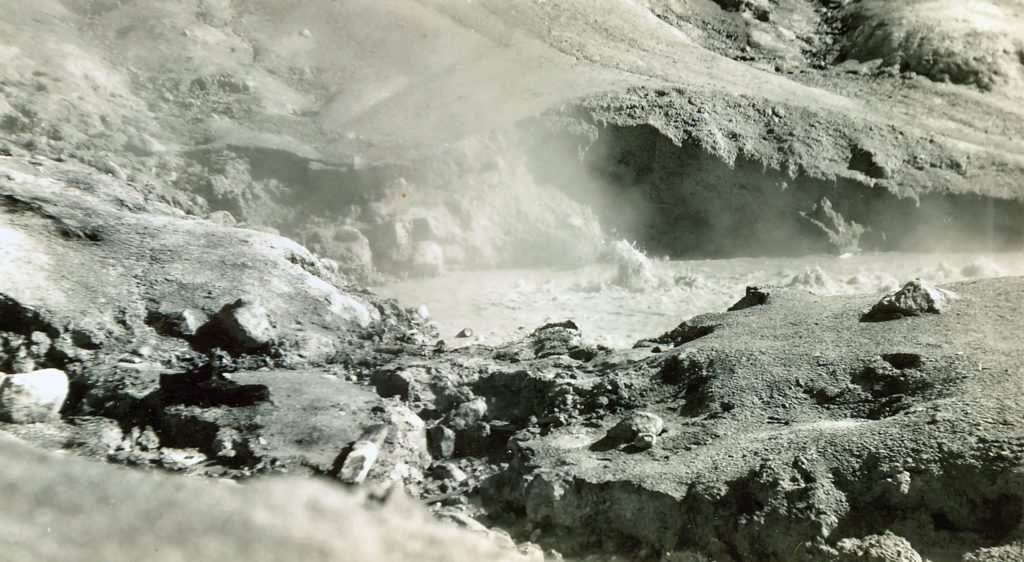
Lassen Volcanic National Park has many fascinating hydro-thermal features such as Bumpass Hell and the Sulphur Works, originally known as Supan.
On June 16, 1865, Dr. Mathis Supan, a resident of Red Bluff filed a mining claim on Sulfur Creek, two miles from Bumpass Hell. Supan spent the next twenty years during the summer months developing the property.
At the Sulphur Works he built steam bath houses for the public’s use. He also developed his own line of patent medicines that were readily available in Red Bluff—Supan’s Colic Drops, Supan’s Sour Powder, and Supan’s Rheumatic Remedy, to name a few. He even marketed his own line of bottled water from the soda springs on his claim.
1935 signage for the sulfur works
A complicated family life caused Supan in 1887 to stop working at the Sulfur works. No one in his family had any interest to carry on with his work. By the turn of the century, his son, Milton became frequent visitor there during the summer months. He utilized the surrounding property for livestock grazing.
In 1916, witnessed the creation of Lassen Volcanic National Park, though inside the park boundaries were various private properties—the Supans being one. This was a problematic issue for park officials for decades to come. Yet, when the park was created, in reality it was by name only, for funding was almost non-existent. For Milton Supan he was ambivalent about the new park that surrounded his holdings. Supan, however, re-filed the Yellow Ocrhe mining claim there, which was his father’s original claim, just a different name. It would become a contentious issue with the park.
By the mid-1920s, after a strong lobbying effort, a stingy Congress began to fund Lassen Park. One of the priorities was the so-called loop highway. The revelation caught the attention of Supan. In 1927 he began to construct a gas station there, which alarmed park officials. It was just the beginning of a long feud.
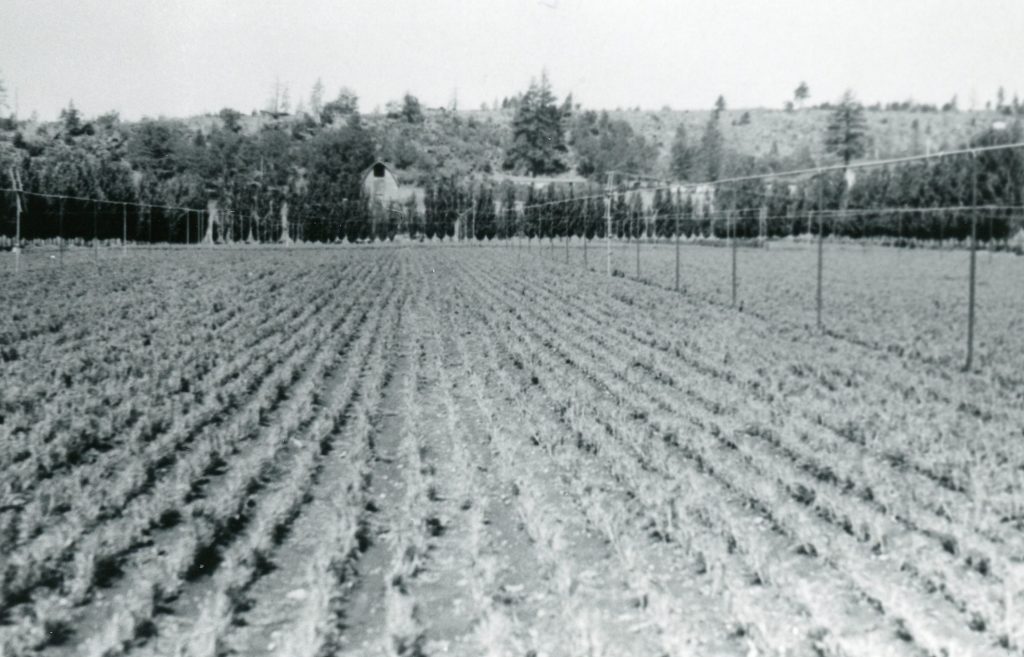
In 1928, the Lassen National Forest Service leased seven acres from Lassen County on Richmond Road for a tree nursery, named the Susanville Nursery. It was done under the direction William G. Durbin, the Lassen National Forest Supervisor. In 1932, C.W. Corson, a recent graduate of the University of Minnesota has hired to be in charge of it and was so for many years. Anyhow, the initial goal was to raise 750,000 of pine seedlings over a five year period. In addition, experiments were done with cedar, fir and sequoia.
The first planting from trees from the nursery was done in 1930 to assist the reforestation of the burn on Antelope Mountain west of Eagle Lake. In addition, the nursery provided seedlings to the various national forests throughout California. It was unique that it was only large Forest Service nursery in California. In 1936, after the establishment of Lassen College’s Forestry program many of those students worked at the nursery.
In 1938, after the passing of William Durbin, the nursery was renamed to Durbin in his honor. Durbin served as the Supervisor of the Lassen National Forest from 1922-32.
Unfortunately, I do not at this time, have a date when the nursery ceased operation, but it appears sometime in the early 1950s. The property is best known today as Diamond View School.
Harvey Valley is located in the north central part of Lassen County about half way between McCoy Flat Reservoir, to the south, and Big Valley to the north. It was so named after various members of the Harvey family—George, James, Mary, Nettie, Samuel, Silas and Thomas—who were residents of Adin and Hayden Hill and in 1906 filed timberland locations which a mountain and valley were named for after them.
One of the very first ranger stations on the Lassen National Forest was located there. R.H. Abbey, the first ranger to occupy the station wrote in his diary: “This station house was a cheaply constructed 1 large room house, 14 x 16, with 2 windows. It was built out of thin shiplap lumber with roof of same material. It was equipped with a very small cook stove and homemade bunk for a bedstead.”
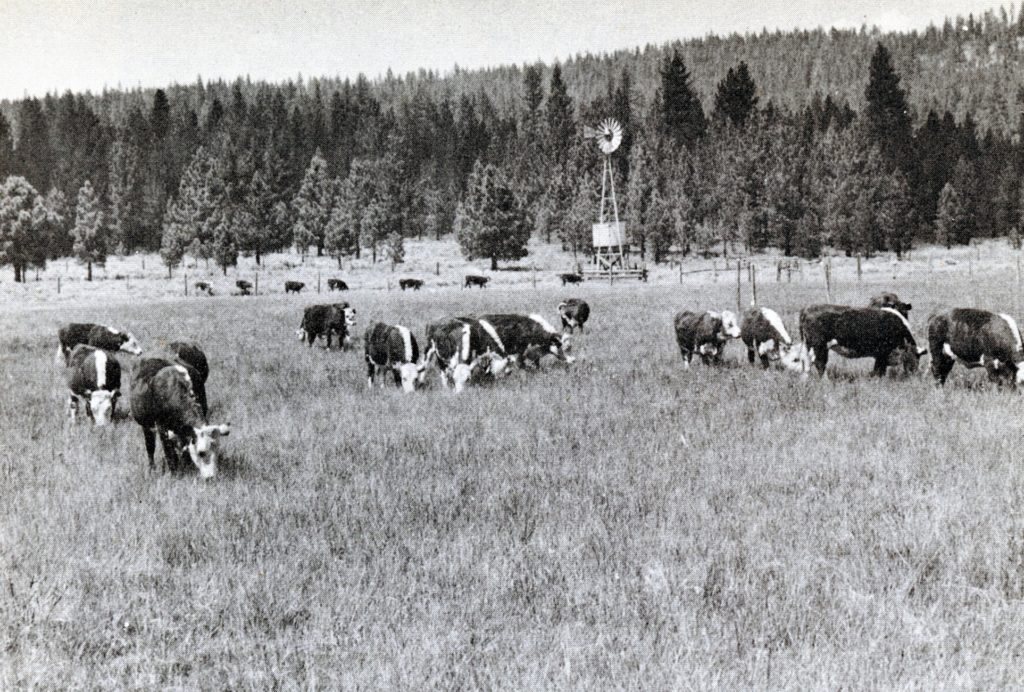
In 1936, Harvey Valley became a focal point in a government study to improve and maintain grazing capacity. Noted range scientist, August L. Hormey, conducted his experiments on livestock grazing. This was where the rest-rotation grazing system was developed.
Yet, there is more to the story of this remote locale. In 1948, the Lassen National Forest and California Department of Corrections established Inmate Camp No. 21. The camp consisted of 58 inmates from Folsom Prison who were supervised by ten forest service personnel and four state guards. The inmates were trained as a “Hot Shot” firefighting crew. When not fighting fires, the inmates worked on various conservation projects from soil erosion to improving timber stands. It operated for sixteen years.
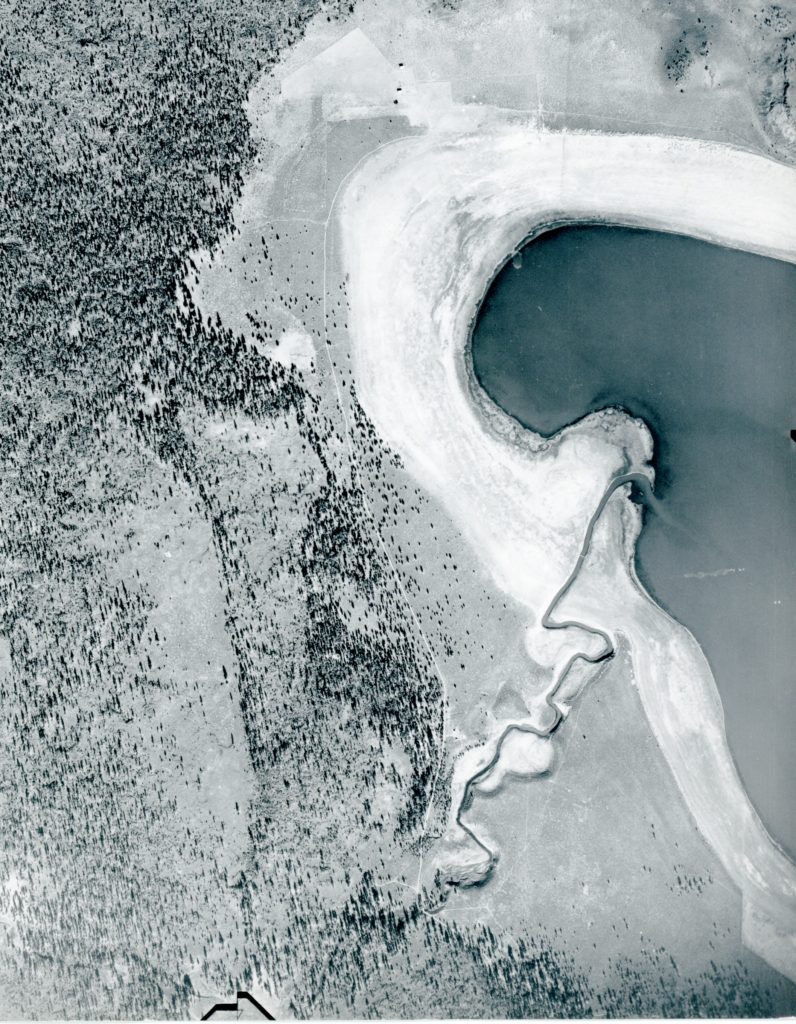
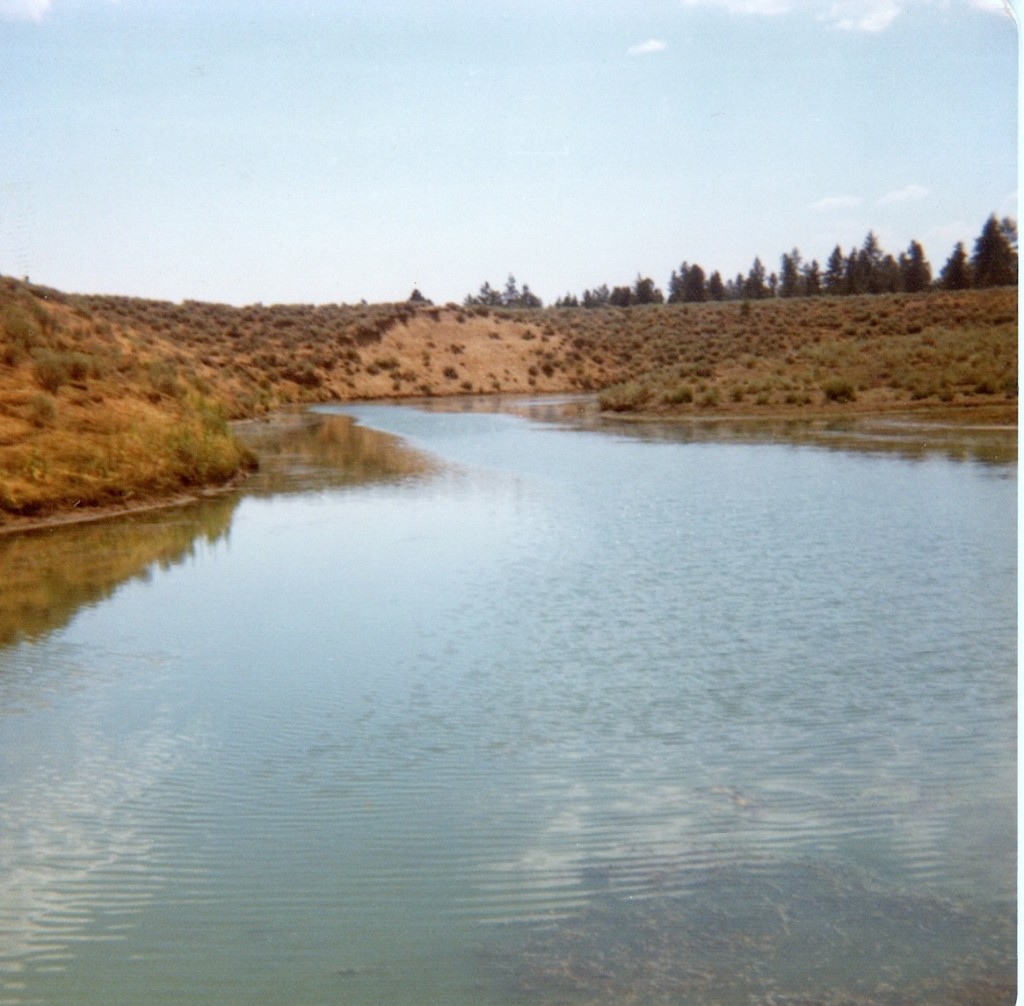
It is that time of year when Pine Creek usually starts flowing again into Eagle Lake, but with this dry winter, it may not be the case. While many people see the creek at the bridge before entering Spaulding Tract or at the nearby fish trap, it still has a way to go before it reaches the lake. Thus, today’s featured photograph provides a good illustration of that fact.
Another excerpt from Harold Gilliam’s Sierra Shangri-la about Lassen County.
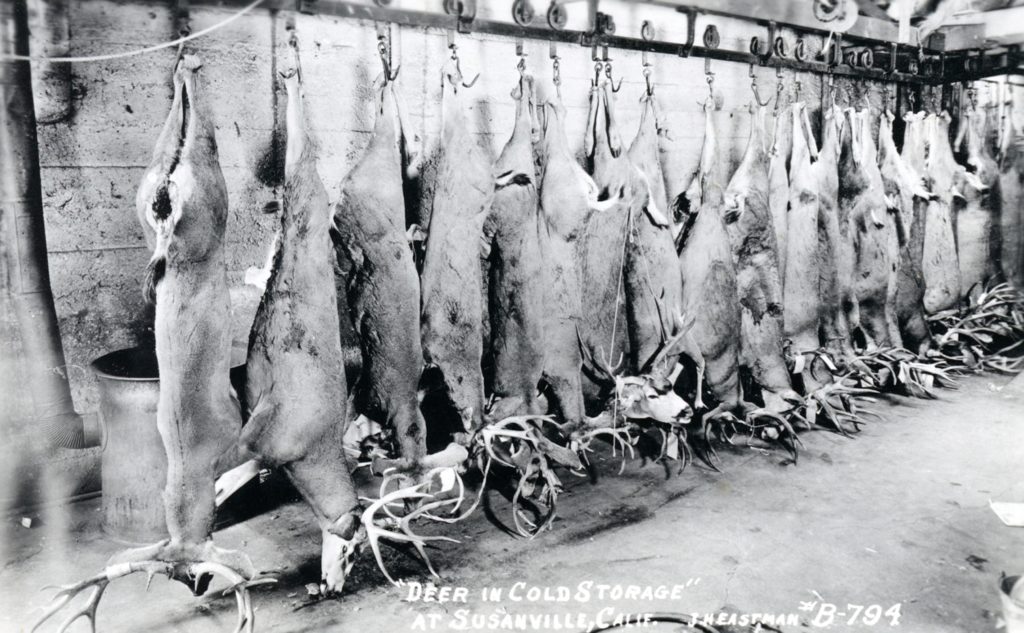
“The State Fish and Game Commission last year [1951] set off a major explosion by declaring a 9-day open season on does in the Doyle herd of some 20,000 mule deer which migrates down from the mountains and winters in the Doyle-Milford area below Honey Lake. The purpose was to hold down the surplus deer population which the commission said was outgrowing its own food supply and diminishing the natural pasture for cattle and sheep.
“A vociferous protest immediately arose from Northern California hunters’ organizations. They denied that there was any ‘surplus’ of deer and condemned the whole principle of shooting does which violates the instinctive code of many California hunter who regards it something akin to shooting women and children.
“Farm groups supported the Fish and Game Commission. Hearings were held in Susanville and protests were made to Governor Earl Warren.
“‘I shot my first doe last season,’ said one regretful hunter. ‘When I heard that poor doe let out a bleat of pain I knew I could never do it again.’ The man at the bar in the Pioneer felt the same way. ‘It’s all a few big cattle ranchers down there,’ he fumed, ‘that put the pressure on to get this doe shoot put through. They’re the ones behind it. They’d as soon get rid of all of the deer. I never violate a law, but if they’re gonna start shooting does, if I get hungry I’d soon shoot a calf or two.”
“The doe-shoot controversy may die out this year if the severe weather conditions kill off enough deer to make the doe shoot unnecessary in the opinion of the Fish and Game Commission.”
The following is an interesting tid-bit that I happened to come across. This is the earliest known round up of wild horses by a government entity that I have come across. In November 1929 the forest service conducted a roundup in the Dixie Valley area of northwest of Lassen County. The following is the statement they issued:
“Wild horses and scrubs have become a nuisance on the national forests. With the shortage of feed, due to the unusually dry season, there is a serious shortage of forage and these animals are taking a large amount that right fully belongs to the stock entitled to grazing privileges in the forest.
“The forest service, in cooperation with the C.W. Clarke ranch in Dixie Valley, recently staged a roundup in which about 140 of these scrub animals were corralled and sold to the buyers of chicken feed.
“While these horses are termed as “wild horses,” in reality they are scrubs that have escaped from herds ranging the forest and from Indian owners. They are of no value, except as chicken feed, and the cost of catching them often amounts to far more than can be realized for them for that purpose.
“When the horses are rounded up those bearing brands are marked and again turned loose. Indians and others are notified and if they can establish ownership are allowed to take their property upon a fee of catching them.”
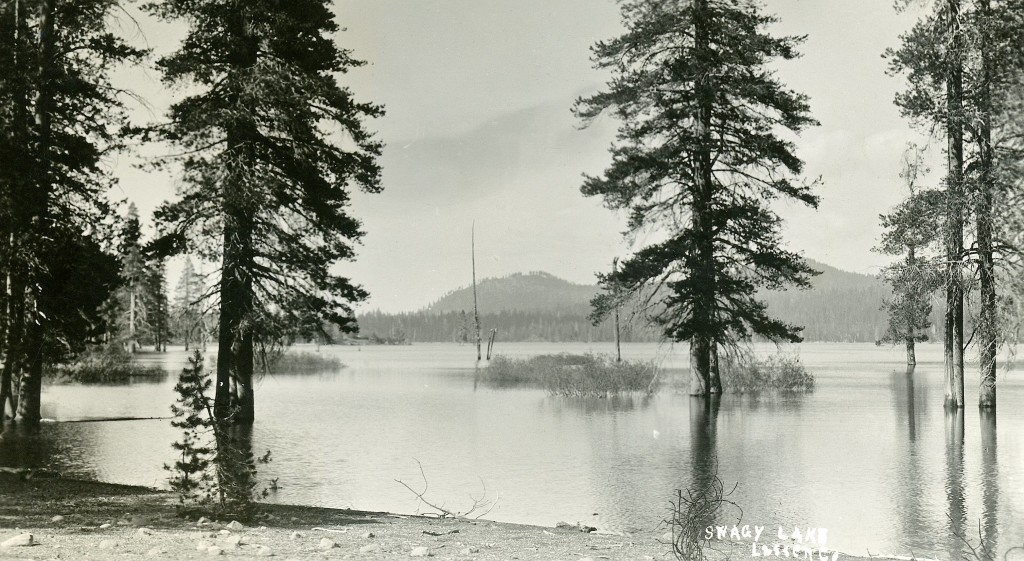
Snag Lake located in the eastern portion of Lassen Volcanic National Park, was originally called Snaggy Lake, and over the years its named shortened to Snag. The lake was formed 200 years ago from the lava flows that created the Fantastic Lava Beds. Trapped in the lake, after it was created, were a number of pine trees that died and are commonly referred to as “snags.”
The lake is only accessed by hiking or horseback. However, those who make the trek agree its worth it. I made the trek in the early 1980s, traversing most of the eastern half of the park.