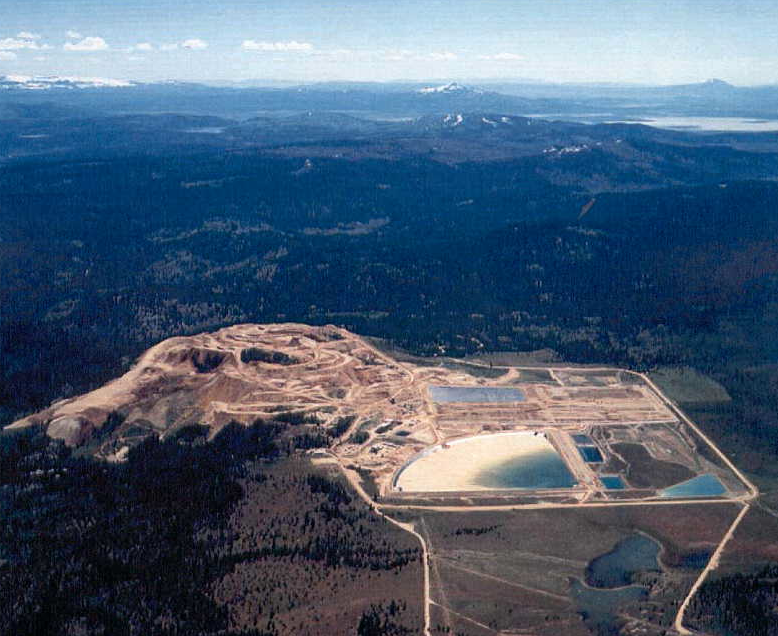
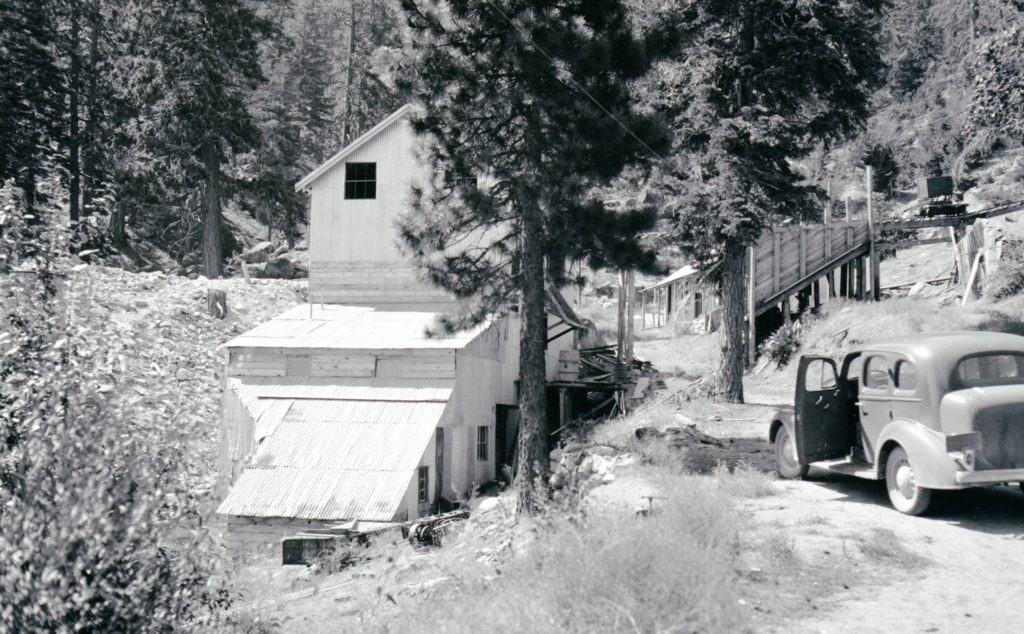
In 1991, Amax Gold Inc. proposed to Lassen County officials their intention to again start up the mining activity at Hayden Hill. It was their intention to literally remove the hill and to extract gold and silver with a cyanide leach ponds. Amax formed a subsidiary company, Lassen Gold Mining, to undertake the enterprise. Lassen Gold carried out the mining operations on the Hill from 1992 to 1997. According to Company figures, approximately 510,000 ounces of gold and 1.4 million ounces were extracted.
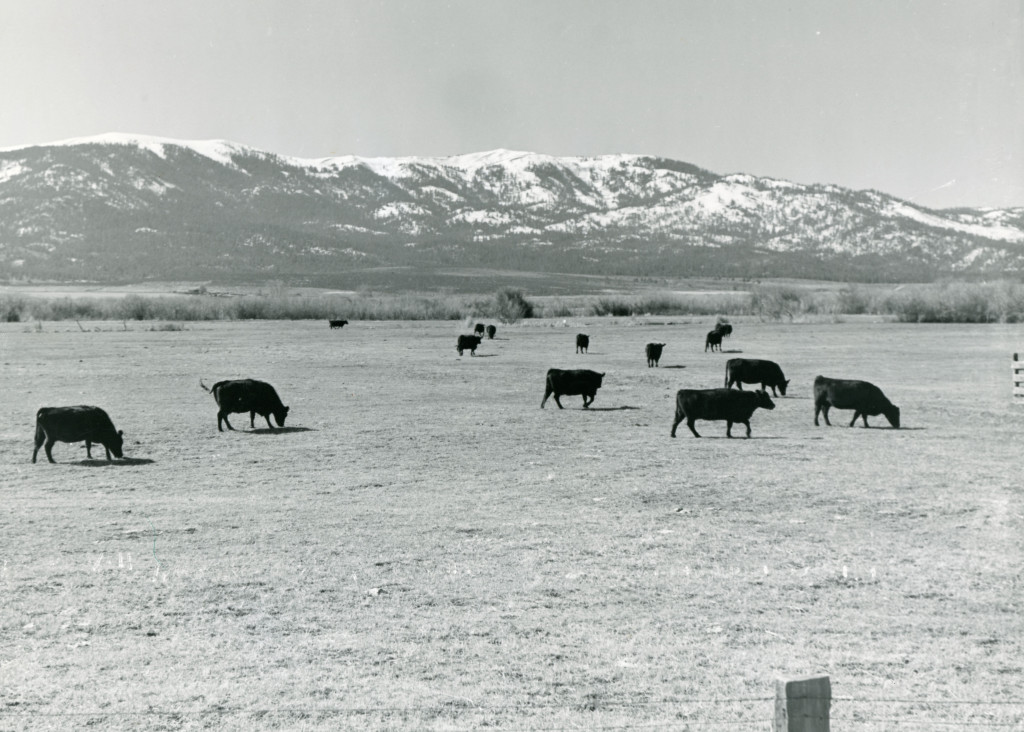
Diamond Mountain, 1950s.I would be derelict in my duties if I did not pass a long a bit of folklore to the naming of the mountain. One story that circulated for a time that diamonds were discovered near the headwaters of Lights Creek. A short-lived diamond mine was developed, but the stone was so poor in quality that it was quickly abandoned.
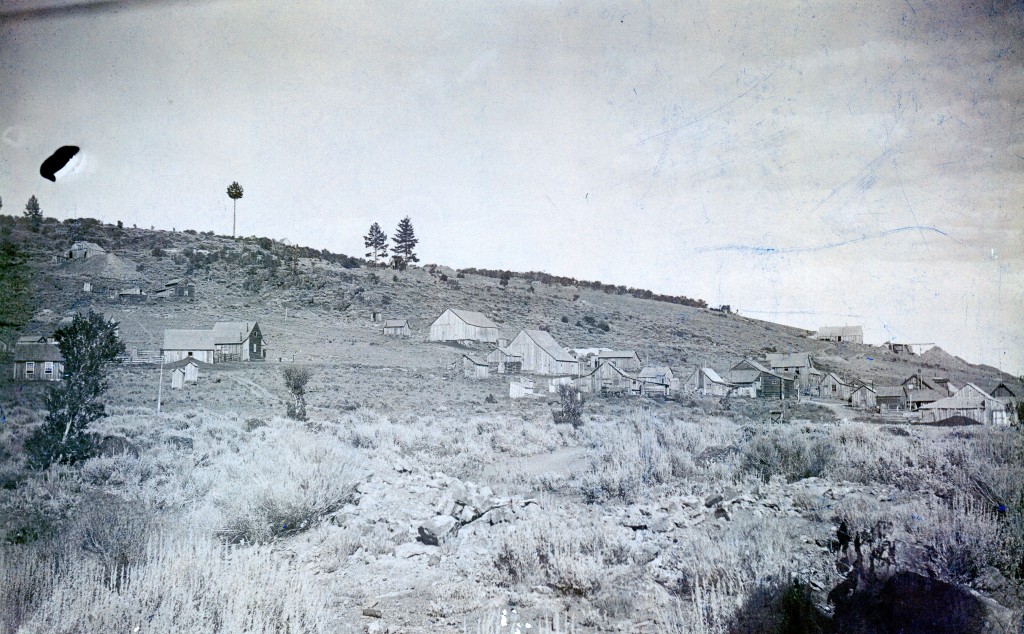
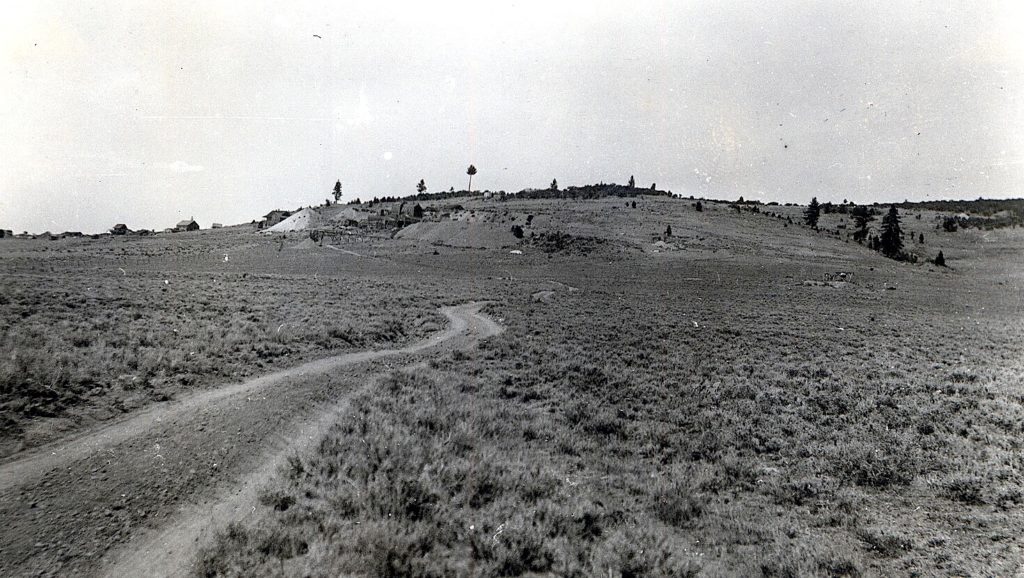
Hayden Hill, 1894Hayden Hill is Lassen County’s best known mining community. However, and especially in the late 1800s, there were numerous mining camps surrounding the hill. One of these was Lewiston. It was a very short-lived mining camp in 1884, that Joseph W. Hayden named after his partner, Seneca Lewis. Of note, both Hayden and Lewis are buried in the Hayden Hill Cemetery.
Mott’s MineMy grandmother Purdy was an avid rock hound, so I experienced some interesting outings as a child. One of these adventures was to the Apache tears mine in the Smoke Creek Desert. The mine dates back to World War I when Smoke Creek resident Gordon Mott while exploring a small canyon came across a mica deposit. He developed a tunnel and a vertical shaft hoping that he would find gold. What he did find was small pieces of obsidian embedded in the soft mica, sometimes referred to as Apache tears or Black Diamonds.
Desert prospectors.The heavy winter of 1906-07 brought tremendous flooding to the region. One of the side effects was the erosion exposed a variety of minerals, especially that of gold. Thus, folks were finding gold in places they never thought of like Antelope Grade and Bass Hill. It was the discovery of gold on Skedaddle Mountain that caused quite a stir. So many mining claims were filed on the mountain that it necessary to create the Hot Springs Mining District.
Of what was one of the more unusual uses of Eagle Lake water was a proposal to use that resource in the mining operations at Hayden Hill, located some twenty-five miles north of the lake.
During the 1920s and 1930s, both the mining activity and the population at Hayden Hill declined. In 1934, Stratton & Stratton of Spokane, Washington consolidated the mine ownership. They had high hopes to revive the Hill. One of the main drawbacks that Hayden Hill suffered was the lack of water for milling. In 1938, Stratton & Stratton proposed to pipe water from Eagle Lake, at a rate of 2,500 gallons per minute. This scheme never came to fruition.
Hayden Hill’s first mine, was named the Providence. In the early 1870s, Hayden Hill was sometimes referred to as Providence. The following whimsical account is from the Mountain Tribune of Bieber, April 22, 1882 that explains how the name came to be: “While at Hayden Hill this week in search of information, we inquired of Ben Bradshaw which was the first claim located on the Hill and he informed me that the Providence was the oldest claim. Being curious to know why it was so named he said it was located and owned by ‘seven preachers and two white men.’ We record this fact for the benefit of the future historiographer of the Hill.”
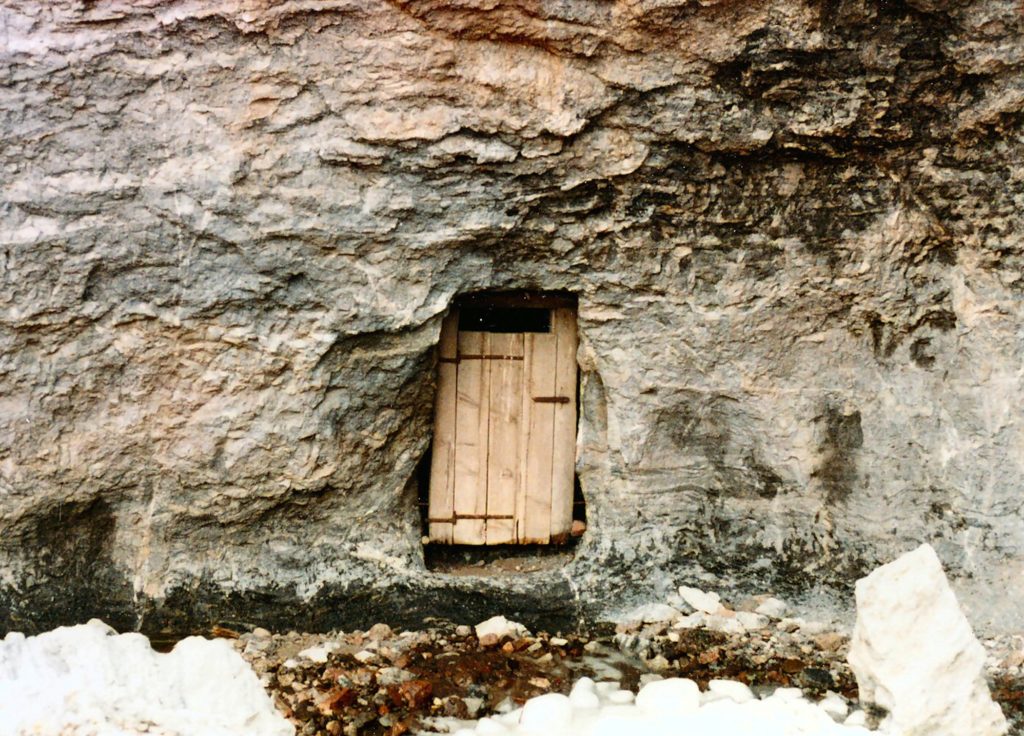
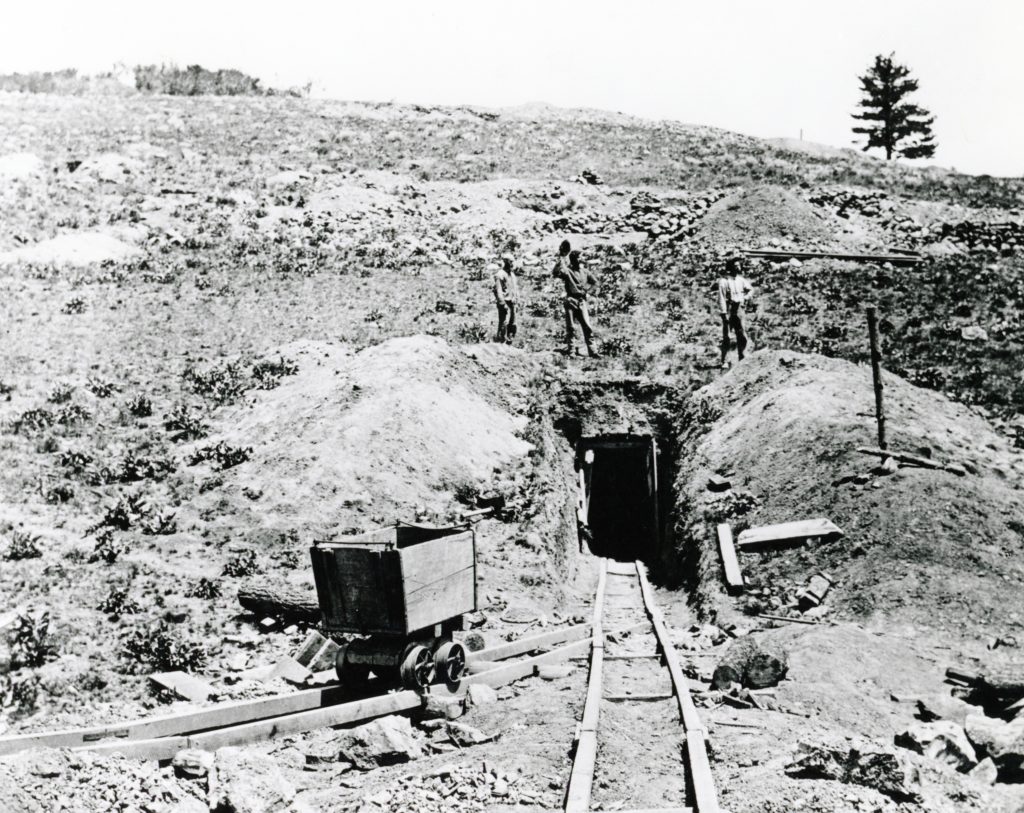
Golden Eagle Mine,Hayden Hill circa 1890. Courtesy of Donna Howell
This is an interesting photograph in more ways than one. Alexander Howell, was a photographer. For a brief time in the 1880s, his brother Oscar Howell, was a one-time renter of Papoose Meadows at Eagle Lake.
In 1979, I obtained a copy of the above print from Alexander Howell’s granddaughter. She thought it was tunnel at Eagle Lake. Well, it is obvious that indeed it is a tunnel, just not the original tunnel at Eagle Lake. It is actually, the tunnel entrance of the Golden Eagle Mine at Hayden Hill, the largest and most productive mine there. In the 1990s, Lassen Gold Mining revived operations at Hayden Hill, which most of the place was obliterated. However, as a Lassen County Planning Commissioner, I made an inspection of Hayden Hill, as part of the reclamation process. What caught my attention, probably no one else is aware, amazingly the tunnel entrance is still intact.
There will be a feature article on Hayden Hill in the Northern California Traveler March/April issue.
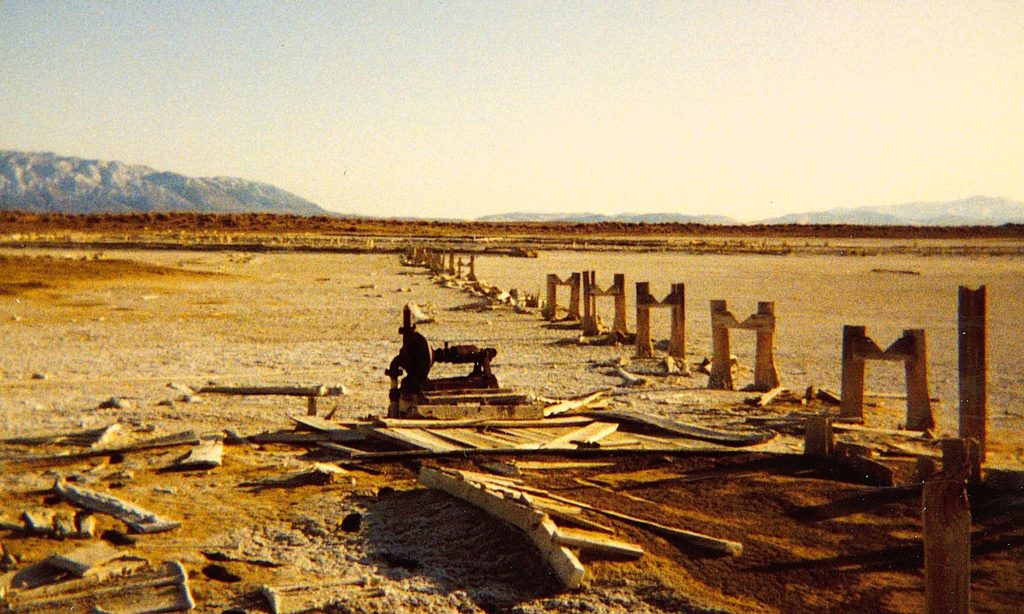
One of the most interesting enterprises around the region was the Buffalo Salt Works in the Smoke Creek Desert. It is so easy today to take many things for granted, but back in the early days of settlement of the mid-1850s, those hardy souls did not have that luxury.
First of all, it boggles my mind, how B.F. “Frank” Murphy and Marion “Comanche George” Lawrence discovered and claimed the salt marsh in the summer of 1864. For most of its existence Murphy was the main operator of the Buffalo Salt Works. Two types of salt was produced. The first being table salt that 99.8% pure. A lesser grade was sold to mining operators with a smelting plant that utilized the salt. The salt was obtained from wells, the brine pumped into vats, and left to dry. In 1888, it was reported that 200 tons of salt was produced annually. Continue reading Buffalo Meadows Salt Works→
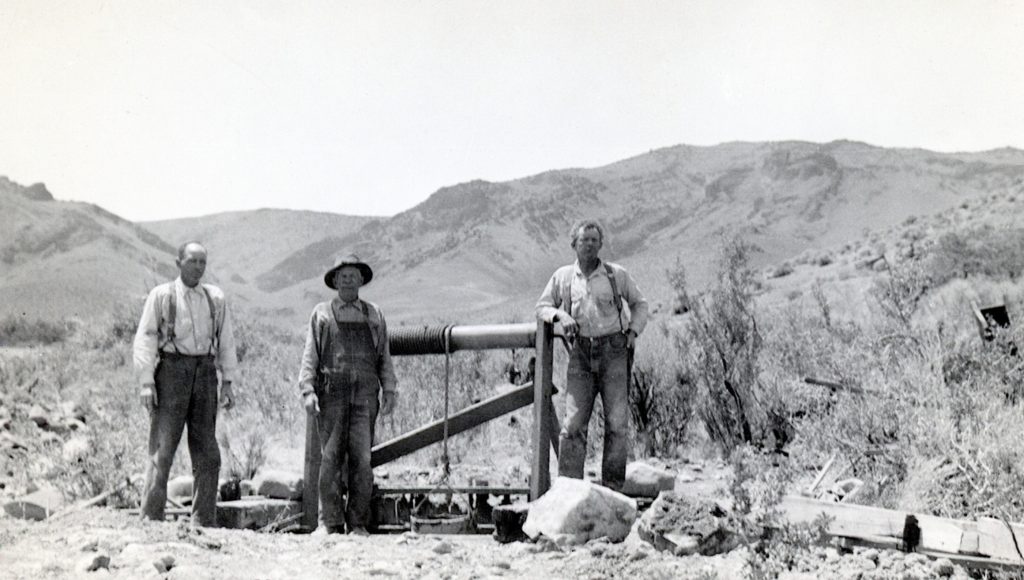
Honey Lake Gold Mine, 1936. Courtesy of Jere Baker
The following account was provided by Jere Baker and originally appeared in Lassen County at 150.
In 1929 the Honey Lake Valley Gold Mining & Development Co. was incorporated. Two years prior to that event, Hilding Sundberg, a mining man from Oakland, California took possession of an abandoned gold mine called the Badger Group located some six miles southeast of Milford on the Diamond Mountain range at an elevation 6,000 feet. Sundberg began work on the property with a new cross-cut tunnel, reaching a small vein of gold 300 feet in. The property was incorporated in 1929 with Sundberg as the new president and general manager of the new company. A second tunnel was cut 720 feet into the mountain, 500 of which were driven along a ledge of gold ore. Assayed samples taken from tunnel no. 2 showed an average of $55.00 a ton. A third tunnel was started at the mining company’s base camp at the 5,000 foot level. Sundberg took a calculated risk that a horizontal tunnel driven far enough would reach the same vein of gold, whereby the entire body of ore could be mined by gravity at a much lower cost. Continue reading Honey Lake Gold Mine→