Tag Archives: Mining

Wood Flat, Hayden Hill

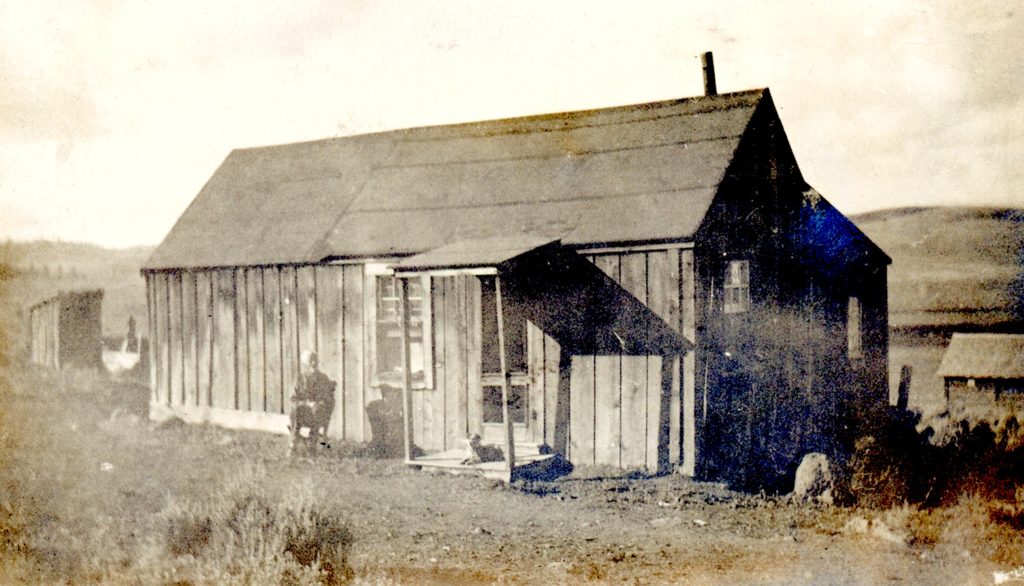
The Belle & Judson Dorsey home, Hayden Hill, 1918–Belle Dorsey Collection

In 1881, the Hayden Hill correspondent to Bieber’s Mountain Tribune wrote:  “I think it quite time to write up the early history of Wood Flat and how it came to be thus named.  As the unpretentious Wood Flat locality is growing in value of late by becoming a pleasure resort for promenades and picnics.  Many there be who would not heard or read
about the Flat, not yet minutely mapped out and sent abroad to induce tourists to come hither.  I will briefly relate what I know about it.

A year ago the first cabin was built on the Flat and the owner
thereof makes his living cutting wood; and at the present time he has twenty cords cut, and more engaged.  His wife one day said to him, ‘We will name this place Wood Flat.’  It is less than a mile from town, and has the best spring water on the Hill.  Some have called it Blue Spring, because of a bluish colored clay found there; and the water, when in the spring, has a light, clear blue caste.  But the last and not least name that is been dubbed lately is Mud Springs Flat.  I cannot see where the mud comes in, unless someone riles the fountain.”
Spread the word, and encourage a friend to subscribe.

Meteor Mining Company

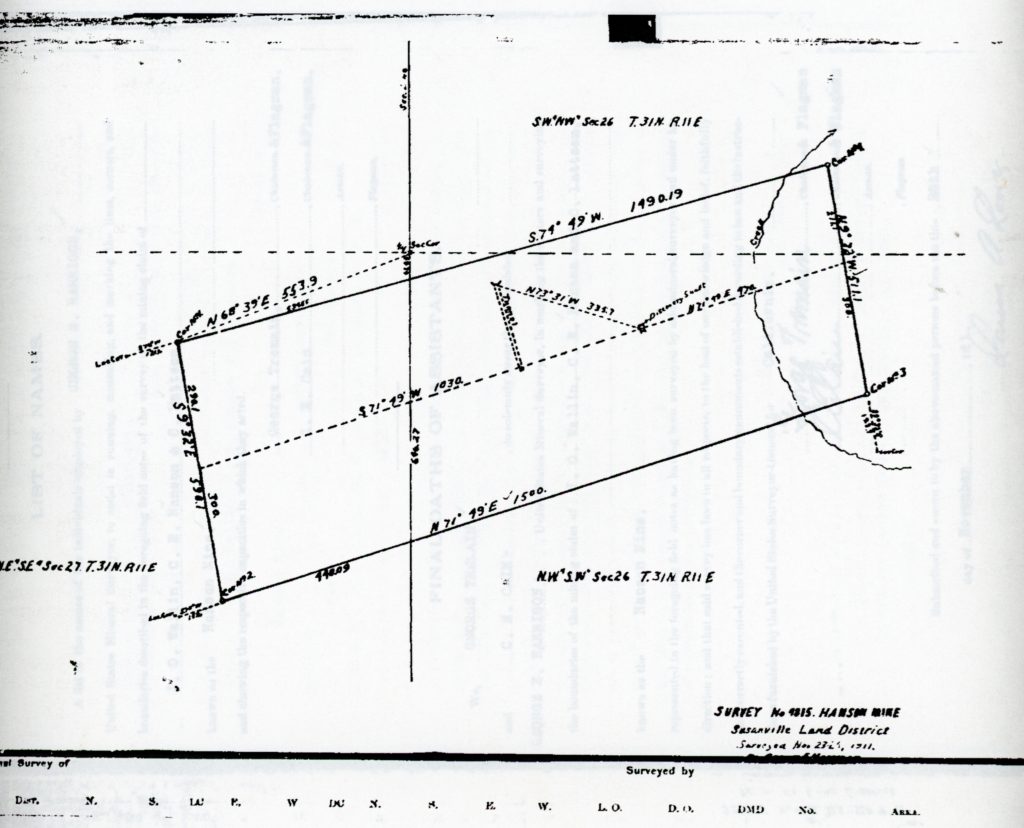
The 1902 Hanson Mining Claim

Most people may not realize that there was a lot of gold mining east of Eagle Lake extending from Gallatin Peak, Green’s Peak and Round Valley. The mining discovery occurred in the early 1870s, and Wright P. Hall had an extensive tunnel on Gallatin Peak in 1879. Many years later, my grandmother Lola Murrer Tanner (1899-1973) who grew up in nearby Willow Creek Valley made a reference of a lost valuable gold mine in that area with a reference to Gallatin Peak. There were others over the years that shared the same belief.

In the summer of 1935, two prospectors, Paul Olsen and Joe Weatherman, who had spent the last few years in that area, believed they finally found the lost mine. Among the items found was an old cabin, where there was some ore, along with an old tunnel 140 feet in length. Of course, they were sly not to reveal the exact location. They immediately formed the Meteor Mining Company. Their next obstacle was to secure a 200 acre lease from the Red River Lumber Company who owned the majority of the property in that region. Whether they succeeded is not known.

A few years back, I went in search of the Hanson Mine of the early 1900s, that fits the description of Olson and Weatherman’s find. However, between fires and logging the site may have been obliterated.

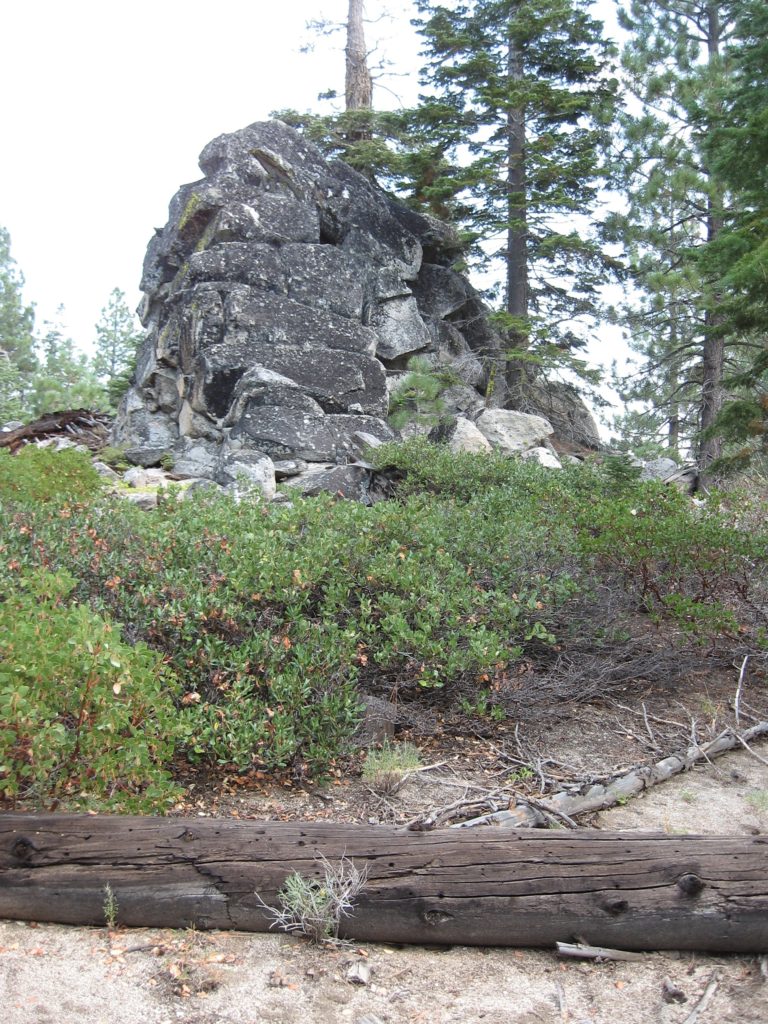
A granite outcropping common in that region.

Subscribe

Engels Copper Mine

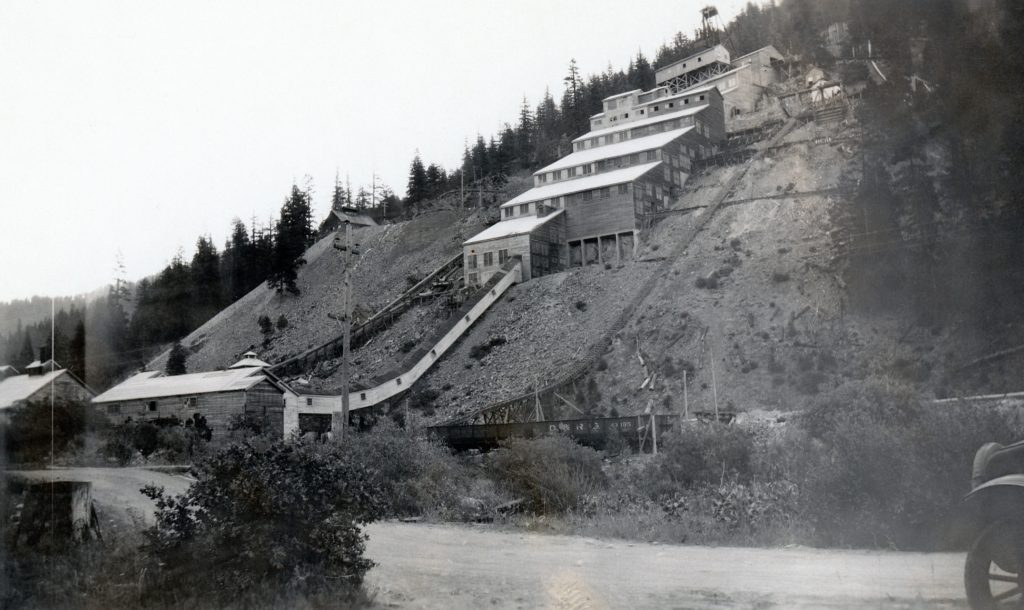
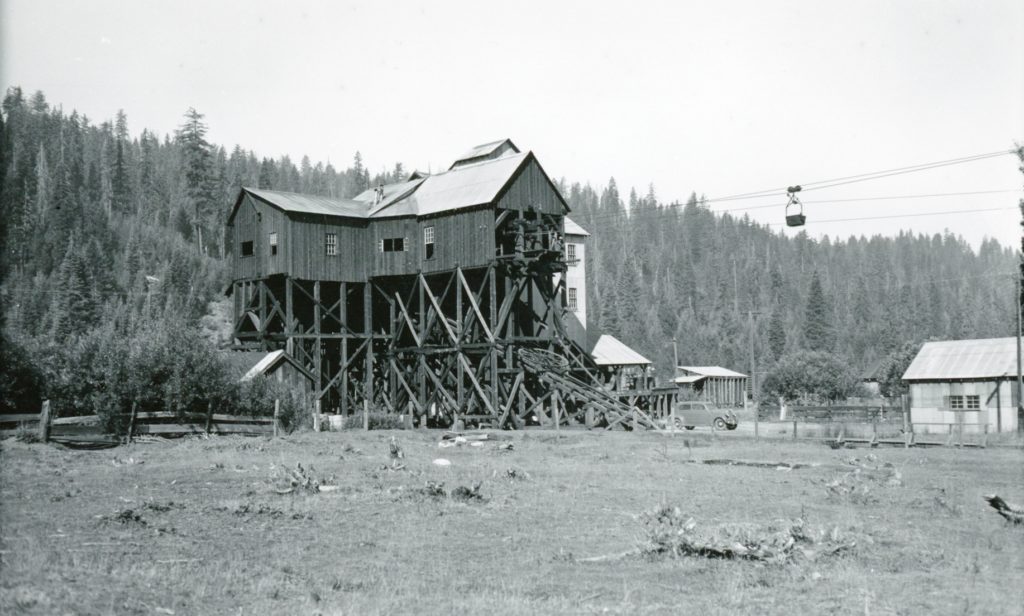
Engels Copper Mine, 1922. Courtesy of Lola L. Tanner

The shortest way from Susanville to Engels Copper Mine is via Gold Run, though not advisable if your are not familiar with the territory. In 1880 Henry Engels discovered copper at Lights Creek near Taylorsville, it being a part of the Plumas Copper Belt.

Major development of the mine occurred in the 1910s. For a time it was the largest producer of copper in California. At its peak in the early 1920s, the townsite of Engelmine boasted a population of 1,200. While the mine closed in 1930s, the remnants that still remain are worth a visit.

Never miss a story, click here to subscribe.

Hayden Hill Mining District

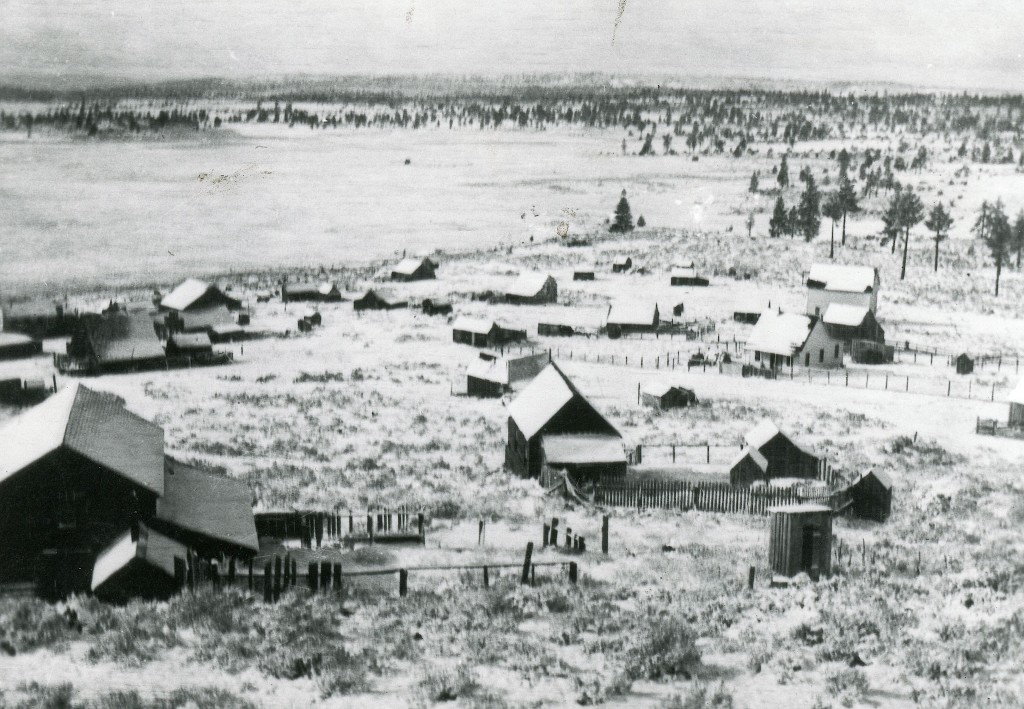
Hayden Hill, 1909. Courtesy of Dallas & Joyce Snider

On December 5, 1870 the Hayden Hill Mining District formed.* Gold was accidentally discovered there in the fall of 1869 when a group of prospectors camped on the mountain, after an expedition in search of the fabled Lost Cabin Mine. They returned the following spring and named their discovery, “The Providence.” Once word spread of the new gold strike over 500 miners had flocked there. It was necessary to form a mining district to keep track of the claims. It was decided to name it Hayden Hill, instead of Providence, since Joseph W. Hayden, a veteran miner aged 56, was the oldest miner there, and they honored him with the bestowment. Hayden died there on Christmas Day 1884 and was buried in the town’s cemetery.

*For those not familiar, Hayden Hill is located approximately twenty miles north of Eagle Lake and eleven miles south of Adin.

Support

Diamond Mountain Mining

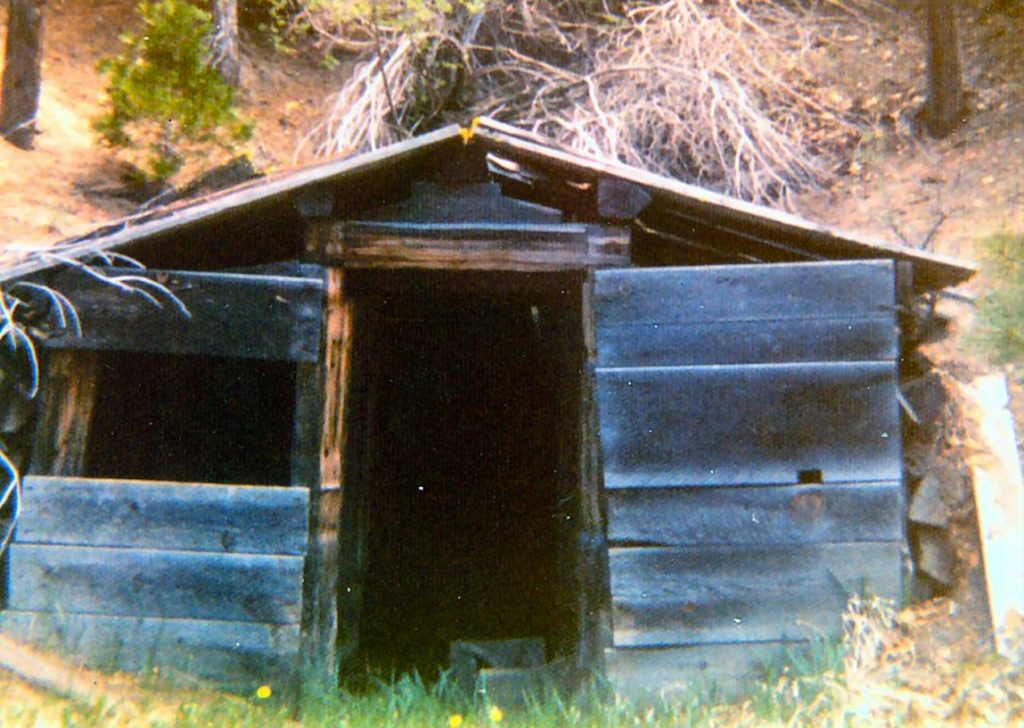
An abandoned Diamond Mountain mine, 1977.

In 1855, gold was discovered in what would be known as Hills Creek at the base of Diamond Mountain. However, the prospecting was soon suspended by summer when the stream went dry. This temporary setback allowed the handful of miners to return over the mountain to Indian Valley to prepare for next year.

In 1856, as word of the new gold discovery spread brought an influx of miners to the Honey Lake Valley. Placer mining was abundant in three streams—Gold Run, Hills and Lassen Creeks. By the early 1860s the easy pickings of the placer deposits had been cleaned out. Thus, lode mining of gold bearing quartz was ushered in and continue until 1942 when President Roosevelt’s Executive Order suspended gold mining during World War II.

Never miss a story, click here to subscribe.

WALKER MINE, PLUMAS COUNTY

Walker Mine Tram, 1938–Courtesy of Jere Baker

Walker Mine was located in almost the geographical center of Plumas County, part of the regions copper mining belt. There is no connection with the Walkers of the Red River Lumber Company and the mine. In 1909, J.R. Walker, G.L. Bemis and A.H. Bemis filed on the mine site, but did not start development until 1911. It would eventually become a thriving community with over 500 men on the payroll. The good times did not last that long, and in 1942 the mine shut down. Today, not much remains there.

Never miss a story, click here to subscribe.

Adins Turns 150!

Adin 1879
Adin, 1879

If you have not made any plans for the weekend, you might want to head north to Adin for its 150th birthday celebration on June 29 and 30.

For those not familiar, Adin is located just a mile north of the Lassen County line in Modoc County, Adin benefited from Lassen County’s largest mining town of Hayden Hill, located twelves miles to the south.

As a matter of fact in the same year that Adin was founded in 1869, gold was discovered at Hayden Hill. It should be noted that Adin’s founder and its namesake, Adin McDowell, was a member of the prospecting party that discovered the gold at Hayden Hill.

When times were good at Hayden Hill, they were even better at Adin. By 1877, Adin was the largest town in Modoc County. In addition, it was only second to Susanville in the amount of business transactions conducted in Northeastern California.

Never miss a story, click here to subscribe.

Devil’s Corral, Lassen County

Devil’s Corral Bridge, 1918. Courtesy of Margaret A. Purdy

In 1944, the County of Lassen contracted Engineer, John D. Hubbard to conduct a study of Iron Ore Deposits in Lassen County as well as other minerals. This was done in conjunction with the Western Mining Council and the California Department of Natural Resources.

As a general rule, such reports tend to be dull reading. On the topic of coal deposits, Hubbard did interject a bit of humor. He wrote: “There is a lignite deposit in Sec. 7, T29N R11E one mile south of Devil’s Corral (handy for the Devil). It is owned by Paul Olsen and associates of Susanville.” Lignite is the lowest grade of coal, with little commercial value.

Support

The Great Uranium Strike

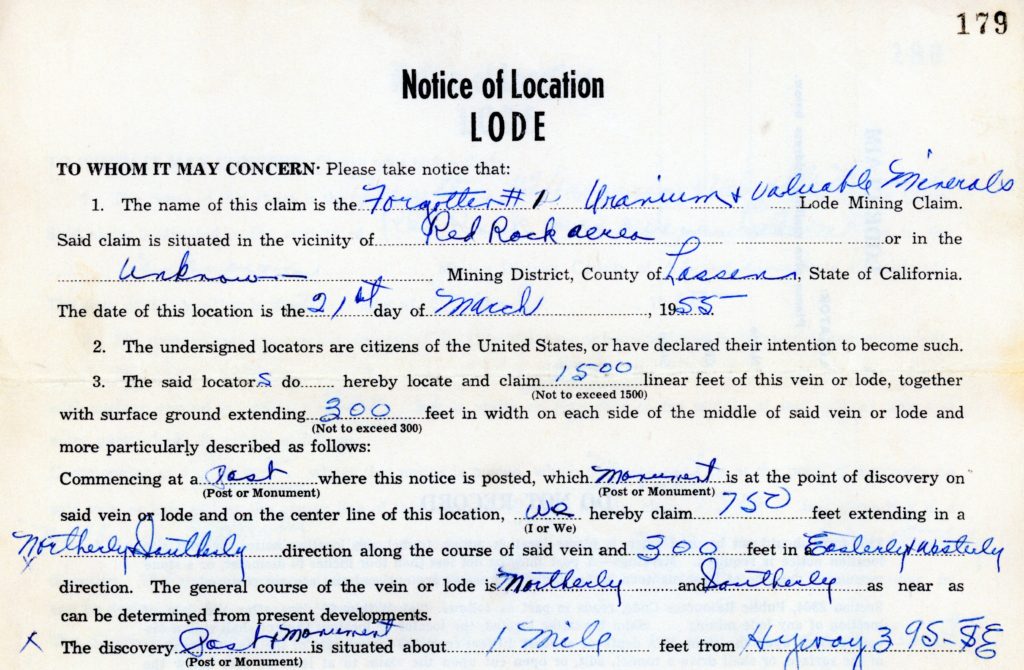
The Maurino, Vella & Purdy mining claim, 1955.

This was one of those events that seemed to happen with a blink of eye and then it was gone. In March 1955 the California Mining Journal featured three articles on the uranium discoveries in Lassen County, or more specifically about four miles north of Hallelujah Junction in the neighborhood of Red Rock. The initial discovery was credited to Carlton A. Brown of Reno in the fall of 1953. What caused tremendous speculation was in 1954 a similar discovery had occurred in Inyo County and those initial prospectors sold their claims for $2 million. As word spread, there was the proverbial land rush to file claims, my family included. By the fall of 1955, it was determined the uranium was of low grade and possessed little value. Interest quickly waned.

Support

Richmond, Lassen County

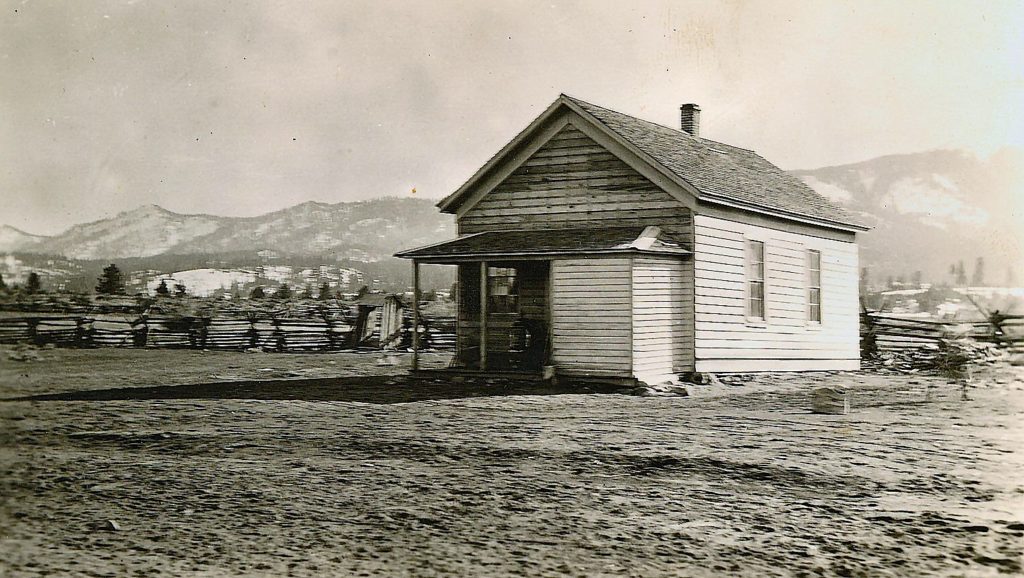
Richmond School, 1916. D.M. Durst Collection

Yesterday, I made reference to the town of Richmond where the local Masonic lodge was organized. After all, for many people they are just aware of a road and school of the same name.

Richmond came into prominence with gold being discovered along the base of Diamond Mountain. By 1859, a nucelus of a town was in earnest with a hotel as well as houses built. The following year the region’s first newspaper, the Richmond Times, made its debut. In 1861, the townsite was surveyed and plotted, a first in the Honey Lake Valley. In 1862, things were rather bleak and the town nearly abandoned. Years later, E.R. Dodge wrote, “Richmond had gone up like a rocket and came down like a stick and Susanville had been left to glory over her rival.”

In a 1878 traveler on his way to visit Lassen’s Monument, described what was left of the abandoned town: “This was formerly a populous town with its stores, saloons and busy life, now nothing is left but a dilapidated hotel to mark the spot; and this with its windows gone, its sides warped and uncouth, is fast giving way to time’s relentless hand.  A schoolhouse has been erected since the demise of the town, and Mr. Bantley and family are now the only inhabitants of this once busy place.”      

On a final note, the abandoned hotel was converted into barn and on March 24, 1908, it fell down during a windstorm.

Richmond Road
Richmond Road, 1906

Support