Tag Archives: Mining

Inspiration Point Tour

Inspiration Point
Inspiration Point, 1930s.

The long delayed tour of Susanville’s first park is scheduled for Wednesday, May 18, so save the date!For those wishing to attend, please leave a comment below or contact me.  Details about time, etc. will be emailed to the attendees. If there is enough interest, a second tour could be scheduled during the summer on a Saturday morning.

Yours truly conducting a preliminary tour at Inspiration Point, April 1, 2016. Photograph courtesy of Annie Henriques Blank

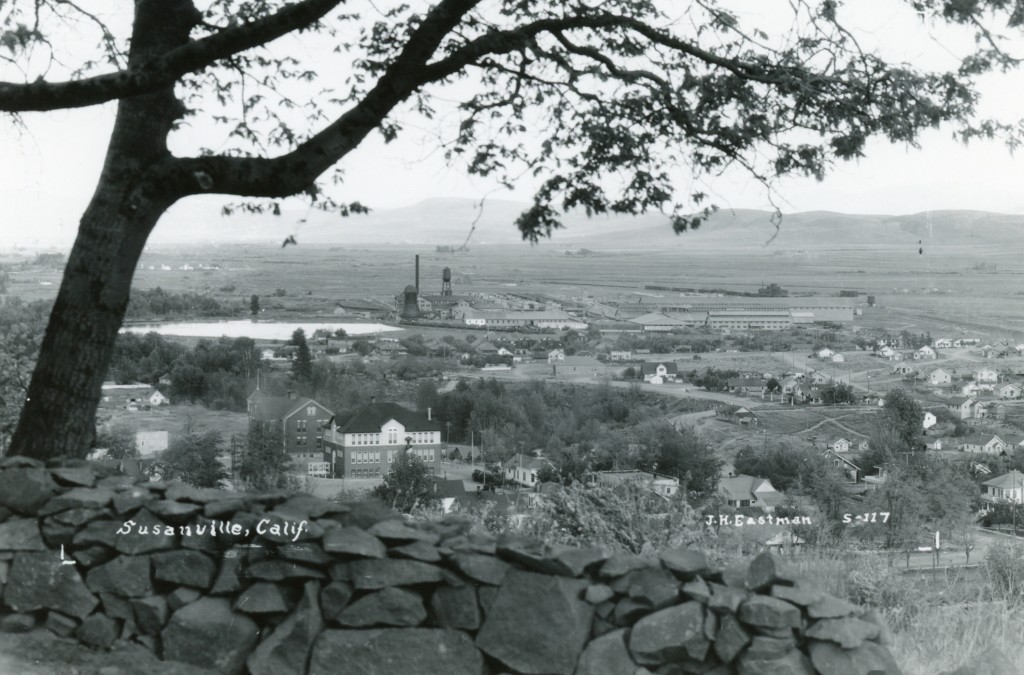
Inspiration Point provides a great vista to discuss the region’s natural history ranging from Lake Lahontan to the region’s earthquake past which had affects of mining on Diamond Mountain to the local stone quarry.  Of course, let us not forget about the city park movement, though at one time back in the 1940s the city gave consideration to subdivide Inspiration Point for homesites.
Never miss a story, click here.

William S. Brashear

W.S. Brashear. Courtesy of Marge Hansen

William Samuel Brashear arrived in Lassen County in an unexpected way.  In 1863, he helped fellow Southerner John M. Kelley retain his original land claim of 1200 acres. When the U.S. Government surveyed the Honey Lake Valley, one could only file claim to 160-acres. Thus, nucleus of southern sympathizers claimed property around Kelley and the region became known as the Tule Confederacy. Continue reading William S. Brashear

Bartlett Said, A Vagabond’s Journey

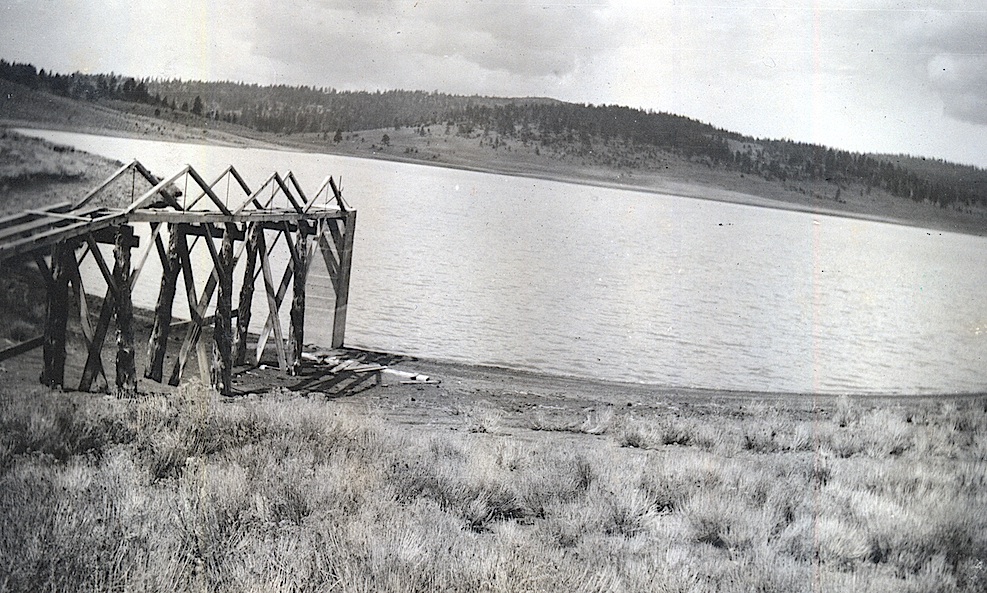
Said Valley Reservoir, 1921. Courtesy of Lola L. Tanner

Approximately some 40 miles north of Susanville, along Highway 139, there lies a small, non-descript place known as Said Valley, or when there is water Said Valley Reservoir, the latter was actually good fishing when it retained water.

It was named for Bartlett Said, somewhat of a free spirit in his day. Born 1813 in Kentucky, Said with his family migrated to Placerville, California in 1850. From there they moved to Rich Bar, Plumas County. His wife, Mary, not fond of her husband, disposed of him. Bartlett, then took solace with his daughter’s family Nancy Jones, who operated Summit House in eastern Plumas County.

One of the reasons for Saids wonderlust was mining. When news circulated about the discovery of gold in northern Lassen County, Said went to check it out. He located in the northern extreme of Grasshopper Valley, that in time became known as Said Valley.  After several years, he ventured over to Horse Lake.  From there his prospecting adventures took him to Long Valley, in Lassen County, where various relations resided.

Said, like so many others, struggled to make a living at mining. In 1896, the family had the elderly patriarch committed to the Lassen County Hospital, which also served as a poor folks and old folks home. He died there in 1904, and lies buried in the Susanville Cemetery in an unmarked grave.

Never miss a story, click here.


Hayden Hill School

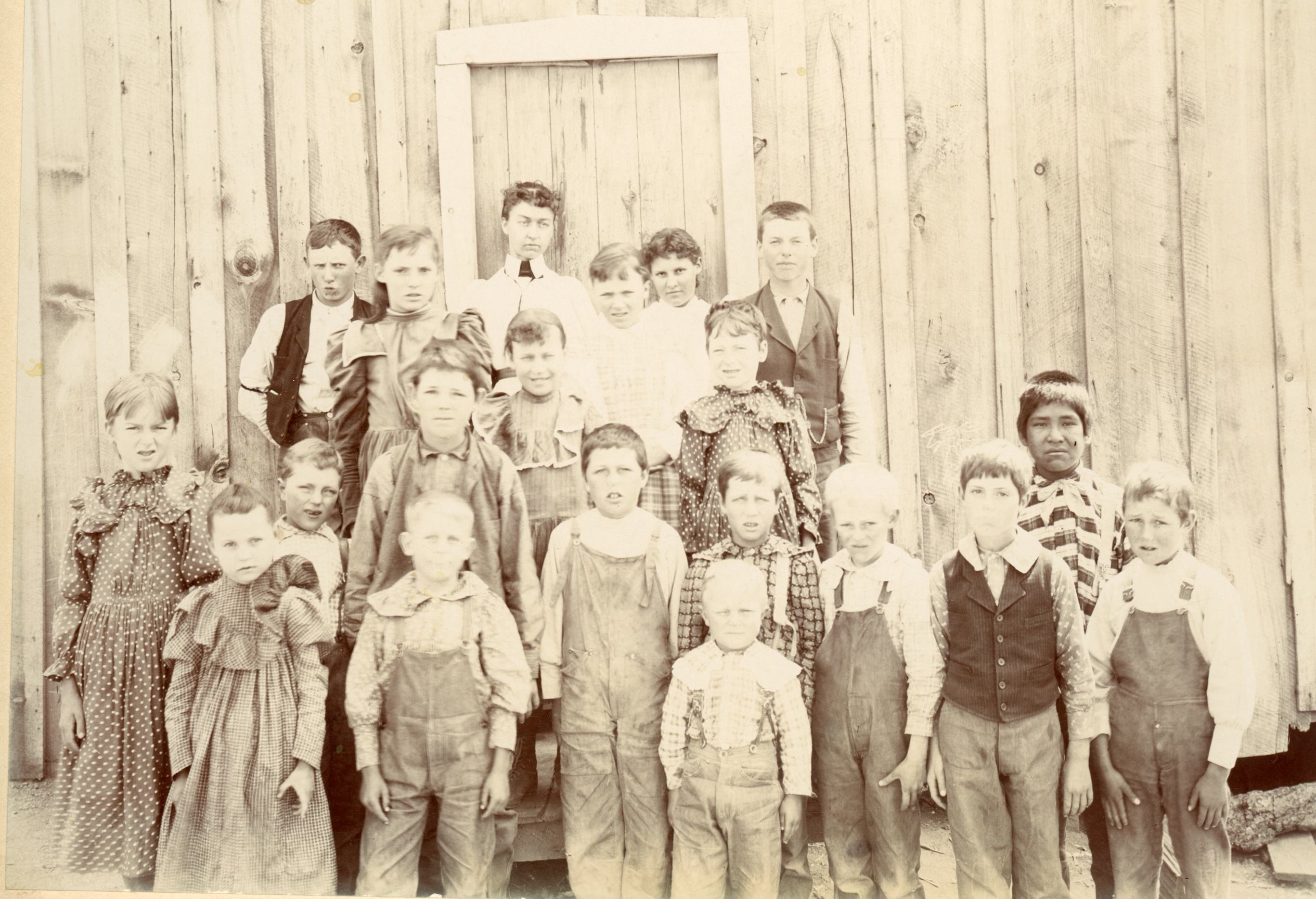
Hayden Hill School, 1894. Courtesy of Del & Diane Poole

Providing service’s to Lassen County’s largest mining community had its challenges. There were, of course, the boom and bust cycles, so its population was always in state of fluctuation. Due to its elevation and harsh winter conditions, many residents sought refuge elsewhere in the winter months.

Those factors influenced educational opportunities at Hayden Hill. In 1872, Perry Edris opened a private school on the Hill. It was not until 1878 that the public school was created. The school opened in the fall of 1878, with Ida Spalding as the teacher of fifteen students. The school remained in operation until 1925, when it closed for lack of students.

On June 1, 1931, the Board of Supervisors offered the schoolhouse for sale. Fred Bunselmeier and Lloyd Walsh purchased the two-story building for approximately $125.

Never miss a story, click here.

Mable Gallagher

Hayden Hill Cemetery
Hayden Hill Cemetery, 1909. Courtesy of Dallas & Joyce Snider

In the annals of Lassen County history, not much happens on this particular date. It was on December 31, 1903, that Hayden Hill resident Mable Gallagher passed away from pneumonia at the age of 30.  She is one of the few known internments in the Hayden Hill Cemetery. We don’t know much about Mable. Yet, she holds a unique distinction in Lassen County. She is the only person to have their occupation listed as “the sporting life” on her death certificate.

It is never too late, subscribe today and enjoy tomorrow with daily notifications. You can also surprise someone with a gift subscription

Paradise City – Lassen County

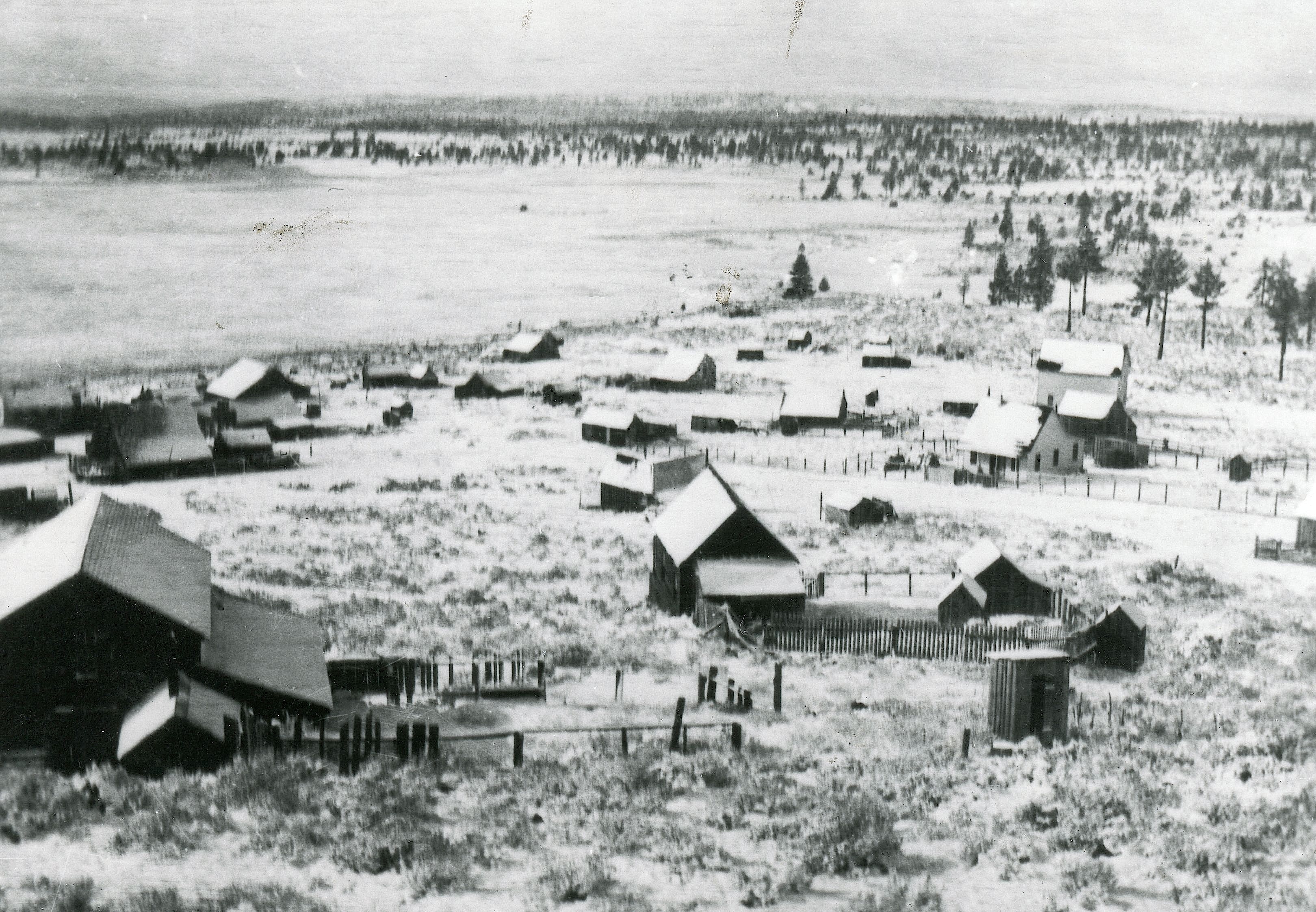
Hayden Hill, 1909. Courtesy of Dallas & Joyce Snider

Paradise City was one of the earliest mining camps adjacent to Hayden Hill. In 1872-73, according to the Lassen County Assessment Rolls, Joseph Miles owned a house and lot in Paradise City—though no records of any subdivision is known for that place or for Hayden Hill. Paradise City was also the location of the Providence Mining Company’s quartz mill. It was the first quartz mill constructed at Hayden Hill. This mill would crush the rock so that the gold could be extracted. Incidentally, that mill was hauled to the Hill from its original location at Hardin City in the Black Rock Desert.

It is never too late, subscribe today and enjoy tomorrow with daily notifications. You can also surprise someone with a gift subscription.

Robert J. Scott

Milford Si

In May 10, 1856 R.J. “Bob” Scott settled on what would become Milford. Two months later, Scott with several others participated on the first recorded boating on Honey Lake that claimed two lives.

The following year, Scott sold his claim to Peter Lassen, and took up another claim adjoining it. This transaction would cause confusion in 1859 after Lassen’s death. Thomas Fairchild and Fred Washburn mistakenly purchased it from Lassen’s Estate, which they thought they were buying Lassen’s original ranch, south of Susanville.

Just as the discovery of gold brought an influx of prospectors to the Honey Lake Valley, discoveries elsewhere, like a pendulum swings, created an exodus when gold was found elsewhere. In July 1858, Scott and with a number of Honey Lakers rushed to the gold mines of Fraser River in British Columbia. Scott never made it there. According to Fairfield’s History (1916) he states that fellow Honey Laker Matthew Craft killed Scott enroute. Fairfield does not elaborate. An examination of the Marysville Daily Appeal, which provided good coverage of Honey Lake news did not report it, or I could have missed it. One never knows when new material surfaces.

It should be noted that a majority of the Honey Lakers returned from Fraser River, no richer than when they left. It is interesting to note one of the big mines discovered there in 1859 was named the Neversweat.

Never miss a story, Subscribe.

Inspiration Point Tour Update

Downtown Susanville 1894
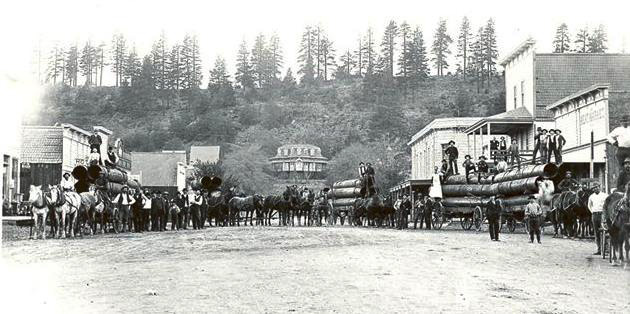
Notice the tall pines that once adorned the Inspiration Point Bluff. On the tour you will learn what happened to them. Susanville’s Main Street, 1894. Courtesy of Ivor Langiar.

Since I am in early stages of recovery, it is too difficult to plan anything, since I have no idea when I will be home.

In the good news department, in between physical therapy I have drafted out the talk. Topics include, but not limited to Lake Lahontan and the difficulties of mining on Diamond Mountain. They are all inter-related.

Help me with my recovery, and subscribe for as a little as $5.00 a month.

Hayden Hill, 1910

HH 1909
Hayden Hill, 1909. Courtesy of Beth Coppedge

Hayden Hill was Lassen County’s only mining community. Like so many others it went through boom and bust cycles. In 1908, a new vein of gold was discovered and another resurgence was on its way. The Golden Eagle the Hill’s largest mine, hired 100 men for the initial operation and more were added to the payroll. In addition, the Lassen Mining Company’s Juniper Mine enjoyed good fortune and they had over 100 men on the payroll. Continue reading Hayden Hill, 1910