Tag Archives: Madeline Plains

The Dry Farming Experience

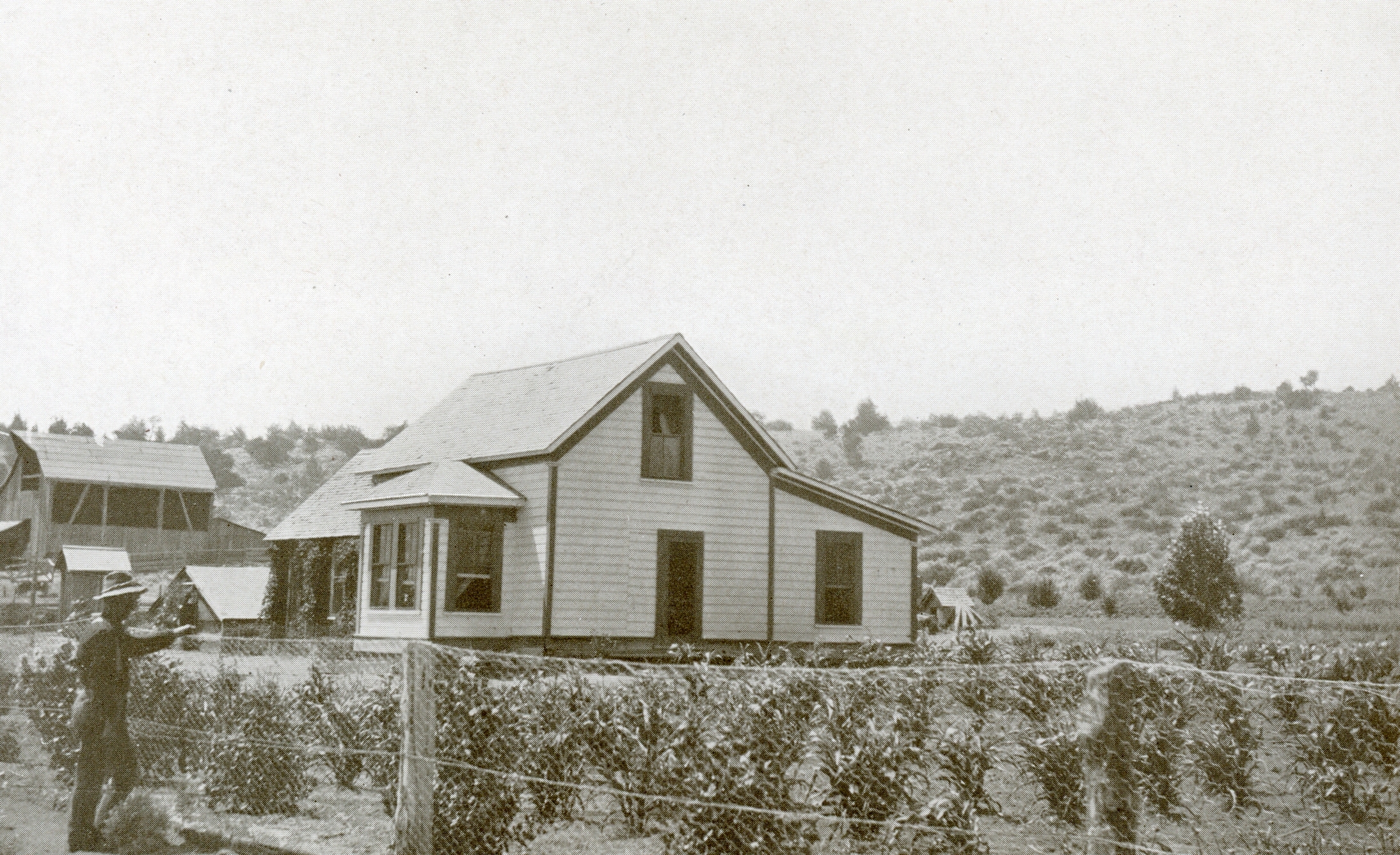
Metcalf Homestead, Madeline Plains, 1911

Dry farming was slow to make its appearance around these parts. It slowly began in the early 1900s and timing could not have been better. The area was in a very wet cycle that lasted through 1916. The following is a 1911 account of dry farming in Lassen County.

”While much of the farming of the county is done dry, which is to say without irrigation, there is very little scientific dry farming. Indeed, it is all but unknown. However, a beginning has been made, in a few small farms in Honey Lake Valley, and in the Madeline Plains, where may be seen the most substantial evidence that it is profitable. Those who are interested in this form of farming may learn something to their profit by communicating  with Mr. Isaac Metcalf, whose address is Termo, Lassen County. Two years ago, Mr. Metcalf lost his all by fire. Coming then to the Madeline Plains without even a team of horses, he began dry farming on 160 acres, practicing the Campbell system. The first year, he cut from forty acres of barley 761 sacks averaging 110 pounds each; and from eight acres of rye ninety-six sacks averaging 130 pounds each. The same year, he turned five sows and their pigs, thirty-nine in all, upon a piece. of alfalfa a little less than two acres in size, upon which they made their living until winter. Then he fed them about one hundred sacks of barley, following which he killed thirty-one of them, these bringing him 3,800 pounds of cured meat. Mr. Metcalf now has a comfortable and pretty residence, a fine barn and other appurtenances, and a small but thriving young orchard of apples, pears, plums prunes, quince and a few grapes. He has no land to sell, but those who. see his place will agree with him that a fair valuation of his possessions is $5,000, all of it accumulated by two years dry farming.”
Support

Tramp Sheepmen

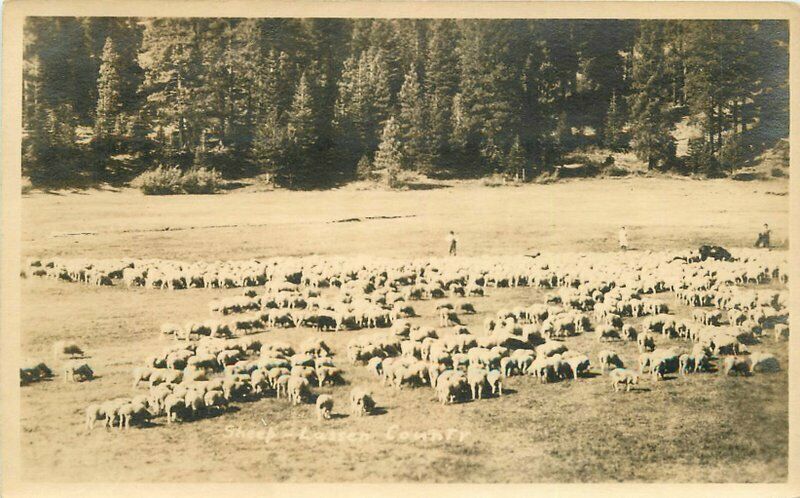
A band of sheep near Pittville, circa 1920

Not surprising, by the early 1900s changes were taking place on livestock grazing on public lands. With the establishment of Forest Reserves later to become National Forests would require grazing permits. This forced itinerant sheep men, many who were Basque, towards the Great Basin were they were able graze freely.

These herders became known as “tramp sheepmen.” These individuals would take their band of sheep and move them to place to place in search of feed and water. This practice would soon come to end. First, is was financial, in the 1920s when wool prices plummeted. In 1934, with the implementation of the Taylor Grazing Act, required grazing permits on all public lands and the itinerant sheepman was no more.

On a final note, is that of Adam Laxalt, who is in the news, of late, as a candidate  forU.S.  Senator in Nevada. His great grandfather, Dominique Laxalt was a true tramp sheepman of the Madeline Plains. As mentioned with the economic, political, as well as a drought, things did not work out well on the Madeline Plains for Dominique by the late 1920s who moved his family to Carson City, and started a new chapter in his life.

Subscribe

Those Pesky Coyotes & Rabbits

A coyote scalp receipt

In 1891, California passed a bounty on coyotes at five dollars each. During that decade, in the Lassen region, that bounty was nearly successful in eradicating the coyote population. In turn, that created another problem—jack rabbits. These critters flourished, since the coyote was its primary predator. For the farmers the jack rabbits created more problems than the coyotes.

In 1920, the residents of the Madeline Plains requested aid from their Congressman John E. Raker, to help them with the jack rabbit problem. A study sent to Raker reported: “As son as the crops are up and making good progress the rabbits begin work on them. The heaviest damage is done in August. One rancher reported losing 100 acres of wheat last summer. They take this crop in preference to oats and rye. It was reported that 70 tons of rabbit meat [to make tamales] had been shipped to the San Francisco market. It appears that the animals cannot be killed fast enough in this region to furnish relief to the ranches.”

One method deployed to eradicate the rabbits—were rabbit drives. As the name infers volunteers were either clubs or guns would work a large swath of area killing thousands of rabbits. Rabbit drives in the region were common during the 1920s and 1930s. Even after the coyote bounty law repealed it took years before a balance in nature was corrected.

Support


The Eagle Lake You Have Never Seen Before

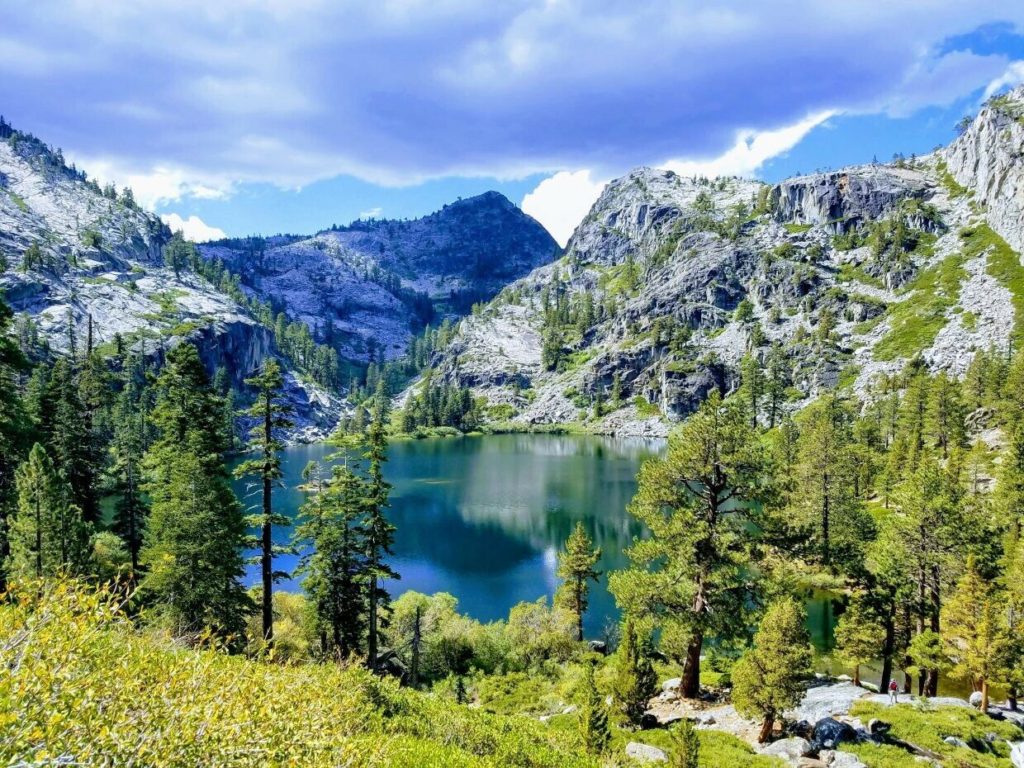
Not familiar with this Eagle Lake, even though the real estate listing purports to be in Lassen County.

This idyllic alpine lake photograph is dubbed as Eagle Lake, located near Termo. It is the featured photograph to the many wonders of the region, specifically, as the the seller points out to entice a buyer of a 20-acre ranch on the Madeline Plains. Asking price for the parcel is $18,000. The seller will even owner finance at 9% interest. So many interesting real estate offers to be found on the internet.

A number of years ago, while doing research in the Lassen County Assessor’s an interesting, yet not uncommon episode occurred. A man walked into the office, having flown all the way from London, England, to examine a parcel of land his uncle bequeathed him. Thus, the gentleman suffered from illusions of grandeur, for surely, California property must be worth gold! The staff at the Assessor’s Office attempted to explain that he inherited a twenty acre parcel on the Madeline Plains. Let’s just say the poor Brit spent more on making the overseas trip than what the property was worth.

Tim

Willow Creek Valley School District

Willow Creek School 1886
Willow Creek School 1886–Alice Fritter Pendergrass

In the spring of 1871, the residents of Willow Creek Valley constructed and operated a private school at the west end of the valley near the Murrer Ranch. Miss Fanny Lovell was employed to teach the first classes. In June 1871, residents petitioned the Lassen County Board of Supervisors for the formation of a school district and that was granted. At that time it was one of the largest school districts, land wise. It included Grasshopper Valley, the Madeline Plains and Horse Lake.

It was not until 1877, when John Dobler donated the land that the school was built on, with a stipulation that the property would revert back to him or his heirs when it was no longer used for a school. That would never happen. Continue reading Willow Creek Valley School District

Not One, But Two Madelines

Van Loan’s Hotel, Madeline, circa 1904.

In 1874, Merrick Cheney and George Ford opened a stage-stop in Grasshopper Valley to take advantage of the traffic generated by the Hayden Hill mines. On September 16, 1875, the Madeline Post Office was established there with Ford as postmaster. Why Ford selected the name Madeline is not known. The post office closed on October 17, 1882 and in the following year Ford sold his Grasshopper holdings to William T. Summers. This location is where Slate Creek enters Grasshopper. However, an 1893 U.S.G.S. map indicates the location at the lower end of Grasshopper.

The current town of Madeline came into existence in 1902 when the Nevada-California-Oregon Railroad extended its line through the region. On October 9, 1902, the Lassen County Board of Supervisors accepted the Madeline townsite. For the next fifteen years, prosperous times were to be found at Madeline. The advent of World War I and the subsequent depression of the 1930s had a dramatic impact, not only to the town of Madeline, but to the Plains as well, as seventy percent of its population left the area.

Subscribe

Dodge Reservoir, Lassen County

Dodge
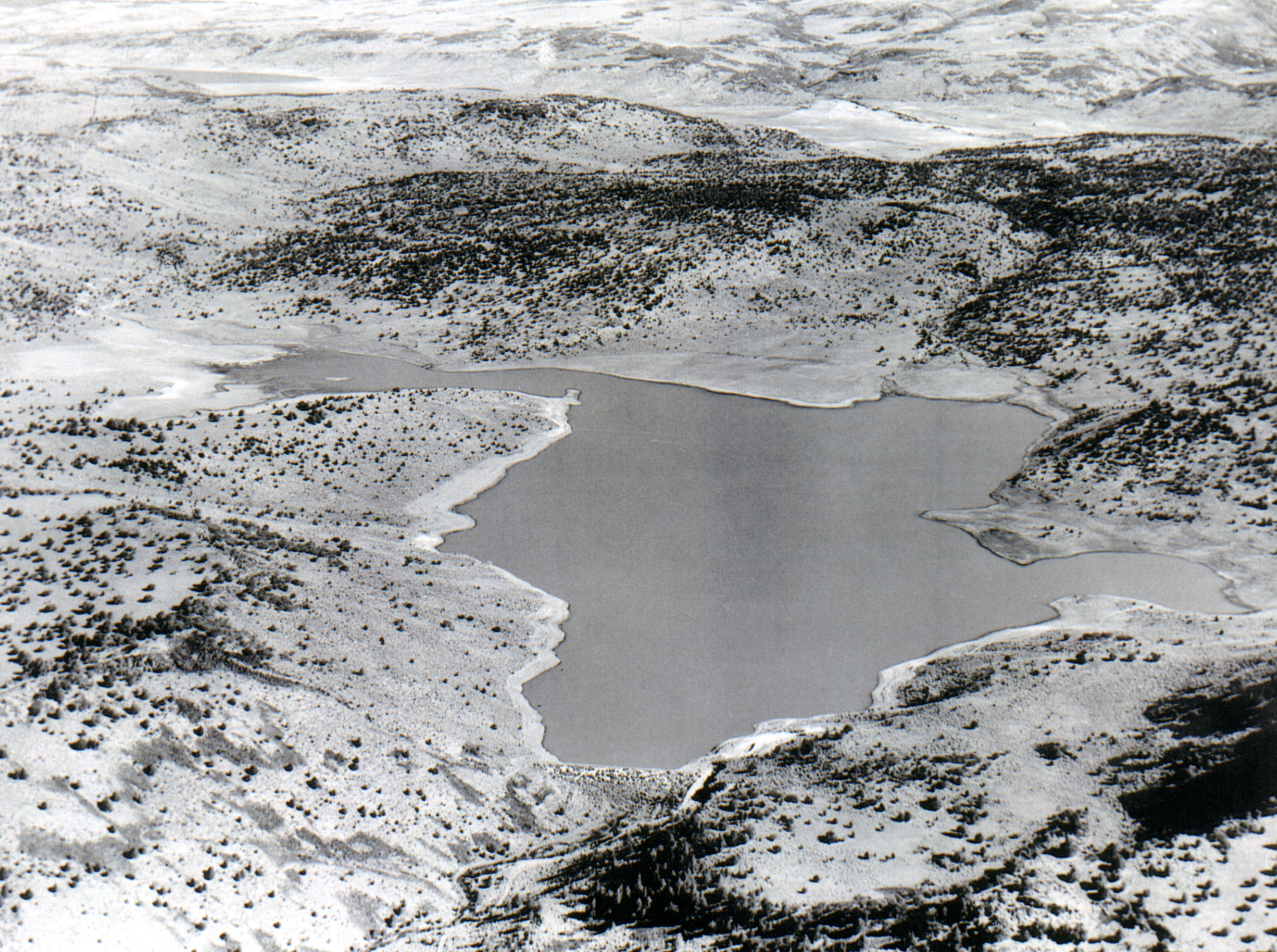
A 1950s aerial of Dodge Reservoir.

Dodge Reservoir located in the northeastern part of Lassen County and has an interesting tale in its development. It would take twenty years from its inception to its completion. It began in 1889, when Albert L. Shinn* formed the Union Land & Stock Company. Shinn proposed that the water from Red Rock Creek could provide irrigation for the entire eastern Madeline Plains. The reservoir was originally named Lake Lockett, for the Company’s Civil Engineer, H.M. Lockett. In the early 1890s, the Union Land & Stock Company started the irrigation project but eventually construction ceased because of lack of funds and other problems. On December 9, 1907, Henry C. Dodge acquired an option to buy the Union Land & Stock Company’s failed Red Rock irrigation system. In 1909, Dodge formed the Madeline Valley Land & Irrigation Company to undertake this enterprise. In the fall of 1909, the Company contracted with August and Alfred Anderson to build the system. In December 1909, Dodge Reservoir was completed. In 1912, Henry C. Dodge died during an altercation in Reno, Nevada. Dodge’s two sons, Carl and Dana, continued with the family enterprise on the eastern Madeline Plains. On January 14, 1949, Bernys M. Dodge, the agent for the Dodge Brothers, sold the Dodge Ranch and Reservoir to George and Jean Smith.

When the fishing is good there, its really good and worth the trek.

*Shinn was part of the Shinn Ranch family,  became a well known attorney in the region and later Sacramento.

Subscribe

Post Camp, Lassen County

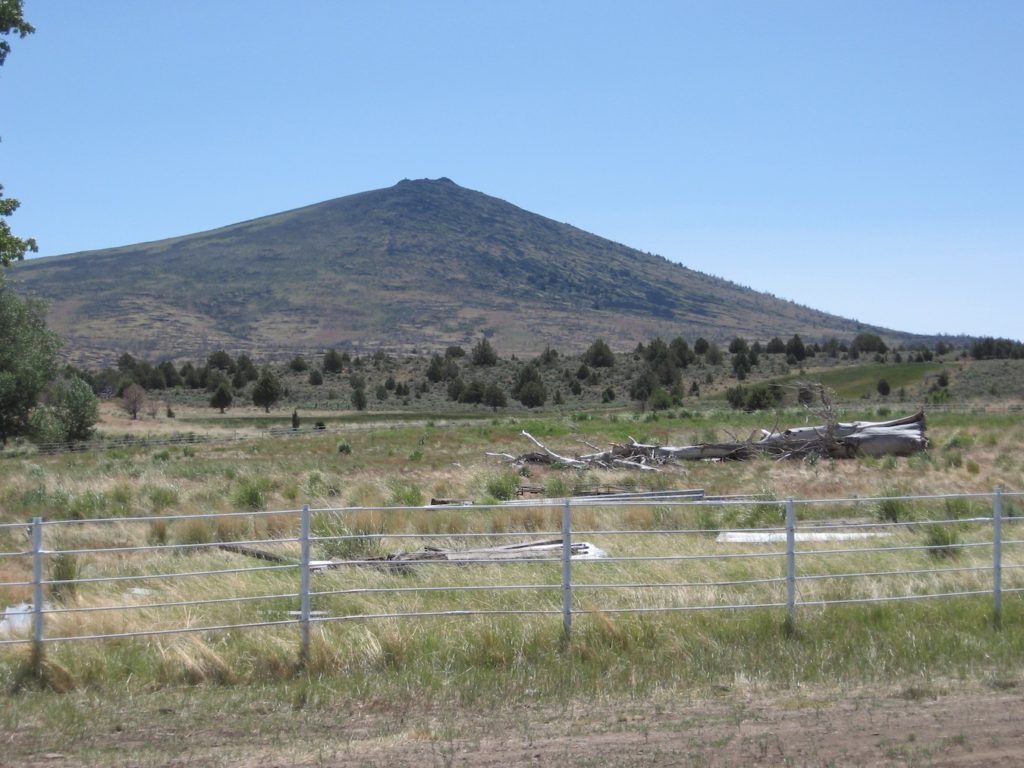
Observation Peak. June 2001

Post Camp, was located on the south side of Observation Peak, NW 1/4 Section 9, T. 33 N. R. 16  E. The camp was established in the late 1870s, by George D. Winters of the Smoke Creek Ranch, who would later acquire the Shinn Ranch Located there were large stands of juniper and mountain mahogany used to make fence posts for both the Shinn and Smoke Creek Ranches. The place remained in public domain for a number of years.

In 1894, James “Juniper Jim” Rousell, also spelled as Russell arrived on the Madeline Plains, where he would live the rest of his life. In the late 1890s, he settled at Post Camp. According to folklore has it that he said the only way a person could survive there was to supplement their diet with juniper berries. In 1904, he acquired title to the property and sold it in 1912, to Virgile Galleron.

It should be noted that Rousell was married to Sarah Ellen McMurphy, a well known family of the era in the Honey Lake Valley.  They had six children, but the couple divorced in 1906. It should be noted they are both buried together in the Susanville Cemetery.

Tim

The Naming of the Madeline Plains

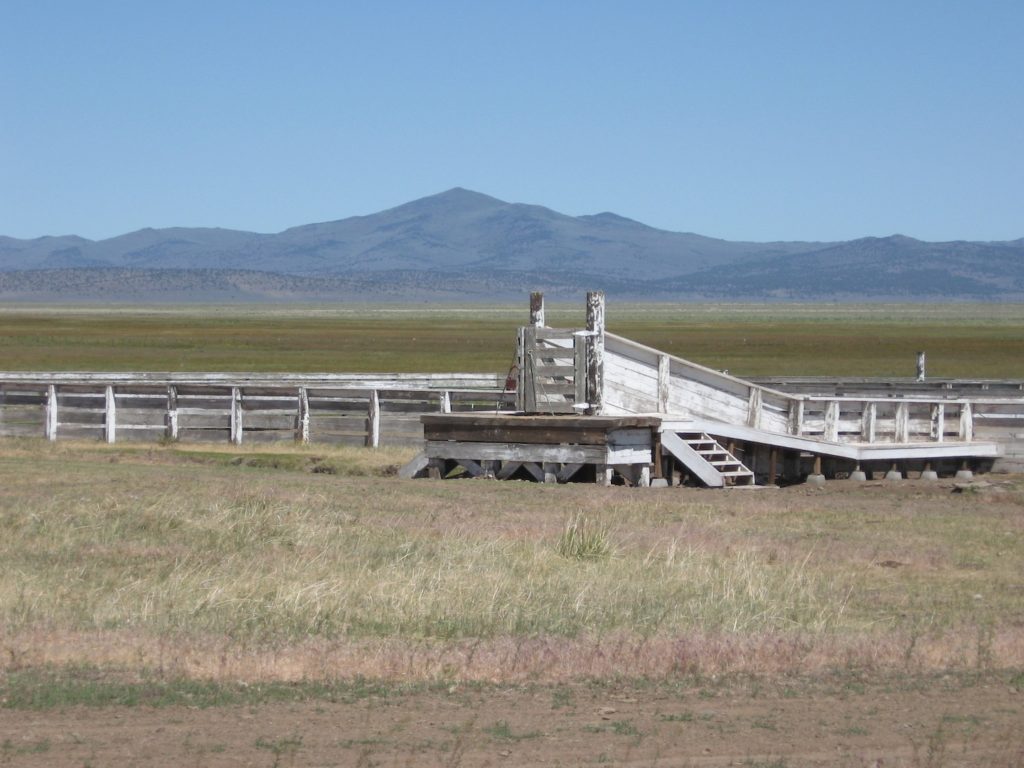
The site of the original McKissick Ranch on the Madeline Plains. It was the first place settled on the plains.

The Madeline Plains in northeastern Lassen County was one of the earliest places named in the county.  In 1853 Congress passed the first Act concerning exploration and surveys for a transcontinental railroad route. Lt. E.G. Beckwith of the Third Artillery was in charge of one of these explorations. Beckwith surveyed Northern California and Western Nevada region in search of a pass over the Sierra Nevada Mountains. In late June 1854, Beckwith entered the Madeline Plains via Smoke Creek Canyon and the east side of Observation Mountain. He named this the Madeline Pass for his daughter Madeline Julia, born January 25, 1853 at New London, Connecticut.  It should also be noted a week later Beckwith named Eagle Lake.

According to folklore attributed the name to an emigrant girl, named Madeline, who was murdered by the Indians in the 1850s. H.T. Risdon who established a sawmill on Bayley Creek in 1912 is credited for that tale.

Finally, it should be noted the Paiute name was Musitzi, though the meaning has been lost through the years. In addition, the Paiute’s territory was for the eastern portion of the Madeline Plains and the western half was the domain of the Pit River.

Become a supporter for just $5 a month to ensure quality history continues. Click here.

Horne Ranch Cemetery, Madeline Plains

Horne Ranch Cemetery, 1985

In 1870, Frank Eben Horne settled in the eastern section of the Madeline Plains, and became one of the first settlers of that region. Horne retired from the ranch in 1905, and moved to Auburn, Califoria. He had turned over the ranch to his sons, and due to some poor judgement lost the ranch in 1927.

There is a very small cemetery on the property, and for whatever unknown reason I neglected to transcribe the headstones. I will have to put that on my todo list this summer.

Horne Ranch, 2003

Support