Tag Archives: Lassen Lumber & Box Company

Millpond Madness

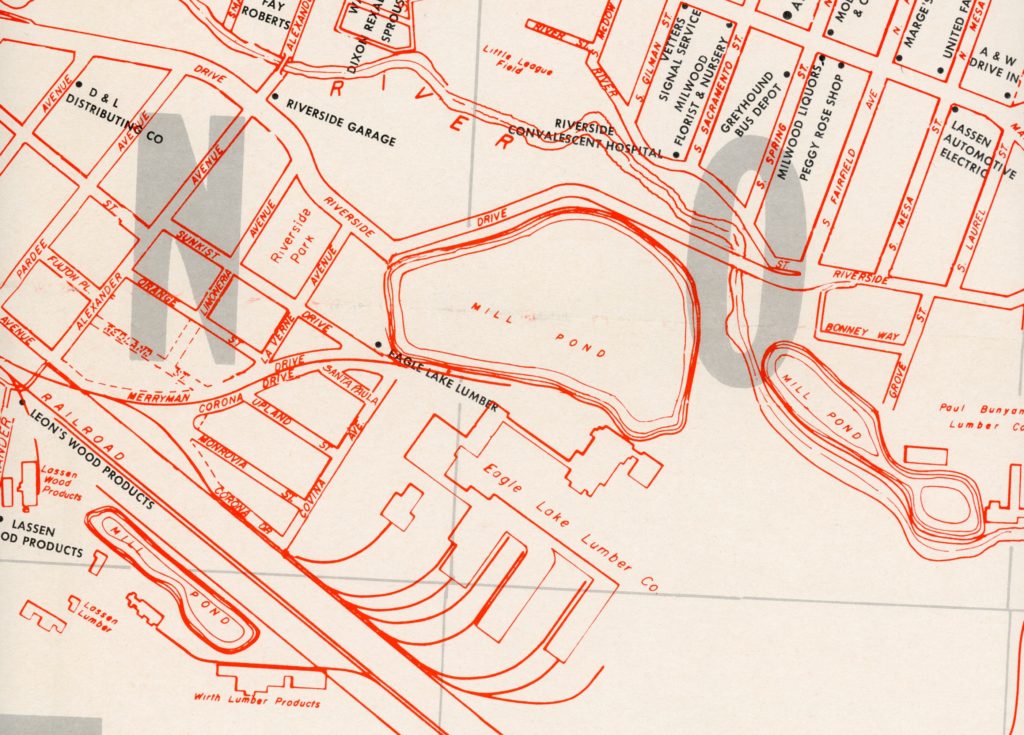
A 1964 Map of Susanville showing three milllponds.

While researching one item, I stumble across material that catches my eye and inevitably get sidetracked. This recently happened when working on an article about the Never Sweat Hills and related topics. Anyhow, while reviewing a 1964 Susanville Centennial publication, I examined the map of the town. In this particular instant what caught my attention was a map. There within a close proximity where three millponds—Lassen Wood Products, formerly Lassen Lumber & Box Company, Eagle Lake Lumber Company, formerly Fruit Growers and Paul Bunyan Lumber Company. Not only are these lumber mills gone, but so are there millponds, once an integral part of the operation. One facet of the millpond that I enjoyed while growing up, was watching a load of logs being dumped into the pond. There was one feature that I did not like—the stench from the millpond in the summer months.
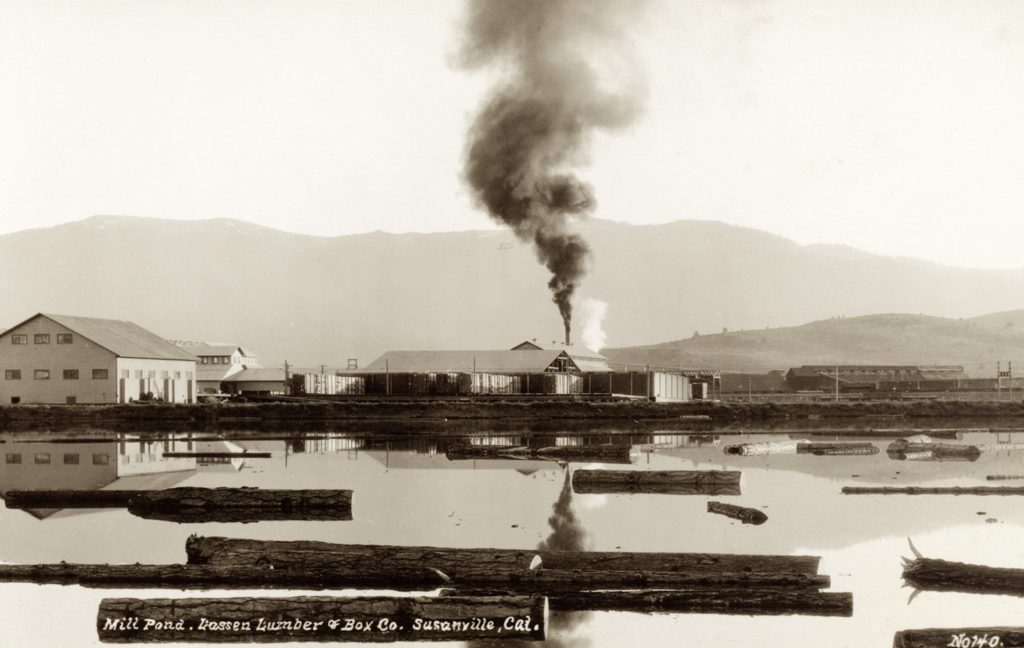
Millpond, Lassen Lumber & Box Company, 1922

Support

Shasta Street—Then And Now

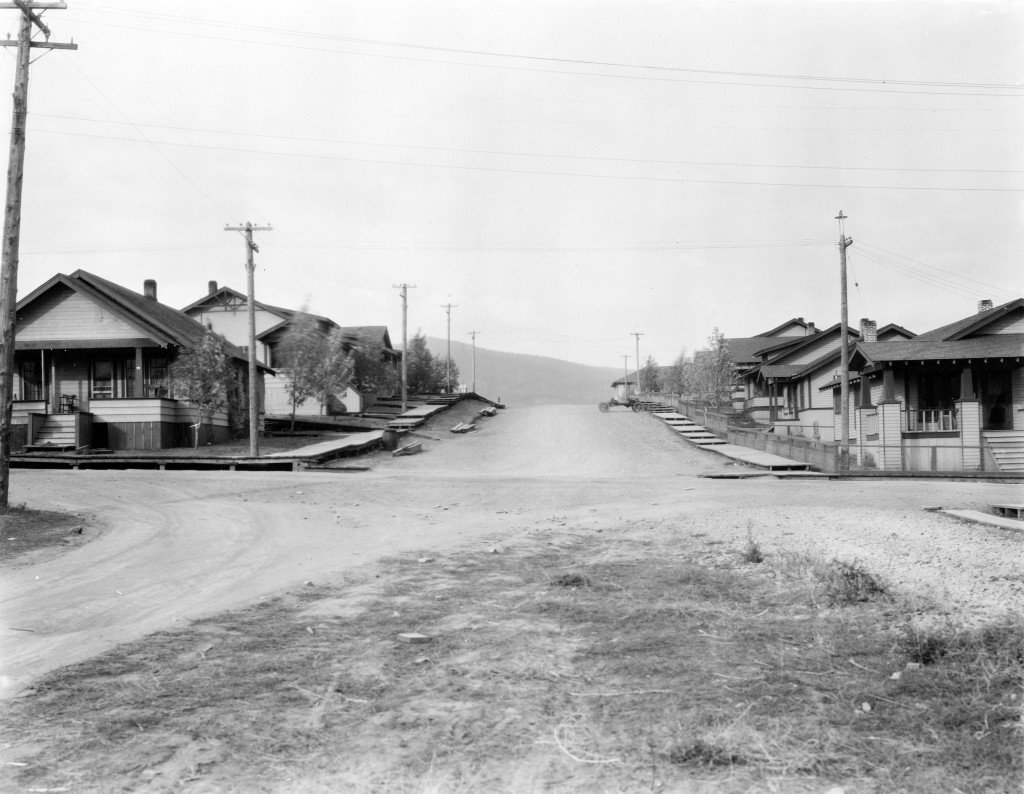
Shasta Street, 1923

The Lassen Townsite was a massive subdivision created in 1912 encompassing everything from Richmond Road to present day Johnstonville Road.

The first housing development occurred in 1918 on property south of the railroad encompassing the streets of Modoc, Orchard, Plumas, Shasta and Sierra. These homes were built by the Lassen Lumber & Box Company for their employees.

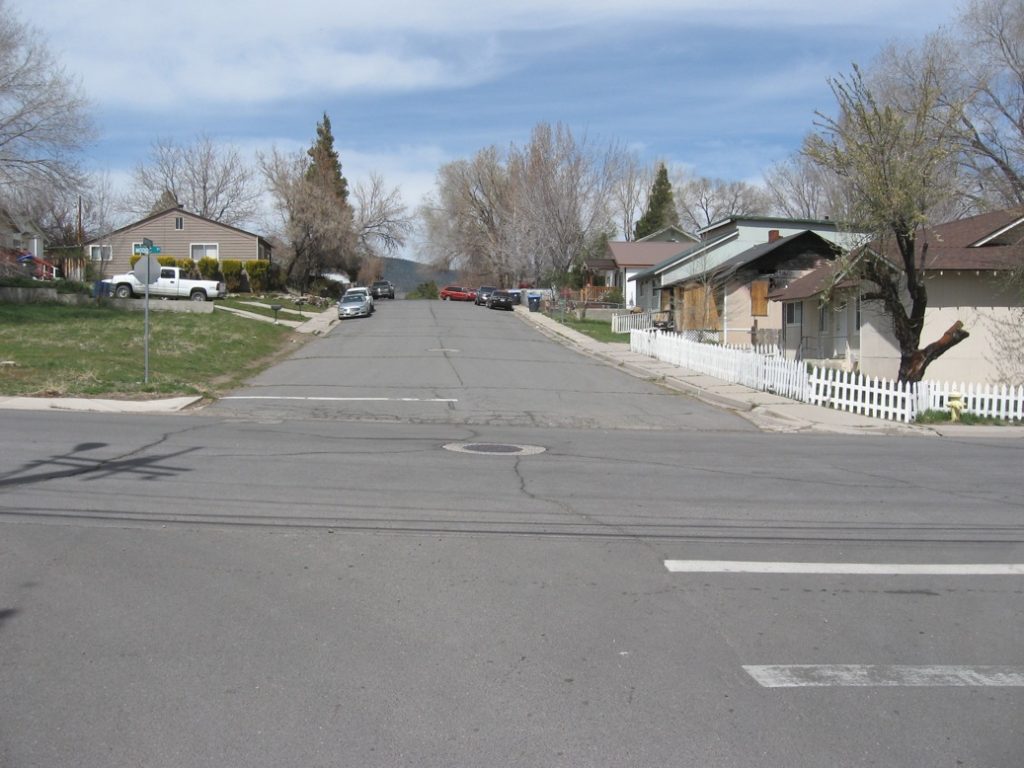
Shasta Street, April 15, 2020

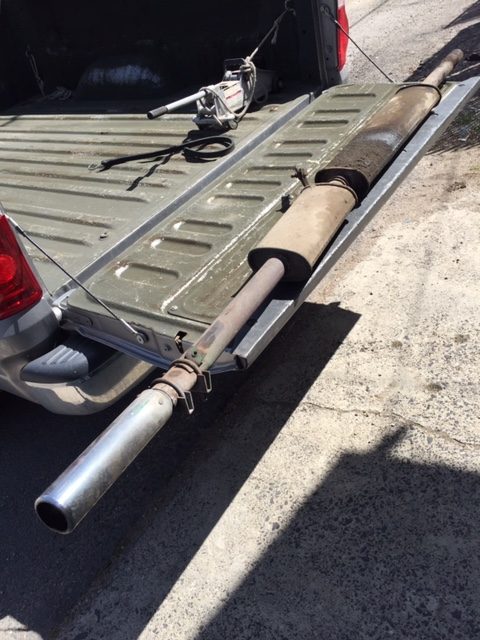
A word of caution, the crossing over the above intersection can be hazardous to your car’s health and your mental health. As I proceeded across, a major dip in my Triumph it removed the exhaust system from it.

Bocci Ball Anyone?

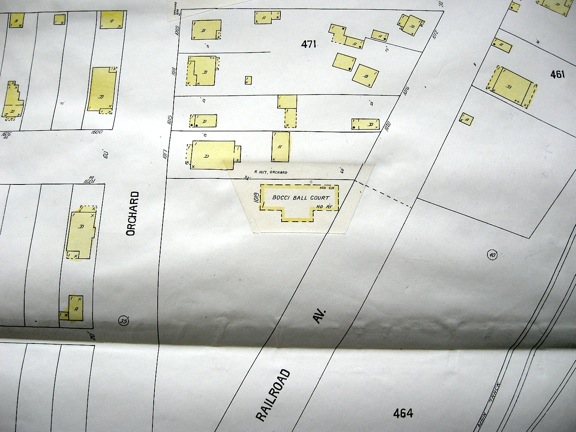
Revised 1935 Sanborn Fire Insurance Map of Susanville, indicating the Bocci Ball Courts.

This is one of those interesting little discoveries, that I do not know anything. In the 1930s, there was a Bocci Ball Court located at 1019 Orchard Street, Susanville. Also spelled as Bocce is in the simplest term as Italian lawn bowling. Where the court was located was part of the housing section for the employees of the Lassen Lumber & Box Company. In the company’s, 1923 photograph album portfolio has a photograph with the caption “Housing for the Italians.” Initially, Lassen Lumber hired a number of Italian immigrants, followed by Spaniards and Filipinos. How long the court existed, I have not a clue and in all my years of research I have never come across a single reference of Bocci being played in Susanville.

Spread the word, and encourage a friend to subscribe.

The Wooden Box Campaign

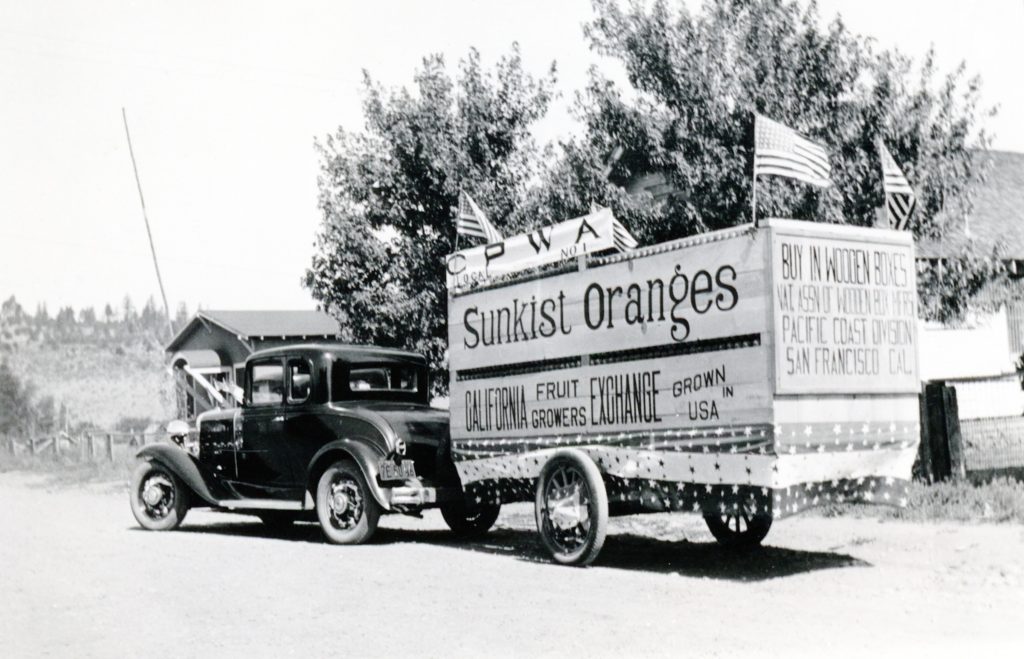
A1937 Lassen County Fair Parade Entry, featuring an oversized wooden box.

At the onset of the Great Depression of the 1930s, the Pacific Northwest lumber industry launched various campaigns to educate the public about the many benefits of timber. Recently, readers many recall the Forestry Essay Contests in the schools.

In the late 1930s, witnessed the organized wooden box campaigns. In 1938, according to the Wooden Box Institute over 50,000 employees of the lumber industry representing an annual payroll of $50 million were participating in the movement. It should be duly noted, that in this era, one of the major components of a sawmill was the box factory division. The manufacture of box shook to make wooden boxes accounted for nearly half the lumber produced in the 1930s. This was an important factor to the local mills of Fruit Growers and Lassen Lumber & Box which their employees joined the movement. On February 1, 1938 the Susanville Wooden Box Promotion Association was formed.

Subscribe

White Pine Verdict

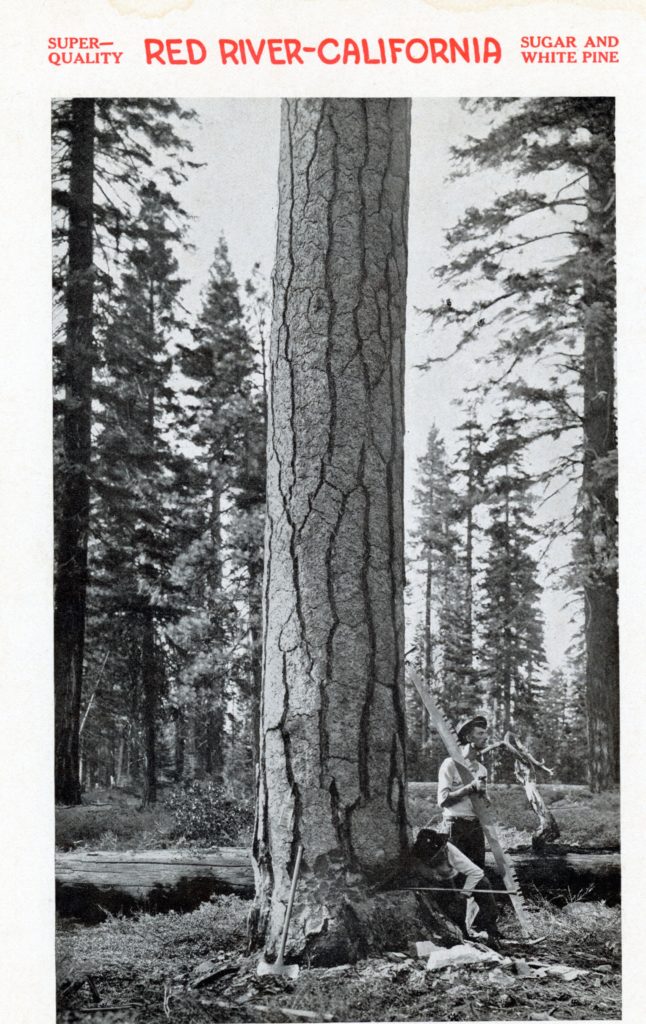
Red River timber fallers preparing to do their job 1915.

It was only until recently that I learned when the federal trade commission cleared up something that confused me for years. In 1931, the commission ruled that thirty-nine West Coast lumber producers would be banned from using “white pine” in their advertising, when in fact it was a “yellow pine” i.e. ponderosa pine. The commission stated there were no true white pine the west. It was stated these producers used white pine in advertising that resulted in a “substantial monetary sales advantage.” Two local companies were cited, Lassen Lumber & Box and Red River Lumber.

When I first began my research, I was confused with the term white pine, yet the two aforementioned companies sold their product under that label. In fact, they aggressively marketed their lumber as such in the Midwest and Eastern markets, since for them that was their preferred lumber.

Subscribe