Tag Archives: Honey Lake Valley

Lassen County Desert Land Act

The Belfast District, 1898. It was to be the center piece of Merrill’s reclamation project.

The federal land patent process often referred as homesteads worked fine until the westward expansion. After crossing the Mississippi River there were dramatic changes in geography and climate. It was President Abraham Lincoln who corrected the situation. In 1862 Lincoln was able to pass three important pieces of legislation since his opposition failed to show up in Congress. These were the creation of the Department of Agricultural, the Pacific Railroad Act and the 1862 Homestead Act. While the Homestead Act did improve matters in the west, it was not a one-size cure all fix.             The arid intermountain west presented its own challenges. A unique chain of events occurred when Captain Charles A. Merrill announced in 1873 of his reclamation plan for the Honey Lake Valley by tapping Eagle Lake as its water supply. It should be noted that Merrill was not a novice to land issues. He came to California, in 1864, from his native state of Maine. In 1870, Merrill was involved in a title dispute of a Mexican land grant near Santa Barbara. As a result of that involvement he worked ardently as a land agent for individuals who had capital to invest.             

For Merrill to move forward on his Eagle Lake project he would need federal legislation for an easier method to homestead arid lands. Merrill recruited California Congressman J.K. Lutrell to craft such legislation. On March 3, 1875 Congress approved Lutrell’s bill, the Lassen County Desert Land Act. In essence, an individual could claim up to 640 acres of government land, versus the standard 160-acre limit. A person then had two years time to reclaim the land by irrigation and they could purchase the land from the government at $1.25 per acre. The last provision was unique in that one did not have to reside on the land as a requirement. The Lassen County Desert Land Act gave birth to the much more famous Desert Land Act of 1877. The two Acts were nearly identical; expect of course the latter applied to all arid regions of the American west. There was one other major change in the fee structure. Under the Desert Land Act, “the settlers pay twenty-five cents per acre at the time of application, to have three years (versus two) for the purpose of irrigation and to pay one dollar per acre upon making the final proof, i.e. being issued a land patent to the property. The Desert Land Act was immensely popular and large swaths of land in the West were obtained under this Act.             

 It should be noted there was a dark side to it. This was from the Lassen County Desert Land Act’s non-residence provision that was included in the Desert Land Act. In the first decade there was a significant amount of fraud. It enabled land speculation companies to acquire thousands of acres of land by hiring dummy entry men to file on said land. Locally, this was particularly the case in eastern Honey Lake Valley and the Madeline Plains. Later amendments to the Act reduced the fraudulent activity. 

More tomorrow . . .
Never miss a story, click here to subscribe.

The Buntingville Breeze

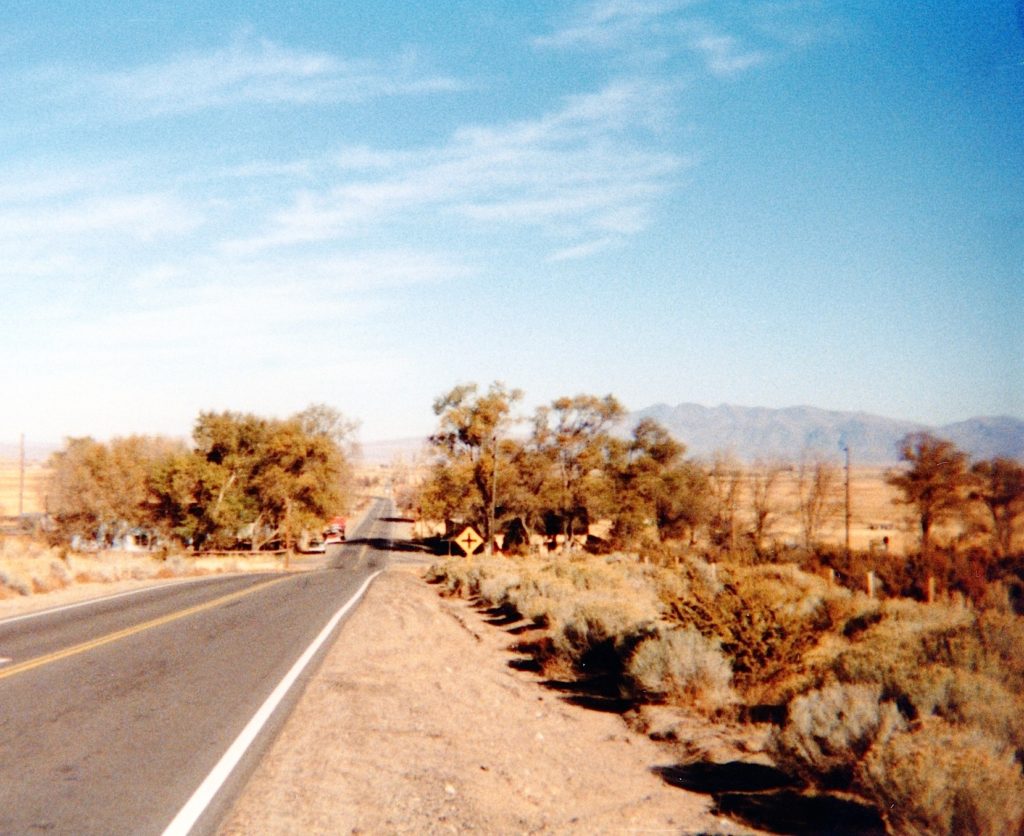
A view of Buntingville, November, 1980.

The Buntingville Breeze was one of those short-lived parody publications. When it made its debut in May 1899 the editor went by the non-deplume Spot Cash Sockettuem. The following issue revealed the editor’s identity as Mike Phillips, the town’s only merchant. It never survived long enough for a third issue as Phillips closed his Buntingville store and opened a new one in Standish.

Subscribe

Thompson Peak Fire Lookout

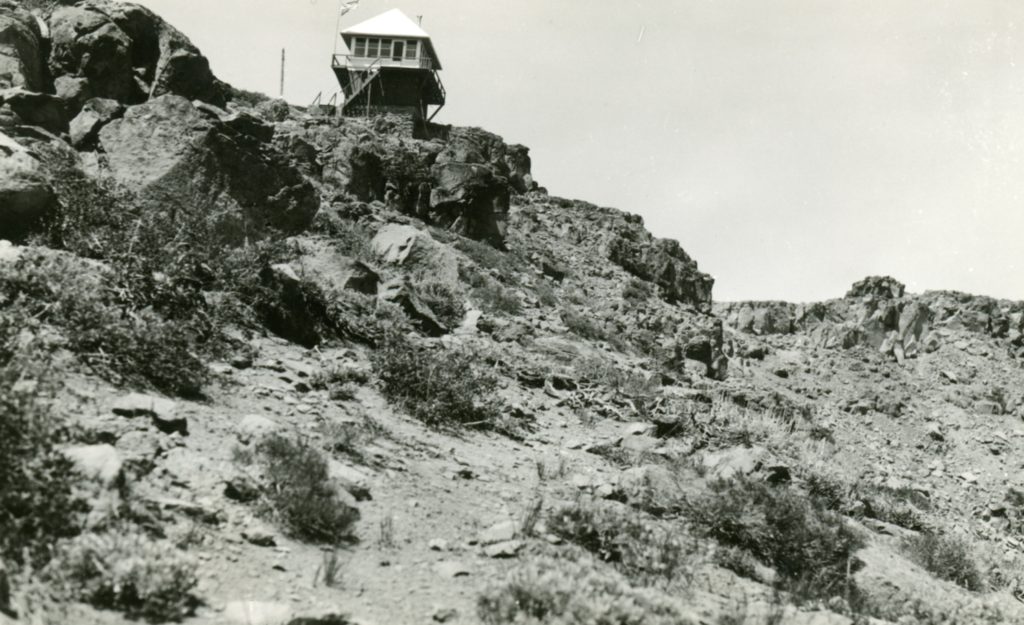
Thompson Peak Fire Lookout, circa 1950–Courtesy of Margaret Purdy

September is a wonderful time to go out and explore, with mild temperatures and in many cases most of the back roads you will have all to yourself. An interesting excursion is the Thompson Peak Fire Lookout that looms above Janesville at an elevation of 7795’. It was built in 1931, and it is still a manned lookout. The view of the Honey Lake Valley and the surrounding territory is magnificent. However, due to the Walker fire it may be awhile before one can access Thompson Peak.

Never miss a story, click here to subscribe.

Johnstonville Post Office

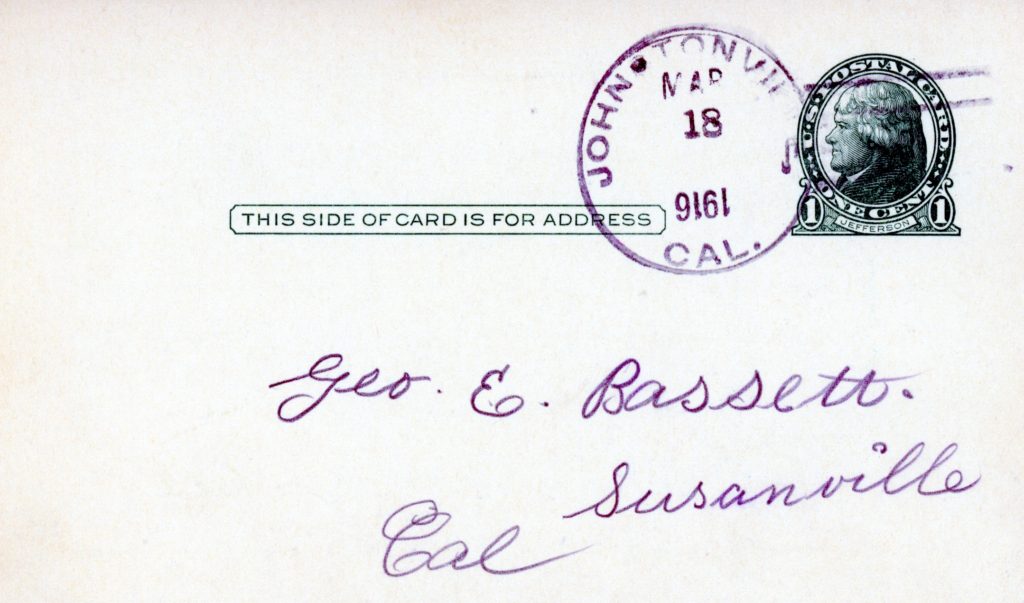
Johnstonville Post Office cancel

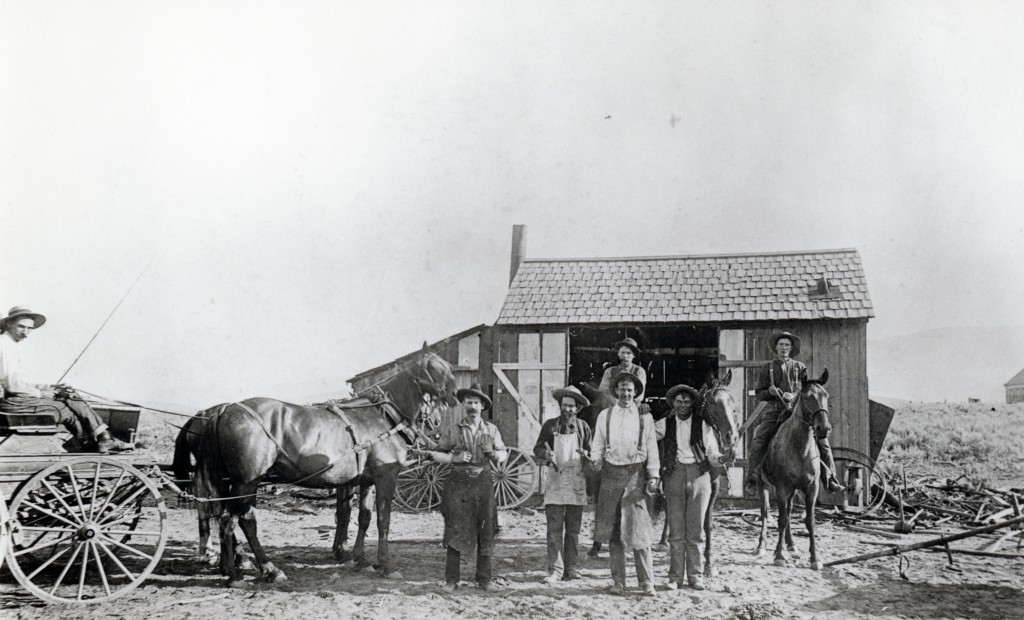
Johnstonville’s close proximity to Susanville hampered its development. Initially, for many years there were only two institutions that existed a school and flour mill. When the Diamond Mountain Creamery was established there, it was an impetuous start for the development of a community. Soon to open was Aaron Hooks blacksmith ship. This was followed by Andrew Spoon’s general store. On November 15, 1902, Spoon had established the Johnstonville Post Office. After a few years Spoon sold out to W.T. Stark in search of new opportunities. On March 3, 1936, Stark’s store, home and along with the post office was destroyed by fire from an overheated chimney. Once reimbursed by insurance all was rebuilt. The post office closed on October 27, 1943. 

Johnstonville Blacksmith Shop

Subscribe

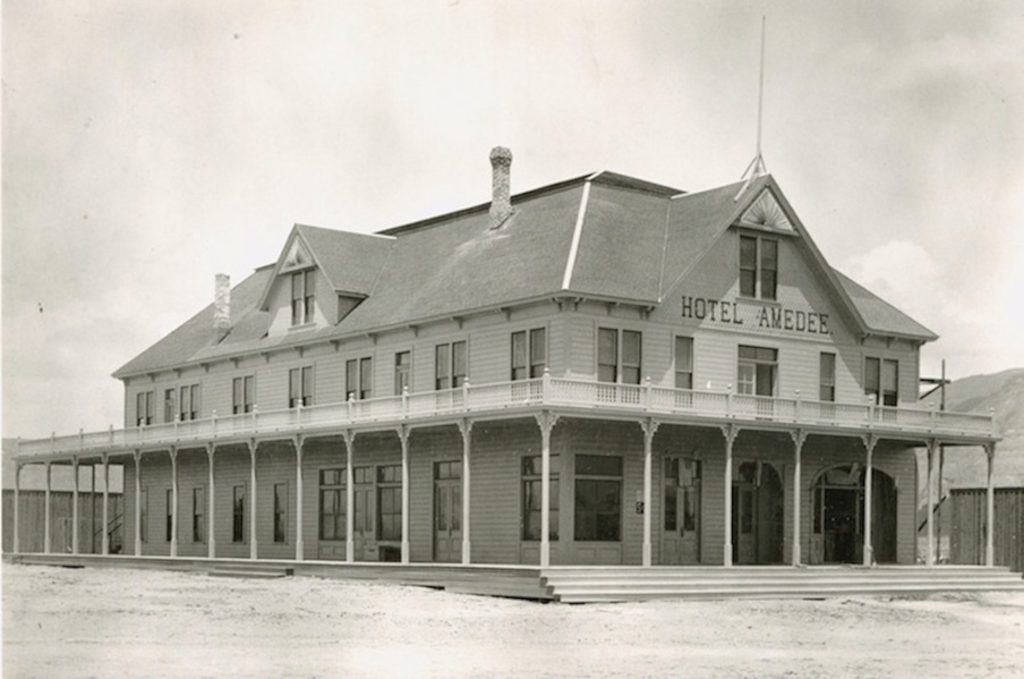
The strange fate of the Amedee Hotel

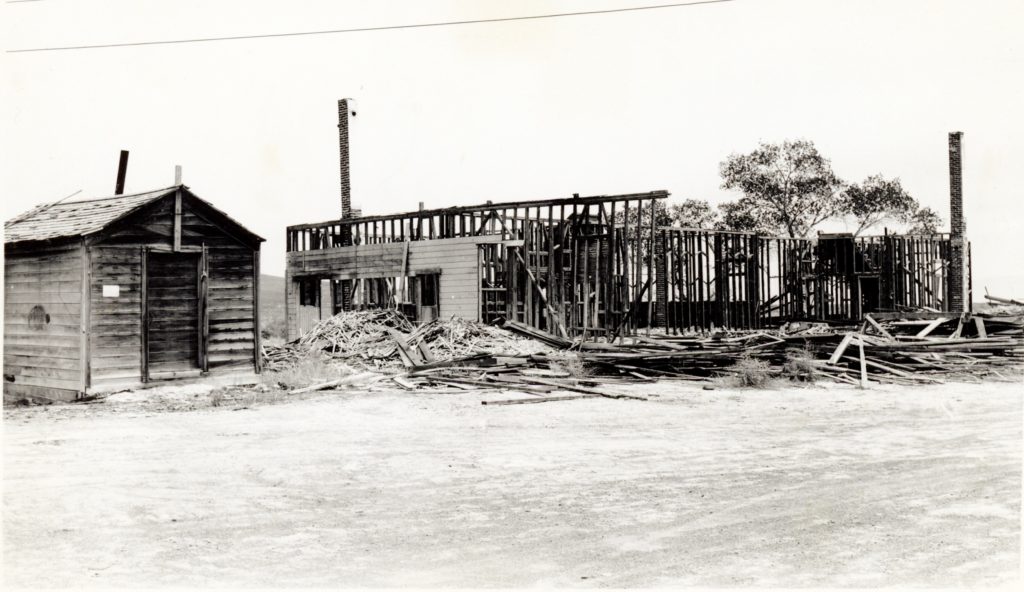
The remnants May 1950. Photograph taken by Harry Ryan

Amedee was the premier railroad boom town on the east side of Honey Lake. It was created in essence when the Nevada-California-Oregon Railroad (NCO) extended its line there in 1891. The following year witnessed lively times rivaling in population of Susanville. The town’s centerpiece was the majestic Amedee Hotel. In 1899, the NCO began work to extend its line north, and Amedee slipped a notch or two in importance. A revival of sorts began in 1910 with the Standish Water Company’s development of an elaborate irrigation system. In 1912. A second railroad, the Fernley & Lassen, added more excitement to region.

By 1917, Amedee’s decline had begun. In 1918, the NCO abandoned the segment of the railroad that serviced Amedee. At the same time the Standish Water Company’s project failed. Then with the advent of World War I a major segment of the east side of Honey Lake was de-populated. By the 1930s, the only occupants of the hotel was the town’s caretaker. By the 1940s the hotel was in a slow decay. In the spring of May 1950, Jack Humphrey who owned it had the hotel dismantled, since it was constructed with premium lumber. The lumber was then hauled to Jack’s residence near Milford, in which he intended to use it to construct a new home the following year. That September a forest fire destroyed the barn that the lumber was stored in.

The Amedee Hotel in its prime.

Subscribe

Standish vs. Litchfield

Standish, 1908. Courtesy of Betty Gorbet

All things considered, since Standish started as a planned utopian community that eventually failed, there was that bit of original quirkeness that prevailed for years, after the demise of the failed experiment. Case in point, when the Fernley & Lassen Railroad surveyed and later constructed the railroad north of the town in 1913, it was not a big issue. It was odd. Other communities would have lobbied hard to have a railroad come into their town. Not Standish. When Ben Gibson plotted out the nearby town of Litchfield that the railroad would become an integral part of that community, Standish yawned. Standish had only been established in 1898, yet it was the first major town in that district and enjoyed a loyal following of the agriculural district, that Litchfield which tried could never overcome.

Never miss a story, click here to subscribe.

Johnstonville Methodist Church

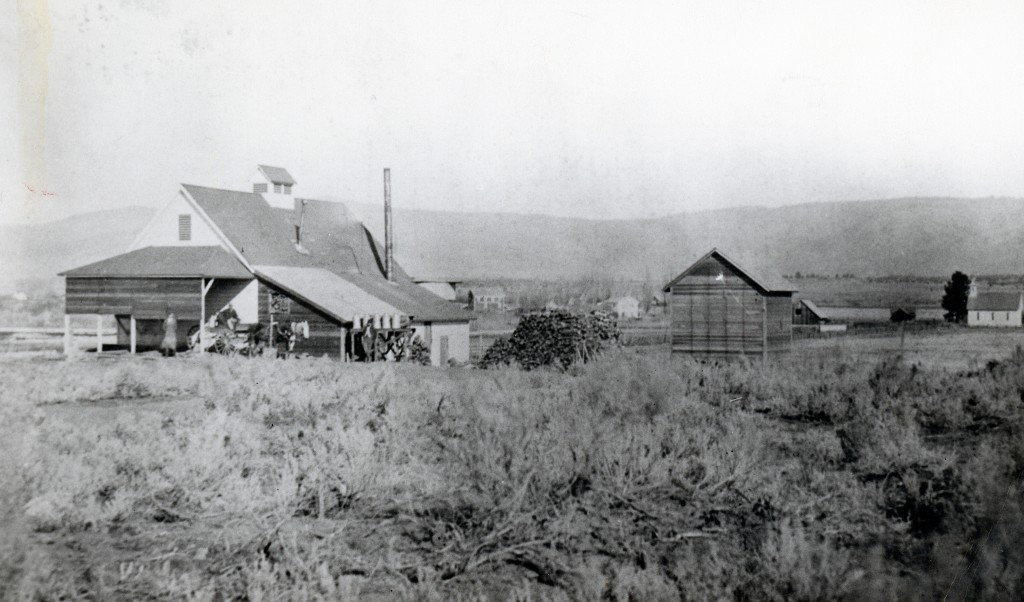
DM Creamery
Diamond Mountain Creamery, Johnstonville, 1897. To the far right, the church is visible.

The Methodist Church at Johnstonville has been a challenge to research. Recently, I came across a transcribed letter dated January 19, 1961 that Ada Hart wrote to Gladys Bass that primarily focused on the history of the Baptist Church at Johnstonville. Thankfully, Ada briefly wrote about the nearby Methodist Church. She wrote that it was built in 1889, along the Susan River, east of the bridge on property owned by Peter Scholl. Ada recalled attending the church there, and that the Susanville pastor was in charge of the services that were held at three in the afternoon. How long it remained in operation and what became of the church, I do not know.

Subscribe

Toad Town No More

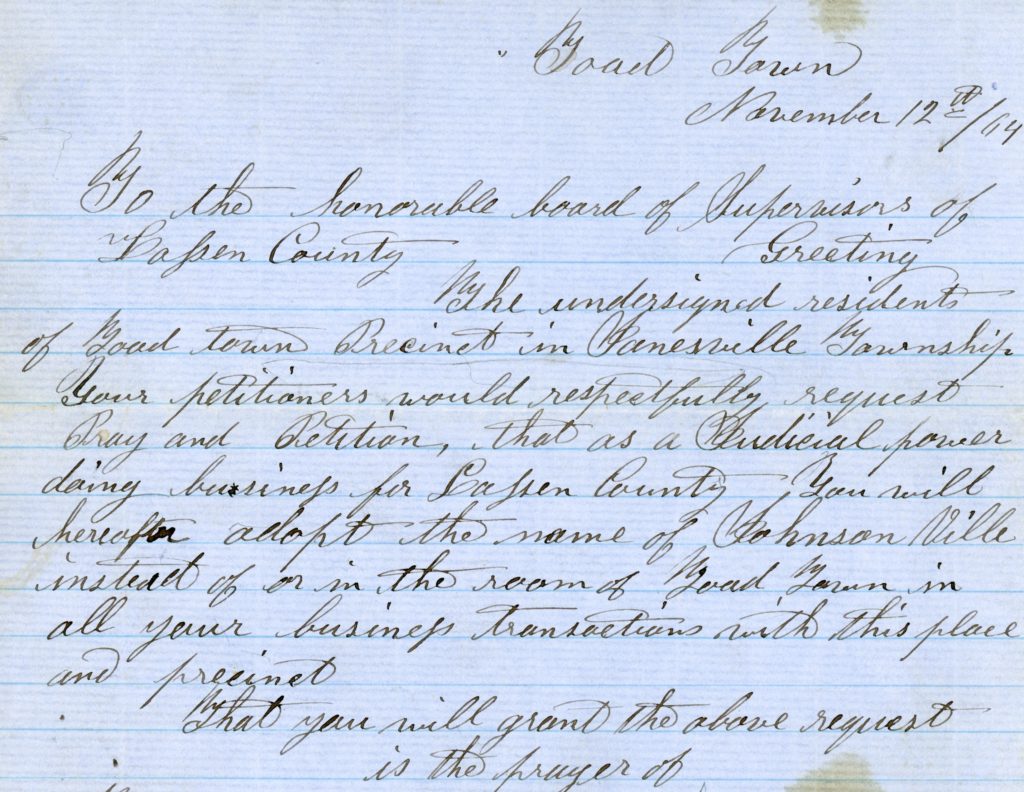
The November 12, 1864 petition.

In its earliest days, Johnstonville suffered an identity crisis. In the mid to late 1850s, a whenever a warm spring/ summer rain storm hit that area and its aftermath caused a swarm of frogs/toads to appear and someone gave that district the name of Toadtown. In 1864, when Lassen County Board of Supervisors were busy with the formation of the county, they named the voting precinct there Toad Town. At the same time, the board named the school district there Susan River. There were some people who did not like the monicker of Toad Town. A dated petition of November 12,1864 signed by 41 individuals asked the Board of Supervisors to change the name to Johnsonville, the “t” omitted. Another peculiar thing about this petition besides the spelling, was the majority of the people who signed it, lived in Susanville. On December. 7, 1864, meeting of the Board of Supervisors they approved the petition as submitted,  changing the Toad Town Voting Precinct to Johnsonville. As to the Susan River School, they did not change the name to Johnstonville until 1878.

Subscribe

Honey Lake Currency

Rutabagas also known as turnips

Isolated settlements in their earliest days had many obstacles to overcome and one item that was hard to come by was cash. This problem was only excabberated during the Civil War years of the 1860s in this region.

The Honey Lakers were a resourceful lot. One crop that grew well was rutabagas. In April 1860 when Honey Lake Valley’s first newspaper, Richmond Times, made its debut they offered a subscription price of 200 pounds of rutabagas. There is one recorded court case in which the lowly rutabaga was accepted as legal tender. In 1866, A. Dillon sued Antone Storff over the payment of labor and sundry supplies. Dillon accepted Storff’s partial payment in the form of rutabagas.

Subscribe

DeWitt, Lassen County

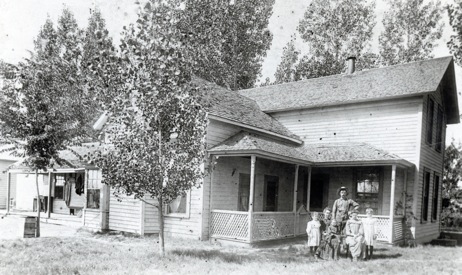
DeWitt Ranch, 1886.

There was a time when the DeWitt family was well known throughout the Honey Lake Valley. However, with time comes many changes and many old time families slowly fade away. DeWitt is one such family.

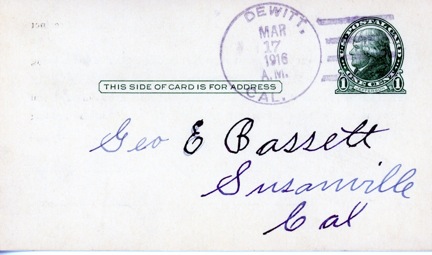
Franklin and Mary DeWitt settled in the Tule District of the Honey Lake Valley. A portion of their ranch is now known as the Fleming State Wildife Refuge Unit. Their son, Walter B. DeWitt (1863-1948) was a life-long resident of the Tule District.  His 1906 biography stated: “The farm which he now occupies is situated on the Spoonville and Hot Springs stage line, about four miles west of the last named place. On his homestead, July 1, 1903, through his earnest and energetic efforts, a post office was established named in his honor, and he was chosen the first postmaster, a position which he still occupies, with his wife as assistant.” The post office closed on November 30, 1927 as part of implementation of the Rural Free Delivery system.

Subscribe