Tag Archives: Honey Lake Valley

Historic Ranch Houses

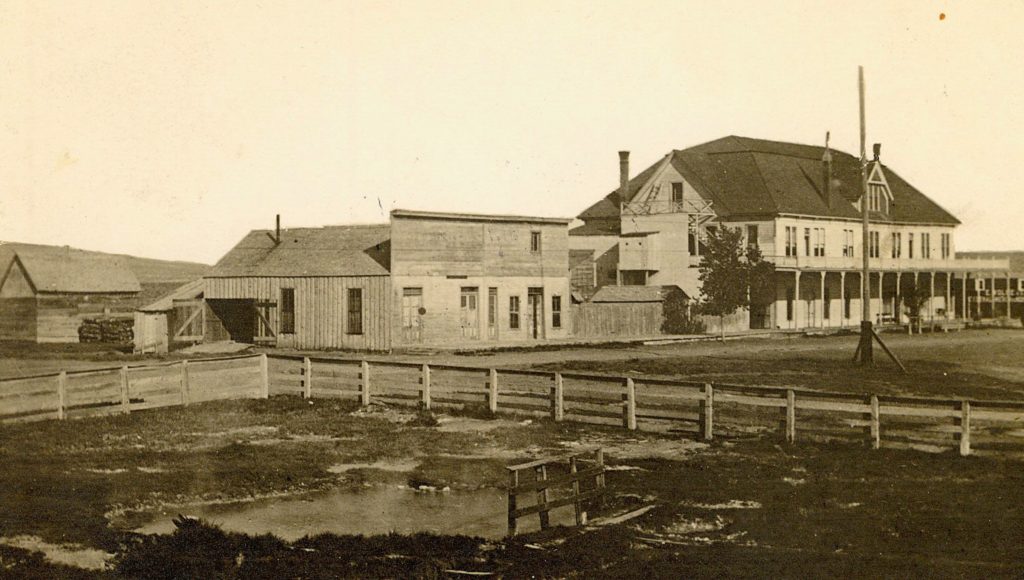
The Charles Hartson ranch house, circa 1915. Courtesy of Dorothy Stone

While we have explored some of the historic homes in Susanville, we should not neglect those of similar stature that graced the Honey Lake Valley. Some still standing, while others for numerous reasons did not stand the test of time.

For example was the ranch house of Charles Hartson built in 1884. Then, it was located in the Tule District of the Honey Lake Valley, but a more apt location today it was located adjacent to the Dakin Unit of the Honey Lake Wildlife Refuge. It should be duly noted that Hartson’s daughter, Elsie who was married to Pete Dakin, was an adjoining ranch that comprises the Dakin Unit. His sons, George and William Hartson also had adjoining ranches to the home place. Eldest son, Frank Hartson took over the original homestead when his parents retired to Susanville.

In 1926, Frank Wood acquired the original Hartson Ranch and resided there for awhile. On the morning of May 4, 1935 the house caught fire and was completely destroyed, along with one outhouse. The origin of the fire was never determined and the loss estimated at $4,000.
Support

It’s pheasant season

1919 Hunt
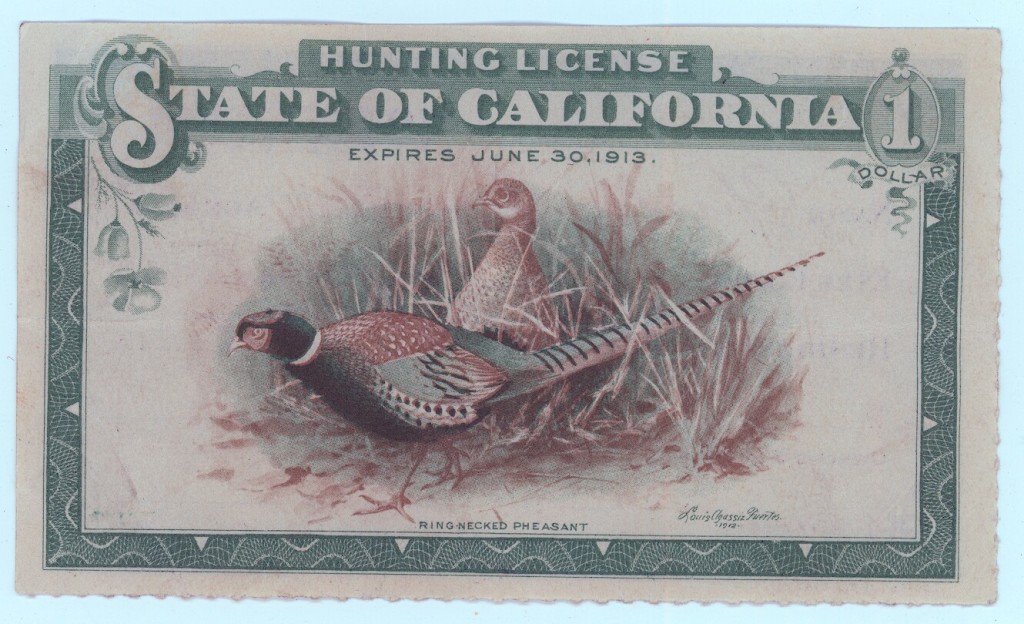
My great uncle Charley Tanner’s 1919 license.

The month of November means many things to many people. For hunters it is beginning of pheasant season in Lassen County. It was not until the 1930s when there was a major push by the California Department of Fish & Game to introduce pheasants into the Honey Lake Valley. Conditions for the birds were exceptional as a considerable amount of grain was being grown. In 1934, the agency with the aid of the Lassen County Fish and Game Conservation League released 572 birds. It was repeated again in 1935 and 1936. During the late 1930s, Fish & Game paid ranchers to raise the birds. That practice ended in 1941 when Fish & Game purchased the Fleming Ranch and turned it into a wildlife refuge.

It should be noted, however, in 1929, the Westwood Rod & Gun Club had 800 pheasants planted on various ranches in the Honey Lake Valley.

Subscribe

Farmers Land Company

On April 3, 1916, the McKissick Cattle Company purchased the holdings of George Callahan at Amedee, which included the hotel, hot springs and several hundred acres of land. Courtesy of Marie H. Gould.

The Farmers Land Company was a short-lived operation, in 1916, that tried to bring new life to the Standish Water Company east of Amedee. That company had to planned to reclaim at least 4,000 acres of sagebrush lands, by using a pumping plant to pump water out of Honey Lake for its water supply.

Its promotional literature, was rather refreshing and it did get my attention. Here is a sample: “Do the trees obstruct your view of the forest? Silly question, eh? But not so silly when you ponder over it. It is a well known fact that years of daily contact with the same surroundings dulls a person’s appreciation of the things about him.

“Honey Lake Valley furnishes a striking example. People who have lived here for years in the valley have lost sight of the immense fertility of the great area of untilled land south of Amedee. We realized the possibilities of this the moment we saw it. The result is that settlers are now flocking to Amedee from all parts of the country and not long we will have the greatest and most prosperous settlement in the entire county.

“Wake up man and get out of this rut and make something of the possibilities around you! While our new colony will be known as Rosendale, will essentially be a Scandavian settlement, we welcome any man who has energy and determination to succeed. Come down and see us today. We are ready to help any man who has made up his mind to help himself.”

Support

The Tanner Slough Initiative

Colony Dam and the Baxter Creek Siphon, Susan River, 1938

In the never ending quest for search for water in the Honey Lake Valley for irrigation a multitude of avenues were explored. A late entry was that of the Tanner Slough Irrigation Association that was formed in the late 1930s. This association was composed of the ranchers of the Tule District, the lower end of the Susan River and the various sloughs before they empty into Honey Lake. Those ranches included—Theodore, Mapes, DeWitt, Bailey, Fleming, McClelland, Gibson, Tanner and Dill.

They were able to impound 2,600 acre feet of water in Willow Creek Valley, and also flood waters of Horse Lake. The spring floods of 1938 caused considerable damage throughout the region. The Colony Dam on the Susan River near Standish was a casualty. The Colony Dam did not impound a great deal of water. One of its key components was a point of diversion of water to downstream users.

On April 20, 1938 the Tanner Slough Irrigation Association sent a letter to the California Governor Merriam seeking funds to repair and reconstruction of the Colony Dam. The flood damaged some 10,000 acres of land belonging to members of the Association. Not only delayed getting crops planted, but when summer arrives they might not be able to divert irrigation due to the damage of the dam, and the sloughs. They sought $3,500. In their plea, they wrote, ”We know of no other place to make an appeal for aid and assistance. You are about our last hope.” Their request was denied.

Never miss a story, click here to subscribe.

An Eagle Lake CCC Camp?

The outlet construction camp of the Bly Tunnel, 1922. Courtesy of Lola L. Tanner

In 1935, Lassen County officials requested a third Civilian Conservation Corp Camp (CCC). This would function a bit differently.  What they sought was a CCC Camp at Eagle Lake to assist with the beleaguered Bly Tunnel and the Tule and Baxter Creek Irrigation Districts. It was their contention after all that a CCC camp could provide work on the tunnel that was necessary to prevent further bankruptcies of the farmers and ranchers involved with the districts. The camp could also provide much needed labor for the canal and siphon system in the Honey Lake Valley that distributed the water. The county’s request was denied, but government officials were somewhat sympathetic and stated some limited manpower might be available from time to time from the Secret Valley CCC camp.

Never miss a story, click here to subscribe.

P.S. – For Lassen County residents, today, one can receive a free flu shot at a drive through clinic at the Lassen County Fairgrounds.

The Little Truckee River Project

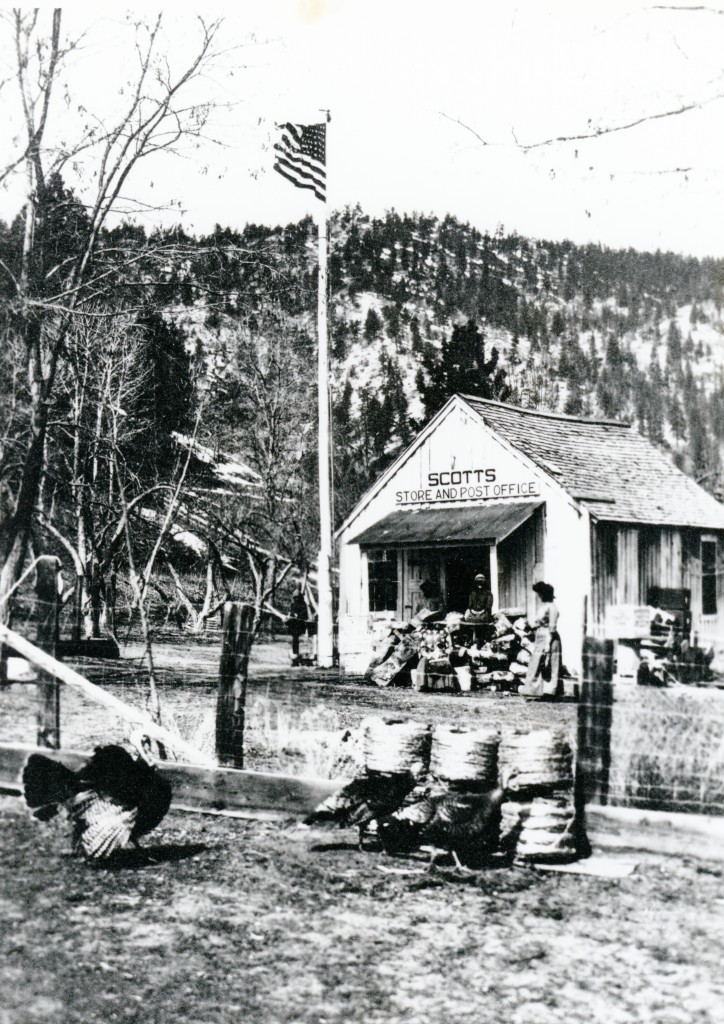
Scotts
Scotts, a Western Pacific station in Long Valley. Courtesy of the Nevada Historical Society

The Southern Lassen Irrigation District was one of my entities organized to reclaim the sagebrush lands of the southern and eastern portions of Honey Lake Valley. This would be done by damming the waters of Long Valley Creek, capturing especially the winter run-off to hold for the spring and summer irrigation season when it is needed the most.

Enter C.E. Grunsky, consulting engineer for the irrigation district. It was his contention that if the district’s goal was to reclaim 26,000 acres, they would need more water than just Long Valley Creek. In July 1918 he unveiled his plan. Grunsky wanted to divert the flood/surplus water of the Little Truckee River via Dog Valley into Long Valley Creek. At Scotts, along Long Valley Creek, about six miles south of Doyle a dam would be construct to impound those waters. It was his contention this would alleviate the flooding problems of the Truckee Meadows (Reno/Sparks). In addition it was his opinion those flood waters were wasted in Pyramid Lake which he remarked, “did no good to anybody.”

In August 1918, Grunsky organized a meeting of California and Nevada officials to discuss the merits of the project. Most of the attendees were receptive. The project never proceeded any further, especially since everyone’s focus at the time was World War I, rations, etc.

Never miss a story, click here to subscribe.

Desert Land Act End Notes

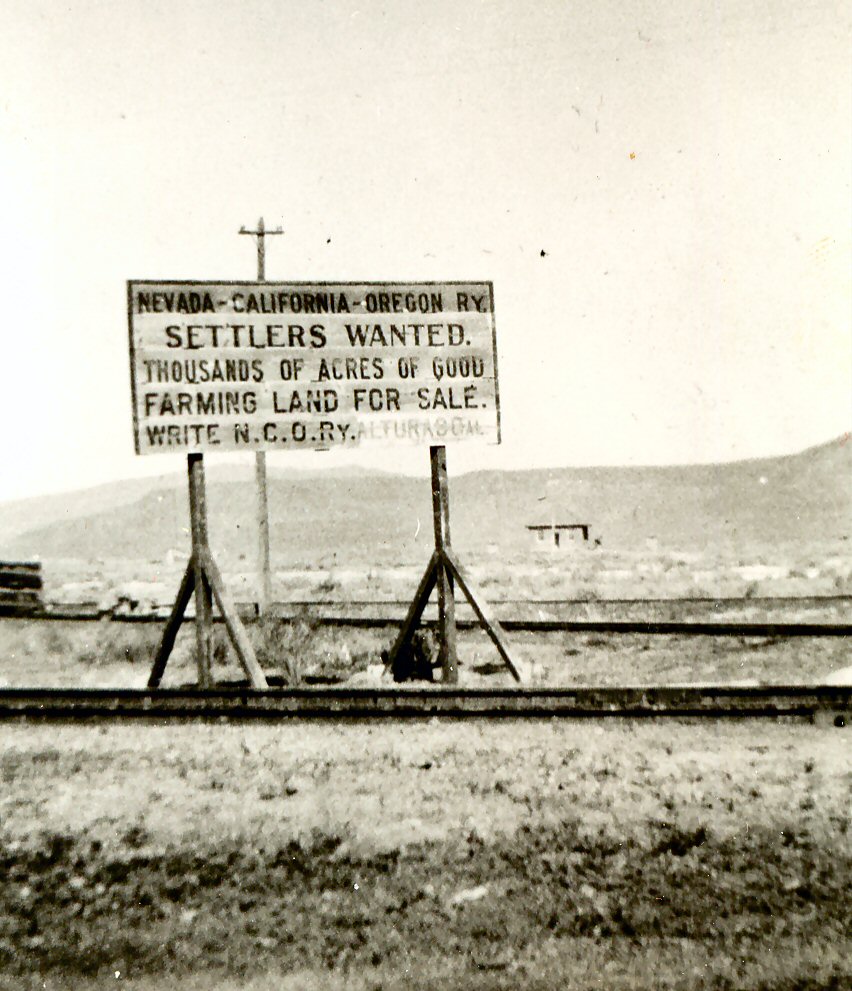
This weathered sign of the NCO at Wendel in 1920, in better days to entice homesteaders. Photograph taken by Lassen County Librarian Lenala Martin.

There is a bit of irony in this tale. In 1923, Merrill’s vision of tapping Eagle Lake for irrigation became a reality. Nobody used his Lassen County Desert Land Act which it was designed for. Of note, it was David Watson of Big Valley who was the first person to use Merrill’s Act in 1887 when he received a federal land patent for 480 acres, located thirty-five miles north of Eagle Lake. At least, in 1891, Merrill did receive title to 160 acres near Belfast, which was to be his dream city of 25,000 inhabitants in the Honey Lake Valley under his Act.

The majority of the federal land patent acts have been revoked, though the Desert Land Act, as far as I know, is still in existence. The last time it was used in this region was in the 1980s. Franklin Jeans wanted to expand his Fish Springs Ranch in eastern Honey Lake Valley on the Nevada side. To meet the reclamation requirement, he had several deep irrigation wells drilled. Jeans had no intention to reclaim the sagebrush land. His goal and it finally became a reality was the water from these wells are now part of Reno’s water supply via a pipeline.

Never miss a story, click here to subscribe.

Lassen County Desert Land Act

The Belfast District, 1898. It was to be the center piece of Merrill’s reclamation project.

The federal land patent process often referred as homesteads worked fine until the westward expansion. After crossing the Mississippi River there were dramatic changes in geography and climate. It was President Abraham Lincoln who corrected the situation. In 1862 Lincoln was able to pass three important pieces of legislation since his opposition failed to show up in Congress. These were the creation of the Department of Agricultural, the Pacific Railroad Act and the 1862 Homestead Act. While the Homestead Act did improve matters in the west, it was not a one-size cure all fix.             The arid intermountain west presented its own challenges. A unique chain of events occurred when Captain Charles A. Merrill announced in 1873 of his reclamation plan for the Honey Lake Valley by tapping Eagle Lake as its water supply. It should be noted that Merrill was not a novice to land issues. He came to California, in 1864, from his native state of Maine. In 1870, Merrill was involved in a title dispute of a Mexican land grant near Santa Barbara. As a result of that involvement he worked ardently as a land agent for individuals who had capital to invest.             

For Merrill to move forward on his Eagle Lake project he would need federal legislation for an easier method to homestead arid lands. Merrill recruited California Congressman J.K. Lutrell to craft such legislation. On March 3, 1875 Congress approved Lutrell’s bill, the Lassen County Desert Land Act. In essence, an individual could claim up to 640 acres of government land, versus the standard 160-acre limit. A person then had two years time to reclaim the land by irrigation and they could purchase the land from the government at $1.25 per acre. The last provision was unique in that one did not have to reside on the land as a requirement. The Lassen County Desert Land Act gave birth to the much more famous Desert Land Act of 1877. The two Acts were nearly identical; expect of course the latter applied to all arid regions of the American west. There was one other major change in the fee structure. Under the Desert Land Act, “the settlers pay twenty-five cents per acre at the time of application, to have three years (versus two) for the purpose of irrigation and to pay one dollar per acre upon making the final proof, i.e. being issued a land patent to the property. The Desert Land Act was immensely popular and large swaths of land in the West were obtained under this Act.             

 It should be noted there was a dark side to it. This was from the Lassen County Desert Land Act’s non-residence provision that was included in the Desert Land Act. In the first decade there was a significant amount of fraud. It enabled land speculation companies to acquire thousands of acres of land by hiring dummy entry men to file on said land. Locally, this was particularly the case in eastern Honey Lake Valley and the Madeline Plains. Later amendments to the Act reduced the fraudulent activity. 

More tomorrow . . .

Never miss a story, click here to subscribe.

The Buntingville Breeze

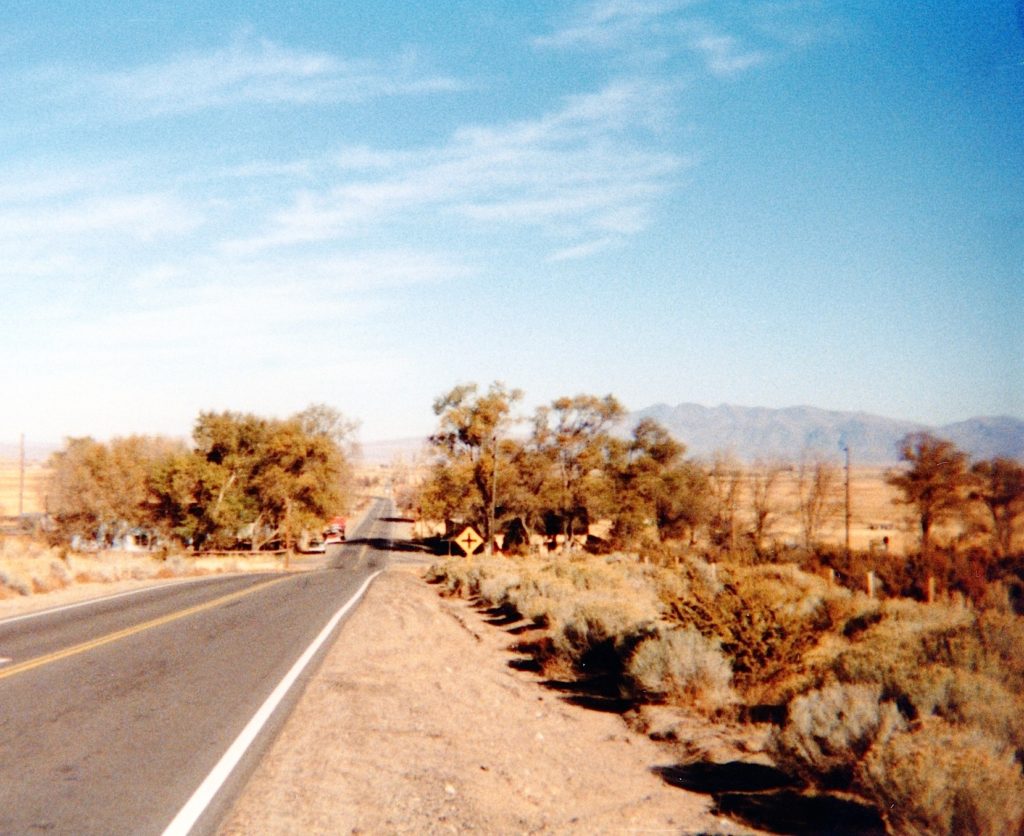
A view of Buntingville, November, 1980.

The Buntingville Breeze was one of those short-lived parody publications. When it made its debut in May 1899 the editor went by the non-deplume Spot Cash Sockettuem. The following issue revealed the editor’s identity as Mike Phillips, the town’s only merchant. It never survived long enough for a third issue as Phillips closed his Buntingville store and opened a new one in Standish.

Subscribe

Thompson Peak Fire Lookout

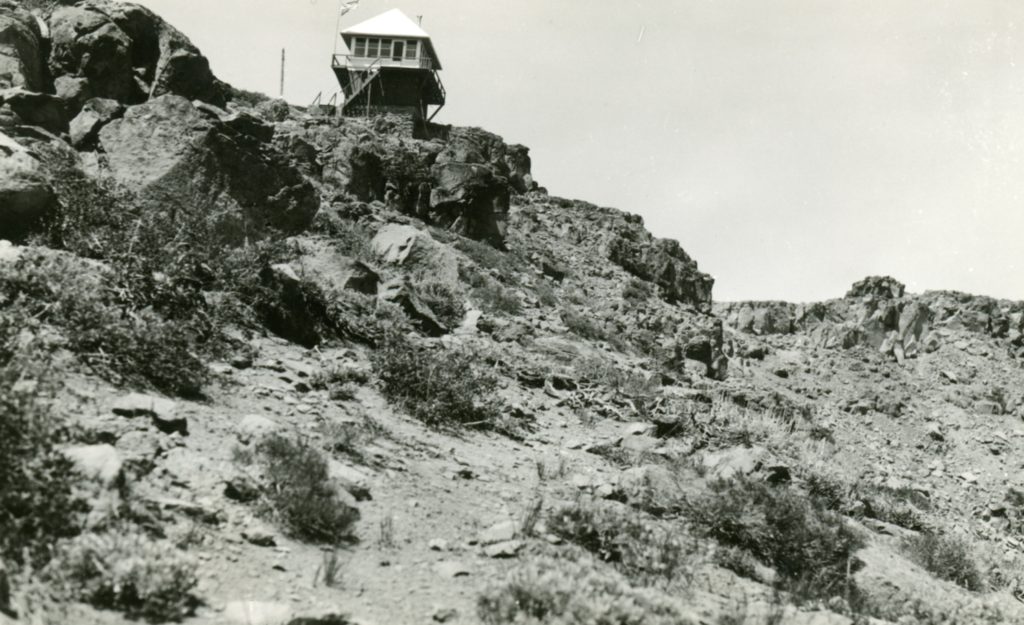
Thompson Peak Fire Lookout, circa 1950–Courtesy of Margaret Purdy

September is a wonderful time to go out and explore, with mild temperatures and in many cases most of the back roads you will have all to yourself. An interesting excursion is the Thompson Peak Fire Lookout that looms above Janesville at an elevation of 7795’. It was built in 1931, and it is still a manned lookout. The view of the Honey Lake Valley and the surrounding territory is magnificent. However, due to the Walker fire it may be awhile before one can access Thompson Peak.

Never miss a story, click here to subscribe.