Incorporated in 1890, the Honey Lake Valley Land & Water Company proposed the construction of a dam on Long Valley Creek to reclaim the desert lands of the eastern Honey Lake Valley. The dam and reservoir site was situated on lands adjacent to that of Long Valley pioneer George Greeno (1817-1902). In the summer of 1892, work began on the dam—90 feet high, spanning a 1,000 feet with a 500-foot wide base. It was estimated that the reservoir would have a storage capacity of 1,281 acres, at an average depth of 14 feet. The project had its skeptics, especially with the regional dam failures of 1890—those of Ward Lake and Skedaddle. The Lassen Advocate noted in October 1892: “The great interest centers in the permanency and holding capacity of the storage reservoir. Will it withstand the winter torrents and the rush of spring freshets? Will it successfully defy the incursions of insidious rodents and stand firm against the pressure of the floods? When the location of the dam is taken into consideration, the scientific, practical and thorough nature of its construction gives conclusive evidence that it will prove permanent.” The Advocate concluded “It has been filled little at a time by fine quality of clay, water poured upon it and then puddle by means of horses, which renders it impervious to water.” The region experienced an unusual amount of heavy fall rains that added a considerable amount of water to the nearly completed reservoir—a delight to many. In late November 1892, the area was hit a deluge, an estimated seven and half inches of rain fell at the dam site alone! The floods from Long Valley Creek breached the dam and left a gaping hole 100 feet wide. The damage was estimated at $50,000. The Company had invested over $175,000 in the project and never recovered from that loss. The Company’s manager, president and owner Fred Lake remained committed to the project until his death in 1942.
Tag Archives: Honey Lake Valley
A Honey Lake Valley Earthquake

Some may recall that back in January I wrote about Sylvester Daniels. For a brief refresher Daniels arrived from Iowa in the spring of 1874 and spent time with his sister, Polly Parks, who resided just east of Buntingville. He kept a journal of his experiences that he wrote specifically for his daughter, Viroqua and the rest of his family who remained in Iowa. The following is his account of the first earthquake he experienced.
“Sunday, January 24, 1875 – Well, we are all alive yet. Now, I will tell you why I started as I did. You have heard of earthquakes I suppose. Well, I will tell on the sly that there was a live one came along here this morning early about 4 o’clock. It awoke me very suddenly, then such a crash. I thought the house was all breaking to pieces and it seemed to roll back and forth in bed. At any rate it shook things up pretty lively, while it lasted. But it was not near as long as I have written about. It seemed to roll back and forth and jar terribly. It seemed to pass towards the Mountain from the Valley.
The hens flew and cackled and the pigs squealed. Polly Parks said it shook every bottle and everything in the house. She said the cream was disturbed on every pan. So you see there was quite a commotion for a time. All the damage that I have heard of as of yet, is some chimneys are slightly rent and some were frightened. I have not heard anyone express themselves to wish it repeated. Polly and Elisha Parks say they are not as near as afraid of them as they used to be of thunderstorms and tornadoes in the East.”
Never miss a story, click here to subscribe.
Susan River – Brockman & Jensen Sloughs

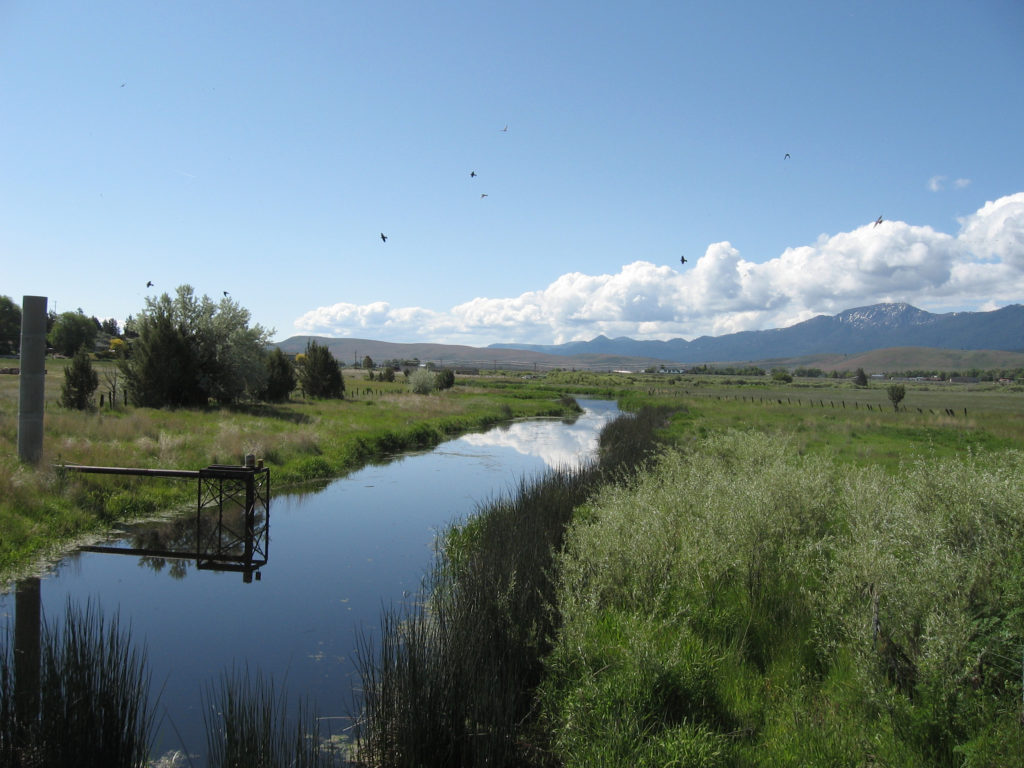
Brockman and Jensen Sloughs are man made irrigation ditches originating from Susan River, at the east end of Susanville, with the diversion point of Woodstock Dam. The dam was constructed in 1861 by Loyal Woodstock and Luther Spencer, and constructed a small irrigation ditch on their adjacent land. It was in that same year, that Woodstock planted the first crop of alfalfa in the Honey Lake Valley.
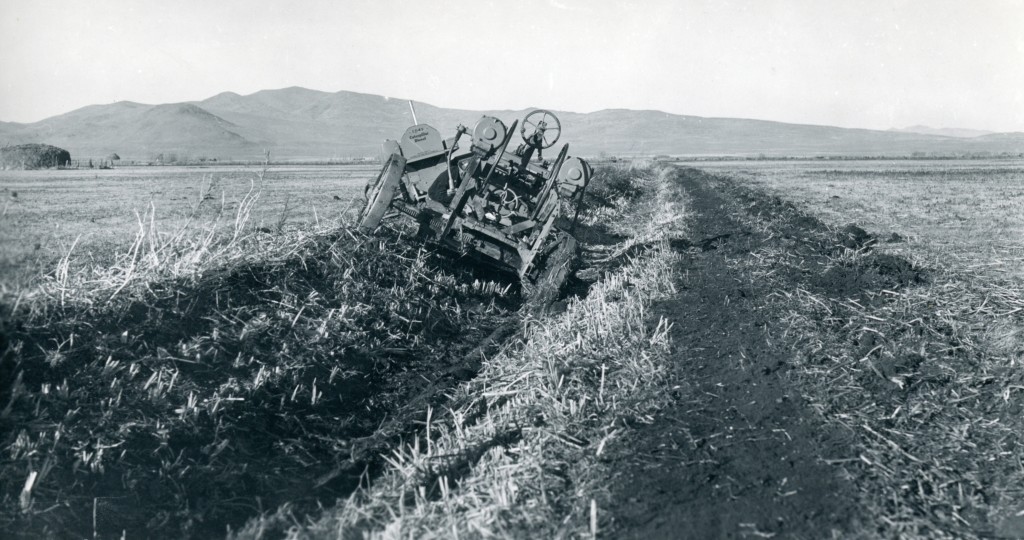
Woodstock’s downstream neighbors liked his irrigation system. On May 4, 1875, W.W. Scholl, John Cahlan, William Brockman, Jurgen Jensen and Fred Hines extended Woodstock’s irrigation ditch and about a mile from the original diversion, the original ditch was split into two, the northern one became known as Jensen Slough and the southern Brockman Slough.
Never miss a story, click here to support and subscribe.
Thomas Abner Ramsey

In 1877, Thomas Abner “Ab” Ramsey arrived in Janesville from his native Iowa. In Janesville, he had numerous relatives, as his mother was a McMurphy. In February 1882, he went into partnership with John T. Masten to purchase the Benjamin Wood ranch in the Tule District of the Honey Lake Valley, each paying $2,000 for the 400-acre ranch. It should be noted that Masten had been a resident of this district since 1872, who had purchased the adjoining John M. Kelley ranch (now Tanner 2016). Within two years, it was no longer just a business proposition, but a family affair when Ab Ramsey married Masten’s daughter, Minnie, on Christmas Eve, 1884.
More changes were on the horizon when in 1886, they sold the ranch to the Dotta Brothers. (Seasoned residents will know this property as the old Bailey Ranch, now owned by Jay Dow). In the meantime, Masten purchased a 640-acre just south of Susanville on Richmond Road from David Knoch for $12,000. The two families relocated to their new home.
In 1892, Ab Ramsey purchased the Marc Bantley place on Johnstonville, about halfway between Susanville and Johnstonville. It should be noted that at all three ranches they had dairy cows.
In 1907, John Masten and his wife Amelia decided it was time to retire, after all he was now 74 years old. Ab Ramsey purchased Masten’s ranch and the Masten’s opted to retire at Pacific Grove, commonly referred to as Honey Lake Heaven. A little over ten years later, Ab and Minnie Ramsey would follow suit. In 1919, his sons, Frank and Roy took over the Richmond Road property, and another son, Masten the Johnstonville Road property.
In 1940, Masten sold the Johstonville Road property to Millard Ulch and moved to Likely. The Richmond Road property was a different story. Frank Ramsey died suddenly in 1921, and his wife Grace continued with the ranch later marrying John Millsap. Over the years, they eventually purchased Roy Ramsey’s interest. In 1960, Grace Millsap sold the ranch to Les and Lyn Allen.
Never miss a story, click here to subscribe.
Elbern Kelley, A Honey Lake Tragedy

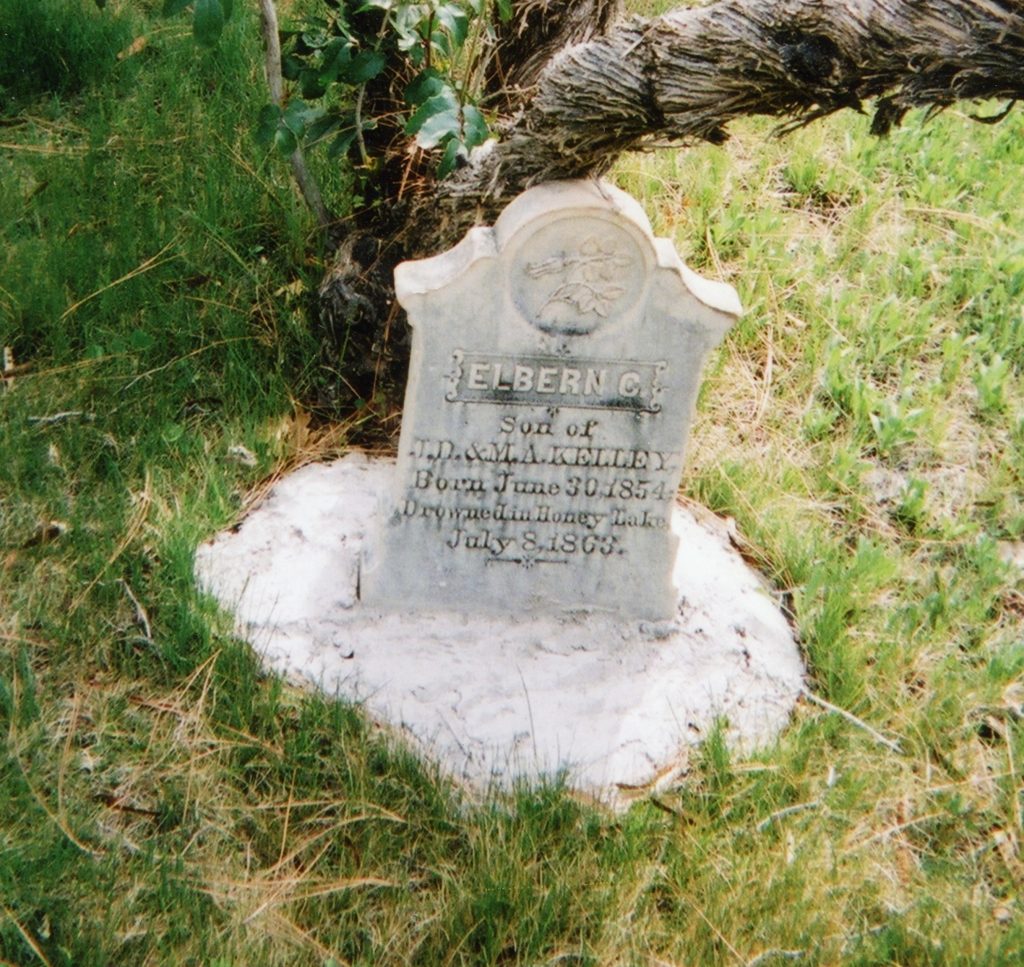
In 1862, the John D. Kelley family arrived in Susanville from Washoe Valley, Nevada. The following year they located in the Tule District of the Honey Lake Valley. The property was known for many years as the Dill Ranch, now owned by Jay Dow.
On July 8, 1863, the family went over to Milford for a social visit. Kelley’s nine-year-old son, Elbern and Joshua Bristo Rice, then eleven, went down to play along the shore of Honey Lake. They then ventured out into the lake on a sand bar. Kelley went even further and got into deep water and did not know how to swim. Rice did not know how to swim either, and rushed to get help. By the time Rice returned it was too late, and Kelley had drowned. It was the first death at Milford and the second drowning in Honey Lake.
Never miss a story, click here to support and subscribe.
Eastside Tour?

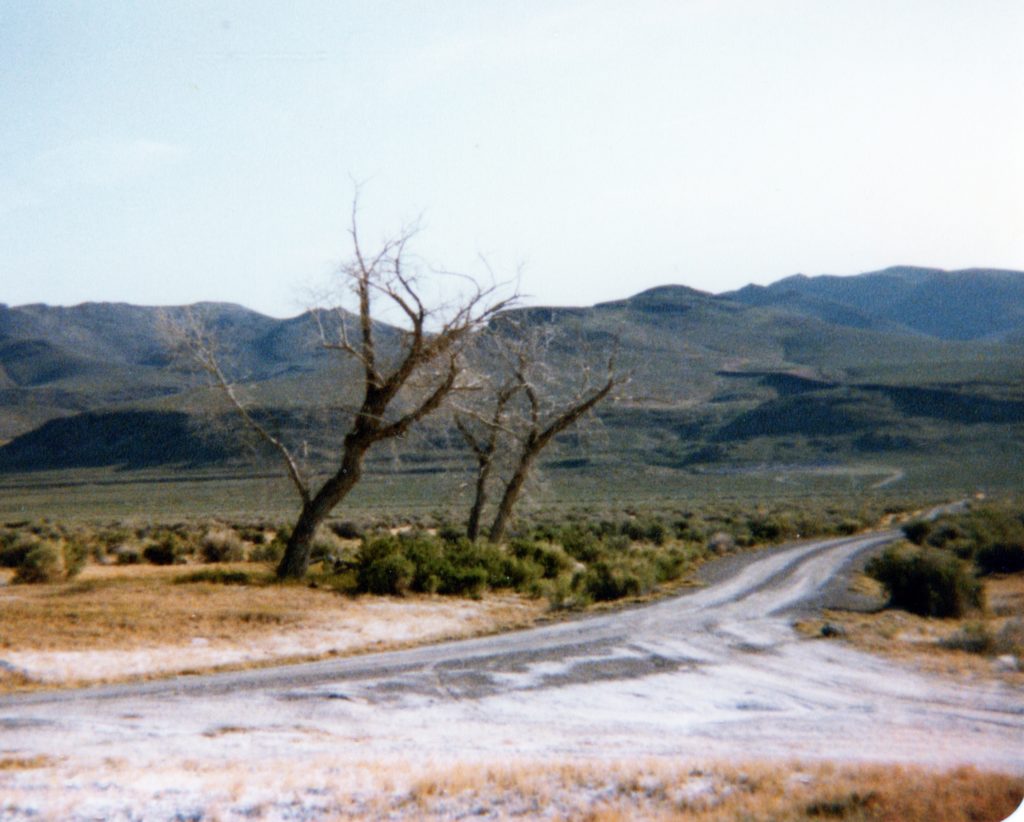
Some folks have expressed an interest to venture around portions of the eastern area of the Honey Lake Valley. Of course, this is not something you do in July and for that matter in August. Ideally, it is more of late September outing.

Stops could include Wendel, Amedee Cemetery, the remnants of Stacy and the Honey Lake Cemetery. Maybe, if we are lucky enough a visit to the High Rock Ranch, though I do not know the current owners. However, to do such an outing, does take planning on my part, hence I am sending out this feeler, first to see if there is enough interest to warrant such an excursion. There is also an option in which I could put together a self-guided tour packet as an alternative due to scheduling conflicts or other issues that might arise. Either leave a comment or contact me direct.
Never miss a story, click here to subscribe and support.
Painters Flat – Update

A subscriber wanted to learn about Painters Flat located in the northeast section of Lassen County. A portion of this post originally appeared on May 30, 2015. When I reviewed it, there was more that I decided to add. Continue reading Painters Flat – Update
Ferdinand Zarbock, Desert Homesteader

Reclamation of the arid American west is certainly an interesting chapter in the nation’s history. Some of these projects were fraudulent, and others not.
Numerous individuals saw huge potential to reclaim the sagebrush lands of the eastern segment of the Honey Lake Valley. Some of these developers were passionate about their projects and would devote their entire lives and resources in hopes to see it come to fruition, but in many cases the projects never succeeded, for one reason or another. A perfect example was that of Capt. C.A. Merrill who saw the potential of Eagle Lake to reclaim the sagebrush plain of eastern Honey Lake Valley. He began his quest in 1875, and continued until his death 1901. Twenty-two years later, Leon Bly completed Merrill’s dream, only to see it end in dismal failure.
Promotion to entice settlers was a key component as providing an adequate and reliable water supply. When the Nevada-California-Oregon Railroad finally entered the Honey Lake Valley in 1888, it brought awareness of the possibilities. A second wave of publicity occurred during the 1906-1912 era with the construction of Fernley & Lassen and Western Pacific railroads through the region. This also just happened to occur during the dry farming movement, which was successful for a time locally with a string of ten years of higher than normal precipitation.
Of course, people from the eastern United States and Europe, as well, were easily lured with the thought of owning land at bargain prices. People from all walks of life arrived, some like Carl Caudle, a civil engineer, would spent the rest of their lives there and others after a couple years of a hardscrabble existence moved on.
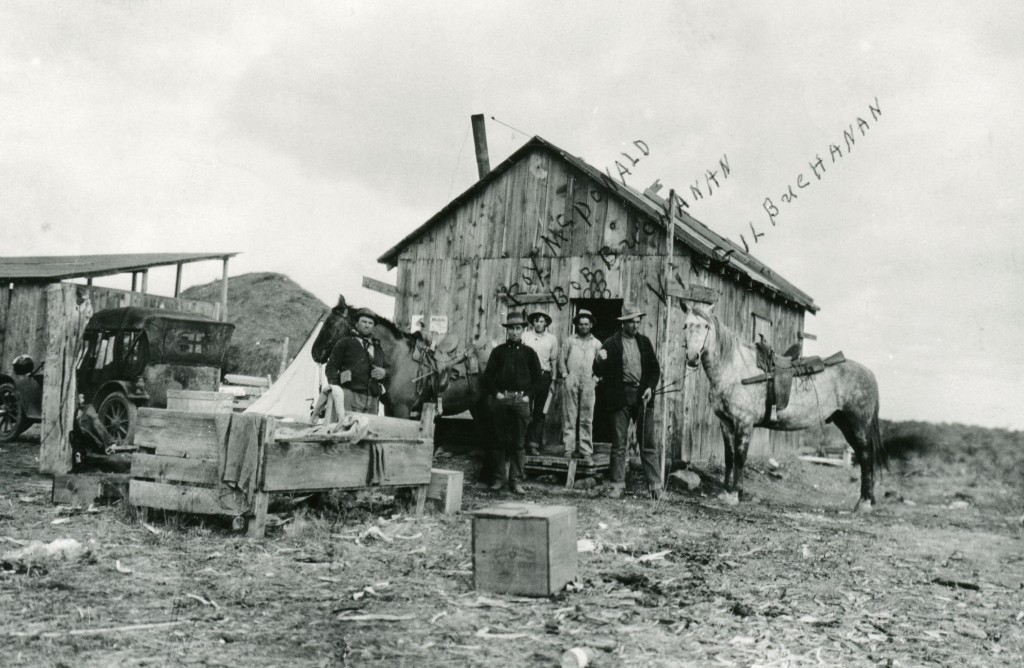
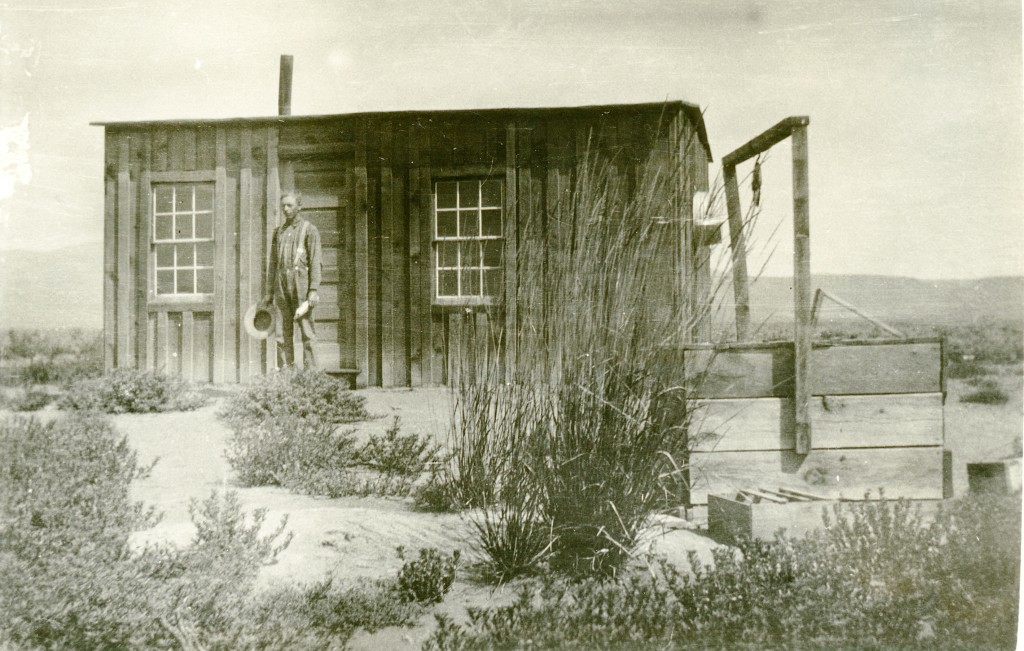
Sometime around 1915, Minnesota resident, Ferdinand Zarbock arrived in the eastern Honey Lake Valley and filed a desert homestead 160 acre claim adjacent to the railroad town of Stacy. He was joined for a brief time by his brother, Fred. In the spring of 1916, it was reported that Ferdinand had received a shipment of seed potatoes from Colorado to plant on his property. At this time, we do not know much about his activities there. In 1917, he did receive a federal land property for the property. However, there was something looming larger on the horizon, that had a major impact on the lives of so many. In 1918, Ferdinand was drafted in World War I. At that time, he deeded over his property to his brother Fred who had returned to Minnesota. After the conclusion of the war, his brother then re-deeded the property back to Ferdinand, who had returned to Minnesota instead of the Honey Lake Valley. This was a common practice for many individuals. Places like eastern Honey Lake Valley and the Madeline Plains were depopulated during the war, and those residents never returned, leaving abandoned homesteads scattered throughout the country. On a bright note for Zarbock, in 1920, he sold his homestead to W.R. Tait for $500. Many were not as fortunate and their abandoned properties were later sold for delinquent taxes.
In a related matter, I highly recommend Sarah Old’s homestead experiences adjacent to the Honey Lake Valley which her memoirs were published in a book entitled Twenty Miles from a Match. In Susanville, you can purchase it at Margie’s Book Nook.
Never miss a story, click here.
The creation of the Sierra Army Depot

The Lassen County business community courted the military over the years. During World War I attempts were made to establish a military training camp at Hackstaff, while that failed that location was not forgotten. In 1926, the Lake Denmark Naval Ammunition Depot in New Jersey was destroyed, the cause of a lightning strike. Twenty-one people were killed, and the damage in today’s dollars about a billion.
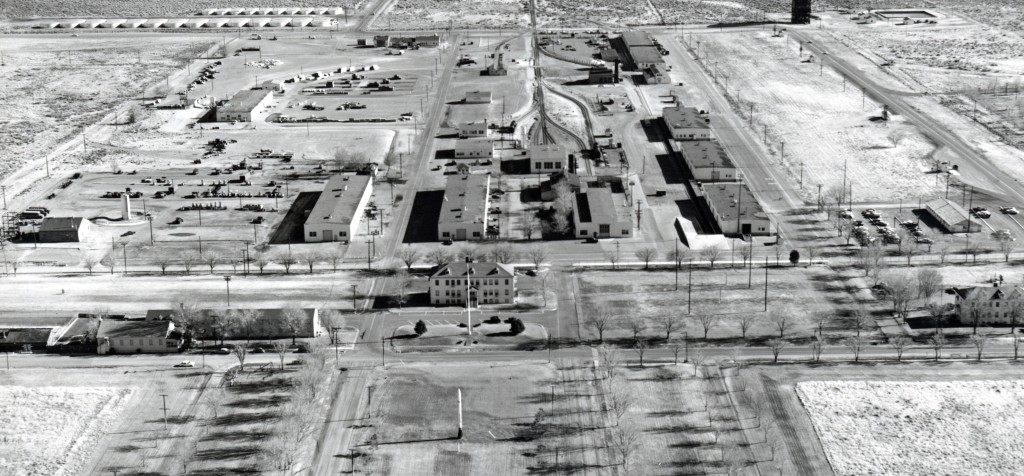
This changed everything when the government sought a location for a munitions depot in the west. The two important criteria was it to be an isolated location, but have railroad access. The top three sites examined were Secret Valley, Flanigan and Hawthorne. In 1928, Hawthorne, Nevada was the victor. When World War II came along, saw the need for another Army Depot, and the army selected Hackstaff in the Honey Lake Valley and it was subsequently renamed Herlong, after the first Ordnance officer killed in World War I.
Never miss a story, click here to subscribe and support.
Brand History – Tanner Ranch

Progress is being made on the Pioneer Brand book. I thought a sample entry beginning with my own family and that of the brand of Lola L. Tanner that appears on the wall of that local institution. My grandmother Tanner would have had a royal fit, if she knew about it, she being a tee-toler.
Lola, was the eldest child and only daughter of Ed and Mary Murrer. Born 11 September 1899 at the family ranch in Willow Creek Valley, she had her first dream dashed in a hurry. In 1924, a debonair ranch hand Jim Scott, came a courting Lola. It was a whirlwind romance and they were married the following year. Only after a few months of matrimony, Scott forged his father-in-law’s name on a bank note for $500 and skipped town. He did not get far, and was arrested in Reno, Nevada. The marriage was annulled, and Scott repaid the money. However, this was his modus operandi for decades to come.
In 1927, Lola married Honey Lake Valley native, John Tanner. Like, Lola, his initial dreams were dashed early when his father, William, died in 1890, when John was only seven years old. His mother Jane, remarried to Charles Adams, an abusive type, so John along with brothers, William and Charley sought refuge with the Ravenscroft family and later at the Gibson Ranch. It should be noted that John’s father, William, had settled at Soldier Bridge in 1870 and registered his brand as the 20. That brand would be modified to the 30.
John and Lola made their first home near Standish, that John and his brother, William had established in 1915. In 1928, an opportunity arose where the Capezolli’s desired to trade their ranch with Tanners, and a deal was struck. Over the years, the Tanner’s expanded and bought the adjoining Hartson, Stamplfi and Whitehead ranches. While John and Lola have passed away many years ago, their three daughters: Joyce Cunha, Mary Rea and Ardene Purdy still own the ranch.
Never miss a story, click here.