Tag Archives: Eagle Lake

Refinancing Bly Tunnel

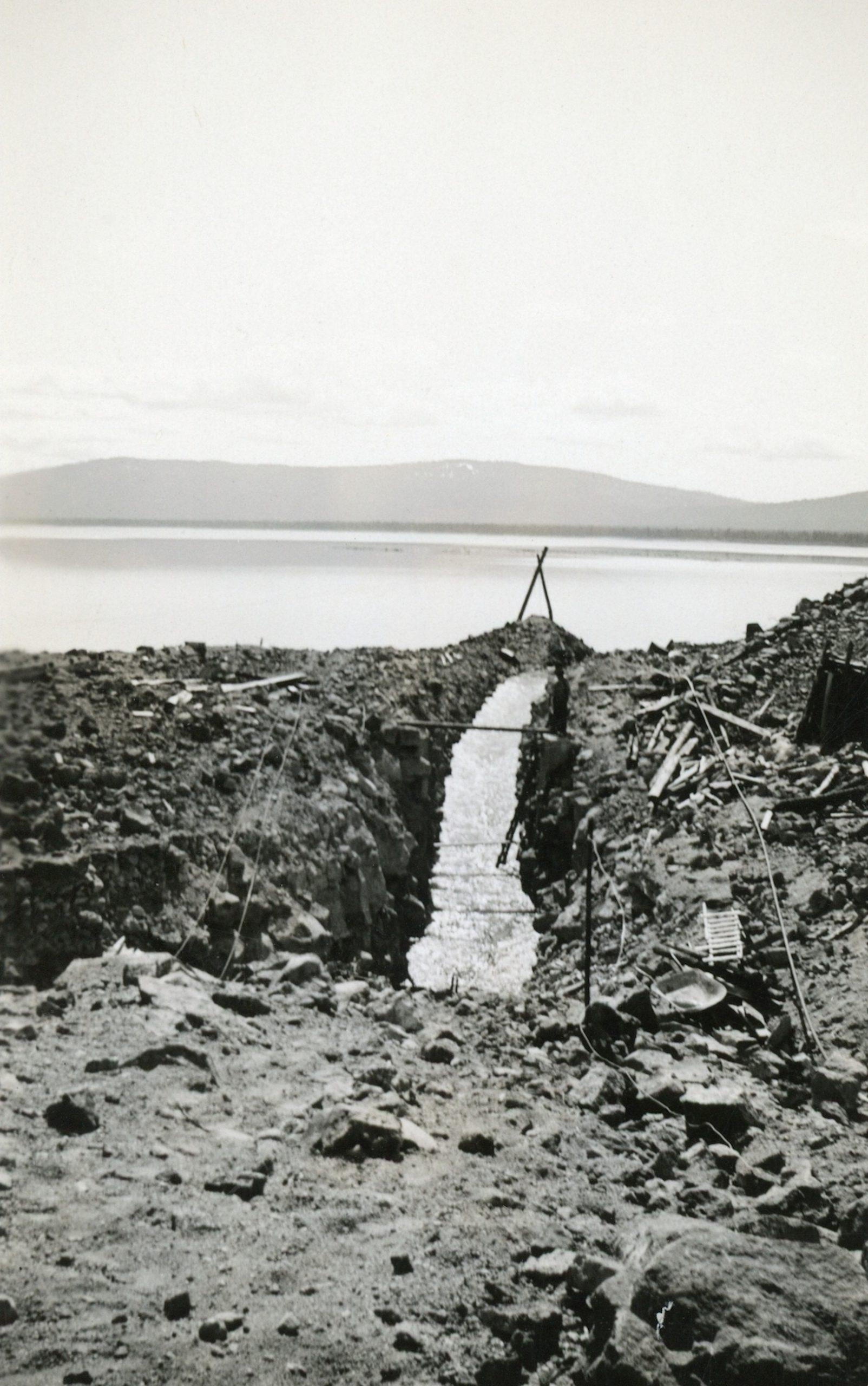
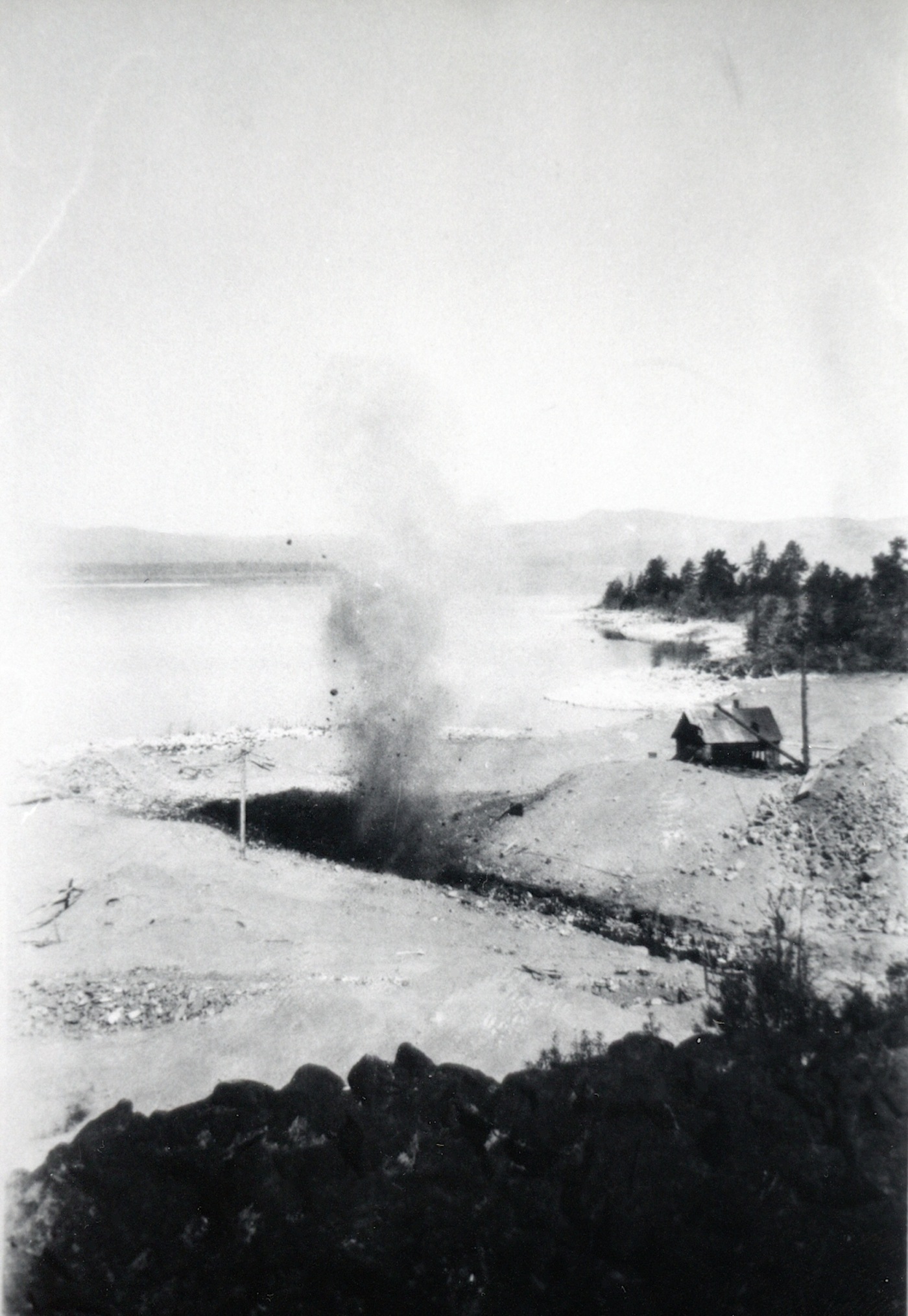
Blasting the inlet at Bly Tunnel, 1928–Francis Riddell

Last week on ongoing  Eagle Lake’s Bly Tunnel saga of 1928, the Tule and Baxter Creek Irrigation Districts needed to raise some $50,000 to correct the defective inlet as suggested by  the consultation with Engineer Wise. On August 12, 1928 a special meeting of the Lassen County Chamber of Commerce was held for the sole purpose to devise ways and means obtaining money urgently needed by the irrigation districts. It was important to have the work done as quickly possible to assure that water would be available for next year’s crops. Chamber President A.J. Mathews stressed without the water there would be a loss of some $60,000 in crops and some 3,000 acres would be fallow. Mathews continued it was a vital interest to every taxpayer in Lassen County. Without the water, these land would be abandoned, thus a loss on tax roll. The ripple effect the county would probably have raise taxes elsewhere to make up for the deficit.  It was decided to have a subscription drive to raise the funds, in the similar manner how the community did to attract the Fruit Growers Supply Company to locate its sawmill in Susanville.

After delays, work commenced on the Bly tunnel on October 15, 1928, when the assembled  supplies, equipment and work force were in place. Dynamite blasting was the first priority. Work progressed better than anticipated, especially with the weather cooperating. By Christmas the work was completed and under budget, too.

Next Week: The water quality issue.
Subscribe

C.D.F.’s Eagle Lake Station

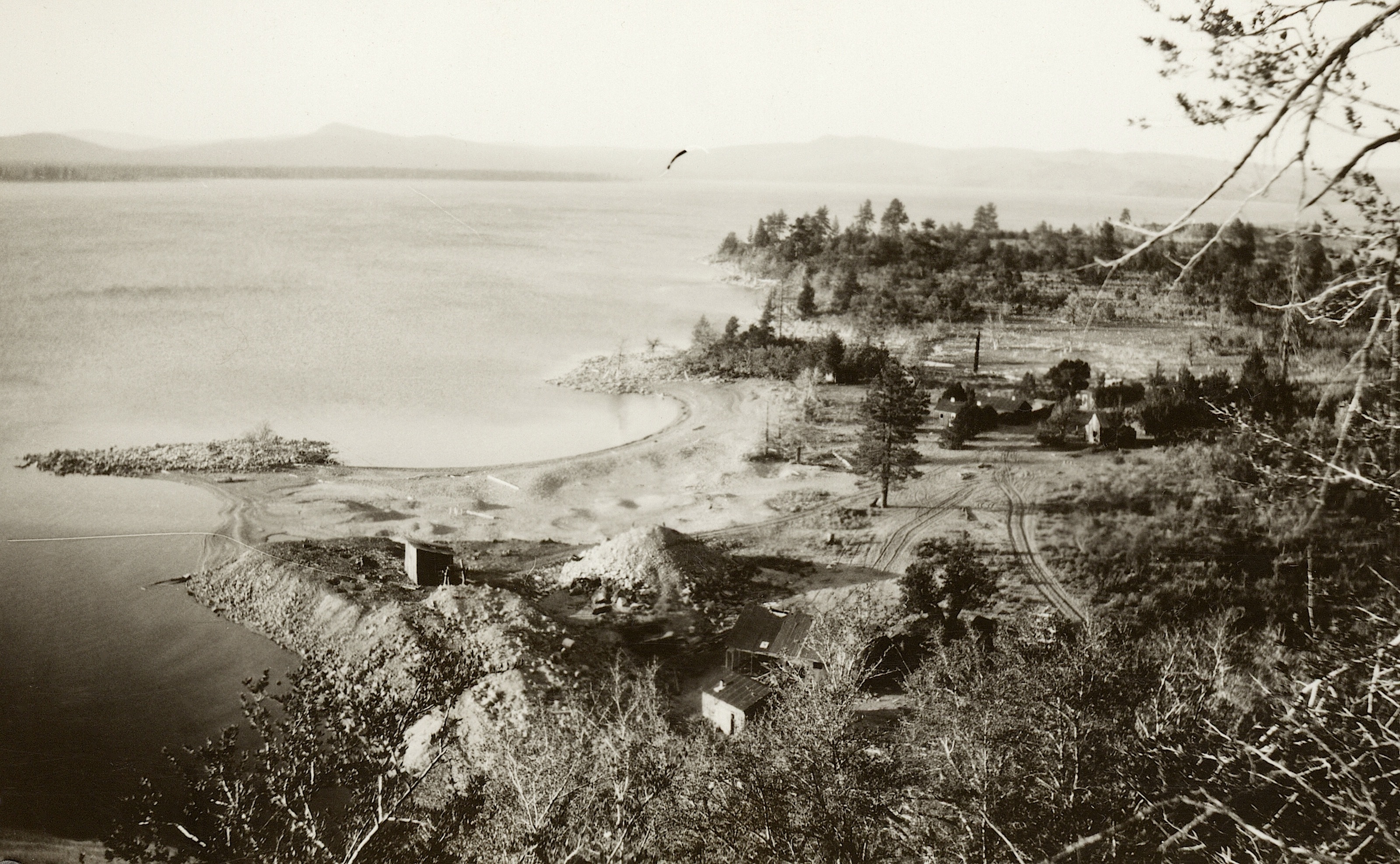
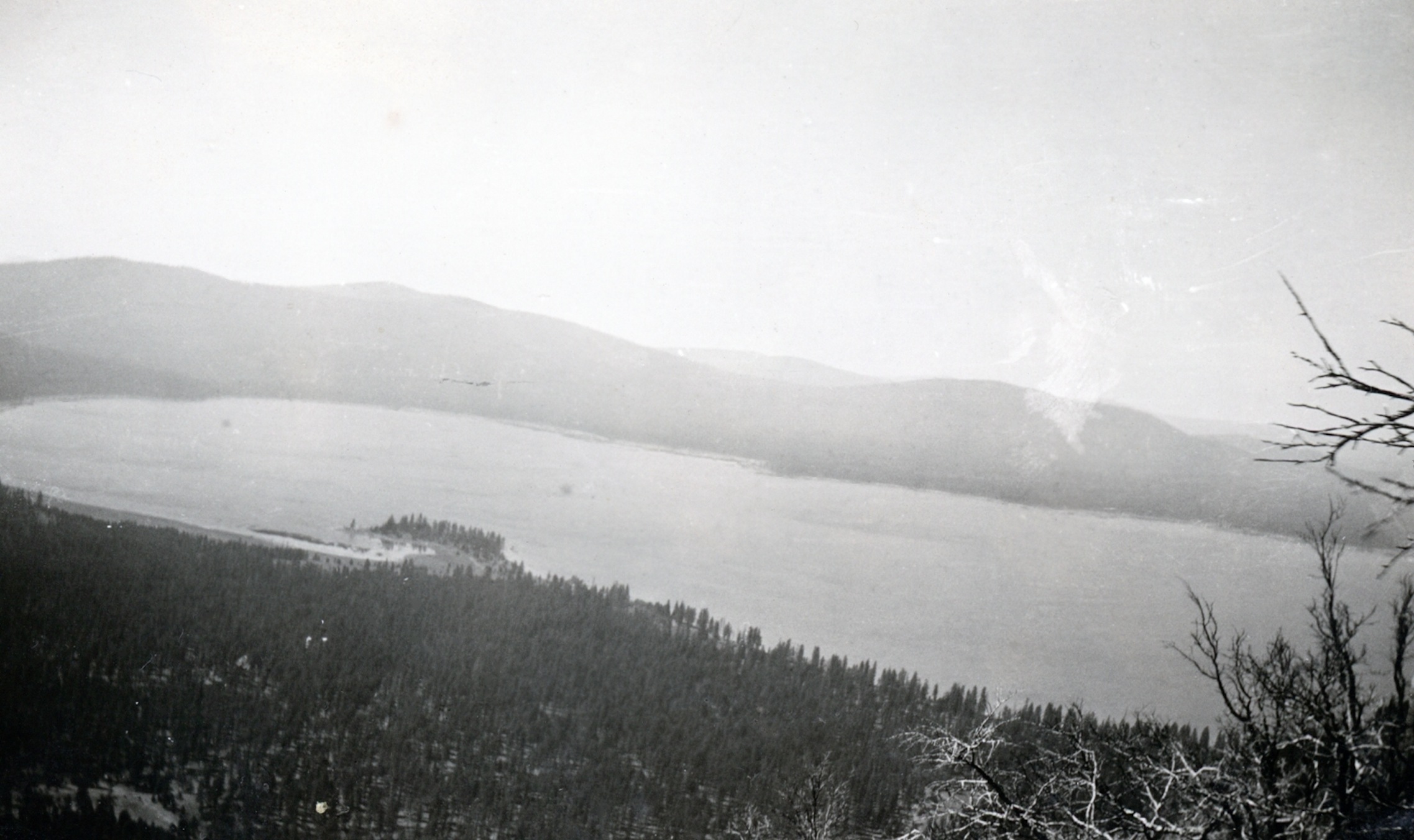
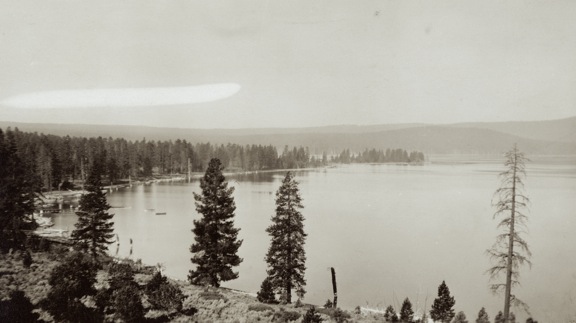
South shore of Eagle Lake, circa 1920—Wyn Wachhorst

This is, in essence, is more like a plea for information. For a time the California. Division of Forestry operated a fire station at the south shore of Eagle Lake. Unfortunately, the information CDF has and as well as my own is rather sketchy.

It was established sometime in the 1950s and what is unique the first station was located on Fruit Growers Supply Company land near their Sunkist cabin. Unfortunately, Fruit Growers is in such a disarray that avenue to locate an agreement is not going to happen.

In the mid 1950s the County of Lassen urged the Lassen National Forest to make recreational improvements at the south shore of Eagle Lake.  By 1958, the Eagle Campground was established and so too was the CDF station. At the end of the 1952 logging season Fruit Growers closed its last remaining logging camp—Camp 10—thus eliminating a resource for fire fighting.  Between the Gallatin Peak fire of 1951 and the Merrill Fire of 1955 might have been impetuous to establish the fire station. Later on the CDF relocated the station adjacent to County Road A1, near the intersection of the turn. off to the marina and Gallatin Beach.

If anyone can shed some enlightenment on this topic, it would certainly be appreciated.

Tim

Virginia City Mine Engineer to the Rescue

Deepening the inlet channel, Bly Tunnel.

Desperate times, calls for desperate measures. This was the predicament the Tule and Baxter Creek Irrigation Districts were dealing with in 1928, with the problems associated with the Bly Tunnel at Eagle Lake. What had transpired was when Leon Bly contracted with Grant Smith Company the inlet was to be eight to nine feet below the lake surface. That company encountered solid rock and only did three below the surface, thus not an adequate supply of water.

On the first go around the districts hired a contractor to correct the problem by lowering the inlet by five feet, but the contractor failed to do so.

In the summer of 1928 the districts consulted with Alex Wise, the superintendent of the three largest mines at Virginia City, Nevada. Wise agreed to examine the Bly Tunnel, and was sympathetic about the district’s plight and waived his standard $200 a day fee, but asked the districts to pay for his travel expenses.

Wise said it was feasible to lower the intake by ten feet. He estimated the cost at $35,000. Before the work could move forward the districts and the bondholders would have to agree and on top of that figure out how to finance it.

Subscribe

1928-A Pivotal Year for Eagle Lake

Grant Smith’s tunnel works, Eagle Lake, 1922–Courtesy of Lola L. Tanner

Each week for the month of March will bring to light a number issues concerning Eagle Lake. In 1928, Susanville’s two newspapers—Lassen Advocate and Lassen Mail—vigorously reported on the status  of the Bly Tunnel and related topics. There is the account of a well known Virginia City, Nevada mining engineer who inspected the tunnel. There was after the engineer’s recommendations how to finance the corrective measures. Then, the issue of the lake’s water alkalinity content was a major concern, that the University of California, Berkeley examined. There was a lot of hope riding among the members of the irrigation districts who struggled with the bond payments, but burdened without an adequate supply of water from the lake to sustain their farms.

Tim

The Incline Works—Bly Tunnel

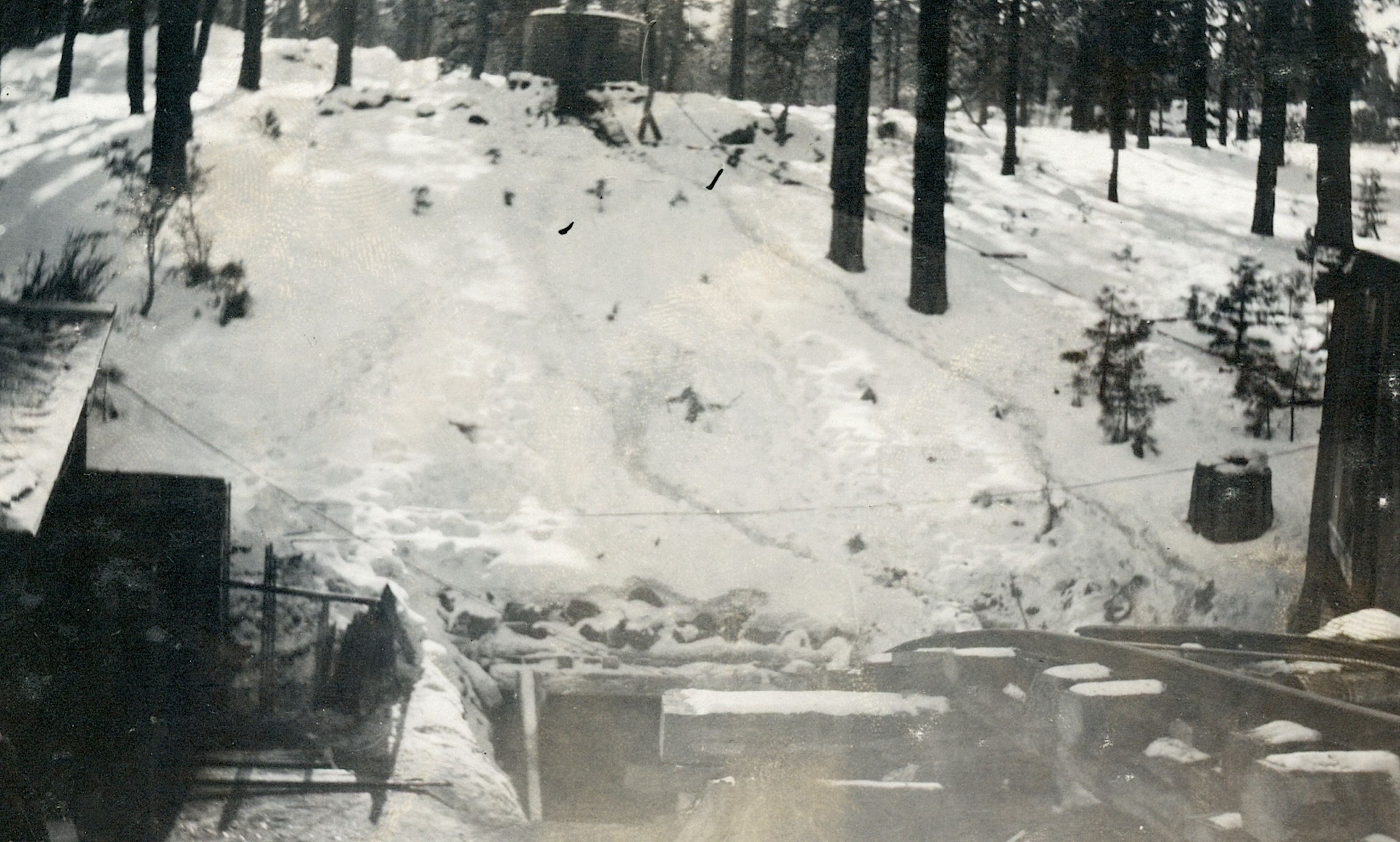
The incline works Bly Tunnel, December 1921–Lola L.Tanner

While sorting through some of my grandmother Lola Murrer Tanner’s photographs, she labeled “Incline Works.” At first, the photograph did not look like much. Then upon further examination, I realized this was the initial work at Bly Tunnel. The tunnel construction began from the outlet side, burrowing its way to the lake. Lola took several photographs at this time, showing the camps at this location and one at the inlet location, which I will scan post in the future.

Tim

A Frozen Eagle Lake, 1921

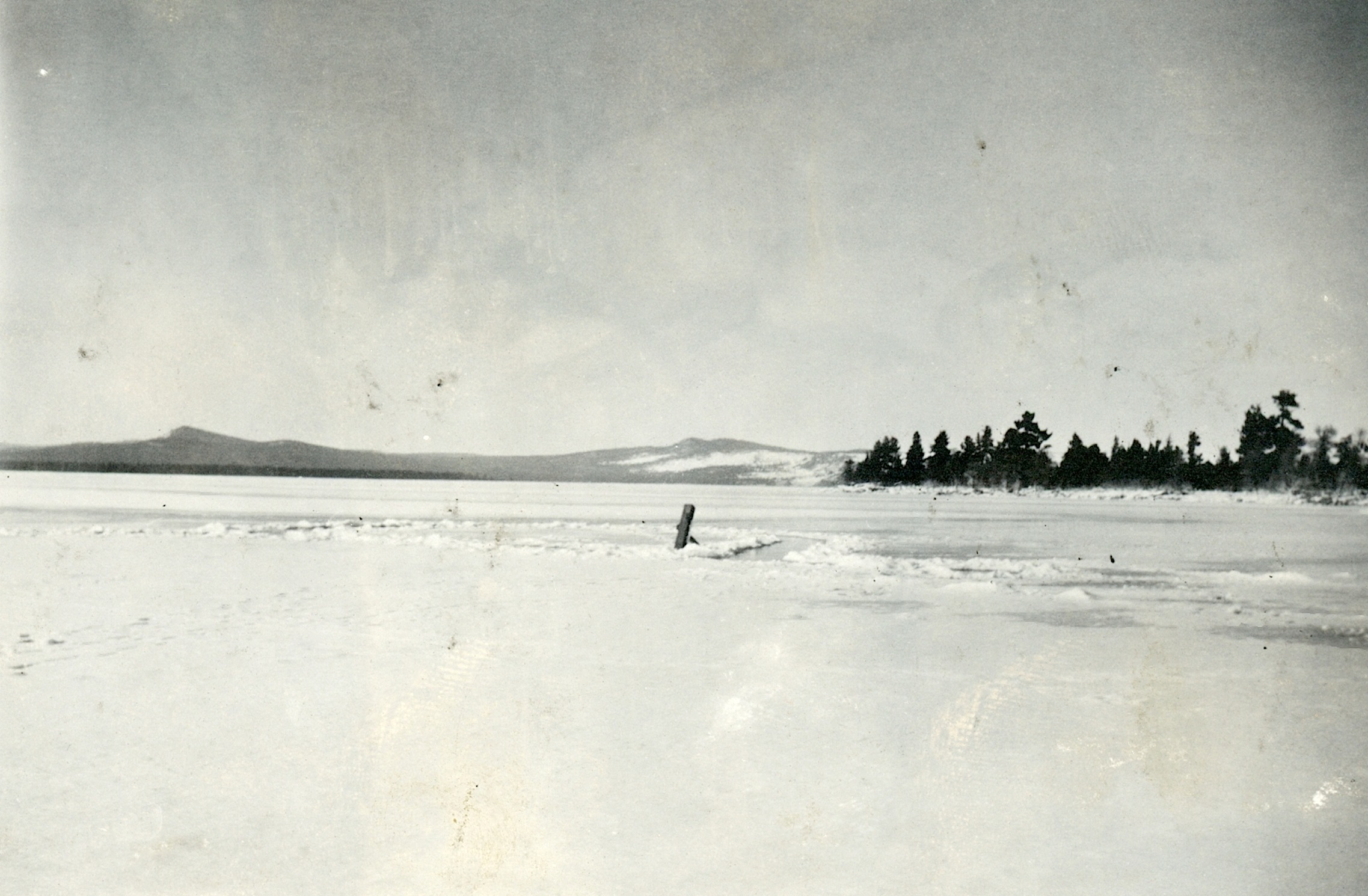
Eagle Lake, 1921—Lola L. Tanner

It has been an interesting winter so far, with the first snowfall on November 7. December provided lots of snow, followed with rain, and then very cold temperatures to freeze the whole lot in a frozen zone.

While, I am slowly getting around to scan old photographs for Tuesdays, the above was one of the first. Since Eagle Lake was still at its historic high level, it had to be darn cold for the lake to freeze over when the above was taken in December 1921.

Tim

Lassen Industrial Bank Sold

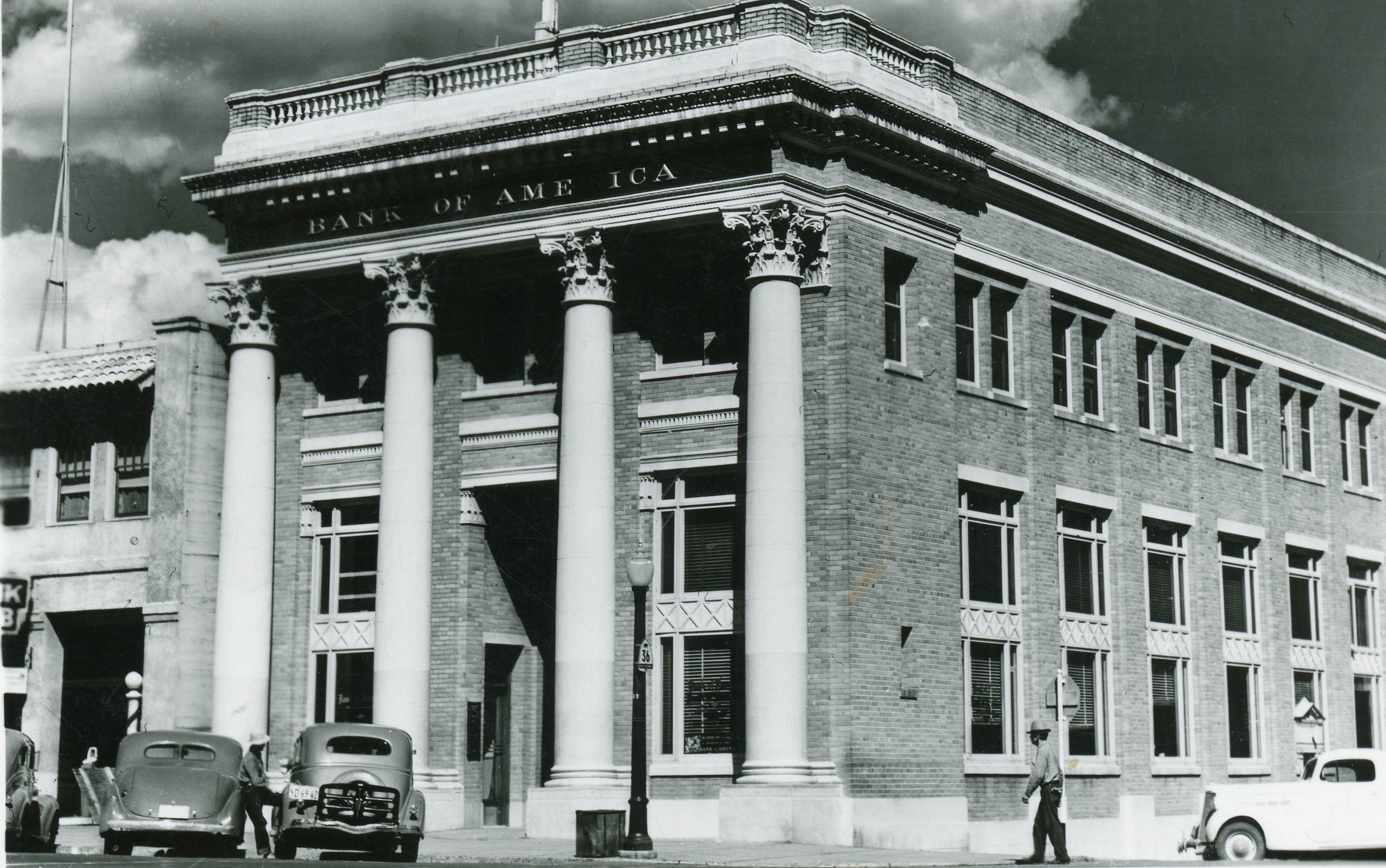
Lassen Industrial Bank built this Susanville landmark in 1922. Some fifty years later Bank of America tore it down.

In August 1928, in a somewhat surprising move to the local populace was the announcement that the Lassen Industrial Bank had intentions to sell the bank to Bank of America, formerly known as the Bank of Italy. Jules Alexander, president of Lassen Industrial Bank highlighted some of the positive aspects being part of larger bank, due to its access of larger amount of capital. Bank of America stated there were be almost no change in operations or that of the personnel employed locally.

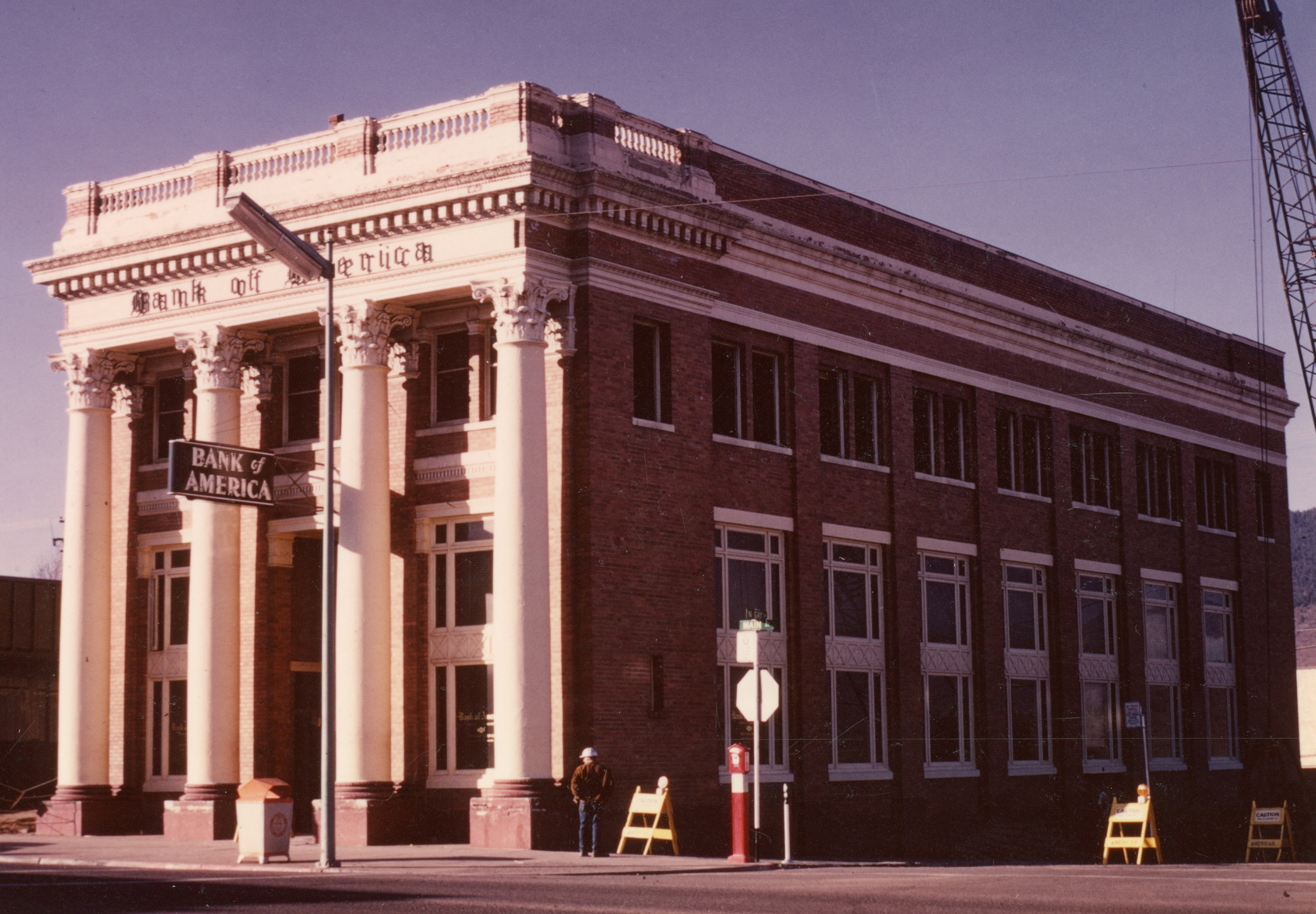
Bank of America, 1971.

But there was more to the story, that the public was not aware. Lassen Industrial Bank was a in a financial crisis due to the delinquency on loans to the farmers and ranchers of the Baxter Creek & Tule Irrigation Districts due to the problems associated with Bly Tunnel at Eagle Lake. On December 1, 1928, Bank of America took over the beleaguered bank and with it and infusion of $100,000 to stabilize it.

Donate

How Much Water?

South shore EagleLake, 1923–Lola Tanner

In 1899, the U.S. Department of Agriculture commissioned a study on water problems in the American West.  The Honey Lake Basin was one place selected and William Smythe was hired to author the report.

Smythe was well known for his work on reclamation issues in the West.  However, Smythe was well versed in the region beginning in 1897 with his Standish Colony and the Honey Lake Valley Colonial Irrigation System. Smythe did provide some unique observations. Concerning Eagle Lake, Smythe noted the importance of the lake for irrigation. Smythe stressed that the lake should only be used during periods of drought, but that the lake was essential in any major reclamation project for the Honey Lake Valley. Smythe became the first person to go on record questioning Eagle Lake’s water supply. It was widely believed that the lake’s water supply was “inexhaustible” due to mysterious springs in the lake’s bottom. Smythe retorted that it that was true, then why had the level of the lake not increased over the years to flood the borderlands, or to eventually overflow the Willow Creek divide? Smythe finally wrote, “It is question which can never be satisfactorily settled until the experiment of the tunnel is actually made.”

Smythe made it a point to stress the problems of California’s vagueness in water right appropriations and that it was a major hindrance in the development of the Honey Lake Valley. He noted one claim of 4,000,000 miner inches of Eagle Lake and Willow Creek water and sarcastically wrote, “Fortunately for those residents of Honey Lake Valley who could not swim, this enterprise was never carried out.” It should be noted that between 1874 to 1897 there were 14,201,400 miner inches of Eagle Lake water claimed!

Donate


Lassen Willow Creek Water Company

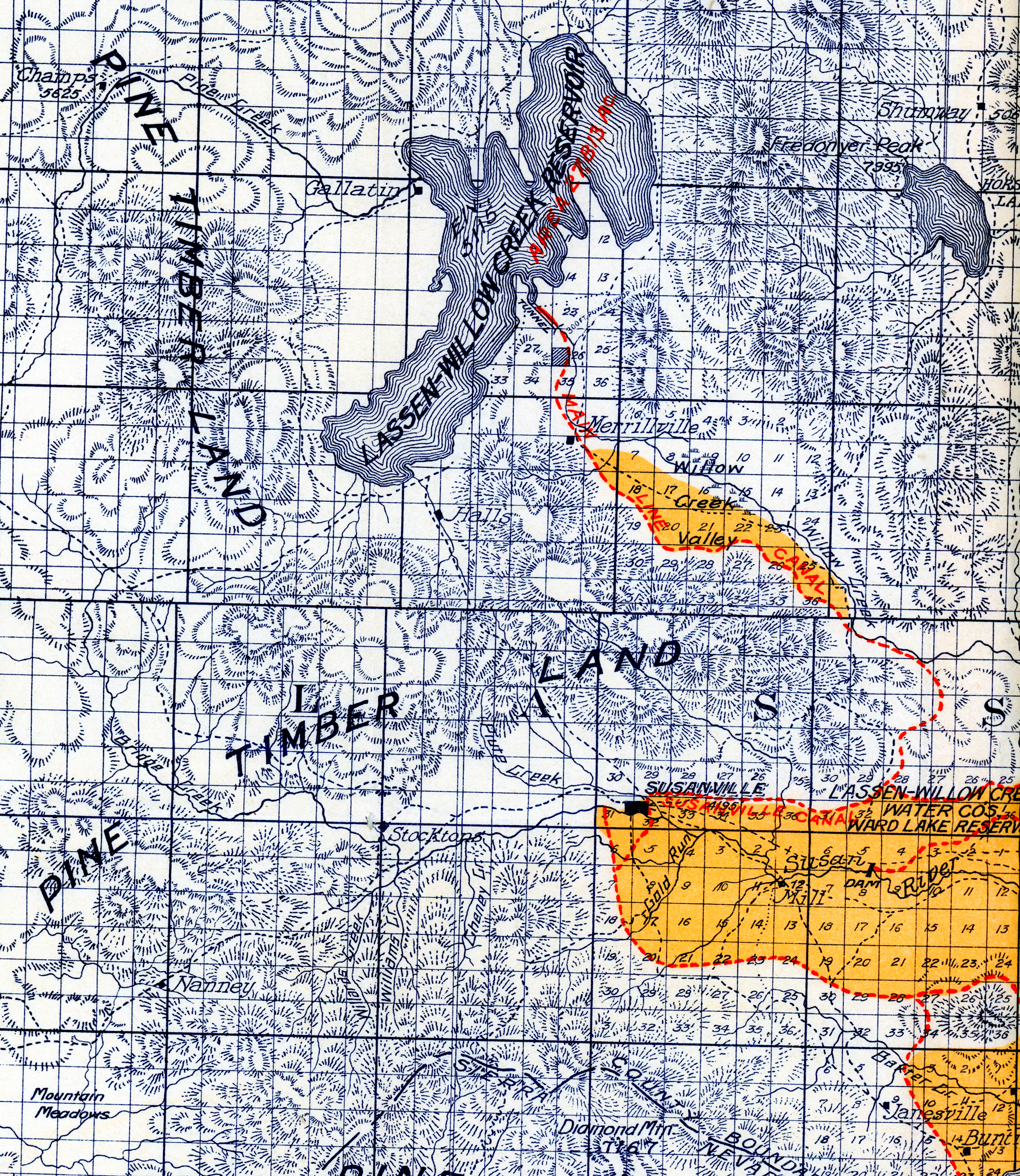
Partial map of Lassen-Willow Creek Water Company’s proposed project. Courtesy of Betty Barry Deal

During the early 1900s, it appeared any attempt to tap Eagle Lake for irrigation were doomed, since previous proposals over water rights etc were being litigated. On the other hand, it did not stop entrepreneurs who dreamed there was incredible wealth to be mde to deliver that water supply.

Enter Lassen Willow Creek Water Company, (LWC) formed in 1905, and its composition of the company were well known locals—Ben Leavitt, W.H. Earl, Charles Emerson, James Elledge and B.F. Gibson. Before they formed, they knew they had a competitor, A.F. Dixon who had filed for tunnel and water rights on December 8, 1904. One of LWC’s obstacles was to obtain a tunnel right-of-way from the Government Land Office to bypass Dixon’s claim. The Company pronounced Eagle Lake as a reservoir and filed for water rights to every tributary and excess flood waters of Susan River. They declared that this water being held in the lake  as a storage reservoir.

This ingenious method of LWC to obtain the necessary right-of-way across public land was not to be resolved so easily. The LWC’s application for the tunnel right-of-way was rejected by the Government Land Office, as Dixon’s application had first priority. The Land Office wrote in its decision, “This office is of the opinion that it was never intended that a natural lake which is already a source of water supply. should be appropriated as a reservoir site.” The Land Office gave the LWC sixty days to appeal their decision.

A month later, the LWC filed a new tunnel right-of-way with the Land Office. They called it the Pine Creek Outlet Tunnel. Ultimately, the LWC decided to bypass the Land Office. They relocated their tunnel site, just north of Dixon. They secured the lands owned by the Cartwright Brothers. By mid-April 1906, shafts were being drilled  and work was being prepared on the tunnel’s entrance and outlet.

It appears LWC was making great progress. In June 1906 the company announced it had signed a contract with the Granite Rock Company to construct the mile-long tunnel. It was estimated to cost $500,000 and everything came to halt since LWC did not have the funds.  LWC’s demise occurred on June 7, 1910 when it sold its records and surveying equipment to E.N. Prouty for $900.

Donate

It Only Took 40 Years

Bly Tunnel, 1922

Before we explore how long it took to close the Bly Tunnel, I hope whoever reads this, closely examine the above photograph. The tunnel was in its early stages of construction. If one looks closely, you can see the lake level has already dropped, though it would be another two years before water flowed through the tunnel.

By the late 1960s, no one really paid that much attention to the abandoned Bly Tunnel at Eagle Lake. By 1970, the level of lake kept rising, threatening some lake shore improvements. In November 1971, D. Dean Bibles, District Manager of the Susanville Bureau of Land Management (BLM) announced that it would take action to revoke the Bly Tunnel right-of-way which was on BLM lands. Bibles noted that there were would be public hearings on the process. He noted there were some that wanted to keep the tunnel open to stabilize the lake level. There was the other camp, that wanted to permanently seal the tunnel to allow the lake level fluctuate naturally.

On February 6, 1973, BLM gained control of the Bly Tunnel for lack of non-use and water rights. The following year, BLM declared the tunnel a safety hazard. At that time, the BLM had the tailing piles used to make a temporary plug of the inlet, which greatly reduced water flow into the tunnel.

In 1981, Murrer Ranch filed a quiet title action over the granted right-of-way for a canal for distribute the water from the tunnel. After all, this is was first water connection from the tunnel. The following year, Murrer’s neighbor, Barron Ranch also filed a quiet title action, thus rendering project as done. In 1986, BLM had a permanent concrete plug constructed at the inlet.

The outlet as it appeared in 2012. Courtesy of Barbara White

However, water still flowed through the tunnel. In 2011, a valve inside the tunnel to regulate flow was finally shut and the water stopped flowing. While the tunnel was originally somewhat functional for a period of eleven years, it took BLM forty years to close it.

Subscribe