Tag Archives: Eagle Lake

Eagle Lake’s Pelican Point

L
Pelican Island, 1916, D.M. Durst

Depending upon the water level of Eagle Lake, it can be an island. The pelicans at the lake were a popular early day attraction, though others perceived them and the cormorants (sometimes referred to as shags) detrimental to the lake’s fishery. At sundry times the birds were slaughtered, their nests and eggs destroyed. A prime example is found in the columns of the Lassen Weekly Mail of June 11, 1892: “In Eagle Lake there are two islands (Pelican and Shag) on which large numbers of fowl, known as Pelican and Shag, build their nests and rear their young. The consequences are that vast numbers of fish from the lake are destroyed each year for food for the young birds. Recently a party visited these islands and killed the young birds and a good many of the old ones, hoping by means, if continued persistently for a number of years, to prevent the yearly destruction of the fish of the lake.”

Tim
The Town of Spalding

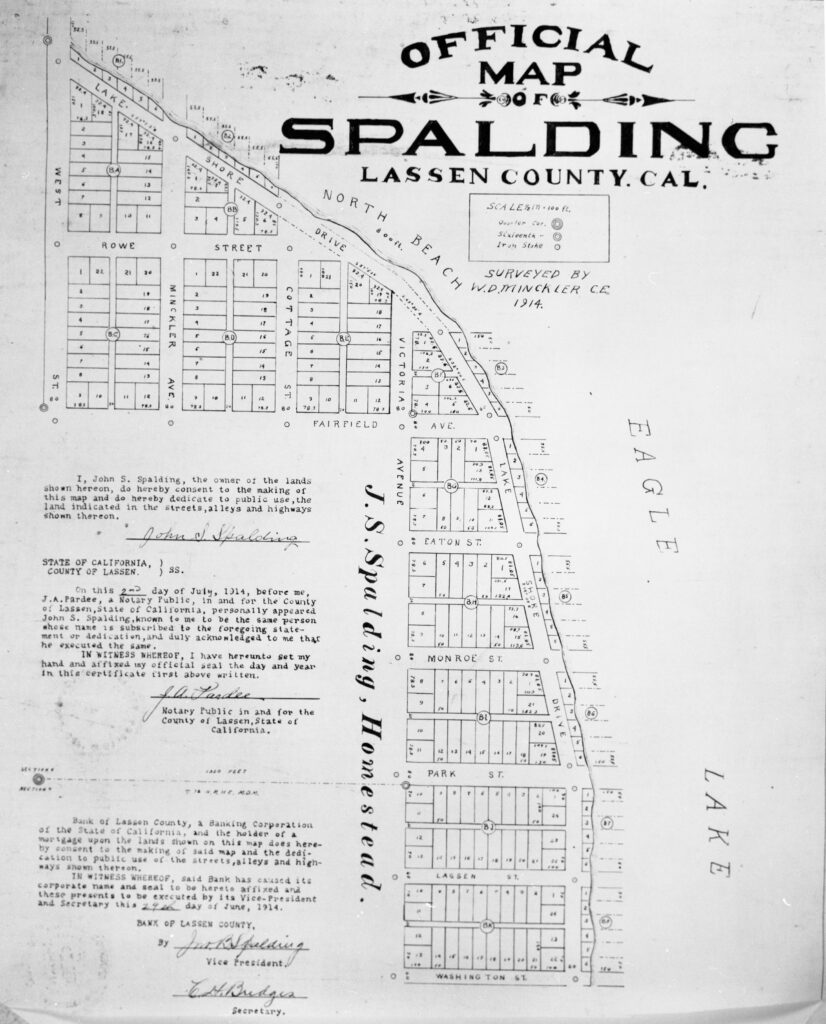
1914 Map of the Town of Spalding

The town of Spalding was the predecessor of today’s Spalding Tract. In February 1914, John S. Spalding announced his intention to subdivide his 420-acre ranch on the west shore of Eagle Lake (near Pine Creek) for a summer resort and town.

William D. Minklcer surveyed and plotted the new 200-acrre townsite of Spalding and recored his map with the County of Lassen  on July 6, 1914. Streets and alleys in the town were dedicated to the County of Lassen, with Spalding obtaining a performance bond as required.

The interest generated by Susanville newspapers made it appear as though the lots would be sold out quickly. To the contrary, only one lot was sold in the Town of Spalding. On July 10, 1914 John S. Spalding sold Lot 1, Block Q to Susanville resident Asa M. Fairfield for $10.

For whatever reason, all the hoopla regarding the new Town of Spalding subsided as quickly as it began. It should be noted that there was a lot going on with the new establishment of the mill town of Westwood and the Mt. Lassen eruptions.  In 1917, John Spalding sold his holdings to hid daughter and son-in-law Zella and Ben Yeakey.  In 1920, the Yeakeys transferred the property to Will and Hazel Spalding, brother and sister-in-law of Zella.

In the fall of 1924, Spalding filed a petition in the Lassen County Superior Court to dissolve the townsite. It was granted. Will Spalding had other plans for a much larger subdivision that we known today as Spalding Tract.

Never miss a story, Subscribe

Eagle Lake & Park Fire Smoke

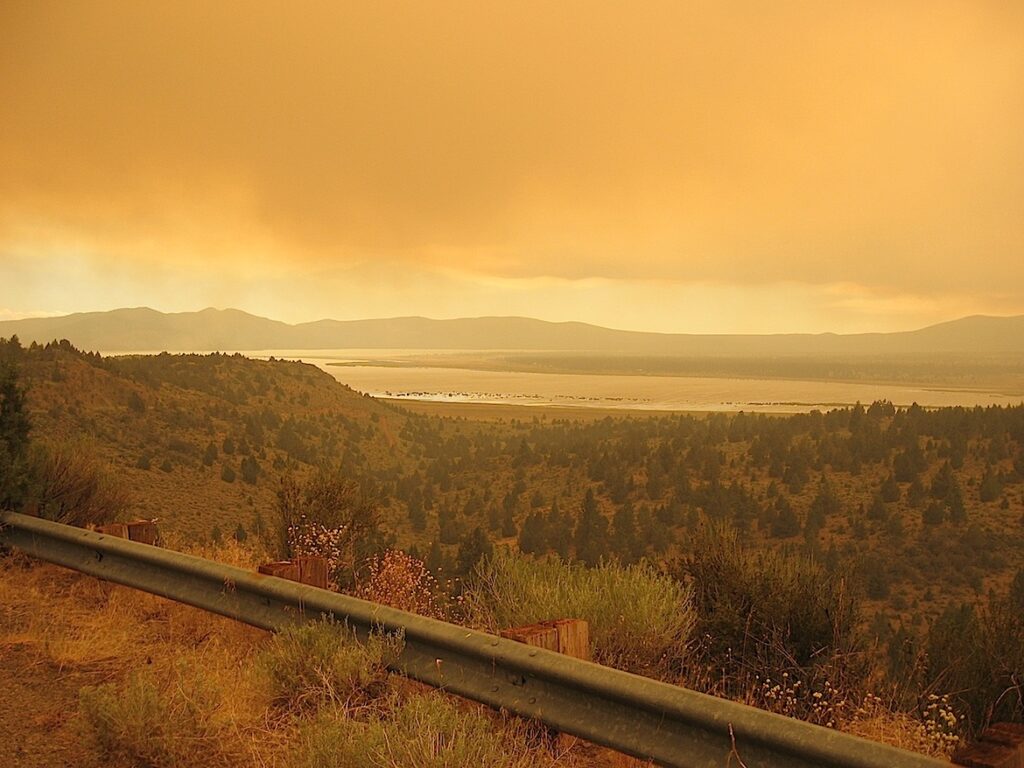
A view of Eagle Lake from the summit of Heartfailure Grade, July 25, 2024

On July 25, 2024, my companions and I went for an exploration expedition to two different sites. By the time we entered the Madeline Plains the visibility of the smoke from the Park Fire that originated from Chico (Butte County) dropped to less than five miles. Since our two intended destinations were a bust, we trekked back home via Termo, Grasshopper and Dry Valley.

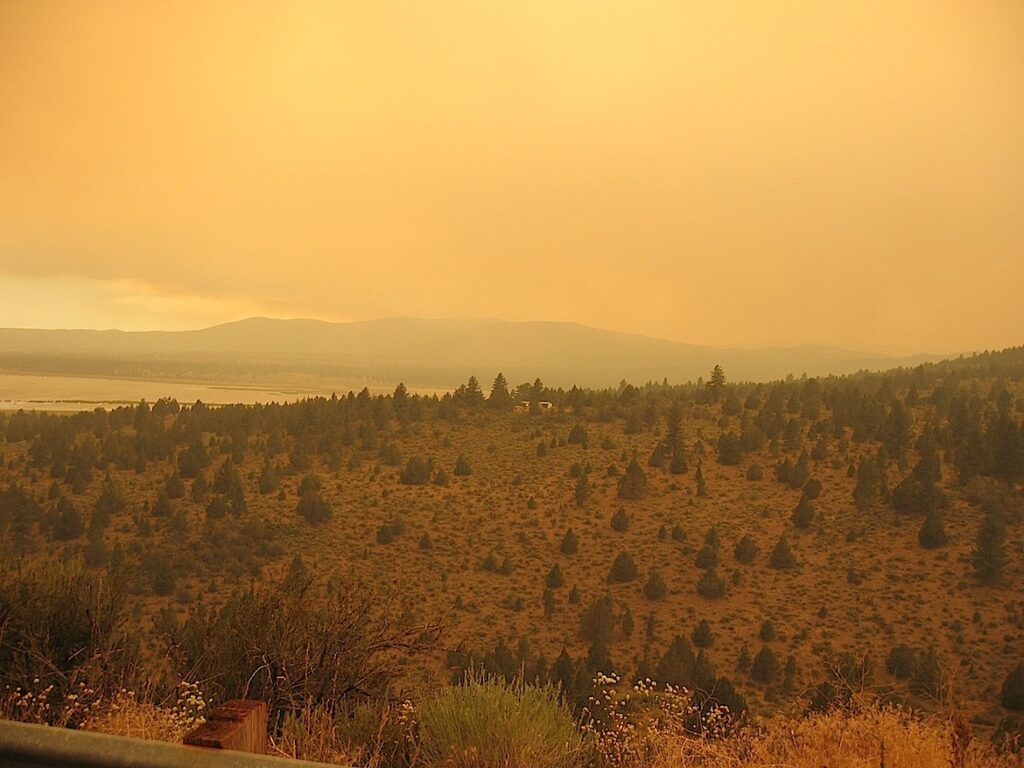
Eagle Lake, July 25, 2024

Reaching Highway 139 we decided to head south, and make our way around Eagle Lake. Approaching the north shore, the lake’s surface had a gray appearance as if it was dry and it was surreal.  At the top of Eagle Lake summit, overlooking Susanville it was blue skies!

Tim


Champs Flat, Lassen County

Champs Flat, 1984

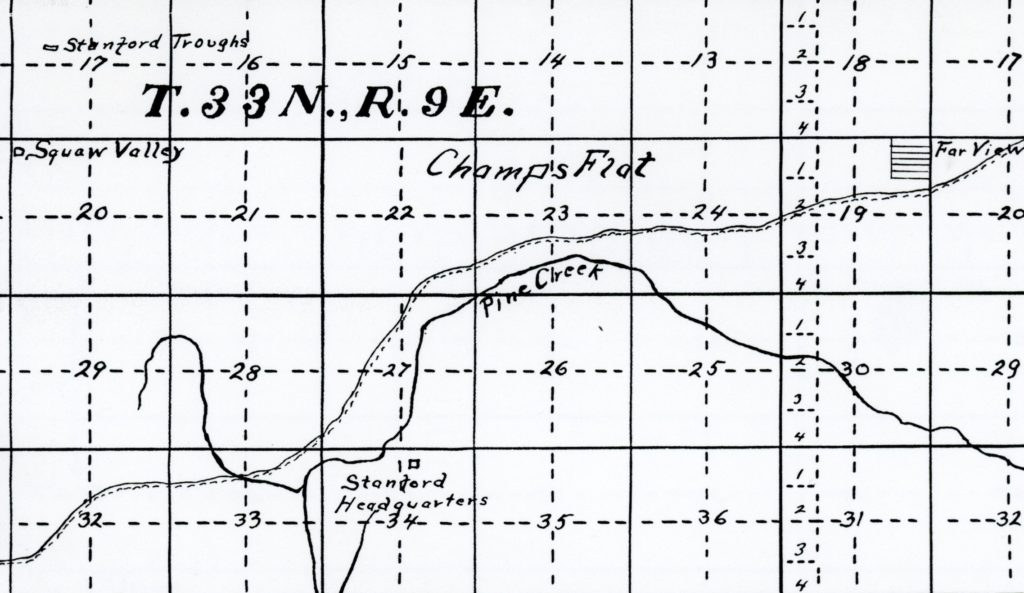
This sagebrush flat located west of Spalding Tract was an active place back in day for summer grazing of livestock, mainly from Tehama County. In 1873, the Champlin Brothers: George (1827-1903) and Lester (1848-1907), Tehama County stockmen, incorporated this area for summer range for sheep. George Champlin, a ‘49er, was associated with Leland Stanford, aka Stanford University etc. Stanford’s attorney, Ariel Lathrop, who happened to be Stanford’s brother-in-law and partner, with a Vina, Tehama County ranch. In May-June 1899, Champlin and his partner, John Boggs, sold their Lassen County property to Jane Lathrop Stanford for $8,000, who immediately transferred the property to the Stanford University.

Map courtesy of Stanford University

In July 1924 the university sold the summer range to J.J. Fleming of the Honey Lake Valley and for whom the state wildlife unit at Honey Lake is named for.

Never miss a story, Subscribe.

An Early Ice Cave Description

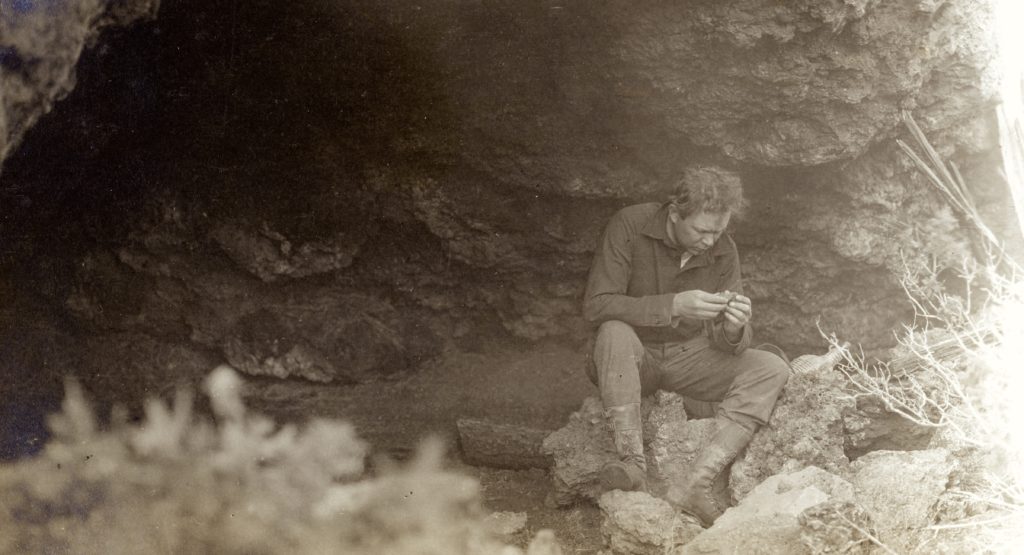
An Eagle Lake ice cave, circa 1916. Courtesy of Wyn Wachhorst

With this current hot spell, I decided on a cool topic. In 1915, the Lucky Land of Lassen was a pamphlet that  produced and distributed at the Panama Pacific International Exposition that was held in San Francisco. Of course it extolled all the wonderful virtues that Lassen County had to offer.. Of notable hightlight, it contained one of the earliest accounts concerning the lava beds and ice caves of Eagle Lake. This what the brochure contained:

“To the west of Spalding lies what is known as the ‘Lava Bed country’ about seven miles long and three or four miles wide. This is the wildest region in this section, and excepting the vegetation, it is almost as when the lava first cooled. It is full of caverns, wells and cracks, one of the latter being five miles long and three to twenty feet wide. In one place it has been sounded to a depth of 160 feet and no bottom found. In this crack there is an ice cave where plenty of ice may be obtained any year until August and some years throughout the entire summer.”

Subscribe


Eagle Lodge

Eagle Lodge, June 9, 1936–H. Frodsham photograph

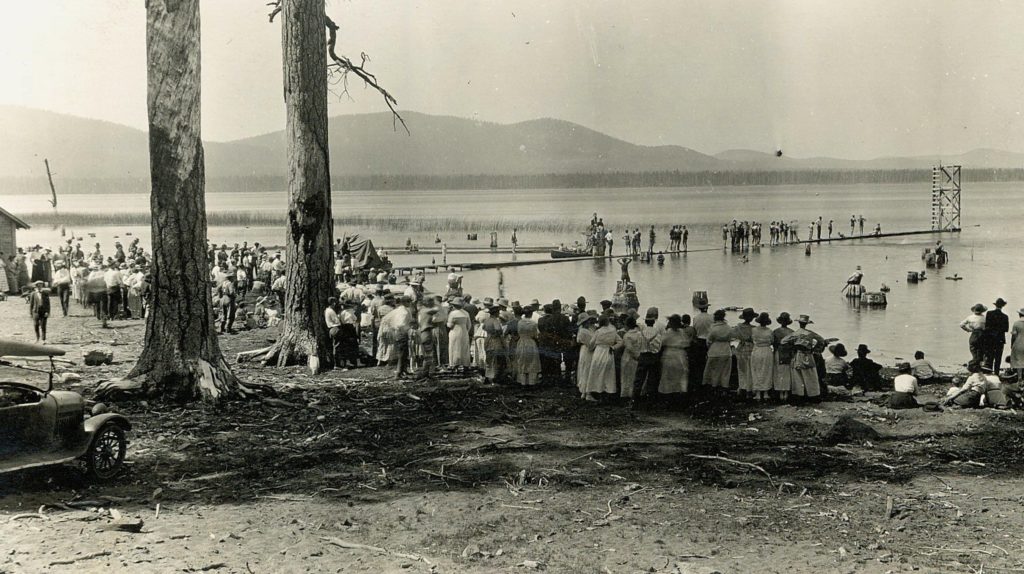
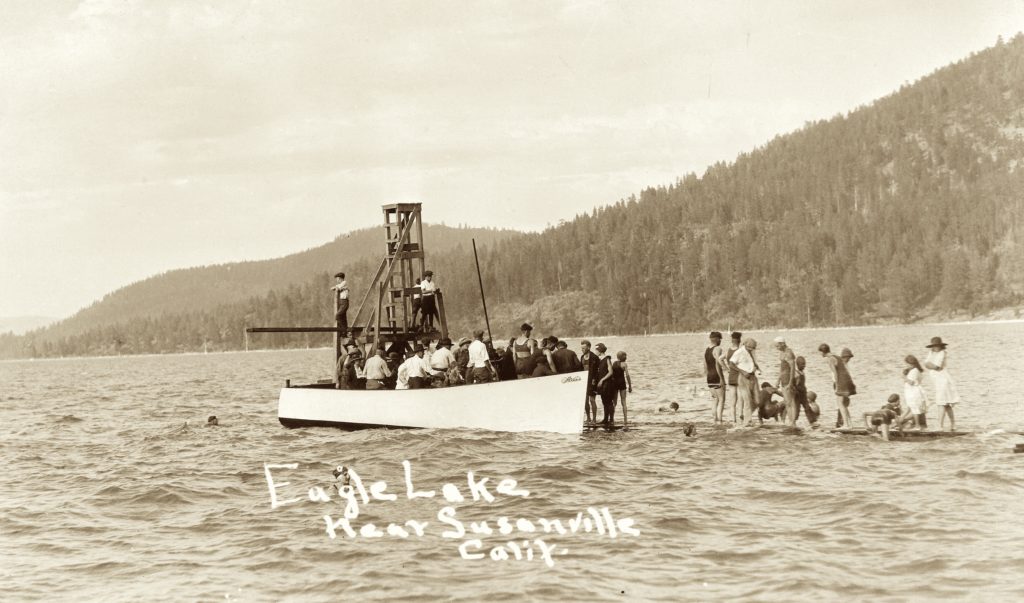
This facility was not opened to the public. Its name a bit of a misnomer. It was built circa 1918 by the Red River Lumber Company at the south. shore of Eagle Lake near present day Merrill Campground. It was used by those in the company’s management positions. Unfortunately, I do not have that much information on it, due to the nature of how Red River operated. However, It was the location of water carnivals during1921-23.

The water carnival at Eagle Lodge, 1921. Courtesy of Ed Standard

Tim

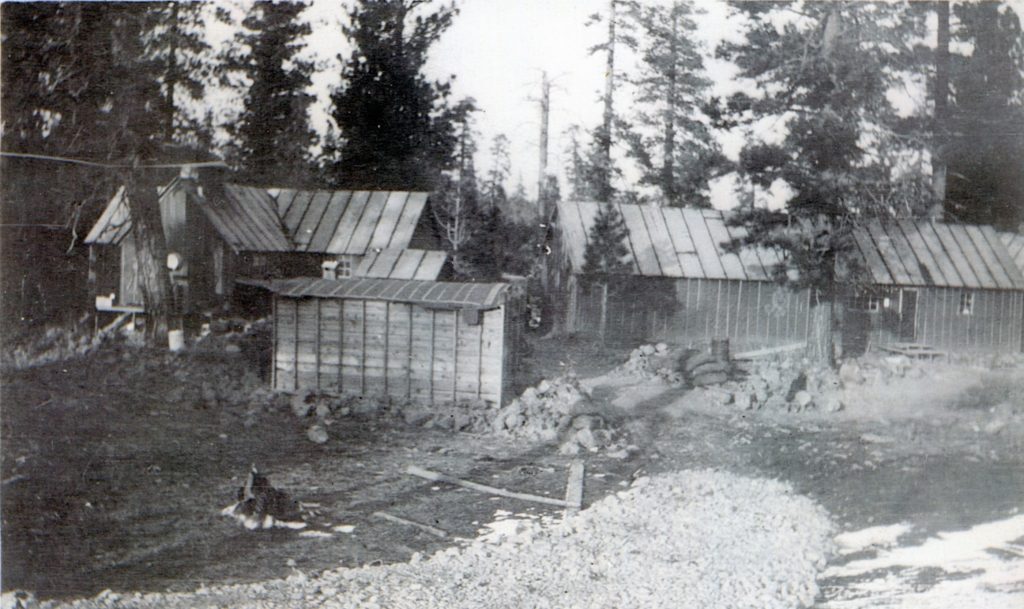
A Final Attempt to Salvage Bly Tunnel, 1935

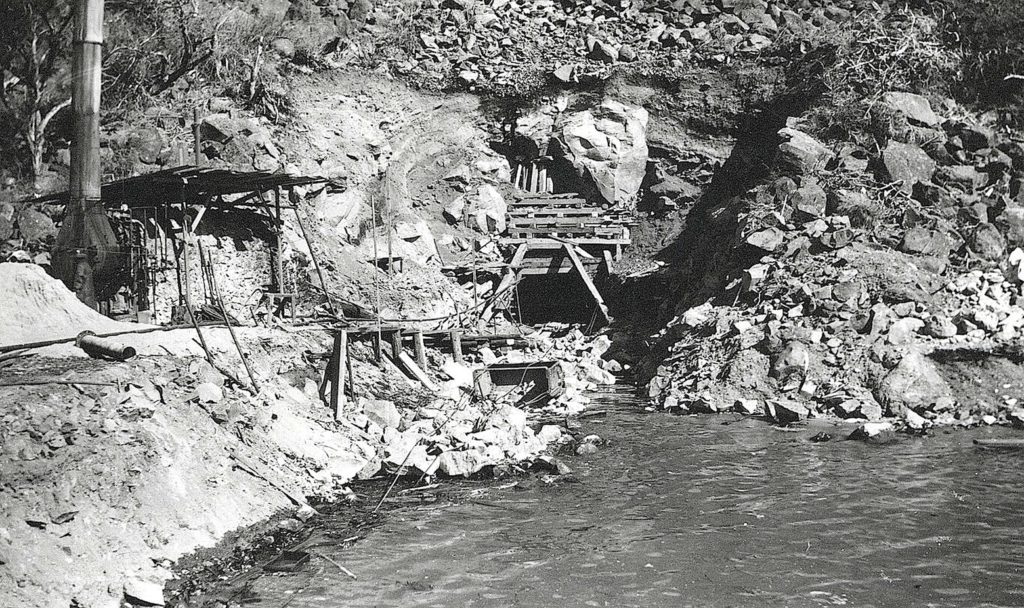
The outlet construction camp of the Bly Tunnel, 1922. Courtesy of Lola L. Tanner

Desperate actions, some times involves desperate measures. The Baxter Creek and Tule Irrigation Districts final plea to salvage the fundamental problems that plagued it from the onset of their Bly
tunnel at Eagle Lake. They were at a such low point, nothing ventured, nothing gained looked promising.

The district’s failed with their applications under President Roosevelt’s  New Deal Programs. Exhausted of all avenues. their last plea was for a Civilian Conservation Corp Camp (CCC). In their petition, it was their belief, that such a camp would prove very beneficial, not just the salvation of the endangered farmers on the verge of bankruptcy, but the county at large. Such a camp, they proposed, would employ some 700 men, not including administrative staff, etc.

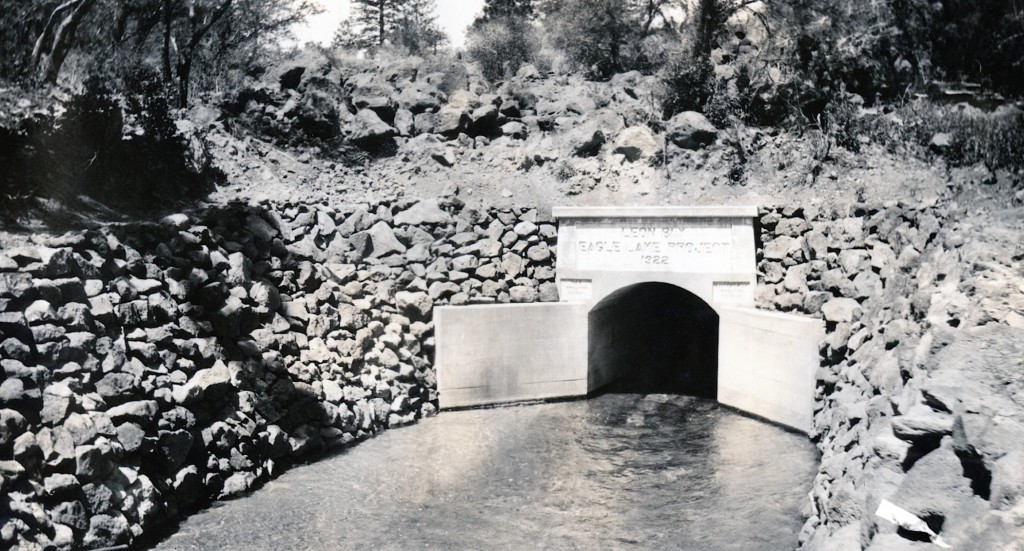
The outlet in 1924. Courtesy of Lola L. Tanner

In a special meeting held on November 1935, the Susanville Chamber of Commerce, endorsed the district’s application. It was not enough, and the application for a CCC speciality camp was denied.

It should be noted, that in the late 1940s and into the 1950s attempts were made to revive the Bly Tunnel project. However, that is another story, for another time.

Subscribe


Oscar Rankin’s “The Pelican”

The Pelican shuttling passengers at the south shore, 1914.

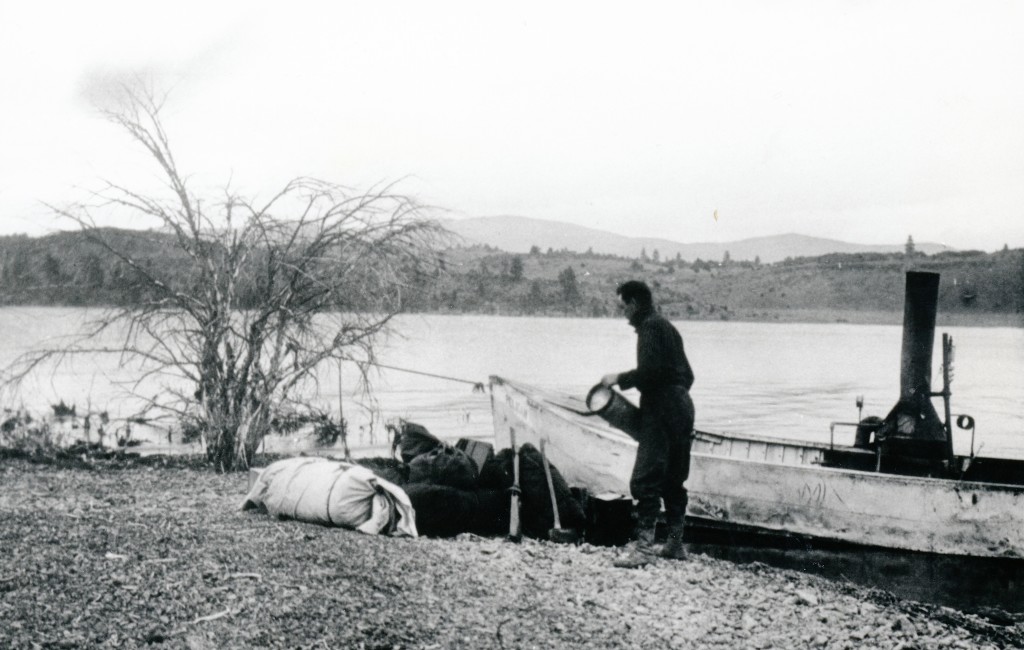
Oscar Rankin arrived at Eagle Lake in 1907, and became the first resort owner, laying foundations for the Eagle Lake Resort on the southwest shore. He constructed several boats for patrons to use on the lake. In 1914, he built The Pelican, a twenty-seven foot galvanized metal hull that was powered with a While boiler and Stanley Steamer engine. Leon Bly used the boat to do a sounding of the depths of Eagle Lake.

Leon Bly
Leon Bly sounding Eagle Lake. Courtesy of Wyn Wachhors

Eventually the Pelican ended up at Spalding Tract. Sometime around 1953 Glen Seeber found the old hull near Spalding’s and rescued it before deer hunters or someone else might use it for target practice. It was his intent to restore it. In the February 1996 issue of the Thru-Bolt the newsletter of the Eagle Lake Sailing Association, stated that The Pelican would be on display at the Bengard residence in Janesville at their next meeting. The Sailing Association launched an effort to help Glen and recruited the historical society and Lassen College to assist.  How much restoration work was ever completed or the boat’s whereabouts remain a mystery to me.

Subscribe!


Everyone’s Water Woes—1924

Bly tunnel inlet, 1921. Courtesy of Lola L. Tanner

The winter of 1923-24 was one of the driest for California since the1860s.  This was one was more profound than the earlier one, as California’s growth had been dramatic in the last six decades.

Like so many the  Golden State, the farmers and ranchers of the Honey Lake Valley were in a state of anxiety—with no snow pact, equalled dry reservoirs and low stream flows. One hand the future did not seem so bleak. The completion of the Baxter Creek and Tule Irrigation Districts Bly Tunnel at Eagle Lake could provide nearly everyone with an ample water supply. That water district agreed to sell 20,000 acre feet to the Lassen Irrigation District for $60,000–enough to irrigate 7,000 acres for that district.

While Eagle Lake had enough water to supply the irrigation needs of the Honey Lake Valley, there was a huge technical problem. The Bly Tunnel original design was the inlet was to tap the lake six feet below the surface—the contractor only did three feet. This forced Baxter and Tule Districts to hire an engineer to examine the situation.. When all as said and done, only a very limited water supply was delivered, leaving many literally high and dry.

Subscribe


A Eagle Lake/Hayden Hill Proposition

Hayden Hill, 1920.

Probably, one of the most unusual proposals to use the waters of Eagle Lake was for mining operations at Hayden Hill, located some twenty-five miles north of the lake. It just goes to show, there are a lot of creative individuals out there, past and present.

During the 1920s and 1930s, both the mining activity and the population at Hayden Hill declined. In 1934, Stratton & Stratton of Spokane, Washington consolidated the mine ownership. They had high hopes to revive the Hill. One of the main drawbacks that Hayden Hill suffered was the lack of water for milling. In 1938, Stratton & Stratton proposed to pipe water from Eagle Lake, at a rate of 2,500 gallons per minute. This scheme never came to fruition. There was no Hayden Hill revival.

Subscribe!