Tag Archives: Eagle Lake

Bly Tunnel – The Answer

Blasting at the inlet of the Bly Tunnel, 1921. Courtesy of Lola L. Tanner

Readers may recall back in January that I posed a question about Bly Tunnel and the geology. On the inlet side of the lake the tailing piles is a granitic type of sand, which is typical of Sierra Nevada. In April, I asked Michael Clynne of U.S.G.S. to explain some of the geology of the Eagle Lake basin. As it turns a portion of the basin is a spillover of Sierra Nevada. The Brockman Flat Lava flow occurred some 125,000 years ago, prior to the formation of the lake. It extended to what is the area of Bly Tunnel.  In essence the lava flow capped over the Sierra Nevada, thus answering my question.

More sand. Courtesy of the D.M. Durst Collection

Support!

Our Lady of the Lake

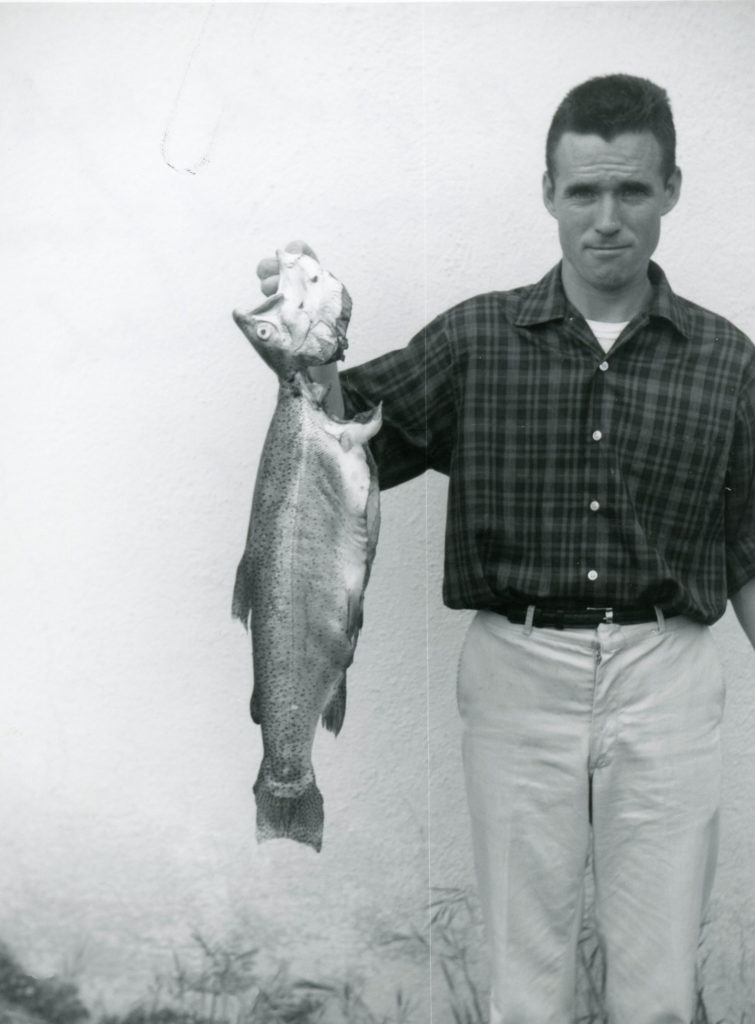
James Stokes holding Our Lady of the Lake

On May 2, 1961, California Department of Fish and Game personnel located an unusual female Eagle Lake trout, that they dubbed Our Lady of the Lake. One reason that it was unique was its age–eleven years! The fish had been trapped twice and taken to Crystal Lake Hatchery to be spawned. Another interesting antidote was Fish and Game reported that this fish had been reared and fed in captivity for seven years, and then it was able to adapt itself to the natural environment of the lake. When it was first caught the fish weighed one and one-half pounds and was 18 inches in length and when they released finally released the fish back into the lake, the fish measured 26 inches and weighed eight pounds.

Subscribe!

Troxel Ranch – Eagle Lake

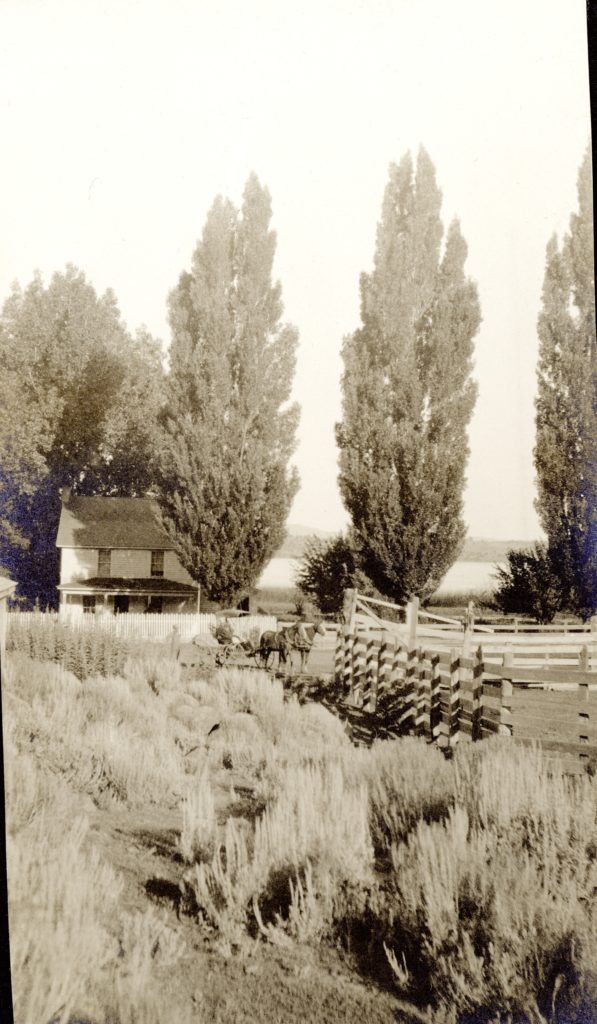
Troxel Ranch, circa 1918. Courtesy of Wyn Wachhorst

The Stone Ranch at Eagle Lake is one of the best known ranches in the basin. However, in a different era, it was better known as the Troxel Ranch. In the mid-1880s on the northeast side of  the lake, featured a lot of new residents and area was dubbed the Butte Colony, as these folks came from Butte County, California. The Troxel family was a part of this enclave. On December 12, 1888, William H. Troxel purchased William S. Davis’ 430-acre ranch on the northeast shore of Eagle Lake for $3,000. In 1918, William and Rosanna Troxel, who where in their mid-sixties, opted for retirement and moved to San Diego. They subsequently leased the ranch and on February 15, 1926, they sold the ranch to Coit and Laura Stone.

Support!

More Coulthurst

Gallatin House. Courtesy of Wyn Wachhorst

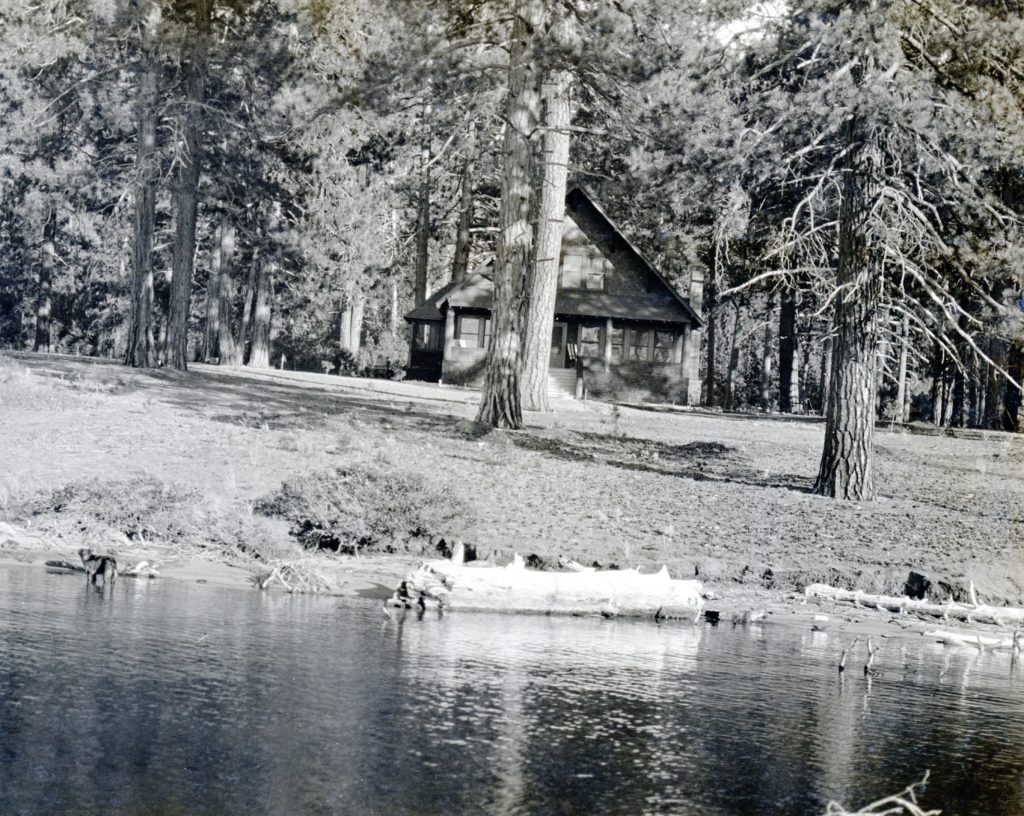
Last week I wrote about Coulthurst Hill. This is a just a little anecdote, since Isaac Coulthurst did not spend all his time in that unusual “man cave.” In the late 1880s he filed for a 123-acre homestead on the southeastern corner of Eagle Lake.  On October 4, 1892 he sold the property to Albert Gallatin who was busy acquiring property around Eagle Lake. While Gallatin primary use of the property was for the grazing of livestock, his wife had other plans for this particular piece of property. In 1913, she built a 4,000 square foot summer home there, the first one to be constructed at Eagle Lake.

Subscribe!

A Research Expedition

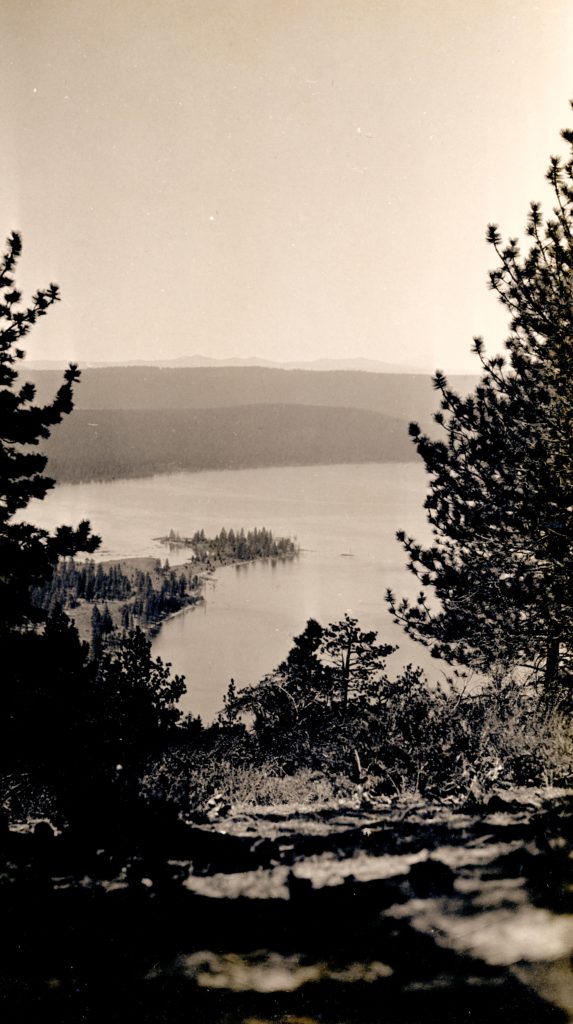
Pikes Point, Eagle Lake circa 1917. Courtesy of Wyn Wachhorst

In late April I made a whirlwind visit to the San Francisco Bay Area. The adventure was two fold–one a needed change of scenery and the other to obtain some new historical data pertaining to Eagle Lake.

The first stop was a visit to Wyn Wachhorst and a review of a fascinating photograph collection of Eagle Lake between the years 1914 to 1920 of the Gallatin family activities there. After some discussion with colleagues, we may attempt a re-photographic survey–then versus now–to examine how the landscape has evolved over the last 100 years. The completed project would be done in a powerpoint presentation and made available to various interested groups. Stay tuned.

The next excursion was to visit Michael Clynne a U.S.G.S. geologist. In a recent finding the Brockman Flat Lava Flow extends to the east side of the lake at Bly Tunnel and Pelican Point is part of that lava flow. In addition, Gallatin Peak is a spillover of the Sierra Nevada. More about these revelations in future posts.

Subscribe!

Leon Bly’s Estate

Malvena Gallatin. Courtesy of Wyn Wachhorst

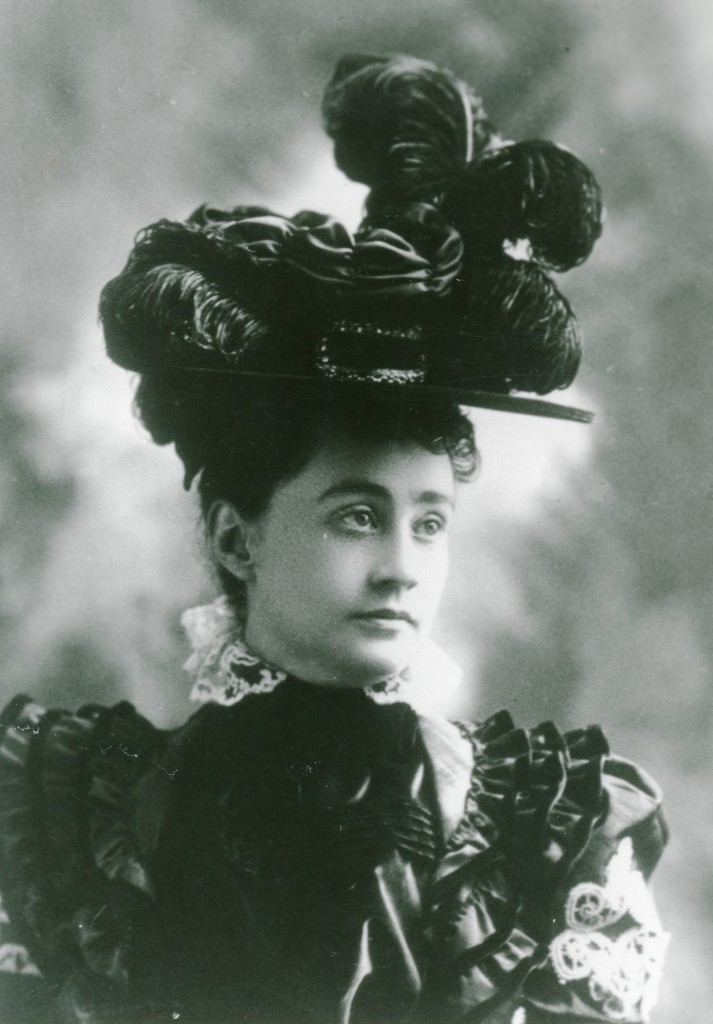
Awhile back I wrote about Leon Bly’s bad karma. During the contested estate hearings, I left out an interesting piece of information. Louise Wick was one of the five beneficiaries to Bly’s Estate. In a letter to the probate judge she stated initially Bly was going to leave a large sum of his estate to Malvena Gallatin. Bly’s housekeeper/nurse Edith Rebhan resented that notion since Gallatin was a “rich woman.” Rebhan also countered she would put in a claim for services as a professional nurse, day and night and at the rate of $18 per day, and this would consume most of the estate. Wick continued, “Nevertheless she [Rebhan] was bitter against the idea of Mrs. Gallatin coming in to anything.” As it turned Rebhan received the bulk of the estate and Gallatin nothing.

Subscribe!

Where is the Pelican?

el-boating009
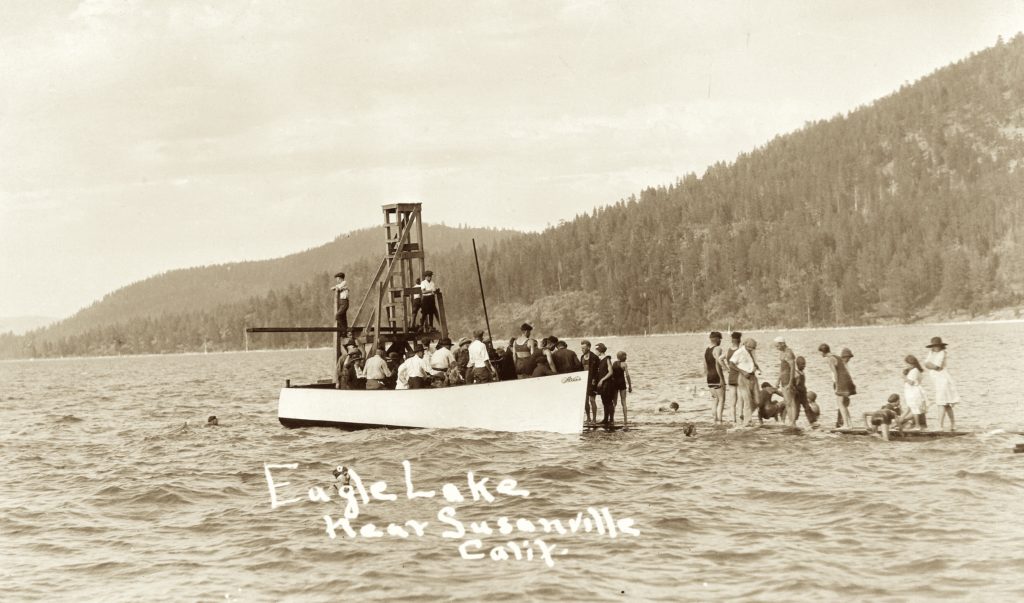
The Pelican shuttling passengers.

Oscar Rankin arrived at Eagle Lake in 1907, and became the first resort owner, laying foundations for the Eagle Lake Resort on the southwest shore. He constructed several boats for patrons to use on the lake. In 1914, he built The Pelican, a twenty-seven foot galvanized metal hull that was power with a While boiler and Stanley Steamer engine.

Sometime around 1953 Glen Seeber found the old hull near Spalding’s and rescued it before deer hunters or someone else might use it for target pratice. It was his intent to restore it. In the February 1996 issue of the Thru-Bolt the newsletter of the Eagle Lake Sailing Association, stated that The Pelican would be on display at the Bengard residence in Janesville at their next meeting. The Sailing Association launched an effort to help Glen and recruited the historical society and Lassen College to assist.  How much restoration work was ever completed or the boat’s whereabouts remain a mystery to me.

Subscribe!


May Preview

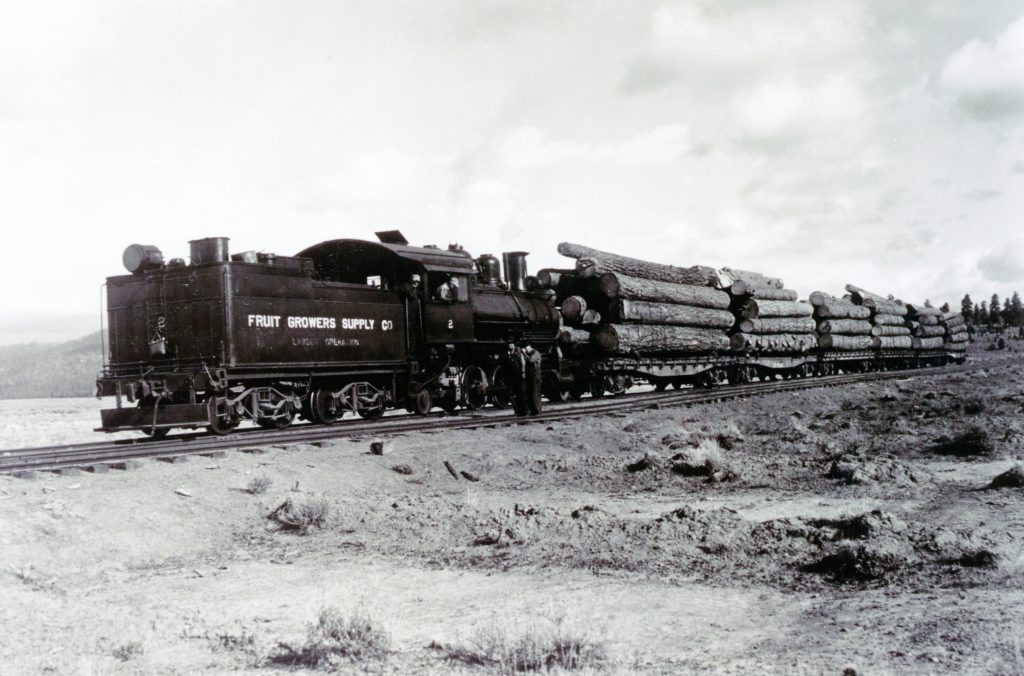
Fruit Growers logging train, Pine Creek Valley.

This month’s scheduled got derailed, so while a portion of it is prepared, it is incomplete. I just returned from the San Francisco Bay Area for a little respite of matters, but also to visit with Wyn Wachhorst. Wyn is the only great-grandchild of Albert and Malvena Gallatin. During my visit with Wyn he shared with me a variety of Eagle Lake photographs that I will be included in future posts. For nearly fifty years the Gallatins were the largest property owners in the Eagle Lake basin. Stay tuned. In addition, I met with Michael Clynne of the U.S.G.S. and revealed some very interesting material, some of which will be included in the forthcoming Inspiration Point Tour.

Subscribe!

Leon Bly – Bad Karma?

Outlet of the Bly Tunnel, 1924. Courtesy of Lola L. Tanner

On September  1923, an agreement was reached between Leon Bly, the Grant Smith Co. and two irrigation districts, Baxter and Tule that the tunnel and canal system was complete. There would be litigation about the tunnel, but that is another story. Of the $1.25 million project, $300,000 was Bly’s fee, the remainder was construction cost.

Instead of returning to Red Bluff, Bly for the next several years would make his home in San Francisco.  This decision no doubt influenced by Malvena Gallatin, one of his few close friends.  In 1928, Bly returned to Tehama County, and purchased a ranch at Paynes Creek.  He would spend much of the remainder of his life as a recluse. Continue reading Leon Bly – Bad Karma?

The other Eagle Lake Proposal

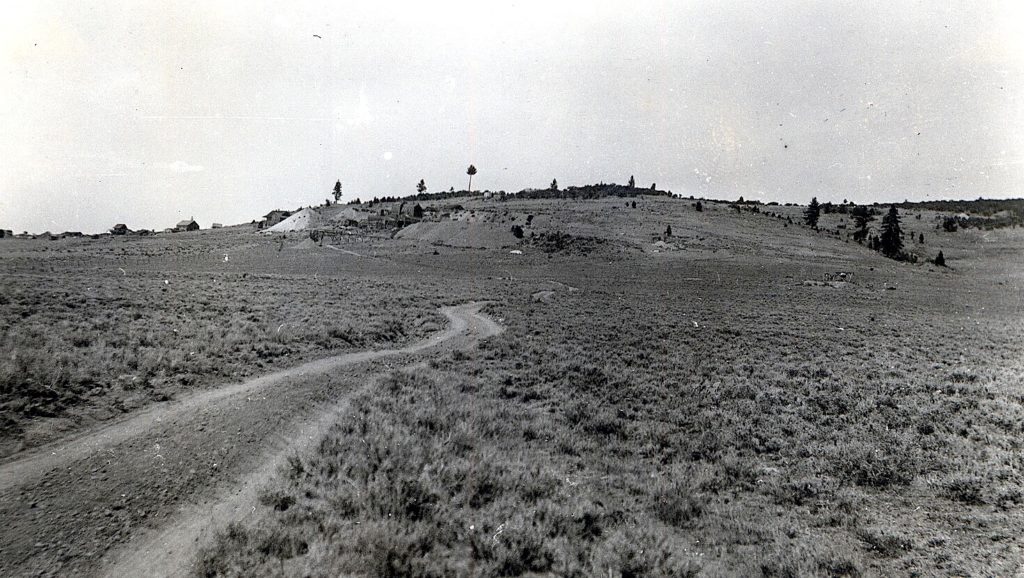
Hayden Hill, 1920.

Of what was one of the more unusual uses of Eagle Lake water was a proposal to use that resource in the mining operations at Hayden Hill, located some twenty-five miles north of the lake.

During the 1920s and 1930s, both the mining activity and the population at Hayden Hill declined. In 1934, Stratton & Stratton of Spokane, Washington consolidated the mine ownership. They had high hopes to revive the Hill. One of the main drawbacks that Hayden Hill suffered was the lack of water for milling. In 1938, Stratton & Stratton proposed to pipe water from Eagle Lake, at a rate of 2,500 gallons per minute. This scheme never came to fruition.

Subscribe!