The remnants of this dam straddle the California-Nevada border, and it is an impressive historical site. On May 25, 1889, William A. Clark filed a claim to all the water of Skedaddle Creek to irrigate the sagebrush lands of eastern Honey Lake Valley. To accomplish this, Clark proposed to dam the creek at the “narrows.” The dam would span the canyon some two hundred feet and be 126 feet in height. To fund the project, Clark formed the Honey Lake Water Company, and it was incorporated on June 17, 1889. It was estimated that the dam would cost $30,000. Construction of the dam began in October 1889, and it was anticipated that the dam would be complete by the following spring. In November, Company Engineer, Alexander Center, reported that construction had progressed better than expected and that the dam’s height would be raised an additional fourteen feet. It was during that month of November that one of the severest winters on record began. The November and December snows made work difficult and by January work came to a complete halt. Blizzards blanketed the countryside and then followed bitter cold temperatures that sent the thermometer to –30 degrees. Snowstorms continued and by the end of January it was estimated that on the higher slopes of Skedaddle, the snow depths surpassed ten feet! (Normal annual precipitation at the dam site is 7 inches a year, in 1889-90 it received 22 inches). Continue reading Skedaddle Dam→
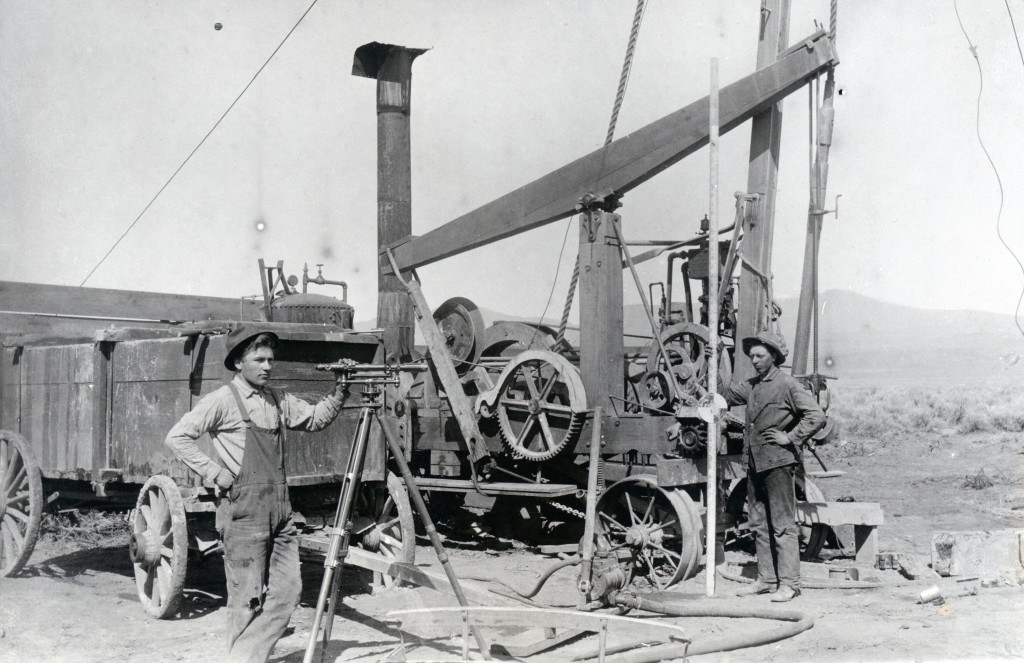
Caudle Brothers well drilling outfit, eastern Honey Lake Valley, 1910.
By the early 1880s, the hot topic that would remain for several decades was reclamation, that was eventually replaced by the lumber industry. When the NCO Railroad inched its way into the Honey Lake Valley only added momentum for the formation of a myriad of schemes. We will explore a number of these, some were successful and some were not.
On a smaller scale, improvements with well-drilling was starting revolutionize irrigation in the Honey Lake Valley. In 1888, Lassen County allocated a $1,000 for the promotion and advertisement of the benefits of well drilling to entice people to settle there. Thus, the Lassen County Chamber of Commerce was formed.
In 1916, William L. Wales, engineer for the Honey Lake Valley Irrigation District, looked at non-traditional water supply sources to reclaim the desert lands of eastern Honey Lake Valley. After all, other sources of water had been claimed.
Wales examined Horse Lake and wrote: “Horse Lake and it’s watershed of 115.2 square miles, laying just east of Eagle Lake, offer very good opportunities for a portion of the water supply. This lake has an area of 3520 acres at an average depth of six feet. According to a statement of a man living near the lake, it has not been dry but twice in sixty years. A shallow cut has been dug through the east rim connecting with a creek leading into Pete’s Valley. No doubt more than enough water has flowed out through this cut to offset the deficiency of the dry years.”
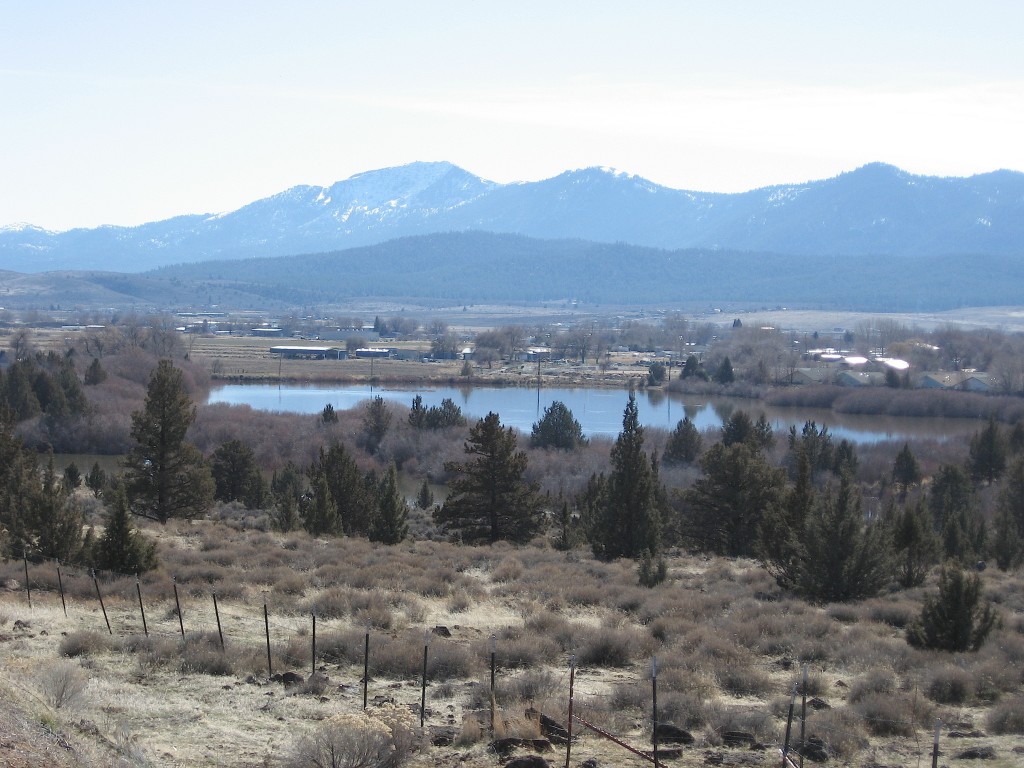
Barry Reservoir from Skyline Drive, February 13, 2016.
Some people may and others may not know the name of this reservoir, which as rule goes dry by the end of summer. After all, it is an intermittent stream as its source of water. In 1902, Mary Jane Hall claimed rights to the stream, that is since known as Barry Creek, and had a small reservoir constructed at the site of the current one. In 1909, Mardis Barry purchased the property from Hall. The enlarged reservoir was constructed in the fall of 1940. It was the first such project of its kind in Lassen County that was constructed with funding from the United States Farm Security Administration.
In today’s marketing world one of the most used terms is “brand.” However, the agricultural community, brands are more than a marketing gimmick.
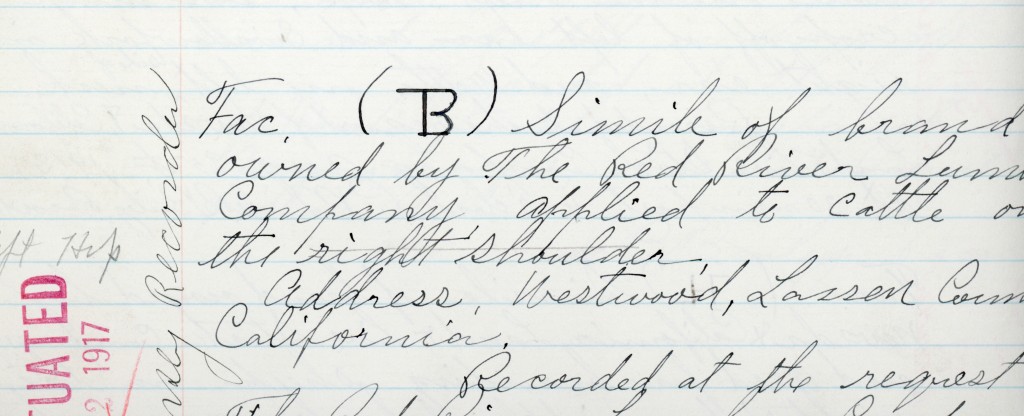
One would not think a lumber company would have a brand for livestock. When Red River first set up shop in Mountain Meadows, Fletcher Walker’s goal that the entire operation would be self sufficient, as possible with certain limitations. It was an admirable goal.
Initially, Red River needed horses for logging, which they did not completely phase out until the late 1920s. Red River had its own dairy herd to provide for milk, etc which all was produced in its own dairy. Since Red River owned a sizeable portion of Mountain Meadows, they initially raised their own cattle. Due to the winter weather conditions there, the cattle had to be moved elsewhere. My grandfather, John Tanner, routinely during the 1920s would pasture a portion of Red River’s herd for the winter in the Honey Lake Valley.
It was only fitting that Red River’s used the initials of TB for its brand. For those not familiar with the company, the initials are of its founder, Thomas Barlow Walker, who routinely used his initials, “TB.”
In 1913 the United States Government Land Office (GLO) intervened. California was on a major verge to overhaul water rights, yet that was of little concern to the GLO. At issue, at least with the GLO, was the State’s law was vague and failed to state whether water from a lake with no outlet could be appropriated. Until that issue was resolved, the GLO had no choice but to revoke Standish Water Company’s rights-of-way of its canals across federal lands. In essence the Company was forced to cease and desist, thereby forfieting revenue from water sales to recover its initial investment. This issue with the State was not to be resolved in a timely manner. In November 1914, the voters of California were presented with an initiative to overhaul the State’s water right system. It was approved and the Department of Water Resources was created. This new agency had complete control over the issuance of water appropriations, which previously was done at the county level. It was necessary reform, since the counties recorded water right claims but had no authority to determine concerning multiple applicants over a single water source. Continue reading Standish Water Company – Part II→
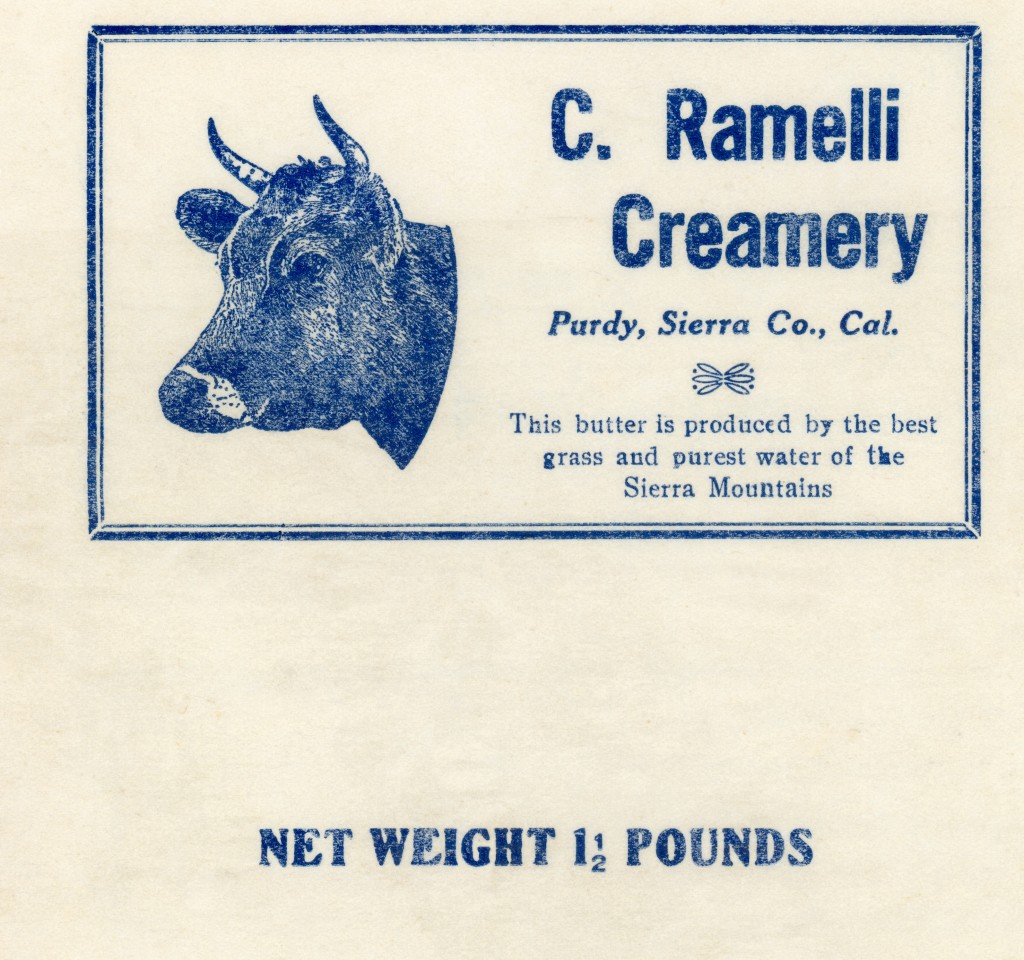
In 1887, Cesar A. Ramelli emigrated from Switzerland to the United States where he eventually located at Purdy, Long Valley, California. The area is best known to many as the region behind present day Bordertown. There, and later, with another location the Bella Vista in the Truckee Meadows, he along with his three sons, had seventy-five cows. From that herd, butter and cheese were made. The cheese was made into blocks of 10, 20 to 25 pounds which was sold in the Reno stores.
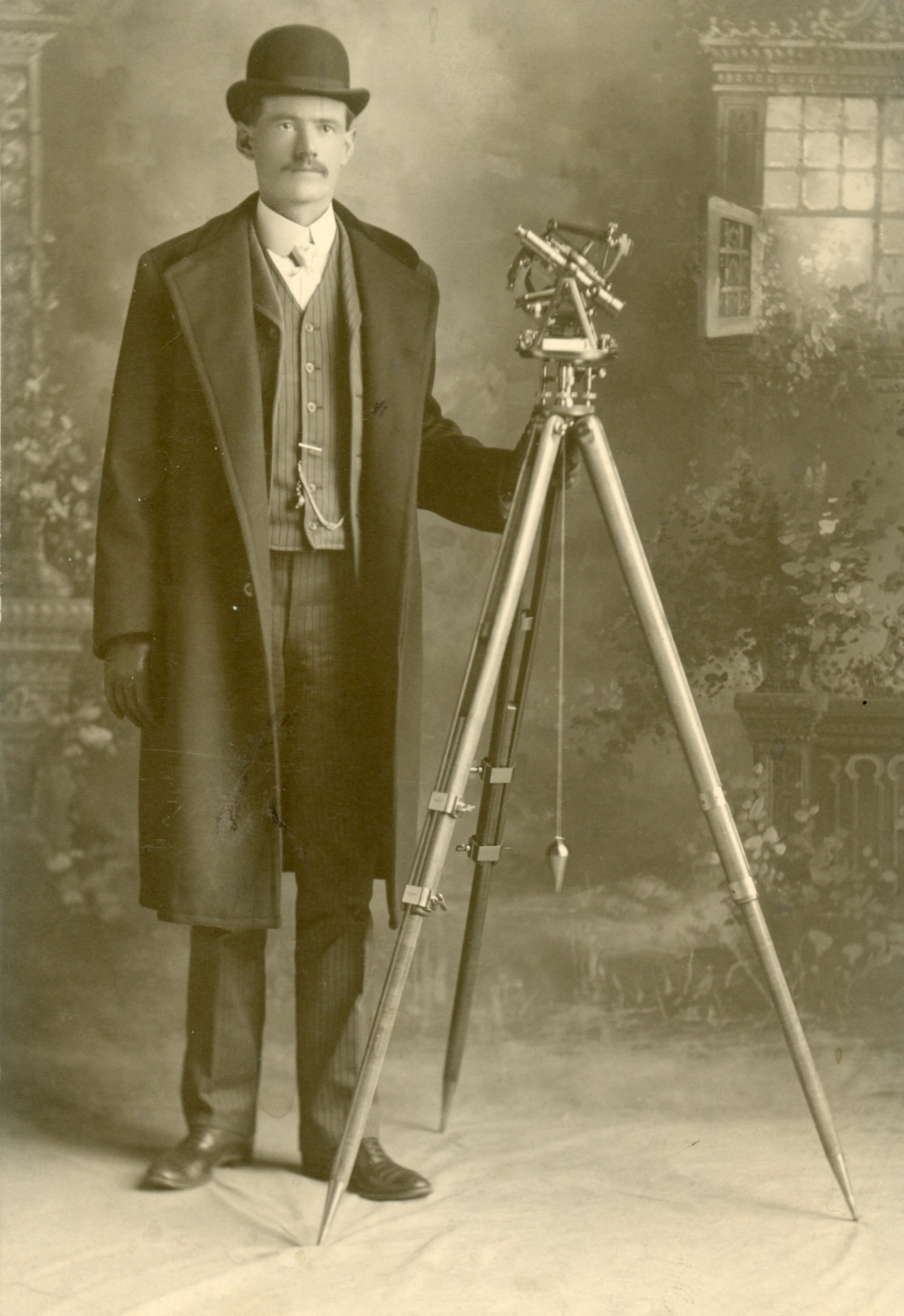
Personally, this east side Honey Lake Valley resident, is a fascinating figure and I relate to him in on many levels. He began his career first working for U.S.G.S. He did extensive travel in the western United States with that agency. In 1905, he was part of the survey team to survey the boundaries of Crater Lake National Park. He put together four albums of his work there, with detailed notes.* During this same time, his brother, Marvin, was lured to the sagebrush plain of eastern Honey Lake Valley, and took up a homestead that would later become the nucleus of the town of Stacy.
In time, Marvin convinced Carl to join him the reclamation enterprise there. Their first endeavor was a well-drilling business, since the new homesteaders arriving in the region would need wells for domestic purposes. Carl kept well logs, that information nearly a century is an important resource. In addition, he monitored the flow of High Rock Springs to see how the wells affected its flows.
The big project in the region was the establishment of the Standish Water Company and their intent to build a pumping plant to use the water of Honey Lake to reclaim the sagebrush lands. The company recruited Carl, as its engineer. Not only, did Carl oblige, he and his brother invested $20,000 towards the project. The project went bust, see Standish Water Company posts for details.
The one bright side, during these bleak times, was they had a great well, that not only provided their domestic needs, but irrigation, too. The family carried on. During the height of the homestead era, Carl was busy as a surveyor to plot out each land claim. By 1920, the area was deserted and services as a engineer or surveyor were no longer needed. Nevertheless, Carl persevered. In the 1930s, the United States Army contacted Caudle for information on this portion of the Honey Lake Valley. Caudle’s knowledge not only paid off for him, but for the region as a whole. It was with his information and lobbying efforts that the government established the Sierra Army Depot in 1942. He never saw its complete development, or that of the community of Herlong for he died in his sleep at his Stacy home on August 4, 1942. He is buried in the nearby Honey Lake Cemetery, with other family members.
*The albums have been donated to Crater Lake National Park.
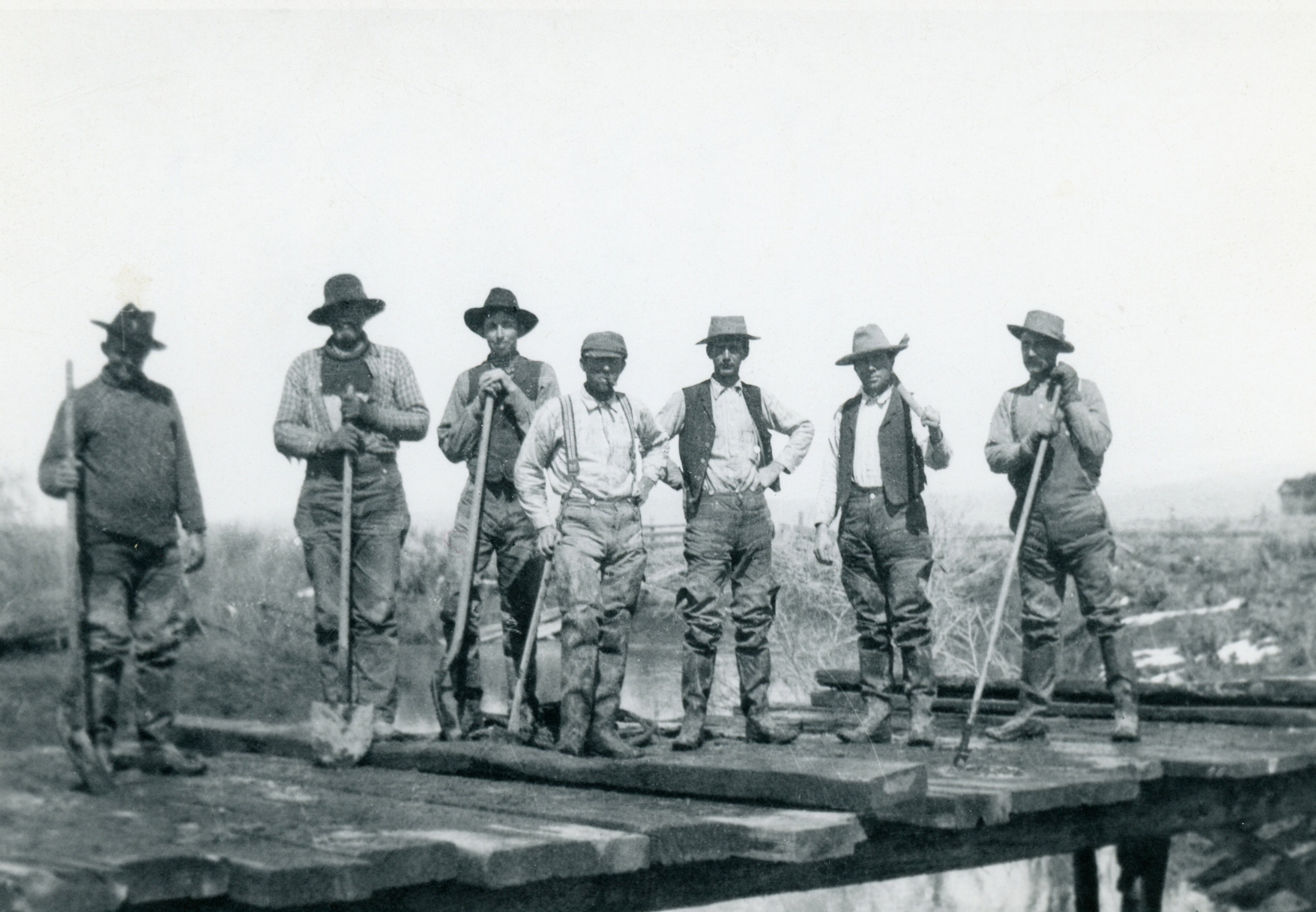
The annual chore of cleaning the slough. Left to Right: George Hartson, Curtis Winslow, Colin Whitehead, Mr. Zumwalt, Will Hartson, John Theodore, Will Spoon. Courtesy of John H. Theodore
Once Susan River flows past Standish, it starts breaking into various sloughs before it reaches Honey Lake. Some of these sloughs are natural, and some man made.
The Hartson Slough is man made, named after Charles Hartson. In 1881, Hartson filed on 160 acres of sagebrush land near Honey Lake, in the Tule District. However, Hartson needed more water to not only reclaim this parcel but to expand. In 1889, Hartson worked as the construction superintendent of the Ward Lakes Reservoir. Hartson made a deal with the Balls Canyon Reservoir Company, the company behind the project, that, for a portion of his services, they would give him a share of water rights to Willow Creek. This gave Hartson the water he sought to reclaim his land. He built the slough to convey the water to his ranch. By 1901, Hartson owned 1,500 acres of land, half of which was planted in alfalfa. In that same year, Hartson & Sons ranch was one of the first in Lassen County to incorporate. In 1910, Charles Hartson retired and moved to Susanville. He turned the ranch over to his son, Frank Hartson.
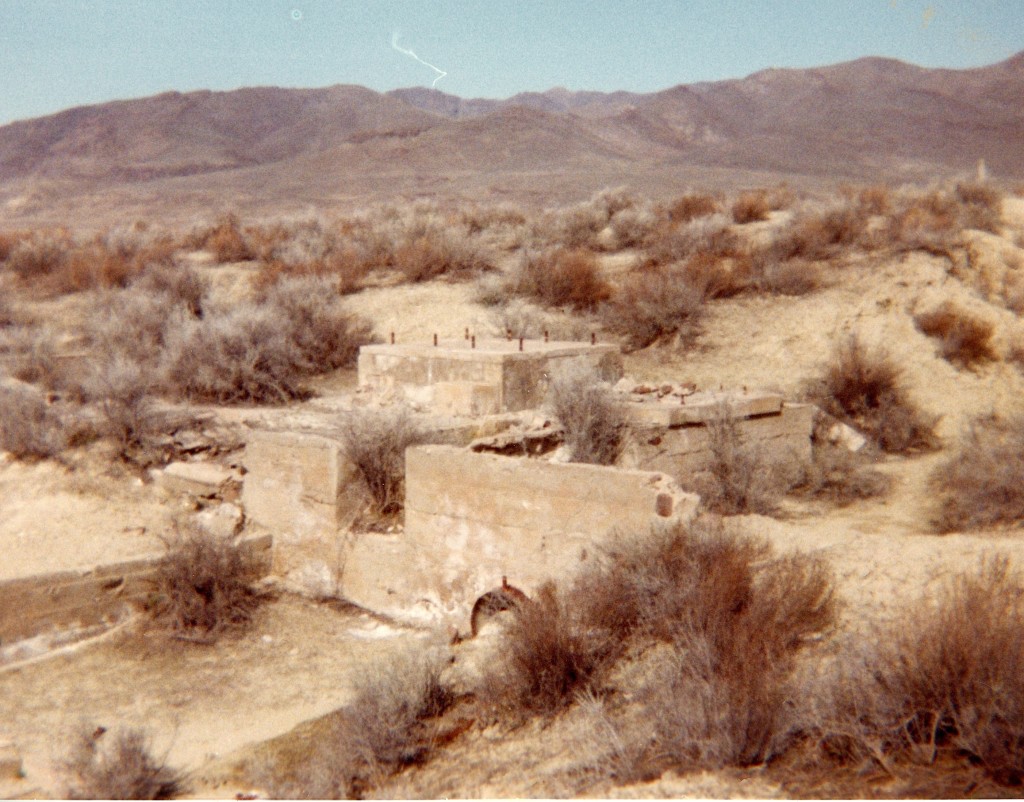
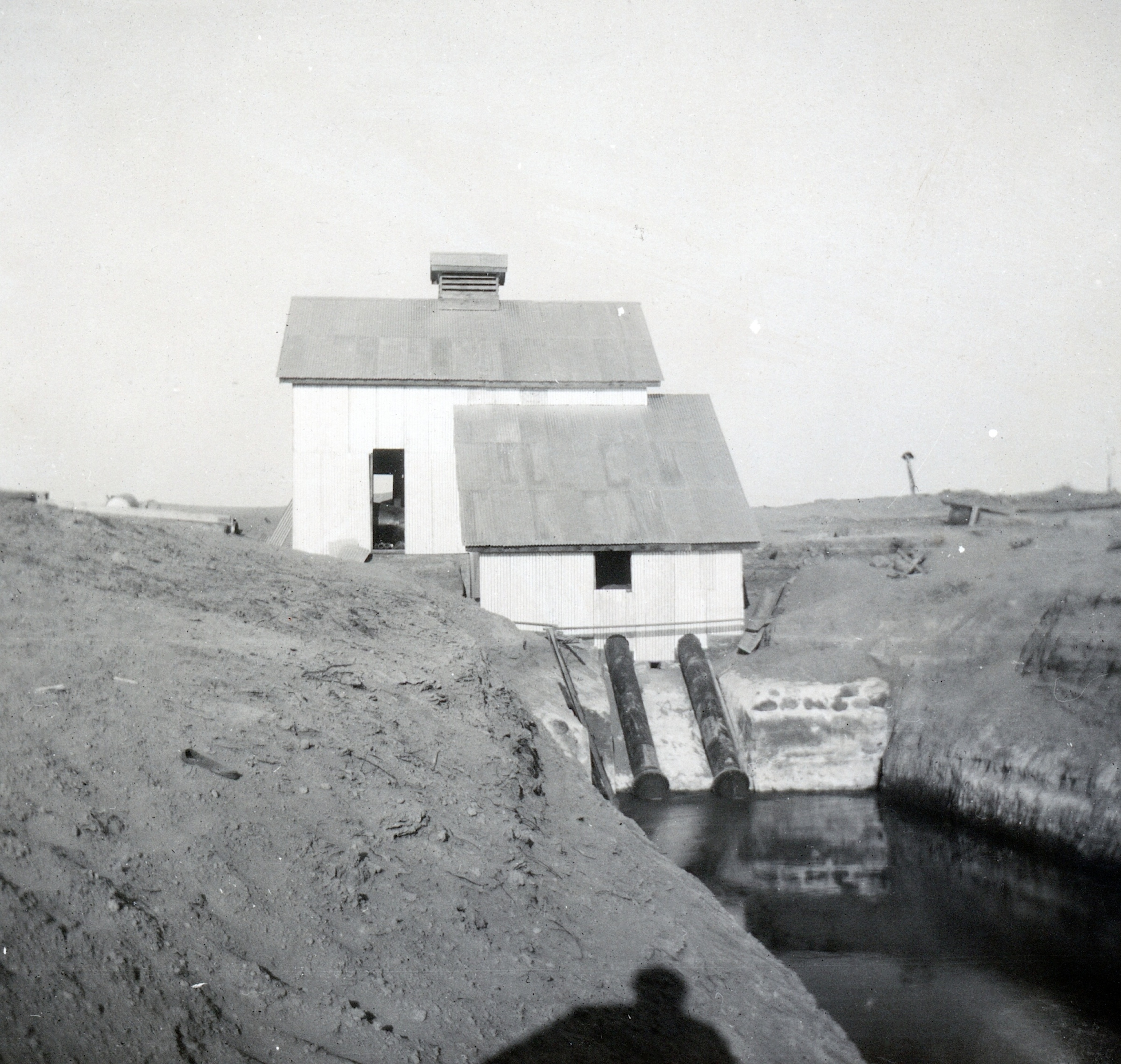
Standish Water Company’s pumping plant. C.R. Caudle collection
When Honey Lake is full it is an impressive body of water. There have been those over the years who thought it could be put towards a beneficial use. In 1878, Captain Charles Merrill came up with the first proposal to use water from the lake to irrigate the sagebrush lands on the lake’s eastern shore. Others, too, looked at lake’s potential for irrigation, but nothing materialized.
In the Standish district, two families who were joined by marriage—Hartson and Holmes—made plans to utilize the lake’s water for irrigation. In 1909, they formed the Standish Water Company. The Company was successful in attracting investors, one of whom was Carl Caudle. Caudle was a civil engineer, who had a homestead at Stacy on the east side of Honey Lake. Not only was Caudle instrumental in designing the project, he also invested $22,000.
In April 1910, construction began on a pumping plant on the east shore of Honey Lake, about two miles south of Amedee. A 150 horsepower Fairbanks Morse engine with a 24-inch centrifugal pump powered the pump house. Eleven miles of canals were constructed in an effort to irrigate 4,000 acres.
On October 4, 1910, on one of those beautiful falls days the region is noted for, set the mood for the inauguration of the pumping plant. During the morning people began arriving from around the Honey Lake Valley to partake in the festivities. Of course, the customary local dignitaries were on hand to provide their accolades. Shortly after noon, the visitors were instructed to assemble along the banks of the main canal to anxiously watch awaited event of pumping water into the main canal. At one o’clock the whistle blew from the engine house, and within moments water burst through the pipes to fill the canal.
On the surface it appeared the Company was off to a successful start. In addition, Mother Nature contributed to their efforts, when a snowstorm in January 1911 dumped eight feet of snow there! Actually, the weather gods for the next several years were very kind to the east shore residents by providing higher than normal precipitation.
In the Company’s first year 1,000 acres had been planted with sugar beets, with a successful harvest. The following year was a success, too. This changed in 1913, in one of those bureaucratic snafus. The Standish Water Company sold water to individuals who were homesteading on federal lands. Once those individuals met the government’s requirements they could acquire the land for a nominal fee. Disputes occurred, usually from neighbors. In this particular instant, Thomas Philbin contested John Ramsey’s request for a final proof for his 160 acre homestead. The United States Government Land Office (GLO) investigated Philbin’s claim, which they dismissed. However, when it was learned Ramsey’s source of water supply was Honey Lake, it raised a concern.