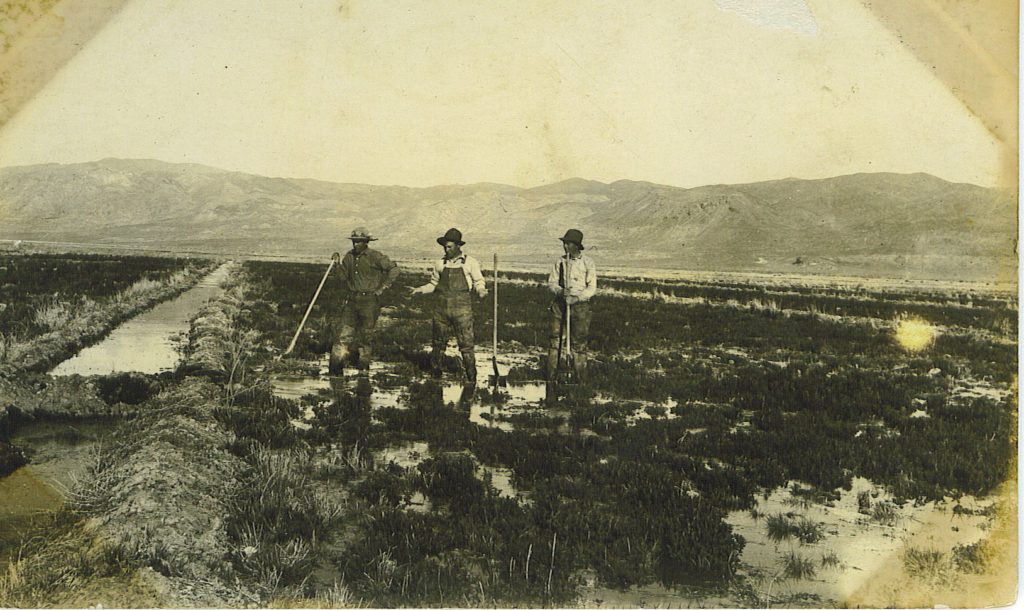
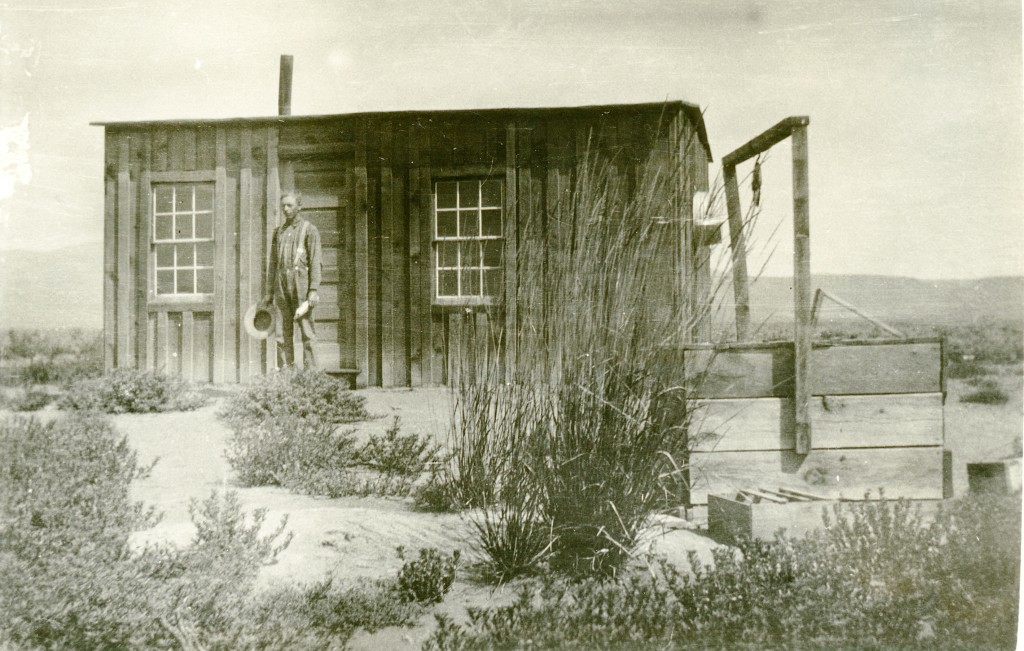
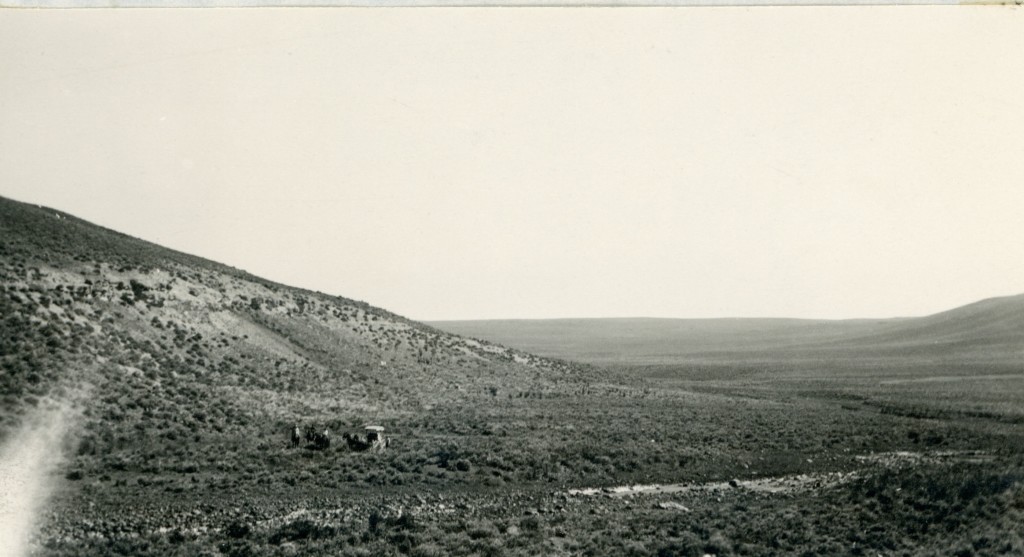
The Zarbock Brothers on their desert homestead near Stacy. Courtesy of Pam Zarbock Bell
In 1910, the Nevada Sugar Company of Fallon, Nevada came courting Honey Lake Valley farmers in the Standish district, as well those homesteaders on the east side of Honey Lake to plant sugar beets. One of the reasons, was the Nevada Sugar Company was in the midst of constructing a $600,000 factory at Fallon.
As an enticement the company stated it would build a second factory at Standish if production was successful and needed transportation facilities. In 1912, with the announcement of Fernley & Lassen Railroad to be constructed through this section of the Honey Lake Valley solved that transportation issue.
It should be noted that in 1911 was the first irrigation season of the Standish Water Company’s pumping plant on Honey Lake’s eastern shore. In that year they provided water for 1,000 acres that was planted in sugar beets, with the Nevada Sugar Company providing the seed. No one locally knew anything about growing sugar beets, but they learned quickly. One of the biggest problems encountered with beet production was the amount of labor required. The problem was compounded as there was a local labor shortage, and then there were those who did not want to work in beet fields. To alleviate the problem 25 Japanese laborers were brought in to assist. Their tenure was brief, even though it was reported they worked twice as fast at a cheaper price.
There were two other problems that ended the experiment. First there was not an adequate water supply and the beets were substandard. It was not only a problem locally, but in Fallon as well for in 1917 the beet factory there closed.
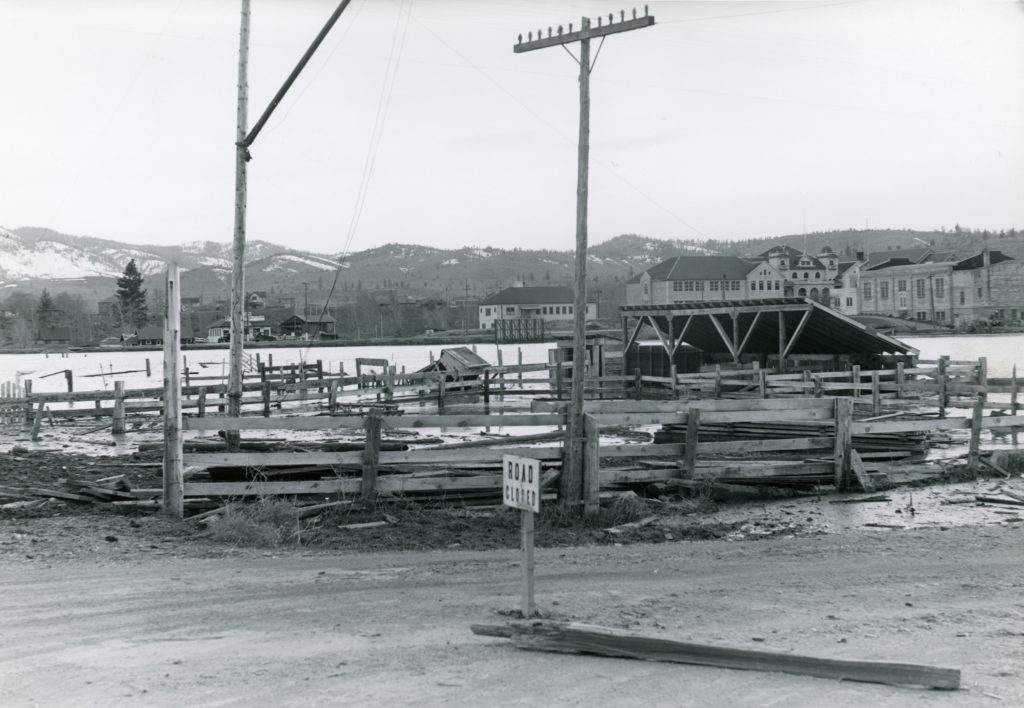
The flooded dairy, April 1938. Courtesy of Betty Barry Deal
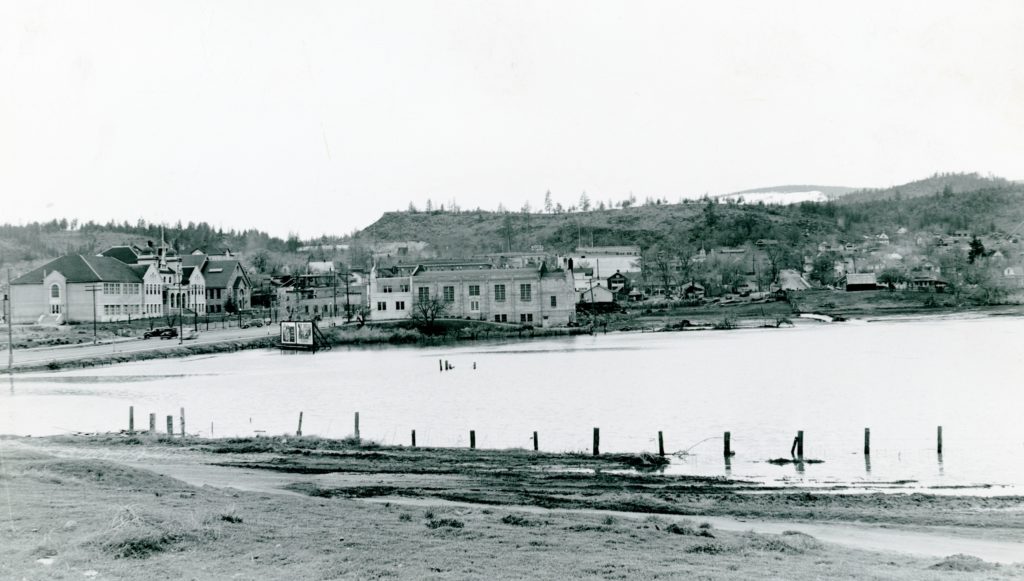
In 1909, Cy Houghton arrived in Lassen County. After the establishment of Westwood, Cy went to work for the Red River Lumber Company. In 1934, he located to Susanville and opened a dairy, which is now Memorial Park. In 1938, the dairy received extensive damage from the Piute Creek flood. At one point he considered abandoning the dairy, but changed his mind. In 1942, Cy’s Dairy closed for business. Not one to be idle, Cy later went to work for Sierra Army Depot and retired from the place in 1957.
Another view. Most people know this site today as Susanville Supermarket. Courtesy of Betty Barry Deal
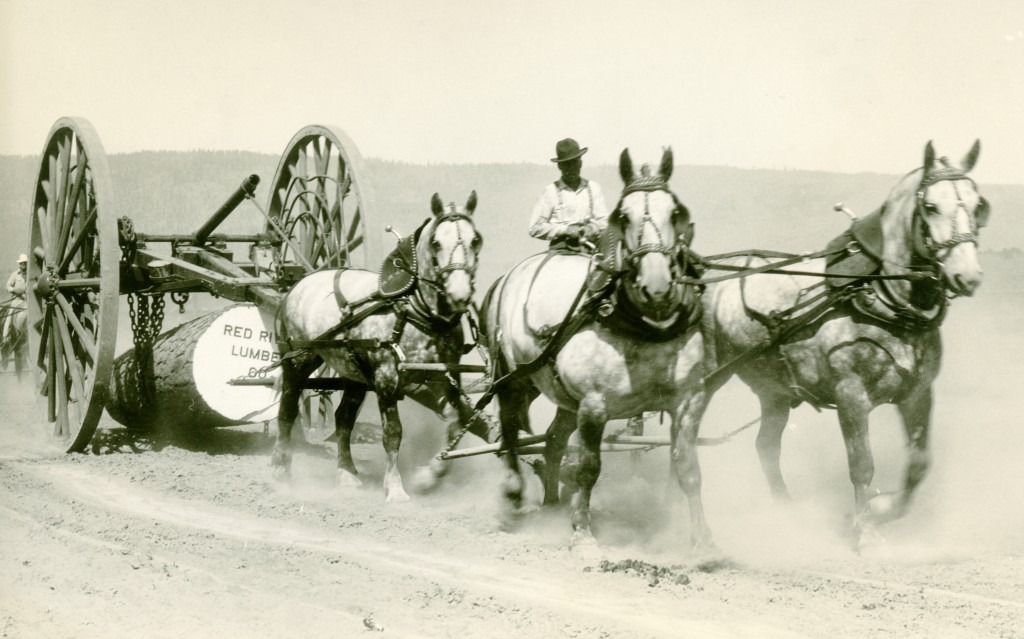
Red River Lumber Company’s 16 foot big wheels and team with a 2 1/2 ton log at the 1923 Lassen County Fair.
This being Lassen County Fair week, it is only fitting to have an article about the fair. The first fair was held in 1878, a regional one that comprised the residents of Lassen, Modoc and Plumas Counties. While it was desirous to make it an annual event it was fraught with financial problems.
What we consider the current Lassen County Fair was established in 1922, with five men who organized it. At that time major changes had taken place in the county with the establishment of three large lumber mills–Fruit Growers Supply Company, Lassen Lumber & Box Company and the Red River Lumber Company. Lumber was now king in Lassen County. Besides the traditional horse racing and such, a new feature was added to reflect the community at large, the logging shows. This was a big attraction for the Lassen County Fair for over seventy years, though with the dwindling decline of the lumber industry, this feature was eventually cancelled.
However, in 1923, the first logging exhibition at the Lassen County Fair was certainly noteworthy. For many attendees it was the first time they were able to witness the current logging methods of the “big wheels.” The Fruit Growers Supply Company won top honors in this category. It should be noted by 1927, the lumber companies began phasing out the “big wheels” for the motorized Caterpillar traction engines.
A full story how the Lassen County Fair has evolved since 1878 can be found in the latest issue of the California Traveler.
Reclamation of the arid American west is certainly an interesting chapter in the nation’s history. Some of these projects were fraudulent, and others not.
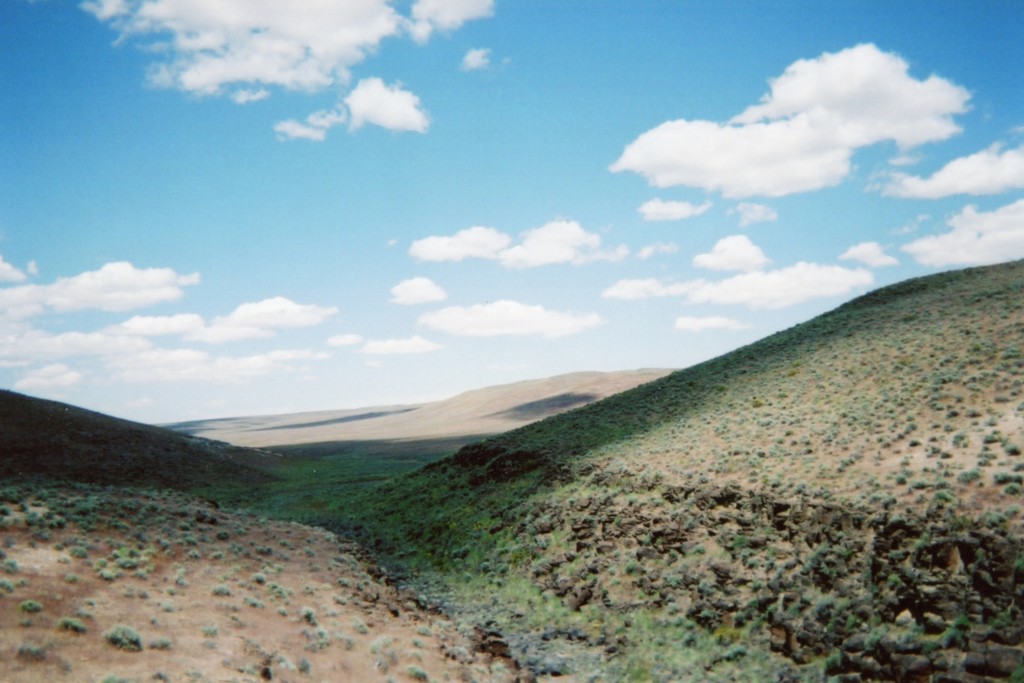
Numerous individuals saw huge potential to reclaim the sagebrush lands of the eastern segment of the Honey Lake Valley. Some of these developers were passionate about their projects and would devote their entire lives and resources in hopes to see it come to fruition, but in many cases the projects never succeeded, for one reason or another. A perfect example was that of Capt. C.A. Merrill who saw the potential of Eagle Lake to reclaim the sagebrush plain of eastern Honey Lake Valley. He began his quest in 1875, and continued until his death 1901. Twenty-two years later, Leon Bly completed Merrill’s dream, only to see it end in dismal failure.
Promotion to entice settlers was a key component as providing an adequate and reliable water supply. When the Nevada-California-Oregon Railroad finally entered the Honey Lake Valley in 1888, it brought awareness of the possibilities. A second wave of publicity occurred during the 1906-1912 era with the construction of Fernley & Lassen and Western Pacific railroads through the region. This also just happened to occur during the dry farming movement, which was successful for a time locally with a string of ten years of higher than normal precipitation.
Of course, people from the eastern United States and Europe, as well, were easily lured with the thought of owning land at bargain prices. People from all walks of life arrived, some like Carl Caudle, a civil engineer, would spent the rest of their lives there and others after a couple years of a hardscrabble existence moved on.
Sometime around 1915, Minnesota resident, Ferdinand Zarbock arrived in the eastern Honey Lake Valley and filed a desert homestead 160 acre claim adjacent to the railroad town of Stacy. He was joined for a brief time by his brother, Fred. In the spring of 1916, it was reported that Ferdinand had received a shipment of seed potatoes from Colorado to plant on his property. At this time, we do not know much about his activities there. In 1917, he did receive a federal land property for the property. However, there was something looming larger on the horizon, that had a major impact on the lives of so many. In 1918, Ferdinand was drafted in World War I. At that time, he deeded over his property to his brother Fred who had returned to Minnesota. After the conclusion of the war, his brother then re-deeded the property back to Ferdinand, who had returned to Minnesota instead of the Honey Lake Valley. This was a common practice for many individuals. Places like eastern Honey Lake Valley and the Madeline Plains were depopulated during the war, and those residents never returned, leaving abandoned homesteads scattered throughout the country. On a bright note for Zarbock, in 1920, he sold his homestead to W.R. Tait for $500. Many were not as fortunate and their abandoned properties were later sold for delinquent taxes.
In a related matter, I highly recommend Sarah Old’s homestead experiences adjacent to the Honey Lake Valley which her memoirs were published in a book entitled Twenty Miles from a Match. In Susanville, you can purchase it at Margie’s Book Nook.
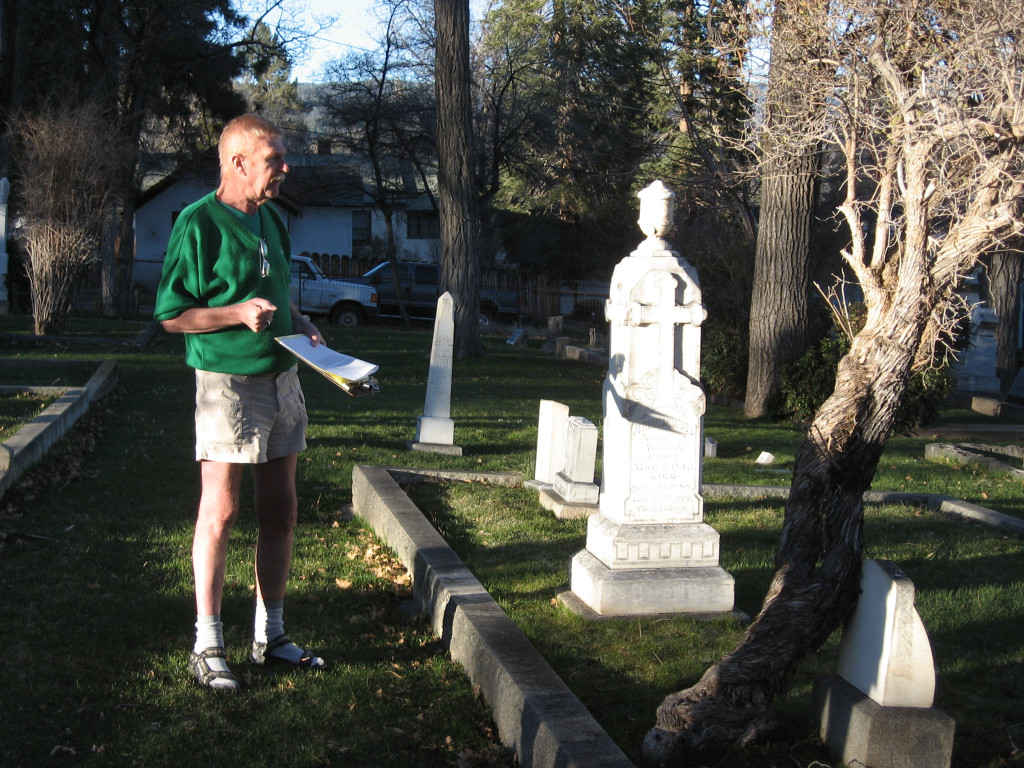
The grave of Jeremiah Wood at the Susanville Cemetery. March 17, 2016
Jeremiah Wood (1819-1889) was a true ‘49er arriving in California in that infamous year and spent most of his life mining in Nevada County. In the meantime, two of his sons, John and Denis came to Susanville in 1872 and opened up a meat market/butcher business. In 1887, Jeremiah came to Susanville to spend his final years with his son Denis, who by the way expanded operations into ranching, and six generations later the family carries on the tradition. This is truly remarkable, after all the old saying goes the first generation makes it, the second uses it and the third loses it. Only 13 percent of family owned businesses make it to the third generation. On a final note, the Wood Ranch still uses the brand that Denis created back in 1875, the DX.
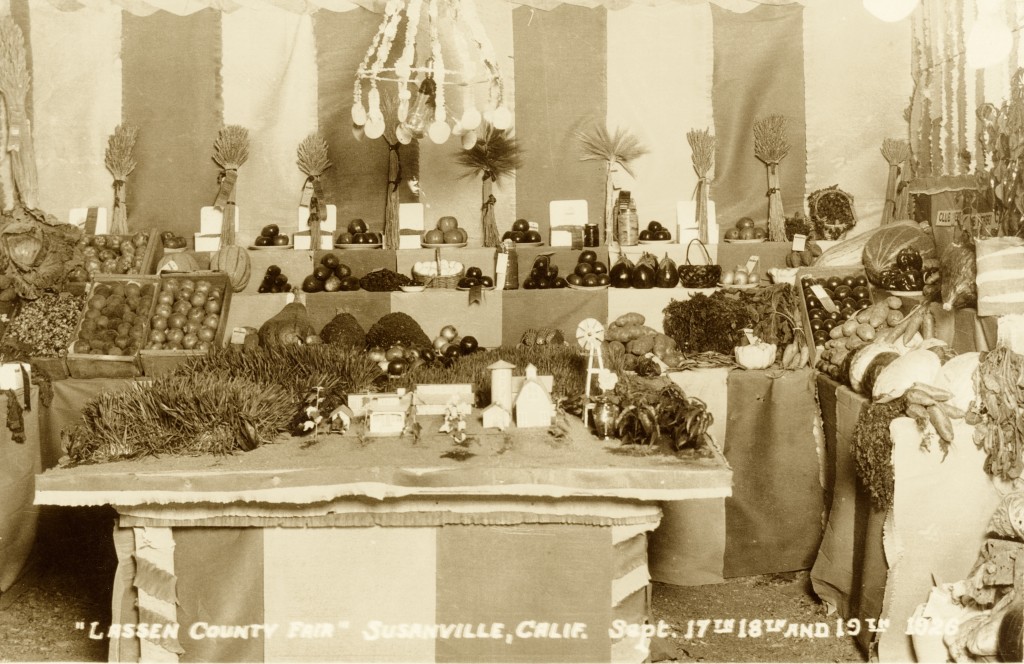
Tomorrow marks the return of the farmer’s market in Susanville. Please note the location has changed and it is on Pancera Plaza, Main and South Gay Streets, and not the Susanville Depot. When the big lumber mills were established it was a bonanza to the local agricultural community. In 1924, the Fruit Growers Supply Company purchased the following for its workforce.
300 pounds of fresh apricots
25,000 pounds of apples
500 pounds of asparagus
5,000 pounds of beets
4,000 pounds of green beans
21,000 pounds of cabbage
3,540 pounds of cucumbers
1,270 pounds of sweet corn
10,400 pounds of carrots
10,500 pounds of cauliflower
2,200 pounds of celery
5,200 pounds of grapes
12,600 pounds of watermelon
17,560 pounds of other melon
11,600 pounds ofgreen onion
50,000 sacks of dry onions
13,400 pounds of peaches
100 pounds of pears
1,000 pounds of peppers
13,800 pounds of tomatoes
89,200 pounds of beef
24,500 pounds of veal
33,600 pounds of pork
2,200 pounds of turkey
3,860 pounds of poultry
1,300 cases of eggs
21,800 pounds of butter
14,220 pounds of ham & bacon
117,500 pounds of flour
Never miss a story, click here to subscribe and support.
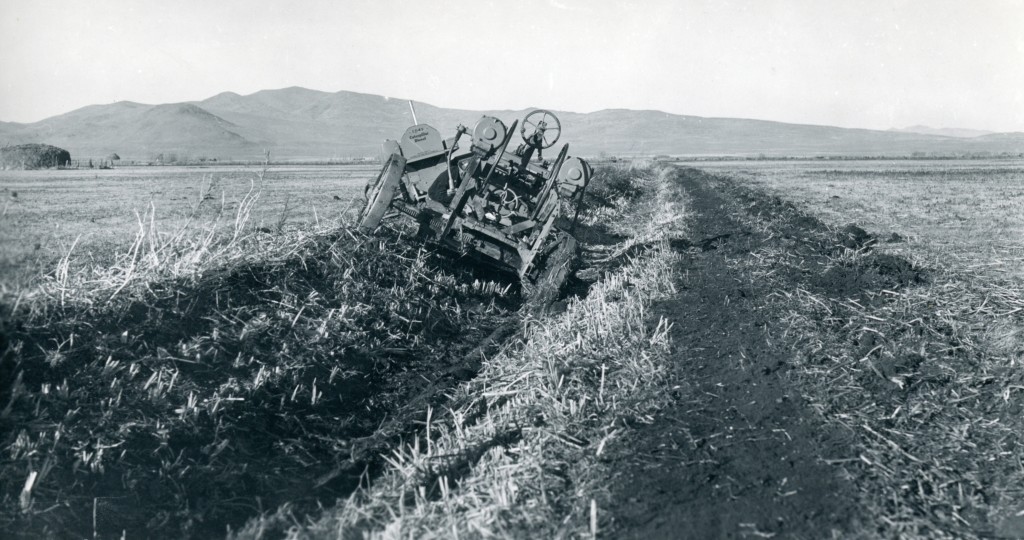
A slight problem cleaning the irrigation ditch on Tanner Ranch, 1936.
Progress is being made on the Pioneer Brand book. I thought a sample entry beginning with my own family and that of the brand of Lola L. Tanner that appears on the wall of that local institution. My grandmother Tanner would have had a royal fit, if she knew about it, she being a tee-toler.
Lola, was the eldest child and only daughter of Ed and Mary Murrer. Born 11 September 1899 at the family ranch in Willow Creek Valley, she had her first dream dashed in a hurry. In 1924, a debonair ranch hand Jim Scott, came a courting Lola. It was a whirlwind romance and they were married the following year. Only after a few months of matrimony, Scott forged his father-in-law’s name on a bank note for $500 and skipped town. He did not get far, and was arrested in Reno, Nevada. The marriage was annulled, and Scott repaid the money. However, this was his modus operandi for decades to come.
In 1927, Lola married Honey Lake Valley native, John Tanner. Like, Lola, his initial dreams were dashed early when his father, William, died in 1890, when John was only seven years old. His mother Jane, remarried to Charles Adams, an abusive type, so John along with brothers, William and Charley sought refuge with the Ravenscroft family and later at the Gibson Ranch. It should be noted that John’s father, William, had settled at Soldier Bridge in 1870 and registered his brand as the 20. That brand would be modified to the 30.
John and Lola made their first home near Standish, that John and his brother, William had established in 1915. In 1928, an opportunity arose where the Capezolli’s desired to trade their ranch with Tanners, and a deal was struck. Over the years, the Tanner’s expanded and bought the adjoining Hartson, Stamplfi and Whitehead ranches. While John and Lola have passed away many years ago, their three daughters: Joyce Cunha, Mary Rea and Ardene Purdy still own the ranch.
Looking north at the proposed reservoir, 1916. Courtesy of Betty Barry Deal
The Honey Lake Valley Irrigation District was an interesting creature, and one of many entities to reclaim the lands on the east side of Honey Lake. It was one of the last organizations to do so after others had tried for thirty years.
The district, like its predecessors, was faced with one gigantic problem, water. By 1916, when the district was formed, nearly all the water in the region had been claimed. After all the district claimed water from as a far away as Butte Lake, in Lassen Volcanic National Park to be diverted to Poison Lake, then a channel to Pine Creek, to Eagle Lake and so forth.
Looking north from the abandoned dam site, 2003.
In addition, they examined one of the closets sources to them, Skedaddle Creek. The district’s engineer, William Wales, noted that even though the drainage covered a relatively small area, it would be imperative to rebuild the original dam that had washed out some twenty years prior, not just as a water source, but to prevent flooding. Wales estimated that the reservoir would cover some 231 acres and hold on the average 5,000 acre feet of water. Wales recommended a new dam be constructed of concrete, at an estimated cost of $63,631. This district, since its inception, was plagued with financial and legal problems and none of their projects materialized.
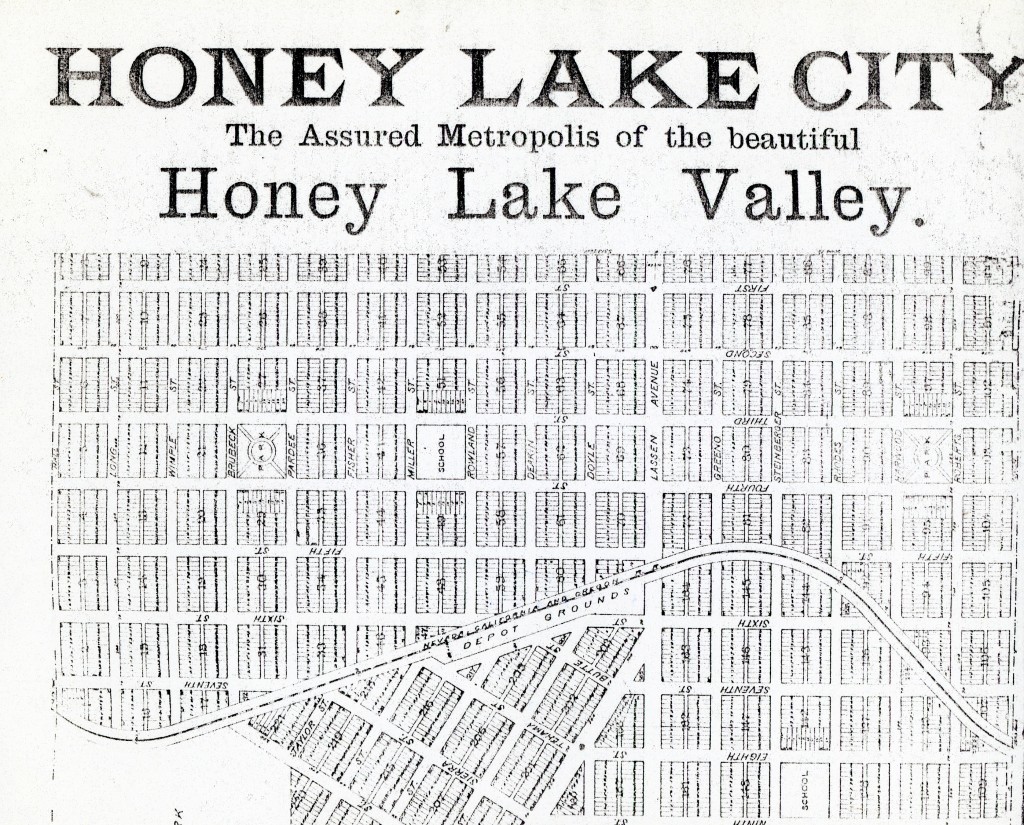
A planned metropolis of the Honey Lake Valley Land & Water Company, established in 1891. The company was involved in a major reclamation project for the eastern portion of Honey Lake Valley. The main water supply would be that of their reservoir, Lake Greeno, constructed on Long Valley Creek.
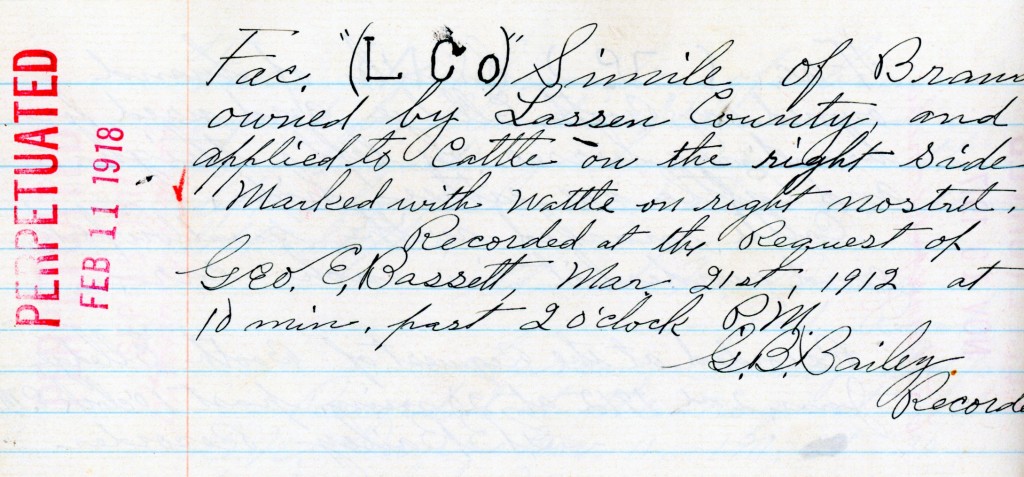
Lassen County had its own livestock brand, even though they did not intentionally plan to be in the business of raising livestock. It was all accidental. Way back in the day, and especially prior to the age of automobile, there were problems with stray livestock. Routinely the county found itself taking care of various animals, in hopes eventually the owners would come forth to claim. After a period of time elapsed the animals became property of the county. Before the county could sale the livestock, they had to be branded for identification purposes. There were other instances were the county was forced to impound animals, whether for collection fees, etc.