Tag Archives: Agricultural

Standish Creamery

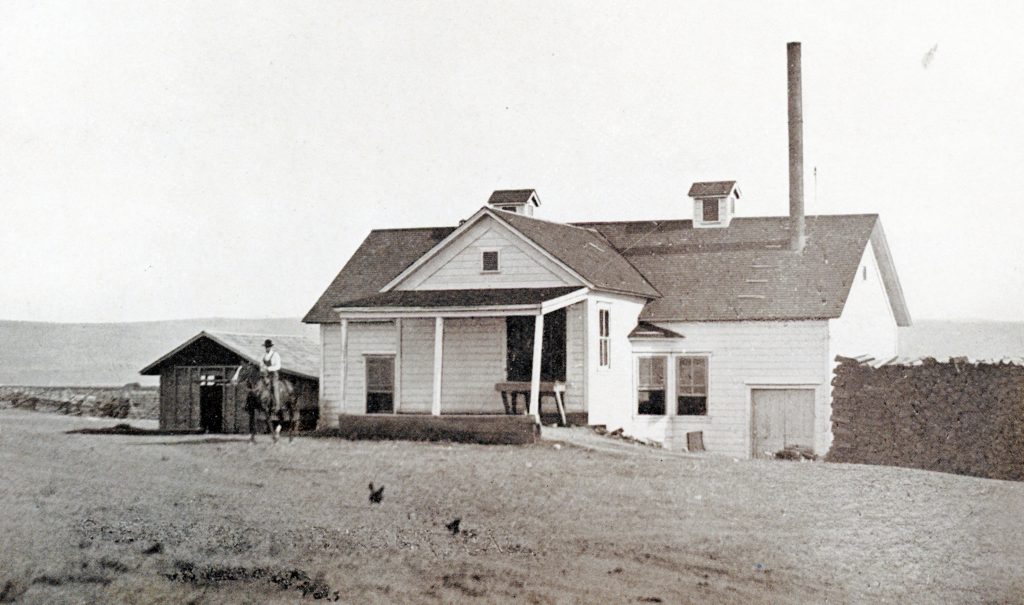
Standish Creamery, 1907

In 1907, the Standish Creamery had a daily output of 650 pounds butter. It was only running at half capacity, labor or the lack thereof being the culprit. As one observer wrote: “One does not wisley undertake the ownership of a herd of a hundred dairy cows, no matter how profitable he knows it to be, with the likelihood staring him in the face of waking up any morning and finding his milkers all gone, converted overnight into cowboys, astride their horses and galloping away.”
Subscribe

Milford, 1908

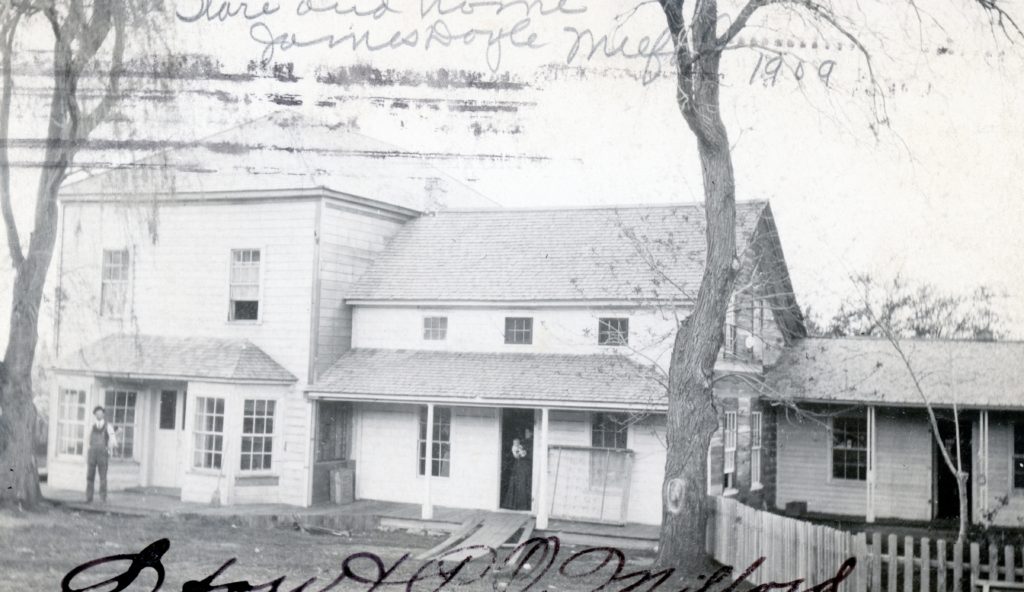
The Milford Post Office and Store, 1909. Courtesy of Betty Barry Deal

In 1908, G. Yoell Parkhurst compiled a Lassen County booklet as part of Sunset Magazine’s Homesteader’s Bureau operation. Parkhurst made the following observation about Milford:

“Milford is quaint little village a few miles from the west shore of Honey Lake, and is the post office for some fine orchard and farm lands. The best way to show what may be done here is to tell about James Doyle, one of Lassen County’s oldest and prosperous citizens. He came to California in the early sixties [1860s] by way of the plain route. Arriving in Lassen County in the vicinity of Milford, he saw the possibilities in the land around him, so went no farther, taking up a section of land plowing the soil. Altogether he accumulated a mile and a quarter square of land between Honey Lake and the mountains, all of it being overgrown with sagebrush. This was nearly sixty years ago and today he is one of the wealthiest men in the County, made so by the power of his own energy exerted upon fertile land.

Subscribe

Lassen County Dairy History

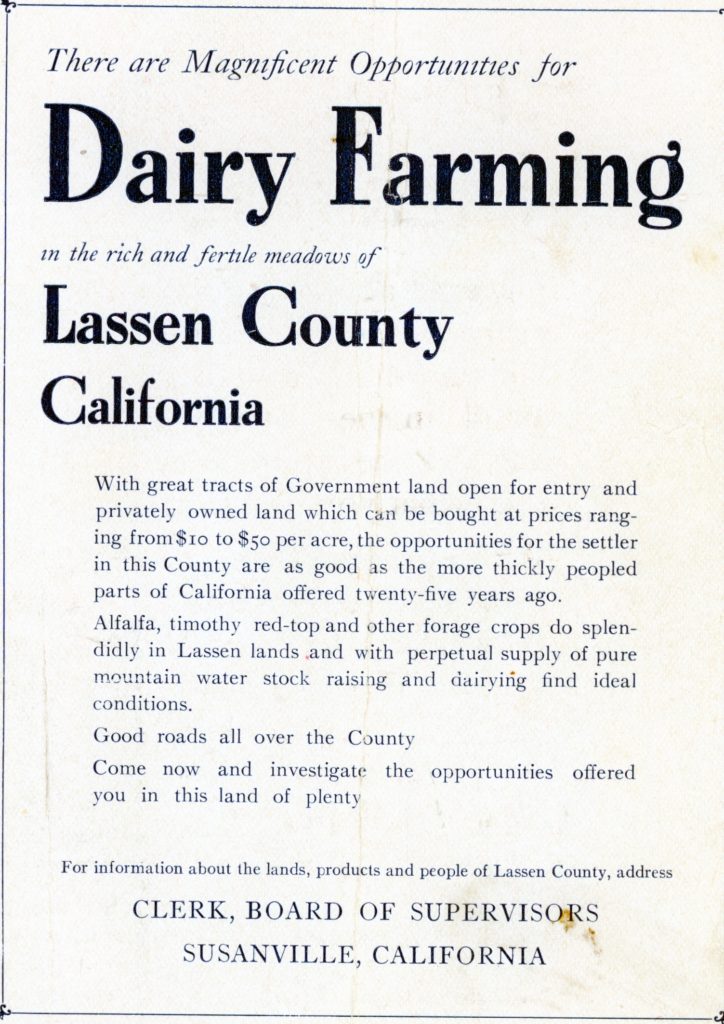
1909 advertisement

The dairy industry played an important role in the region’s history. After all, before grocery stores and transportation, one needed to be self sufficient. In the late 1800s, butter was a major product.  For example, A.L. Tunison who resided in Willow Creek Valley wrote in his diary: October 21, 1880 – Started for Oroville with 3200# of butter.

Virginia City, Nevada during its boom times was another big market. It was not until the late 1890s, that saw the development of creameries. Then by the early 1920s, with a huge population increase in Lassen County caused the establishment of the large lumber mills, saw the establishment of numerous dairies to produce milk. In future posts I will be exploring the history of those dairies. Of course, if you happen to have knowledge of any of these, I would like to hear from you, as very little has been documented on this topic.

Subscribe

Little Valley, Lassen County

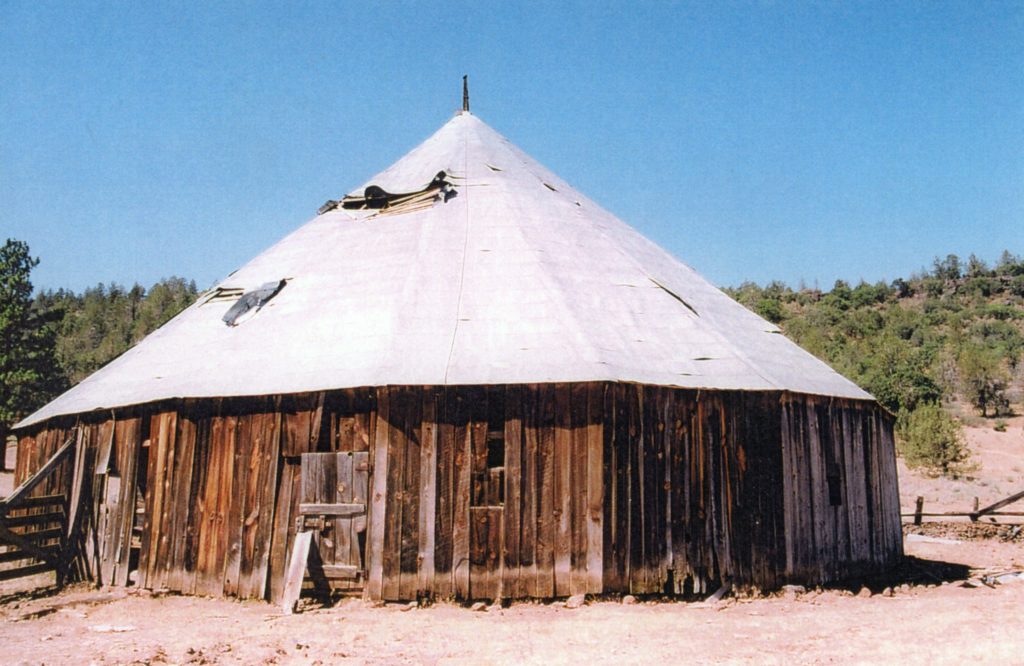
The Round Barn, Little Valley, Lassen County, prior to it being moved to Fall River Mills. Courtesy of Tom Glunt

Little Valley tucked away in the northwest section of Lassen County was first settled in 1870.  In 1916, R.L. “Bob” Johnson constructed the area’s most notable landmark, referred to as the “Round Barn.” Johnson needed a structure where he could train horses during the winter months, as they were in great demand in World War I. Over the years, the elements, etc., took a toll on the building. By 2004, the Fort Crook Historical Society had started a movement to relocate the barn to their museum complex at Fall River Mills.  It was a slow process, but they succeeded, and is now restored to its glory.

Subscribe

Lassen County Fair

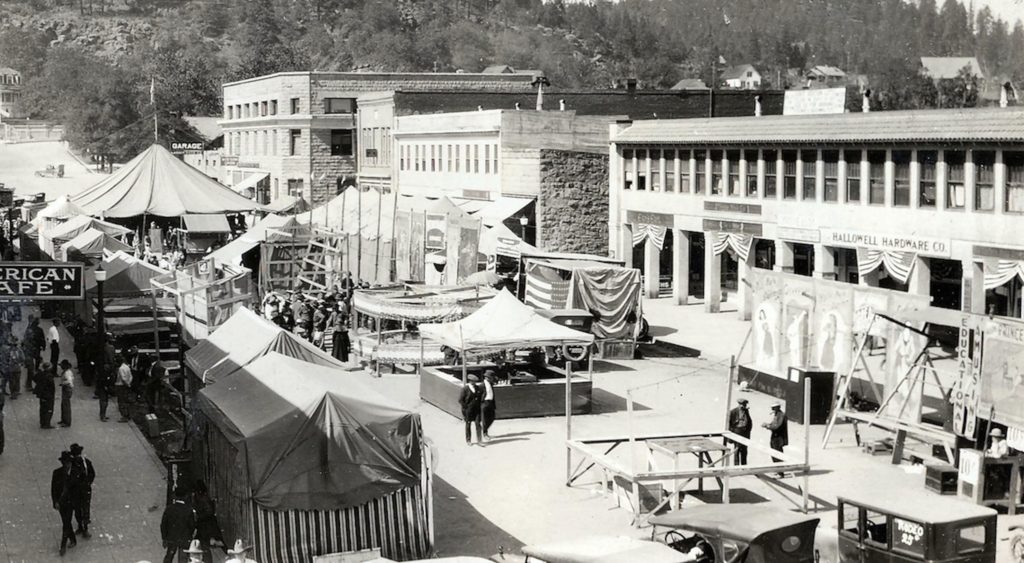
The Main Street Pavillion

In 1922, after a long hiatus the Lassen County Fair was revived.  A new fairgrounds was constructed, and that site is still used today. A grandstand was constructed for viewing various livestock activities. However, exhibits, etc. were held in the uptown part of Susanville, there being no other facilities. Of course, Main Street was converted into a carnival scene for a couple days. After all, this was before CalTrans came along.

Subscribe

Importing Water From Where?

Butte Lake, circa 1920. Roy Sifford, of Drakesbad fame wrote: “The sign of the Manitou which means the sign of God. The shadows in the water made a long arrows which the Indians thought that was a sign of the Great Spirit (Manitou) or God gave them. Courtesy of the Sifford Collection.

The search for water is an interesting chapter in Lassen County history. However, who would have thought that an civil engineer proposed to tap Butte Lake, in remote Lassen County for irrigation in the Honey Lake Valley. It was 1916, an William Wales of the Honey Lake Valley Irrigation District saw Butte’s for its potentional, especially since no one had filed claim to its water. Wales proposed a canal would be constructed from Butte Creek to Poison Lake, and then onto Pine Creek. From there the water would flow naturally into Eagle Lake. At that point a tunnel would be constructed to convey water into Willow Creek, and from there would flow naturally into the Honey Lake Valley. Due to litigation in the early 1920s the project was abandoned.

Subscribe

Susanville – A Celery Capital?

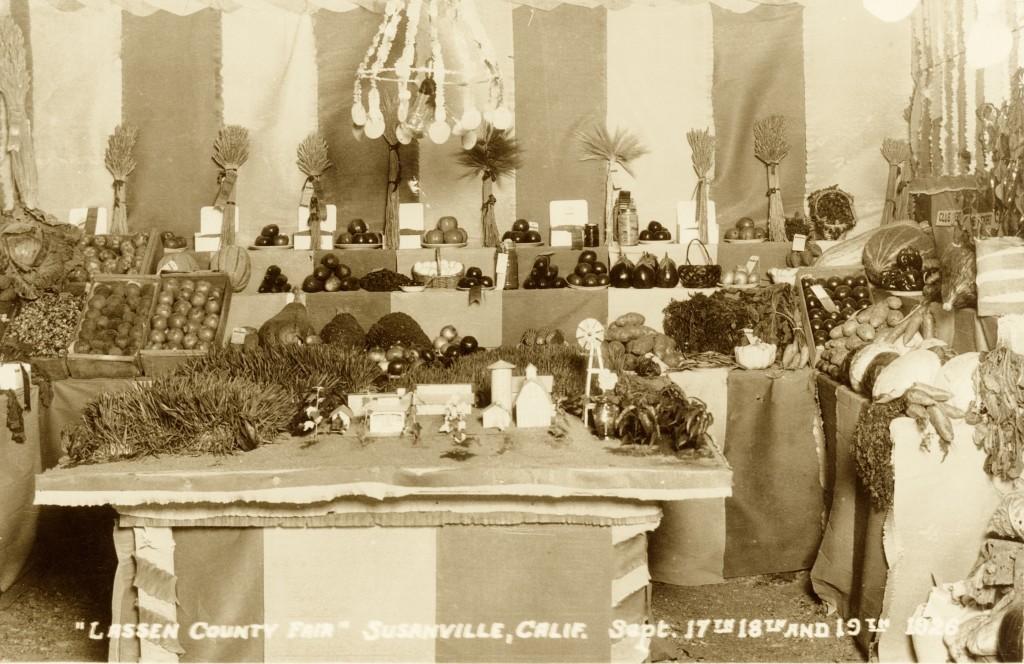
Produce exhibit Lassen County Fair, 1926.

With the impending arrival of the Fernley & Lassen Railroad in the early 1910s, there were a lot of promotional materials produced to extol the virtues of the region. In a 1909, Sunset booklet, it noted that Susanville could be a major player in celery production. They cited one case of Frederick Borgwardt, a Susanville resident, who planted a small plot of thirty by fifty feet with choice variety of celery, from which he gathered eight hundred bunches. When you consider that this plot could be contained a hundred and thirty-five times in an acre, and that the celery sold at five cents a bunch right in Susanville, the profit may be readily seen.

As a friendly reminder, tomorrow is the beginning of Susanville’s Farmer’s Market for the season. Hope to see you there!

Subscribe

The Magpie Menace

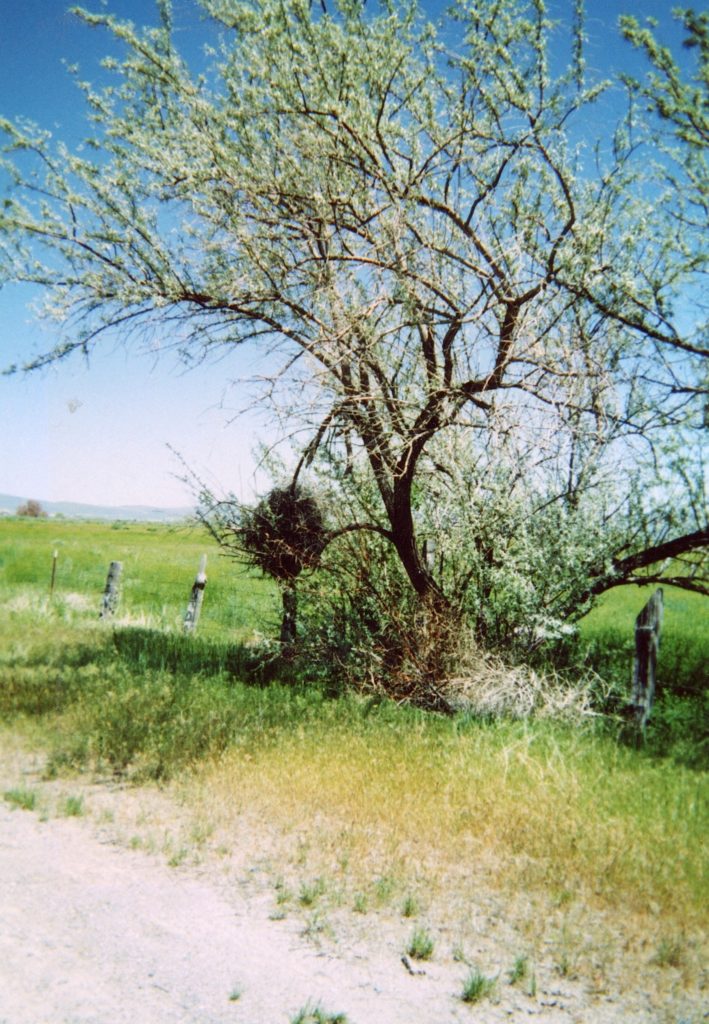
A magpie nest along Mapes Road.

Magpies have a reputation of being voracious predators of songbirds, among other things, as they feed on their eggs and chicks. With that introduction, in February 1930, F.H. Taylor, Lassen County Horticultural Commissioner and Stan Brown, Lassen County Farm Advisor experimented on a poison concoction to combat the “magpie pestilence” in the Standish district. They considered it a success with more than 100 magpies killed in the first attempt.

On a final note, when my mother, then Ardene Tanner, was a small child, who grew up in that region, told me she would collect magpie eggs as Fish and Game would pay her five cents for every egg. This she said was a worthwhile financial endeavor, since this was in the late 1930s.

Donate!


Rosendale – Lassen County

Amedee, 1913. Courtesy of Tom Armstrong

While today, the east side of Honey Lake may look bleak and barren, it was not always the case and there were numerous attempts to develop it. In 1915, Rosendal Minster envisioned a Scandinavian settlement south of Amedee. Minster had a lease/option to purchase the lands and the pumping plant of the Standish Water Company. He then formed the Farmer’s Land Company to operate the holdings.. The properties were split into 40-acre tracts with a price range of $45 to $65 per acre. The new settlement was named Rosendale. While Minster vigorously promoted the project, but due to debts he quickly accrued, he abandoned it the following year.

Subscribe!

Milford Rabbit Drive

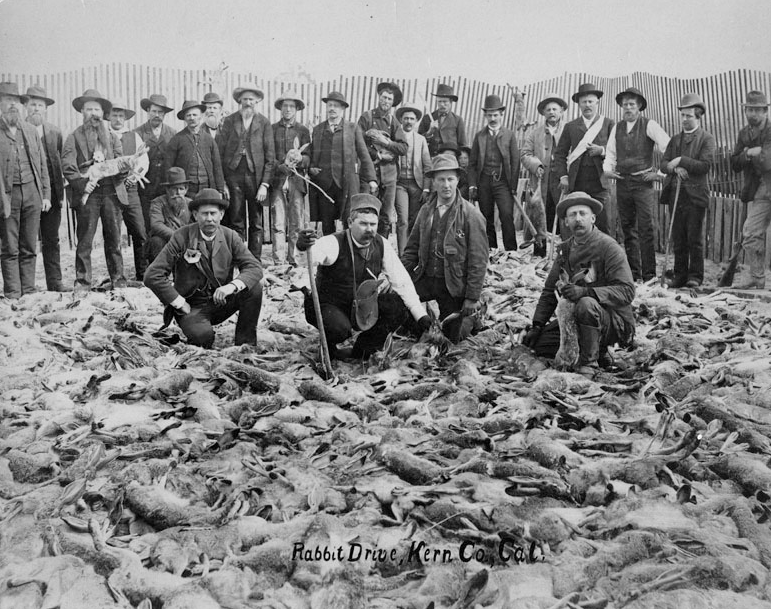
A Kern County rabbit drive, date unknown.
Rabbit drives were common during the first part of the twentieth century. On March 10, 1932 one was held at Milford and an observer wrote: “Blooey! and another jack rabbit bit the dust! In fact 1200 rabbits pulled this little trick as some 30 marksmen armed with shotguns blazed away continuously all day in a big rabbit drive. The drive was one of the most successful ever held in the valley. The drive started at the Harwood ranch and covered about a two-mile area. With the termination of the drive, a lunch was served to the hunters by various ladies of the community.

“Smoking gun barrels and black and blue arms were quite apparent throughout the day. Those participating were thoroughly pleased with the results and voted the occasion as most enjoyable form of hunter’s sport.”

Subscribe!