Category Archives: History

Tuesday Tidbit – Antelope Grade, 1947

Antelope Grade, 1941

Beauty may be in the eye of the beholder, but for me when it comes to old photographs it is the little things at times, that pique my interest. During the winter, I obtained a box from storage that contained a little bit of everything, but not necessarily what I was looking for.

This photograph was taken near the summit of Antelope Grade. What is interesting is you can clearly see the old and new grade, When researching the archives, it appears I have not wrote about the construction of the current Antelope Grade. I will have to add to my to do list.

Tim

The Chester Rodeos of Yesteryear

Chester Rodeo, 1928—Margaret Purdy

Long before Chester’s big July 4, celebration, the first major special event that helped bring awareness to the fledgling community of Chester was a rodeo. In 1920, McKenzie & Stover sponsored the first rodeo in Chester at the Stover Ranch, and it was held there for the next eighteen years. Within a short time it became quite popular, initially attracting about a thousand spectators. As the word spread, by the early 1930s the crowds had swelled to between 2500 and 3000.

If the word-of-mouth advertisement was not enough to entice a person to attend, how could one not go wrong after reviewing this promotional literature of the event? “Cowboys, broncos wild steers, Indians, thrills, action and the shores of Lake Almanor takes on a scene of the old frontier. The wild west days of yore live and breathe in the 15th annual Chester Rodeo Pageant, Sunday July 28.

”Suddenly, like the roaring echo of Mount Lassen, the calm little logging hamlet, banked on either side by the tranquility of pine covered thickets of the Sierras, burst forth in gala Cowboy Rodeo Fashion almost overnight. A Cowboy’s curdling yipes-prancing cow ponies-the whirl of lariats-the snort of wild-steers careening, untamable broncos-strong wooden gates and corrals, wheezing and groaning with impending mass of animal flesh-a cloud of dust cheering grandstands; lack-a-day friends, it’s rodeo time.

”Join the throngs as they sit side by side in the tense moment, viewing the spectacle! Feel the thrills of your favorite cowboy. Give voice to your emotions as a wild bull bites the dust and is tamed to the tune of a husky cowboy’s bull-dogging yodel! Be red-blooded American and rejoice as history of the old wild west repeats itself. Plan now to have the adventure of a lifetime.”

In 1938, Stover & McKenzie held their last Chester Rodeo. It should be noted two years later saw the dissolutioon of that venerable partnership.

Donate

Lassen Park’s Inferno Ski Race

1937 Ski Jump across the park highway. Courtesy of the National Park Service

In the 1920s, three sports became mainstream in the nation’s recreation sector—golf, snow skiing and tennis. By the 1930s, in the region there were nearly a half dozen ski clubs, that were very active and creative, too.

In 1936, the Mt. Lassen Ski Club of Mineral created a mid-summer ski tournament. It was held on Lassen Peak, Lake Helen being the base, during the Fourth of July weekend,. However,  depending on conditions, it was sometimes held a bit earlier or later than the patriotic date. The club introduced a new event, known as the Inferno Race. This was no ordinary race, and definitely not one for novice skiers. The course was interesting and required a great deal of stamina just to reach the starting point, the summit of Lassen Peak, a climb of 2,200 feet. Usually only a dozen or more skiers participated in this slalom race, which had four gates, and two turns and one jump across the park highway. The event continued through 1941, but conditions created by World War II brought an abrupt halt. This is one of many prime examples that after World War II was never resurrected.

It should be noted that there some individuals who climb the peak to the top and ski down during the summer months.

Subscribe or Donate

Susanville’s Edsel Dealership

80 N. Roop St.
80 N. Roop Street, Susanville, May 3, 2015

For a brief time, Susanville had its own Edsel Dealership though it did not last long. In 1957 it was housed in a brand new building at 80 North Roop Street.  Of course, Ford’s Edsel automobile was a failure and the model soon abandoned. Many seasoned residents will recall this building housed the California Department of Motor Vehicles for many years. It is now the home to Lasco and Rooptown Bicycles.

Tim

Gov. Brown Opens New Facility at Susanville

Humboldt Times, July 14, 1963

Supposedly, today marks the closure of the California Correctional Center on the eve of its dedication sixty years ago. The following is an extract from the Humboldt Times of Eureka California about the dedication:

”Before a throng of enthusiastic home townsmen, plus scores of interested correction officials. from other Western States, Governor Edmund G. Brown Saturday [July 13, 1963] dedicated the California Correctional Center the nation’s newest concept in corrections.

The $9 million institution for 1200 inmates is a pioneering idea, the first of four such centers to be built in California.

”In a former timber economy now reverting to agricultural and recreation, business leaders of Susanville and Lassen County look upon the new facility as their own. They threw a banquet for state Senator Stanley Arnold of Susanville, author of the enabling legislation for the entire program, and the laurels were almost unprecedent.

”Besides the stimulus of actual construction, the new facility has 260 Department of Corrections employees and 30 from the Division of Forestry. These are permanent, mostly with families, and their annual payroll is more than $1,750,000”

Support by subscribing.

Susanville’s Fruit Growers’ Subdivision

Sunkist Street, 1921. Courtesy of Ed Standard

In 1919, when the Fruit Growers Supply Company decided to locate its second lumber mill at Susanville, they thought that community would come forth to provide housing for its workforce.  It kind of happen. Yet, Fruit Growers with over 1,000 employees for its Susanville operation, was too much for the community to handle. To be able to attract a stable workforce, Fruit Growers only option was to develop its own residential district next to the mill. Those streets all have names associated with the citrus industry, such as Sunkist.

For those not familiar with Fruit Growers, it is a purchasing agent for co-operative then known as the California Fruit Growers Exchange comprised of citrus growers. In 1907, the Exchange coined the brand Sunkist and in 1952, they renamed the Exchange to Sunkist.

Never miss a story, click here to support and subscribe.

Northern Counties Utility Company

Birch Street, Westwood. Courtesy of Hank Martinez

In 1945, when Fruit Growers Supply Company took over the town of Westwood from the Red River Lumber Company it presented all kinds of problems. It should be noted for the record, Fruit Growers did not want Westwood or its mill, but it was packaged deal to obtain Burney Tract which contained a billion board feet of timber.

Westwood provided all kinds of challenges for Fruit Growers. What worked for Red River, did not for Fruit Growers. To provide water, telephone and electrical service to the community Fruit Growers formed the Northern Counties Utility Company. It was necessary for the company to avoid the involvement with its lumber and timber operations.  The residents were not happy with any change, and in the past their utility cost were included in the rent. Fruit Growers did not initially charge a separate utility bill. This, of course, was an accounting nightmare for Fruit Growers. In 1945, the utility company lost $35,549.65. Fruit Growers covered the loss from revenues from rental properties, but it was still a out-of-pocket loss for Fruit Growers. In 1956, when Fruit Growers sold Westwoof it was no longer their problem.

Subscribe

Tuesday Tidbit—A Railroad Question

Southern Pacific train, Secret Valley, 1936—C.H. Bennett Collection

Secret Valley CCC Company Clerk, C.H.Bennett provided the following caption of this photograph, “It would happen.”

Now, I am not sure what he meant. There are subscribers, who have a lot more knowledge about train movement, rolling stock, etc., than I will ever possess. It appears, that may be the train is stalled, though I am not sure what the activity is going on. Can anyone enlighten?

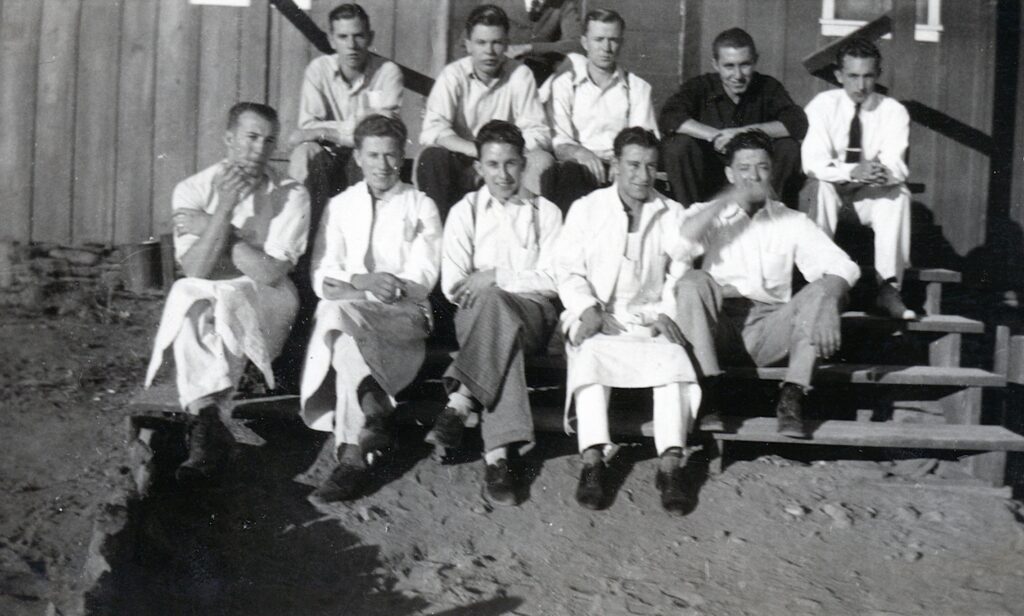
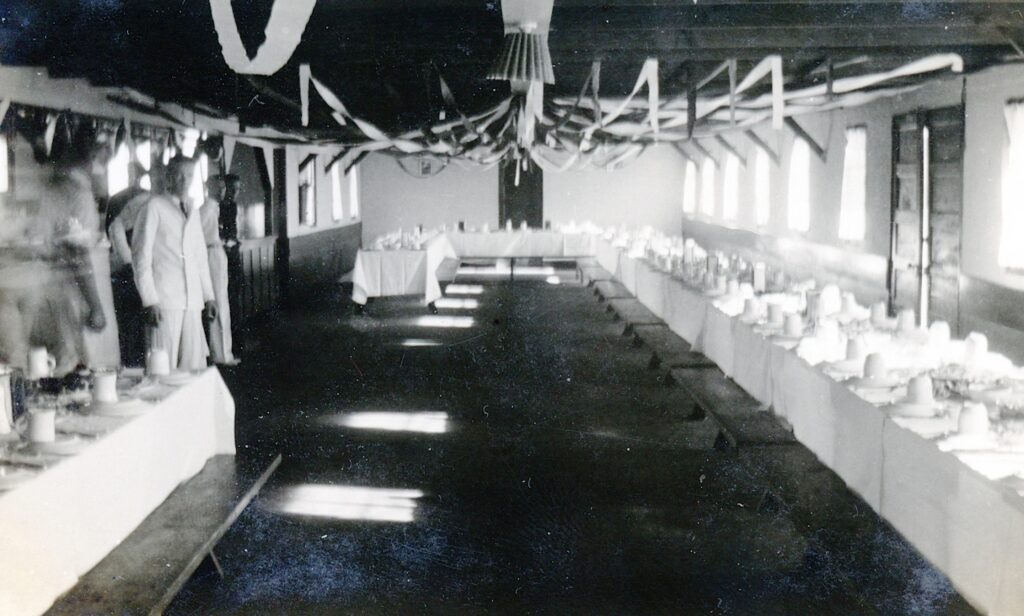
By the way, starting next week I will begin a series of articles concerning the varied activities of the Secret Valley CCC camp, which played an interesting role of the region’s history during the 1930s and I can attest there will be some surprising stories, including Lassen County’s first culinary school!

Tim

Where Are We—Cramer (Craemer) Reservoir

Cramer ReservoirJune 3, 2023

Cramer Reservoir, though USGS maps misspell it as Craemer, is located a short distance to the southwest side of Horse Lake. Charles Cramer came to Lassen County in 1864. In time, Cramer would assemble several large ranches in Lassen County. On September 5, 1874 Cramer purchased 160 acres at Horse Lake from Joe Hale, co-owner of Susanville’s Pioneer Saloon, for $600 and would continue to acquire more property there. On May 21, 1900, his son, Daniel F. Cramer obtained the rights to construct the reservoir. On July 18, 1939 the Cramer family transferred the Horse Lake property to California Lands Incorporated.

Tim

The Restdale Cemetery Petition

Honey Lake Cemetery, June 4, 1978

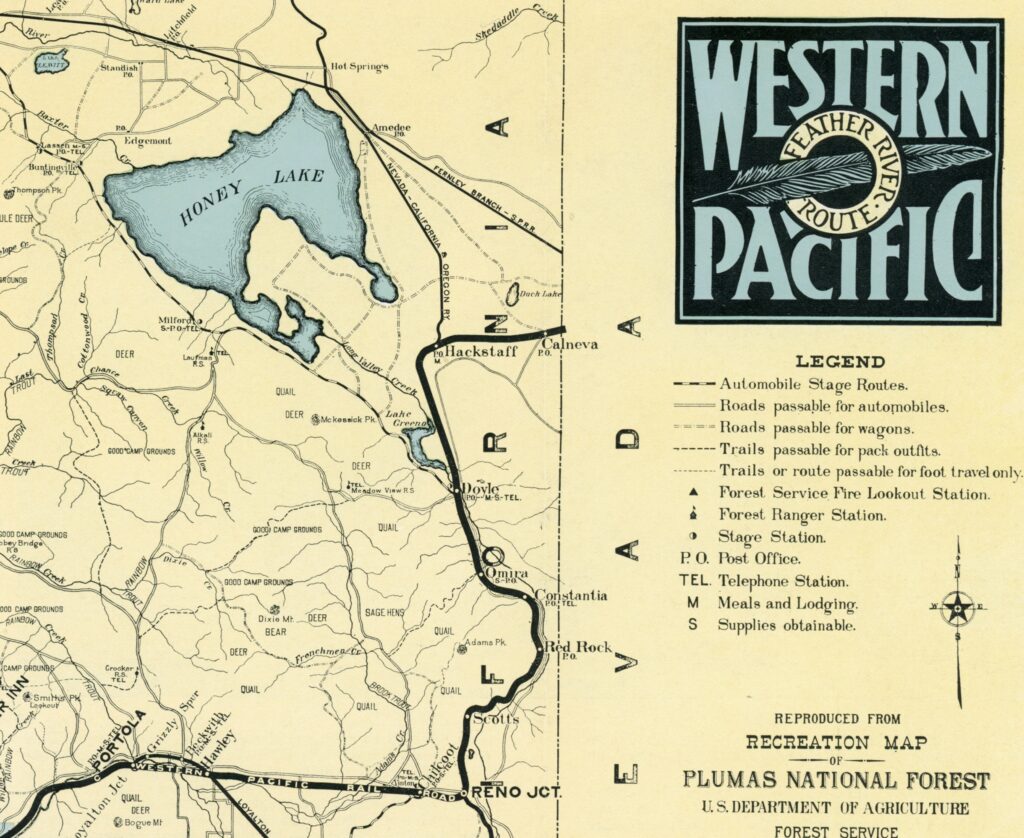
Most people never heard of this cemetery, and even fewer have ever been there. It is a remnant of the homestead era of eastern Honey Lake Valley. Known today as the Honey Lake Cemetery, it was originally named Restdale Cemetery.

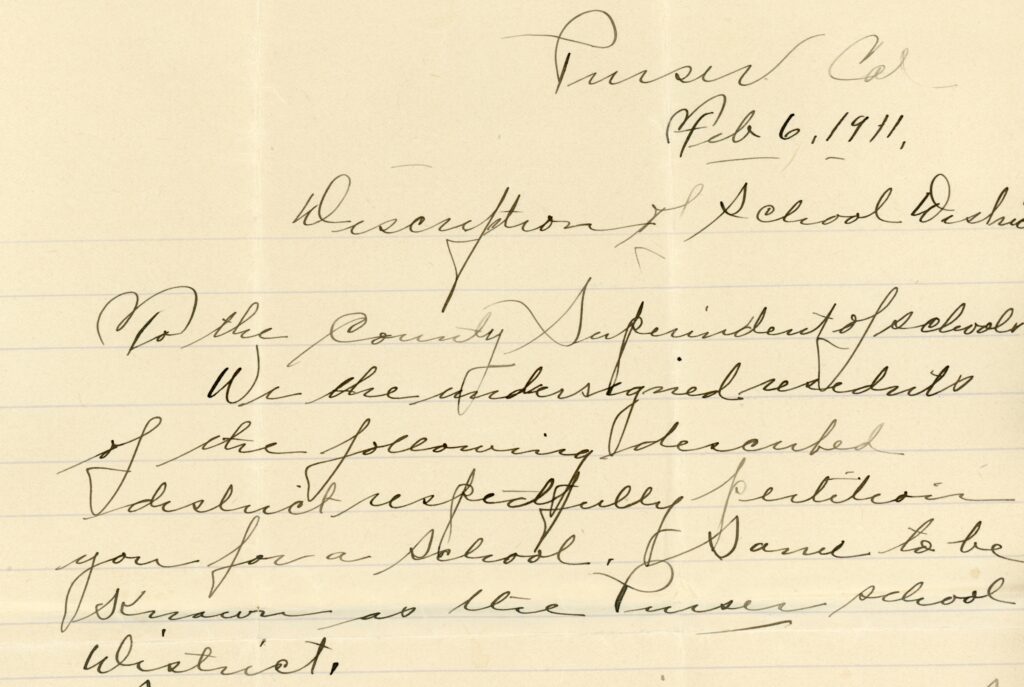
In October 1914, Stacy resident Charles Baker died on his homestead and was buried near there on property owned by Mary Caudle. On November 3, 1914, Mary Caudle donated the property (1.1 acres) to Lassen County. At the same time, residents of the area presented a petition to the Lassen County Board of Supervisors to make it a public cemetery. The petitioned was signed by 16 residents of Stacy, 10 from Calneva and two from Amedee.  The petition stated: “We deem the establishment of said cemetery for the best interests of the public well-fare, and absolutely necessary. The nearest public cemetery for the residents of this district is days drive away.”  Later in November, the Lassen County Board of Supervisors approved the creation of the cemetery.

Honey Lake, Cemetery, 2018

An item of note included in the deed was the covenant that if the property was no longer used as a burial ground the property would revert back to Caudle.

Subscribe