Category Archives: History

Susan River’s Hartson Slough

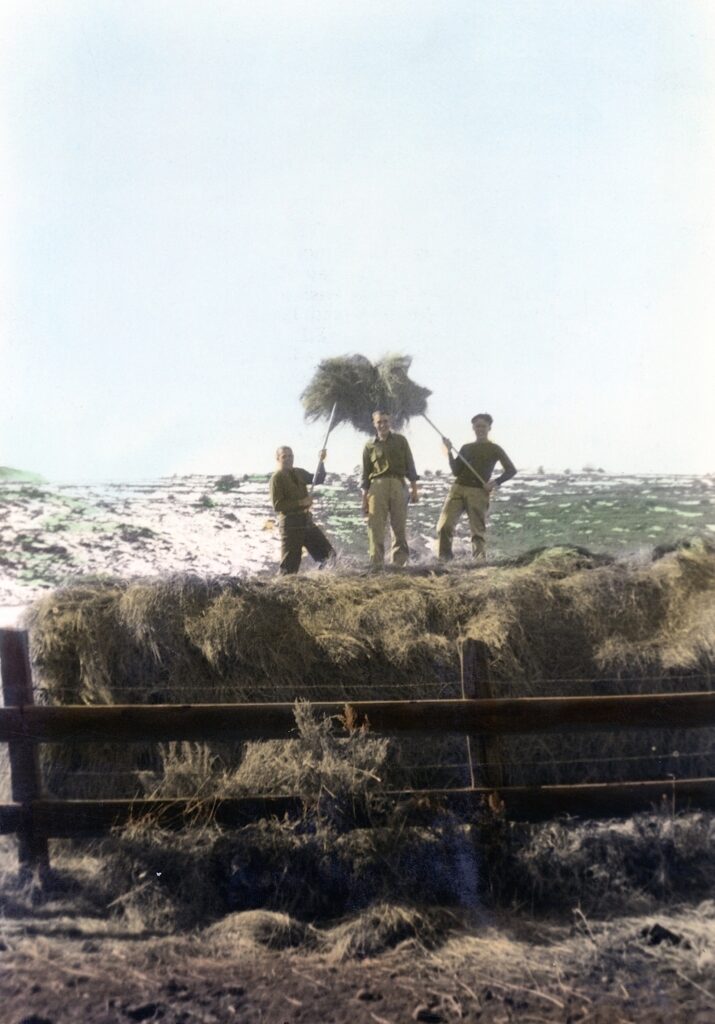
The annual chore of cleaning the slough. Left to Right: George Hartson, Curtis Winslow, Colin Whitehead, Mr. Zumwalt, Will Hartson, John Theodore, Will Spoon. Courtesy of John H. Theodore

So much for hindsight, I should have scheduled this the day after last week’s post about Ward Lake Reservoir, since the topics are related. Once Susan River flows past Standish, it starts breaking into various sloughs before it reaches Honey Lake. Some of these sloughs are natural, and some man made.

The Hartson Slough is man made, named after Charles Hartson.  In 1881, Hartson filed on 160 acres of sagebrush land near Honey Lake, in the Tule District. However, Hartson needed more water to not only reclaim this parcel but to expand.  In 1889, Hartson worked as the construction superintendent of the Ward Lakes Reservoir. Hartson made a deal with the Balls Canyon Reservoir Company, the company behind the project,  that, for a portion of his services, they would give him a share of water rights. This gave Hartson the water he sought to reclaim his land. He built the slough to convey the water to his ranch. By 1901, Hartson owned 1,500 acres of land, half of which was planted in alfalfa. In that same year, Hartson & Sons ranch was one of the first in Lassen County to incorporate. In 1910, Charles Hartson retired and moved to Susanville. He turned the ranch over to his son, Frank Hartson.

A view of the old Hartson Ranch.

It should be noted that a portion of the Hartson Ranch, is a part of the Dakin Unit, of the Honey Lake Wildlife Refuge. Hartson’s daughter, Elsie was married to Pete Dakin.

Never miss a story, click here.
 

Hayden Hill School—One Of Three

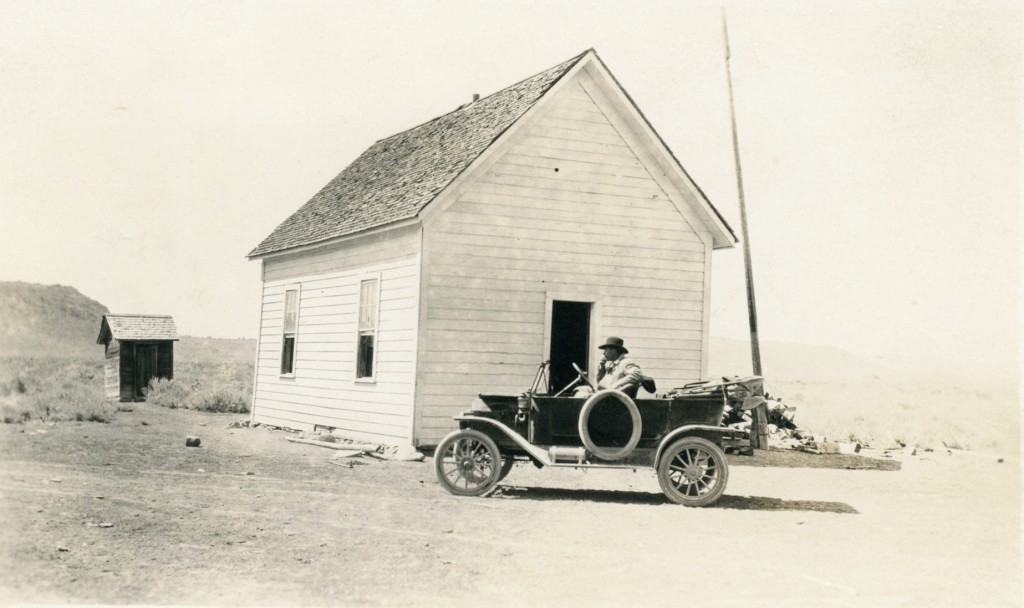
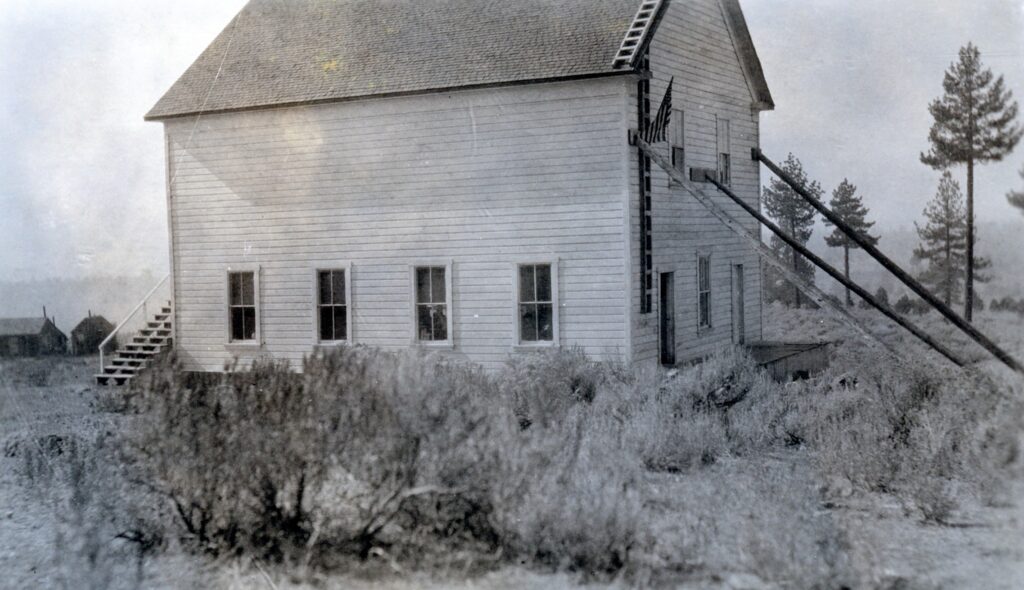
Hayden Hill School, 1916—D.M.Durst

The Hayden Hill School District operated from 1878 to 1925. When it was established, the mining town was at its peak and would enjoy prosperous times for the next several years.

A lot of details of the school are sketchy. Since there was no town plat title research is a real challenge. It does not appear the school district owned the property where the school house was situated on.  When the school was built is a matter debate, unlike most rural schools, those school houses were funded by local bond measures. The Hayden Hill School was built without the aid of public funds. In addition, it was one of three rural Lassen County schoolhouses that was a two-story structure. The two other schools were Lake (near Janesville) and Long Valley (Doyle). In all three cases, the second floor was used as a community hall.

Hayden Hill School, 1918. B. Dorsey Collection

When school closed in 1925, due to a lack of students, it was apparent that the mining community was not going experience one more revival. In 1931, the Lassen County Board of Supervisors sold the abandoned school building on June 1, to Fred Bunselmeier and Lloyd Walsh for an undisclosed amount.

Support by subscribing.

What About Lassen Volcanic Park?

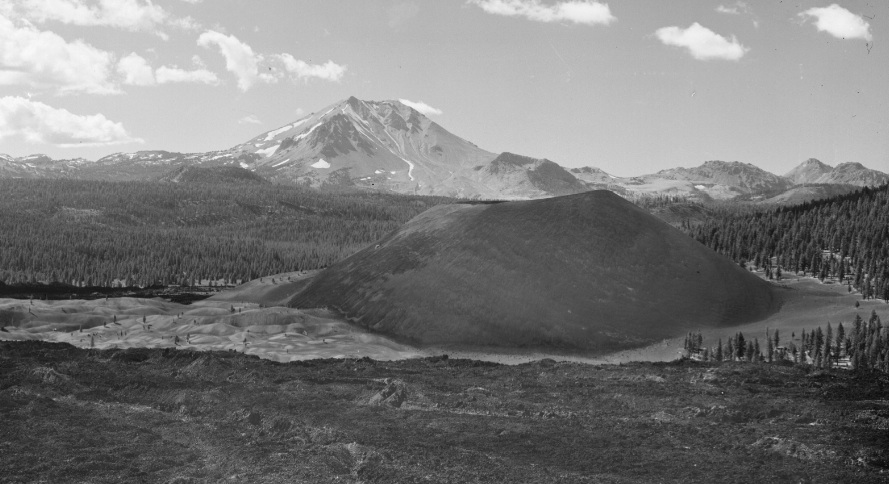
Cinder Cone and Lassen Peak

In 1923, Bank of Lassen County in one their weekly newspaper advertisements contained this. “National Parks as Money Makers. According to the Department of Interior, National Parks are good money makers for the states they are in. Crater Lake Park brought $7,000,000 revenue to Oregon; Yosemite, $5,000,000 to California and Mt. Rainer $1,500,000 to Washington.

”What about Lassen Volcanic Park? If we awake to the possibilities which lie in the park—if we appreciate that such a park in time must bring in considerable revenue, we can more intelligently boost for sufficient appropriations to develop the park.”

When Lassen Park was established in 1916, Congress only approved an annual budget of $5,000. In addition, the park was administered by Yosemite. It was not until 1922, Lassen Park hired its first ranger. It was estimated that it would cost a million dollars to build a highway through the park. What made that problematic were private lands inside the park such as Drakesbad. Any park improvements would increase the value private lands inside the park, making it more difficult for the park to purchase said lands. In 1925, Congress approved $340,000 for initial highway construction. Not enough, but a start.

Donate


Dry Valley Cemetery, Lassen County

Bailey Creek, October 8, 2020

This is a follow up about yesterday’s post. The person who alerted me about the article in High Country Life was interested in a small county cemetery in Dry Valley, which is sandwiched between the Madeline Plains to the east and Grasshopper Valley to the west. It was an interesting conversation.

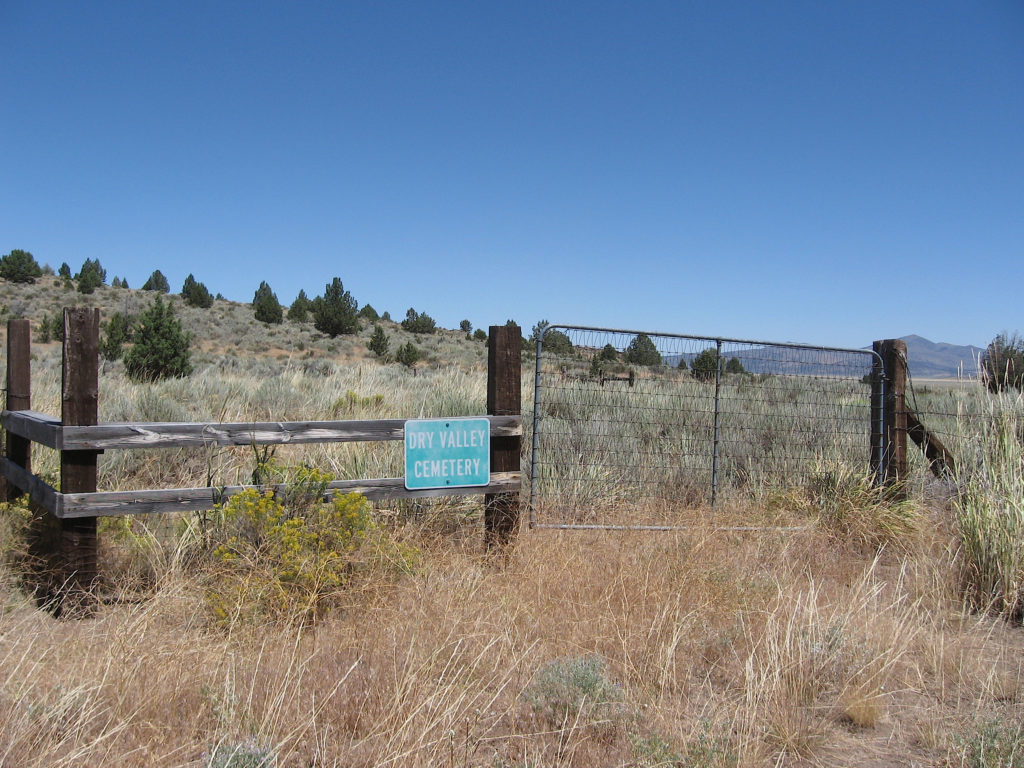
Dry Valley Cemetery, August 4, 2016.

In the fall of 2020, my companions made a trek into that region, the goal Bailey Creek Reservoir. Alas, for over a century, the road was now graced with a locked a gate. Onward ho, we go. Next destination Dry Valley and and the south end of Grasshopper Valley. While in the neighborhood, we thought a quick visit to the Dry Valley Cemetery was warranted. Lo, and behold the access road, which the public had traversed for over a century, was graced with a locked gate.

Dry Valley School
Dry Valley School, 1916. Courtesy of D.M. Durst Collection

Which brings up to this recent article and the inquiry I received. This individual purchased the property surrounding the Dry Valley Cemetery and closed off the road leading to the cemetery.  I did inform this person that it is public cemetery and the public has right to access. I provided this person with some history. Near the road  intersection to venture to the cemetery was the Dry Valley School. For a brief time the school children would march up the hill the to decorate the graves for Memorial Day. Needless to say, none of this mattered to the owner and the public cemetery is no longer accessible. Just for the record in 1918 P.E. Bowles donated the cemetery to Lassen County.

Tim

High Country Life Disclaimer

High Country Life, July 2023

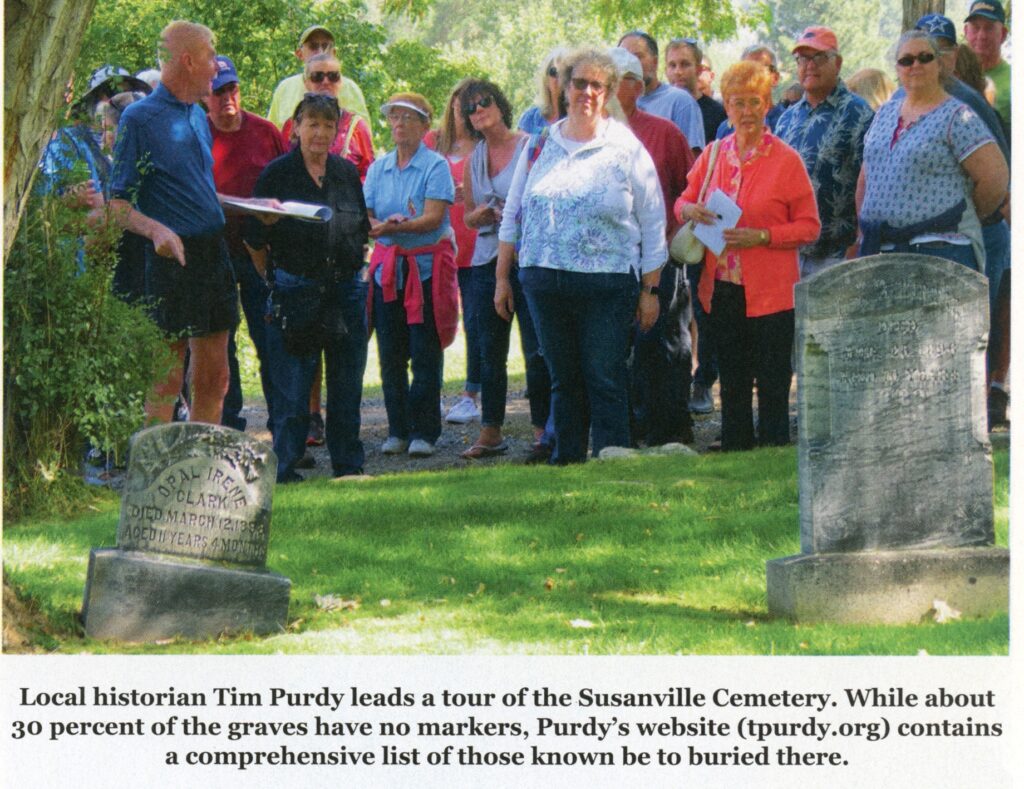
In the July 2023 issue of this Feather River Publishing publication contains an article about the Susanville Cemetery. There is, of course, a photograph of yours truly conducting the 2017 Lassen County Courthouse Centennial Cemetery Tour. Some of the information in article came directly from my website, which they noted and alas did not publish the correct link. The one erroneous error that gets perpetuated a lot, is that Thomas Tucker, a Maidu, was the first casualty from Lassen County in World War I. Alas, it was Westwood resident Clyde McKea who was the first. It should be noted, I was never consulted about this article. As a matter of fact, I would probably never known about it, but a Sacramento resident while traveling through the region picked up a copy of the magazine. This person after seeing the article, sought me out for some Lassen County cemetery information.

Tim

Why Secret Valley Is So Named

Secret Valley Ranch aka French, 1936–C.H. Bennett

After several posts concerning the Secret Valley CCC camp, a reader wanted to know why Secret was so named. The name was applied to region by the late 1860s.

In 1927, when Frank Heath traveled through the region he wrote: “Wild hay along southwest side of Secret Valley—which so named by a poetical cowboy on account of its many secret springs.”   On September 20,  1864, Melissa Turner recorded the first land claim in Secret Valley. On December 6, 1888, the Lassen Advocate published this descriptive account: “Secret Valley lies about twenty-five miles northeast of Susanville and is surrounded on all sides by mountains, covered sparsely by timber, although there is sufficient juniper in the
immediate vicinity to provide fuel for a long time.  Lumber is hauled
from this valley. The land, in this valley, is great part sagebrush soil bearing the large, thick brush, by which we of Northern California have learned to distinguish as fertile soil.  There is, however, considerable meadow land, largely comprised in the ranches of J. B. McKissick, J.J. Tipton and James Sellick, water altogether with springs, which are quite warm, although the water does not by any means approach the boiling point.  Within the enclosure of T. Ashby are seventy-five springs. Mr. Ashby has raised this year about sixty thousand pounds of fine potatoes which grow in Secret to a large size and of a very fine quality.”

On a final note there is a small family cemetery in Secret Valley, and interred there is John Best “Buster” the proclaimed World’s First Champion Cowboy. in 1876.

Support by subscribing.

Those Rowdy Camp Followers

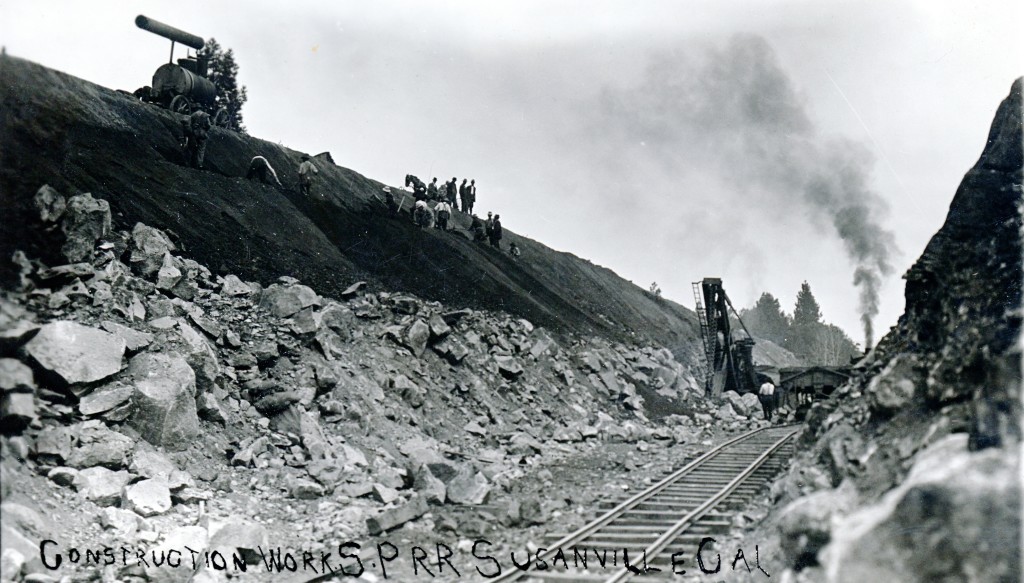
Construction of Miller's cut near Susanville 1913. B.R. Zimmerman collection
Construction of Miller’s cut near Susanville 1913. B.R. Zimmerman collection

Daily life got crazy in Susanville when the railroad arrived in 1913. Numerous discussions were held to make the town “dry.” It was the belief of some that if there was a ban on alcohol, that it would rid the town of certain elements. The City was not so keen  on the other hand, as it received most of its operating revenue from liquor licenses. Continue reading Those Rowdy Camp Followers

Ward Lake—One of Many Reservoirs

Ward Lake, October 26, 1969. Photo by D.B. Martin

By 1889, there was a dam building craze, like the region has never seen before or after. The Union Land & Stock Company proposed five reservoirs for the Madeline Plains. On the Susan River three dams were proposed, two were built—Hog Flat and McCoy Flat. There was the proposed Lake Greeno on Long Valley Creek and Skedaddle Dam on Skedaddle Creek. In addition, the tapping of Eagle Lake was still a work in progress.

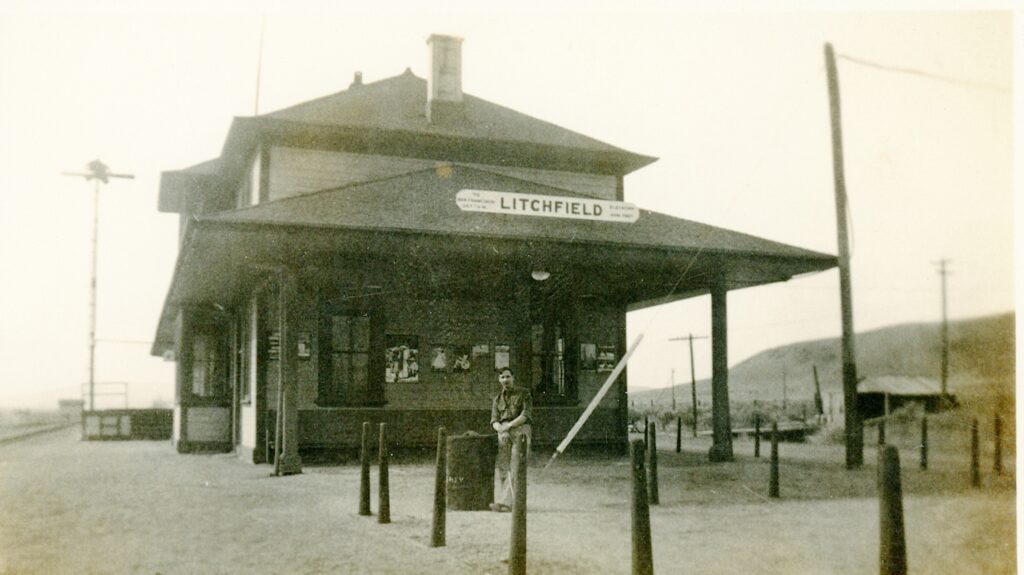
In 1889, the Balls Canyon Reservoir Company was formed to build a dam on Secret Creek where it enters the Honey Lake Valley, about five miles west of Litchfield. The company employed surveyor, Frank Gates Ward (1857-1895), to survey a dam and reservoir site.  In 1889-90, the first reservoir was constructed. In February 1890, a flood washed out that dam. As one observer noted, the waters of Secret Creek began rising at a rate of two feet an hour and within three hours the 27 foot high structure, that measured 150 feet in length, was swept away. The company planned to rebuild but never did. In 1895, Edward T. Purser took over the project and a new reservoir was constructed, along with a twenty-mile ditch to his property near Wendel.

Support by subscribing.

Those 1920s Wacky Motorists

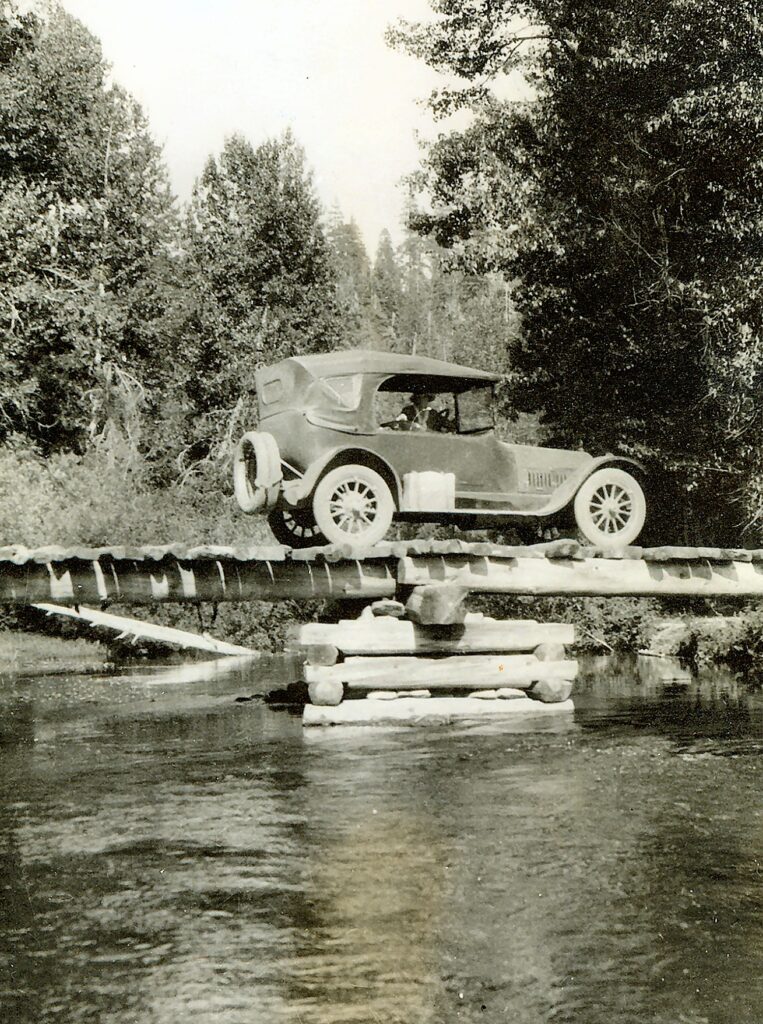
Warner Creek bridge en-route to Drakesbad—Sifford Collection

The “Roaring Twenties” of a century ago began with a thud. After World War I the nation dived into an economic recession. By 1922/23 things slowly improved.  In the meantime,  so much had changed with the automobile and highway improvements folks were ready to go out and explore.

In California, local auto clubs held group functions. One of these became known as a ‘socialbility run.” It was a multi-purpose event, to explore, promote and enjoy California’s wonders. Lassen Volcanic National Park dubbed as California’s newest playground, back in the day, drew lots of attention, because it was so unknown.

The Sacramento Chamber of Commerce in conjunction with the Sacramento Motor Dealers Association proposed two socialbility runs to Lasssen Park. The first run on July 4th to Drakesbad and for Labor Day an excursion to Manzanita Lake.

Donate