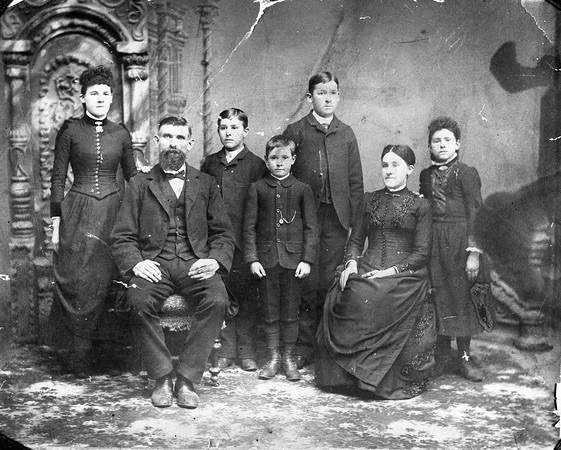
Andrew Litch Family. Left to Right: Clara, Andrew, Thomas, George, Fred, Mary (Grass) and Minnie–Courtesy of Erma Gibson Haley
In 1850, Andrew Litch (1883-1906), a native of Germany, arrived in California. During the 1860s, he operated a trading post, the Granite Creek Station. In 1866, he abandoned the station and moved to the Honey Lake Valley. In 1868, he entered into a partnership with Thomas J. French. That year, they purchased the Shaffer Brothers Ranch (known today as Mapes) for $2,500.. In 1874, the two men dissolved the partnership and Litch received the western part of the ranch. In 1883, Litch moved to Reno, Nevada, though retained ownership of the ranch and leased it.
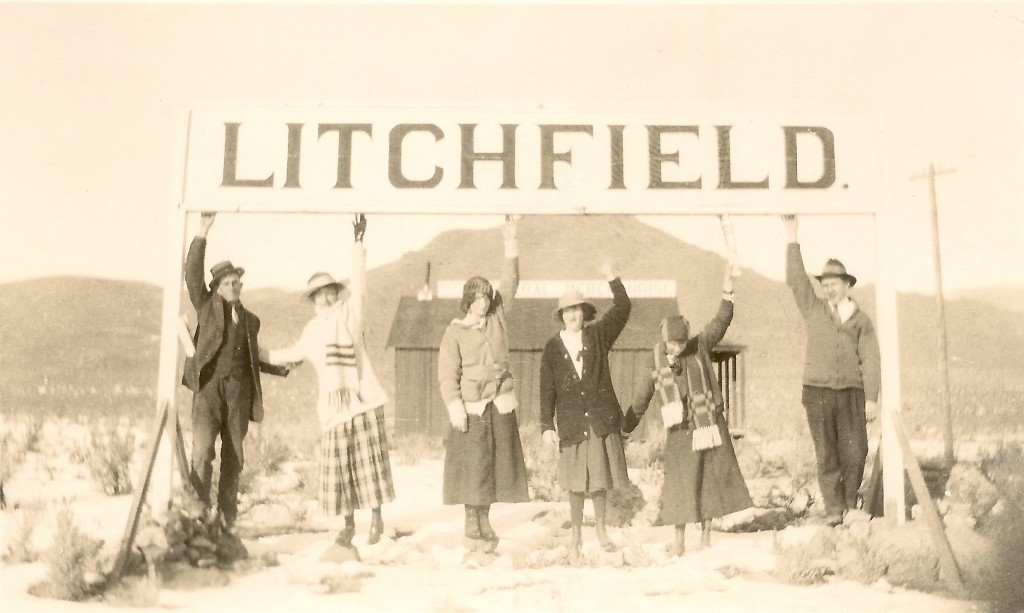
A town is born, Litchfield. Courtesy of John M. Gibson
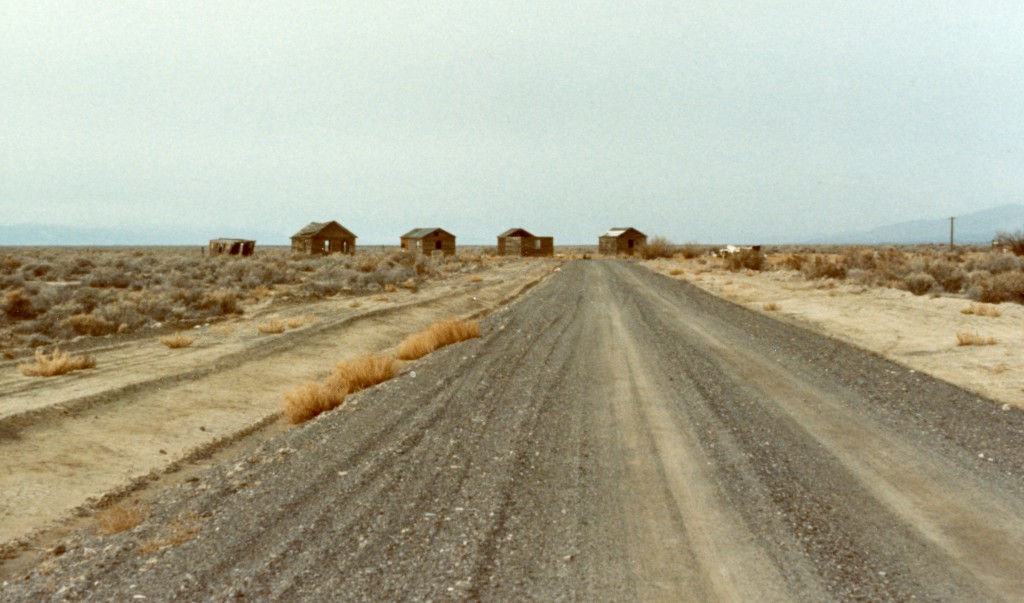
In 1895, B.F. Gibson married Andrew’s daughter,Clara Litch, and he took over his father-in-law’s ranch. In 1912, construction began on the Fernley & Lassen Railroad that went through the Litch property, now owned by Gibson. On January 8, 1913, Gibson had subdivision created for a new town, served by the railroad. He named it Litchfield, in honor of his father-in-law.
Established in 1887, it was originally located at the Bonham Ranch in the Smoke Creek Desert. The school closed in 1919 for lack of students.
Flanigan, 1976, courtesy of Christopher Moody
In 1929, it was resurrected at Flanigan in the Honey Lake Valley. It closed on June 20, 1969 and at that time it was the only remaining one-room school in Washoe County. Standish resident Ed Bass purchased the school and moved it to his property.
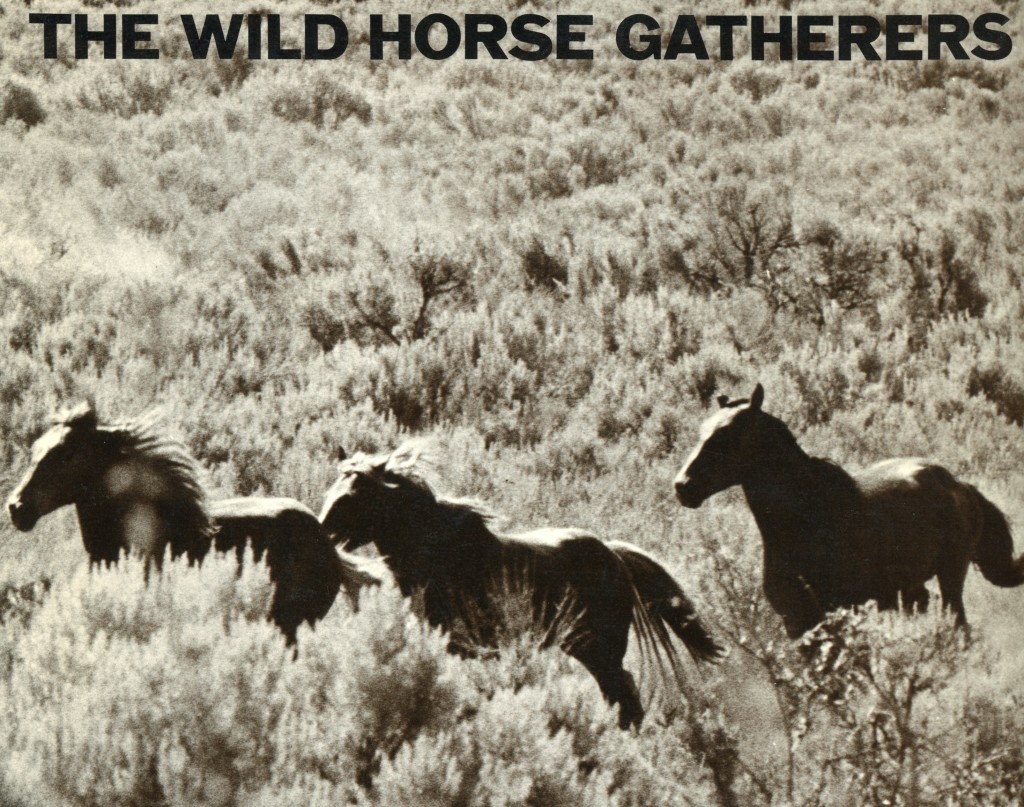
In 1978, the Sierra Club published The Wild Horse Gatherers. It is an illustrated story of BLM’s wild horse round-up locally.
In 1977, Alden Robertson spent a lot of time with the Bureau Land of Management’s wranglers of the Susanville District, as part of the Adopt Horse Program. He photographed the wild horse round ups of Twin Peaks, northeast of Susanville. In 1978, the Sierra Club published Robertson’s work titled Wild Horse Gatherers. It is remarkable account of those round ups. While it has been out of print for a long time, I was able to locate copies at Bookfinder.com as low as nine dollars.
The new entrance to the Lassen Monument, September 20, 2018.
Since we are approximately half-way between Thanksgiving and Christmas I thought briefly reflect past community efforts to organize and get things done. It should be noted, that three sites were done by volunteers.
The Lassen Monuments. In October 1916, Susanville resident Jules Alexander spearheaded efforts for a new Peter Lassen Monument. The new monument was installed in September 1917. A century later, in 2017, Susanville Boy Scout Hayden Chittock made the rehabilitation of the premises into an Eagle Scout project. It was a massive undertaking to say the least, with many volunteers lending a helping hand. Go check it out, when you can.
Lassen County Fair, 1922. Courtesy of Lola L. Tanner
The Lassen County Fair. In the summer of 1922, Bert Jensen, Russell Brownell, C.E. Lawson, L.E. DeForest and H.H. Riddels formed the Lassen County Fair Association. It had been sixteen years since the last fair, and these ambitious men were not only going to correct that, but make the county fair an annual event. They wasted no time to put together a fair, but a permanent fairgrounds as well. Twenty acres of land were acquired which is still the present Lassen County Fairgrounds. In July they even had a grandstand constructed. In 1930, the Association donated the fairgrounds to Lassen County.
Memorial Park, 1948
Susanville’s Memorial Park.. This park owes its existence to countless numbers volunteers who raised the money to purchase it, but they also did the landscaping and built the grandstand that was destroyed by fire this summer. In 1946, M.E. “Mul” Mulroney was the guiding force behind to make Memorial Park a reality.. The property was owned by Cy and Eleanor Houghton, and the asking price was $7,000. The community raised the funds, presented it to the city and the purchase was complete. When the city stated that they had no funds to make improvements, the community stepped in and did it. On July 3, 1949 dedication ceremonies were held for Memorial Park. Ben Curler, Lassen County Superior Court Judge, was the opening speaker. He simply said it as “truly a community park” for all the efforts by the community to purchase and landscape the site.
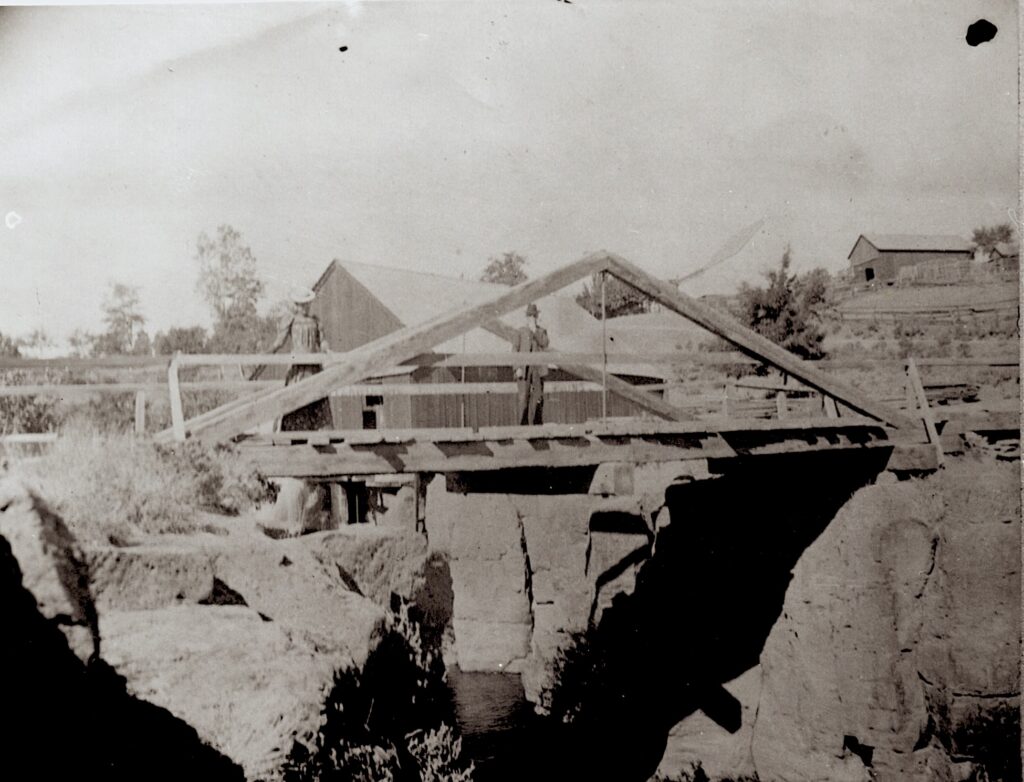
Richmond Road Bridge, 1899- This bridge was replaced in 1915.Mary Dale Folsom
It is a Tuesday and only a few more to go before we start a new year. The crossing of Susan River from Susanville was necessary for commerce. It should be noted on the north side of the bridge is where South Weatherlow Street ends. On the south side bridge is the beginning of Richmond Road.
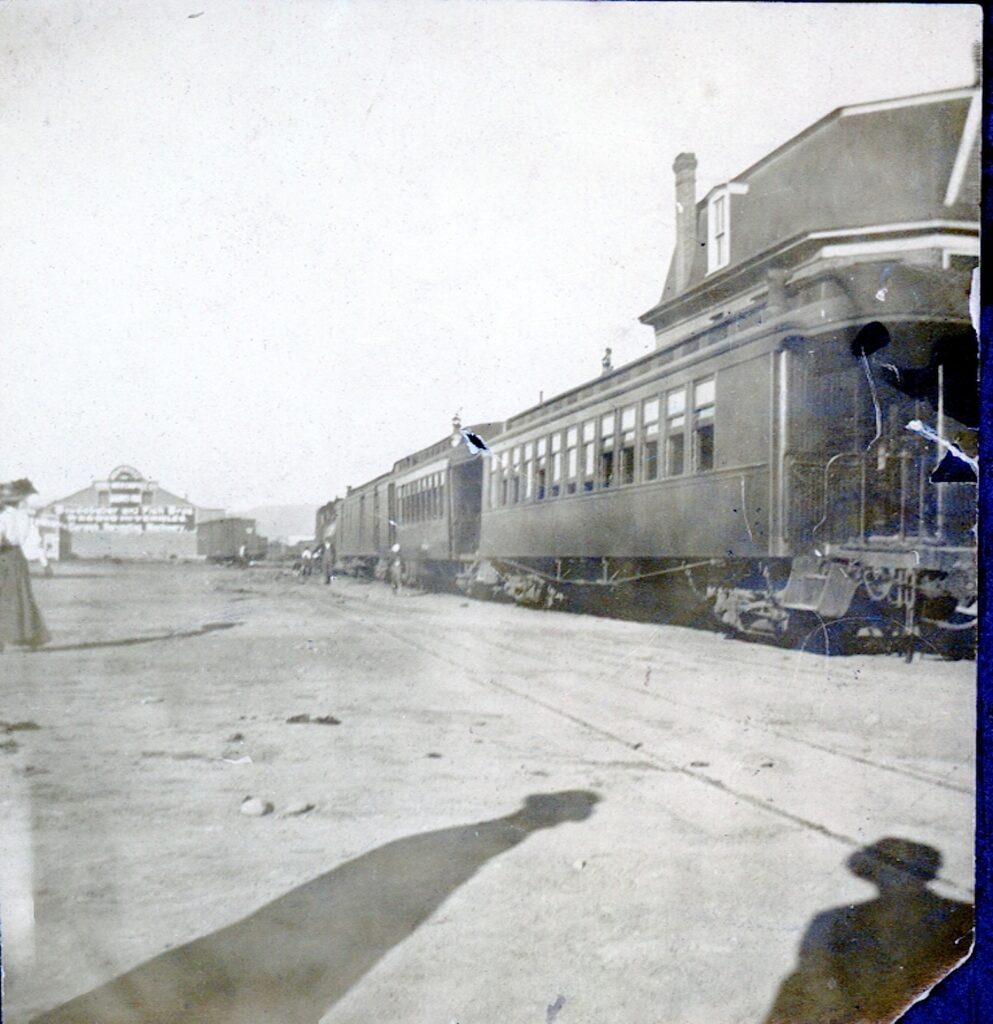
NCO train at Reno, Nevada-Courtesy of Marie Herring Gould
In the spring of 1887, the NCO Railroad abruptly fired its General Manager, Edgar Heriot. This coincided with railroad’s desire to build 45-mile extension north from Junction House, better known today as Hallelujah Junction. Heriot was replaced with Erasmus Gest. The 67-year-old Ohioan was known as a cantankerous individual. The plans revealed the railroad was to bypass Susanville. While Moran’s heard that town’s pleas, Gest had made up his mind. Gest stated it was a waste of money to build to Susanville, referencing to it as a “no place.”His replacement, T.F. Dunaway remarked Gest’s judgment to bypass Susanville “. . . one of most monumental blunders, I have ever known a sane man to commit.”
While the railroad construction moved forward to end up at Amedee on the east side of Honey Lake. Economic conditions stalled for an another extension for nearly decade. When work was resurrected again in 1899, Susanville clamored for a feeder line, and Gest was not about to let it happen. In July 1899, Gest testified at the California Board of Equalization hearing and with total frankness said “The people in Susanville don’t deserve a railroad.” Gest’s animosity towards the town was odd, since he never visited it.
Looking north on Gay Street, Susanville, circa 1864. Courtesy of Gil Morrill
In 1862, William J. Young opened a photography studio, the first of its kind in Susanville. It was. located on the north side of Main Street’s 600 block. In the same year, he was elected Justice of Peace, Honey Lake Township, Plumas County. Little is known about his photographic work. If the fall of 1863, he sold the business to a man by the name of Townsend, first name unknown. By 1865, Young had moved to the Idaho Territory with its mining bonanza underway.
In the fall of 1869, Young did make appearance in Susanville. This time with a stereopticon show. The local newspaper stated Young lack the skills of a good “orator” and that he should stick with photography.
Goumaz, located 16 miles west of Susanville was a former railroad siding of the Fernley & Lassen. In 1927-28, Lassen Lumber & Box Company established a. logging camp there, that employed 75 men. Today, it has been transformed into a small campground of the Lassen National Forest.
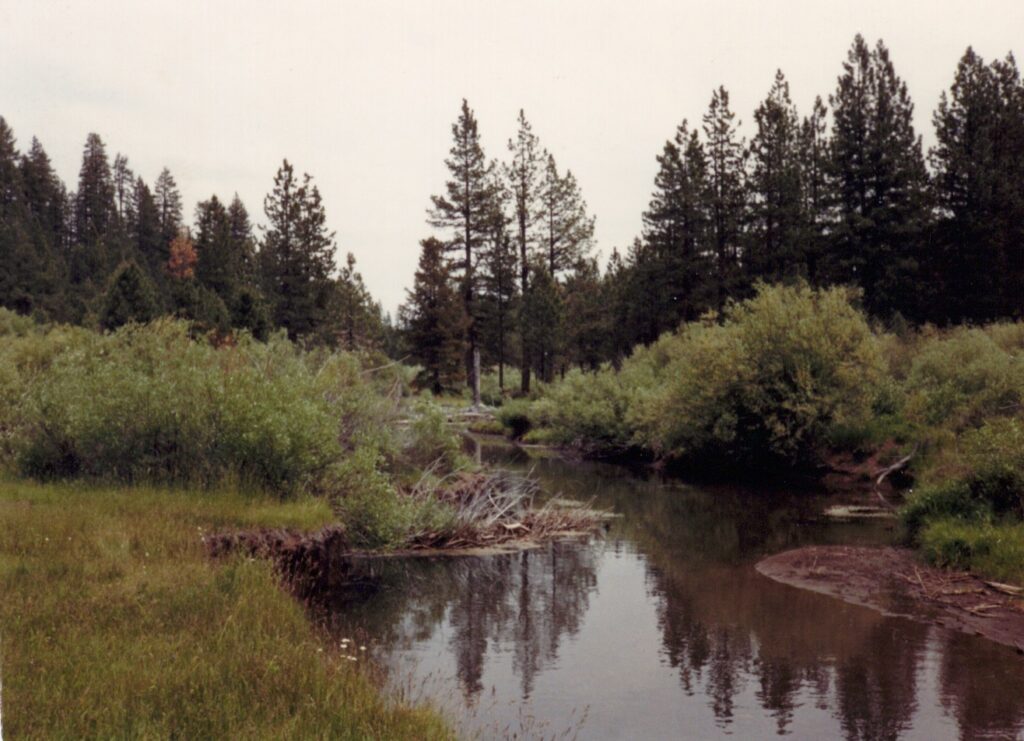
A view from the southern end of Grasshopper Valley, August 4, 2016.
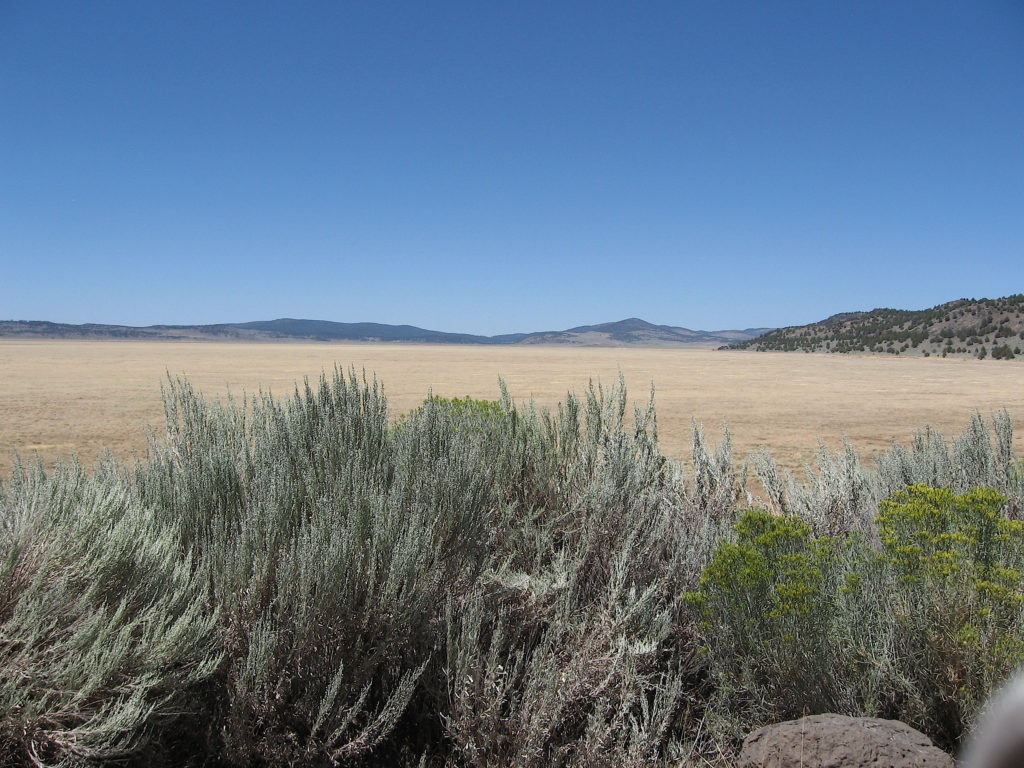
Once you pass Eagle Lake north on Highway 139, the next broad expanse you see to your right is Grasshopper Valley. When intrepid explorer J. Goldsborough Bruff in 1850 noted it was lake, who later in 1876 stated it had to be what was later Eagle Lake. In wet years, the lower portion of the valley is flooded, and back in Bruff’s day especially so, since there were no dams at Said Valley or Slate Creek, so even a greater flow of water in the basin. Continue reading Grasshopper Valley, Lassen County→
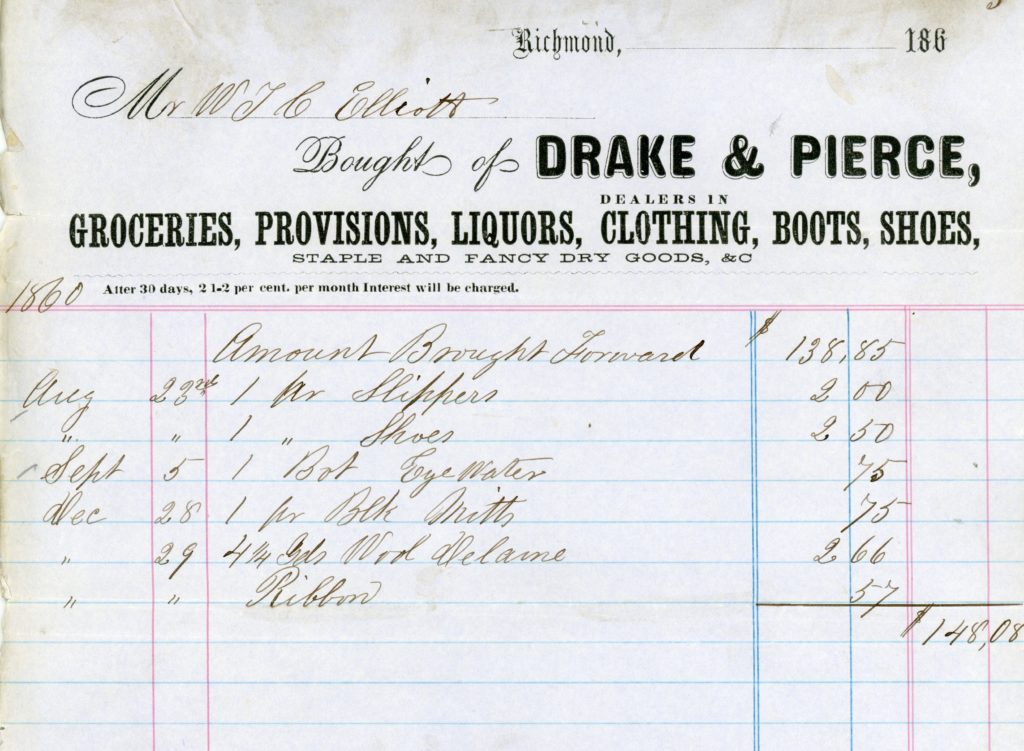
Drake & Pierce’s Richmond mercantile store, was for a time, the largest in the Honey Lake Valley.
In this day with the internet, some might think is quaint. However, the postal service provided a key role for people to communicate. Actually, there are several people that I still exchange letters the old the fashioned way. Personally, I think it is rather nice, to check the mailbox and there is a letter for me.
The Susanville Post Office was established in 1859. A little known fact, it carried the postal cancellation of Susanville, U.T., as in Utah Territory. Nevada had not yet been created and Utah’s western boundary was that of California.
The biggest problem for the new post office was receiving mail for distribution. On March 3, 1860, Susanville resident wrote to Col. F.W. Lander in Washington, D.C. about the state of the postal affairs: “There is an effort being made to have a daily mail established from Oroville from the first of June to the 30th of November, and semi-weekly for the balance of the year. Now Sir, if you could get the same service continued on through Indian Valley which needs a P.O. having about three hundred inhabitants through Richmond to Susanville with a P.O. at each place you would confer a great favor on the people here about five hundred in number and constantly increasing (There having been rich mines discovered here since your departure.)
“There was three routes established last year, one from Shasta, one from Oroville (the route you went down) and another from LaPorte all arriving at Susanville. There was however been no service on either of them and if we could get the above route from Quincy it would answer us better than all three of those which were recommended by Judge Crane without knowing the actual wishes of the people.”
During the 1860s witnessed improvements with the Idaho-California Stage Company that had the mail contract from Chico to Idaho via Susanville. In 1869, conditions for receiving mail was stabilized with the completion of the transcontinental railroad.