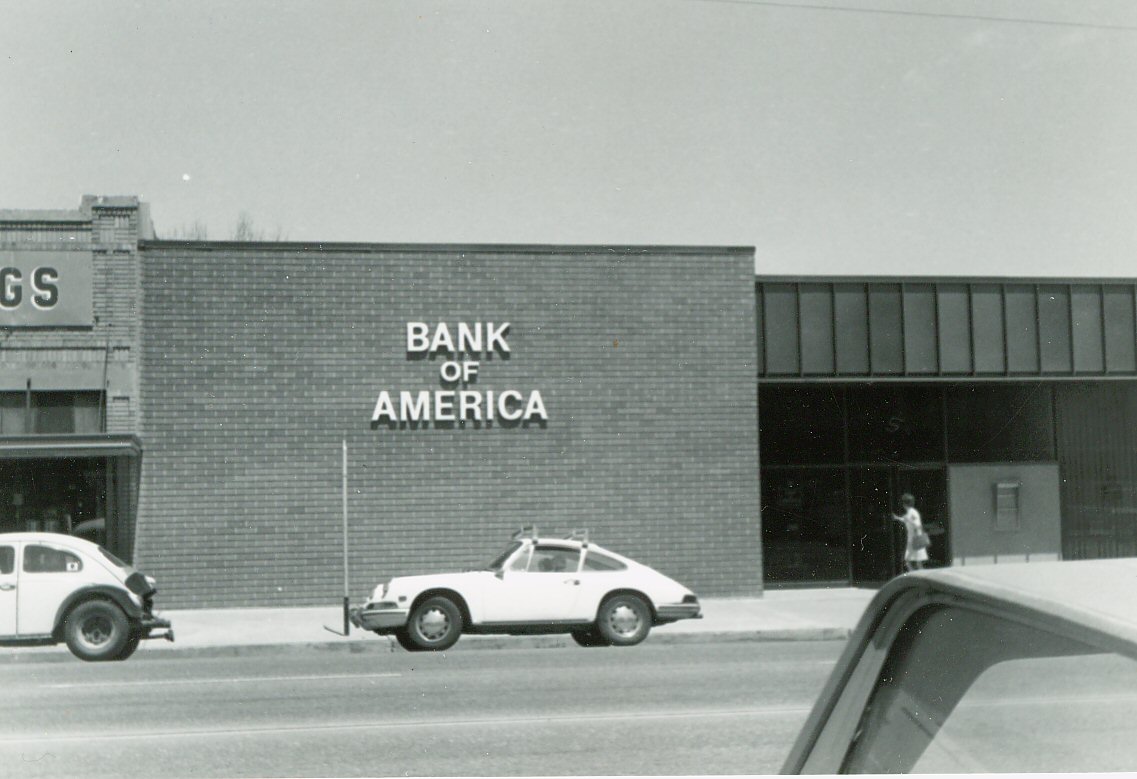
It is always amazing how fast time marches on. It was back in April 1978, when Bank of America announced plans to build a new bank on the corner of Main & Gay Streets for $500,000. This was to replace the existing bank on Main Street that had only been built seven years earlier at a cost of $413,000. It was the latter building when it was constructed that got the community in an uproar, as Bank of America torn the original two-story landmark bank on the corner of Main and Gay Streets for a parking lot.
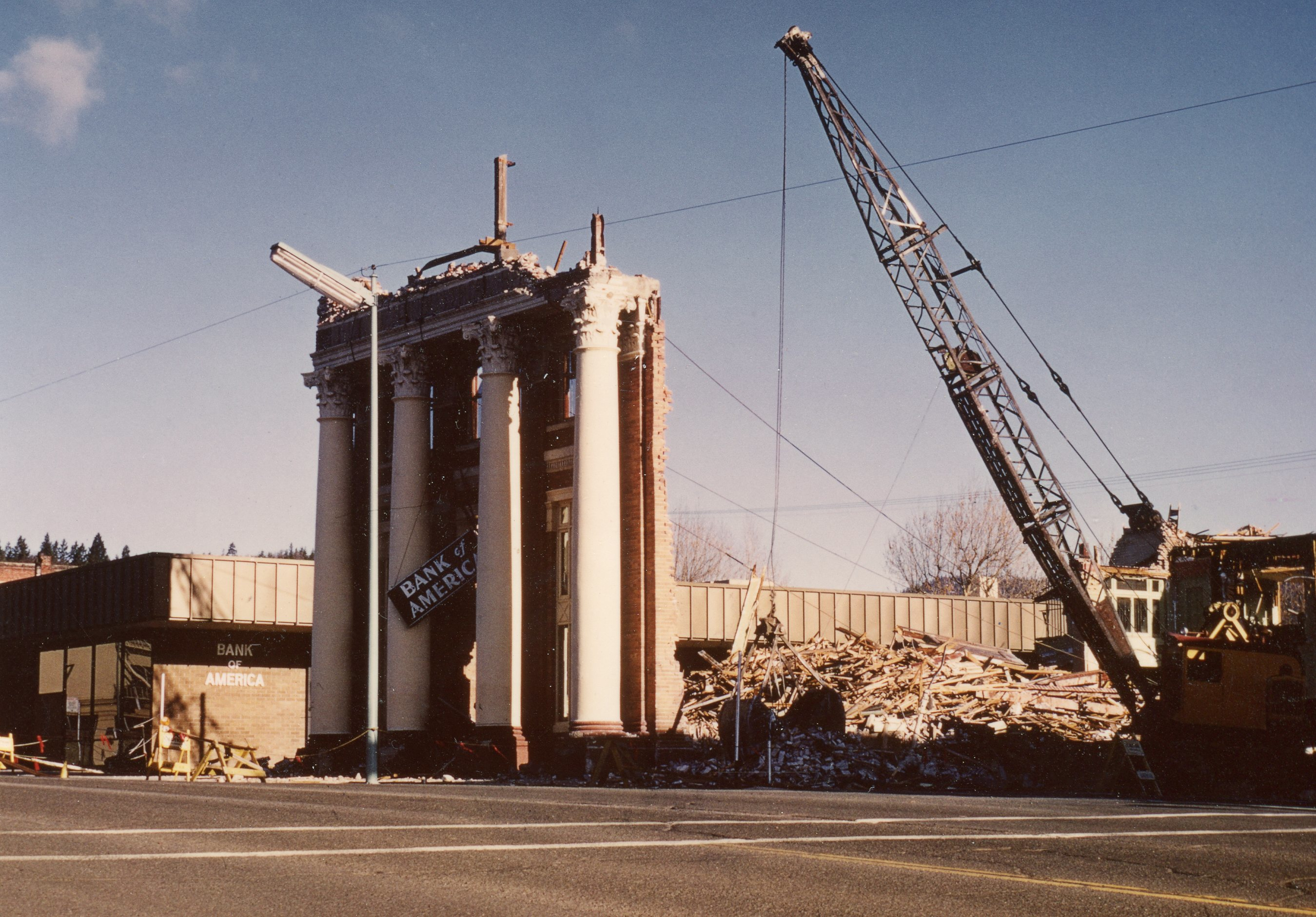
Final demolition of the original Bank of America, to make way for a parking lot.
Note: This article originally appeared on April 19, 2015. I am selecting some early posts, to fill in while I am on the road to recovery. For five dollars by subscribing, you can receive a daily email on that day’s topic, and in doing so, help preserve a bit of history.
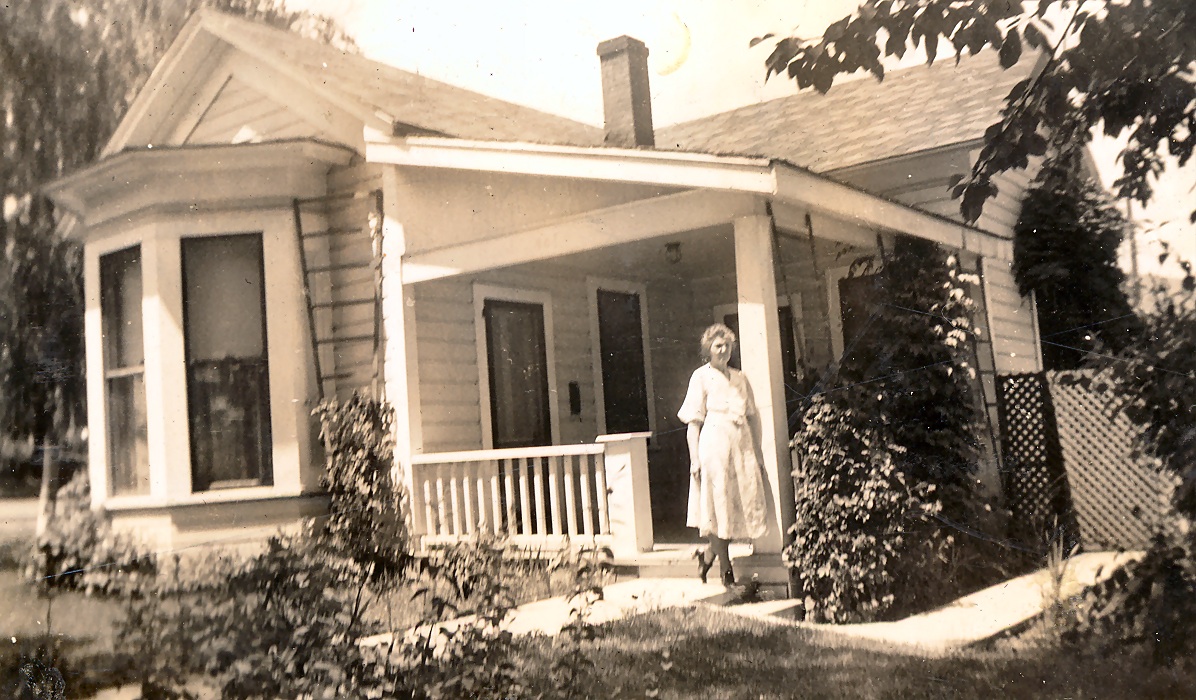
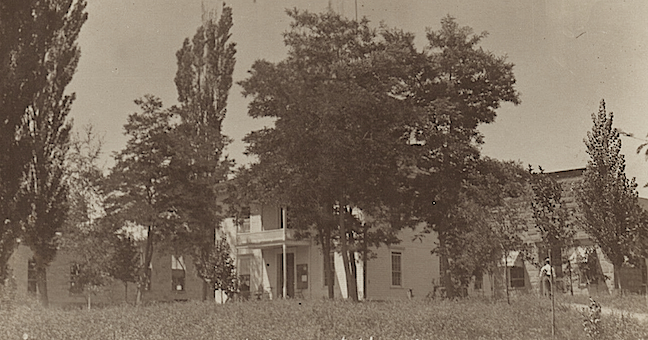
The house was originally located at 601 Cottage Street. In 1939, it was moved to 607 to make way for a parking lot, for the new Safeway Store. Dr. J.R. Packwood later remodeled it, adding a second story. Courtesy of JoAnn Uptegrove
Today, at 8:15 a.m. marks six weeks since I underwent surgery for my broken hip. I arrived home one day last week, though I need the aid of a walker to get around, among other things. Slowly, but surely progress is being made. I have been assured that I should be able to attend the Lassen County Planning Commission meeting on October 7, followed by the Lassen College Board a week later. As I write this, though, that seems likes an eon away, having yet to be able to venture down the stairs and to the outside world.
While I was in rehab, I did make the best of my idle time when I was not in occupation and/or physical therapy sessions. One major accomplishment was the drafting of the Inspiration Point Tour presentation. When I will be able to do this walking tour, unfortunately, at this time I do not know. It may be a small practice run in November, and then a regular tour next spring. Too many unknowns, as not just with my walking ability, but weather and other factors to be considered.
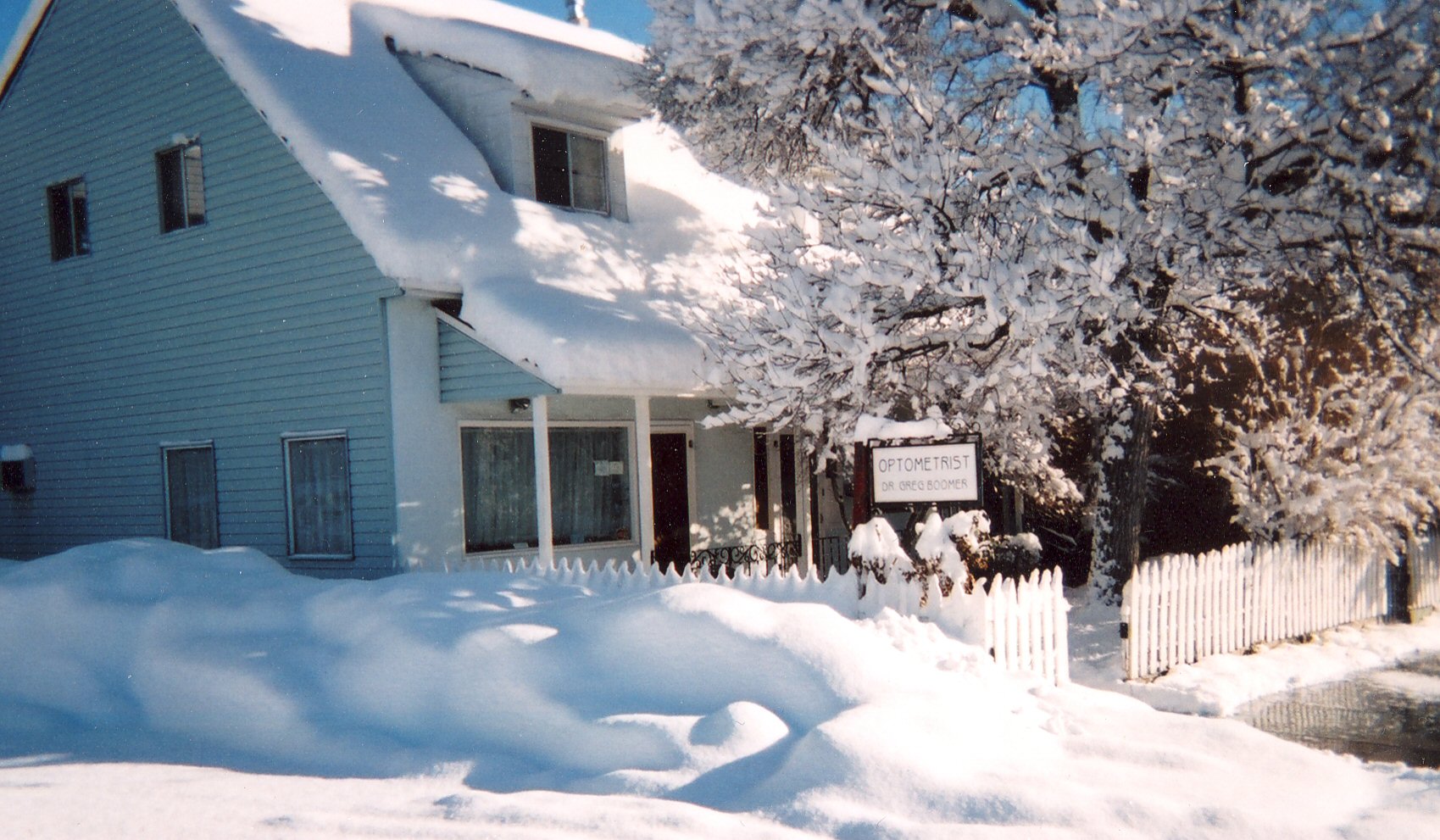
607 Cottage Street as it appeared in the winter of 2005. One portion of me, hopes a heavy winter appears, and another somewhat terrified with the prospect of snow and ice, mainly the latter, as I don’t want to have another disastrous fall.
Finally, and most importantly, I want to say a very big thank you to everyone, who lent a helping hand during this most interesting episode of my life.
For five dollars a month by subscribing, you can receive a daily email on that day’s topic, and in doing so, help preserve a bit of history.
In my very first post about Adin, it initially starts out concerning the works of photographer Herman Brince. After leaving Adin, Brince toured Modoc County and provides us with a glimpse of what Cedarville looked like then.
Cedarville, 1879
Cedarville’s humble beginnings began in the fall of 1865 when James Townsend built a cabin and commenced operations of a general store. His tenure was brief, for a year later in pursuit of some stolen livestock he was killed in a skirmish with the Indians. The following summer (1867), two enterprising entrepreneurs, John H. Bonner and William T. Cressler established a store there to become very successful businessmen there. They eventually bought Townsend’s cabin for their store. They went one step further and plotted out a town they named Cedarville after Bonner’s home town in Ohio.
Note: This article originally appeared on March 13. I am selecting some early posts, to fill in while I am on the road to recovery. For five dollars by, you can receive a daily email on that day’s topic, and in doing so, help preserve a bit of history.
Queen Lena the first, September 24, 1902. Courtesy of Betty Barry Deal
On September 24, 1902, Miss Lena Long won a lively contest to be crowned Queen, which was part of the festivities of the first Lassen County Fair to be held in ten years.
Since I am writing this from a remote location, I do not have access to my files, a more detailed post is in the future. Just stay tuned and thanks for your patience.
For five dollars a month by subscribing, you can receive a daily email on that day’s topic, and in doing so, help preserve a bit of history.
South side of the 700 block of Susanville’s Main Street, 1901
Susanville was in the midst of re-building its business from the devastating fire of June 1900. It was from that fire the led to the creation of the City of Susanville. Actually, the town suffered from many fires, and that history can be found here. What is interesting with this photograph you will notice the vacant lot between the Cohn Bros. and the Pioneer. It should be noted that the Pioneer used the lot for a beer garden, until O.M. Doyle constructed a two-story stone building that eventually became home of the Grand Cafe. The building to the right to the Pioneer, is still standing, the front having been modified and is home to Margie’s Book Nook.
Note: This article originally appeared on March 29. I am selecting some early posts, to fill in https://tipurdy.org/subscribe/while I am on the road to recovery. For five dollars by subscribing, you can receive a daily email on that day’s topic, and in doing so, help preserve a bit of history.
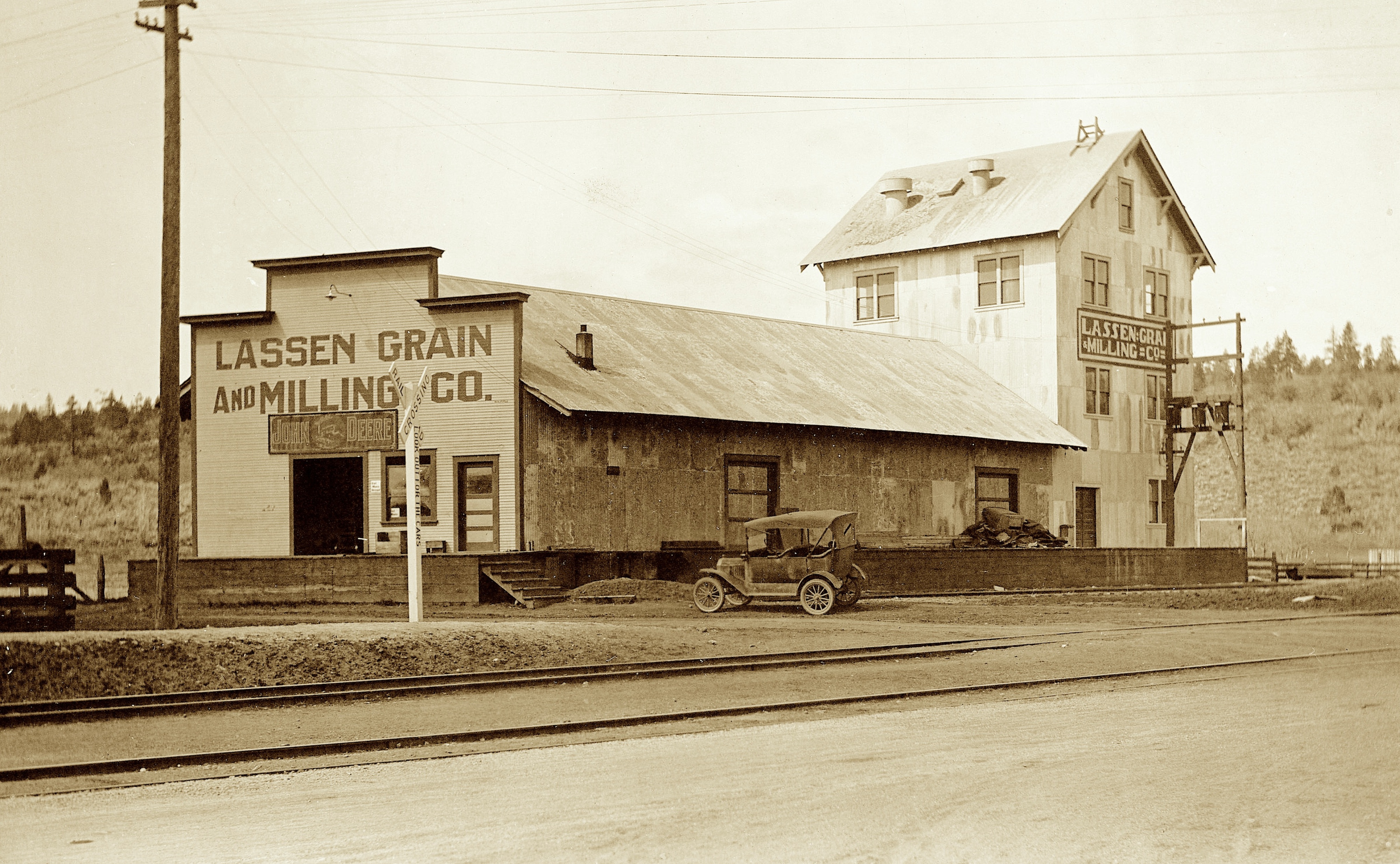
Lassen Grain & Milling Company, circa 1918. Courtesy of Dick & Helen Harrison
In February 1917, this new company was organized with Fred Bagin spearheading it. When the news broke, it made the grain growers of the Honey Lake Valley rejoice. After all, the flour mill at Johnstonville had been closed nearly a decade and the Janesville mill was operating at half capacity, and only during the harvest season. Continue reading Lassen Grain & Milling Company→
In the past we have explored various creameries of the Honey Lake Valley such as the ones at Johnstonville and Spoonville.
Around 1901/02 the Wemple Brothers at Milford decided to give it a try and established the Lakeshore Creamery on the Wemple Ranch.
Like the other operations, this, too, was short-lived. As one family member put it that all the brothers wanted to be the boss, so getting the actual work done could be problematic. Thus, due to that unfortunate circumstance, the brothers abandoned the enterprise.
The old courthouse block as it appeared around 1912.
In June 1915, Lassen County voters approved a $125,000 bond measure to build a new courthouse, to replace the old wooden constructed in 1867. Since it was deemed to use the existing site, the old one would need to be moved, while the new one was constructed. So in September 1915, the courthouse was put on rollers and moved fifteen feet to the property line along Lassen Street. It would remain in place there and used until the new courthouse was completed, mainly for storage, and the county offices found temporary housing in the Lassen County Jail.
In November 1916, the county advertised for bids for the sale of the old courthouse in anticipation of moving into the new facility. Plenty of people inspected the building. The county did not know when the building would be available. In January 1917, the county received two bids for the structure one from Sierra Packing Company for $50 and the other from Charlie Emerson for $60. The county rejected both and decided to auction it off. When that event would happen no one knew. There were delays in moving into the new building, one of the big obstacles was that of the cost of furniture. During the first week in April moving into the new courthouse began in earnest.
On April 28, 1917, the auction was held with George Bennett’s winning bid of $85. Bennett immediately sold it at a higher undisclosed amount to Dan Armstrong who tore down the building and used it for scrap lumber.
Subscribe and support this site for $5.00 a month.
Long before Herlong came into existence, there were several attempts to establish a town there. One of these was Rayl, for Stanley Rayl who in 1915, investigated the premises. Since the location was at the junction of the Nevada-California-Oregon (NCO) & Western Pacific (WP) railroads, it was an attractive spot for entrepreneurs. In the summer of 1915, Rayl filed rights to an initial 40 acres and constructed a combination two-story hotel and general store. Continue reading Rayl→
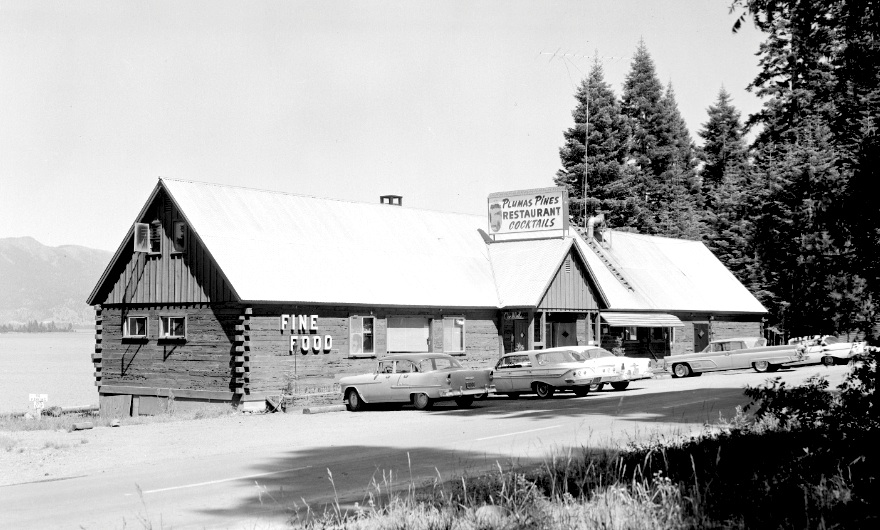
Usually, there are a few of us who get together to make an annual luncheon trip to Plumas Pines at Lake Almanor. However, between everyone’s schedule and then my broken hip that I am recovering from, we will have to wait until next year.
It is interesting to note that development of what is known as Prattville today, versus the original town of Prattville, which was destroyed to make way for Lake Almanor, had its humble origins dating back to 1916. It was none other than the forest service who offered 88 lots for a special use permit fee of ten dollars a year.
In 1932, Adelaide and Fred Smith established the Plumas Pines Resort. The Smith’s operated it for the next twenty years. Since that time it has had numerous owners, but its always worthy a visit.
Subscribe and support this site for as little as $5.00 a month.