Category Archives: History

Honey Lake’s Sugar Beet Experiment

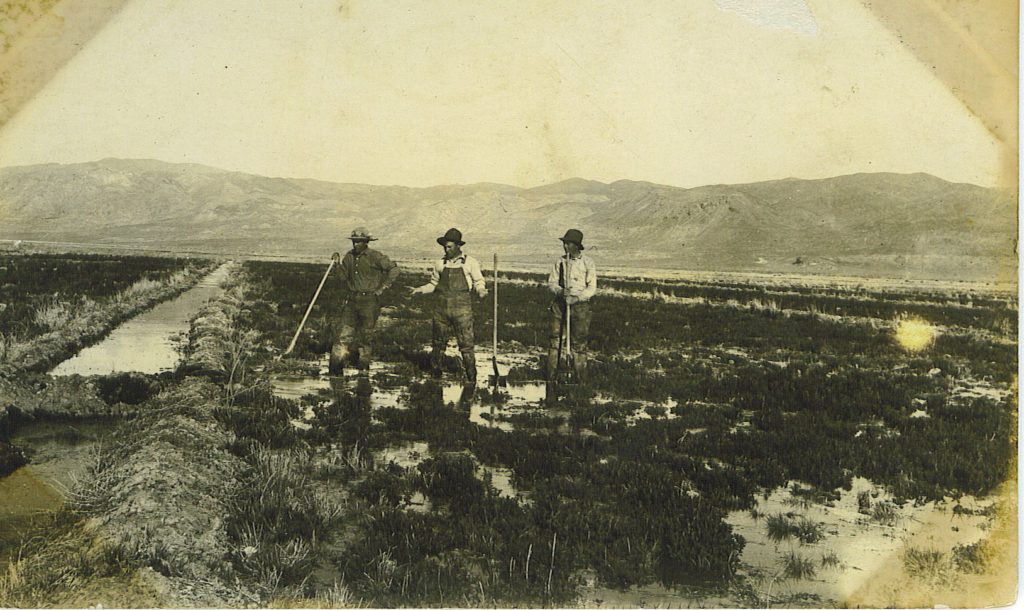
The Zarbock Brothers on their desert homestead near Stacy. Courtesy of Pam Zarbock Bell

In 1910, the Nevada Sugar Company of Fallon, Nevada came courting Honey Lake Valley farmers in the Standish district, as well those homesteaders on the east side of Honey Lake to plant sugar beets. One of the reasons, was the Nevada Sugar Company was in the midst of constructing a factory at Fallon.

As an enticement the company stated it would build a second factory at Standish if production was successful and needed transportation facilities. In 1912, with the announcement of Fernley & Lassen Railroad to be constructed through this section of the Honey Lake Valley solved that transportation issue.

It should be noted that in 1911 was the first irrigation season of the Standish Water Company’s pumping plant on Honey Lake’s eastern shore.  In that year they provided water for 1,000 acres that was planted in sugar beets, with the Nevada Sugar Company providing the seed. No  one locally knew anything about growing sugar beets, but they learned quickly. One of the biggest problems encountered  with beet production was the amount of labor required. The problem was compounded as there was a local labor shortage, and then there were those who did not want to work in beet fields. To alleviate the problem 25 Japanese laborers were brought in to assist. Their tenure was brief, even though it was reported they worked twice as fast at a cheaper price.

There were two other problems that ended the experiment. First there was not an adequate water supply and the beets were substandard. It was not only a problem locally, but in Fallon as well for in 1917 the beet factory there closed.
Never miss a story, click here to subscribe.

The 1916 Railroad Blockade

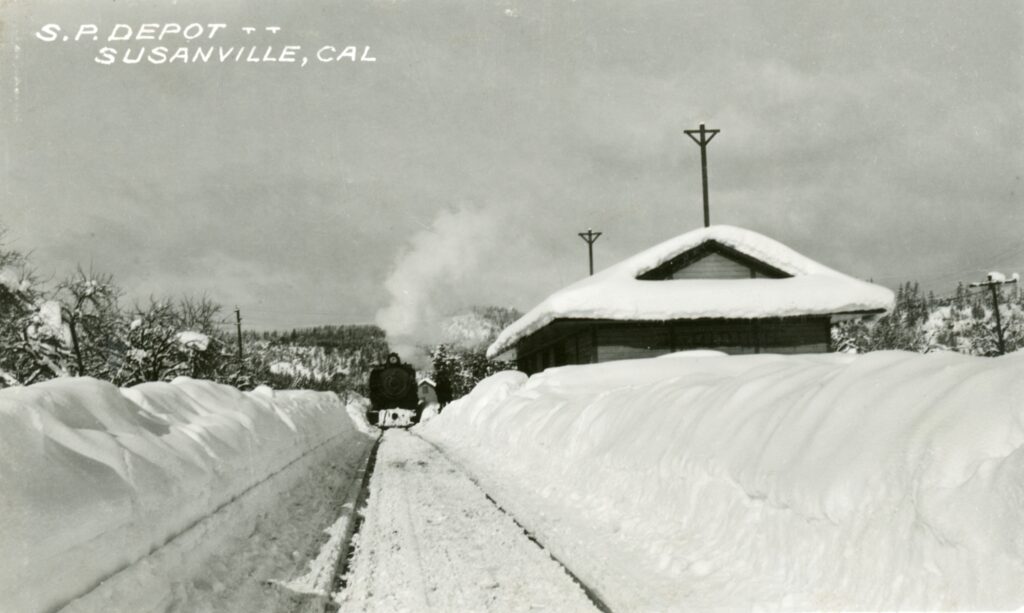
Susanville Depot, January 1916

On January 2, 1916, it began to snow and depending where you were located, did it ever.  At Westwood, some records indicate fourteen feet of snow that month. That town was virtually cut-off, as the railroad in the winter months was the only link to the outside world. At Westwood Junction, the highest elevation of the Southern Pacific’s branch line had reported twenty feet of snow.  With the aid of a rotary snow plow, and four locomotives the line from Susanville to Westwood finally opened.

The NCO train near Amedee, January 1916. Courtesy of Marie H. Gould

The NCO Railroad that served eastern Lassen County was not as fortunate, because it had no backup like the Southern Pacific. It was just not the deep snow, but the  snow drifts and below zero temperatures that hampered efforts. After a twenty-one day blockade the NCO locomotives made it to Amedee and beyond.

Tim


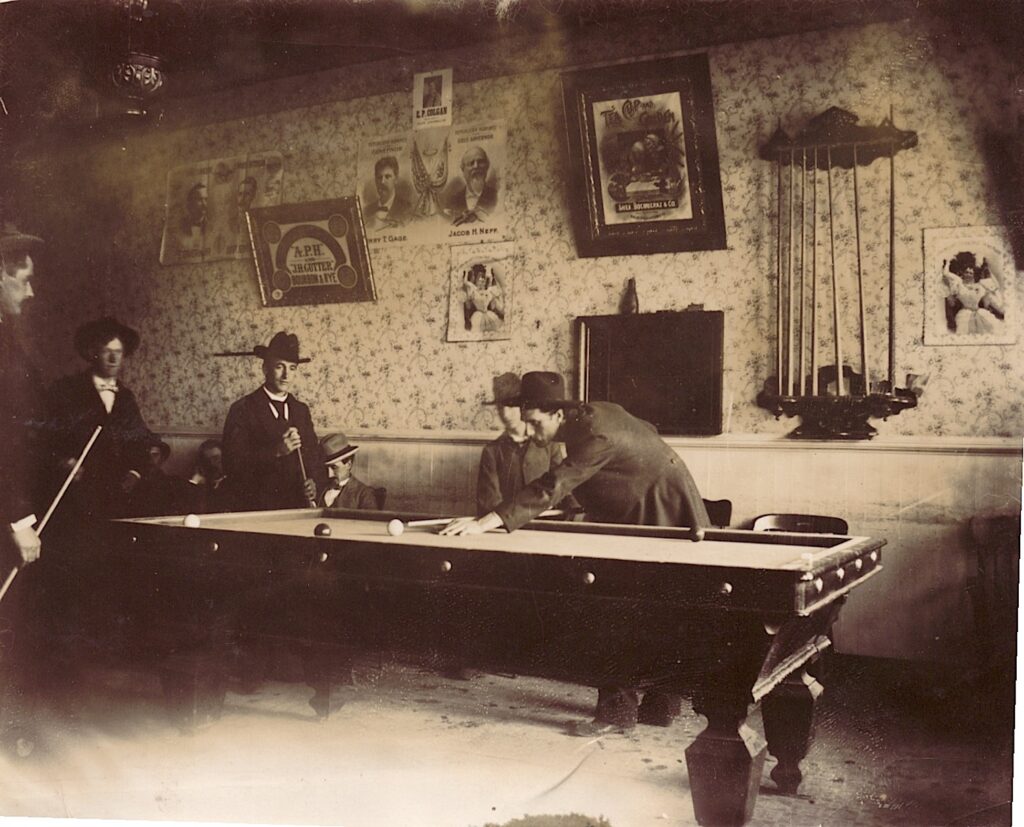
Billiards . . .

From unknown photograph files

First, I have had this photograph in my archives for decades. It is frustrating because its unidentified. A great photograph., though.

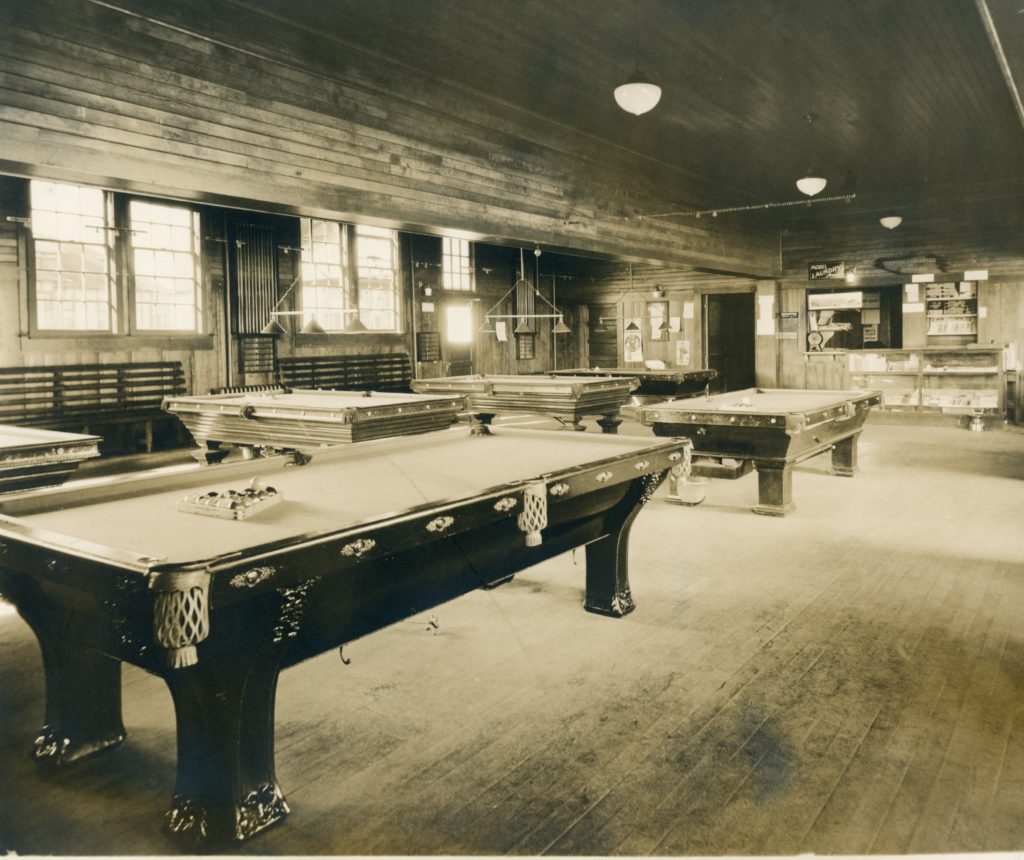
There is some rich untold stories about the game of billiards and the discussions that took place during the games. . It is a facet locally, that has not been well chronicled. The Pioneer had a large billiard room with assorted snooker and pool tables. Those days are gone. In fact, I do not believe there is any public establishment that has a pool table in Susanville.

The billiard room, Story Club, Susanville, 1923. Courtesy of the Fruit Growers Supply Company

Tim

Susanville’s East Addition

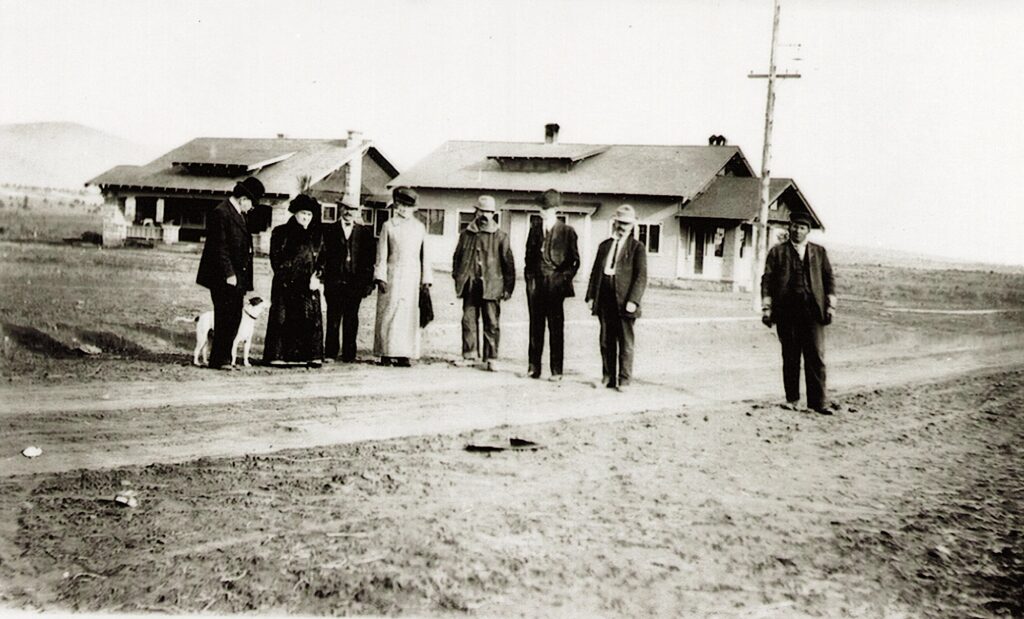
North and Spruce Streets, Susanville, 1912-Mary Dale Folsom

On January 16, 1911, M.O, Folsom filed his map for the East Addition subdivision to Susanville. It was located east of the town and north of Halls Addition. The property was familiar to many, since it was the location of the racetrack and fairgrounds that had long since been abandoned. In the summer of 1912 work began to clear the property of sagebrush and grade streets. In addition, two speculative houses were built at North and Spruce Streets. The 300 lot subdivision created the following streets–First, Second, Third, Fourth, Fifth, Grand Avenue, Oak, Fir, Cedar, Spruce, Park and Ash. Folsom had North Street extended to his subdivision. The street had previously terminated at Weatherlow.

The East Addition contained a number of covenants. No property could be sold or transferred to foreigners, i.e. “Chinese, Japanese, negroes, Hindus or other objectionable races,” or as the Lassen Mail noted, “This addition will be for the Caucasian race only.” The East Addition promoted its healthy environment–one with a sewer system and which prohibited stables for livestock. Finally, and, what was important for property values, each house. constructed must cost at least $1,000, though in certain blocks that requirements was raised to $1,500.

To Support, Please Donate or Subscribe

The Roseberry House Re-opens

An early day advertisement when it was known the Green Tree House.

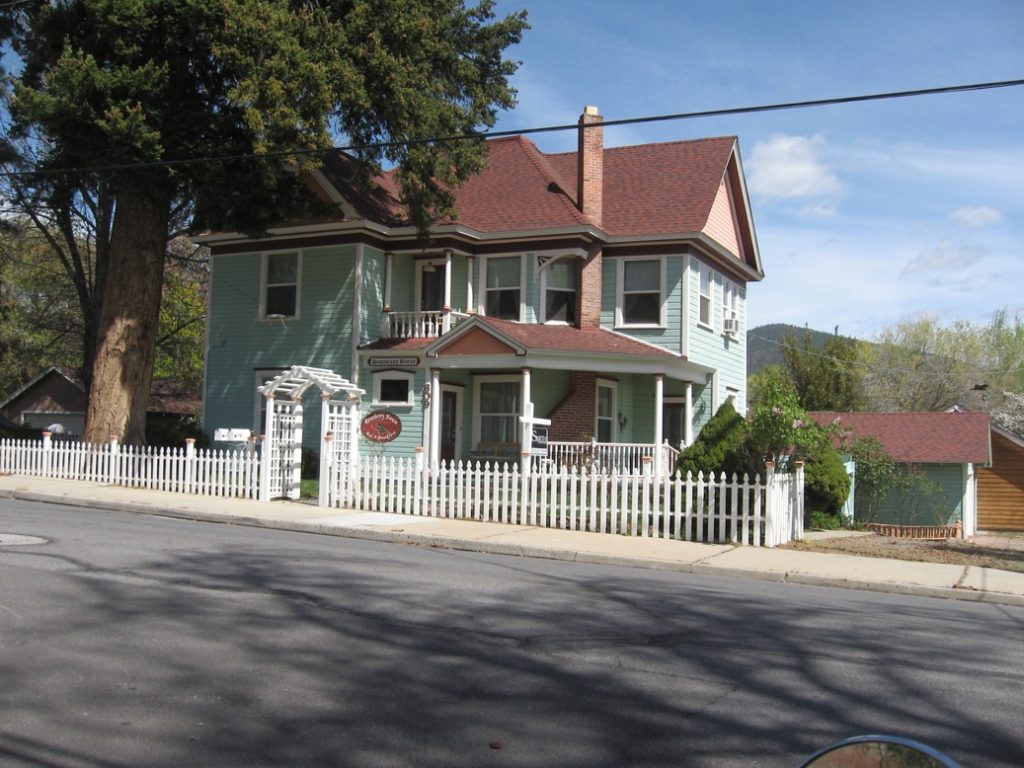
In 2020, the Roseberry House located at 609 North Street, Susanville which was the town’s only bed and breakfast operation was closed. After nearly a five year hiatus, it is now open again.

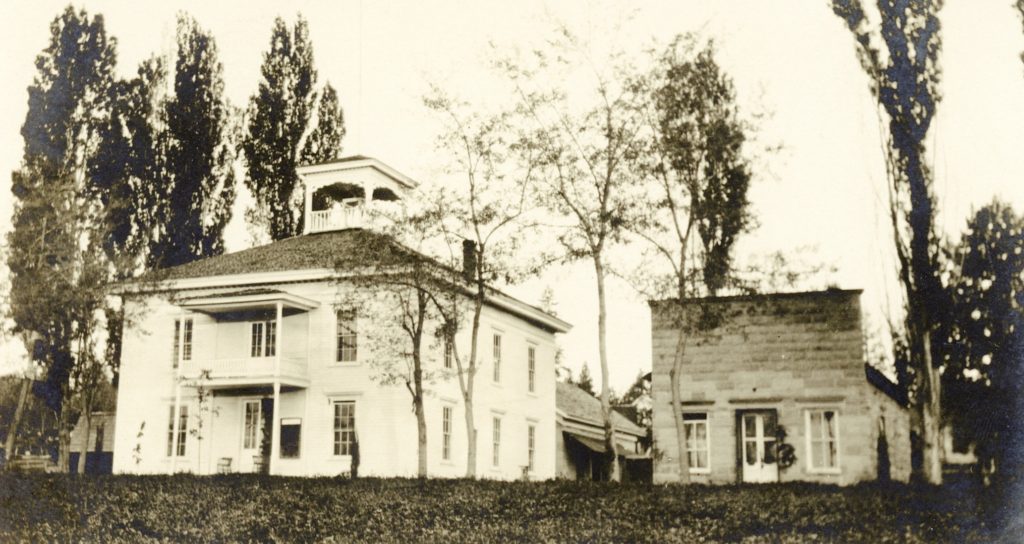
.The stately Roseberry House constructed in 1903, had a history over a hundred years ago catering to tourists. The house was constructed forThomas and Viola Roseberry. When Lassen Peak came alive as a real live volcano in 1914, area residents flocked to the mountain to take a look first hand. For Thomas Roseberry it was a fatal mistake for in August 1915, while climbing down the peak he died from a heart attack. Another  event occurred earlier in the month when the Emerson Hotel, located only two blocks from the Roseberry home was destroyed by fire.

Roseberry House, April 27, 2020

These circumstances forced Viola into action. She made some remodeling changes to her home and began to take in travelers and boarders alike, which she would do so for another decade.

Never miss a story click here.

European Immigration Patterns

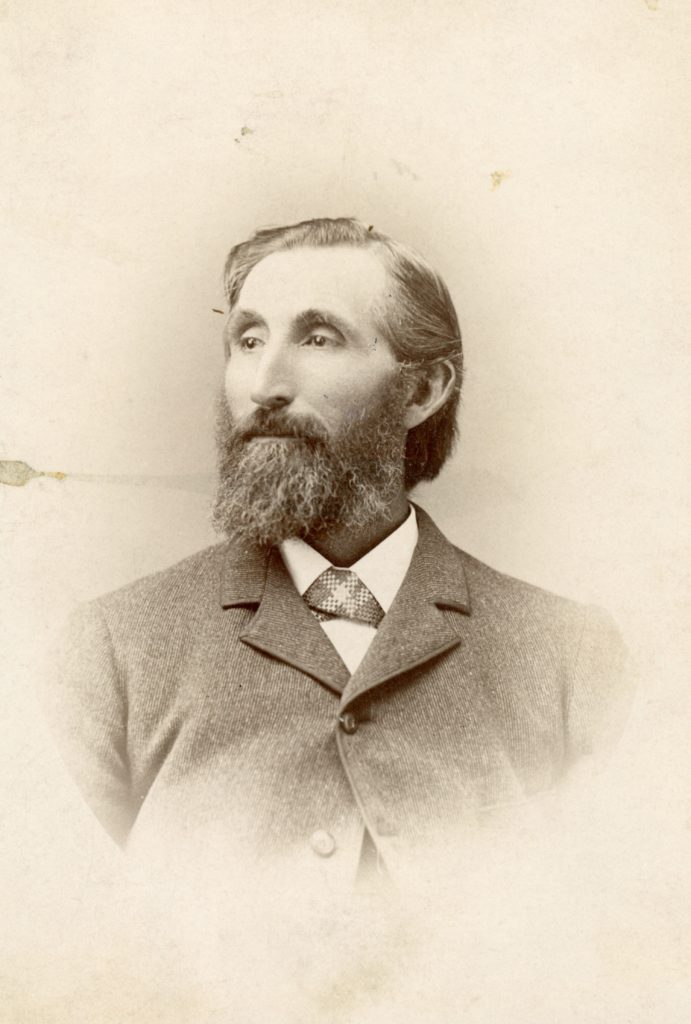
Ben Neuhaus., a  native of Prussia came to Lassen County in 1865. Courtesy of Philip S. Hall

My catalogue filing bin is perpetually overflowing. Truth be known, filing and cataloging is not my favorite chore. There are some gems in those boxes, and this recent one has a tremendous wealth of material in a four page document, that would put to shame modern day planning documents, too much verbiage and light on facts. Just for record, I served as Lassen County Planning Commissioner from 2009 to 2020, so I am familiar with the topic.

With that introduction, I examined the July 1958 Standard Industrial Survey Summary Report for Susanville.  To understand fully of the fact filled document it even includes humidity levels of a given starting a 5.a.m, Noon and 5 p.m.  As to the community’s ethnic makeup of those foreign  born were from Italy, France and Canada. During the late 1800s, the foreign born residents were from  Ireland, Prussia and Great Britain.

Tim

P.S. – Another instance  of the details was an exact break ground as to the community’s ethnicity. It showed that Susanville had two Negro residents. Seasoned residents will know who they were, and as a matter of  fact a street is named in their honor.. Subscribers will receive this additional information.

The Williams Brothers–Morgan & William

The first Lassen County Courthouse and Hall of Records, 1908–David Zoller

These Welsh Brothers came to Susanville in the mid-1860s. The first to arrive William “Bill” in 1866, and followed by his brother, Morgan in 1867. The brothers, it should be noted, were carpenters. In February 1867, Bill Williams was awarded the contract to build Lassen County Courthouse at  cost of $9,850. The two men were kept busy, and the courthouse was completed on October 28, 1867. The brothers  dabbled in other pursuits including homesteading, Morgan filed on 160 acres, adjoining the Goodrich Ranch at Mountain Meadows, His brother, claimed land at Devils Corral along the Susan River, There is a small stream located there and is known as Williams Creek.

The documentation of their lives in the Susanville region is sporadic. For instance in fall of 1875, Morgan took his family on an extended trip to Europe. In 1877, the Williams Brothers were busy constructing rental houses in Susanville. By 1880, William Williams relocated to Sacramento where he died in 1883. In 1888, Morgan Williams sought greener pastures in New Mexico. He died in 1893.

Tim

A Susanville Teacher Retires

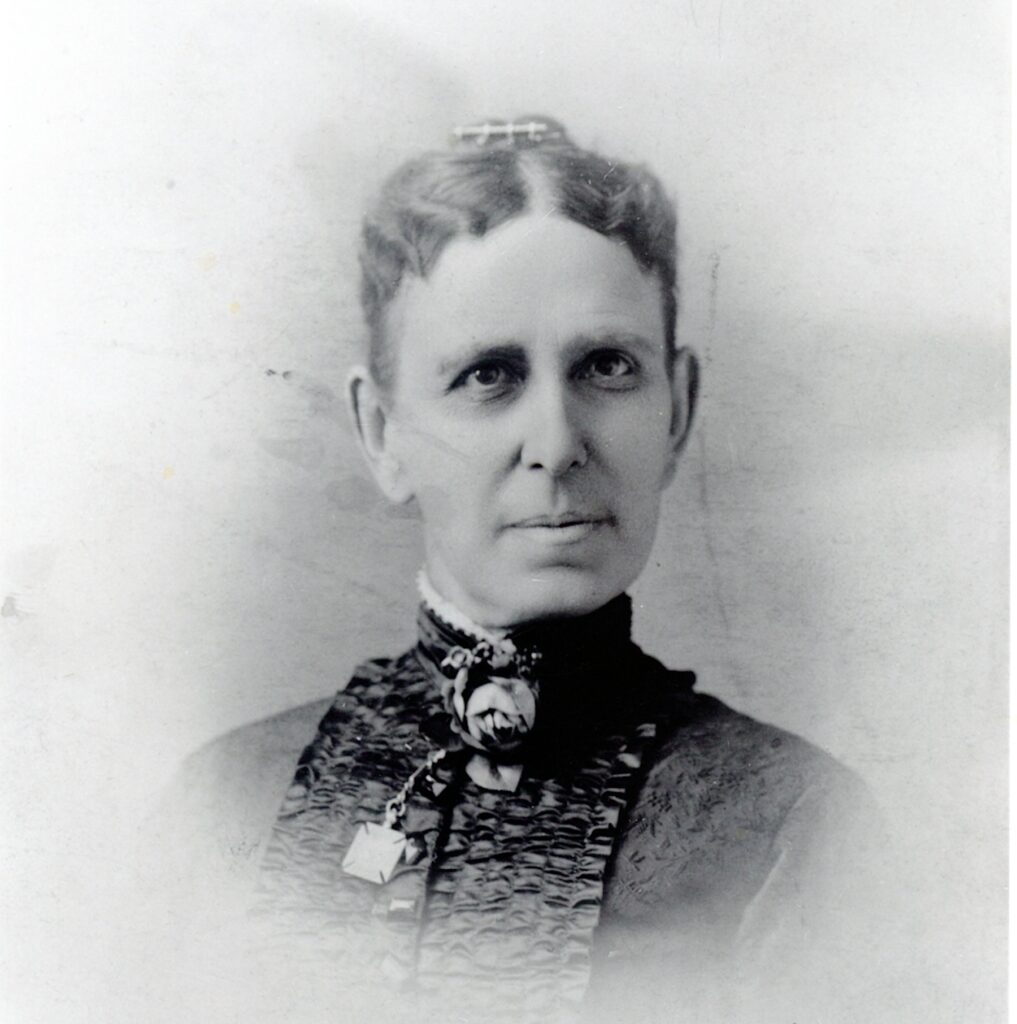
Mary Hurley-Courtesy of Betty Barry Deal

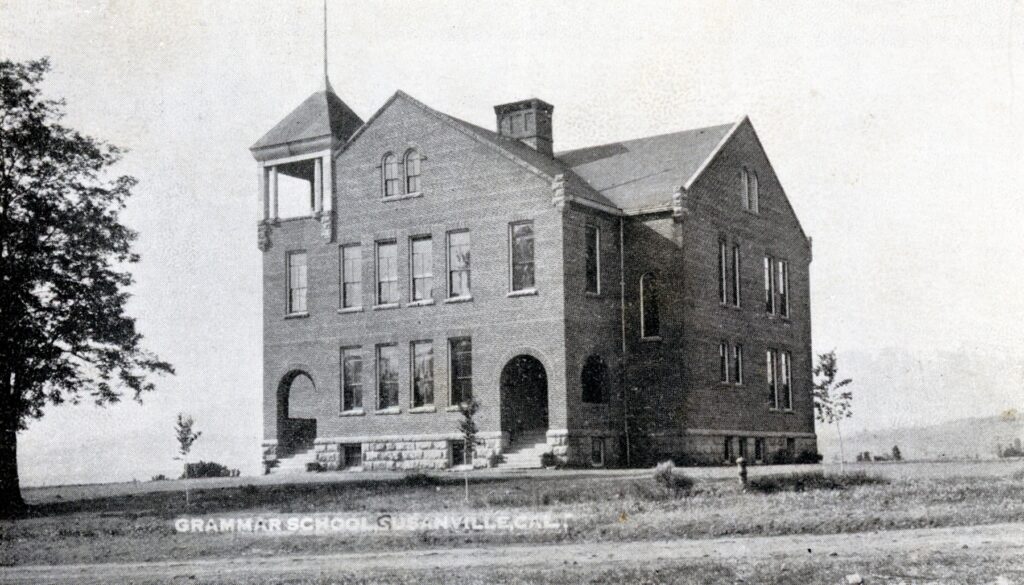
In 1913, Susanville teacher, Mary Hurley retired at the age of 69. In 1880, twice widowed at the age of 36, she was accepted as a teacher at the Susanville Grammar School. She taught there for four years, and briefly relocated to Los Angeles. In 1887, she returned to Susanville and was hired at her old teaching job in Susanville, where she taught for twenty-six years.

Susanville Grammar School, circa 1905- Courtesy Betty Barry Deal

But her retirement was different than others. She was the first Lassen County teacher to receive a pension from the Teachers’ Retirement Fund of the State of California. Her quarterly retirement  check was for $125.00. In 1924, she moved to San Francisco where she passed away on February 15, 1929. She is buried in the Susanvillw Cemetery, but has no headstone. While the Hurley name is not known these days, she has lots of relatives, her one sister,  Cetera  married Ben Leavitt and the other Florence married Clinton DeForest

Tim

Every Votes Count

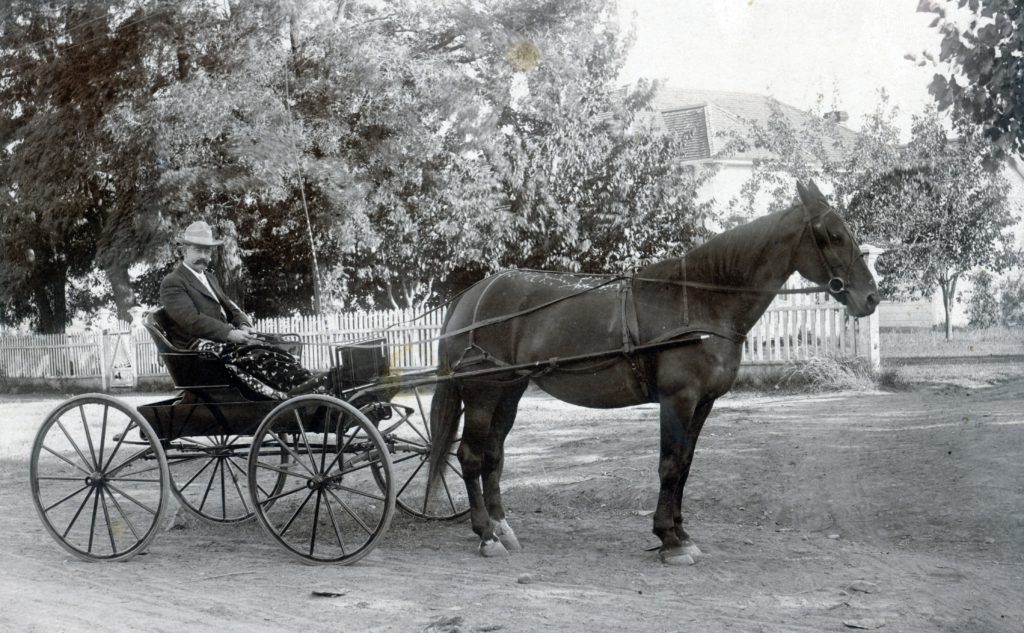
A.K. Philbrook and his new buggy in front of the Sol Nathan residence on Roop Street. Courtesy of Philip S. Hall

While here in Lassen County we are spared of elections in 2025. Other places in California will hold elections under the  Uniform District Elections UDEL). These elections include schools, fire districts, community service district etc. Under former Lassen County Clerk Theresa Nagel, opted to consolidate the UDEL’s with the General Election in even years.

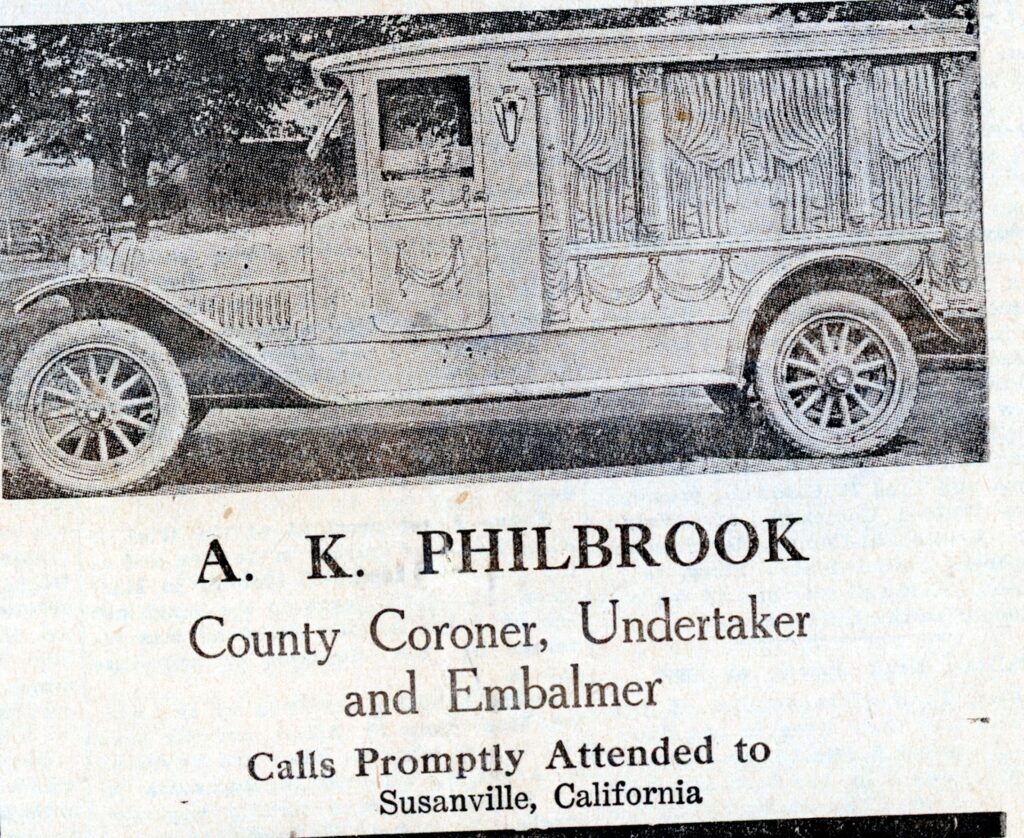
Philbrook’s 1917 advertisement in the Westwood Independent

Every region experiences close elections, and Lassen County has had its share. This story involves the 1914 election of Lassen County Coroner and Public Administrator. The two candidates were A.H. Taylor who served as the Registrar of U.S. Land Office. The other, was incumbent A.K. Philrook, who was the local undertaker.  Philbrook won the race by three votes. However, Taylor challenged the vote and asked for a recount. The result was unchanged and Philbrook would serve another four year term.

Tim

An NCO Critic

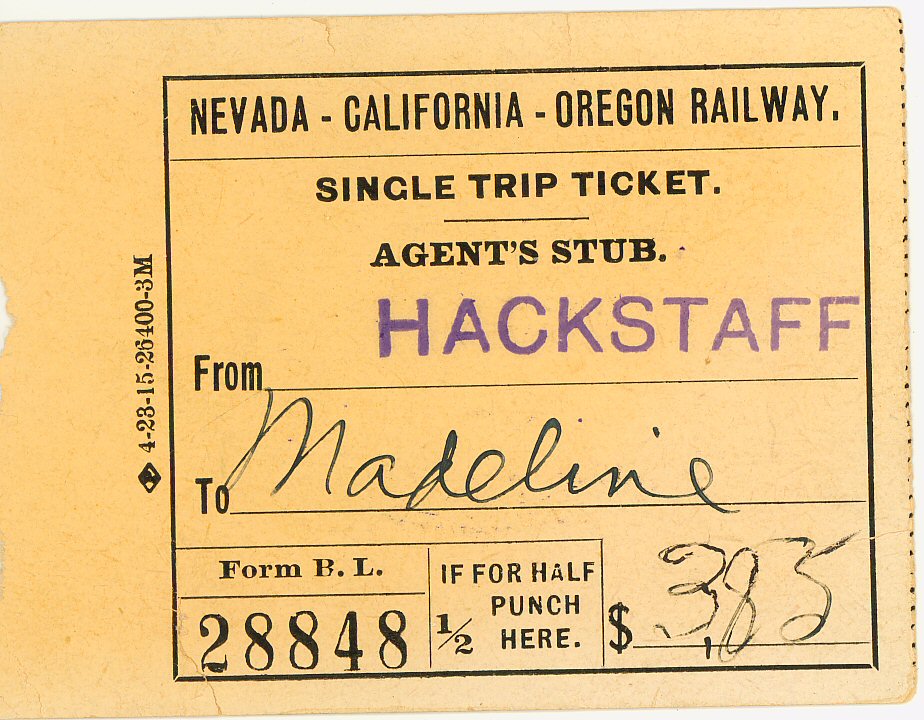
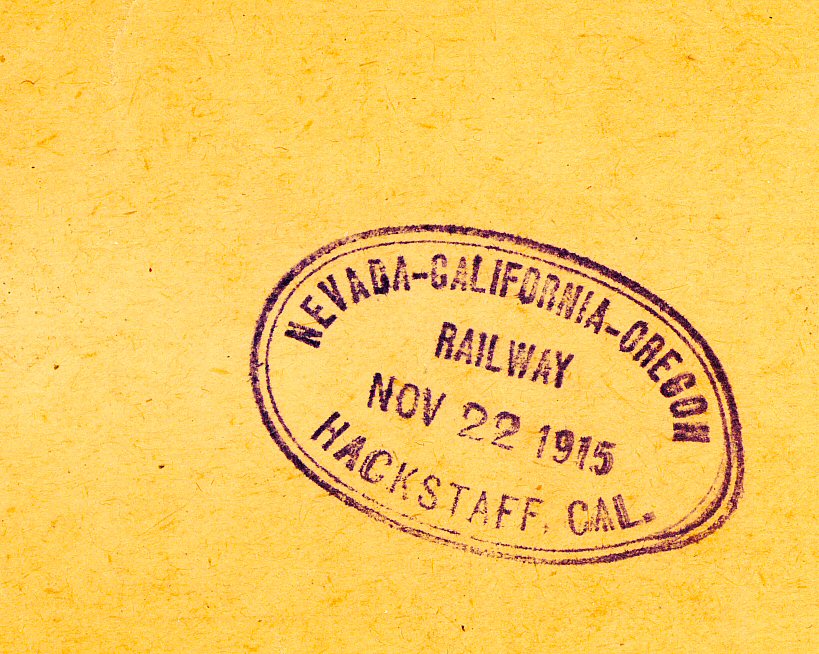
A November 22, 1915 NCO ticket stub. Courtesy of Dorothy Capezzoli

It is the beginning of April and I just happened to be wearing my  favorite cranky pants. I have been dealing with a critic(s) about the Nevada-California-Oregon Railway (NCO). who insinuated that my knowledge only pertained to Lassen County. It’s far from the truth,. People who have been acquainted with my research over the decades know that the said criticism is erroneous .

However, the truth be known Lassen County played a substantial role in the NCO’s history. When the NCO finally reached  Lakeview, Oregon in 1912, the length of the narrow gauge railroad was 241 miles. Over the half that mileage, 124 miles was in Lassen County. Over the railroad’s troubled existence, it operated in Lassen for 43 years.*. Translation the railroad operated in Lassen County longer than any other jurisdiction. While, Sierra County had the shortest trackage within its territory, the NCO’s presence in that county was 35 years, far greater than Modoc County of 21 years.. Enough said.

Tim

*I arbitrarily use 1927 as the end date of NCO, since that is when the line was converted to standard gauge.