Category Archives: History

Diamond Mountain Tree Growth

Diamond Mountain, 1950s.

On April 16, 1921, a grand celebration was held in Susanville for the Fruit Growers Supply Company new mill  that was placed into the operation. In evening, a banquet was held for an assorted of company officials and local dignitaries. Fruit Growers General Manager Frank Hutchens stated how the Lassen would be operated. Fruit Growers would conduct selected tree harvesting, whereby 30 percent of the merchantable trees would remain as seed trees. Fruit Growers and the Lassen National Forest Service were working on a selective harvest plan that would allow to operation to continue in perpetuity. They estimated it would take between fifty to sixty years to log their holdings. By that time, the original logged areas would be ready for the second harvest of mature trees which again would take between fifty and sixty years to harvest, and the cycle could continue.

C.E. Emerson, a local merchant and rancher, told the crowd of his reforestation experience locally. Emerson recalled as a child, forty years ago, he helpd plant a tract of pine trees on the family ranch just south of Susanville on Diamond Mountain. Those seedlings, he said, had become a fine stand of pine timber, many of which were 22 to 24 inches in diameter.
Indian Meets White – W.N. Davis, Jr.

Cover page of Davis’ Thesis

A subscriber placed a question on the quarterly Ask Tim post about suggested reading materials of the Native American community. I am working on it. The title above is misleading. While it is designated of the California Indians series, volume five pertains to the settlement of Lassen and Modoc Counties.  It should be noted Garland Publishing market was not mainstream in the sense was geared toward academia and libraries. Since I personally knew Davis, who at that time was the director of the California State Archives, he alerted me to its publication.

Davis, of course, devotes a chapter titled Indian Meets White. Davis provides one with some introspection in  a tragic episode of history. He wrote: “The stakes of the contest were high. Retrospection is wide of the mark  it does not note that, although both races were wrong, many times and more, each showed much willingness to work toward justice as it viewed in those days. Each felt its cause was right and each was determined to let nothing stand in the way of the maintenance of that right. The story is one of the head-on collision of two civilizations, and of the unending struggle for survival.”

Tim


Susanville’s First Easter Sunrise Service

Inspiration Point
The view from Inspiration Point, 1930s.

On Sunday, April 20, 1924 the first Easter Sunrise Service were held in Susanville. Preparations began two weeks  earlier for the non-demonitial service. Inspiration Point was the selected location. The event was organized by the Ladies Auxiliary of the American Legion. The women were ambitious. They persuaded the Lassen Lumber & Box Company to donate the materials and labor to construct a cross on the point at no cost. They employed the same maneuver with the Lassen Electric Company who adorned the cross with light bulbs. A week prior to service, in the evenings the cross was lit up and seen for miles around.

At five a.m. Easter Sunday some 300 people attended the service under very chilly conditions. The invocations were done by Father McCarthy (Catholic), Rev. Price (Methodist), Rev. Rowe (Baptist) and Captain Diez of the Salvation Army.

Tim


Those Merry Pranksters

Fake
The 1931 Fake Eruption of Lassen Peak. Courtesy of the Plumas County Museum

On May 30, 1914, when Lassen Peak awoken from its slumber with its first eruption, it was an attention grabber to say the least. With each new eruption, caused even more excitement. In the fall of 1914, some practical jokers climbed Beckwourth Peak near Portola. According to one report a big “red”fire” could be seen by many. The stunt , of course, was to resemble a volcanic eruption. Some observers swore they actually heard rumbling noises in the mountain.

Tim

Susanville’s Potter’s Maternity Home

Potter's Maternity Home
Pottter’s Maternity Home, 1600 Main  Street, Susanville

Ruth “Ma” Potter (1886-1965) was a Susanville institution of sorts. In the early 1930s, the Utah native, opened a maternity home at Main and Park Streets, the current location of the closed  Rite Aid. She continued on until 1963, when she finally retired. It should be noted that her home was moved to South Street in 1966 to make way for United California Bank. There is a plaque in the sidewalk marking the site.

During the time when Potter’s was in operation, one was either born there or at Riverside Hospital, the latter no longer exists. While my three siblings were born at Potter’s, I decided to be different or difficult, whatever the case may be, and was born at Riverside Hospital.

Tim

P.S. – There was the Lassen County Hospital. My Aunt Irene Bengoa Purdy worked there in the 1950s and the 1960s, She referred it as “County.”  Births there were rare, and basically it those that were indigent. This would all change in 1963, when Lassen County built the Memorial Hospital which replaced Potters and Riverside.


The Raker Act

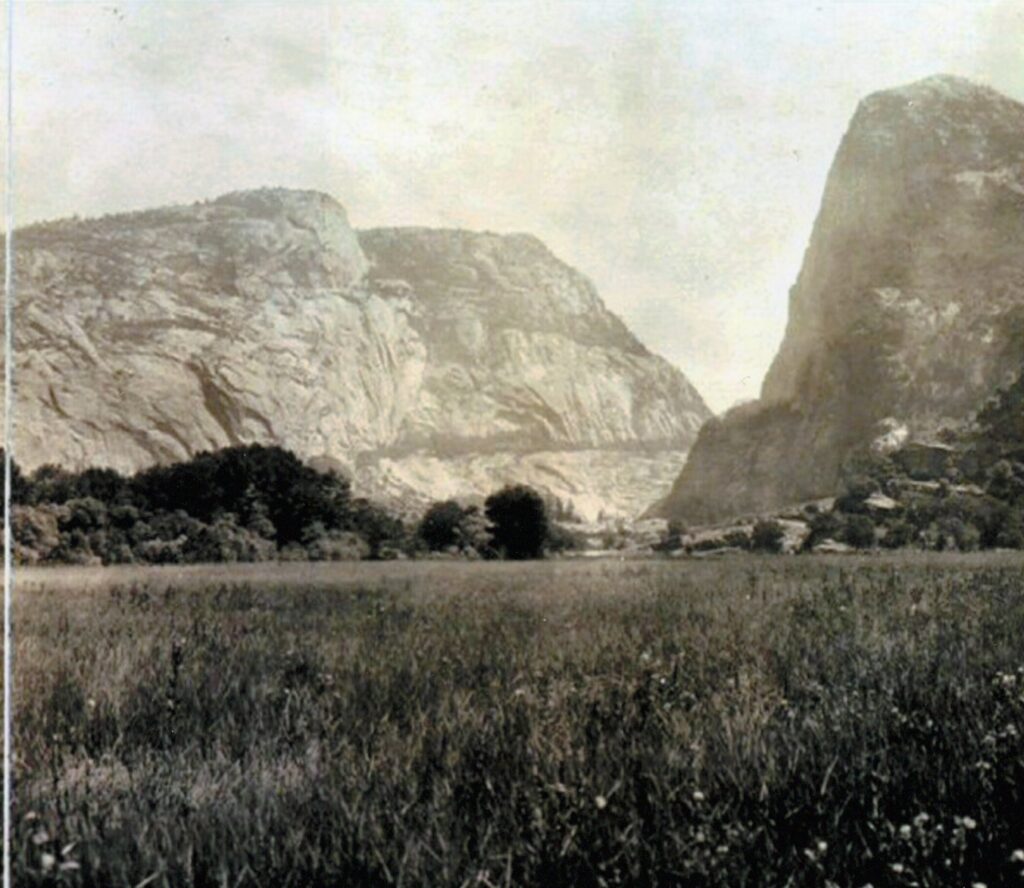
Hetch Hetchy Valley, 1911 ( I paid $12.00 for this photograph on Ebay)

United States Congressman, John Raker served the as the representative of California’s First District from 1911-1926. Raker primarily resided in Lassen and Modoc Counties. In fact upon his death in 1926, he became a permanent resident of Susanville since he is buried in that community’s cemetery.

Raker was known for many things. In 1990s environmental groups painted Raker as a villain for the author of the Raker Act that Congress passed in 1913. The Act authorized for the O’Shaunessy Dam, that would flood valley the Hetch Hechty Valley, a part of Yosemite National Park. The purpose was a water supply for San Francisco.

Of course, it was fraught with the usual politics. By 1880, San Francisco sought a reliable water supply for the growing city. As I wrote before, the City even had its eye on the abundant springs at Big Meadows,  Plumas County, now Lake Almanor. After the 1906 San Fransisco earthquake and fires, there was an urgent need for a abundant water supply.. One key player, that does not much draw attention is that of Franklin Lane. In 1912, President Wilson appointed Lane as Secretary of the Interior, which managed the National Parks, since the park service was not created until 1916. Previous to Lane’s appointment he served as the City Attorney of San Francisco, thus he was well aware of that city’s water supply issue. Lane, and others in the San Francisco water lobby sought out congressmen to support there cause, and they found Raker.

Raker, it should be noted that was an ardent supporter of Gifford Pinchot, the first director of the United States Forest Service.  Along that line, while Raker urged conservation, he thought multiple land uses could co-exist.

In 1911, Raker who was in his first term as congressman, authored a bill to establish Redwood National Park. It failed. It did draw attention to the majestic trees. In 1918, the Save the Redwood League was established. It was not until 1968, that Redwood National Park was created. For the record, it was Raker that was instrumental in the creation of Lassen Volcanic National Park.

To Support, Please Donate or Subscribe


Is Some Railroad, Sure

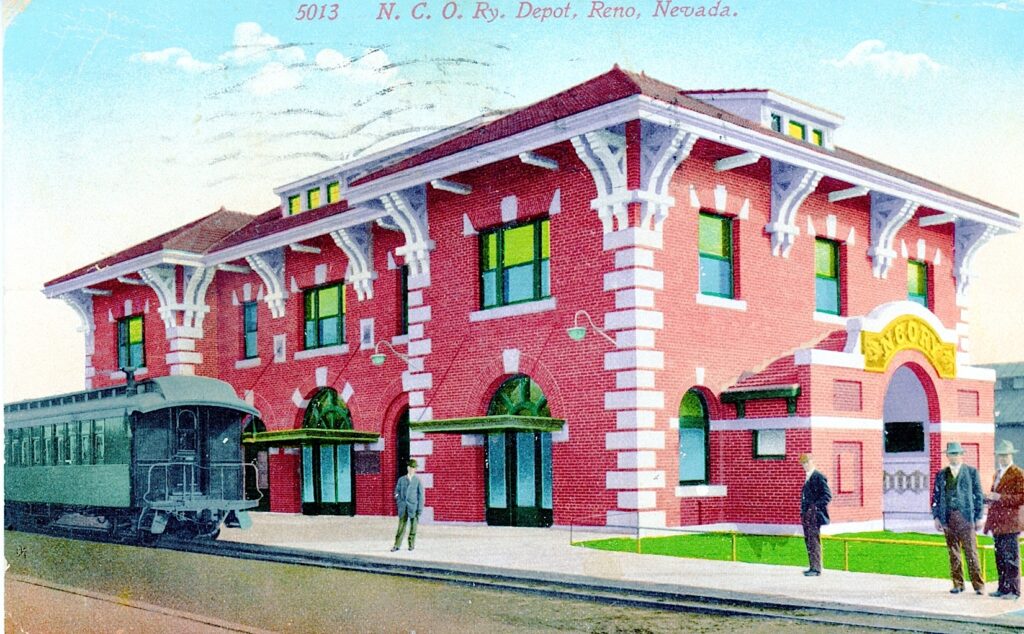
NCO Depot, Reno, Nevada circa 1911

In December, I wrote that I would reading the Lassen Advocate for 1898 and 1914. From time to time I will publish extracts that it may be of interest.

Lassen Advocate 2 January 1914 5;4 – Is Some Railroad, Sure. For a railroad that has been running trains for twenty-eight or thirty years, the NCO railroad has a “peacherino” as the following from the Reno Journal of December 27 will attest.

“Traveling at a rate of about twenty miles per hour, the NCO passenger train due in Christmas evening was wrecked that afternoon at Chat, a small station situated one mile south of Plumas Junction.

“Fortunately the wreck did not cause injury to the train hands or passengers, excepting slight hurts by fireman Bert Pratt, who sprained a leg where he jumped from the engine.

“The wreck was apparently caused by a spreading rail and the engine overturned, after plowing up the frozen ground to a depth of four feet distance of a car length.

“The mail car was partially overturned although the remaining coaches to the train remained on the track. The wreck occurred at 5:05 o’clock Thursday afternoon and the passengers reached Reno 25 hours late.”

It should be noted that Mother Nature played on a role. The Christmas Eve storm dumped 3 1/2 feet in Susanville. Reno is the banana belt” so to speak in terms of weather. Due to rain shadow effect of its location, it is much drier than other east slope communities of the region.

Tim

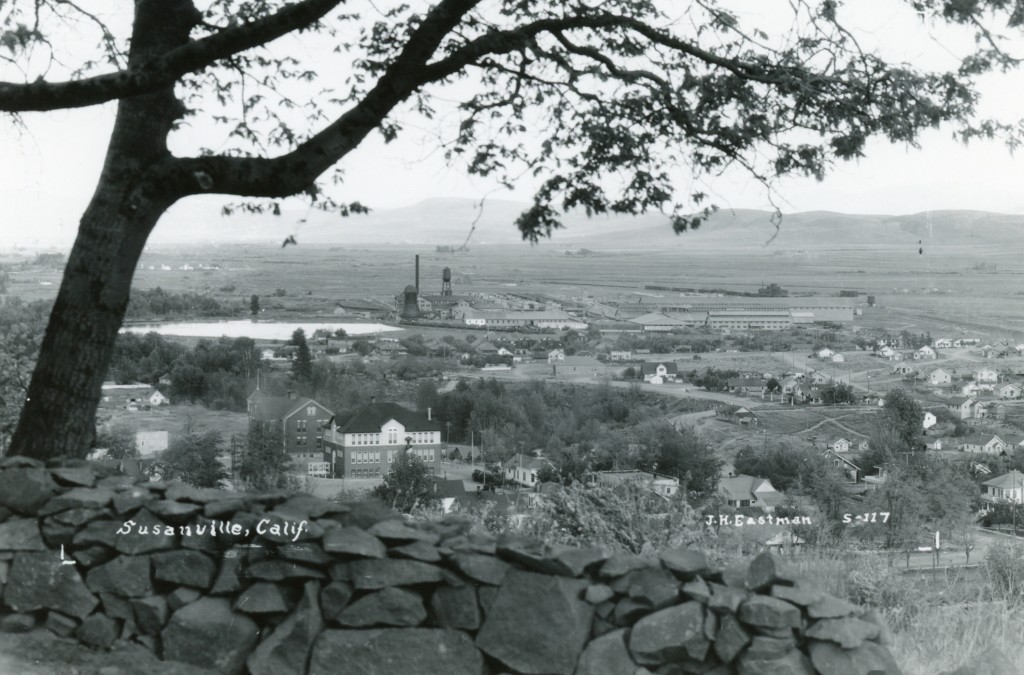
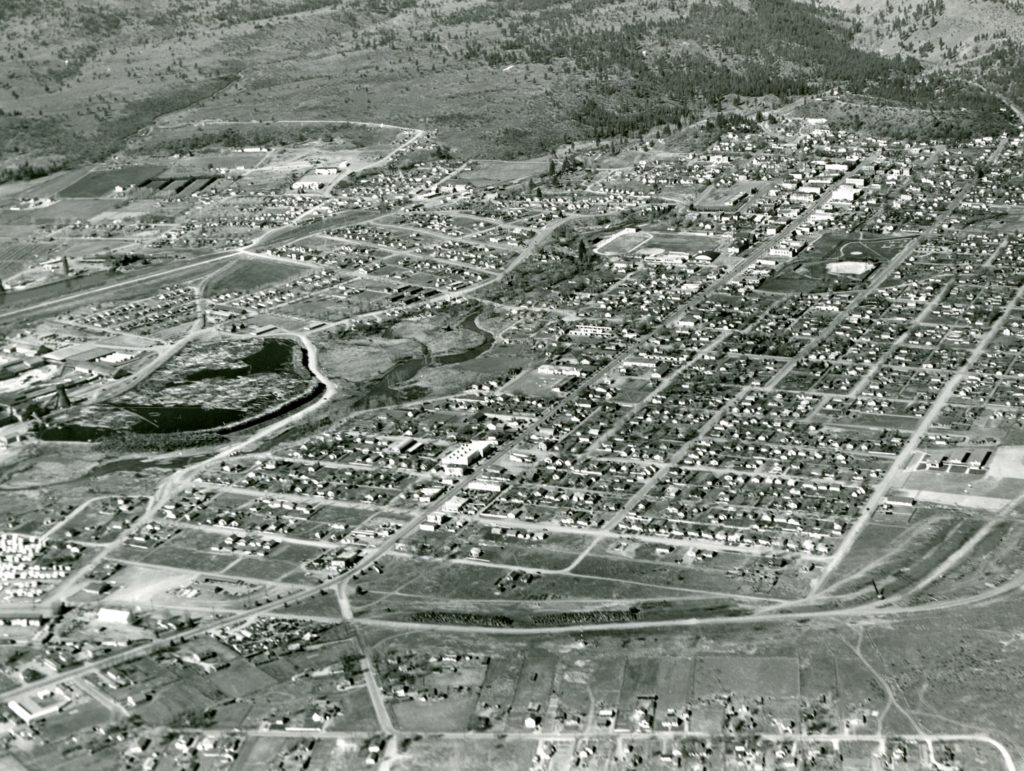
Susanville, 1958

Susanville, circa 1950

Awhile ago, I referenced the 1958 Standard industrial Survey for Susanville. I thought some may like to have peek of some information in the report. Times have certainly changed.

Of course, lumber was still king in Susanville. Here is some employment figures: Fruit Growers Supply Company, 350 employees; Paul Bunyan Lumber Company, 300; Susanville Logging Company, 150;  Wirth Lumber Products, 50; Lassen Lumber Products, 15 and Orr Wood Products, 5.

Housing Availability, Prices and Rentals. The housing census as of April 1950 showed 1,721 dwelling units, of which 22 percent in structures built since 1940 and 1,687 were occupied. Of these 1024 were owner occupied, or 61 percent and had a median value of $9,000. Of the renter dwellings, 14 precent rented for less $20 per month., 42 percent for $20 to $39 per month, 35 percent for $40 to $59 per month and 8 percent from $60 to $74 per month, with 2 percent in excess of $75  per month. Since 1950 rents have risen about 25 percent and permits have been issued for 106 new dwelling units.

Community Facilities. Susanville has 2 general hospitals with a bed capacity of 74. Other medical facilities include 7 physicians and surgeons, 5 dentists, and 1 chiropractor, new 25-bed County Hospital in planning stage. Education facilities include 4 elementary schools. 1 high school and 1 junior college–1 parochial school. There are 28 churches, 1 library, 1 newspaper, and 2 banks. Recreational facilities include 1 theater, 2 parks, 6 playgrounds and Roosevelt Swimming Pool.,

Tim

Honey Lake’s Sugar Beet Experiment

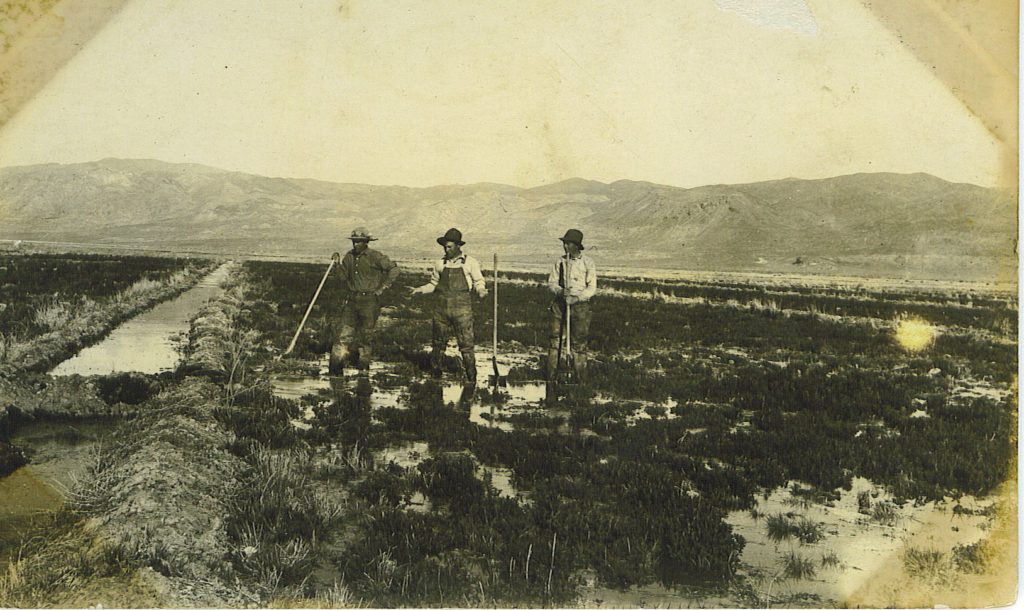
The Zarbock Brothers on their desert homestead near Stacy. Courtesy of Pam Zarbock Bell

In 1910, the Nevada Sugar Company of Fallon, Nevada came courting Honey Lake Valley farmers in the Standish district, as well those homesteaders on the east side of Honey Lake to plant sugar beets. One of the reasons, was the Nevada Sugar Company was in the midst of constructing a factory at Fallon.

As an enticement the company stated it would build a second factory at Standish if production was successful and needed transportation facilities. In 1912, with the announcement of Fernley & Lassen Railroad to be constructed through this section of the Honey Lake Valley solved that transportation issue.

It should be noted that in 1911 was the first irrigation season of the Standish Water Company’s pumping plant on Honey Lake’s eastern shore.  In that year they provided water for 1,000 acres that was planted in sugar beets, with the Nevada Sugar Company providing the seed. No  one locally knew anything about growing sugar beets, but they learned quickly. One of the biggest problems encountered  with beet production was the amount of labor required. The problem was compounded as there was a local labor shortage, and then there were those who did not want to work in beet fields. To alleviate the problem 25 Japanese laborers were brought in to assist. Their tenure was brief, even though it was reported they worked twice as fast at a cheaper price.

There were two other problems that ended the experiment. First there was not an adequate water supply and the beets were substandard. It was not only a problem locally, but in Fallon as well for in 1917 the beet factory there closed.

Never miss a story, click here to subscribe.