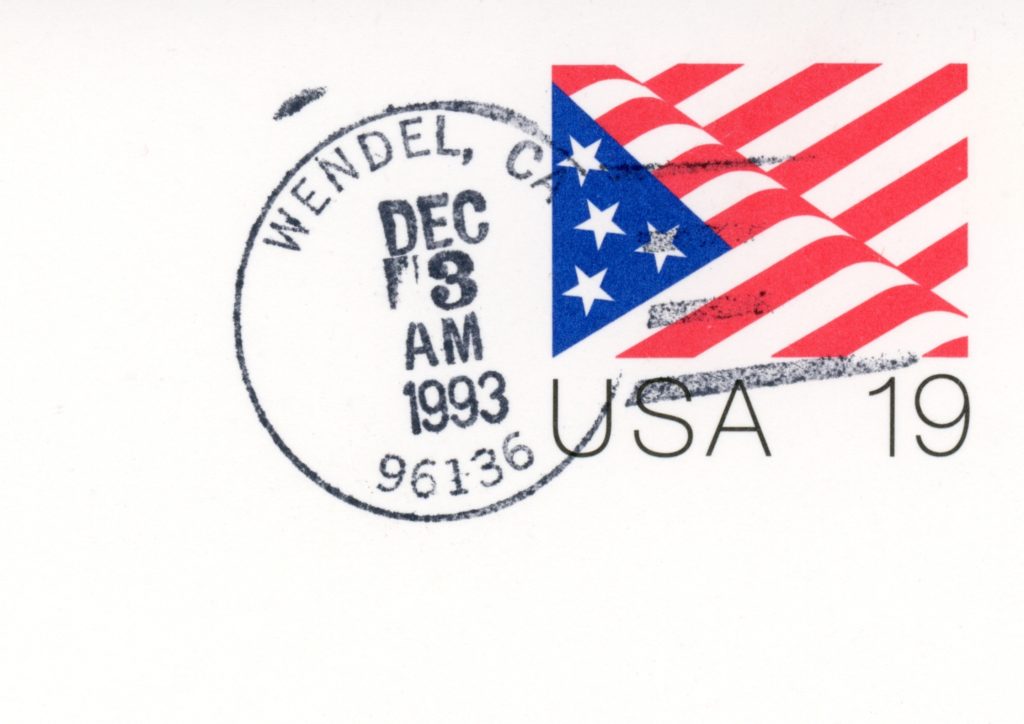
It was a busy day for folks to obtain the last cancellation mark.It was established on February 10, 1915 with Mrs. Gail H.V. James as postmaster. For the majority of the post office’s existence, Aldah Callahan Riesenman (1893-1978) served as postmaster and Florence Brandon succeeded her. The post office closed on December 3, 1993.
Westwood Boulevard, Los Angeles.Yes, there are two Westwoods in California. In the 1920s a subdivision known as Westwood Village was created in Los Angeles. It would soon become home of University of California, Los Angeles (UCLA). Because of UCLA’s medical center, some time’s a person’s place of death is listed at Westwood and some times the Lassen County Recorder will receive an inquiry for a death certificate for a person that died at the other Westwood.
The Milford Post Office and Store, 1909. Courtesy of Betty Barry DealA month ago, we examined the NCO Railroad proposed railroad line for the west side of the Honey Lake Valley that was abandoned. By 1905, hope was on the horizon with the Western Pacific Railroad when survey crews came through the community. The Western Pacific had looked at two sites to cross the Sierra—Chilcoot or Fredonyer. Alas, Chilcoot was selected. Enter the Red River Lumber Company who wanted a branch line from Doyle to their lumber town of Westwood. It became close to a reality after the Chilcoot Tunnel caught fire in May 1912, but almost does not count.
South side of the 700 block of Susanville’s Main Street, 1901The City of Susanville was incorporated in 1900, and with any new institution there was a lot of foundation work to be done. Take for instance speed limits. In 1902, the city passed an ordinance for speeding, the limit set an eight miles per hour whether motorized or not. However, an automobile had yet to grace the streets of Susanville. Bicycles were all are the rage then, some considered them a nuisance. In 1911, the city increased the speed limit to fifteen miles per hour, but it went ignored. On January 10, 1913 the Lassen Advocate noted: “Another man’s dog got under the wheel of a gasoline juggernaut this week. Sooner or later it will be somebody’s child that will fall victim to the speedomaniac’s disregard of the law. Then (maybe) our officers will recognize the difference between forty and twelve miles per hour.”
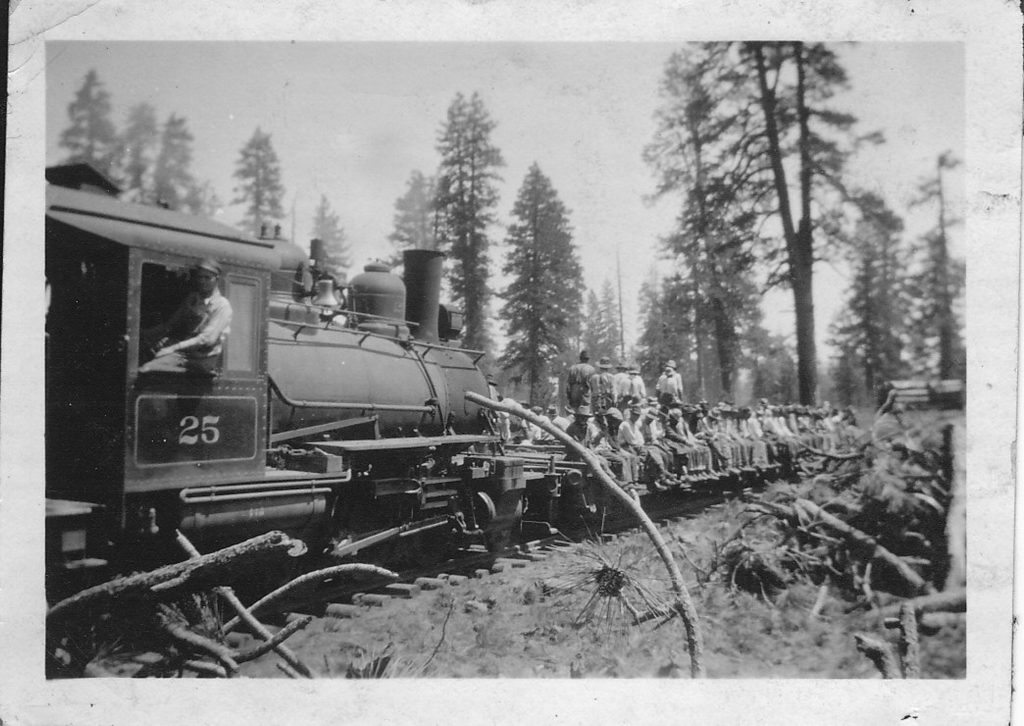
The Camp Lasco commute train. Courtesy of Ron LinebargerTo wrap of the long holiday weekend I share a couple of logging photographs of the Lassen Lumber & Box Company that are provided by Ron Linebarger . Lassen Lumber’s main logging camp, was that of Camp Lasco at the base of Peg leg Mountain that was more or less shuttered in 1929.
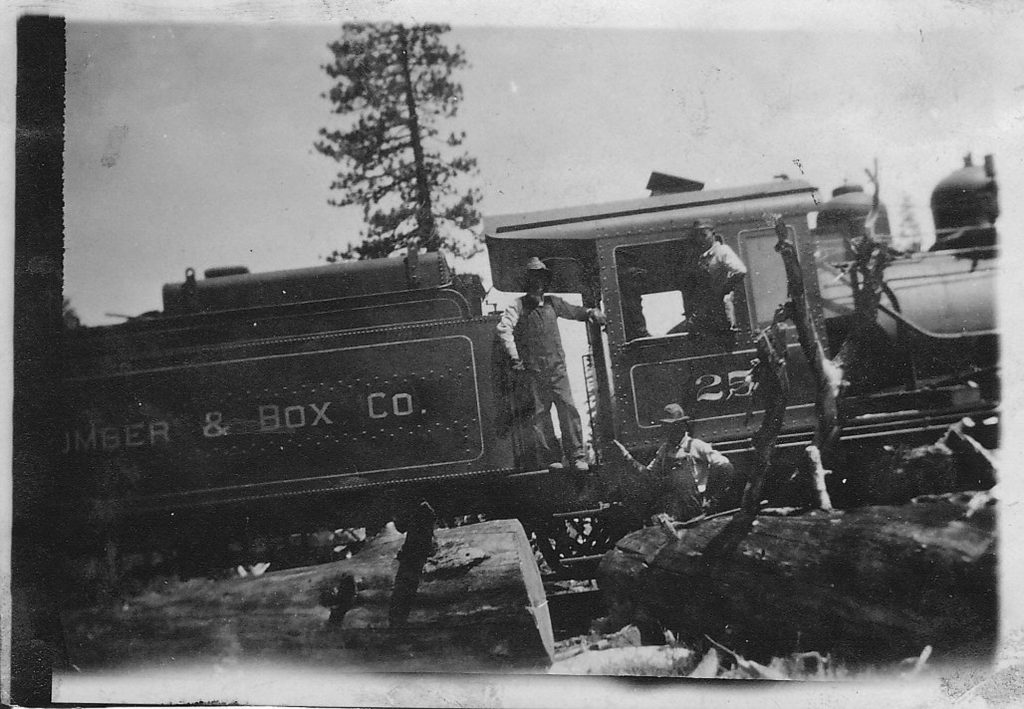
Donate! Another shot of the No. 25. Courtesy of Ron Linebarger
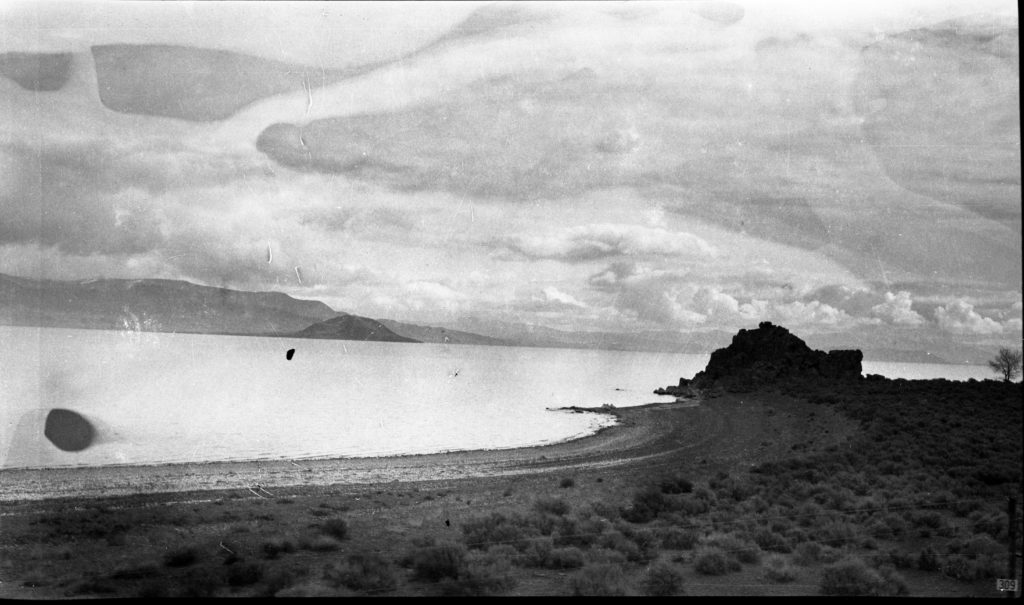
Pyramid Lake, 1915. Courtesy of the Otto Kratzer Collection.Since it is a long holiday weekend, and many might have short attention spans I will keep the post brief. While sifting through the Otto Kratzer photograph collection who worked for a brief time for the Red River Lumber Company from February to May 1915 was this picture of Pyramid Lake. It was taken from the train while Kratzer was enroute to Westwood. While it may not look like much, those familiar with the lake will see the obvious as to how much the lake has dropped in the last 102 years.
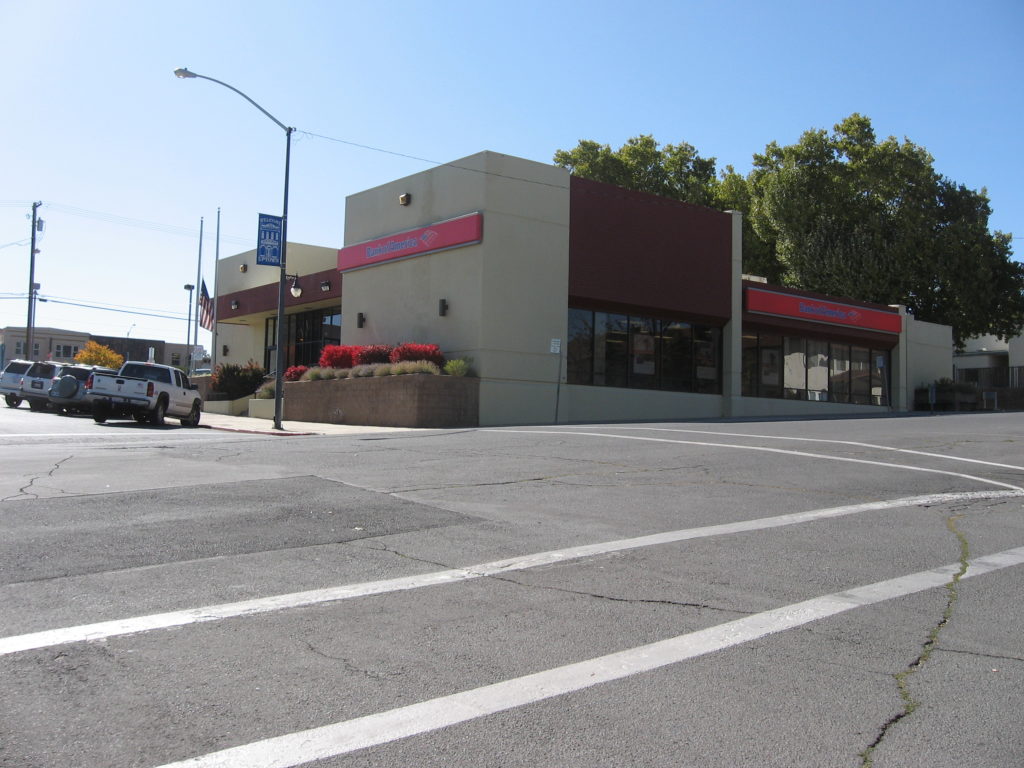
50 North Gay Street as it appeared in 1919. Courtesy of Leona F. ByarsThe Italianate home was moved to North Roop Street in 1979 to make way for the current Bank of America building. What will become of this corner location now that the bank branch has closed is anyone’s guess.50 North Gay Street, October 12, 2017.
Inspiration Point, 1930s.In 1930, the City of Susanville acquired Inspiration Point to become its first municipal park. However, with the nation’s financial crisis, city did not have any spare funds to make improvements. Some relief would come the federal government’s various relief programs, such as the Civil Works Administration. In an effort to put people to work, a project required that sixty-five percent of it be devoted to labor. Under the guidance of B.R. Zimmerman was in charge of crew funded by the C.W.A. to make improvements to Inspiration. This included graveling the road, clearing debris and constructing a retaining with seating arrangements.
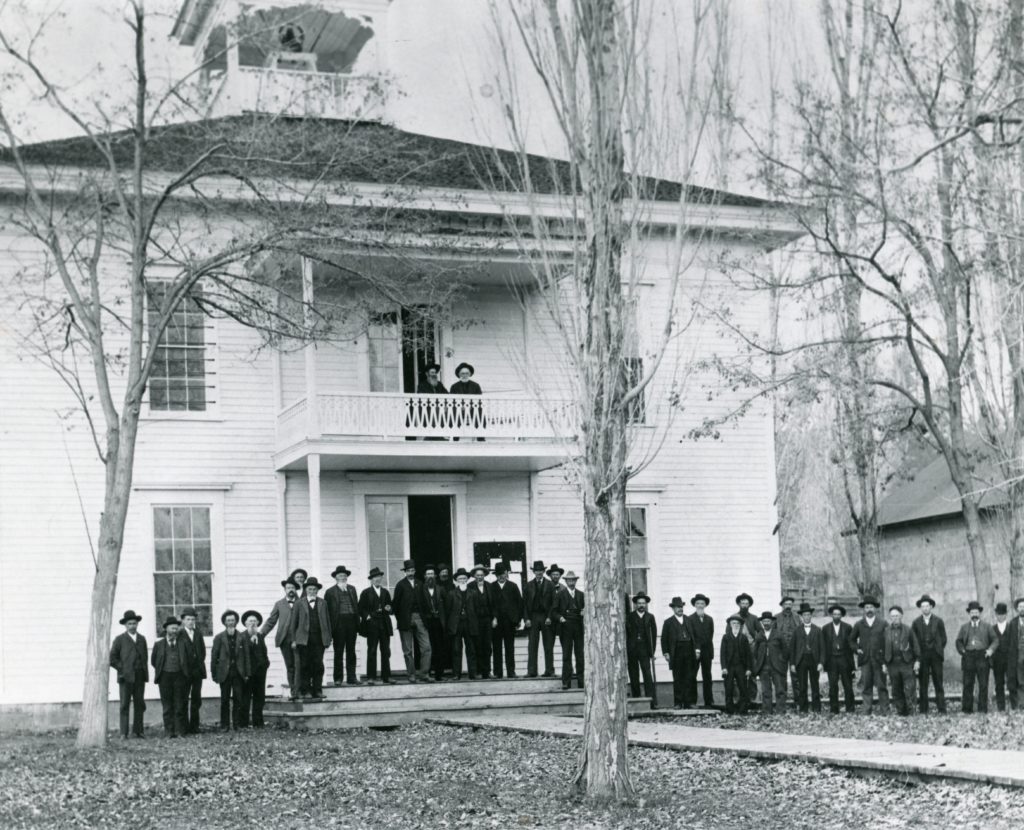
Lassen County Courthouse, circa 1890s. Assembled are county officials, along with the grand jury.Those who attended the Centennial Cemetery Tour learned that the first courthouse was held on rented property known as the Magnolia Saloon. In 1867, Henry C. Stockton, one of the original County Commissioners (now Supervisors) voted to award the contract to build the first courthouse to his best friend William Williams for $9,850. Now, we know why public officials file conflict of interest statements. While the amount may seem paltry in today’s dollars, it was a tidy sum then. Money was scarce while the country slowly recovered from the effects of the nation’s Civil War.
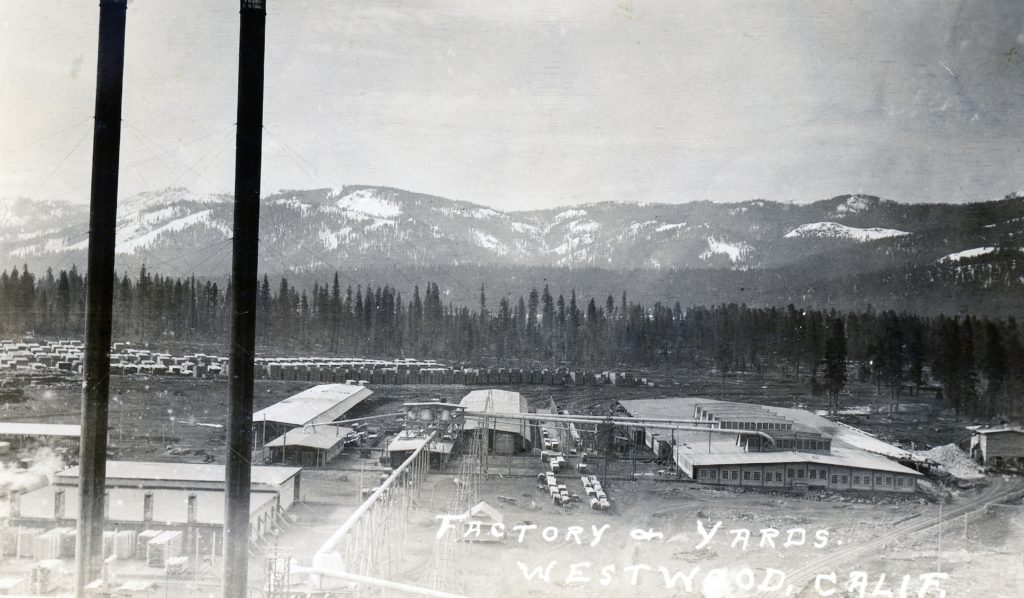
Red River Lumber Company’s Westwood Box Factory, 1915.One hundred years ago, the major component of the lumber mills was the box factory. It is rather a misnomer, since what was actually manufactured was box shook. Box shook were the various sized wooden slats that are used to make wooden crates, which was how the nation’s fruits and vegetables were then shipped. The shook was shipped to packing houses were they were assembled. To understand the enormity the amount of lumber used to make these boxes, was that during the early 1930s of the great depression over half of lumber produced in the United States was used for box shook. It was not until after World War II that the cardboard box would slowly become the preferred shipping container. In the future we will explore this topic further.