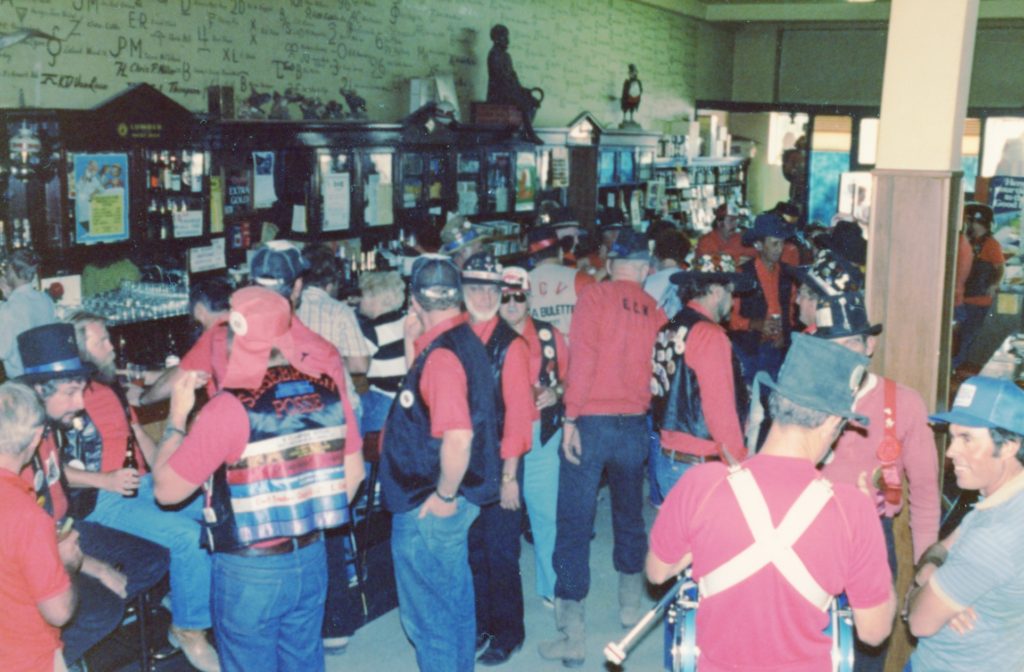
On July 5, 1935, President Roosevelt signed into law the Wagner Act, one of the most significant labor laws of the 20th century. It’s main beneficiary was union organizers. The Lassen County workforce eagerly adopted it. By 1940, barbers, bartenders, culinary workers and more had their own union. Take for instance the barbers of Susanville, Westwood, Greenville, Quincy and Portola organized a Journeyman’s Barbers Industrial Union of the AFL. In 1941, they adopted a universal fee of sixty-five cents for haircuts.
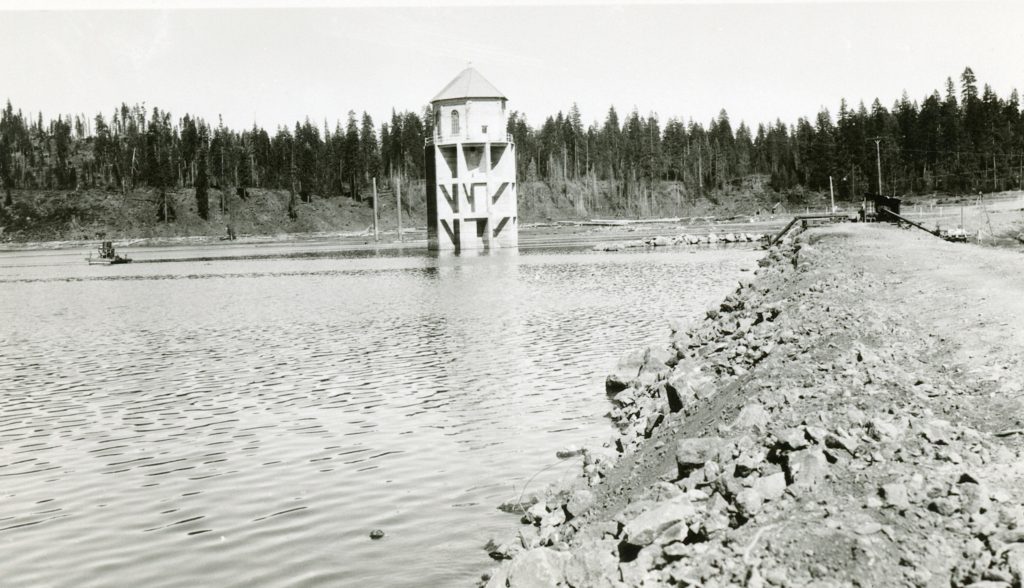
Used for storage today, what was this small structure originally used for? There were at least three in Lassen County, but this is the only one that remains today.
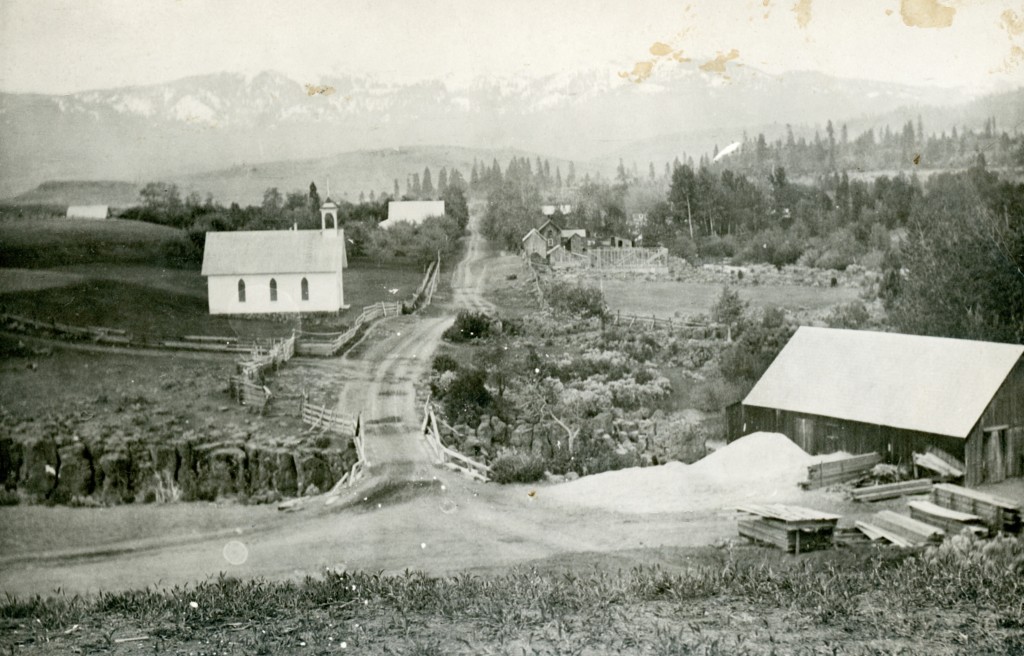
Main Street, Janesville, 1911. Courtesy of Betty Barry Deal
With the pending arrival of the Fernley & Lassen Railroad there was a movement to change many names of communities in the Honey Lake Valley. It was deemed there were too many towns ending with “ville.” Some thought the suffix carried a stigma of a small village. While the movement to change the name of Susanville failed, Janesville did not fare so well. On July 2, 1914, the post office there was renamed Lassen. This did not set well with many of the town’s residents. A petition was sent to the Postmaster General to restore the name, but it was denied. It led to confusion since the town was known as Janesville, but its mail designation was Lassen . In 1923, the residents once again petition the postal authorities to restore the name. It was granted and on September 22, 1923, the Lassen postal designation was dropped.
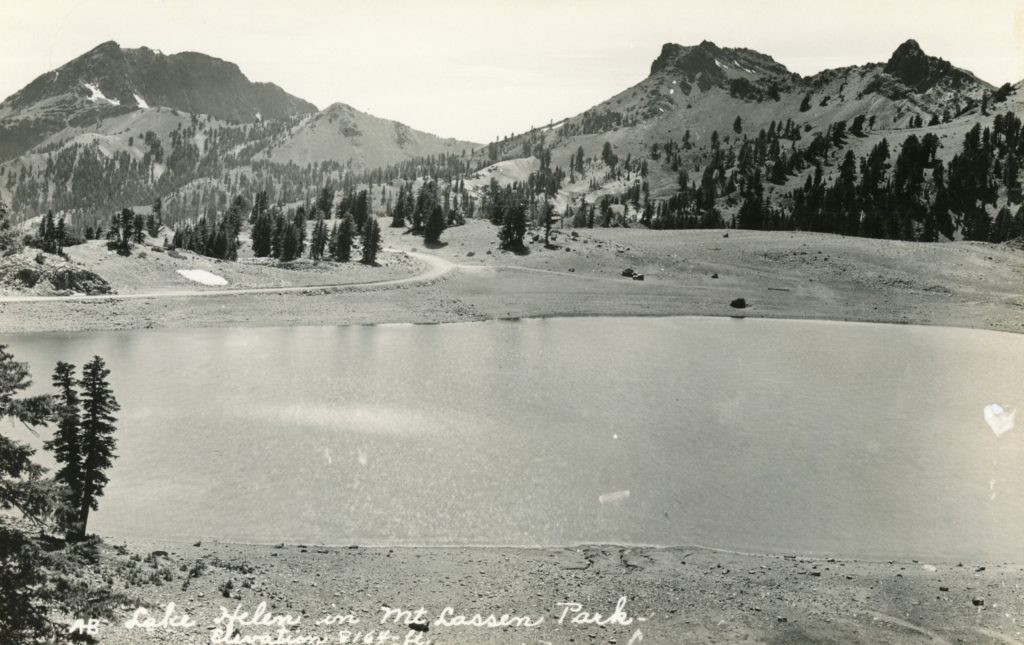
The Loop Highway, 1930. Courtesy of Margaret A. Purdy
Readers may recall earlier this year as to Highway 36 many designations. This is also the case for the Loop Highway through Lassen Volcanic National Park. Work first began in 1925 and it would take nearly six years to complete at a cost of nearly $688,000. The Loop Highway is also designated as State Highway 89 through the park. A little bit of trivia, it is known in the park at US 1.
Lassen County’s mining community of Hayden Hill went through many boom and bust cycles. The school closed for the last time in 1925 for lack of students. The fate of the school building is conflicted. On April 18, 1931, long time Hayden Hill resident J.S. Owens offered to purchase the two-story building from Lassen County for $125. It appears the county did not accept the offer, but it did raise awareness. On June 1, 1931 the county placed the school on the market. Fred Bunselmeier and Lloyd Walsh purchased it, but the records did not disclose how much they paid for it.
The movie theater in the Story Club, 1923. It was used by many religious denominations for services. Courtesy of Fruit Growers Supply Company.
Like so many religious denominations the Seventh-Day Adventist experienced a rocky road to establish itself in Susanville. It was not so much their faith, but when they first held meetings there in the early 1900s, the population of the community was a meager 1,000 inhabitants, including dogs and cats. For reasons, not known to me they flourished for a brief time and built a church on Main Street, between Hall and McDow Streets. The good times did not last long, and in 1919, the remaining members of the church petitioned the Lassen County Superior Court to sell the property. In their petition, they stated it had not been used for five years. It was granted. Otto Hisaw bought the church and converted it into a pool hall.
A decade later the Seventh-Day Adventist saw a resurgence in Susanville and on September 7, 1928, Elder J.H. McEchern of Reno organized the Susanville. For nearly a decade the congregation would meet in members homes. In 1939, they built a church on the corner of Cedar and Fifth Streets. In 1976, an opportunity arose and they purchased the Chapel of Memories on Johnstonville Road from Jim and Betty Stone which they still occupy. In 1983, the Adventists sold their old church to the Church of the Foursquare Gospel.
The lizard played an important symbolic role in Maidu mythology. A lengthy account of the lizard of the Big Meadows (Lake Almanor) Maidu was published in 1883, and is included in my book The Lake Almanor Story. There is a lizard rock designated by the Maidu, east of Lake Almanor.
The Minnesota Historical Society is a wonderful institution that is also the home to the T.B. Walker papers and archives of the Red River Lumber Company. On my last visit I ordered over 700 pages of documents. There are a lot of tidbits that unfortunately, I could not include in the Red River series. To do so, would have made for some awkward reading.
The T.B. Walker papers contains tremendous amount of correspondence between the family members. In T.B.’s correspondence there is a sense of frustration as he found himself in a Catch-22 situation. After all, the California operation was for his sons to operate on their own. While he provided his thoughts and opinions, most went largely ignored. In 1916, he lamented that mammoth mill at Westwood was a colossal mistake. It was his intention that Red River build several small mills throughout their vast timber holdings of Northern California.
600 Nevada Street, Susanville, circa 1911. Courtesy of Dick & Helen Harrison
A subscriber wanted to know what happened to the house located at 600 Nevada Street. It is somewhat an amusing tale. The house was built in 1895, and for many years it was the home of Elizabeth Bagin. In 1941, the residence was converted into apartments. In 2005, the last tenants to occupy the building were refugees from Hurricane Katrina. The City of Susanville had already acquired the building by then. In 2008, the building was placed on the City/County historic landmark register. The city would spend the next several years as to what to do with the structure. In the spring of 2014, the city had the building demolished.
In 1975, when the Lassen County Public Works Department proposed a new building on the north side of the courthouse that was shot down, the department did not give up. In the spring of 1976, a proposed Lassen County Master Plan was unveiled. A site of 10 acres had already been selected adjoining North Mesa Street. Construction would be done in phases with the ultimate goal of a county courthouse complex.
On September 7, 1976, the county board of supervisors approved the purchase of the Mesa Street property from the Paul Bunyan Lumber Company for $45,000. There was opposition with over 100 people in attendance against the measure. Susanville attorney, Joseph B. Harvey representing the Lassen County Tax Payers Association presented a petition signed by 889 registered voters opposing the purchase and that the matter be put to vote.
While the county went ahead with the purchase, no county complex would be constructed there.