Category Archives: History

GeoProduct’s Honey Lake Hydroponic Farms

A Lassen College brochure offering a degree in hydroponics.

With all the publicity generated by Hobo Wells Hydroponics it caught the attention of Alexander Black, of GeoProducts based in Oakland. With what seemed a blink of an eye, GeoProducts secured a lease to 3,000 acres directly across from Hobo Wells. GeoProducts named this venture Honey Lake Hydroponic Farms. Their technique would be somewhat similar to Hobo Wells, though they would use cold water containing 16 nutrients to feed the plants.

In 1977, GeoProducts constructed 30 greenhouses similar to Hobo Wells, which by way was dormant. On other hand, Black, like so many promoters of developments on the east side of the Honey Lake Valley, suffered from illusions of grandeur. According to Black the company would build a total of 150 greenhouses,. Next on the list a power plant, which would enable to build 700 greenhouses. Also in works, their own alfalfa ranch, and a alfalfa dehydration plant. Such a large scale operation would need housing for its employees, since Wendel with a mere population of 30 could not accommodate. With that in mind in 1979, plans were in the works for 200 home community, exclusively powered by geothermal energy.

Any visitor today to Wendel, knows that these proposals never materialized. Just by the early 1980s, like Hobo Wells, GeoProducts abandoned their operation. There seems to be one general consensus, one problem it was too costly to transport the tomatoes to a large outside market.

Support


Hobo Wells Hydroponics

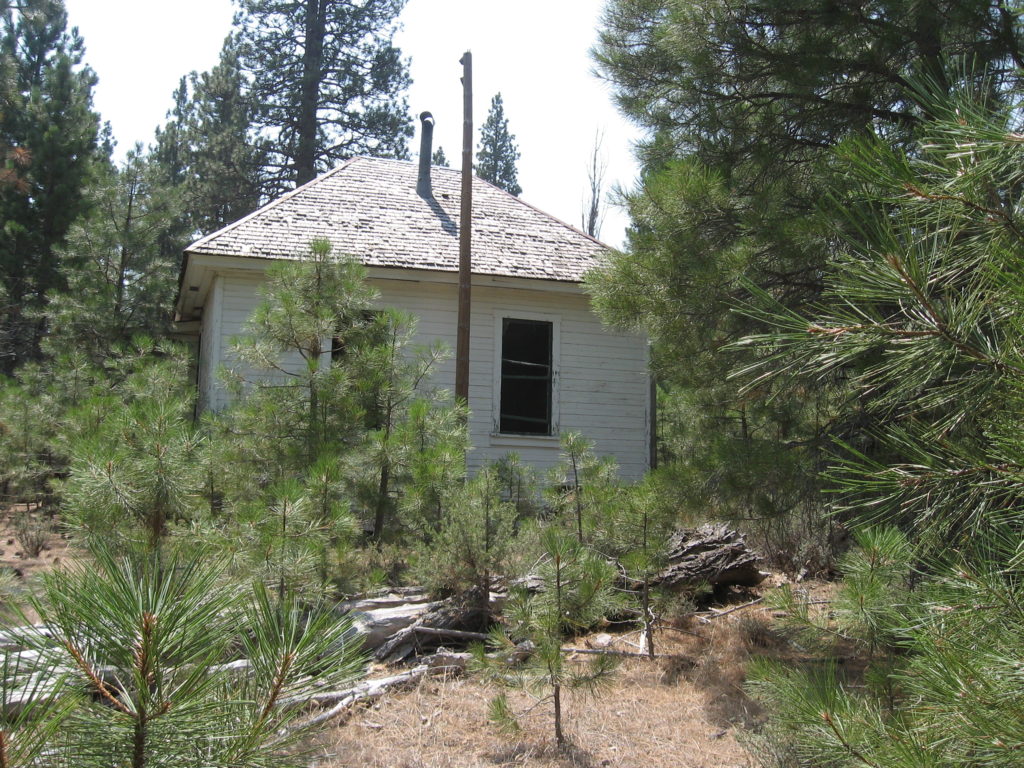
Hobo Wells greenhouses,May 1975

In 1971, an itinerant hunter from San Diego ventured into the wilds of Lassen County. One of the things he encountered was Wendel Hot Springs. Whatever the case may be this wandering hunter, Phil Gutman, had an epiphany.

The following year, Gutman did something extraordinary, that no one had done before. Gutman came up with the concept of Hydroponic farming utilizing the hot springs for there geothermal potential. On August 28, 1972 Hobo Wells Hydroponics, Inc. was finalized along with two other partners—Mark Souza and Gutman’s son, Andy. Hobo Wells entered into a long term lease with Mapes Ranch for the property. In August 1972, the first greenhouse was built, measuring 28 feet wide, 140 feet long shaped like a quonset hut covered with a translucent plastic. It was planted with 1200 tomato seedlings. The seeds are initially started peat moss, and set in pea gravel in nine-inch-deep beds.  Then several times a day the plants are watered with the necessary nutrients. They also experimented with other vegetables and florals as well, but the high quality tomatoes were in demand, thus the most profitable. Hobo Wells operation was not limited to a single growing season, as the geothermal heating allowed the operation to grow year round.

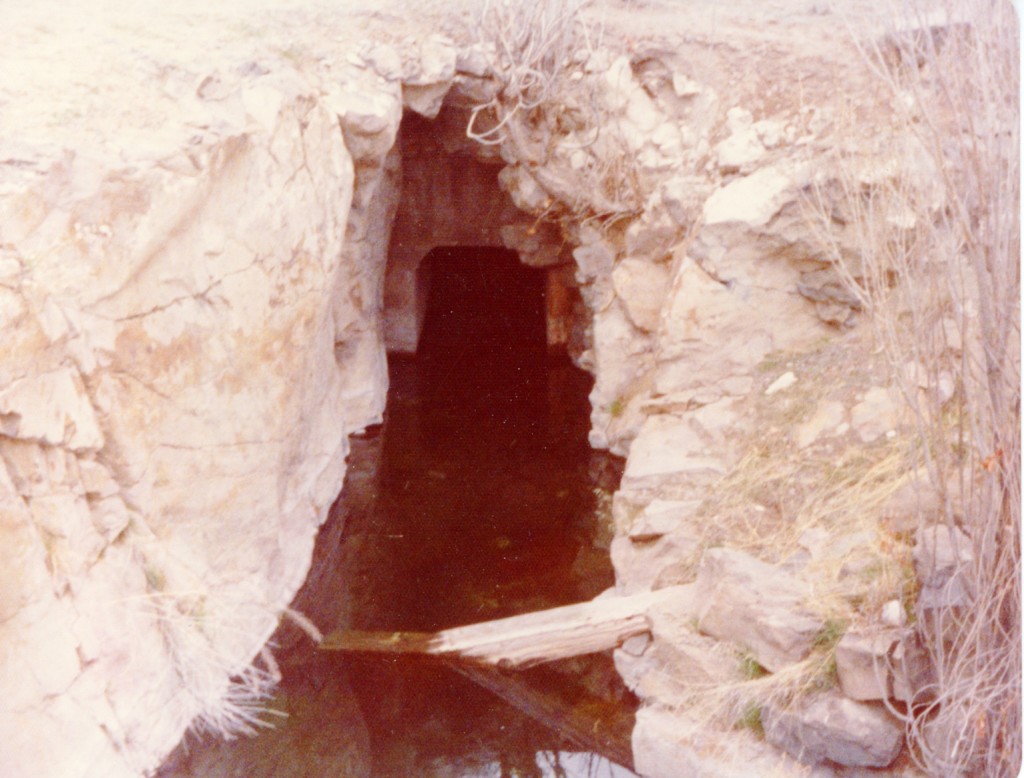
They constructed a concrete block around the spring to conserve heat. May 1975

Another aspect of this enterprise that is unique, was that Gutman had no background in agriculture or geothermal energy. As a matter of fact, he had only retired from the Army after twenty years of service.

In time, the operation expanded to six greenhouses. The goal was to raise 40,000 pounds of vine ripened tomatoes per greenhouse, per year.

Hobo Wells received extensive press coverage, locally, state and nationwide. In addition, he designed an taught a two-year course in Aquiculture at Lassen Community College, where the students received first hand training at Wendel. All that attention, brought in a competitor across the road by the name of GeoProducts.

Something happened that changed the operations. First there was the sale of the Mapes Ranch in 1976. Then for reasons unknown, Gutmans and Souza were no longer on the scene in 1977 and the greenhouses were idled.  In 1979, John DeLapp of Standish had taken over Hobo Wells. By the early 1980s the operation was abandoned.

Tomorrow: GeoProduct’s Honey Lake Hydroponic Farms

Support


Liegan, Lassen County

Liegan bill368

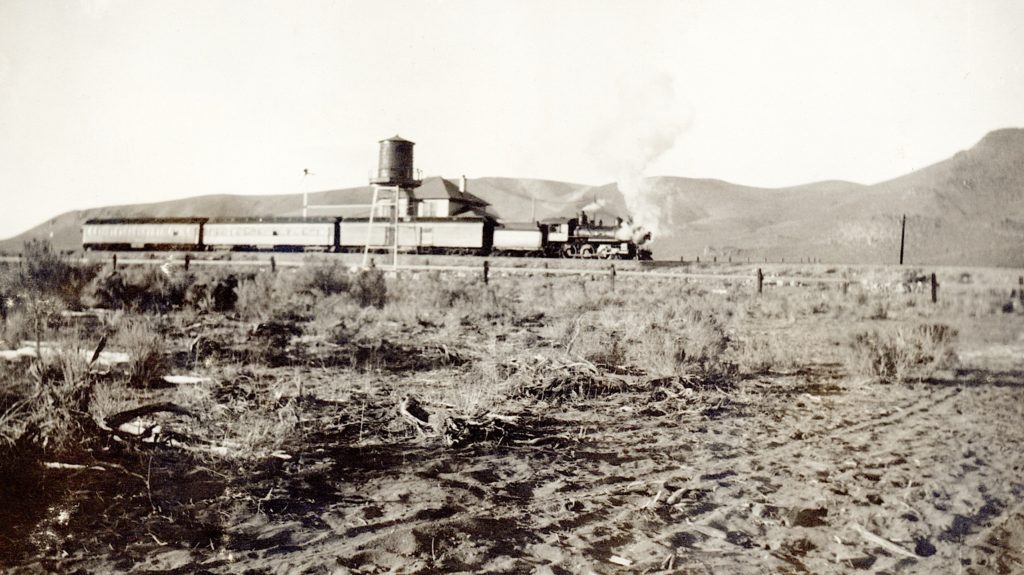
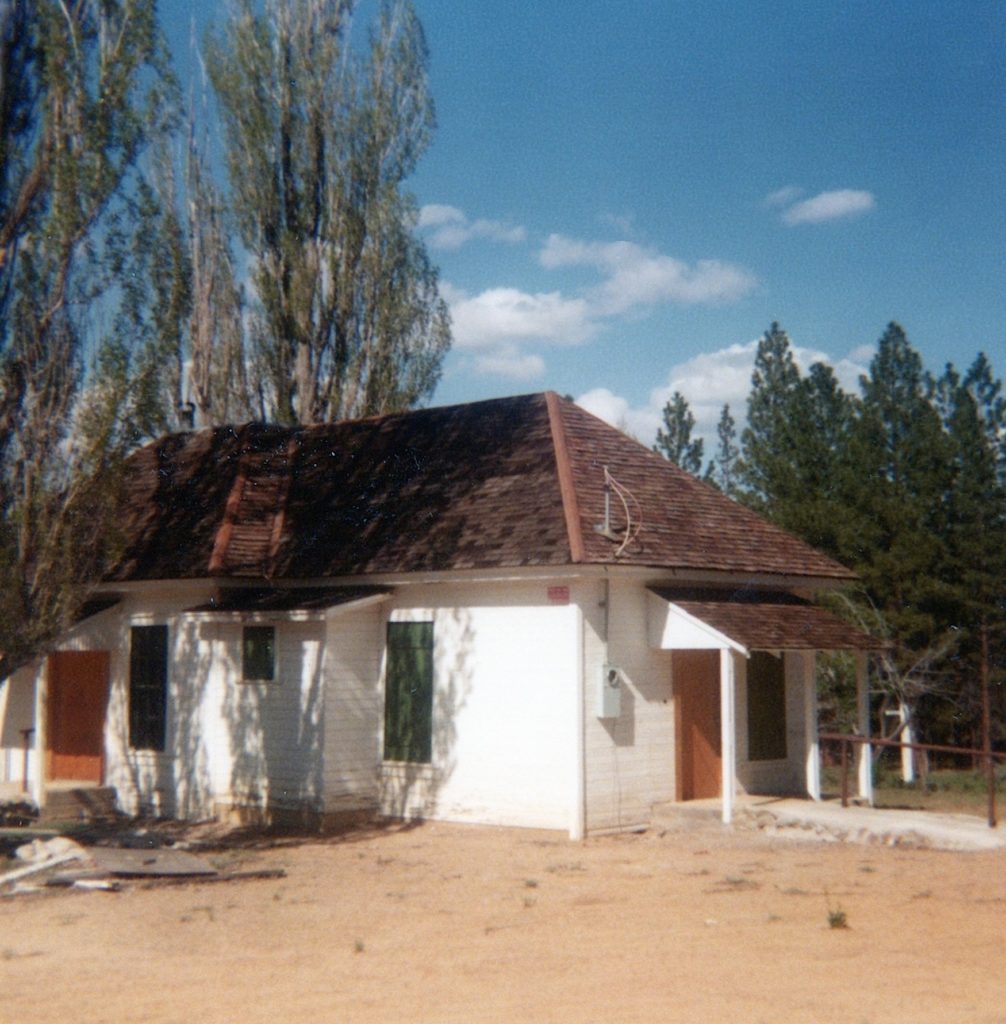
Liegan was a  Nevada-California-Oregon Railway (NCO) station that was located a bit north and east of present day Herlong.  On September 10, 1888 it became the new terminus for the railroad. It was a desolate outpost to say the least, surrounded by miles and miles of sagebrush, but not a single living soul in the immediate region. Of course, the decision of the NCO to bypass the west side of Honey Lake for the east drew lots of criticism, a topic for another time. Its location was too remote for the railroad to generate any freight traffic. One of its biggest claim to fame occurred on January 1, 1890 when numerous sight seers from Reno ventured there to view the eclipse of the sun. By that summer, the railroad extended its line farther north to Amedee, which quickly overshadowed Liegan. In the fall of 1890, Elmer Koken who traveled to Amedee on the NCO remarked that the Liegan station consisted of a box car. On April 9, 1891, the Liegan Post Office closed after an existence of eight months.

A printed copy of my news release when I taught a history class at Lassen College. However, the photograph was not returned.

There was a glimmer of hope and Liegan would be  revived in 1909-10 by the railroad. The Standish Water Company had just built a pumping plant on Honey Lake, near there with the intention to reclaim the sagebrush plain into a major sugar beet production region. That failed, and Liegan’s hopes too. It is interesting that a 1915 soil survey designates the site as Italy.

Subscribe today and tomorrow enjoy with daily notifications.


A Once Upon a Time Ritual

Plowing the Paul Bunyan Road, April 7, 1948—Fred Lendman

In the last century when lumber was king in the Lassen region there was the annual ritual each spring to open logging railroads and/or logging roads each spring in preparation for that season’s logging operations.

Catepillar Tractor representatives were ever present since the logging industry was one of its biggest clients. They also captured many activities on film of their equipment, such as above.  The company provided the following description: “One of two Caterpillar Diesel D7 Tractors with No 7S Bulldozer opening the main logging road near Susanville, California. 1 to 2 1/2 of snow—15 miles of road to clear. Will take the two Tractors three days to do the job. Will produce 25 million bd. ft. of lumber—90% ponderosa pine.”

Spread the word, encourage a friend to subscribe.


Where Are We—Amedee Mountains

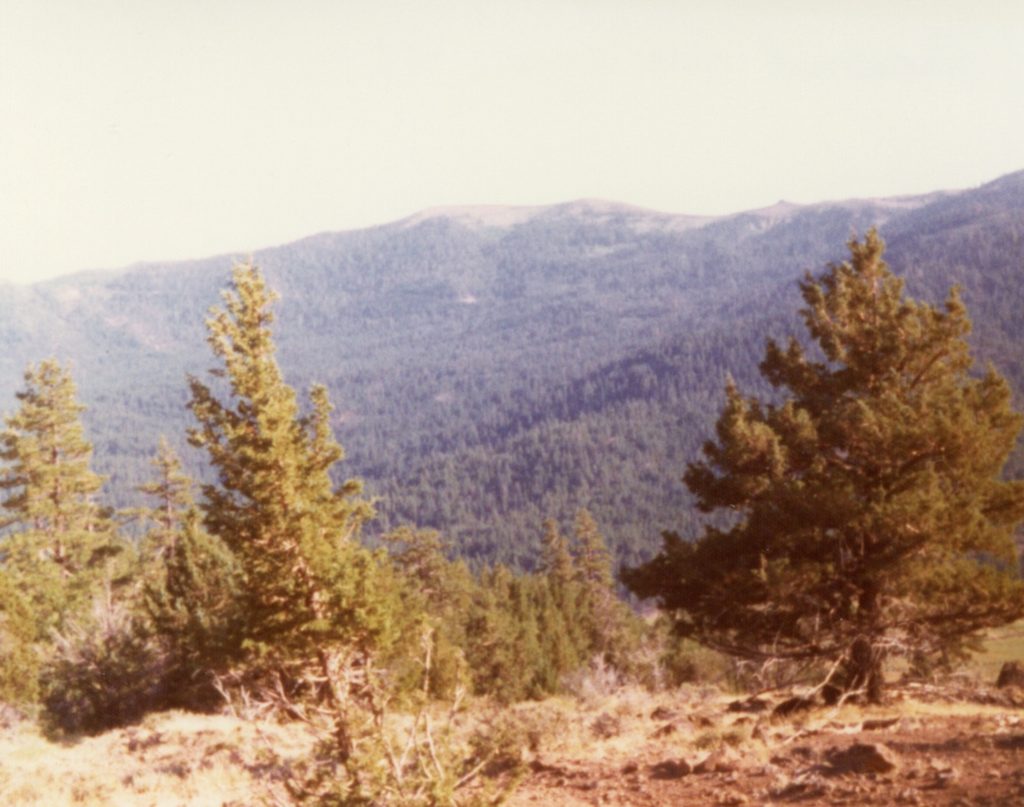
Amedee Mountains, as seen from the former town of Amedee, January 26, 2020

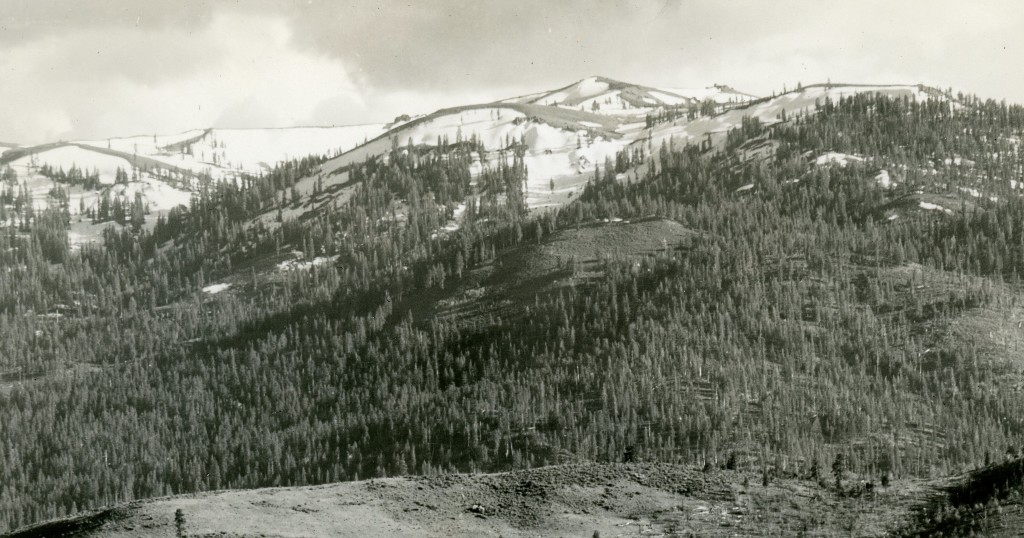
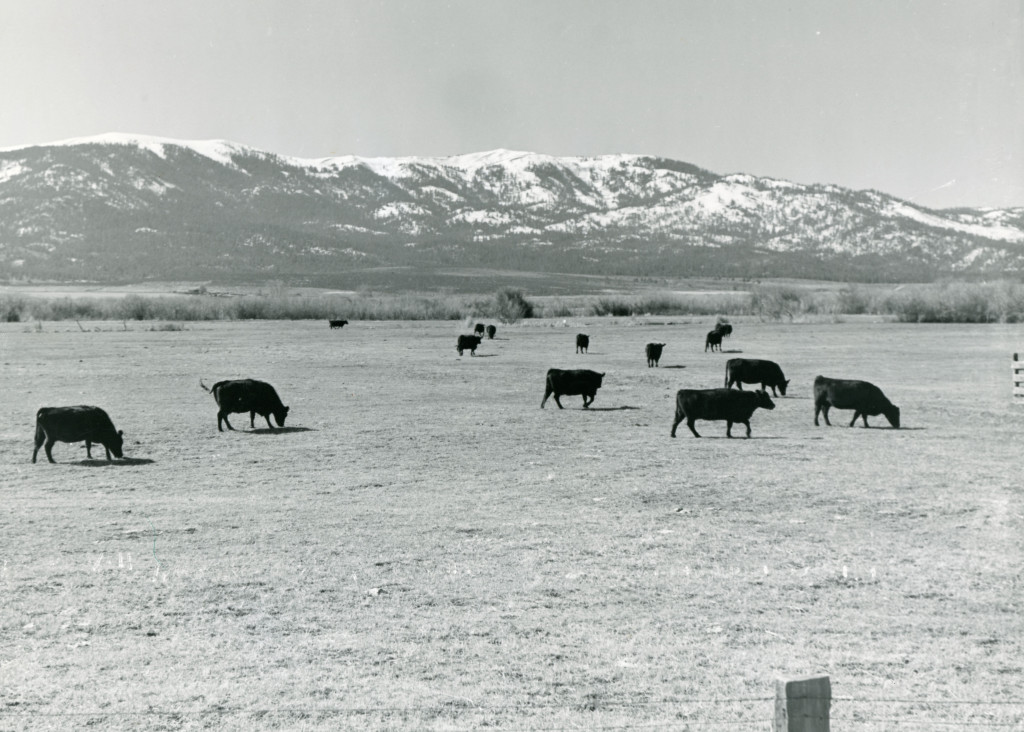
Amedee Mountains has a way of blending with the Skedaddle Mountains. Its best known feature is the archaeological site known as Tommy Tucker Cave. In 1907 gold was discovered on the mountain, causing a miniature gold rush where more prospectors could be found on the mountain, then gold. Whatever the case may be, there was enough activity to form the Hot Springs Mining District.

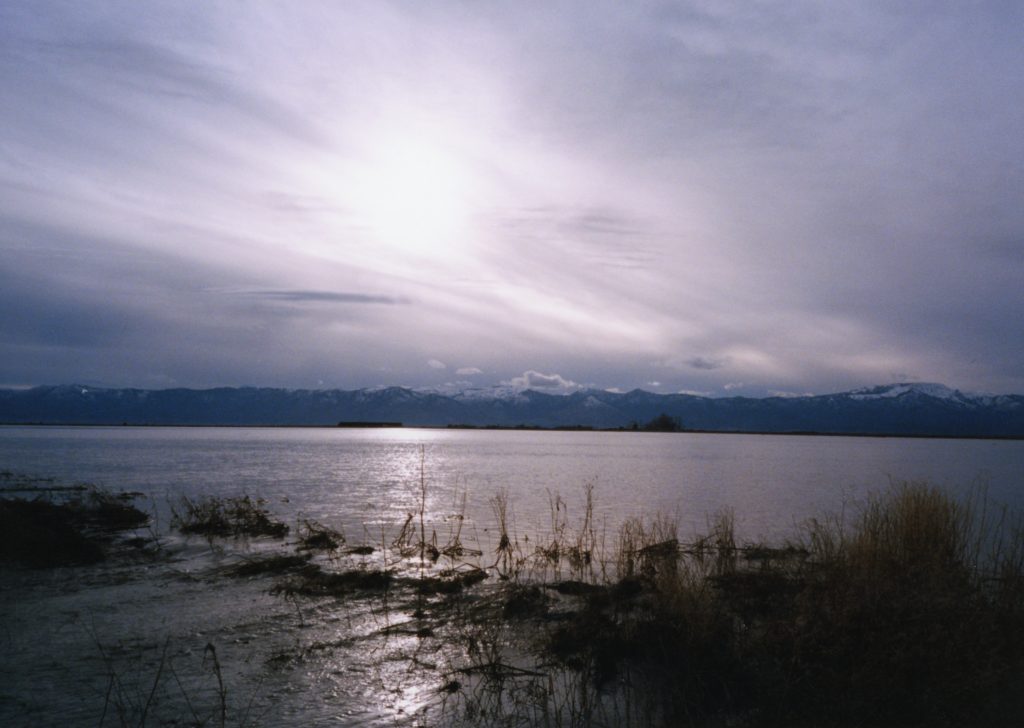
Honey Lake, with Amedee and Skedaddle Mountains in the background, 1997.

Support

609 Cottage Street, Susanville

Ted Friend, publisher of the Lassen Advocate, 609 Cottage Street, Susanville, June 1944–Life Magazine

There have only been three structures on this site. Considering that it is one block off Main Street, in the original historic core of the town. In 1914, the first building on the site was moved from up the street. It was the old abandoned Congregational Church. C.E. Emerson who had a three-story hotel, along with his mercantile store was just across the alley, the current site of the Hotel Mt. Lassen. Emerson used this building as a warehouse. In August 1915, it caught fire that destroyed the entire east end of the block including the Emerson Hotel, the Hyer Hotel and the Methodist Church.

Emerson’s loss was only partially insured and was never ever to rebuild the hotel. He did construct a smaller native stone building fronting Main Street, that many people recall the home of Millar Hardware. Across the alley, and next to the Methodist Church a native stone building was built as Emerson’s warehouse. In March 1934, the Emerson Estate sold the warehouse building to the Lassen Advocate newspaper. In January 1963, the Lassen Advocate relocated to 2119 Main Street.

In the early 1960s,  the Susanville Methodist Church needed additional space. A 1960 financial bequest by Elizabeth Lytle to the church’s building fund was a major boost. It was decided to purchase the Advocate building and build a second church building to house a Sunday School among other things. It progressed faster than anticipated and the native stone building was demolished in the fall of 1963. The church’s Fellowship Hall  was built in 1967 containing a social hall, kitchen and classrooms. A dedication ceremony and the burning of the mortgage took place on May 12, 1978.

Donate

Stanford University & Lassen County

Map courtesy of Stanford University

One would not think that Stanford University and Lassen County would be associated in any way, but that was not case. Leland Stanford had many interests. In 1881 he purchased Rancho Bosquejo at Vina, Tehama County. It should be duly noted, that this was Peter Lassen’s original Spanish Land Grant.

On May 26, 1899, Stanford’s widow, Jane, purchased 2,114 acres west of Eagle Lake from Champlin and Boggs for $8,000. This allowed for additional summer pasture for the Vina property. Ten days after the purchase, Jane transferred the title to Stanford University. In February 1924, the University sold its Lassen County Summer Range to J.J. Flemining at $10 an acre.

Spread the word, and encourage a friend to subscribe

April Fools Day

Lassen County Map
Lassen County, 1907

It was on April 1, 1864 that Lassen County came into existence. It is interesting to note while Lassen County shares the date with April Fools, it is only fitting that its neighbor, the State of Nevada entered the union on Halloween, 1864. Also, notable on Halloween, Peter Lassen was born that day in 1800 in Denmark. It was on Valentine’s Day 1869, Susanville’s founder, and the first Provisional Governor of the Nevada Territory passed away from pneumonia at the age of 47.

Support