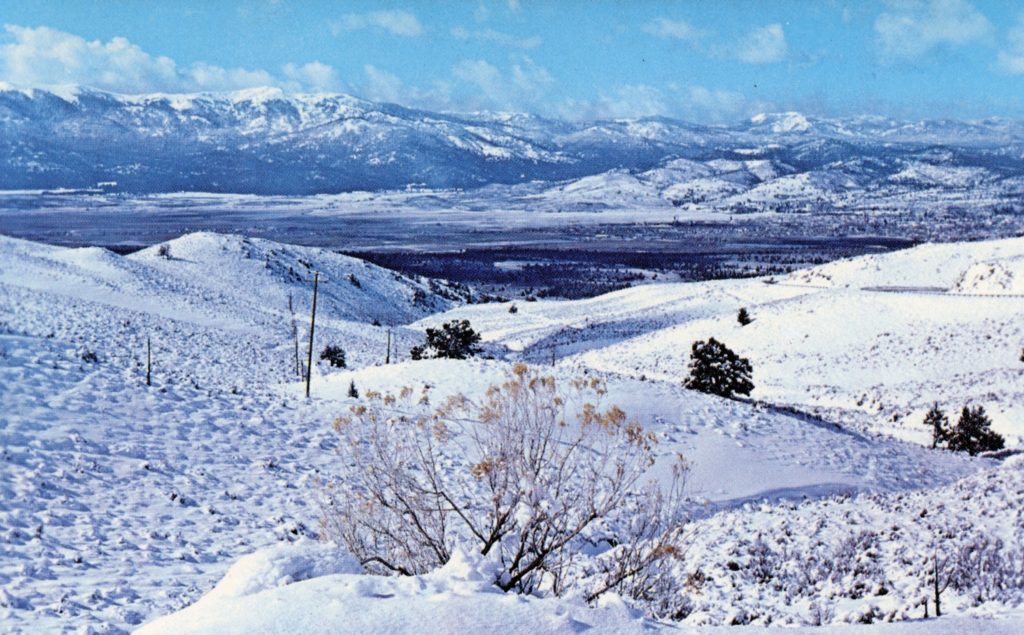
A view of Diamond Mountain from Antelope Grade, January 1975
Exactly who and when mountain was named, is not clear. By the early 1860s it was referred to Diamond Mountain. There are pockets of crystal quartz that can be found along the range, hence “diamond.”
In February 1910, Lassen County historian and retired school teacher, Asa M. Fairfield wanted to name the highest point on Diamond, Mount Roop. It went over like the proverbial “lead balloon.” Fairfield’s quest to have a feature named for Isaac Roop did not end. Fairfield consider Roop the father of Lassen County, while Peter Lassen received all the name recognition.
In 1921, Fairfield petitioned the United States Board of Geographical Names to rename Worley Mountain, to the west of Susanville. In 1922, the Board agreed and changed the name from Worley to Roop Mountain.
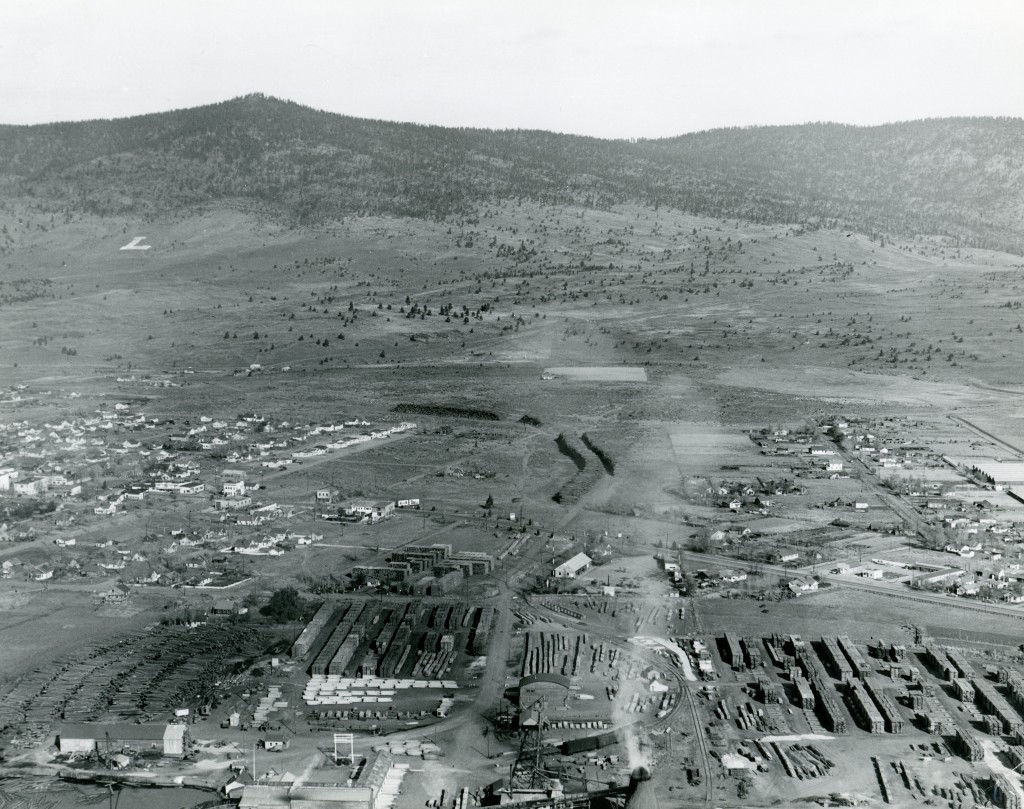
Susanville Peak, 1947. Courtesy of Fred Lendman
Personally, Susanville Peak would have been more fitting to the name designation. In Susanville’s historic core, one cannot see Roop/Worley Mountain. Yet, Susanville Peak is highly visible throughout the community. I still refer to Worley by its given name because when I was growing up that is what everyone referred to it as.
In 1913 the United States Government Land Office (GLO) intervened. California was on a major verge to overhaul water rights, yet that was of little concern to the GLO. At issue, at least with the GLO, was the State’s law was vague and failed to state whether water from a lake with no outlet could be appropriated. Until that issue was resolved, the GLO had no choice but to revoke Standish Water Company’s rights-of-way of its canals across federal lands. In essence the Company was forced to cease and desist, thereby forfieting revenue from water sales to recover its initial investment. This issue with the State was not to be resolved in a timely manner. In November 1914, the voters of California were presented with an initiative to overhaul the State’s water right system. It was approved and the Department of Water Resources was created. This new agency had complete control over the issuance of water appropriations, which previously was done at the county level. It was necessary reform, since the counties recorded water right claims but had no authority to determine concerning multiple applicants over a single water source. Continue reading Standish Water Company – Part II→
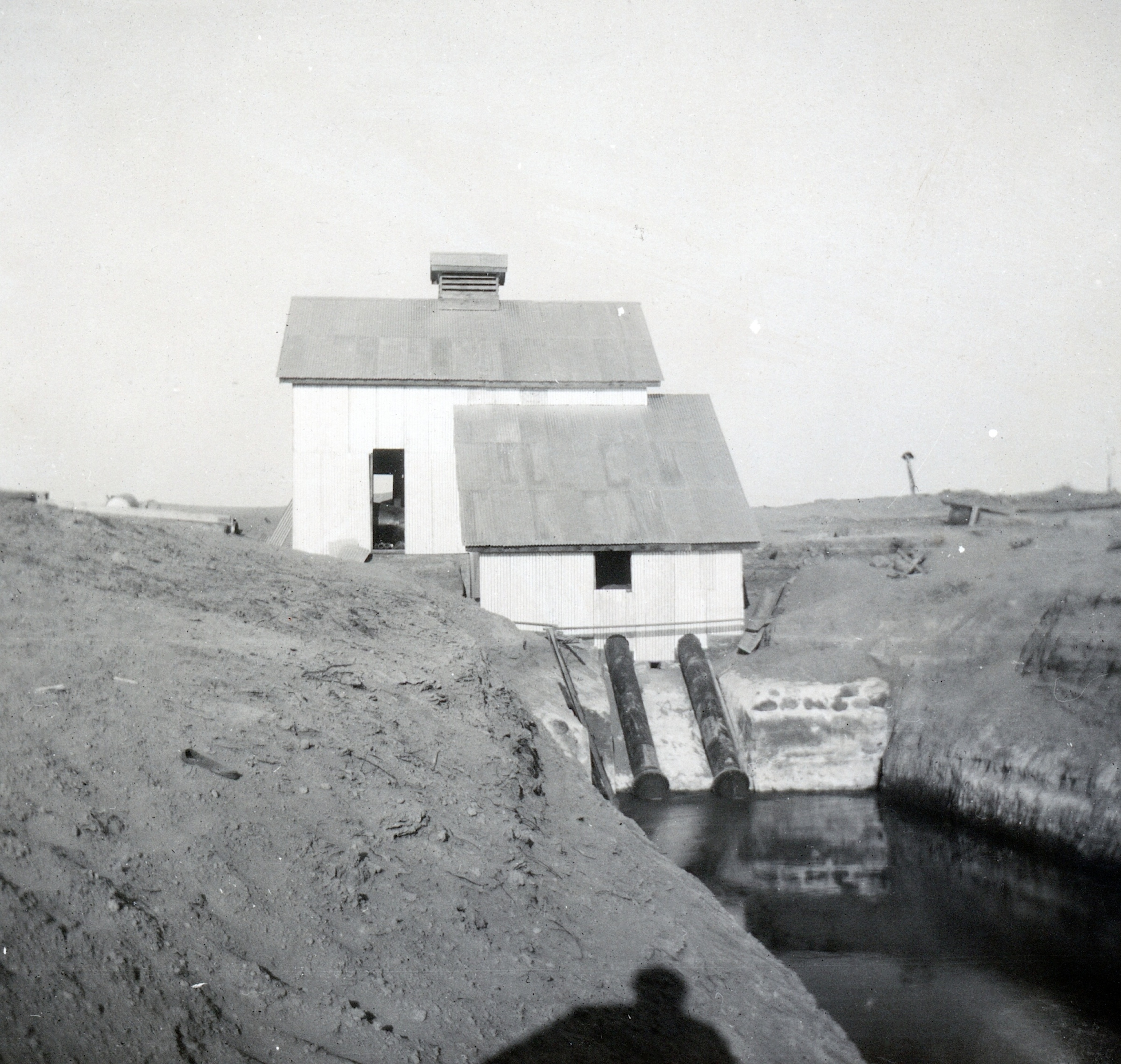
Standish Water Company’s pumping plant. C.R. Caudle collection
When Honey Lake is full it is an impressive body of water. There have been those over the years who thought it could be put towards a beneficial use. In 1878, Captain Charles Merrill came up with the first proposal to use water from the lake to irrigate the sagebrush lands on the lake’s eastern shore. Others, too, looked at lake’s potential for irrigation, but nothing materialized.
In the Standish district, two families who were joined by marriage—Hartson and Holmes—made plans to utilize the lake’s water for irrigation. In 1909, they formed the Standish Water Company. The Company was successful in attracting investors, one of whom was Carl Caudle. Caudle was a civil engineer, who had a homestead at Stacy on the east side of Honey Lake. Not only was Caudle instrumental in designing the project, he also invested $22,000.
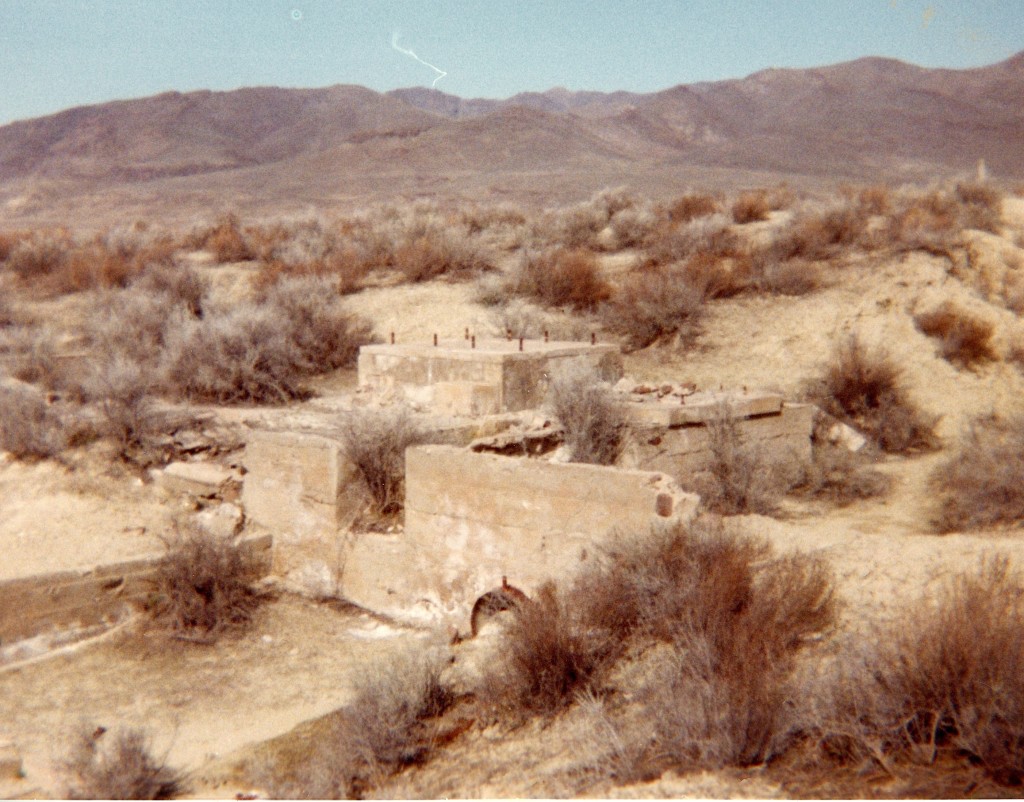
In April 1910, construction began on a pumping plant on the east shore of Honey Lake, about two miles south of Amedee. A 150 horsepower Fairbanks Morse engine with a 24-inch centrifugal pump powered the pump house. Eleven miles of canals were constructed in an effort to irrigate 4,000 acres.
On October 4, 1910, on one of those beautiful falls days the region is noted for, set the mood for the inauguration of the pumping plant. During the morning people began arriving from around the Honey Lake Valley to partake in the festivities. Of course, the customary local dignitaries were on hand to provide their accolades. Shortly after noon, the visitors were instructed to assemble along the banks of the main canal to anxiously watch awaited event of pumping water into the main canal. At one o’clock the whistle blew from the engine house, and within moments water burst through the pipes to fill the canal.
On the surface it appeared the Company was off to a successful start. In addition, Mother Nature contributed to their efforts, when a snowstorm in January 1911 dumped eight feet of snow there! Actually, the weather gods for the next several years were very kind to the east shore residents by providing higher than normal precipitation.
In the Company’s first year 1,000 acres had been planted with sugar beets, with a successful harvest. The following year was a success, too. This changed in 1913, in one of those bureaucratic snafus. The Standish Water Company sold water to individuals who were homesteading on federal lands. Once those individuals met the government’s requirements they could acquire the land for a nominal fee. Disputes occurred, usually from neighbors. In this particular instant, Thomas Philbin contested John Ramsey’s request for a final proof for his 160 acre homestead. The United States Government Land Office (GLO) investigated Philbin’s claim, which they dismissed. However, when it was learned Ramsey’s source of water supply was Honey Lake, it raised a concern.
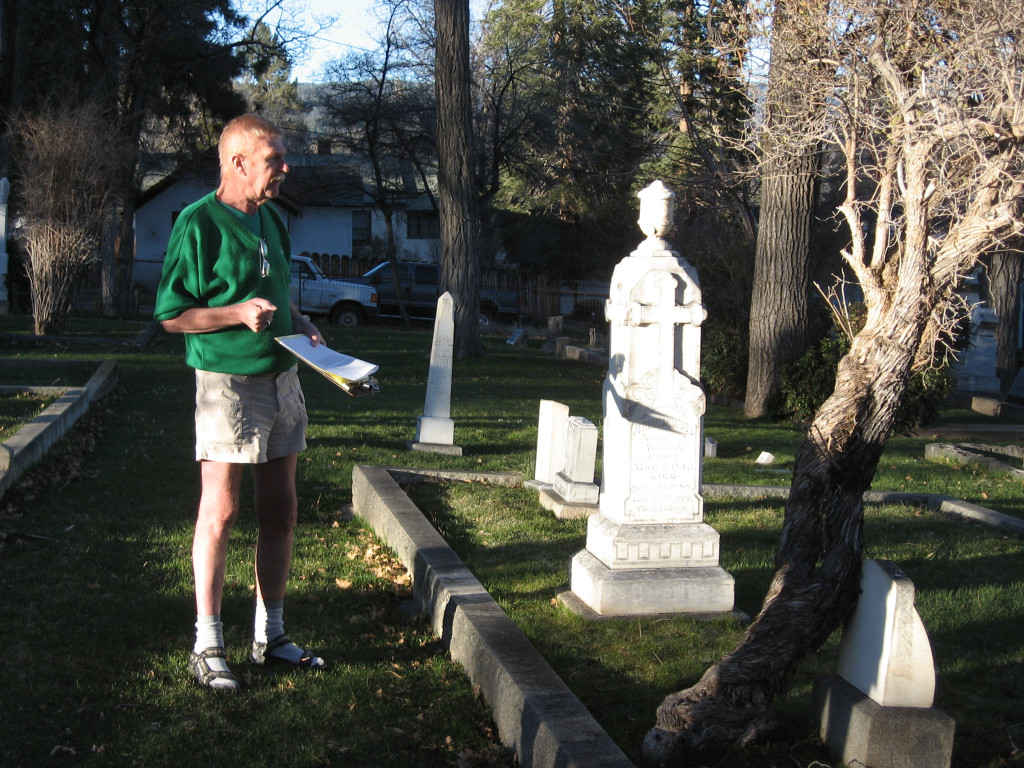
The grave of Jeremiah Wood at the Susanville Cemetery. March 17, 2016
Jeremiah Wood (1819-1889) was a true ‘49er arriving in California in that infamous year and spent most of his life mining in Nevada County. In the meantime, two of his sons, John and Denis came to Susanville in1872 and opened up a meat market/butcher business. In 1887, Jeremiah came to Susanville to spend his final years with his son Denis, who by the way expanded operations into ranching, and six generations later the family carries on the tradition. This is remarkable, after all the old saying goes the first generation makes it, the second uses it and the third loses it. Only 13 percent of family owned businesses make it past the third generation. On a final note, the Wood Ranch still uses the brand that Denis created back in 1875, the DX.
Jeremiah Wood was married to Anne Clifford and they had six children—five sons and one daughter. Denis was the eldest and after moving to Susanville spent the rest of his life there, and his descendants, too. John Clifford Wood, who spent some time in Susanville moved around to various points and was buried in San Francisco. Katie Wood married J.J O’Neill and spent most of her life in Nevada City, Thomas spent most of his life in Pacific Grove. James Hyatt was the only to migrate further away and spent most of his life The Dalles, Oregon. Jeremiah Vincent, the youngest, died in 1888 in Susanville at the age of 22.
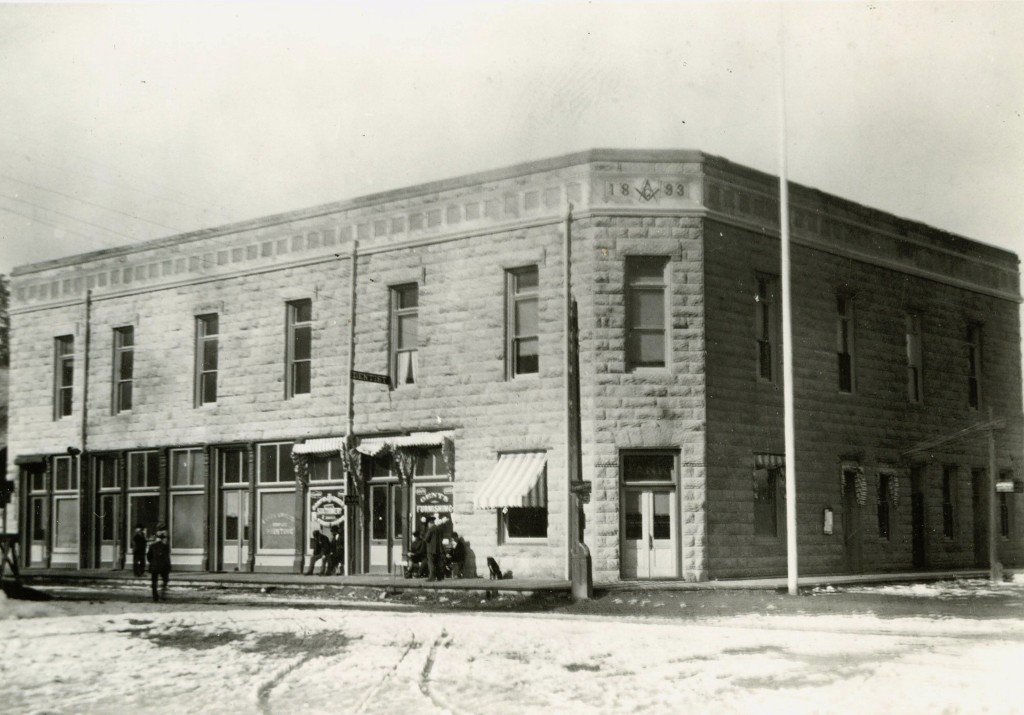
Knoch Building, circa 1900. Courtesy of Philip S. Hall
One of Susanville’s oldest commercial buildings, located at the intersection of Main and North Lassen Streets, has had a wide variety of occupants since it was built in 1893. Among the early occupants was the Susanville Post Office, Bank of Lassen County and the Government Land Office.
Susanville’s Knoch Building.
In 1913 and 1914 two major changes transpired. One was the addition of a third floor. On the Lassen Street side a smaller one story building was constructed to be known as the Knoch Annex.
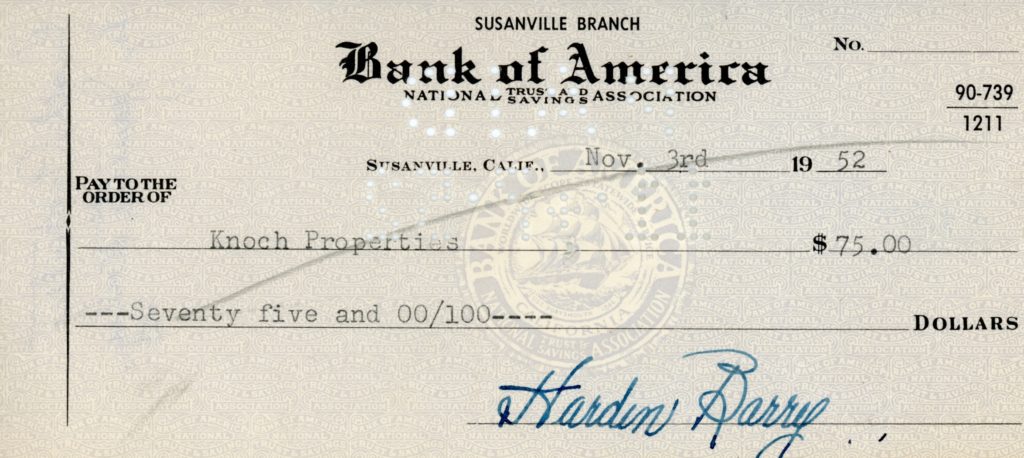
One of the occupants on the second floor of the Knoch, was well known local attorney, Hardin “Finn” Barry. In 1921, Finn passed the California Bar and opened his office in the Knoch. He may have been the longest tenant. Finn remained there at that location until his passing in 1969. Once his office was vacated, another attorney Dawson Arnoldrented that space, only to eventually relinquish it when he closed his practice and went to work full time as Lassen County Counsel.
Finn Barry’s rent check
Of course, it should be noted that on the ground floor was another long term tenant—Fred’s Barber Shop. Fred Borghi’s establishment was an old fashioned barber shop with a loyal clientele who would drop in to visit in between haircuts, to “shoot the breeze.”
A Fruit Growers Craveneer box, which resembles the standard wooden box—-FGSCo.
When one asks, I try to do the best to answer. A person thought Fruit Growers Supply Company was an odd name for a timber company. Fruit Growers is not a timber company per se, just a facet of its many duties. Fruit Growers only got into that line by accident.
First, some very brief background. In 1893, the Southern California citrus growers formed a marketing co-operative later to be known as the California Fruit Growers Exchange. The growers co-op proved to be a success. In 1906, discussions were held of forming a second co-operative—this one to purchase agriculture supplies such as fertilizers, sprays, tissue wraps, etc. Another component was the need for wooden boxes for the shipment of citrus. It should be duly the nation’s fruit and vegetables were shipped in wooden boxes and the conversion to cardboard did not occur until after World War II. At first, it was discussed to have two co-ops, one to handle supplies and the other for boxes. It was finally agreed that one co-op could do it all. In 1907, the growers organized the Fruit Growers Supply
Company.
In the same year, due to multiple circumstances, the price for wooden boxes nearly doubled to 23 cents a box. To make long story short Fruit Growers found some sawmills in far Northern California that could provide them with boxes for a reasonable price. These mills needed financial aid and Fruit Growers lent them money. One of these mills was the Northern California Lumber Company located at Hilt, Siskiyou County near the Oregon border. In 1910, the company defaulted on their loan and Fruit Growers took over the mill and thus its entrance into the timber industry. It is interesting to note the growers self financed the operation by a special assessment of three cents a box for a period of five years. The growers needed six million boxes annually, so that assessment raised a lot of money.
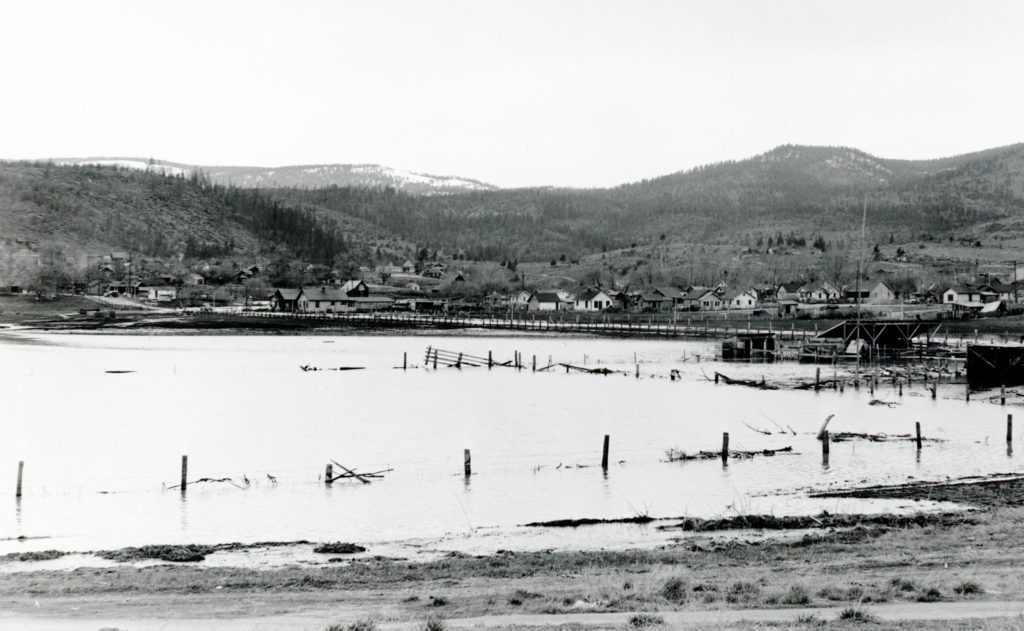
Piute Creek at Grand Avenue, April 1938–Betty B. Deal
On March 13, 1983, Susanville’s Memorial Park was once again flooded, transforming it into a lake. It was the third consecutive winter in which the event transpired. The perennial flooding of Piute Creek was due to an inadequate culvert under Main Street, which allowed the water to back up and flood the park. It was not until 1998, that the problem was rectified.
The Susanville Coca Cola Plant as it appeared in the 1950s, during the Lassen County Fair Parade. Courtesy of Margaret A. Purdy
Season residents may recall there was a time that Susanville had its very own Coca Cola Plant. The original bottling works was established around 1914 by H.W. “Pop” Wharton. It was located at 906 South Alley between South Weatherlow and Union Streets. The building, painted a chocolate brown, is still there and converted into apartments.
In 1923, Howard L. McMurphy took over the complete operation. It was an interesting and lucrative time to be in soda business with Prohibition. It saw not only the local production of Coca Cola, but a local line of the Mt. Lassen brand of sodas.
Sometime in the late 1920s a new plant was constructed at Main and S. Sacramento Streets. For many the star attraction was the large picture window on Main Street, where people on the street could watch the assembly line of the sodas being bottled.
In 1967, Phyllis McMurphy Beard dissolved the Susanville Coca Cola Plant and the local production of sodas ceased.
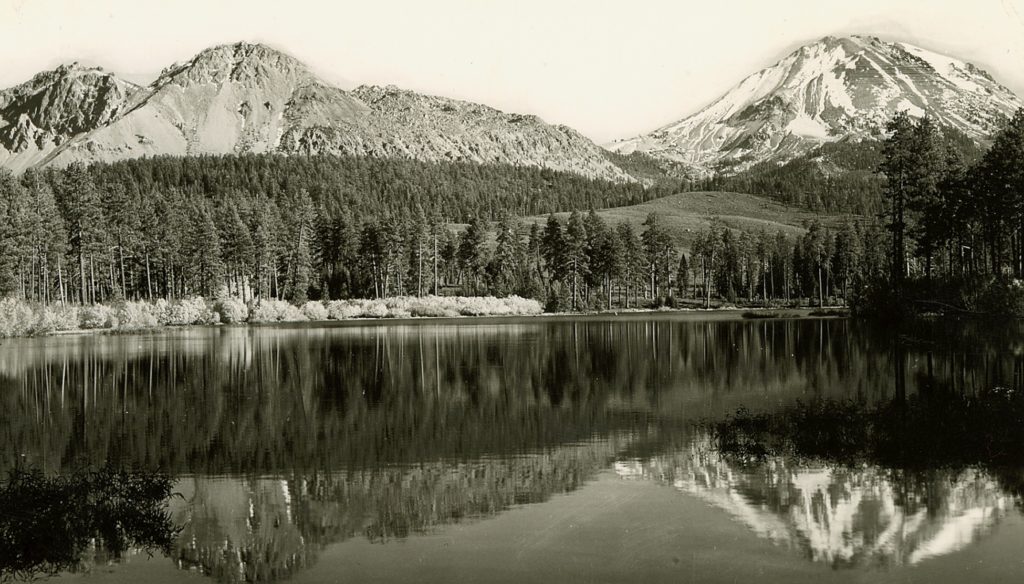
Many people may not be aware that when Lassen Volcanic National Park was established in 1916, it did not include Manzanita. Lake, however, it is one of the most photographed spots in the park, with Lassen Peak in the background.
In 1928, Lassen Park Superintendent L.W. Collins approached Pacific Gas & Electric who owned the lake for a possible sale. The lake had no potential for hydroelectric development, but Collins feared that PG&E would develop a resort, or create a subdivision for summer cabins. Nothing materialized.
In 1929, Congressman’s Harry L. Englebright’s park expansion bill that included Manzanita and nearby Reflection Lake was approved. In that same year, National Park Service Horace Albright met with PG&E officials concerning Manzanita. Albright informed the company that they did not have the funds to purchase the lake at this time, but he was able to persuade the company not to sell the property to developers. The company agreed. Negotiations continued and in 1931, the park purchased Manzanita Lake at the bargain price of $15,000.
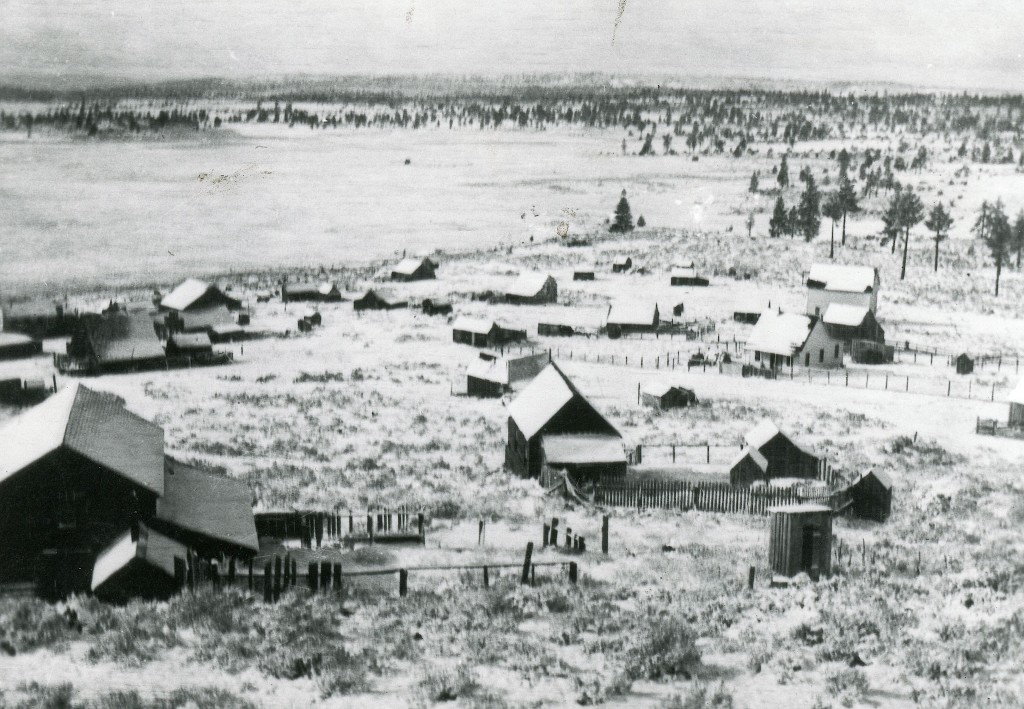
A view of Hayden Hill looking towards Silva Flat, 1909. Courtesy of Dallas & Joyce Snider
This 831-acre reservoir is located just south of Hayden Hill. It was so named for John Silva (1855-1904), a native of Portugal, who purchased 80acres near the base of the town from Lewis Hanson for $800. Silva was a sheep rancher by profession. When he died in 1904, he was buried in the Hayden Hill Cemetery.
In 1919 Homer Jack filed an application with the Government Land Office to construct a reservoir that would flood the flat with spring run off. It was not until 1924 when the reservoir was constructed to irrigate southeastern Big Valley, where the water is distributed by Juniper Creek.