Category Archives: History

A Susan River Pine Creek Proposal

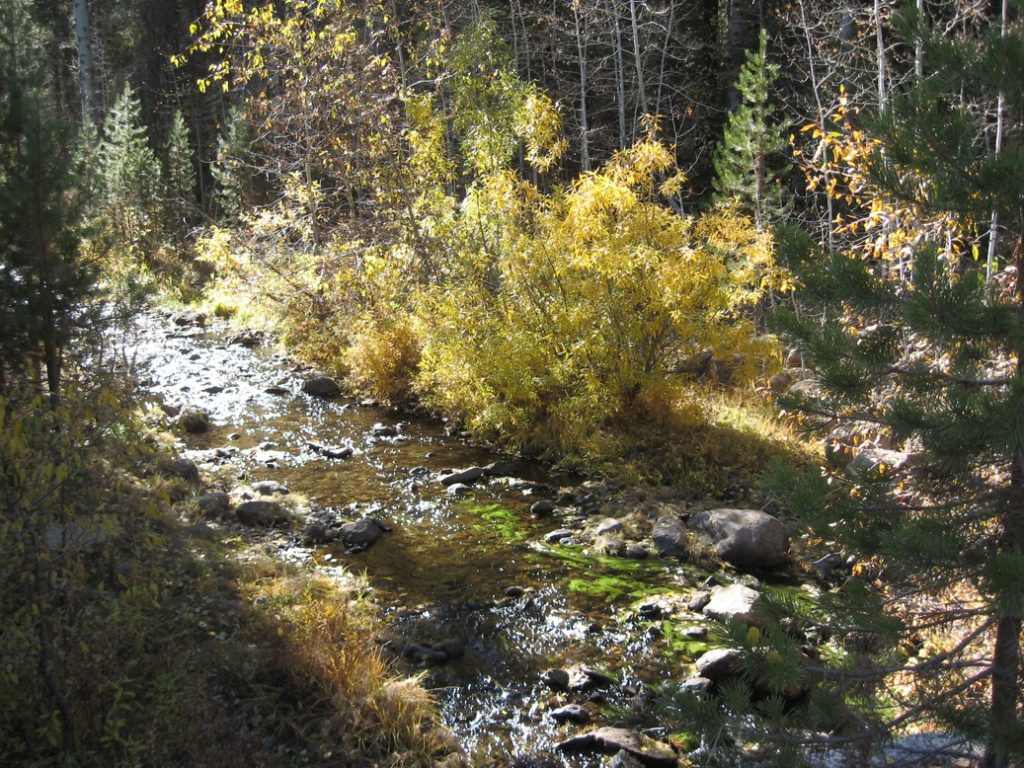
Upper Pine Creek, October 22, 2019

In the early 1900s there was a new battle as to who would gain control of Eagle Lake to tap it via a tunnel to irrigate the Honey Lake Valley. To be quite honest, attorneys benefited the most. While sifting through the archives, during a very cold and dry January, I came across a most unusual 1906 report about how the Lassen Willow Creek Water Company and its plans to exploit Eagle Lake. More about that in a future post. However, there was a certain aspect about water diversions that were never made public. If you happened to be named Martin, this story will particularly appeal to you.

In 1905, the Lassen Willow Creek Water Company was formed and unlike their predecessors they viewed Eagle Lake as a reservoir. In the fall of 1906, the company consulted with San Francisco Civil Engineer, Marsden Manson, who was involved with Hetch Hetchy. In Manson’s report of October 29, 1906 he wrote that to permanently increase the flow into Eagle Lake it would be necessary to divert portions of the headwaters of Susan River into Pine Creek. It was his opinion the run off of the Susan River is wasted flowing into Honey Lake. It would cost less than $10,000 to construct the diversion canal. Manson’s report was never made public, the water users of Susan River would never allow it.* Of course, this never materialized and by this time the Lassen Willow Creek Water Company was on the verge of imploding.

Support

*Thanks go to Hardin “Finn” Barry and his daughter, Betty Barry Deal for preserving this document, and so much more.
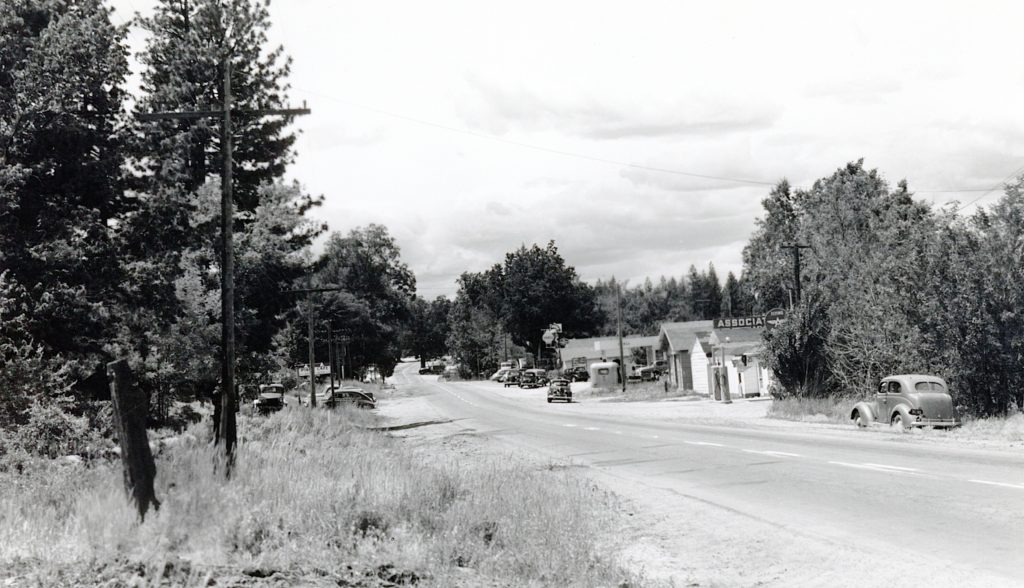
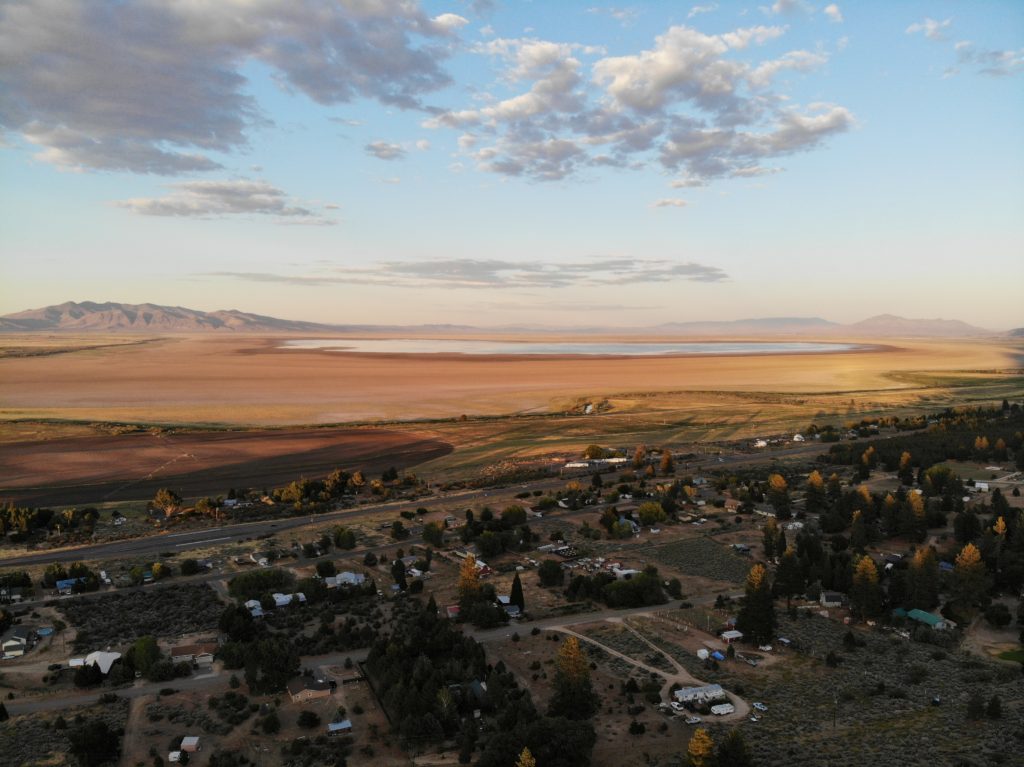
Janesville, 1970

Janesville, circa 1940

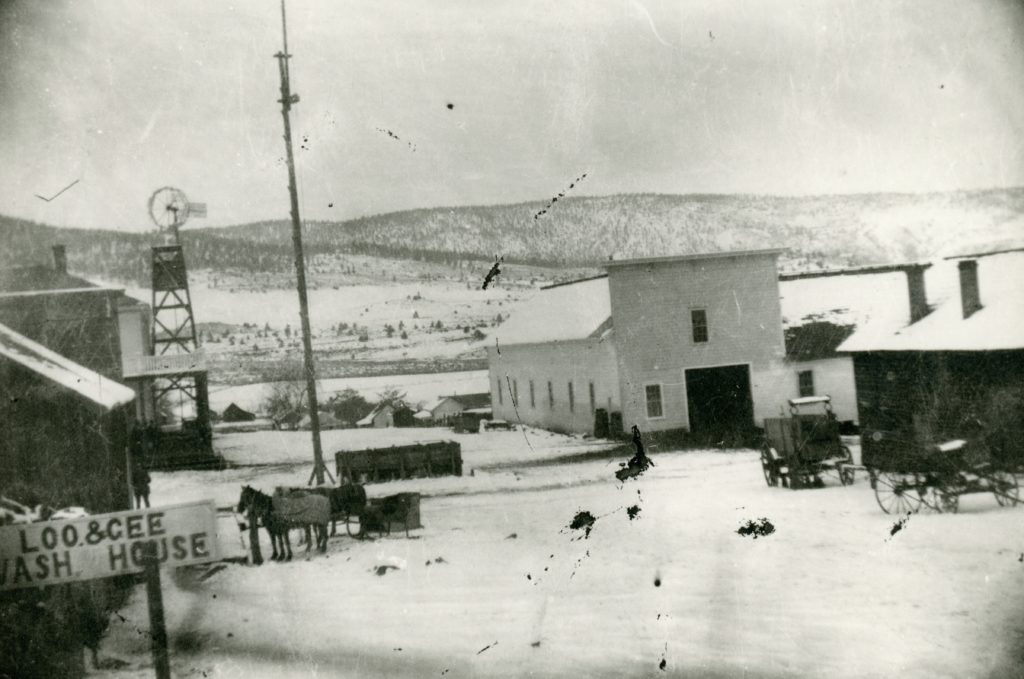
While assorting through old brochures, I came across one published in 1970 by the Susanville Junior Chamber of Commerce. Some might be interested in the description of Janesville.

“One of the fastest growing communities within the Honey Lake Valley, Janesville is a historic pioneer town twelve miles southeast of Susanville. Many new homes are appearing on the scene as this picturesque little town with its beautiful mountain background and bountiful forests attract more and more people to its bounds. A great abundance of ranches and meadow land lie in the foothills of this area. Plans are being made to make use of these natural facilities for recreational and community living. Janesville is easily accessible  to main highways. Small agricultural, cattle and poultry raising are part of the Janesville scene.”

Tim

The Mighty Ox

Shumway’s ox team in Susanville. To left seated on a horse, Susie Shumway. Standing Ben Shumway and seated in the wagon, Mahala Shumway—Carl Illig

Information about the use of oxen in the region is scant. On the other hand, many a pioneer settler who traveled overland to the west, used ox teams, because they could carry heavy loads and handle difficult terrain.

One of the earliest accounts of oxen used for freighting, occurred in November 1860. At that time, Mark Haviland rented his wagon and and six oxen to J.E. Shearer to haul merchandise to Virginia City, Nevada. On the toll road between Virginia City and Silver City the wagon and ox team overturned down a steep embankment. There was substantial damage to the wagon, one ox was killed and another seriously injured. Haviland sued Shearer for $150 for damages, and was awarded $120.

Ox teams at Amedee, 1907–Lola Tanner

In 1907 was the last time oxen were used commercially in the Honey Lake Valley. At that time, the Lassen Mill & Lumber Company had a contract for a million board feet of lumber to the Nevada mines of Goldfield. The lumber came from the mills in the Janesville area. It was then hauled to the Barham Dock at Honey Lake, near Baxter Creek. It was then placed on a barge and shipped across the lake to Amedee. An ox team there, then hauled the lumber to the NCO railroad depot to be shipped. The oxen were needed as the ground near the lake was too soft for horses.

Subscribe

Honey Lake Overview

Honey Lake Valley, 1952

A subscriber inquired that for most of their experiences Honey Lake was either a dry dust bowl or a small mud puddle. The lake can be a lot of things.

First of all, the lake is a remnant of the ancient Lake Lahontan, so is nearby Pyramid Lake. There is a difference between the two, as Honey is a playa lake—a shallow body of water that goes dry in times of drought. However, there is another factor in play, since a great amount of water that would normally  flow into the lake, is now diverted for irrigation, thereby never reaching the lake.

Honey Lake, June 26, 2021—Larry Plaster

When there is a heavy wet winter, that causes flooding with excessive run off can fill up the dry lake bed. When the lake is full it covers some 60,000 acres. On the average it takes a successive three drought years for the lake to completely evaporate. When the lake is dry and with the downslope winds from the Diamond Mountain range creates a dust bowl. What is fascinating is the amount of sediment the winds remove, thereby allowing the lake to still retain in certain places a depth up to twenty feet, though on the average four to five feet, and shallower on the east side, when the lake is filled up with water.

Tim

Shumway, Lassen County

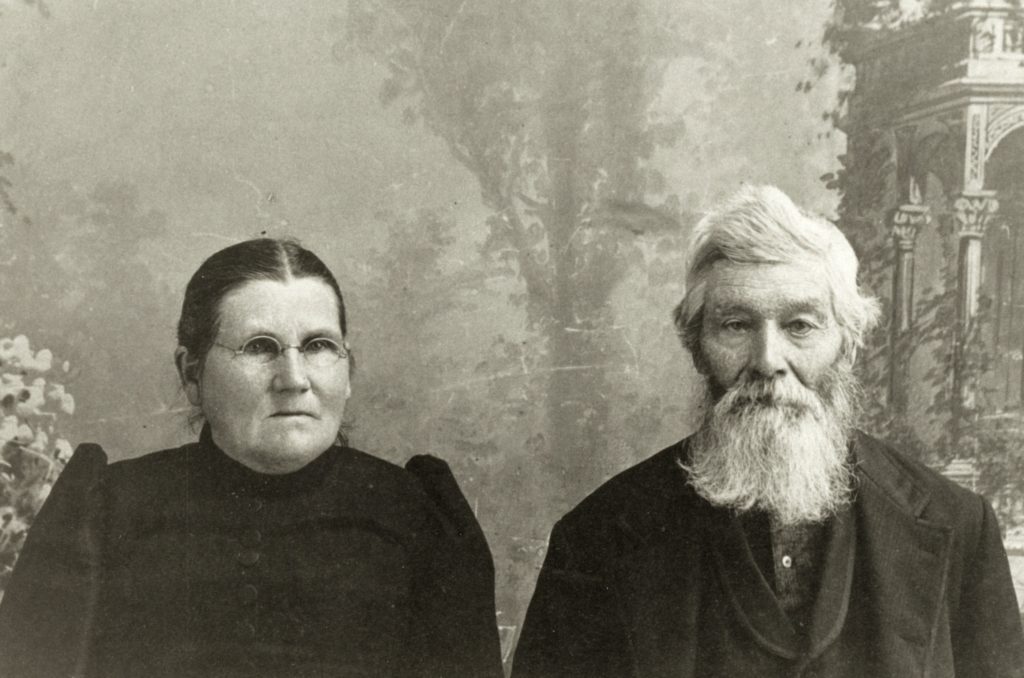
Benjamin E. and Mahala (Conklin) Shumway—Carl Illig

Shumway was a ranch and stage stop located at Horse Lake. Benjamin Emerson Shumway (1823-1909) settled there in 1869 and built the first cabin at Horse Lake.  In addition, he built the road from Willow Creek Valley to Horse Lake and then onto the Madeline Plains. For a time, it was the quickest route to Alturas and Surprise Valley.

On May 23, 1883, the Shumway Post Office was established with Susie Shumway, as postmaster. On October 31, 1913, it was discontinued. In 1916, Horse Lake residents attempted to re-establish the post office and have a mail drop off at the NCO Railroad’s Horse Lake siding. The postal authorities denied the request. They stated they did not need a mail drop as there were only four permanent families residing in the area. In addition, it was cited, the NCO was an unreliable operation, with irregular train service and since there was no attendant at the Horse Lake Station, there was no way that the mail could be protected.

Subscribe

Lassen High School’s First Fence

Lassen County High School

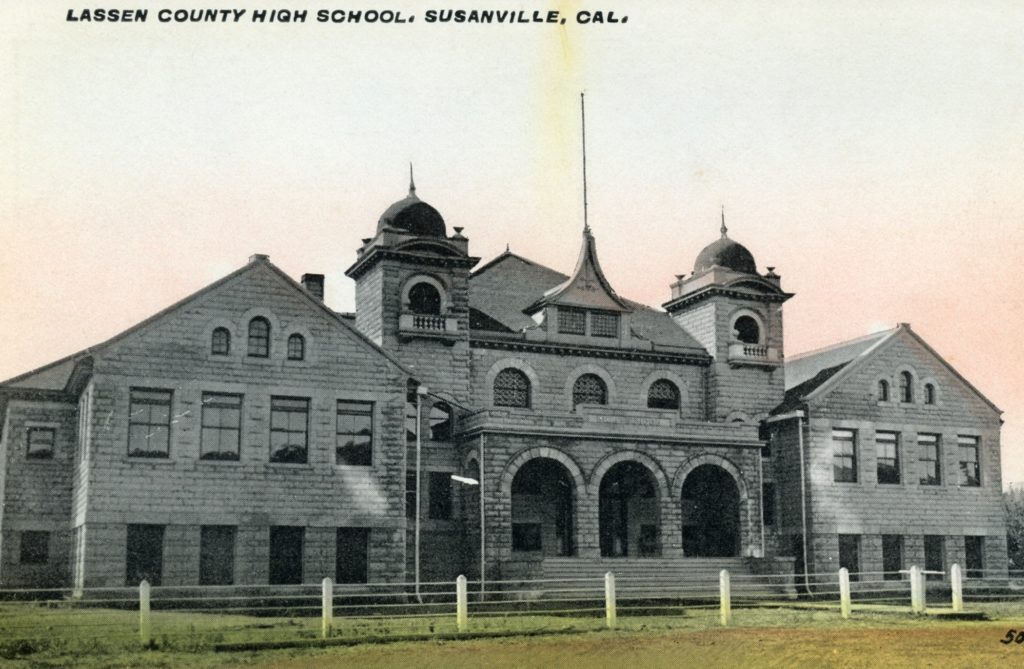
In 1908, the trustees of Lassen County High School ordered to have a fence built in front of the school. Its primary function was to keep stray livestock off the school grounds.

It should be noted that in Susanville during its early years had a problem with stray livestock roaming the community. It was so bad, that in 1870 the California Legislature passed “Barnes Hog Law”which prohibited free roaming pigs in Susanville. This was a major concern after all, since the town’s water supply came from Piute Creek and was distributed by open ditches.

Support

Lake School, Lassen County

Lake School
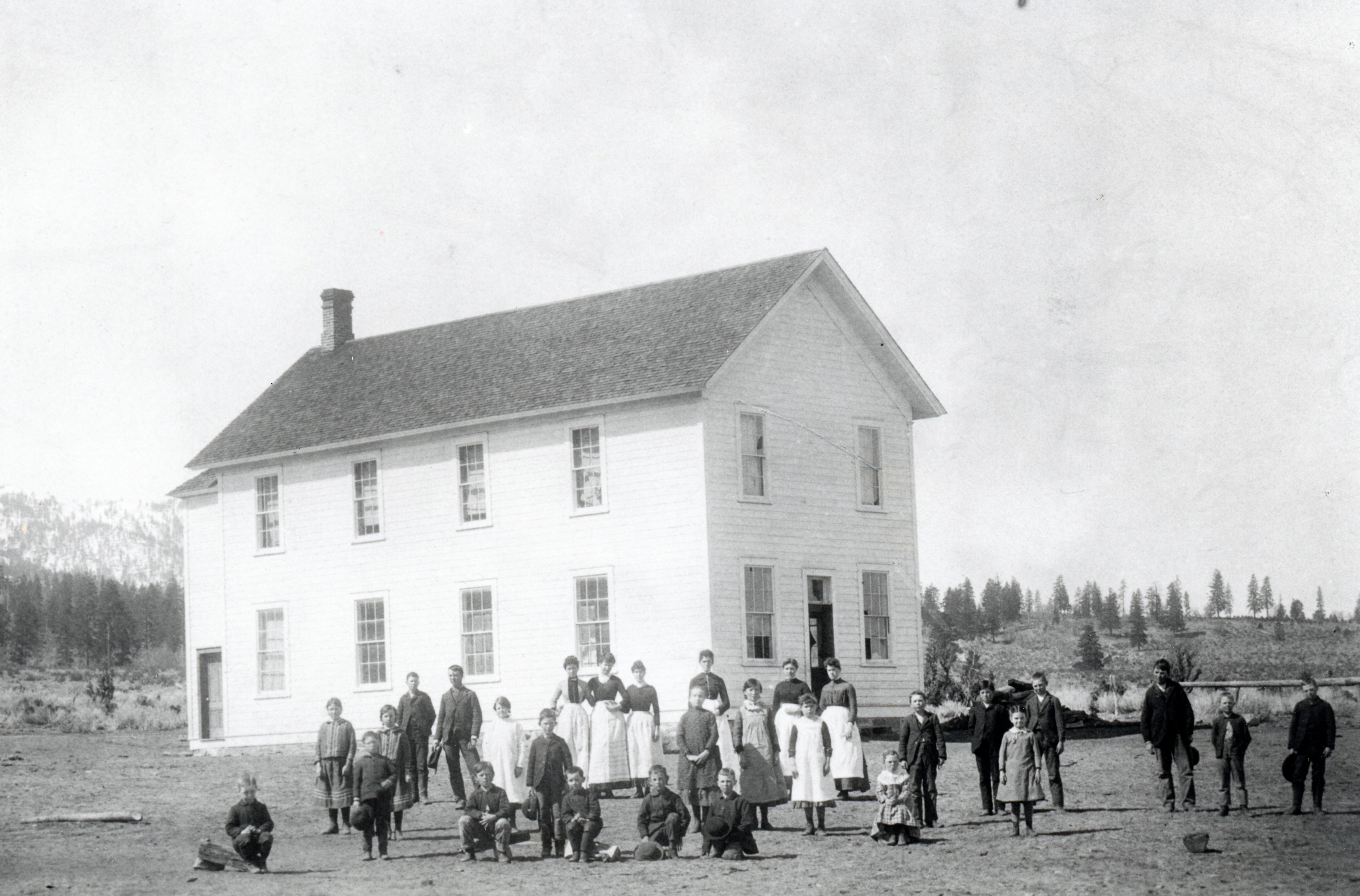
Lake School, 1886

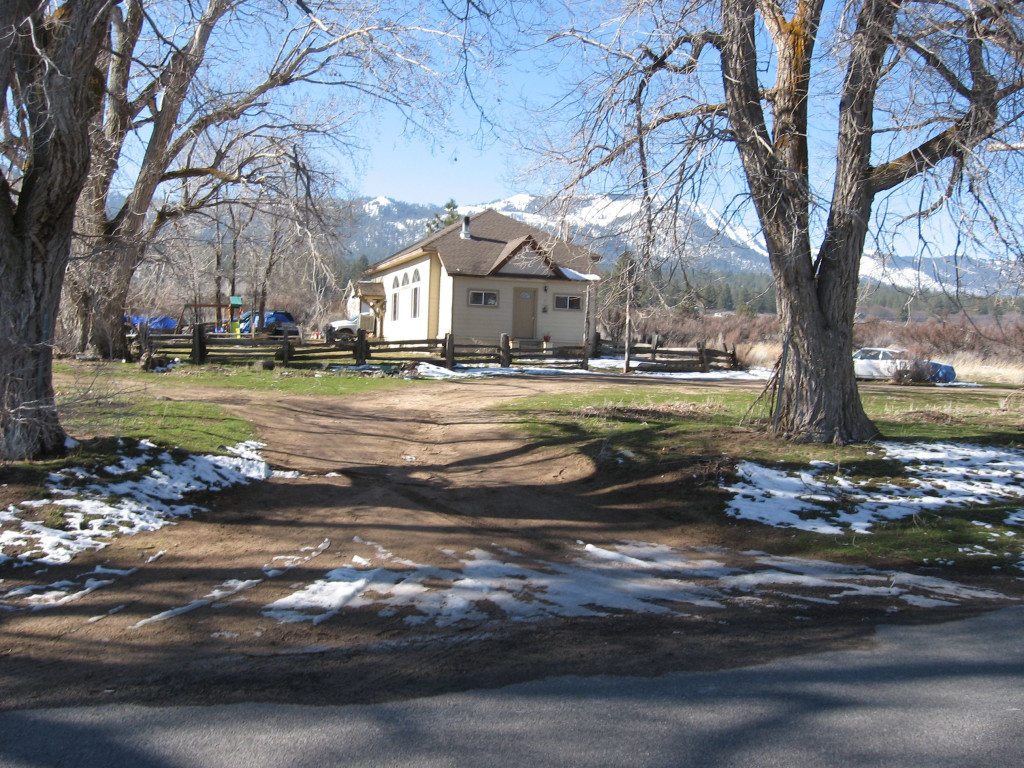
Lake was one of the original six school districts established in 1864–the others being Susanville, Richmond, Susan River, Janesville and Long Valley.  It was so named, due to its close proximity to Honey Lake and the school house was located some four miles south of Janesville.

In 1877, the District constructed a two-story schoolhouse with the assistance of the Independent Order of Good Templars. The second story was used as a hall for that organization, as well as others.In 1898, the student population was 31.

Numerous changes were on the horizon, especially with automobiles and highways. The second story no longer used by fraternal organizations.  In 1934 the second story was removed as part of a WPA project. Francis Wilbur, a local carpenter was hired to do the work at a cost of $1,740. According to former student, Erma Reuck McNett, she stated during the renovation process school was held at the nearby Bailey Ranch.

Lake School as a private residence, February 7, 2016.

In 1953, a ballot referendum was held to consolidate the Janesville, Lake, and Missouri Bend schools. The Lake District voters opposed it. In 1971, the Lake School closed and annexed to Janesville. At the October 9, 1975, meeting of the Janesville School District Board declared the Lake School as surplus property, since the old school house would not meet current state building code standards for a school. The title to the property was a bit “cloudy”concerning a reversion clause. It was deemed that the property should revert back to the Bailey family. On October 17, 1975 it was deeded to George and Jane Bailey and the schoolhouse  converted into a private residence.

Support

Chinese New Years in Susanville

Susanville’s Gay Street, looking north, 1864. Courtesy of Gilbert Morrill

By the mid-1860s, Susanville had its very own Chinatown. It was located in the area of Main and Union Streets. It is interesting to note, where the current Elk’s Lodge is, it was owned by Chinese in 1864. Anyhow, this being Chinese New Year, the following is the earliest account of that event being held in Susanville.

Lassen Advocate – February 13, 1869 – “The celestial portion of our community have had a good time enjoying their New Year feast. It was ushered in by burning three bunches of fire crackers—superior size—at Main Street, much to the annoyance of our peaceable and quiet citizens. Rice, hog, gin, chickens and red paper are in great demand.”

Subscribe

No Ground Hog in 1914, in these parts!

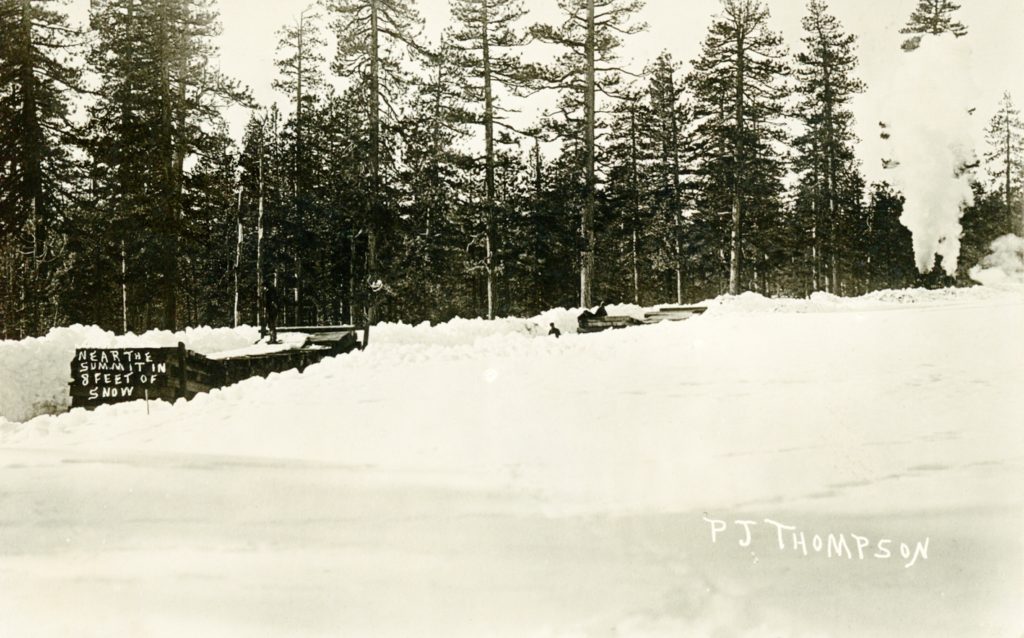
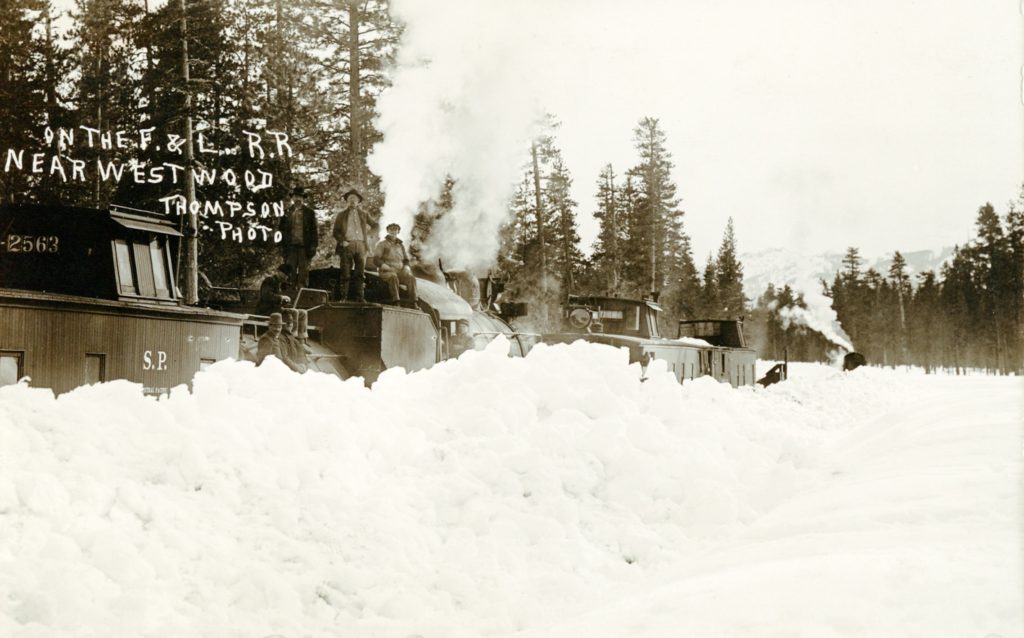
Approaching the summit of the Fernley & Lassen Railroad in 8 feet of snow, February, 1914—B.R. Zimmerman Collection

It was a very wet and snowy January 1914 in the Lassen region. There was so much snow on the ground, the ground hog, could not even make it to the surface, even if it wanted to see his shadow or not.

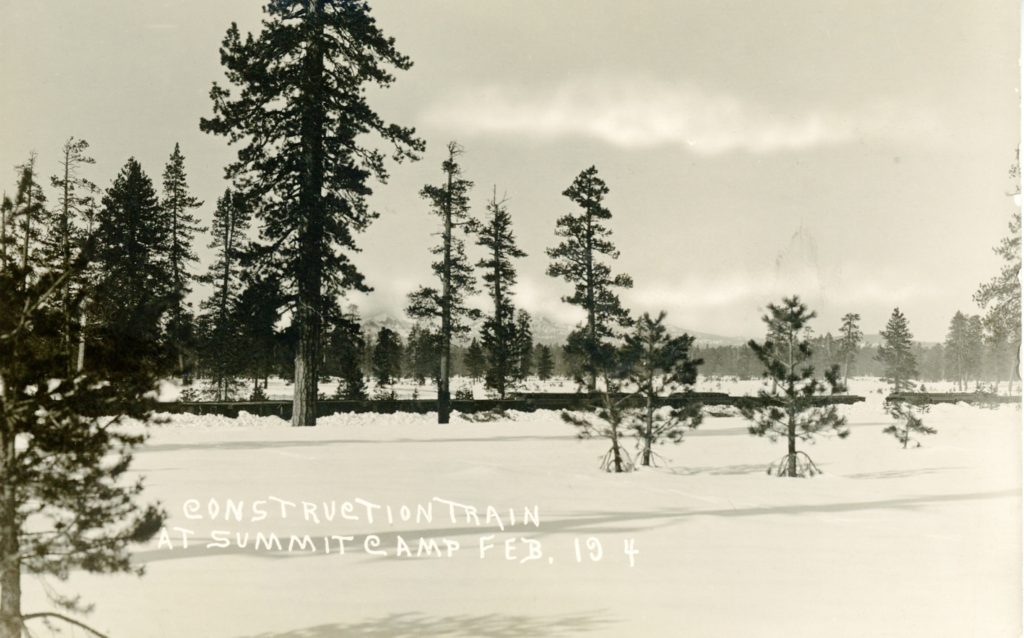
Summit, Fernley & Lassen Railroad, February1914—B.R. Zimmerman Collection

In January 1914 Susanville had received nine inches of rain, along with 93 inches of snow. The total precipitation for the month was 18.27 inches.

Approaching Westwood, the final destination, February 1914–B.R. Zimmerman Collection

This is a good day as any to showcase these photographs of the construction of the Fernley & Lassen Railroad between Susanville and Westwood during that time. The snow depths in early February 1914,  ranged from 8 to 10 feet.

In February 2012, a classified ad appeared in the Lassen County Times that a person had a small trunk of old photographs of the region. I called the number and it took several attempts. An elderly gentleman answered and said the trunk was found in an old barn in Richmond, Contra Costa County. It took several months before the trunk was shipped to me. It was twice the size, I was told, and when I examined the contents, which were photographs of the B.R. Zimmerman family, long time Susanville residents, I was thrilled. I did end up paying about $70 for the cost of sipping and it was worth every penny.

Tim

Strange Indeed!

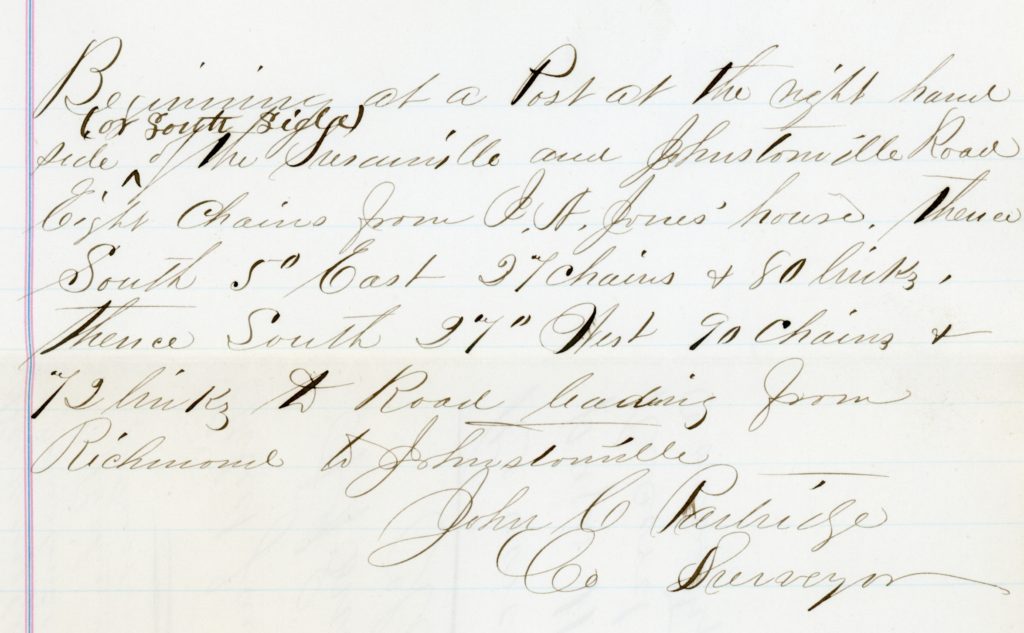
County Surveyor Patridge’s Field Notes recorded on June 5, 1869

Researching the Official Records of Lassen County can be challenging. The above is a perfect example how vague a document can be. The title of this document is confusing, too. “Field Notes of the Survey of County Road from Susanville and Johnstonville Road to Richmond and Susanville Road.”

John C. Partridge, spent two years as the Lassen County Surveyor. In 1871, after the U.S. Government Land Office established an office in Susanville, he was appointed to U.S. Deputy Surveyor. He spent five years conducting the initial Government Land Office surveys in the region.

Tim