Once upon a time there was an old saying “boys will be boys.” I am not if that is case today with youngsters growing up in the digital age.
The Red River Lumber Company’s Westwood millpond was a scene of several tragedies. The millpond separated the communities of Old Town and Westwood. Old Town designated as such, for it was where everyone resided while the mill and town of Westwood was being constructed. A foot bridge was constructed across the millpond allowing those from Old Town easy access to Westwood.
On Friday afternoon, October 1, 1926, 17-year-old Westwood High School student, Jose Nunez, was returning home in Old Town with other school companions. While crossing the footbridge someone in the group suggested they play “Follow the leader.” Nunez was selected leader. He decided to jump off the footbridge and onto a
log, which rolled and he fell into the water. Nunez was pinned
underneath the logs unable to surface. When he did not immediately
reappear, two of his friends dived into the water, but were unable to
locate him. In the meantime, the call of help was made. Nunez’s body
by this time had been submerged for nearly fifteen minutes. It was
only with the aid of pike poles his body was located and pulled out of
the water. A doctor was present and attempted every means to
resuscitate him, but it was too late.
Today, something on a lighter note, though the issue was a serious one. A century ago, the City leaders were a progressive lot. One item they sought was to have paved streets and sidewalks. This was an expensive proposition, and would be paid by a special tax assessment on the property owners. Of course, not every one was thrilled. However, one clever resident suggested that Susanville adopt the City of Redding’s policy of imposing heavy fines on speeders. A speeding ticket in that City cost $10. Since speeding was a problem in Susanville, the collection of hefty fines could easily pay for the sidewalks!
Its been nearly a half a century since the Mapes family sold their well known ranch located east of Litchfield to the Five Dot Land & Cattle Company. Like the Dodge Ranch on the Madeline Plains, the Mapes Ranch still retains its name, even though no longer owed by the family.
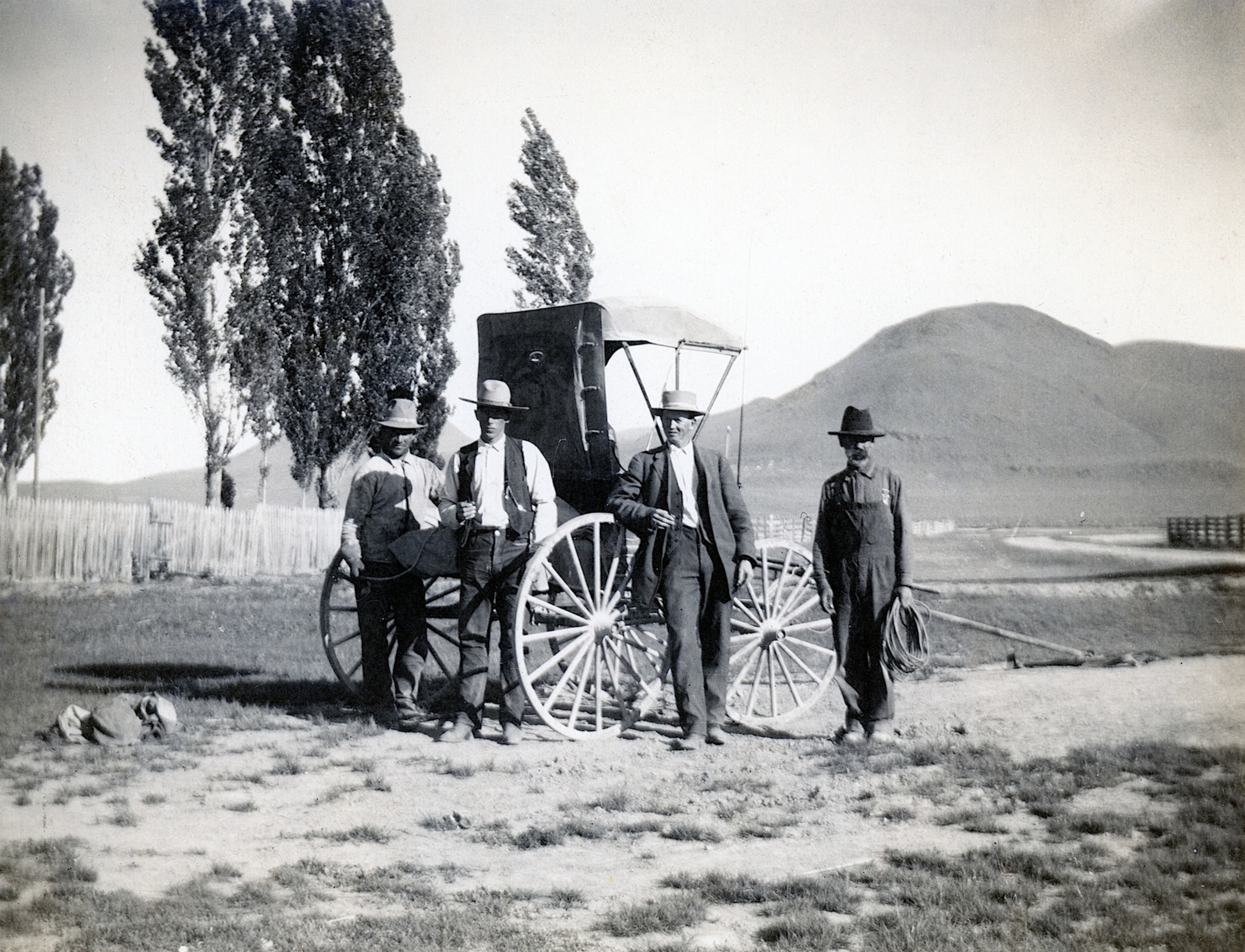
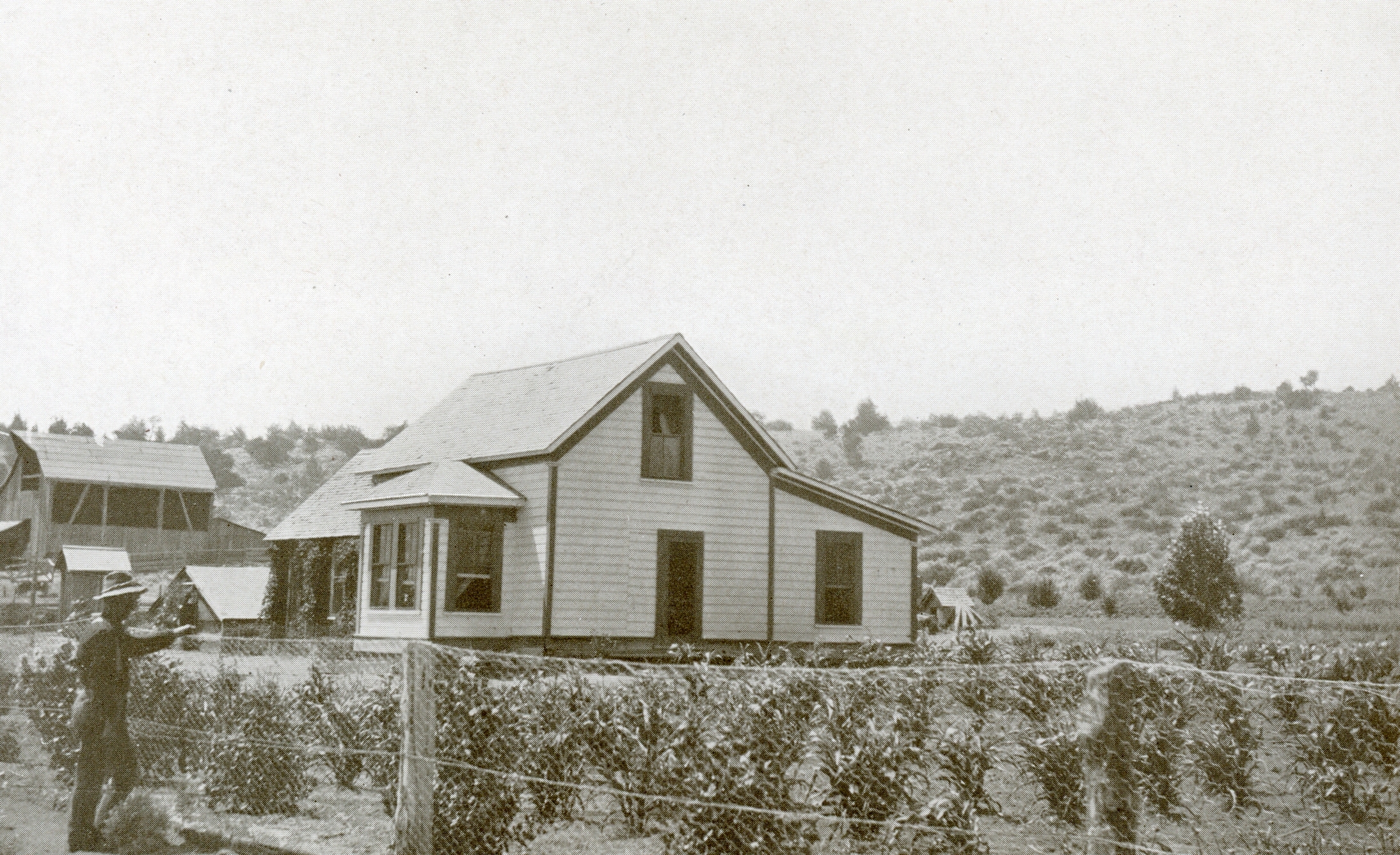
Mapes Ranch, with Shaffer Mountain in the background, 1906. Left to Right: James Riley, John Conlan, James Mapes and Charlie the blacksmith. Courtesy of Madelyn Mapes Dahlstrom
The ranch’s early history is interesting, once owned by the Shaffer Brothers in the 1860s—hence the origin of the name Shaffer Mountain. For a time it was owned by John D. Kelley and Hiram Winchell. Dissolving their partnership was a bitter dispute that required litigation in the Lassen County Superior Court. On June 30, 1885 the ranch was sold at public auction. It was purchased by Sierra Valley rancher, George W. Mapes for$11,000. The sale included all the livestock and farming equipment.
George hired his brother, Ira C. Mapes to manage the ranch. George was involved in a variety. of affairs including the Washoe County Bank. When the 1893 financial crisis hit, to protect his interest he transferred the Honey Lake property to Ira. It would take years for the economy to recover and in the meantime Ira passed away. Ira’s family refused to deed back the ranch to George. End of story.
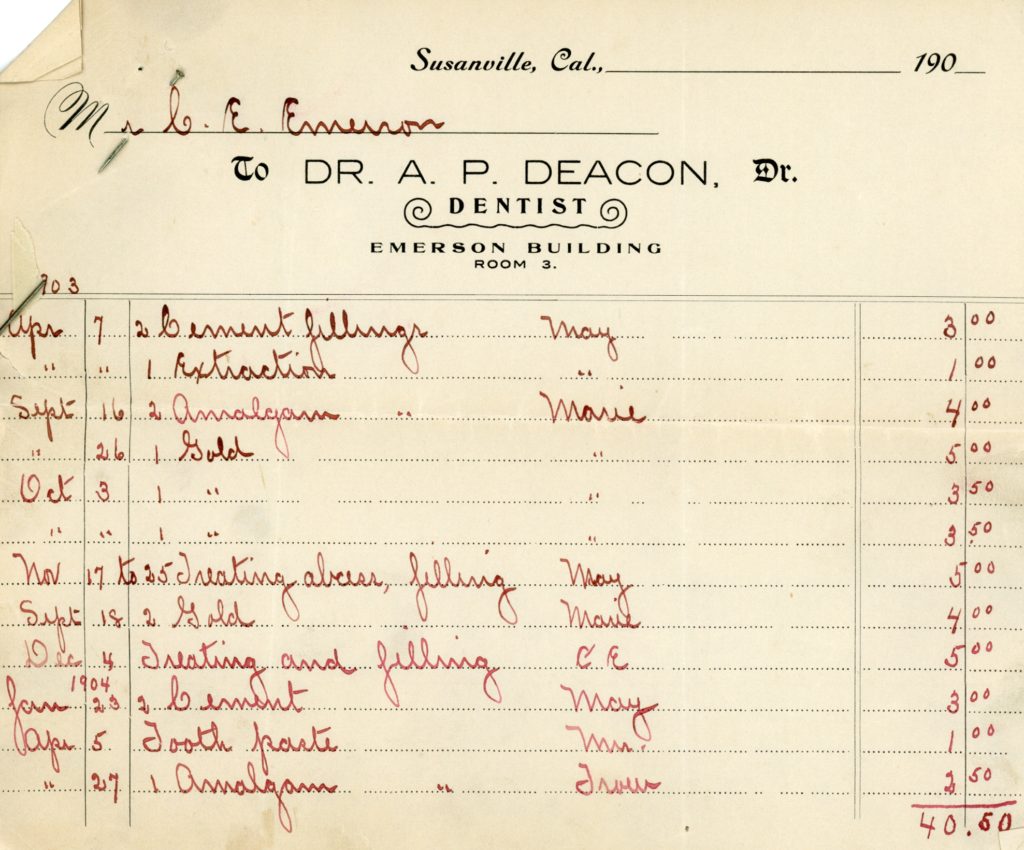
Doctor Deacon’s dentist bill for the Emerson family 1903-04
Believe it or not, over a century ago many professional occupations such as dentist, doctors and lawyers struggled financially. While compiling the history of the northern California operations of Fruit Growers Supply Company, I met Tom Gilfoy who illustrated that aspect, In 1950-51, Tom attended Lassen Junior College. He would spend the next two summers working in woods for Fruit Growers Supply Company. He said he made more money during those summers, than he did his first few years as an attorney.
Anyhow, when I had request for information on the Emerson Ditch, I knew it would require sorting through the Emerson files in my archive. While I did locate information on the ditch, I found an assortment of interesting documents.
Dr. A.P. Deacon was a Susanville dentist in the early 1900s. His office was located on the first floor of the Lassen Street side in the Emerson Hotel. Like his fellow predecessor, Dr.J.G. Leonard, whose home would later become the Elks Lodge struggled with patients for payment of services rendered. This had a ripple effect wherein Deacon fell behind on his rent payments with C.E. Emerson. In 1904, he moved his practice to Willows, California and the prospects there were not any better. Unable to make a payment to Emerson, on August 31, 1905, Deacon wrote this letter;
”Friend Charley – Tomorrow is the date that the first of my notes [promissory] is due, but I am very sorry to say that I am unable to pay it at present. I will, however, send you whatever amount I can spare each month, until I am out of your debt. Thank you very much for your opinion of me, if some of the people up there would make an effort to pay me that I do to pay my bills, we would all get along much better. I have the highest regard for Dr. Dozier as a man could be, of course he had his faults, but then none of us are perfect, and I sincerely hope that he has cut out the booze and his former type of companions, and is doing well. Everything is quiet here, but the prospects are good. “
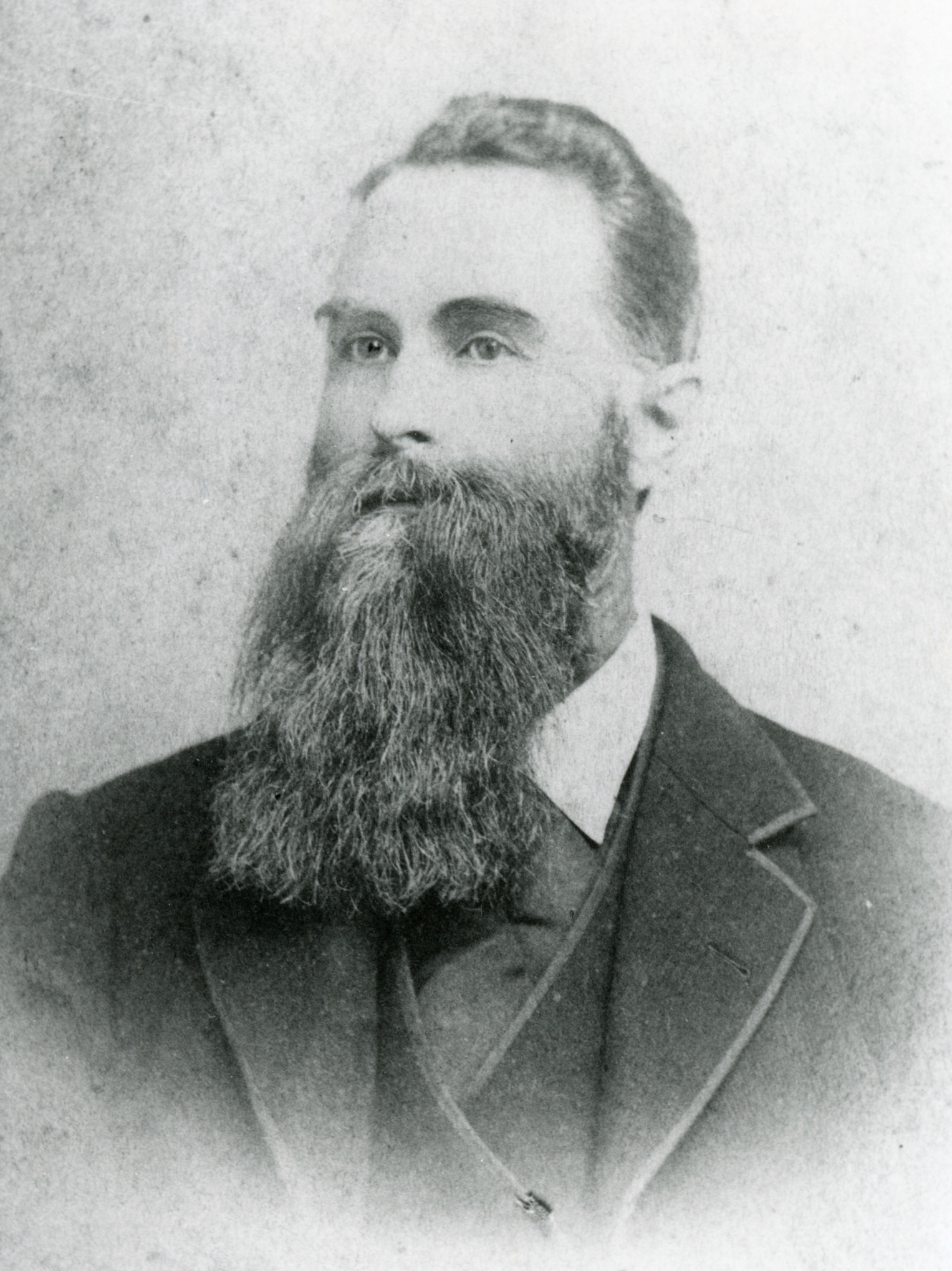
Charles Thomas Emerson (1836-1917) led a colorful life. In 1859, the Missouri native, along with Colburn Brown arrived in the Honey Lake Valley and claimed some 1200 acres in what was known as the Tule District. While residing there, he earned the nickname “Tule”. 1862 was a pivotal year for him. His partner, Brown, returned East to fight in the Civil War, who would become a casualty the following year. Emerson that year purchased a combine mower and thrasher one of the first in the Honey Lake Valley. He named his place the Eureka Ranch, but seasoned residents will know it as the former Gibson/Haley Ranch east of Litchfield. On March 29, 1865, Emerson filed for water rights and easement for an eight mile irrigation ditch, that he constructed that year.
Things change. The bachelor married divorcee Mrs. Sarah Laird on January 1, 1867. The following year, he mortgaged the ranch and built a hotel in Susanville on the northeast corner of Main and Lassen Streets (701 Main Street). In 1869, Emerson threw caution to the wind and set out for the booming mining camp of Pioche, Nevada, leaving behind his wife, and infant namesake son, Charles. It was a bust for him, but instead returning to his family in Susanville, he set his sights on Mexico. Of course, there were consequences for his actions. His wife was granted a divorce on the grounds of desertion, and he lost his ranch by default for non-payment of the mortgage.
After Mexico, he was off to South America. Then he would spend an additional twenty years exploring the South Pacific. It is interesting to note, he never forgot about his son, whom he deserted as an infant. From time to time he would send boxes of sea shells and other trinkets from his travels. In 1902, Emerson had gathered such a notoriety that that the San Francisco Examiner devoted a full page about his exploits.
Time takes its toll and Emerson was no exception. In 1913, he returned to Susanville to spend his twilight years with his son, whom he only met twice as an adult.
Dry farming was slow to make its appearance around these parts. It slowly began in the early 1900s and timing could not have been better. The area was in a very wet cycle that lasted through 1916. The following is a 1911 account of dry farming in Lassen County.
”While much of the farming of the county is done dry, which is to say without irrigation, there is very little scientific dry farming. Indeed, it is all but unknown. However, a beginning has been made, in a few small farms in Honey Lake Valley, and in the Madeline Plains, where may be seen the most substantial evidence that it is profitable. Those who are interested in this form of farming may learn something to their profit by communicating with Mr. Isaac Metcalf, whose address is Termo, Lassen County. Two years ago, Mr. Metcalf lost his all by fire. Coming then to the Madeline Plains without even a team of horses, he began dry farming on 160 acres, practicing the Campbell system. The first year, he cut from forty acres of barley 761 sacks averaging 110 pounds each; and from eight acres of rye ninety-six sacks averaging 130 pounds each. The same year, he turned five sows and their pigs, thirty-nine in all, upon a piece. of alfalfa a little less than two acres in size, upon which they made their living until winter. Then he fed them about one hundred sacks of barley, following which he killed thirty-one of them, these bringing him 3,800 pounds of cured meat. Mr. Metcalf now has a comfortable and pretty residence, a fine barn and other appurtenances, and a small but thriving young orchard of apples, pears, plums prunes, quince and a few grapes. He has no land to sell, but those who. see his place will agree with him that a fair valuation of his possessions is $5,000, all of it accumulated by two years dry farming.”
Many years ago, I wrote a weekly historical column for the Lassen County Times. At that time, I contacted Eric Moody, who was researching Flanigan, and I asked him to write an article. He obliged and here it is.
Flanigan was to be the most important community in eastern and southern Honey Lake Valley, a major rail center, situated in the midst of a rich agricultural area, boasting hundreds, perhaps thousands of inhabitants.
At least that was the grandiose dream of Flanigan’s founders. In reality, the small town located five miles inside Nevada at the intersection of the Southern Pacific and Western Pacific tracks never boasted a population more than fifty and never became a center for much of anything.
The place did exist, though, for seventy years, 1909 to 1969, and its history isn’t as lacking in interest as its meager population would seem to indicate.
Flanigan first appeared in late 1909, when the Western Pacific Railroad built its main line through eastern Honey Lake Valley. By January of 1910 a Western Pacific station was in operation there. The station disappeared the next year, but in 1912-1913 the Southern Pacific built a branch line from Fernley, Nevada to Susanville and Westwood, and the new line passed that of the Western Pacific at Flanigan. Southern Pacific buildings were set up late in 1912, and the next year a station established.
With this, the time seemed ripe for promotion of the site. Two Oakland speculators, C.A. Ross and George Warnken, had a townsite laid out on land they owned just west of the Flanigan railroad intersection. Their projected community, taking the same name as the station, was to have thirty blocks with 900 lots, a school and a library.
Promotion of the new town began, with the principal “pitchman” being Paul Butler, a one-armed dynamo who had been hired by Ross and Warnken to be their agent at Flanigan. Scores of curious visitors were ushered around eastern Honey Lake Valley, and over 200 town lots were sold. By 1914 Flanigan boasted a post office, a general store, and a spacious forty room hotel—built and operated by Paul Butler, who confidently predicted that Flanigan was going to become a major rail center—another Roseville, or at least another Sparks.
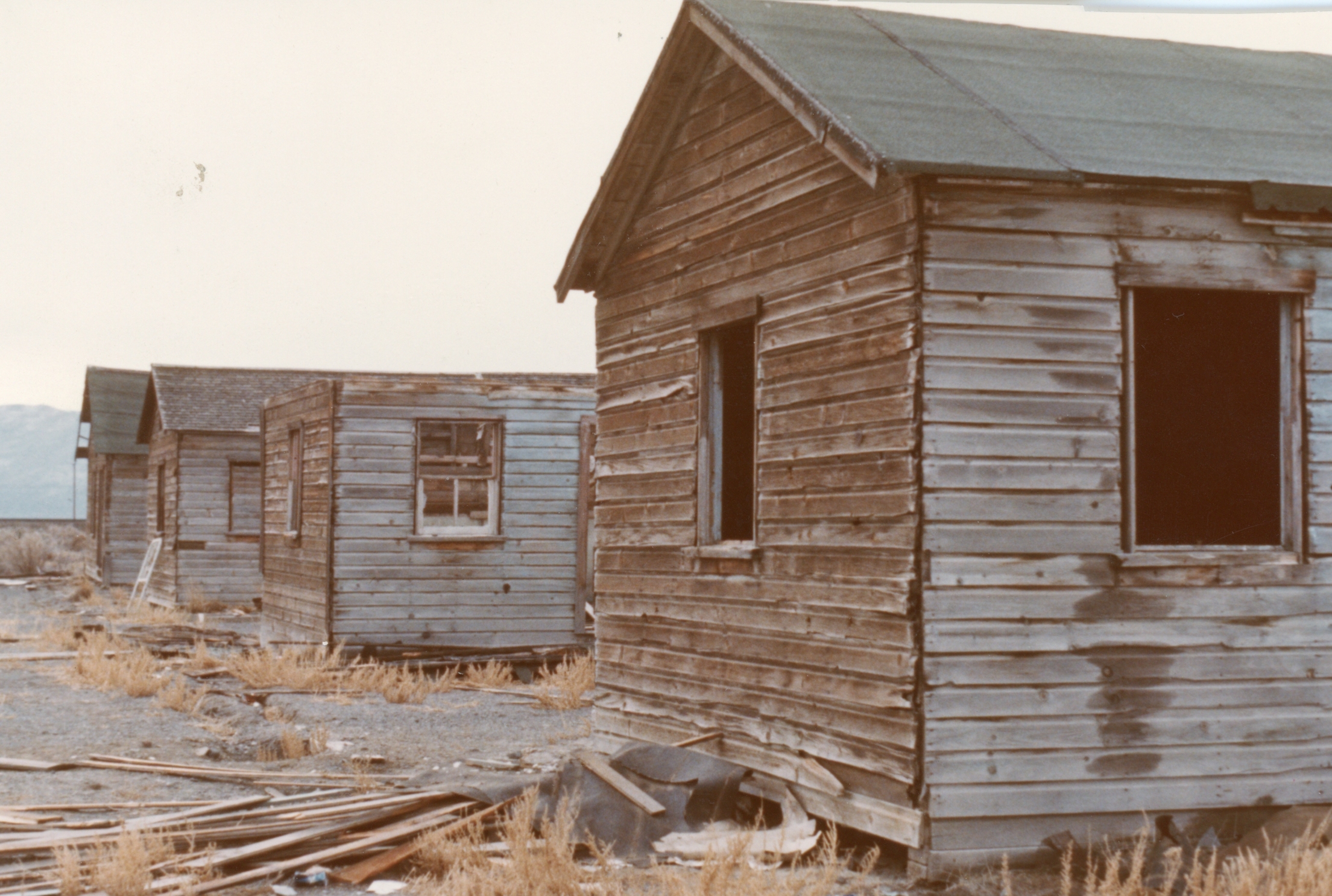
Cabins on A Street, Flanigan, 1976–Christopher Moody
Unfortunately, Flanigan didn’t develop much more. Butler continued his promotional work into the mid-1920’s—even trying to drill for oil and developing a bog lime, or marl, deposit nearby, but even he finally gave up. In 1924 he sold his store to Orlando Gasperoni, then a Southern Pacific section foreman at Flanigan, and in 1926 the practically unused hotel was sold for its lumber and torn down.
Flanigan went on living, but its existence was quiet and relatively uneventful. There were some further attempts to drill for oil or gas and the marl deposit continued to be worked. The Bonham School (formerly located at the Bonham Ranch) opened its doors at Flanigan in 1929, and dances, which drew people from all over the area, were held in the school building. In 1934 Orlando Gasperoni sold the store to William and Gertrude Milne, who had come to Flanigan four years earlier when she had been hired to teach school.
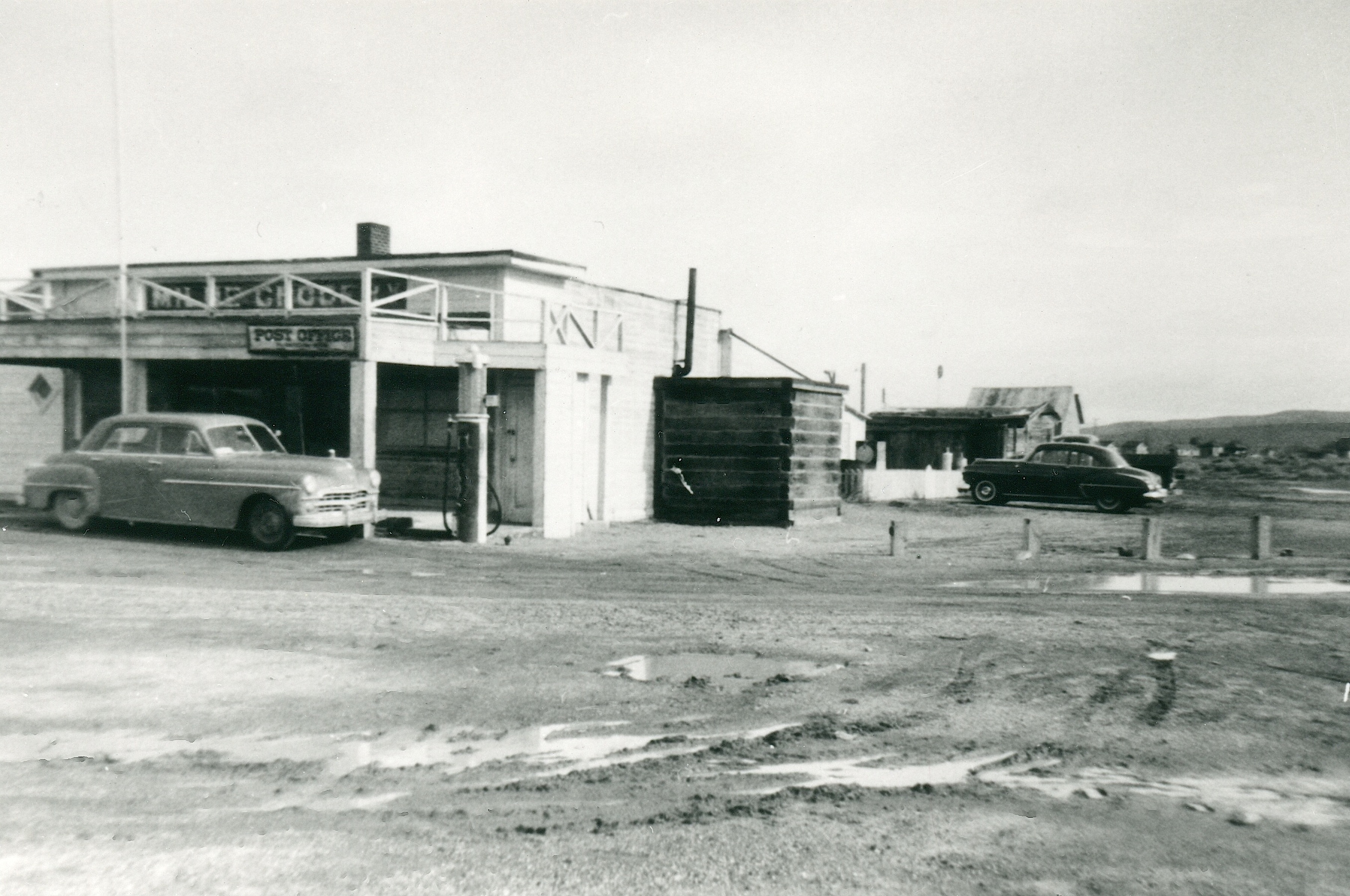
The Milne Store, 1950s. Courtesy of Dorothy Carnahan.
It was not until the late 1950s that things at Flanigan really began to change—for the worse. In 1959 the Southern Pacific pulled out its section crews, and shortly after that the Western Pacific did the same. In 1961 the post office shut down. It had been located in the store, which had closed its doors in the middle 1950s.
Flanigan remained alive only because of the school, where a commuting teacher taught a handful of students, and Mrs. Milne’s continued residence at her home which was attached to the closed store.
The year 1969 saw the end of Flanigan. Early on the morning of January 2, while Mrs. Milne was away visiting at the Fish Springs Ranch, the store with her attached home, burned to the ground. And that summer the school, the last one-room school in Washoe County, was closed because of a lack of students. Mrs. Milne moved to Sutcliffe over at Pyramid Lake.
Today, there is not much to Flanigan to tell visitors that it was once the “coming city”, the projected metropolis of eastern Honey Lake Valley.
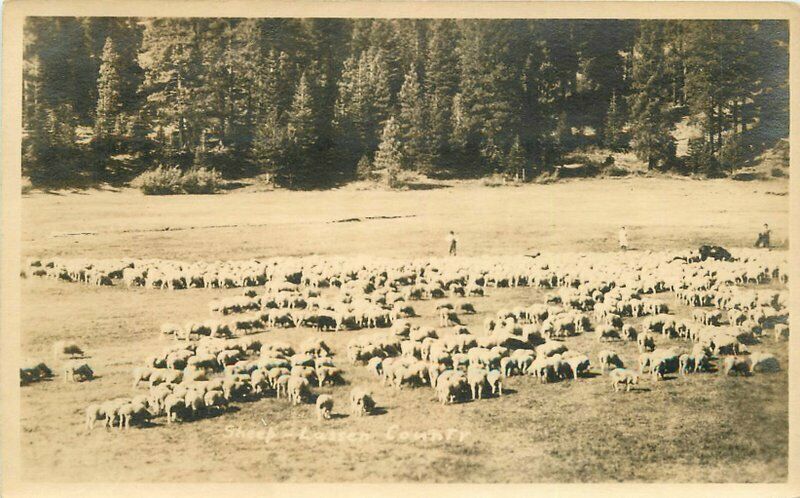
Not surprising, by the early 1900s changes were taking place on livestock grazing on public lands. With the establishment of Forest Reserves later to become National Forests would require grazing permits. This forced itinerant sheep men, many who were Basque, towards the Great Basin were they were able graze freely.
These herders became known as “tramp sheepmen.” These individuals would take their band of sheep and move them to place to place in search of feed and water. This practice would soon come to end. First, is was financial, in the 1920s when wool prices plummeted. In 1934, with the implementation of the Taylor Grazing Act, required grazing permits on all public lands and the itinerant sheepman was no more.
On a final note, is that of Adam Laxalt, who is in the news, of late, as a candidate forU.S. Senator in Nevada. His great grandfather, Dominique Laxalt was a true tramp sheepman of the Madeline Plains. As mentioned with the economic, political, as well as a drought, things did not work out well on the Madeline Plains for Dominique by the late 1920s who moved his family to Carson City, and started a new chapter in his life.
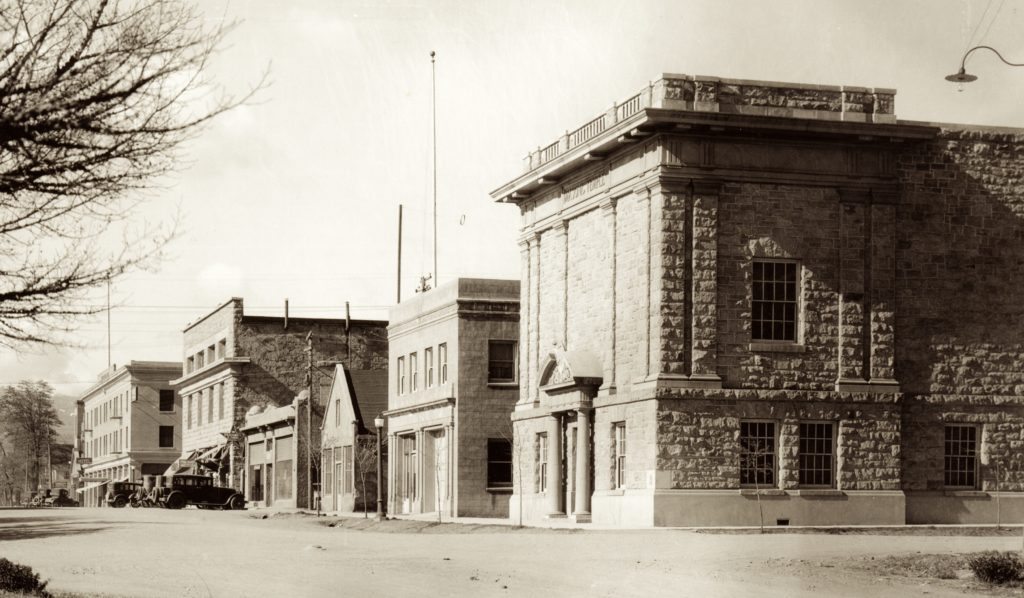
North Lassen Street, Susanville, showing City Fire & Hall, circa 1930
In 1922, saw the City of Susanville’s reorganized fire department, complete with a new fire engine. Initially, they would respond to fires outside the city limits. That changed on November 30, 1926 and the City prohibited the fire department from leaving the city limits. There were a few exceptions. The City would provide fire suppression for the lumber mills, the county hospital and the two public schools in the unincorporated areas. The reason for aiding the mills was not that they were the largest employers, but they had their own fire departments. Those mills could reciprocate with fire assistance inside the City if needed.
The reason for the City’s abrupt decisions not to provide fire assistance outside its boundaries came from fire underwriters, who informed the City that they would have to raise fire premium rates for the City if they continued to provide aid outside the City limits. It was their contention that the City did not have sufficient equipment to protect the property outside the City, and a fire then occurred inside the City; there would be no means to fight it. The City informed its neighbors in unincorporated areas that once they equipped themselves, the City would provide mutual aid.
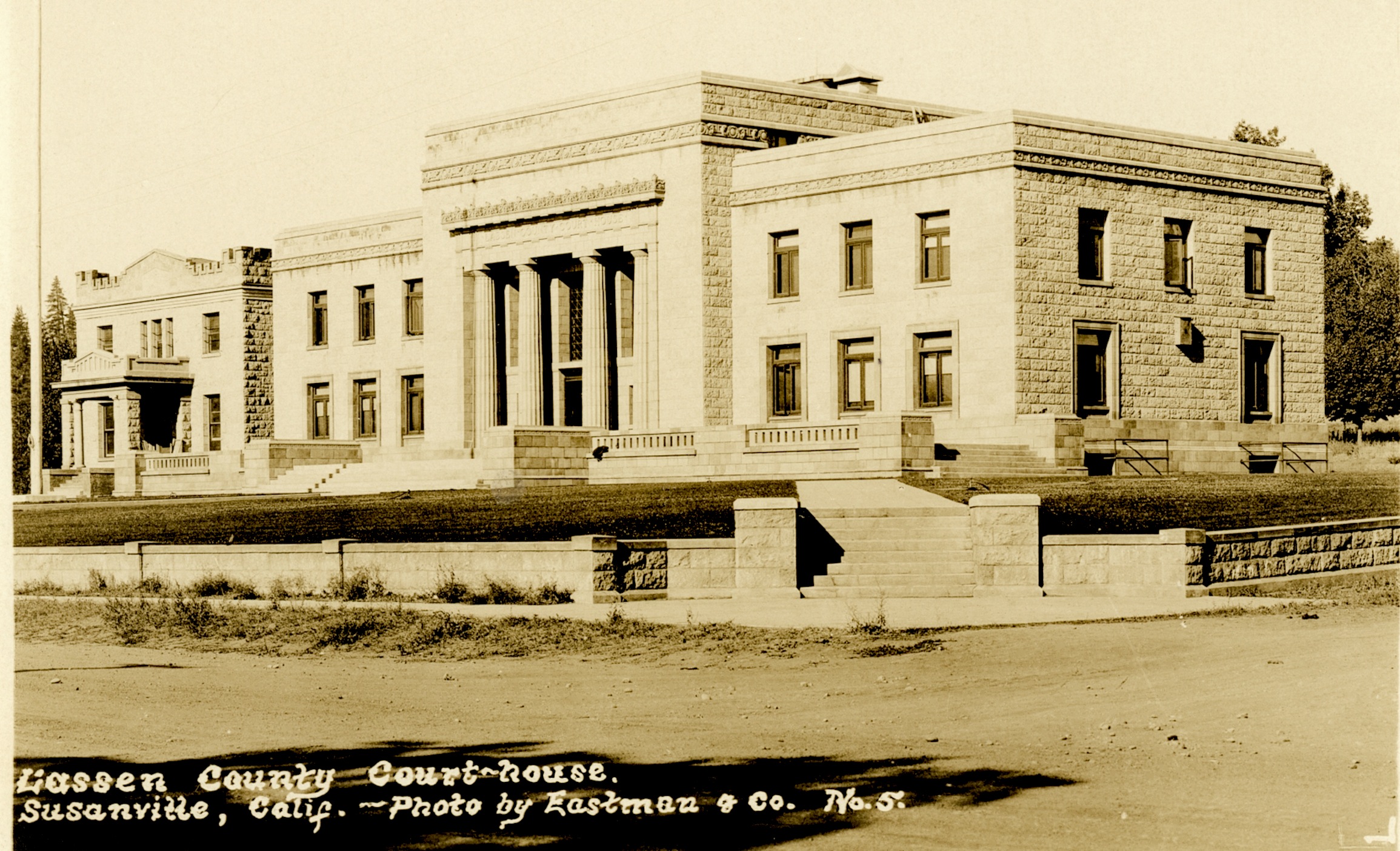
While the Lassen County Courthouse slogs away with its interior restoration/renovation process, this unique photograph was taken by Jervie Eastman in June 1921. It shows how the exterior has been dramatically altered. On a side note, Eastman was visiting Susanville and briefly opened shop when he had taken numerous views of Susanville. He was fined by the City of Susanville for not having a peddlers license. More about Eastman at another time.
The courthouse was designed by noted architect George Sellon. During his career he would design eleven California county courthouses. For Lassen he had a grand Colonnaded Portico entrance—that has been altered. The surface area, including steps were covered with red tile. Some time in the between 1952 and 1957 the north and south entrances were removed.