How Folklore Evovled

Honey Lake Valley, 1898–Betty B. Deal

On August 4, 1857, the Plumas County Board of Supervisors created the Honey Lake Valley Township. The action did not set well with the Honey Lakers who met to protest the Township action on August 29, 1857. (It was originally presumed that the Honey Lake Valley was not a part of the State of California—a logical theory that the Sierra Nevada Mountain Range  created a natural eastern boundary.)  As a result of this meeting , a resolution was adopted opposing any control of Plumas County over the affairs of Honey Lake Valley.

After this event a piece of popular local folklore began,  as to Honey Lakers evaded paying taxes to any one. The news of the Honey Lakers’ meeting had spread and the Marysville Express newspaper of Marysville, California reported: “The citizens of Honey Lake Valley, are for the most part violently opposed as ever by the exercise of any jurisdiction over them by the authorities of Honey Lake Valley. There is, however, some with some inconsistency in their conduct, for when the tax collector of Plumas County came among them, they told him that they were in not in California, but in Utah. Orson Hyde from Salt Lake visited them, they said they lived in California.”

It should be noted Mormon Apostle Orson Hyde was sent to form a Mormon settlement, known today as Genoa, Nevada. The Honey Lakers reluctantly agreed and paid their Plumas County property taxes. Of course, there are those who do not, and this happens every year.  Honey Lakers were not tax evaders per se, but they. were disgruntled with Plumas County because during the winter months they were cut off from the county.

But the Marysville newspaper makes a great story, that is repeatedly told from one generation to the next without any veracity.

Another interesting piece of trivia was the 1860 US Census. Honey Lake Valley was included in the Plumas County head count. However, to the south, Long Valley was included in Washoe County, Utah Territory.
Donate

Lassen Post Office Now Known as Janesville

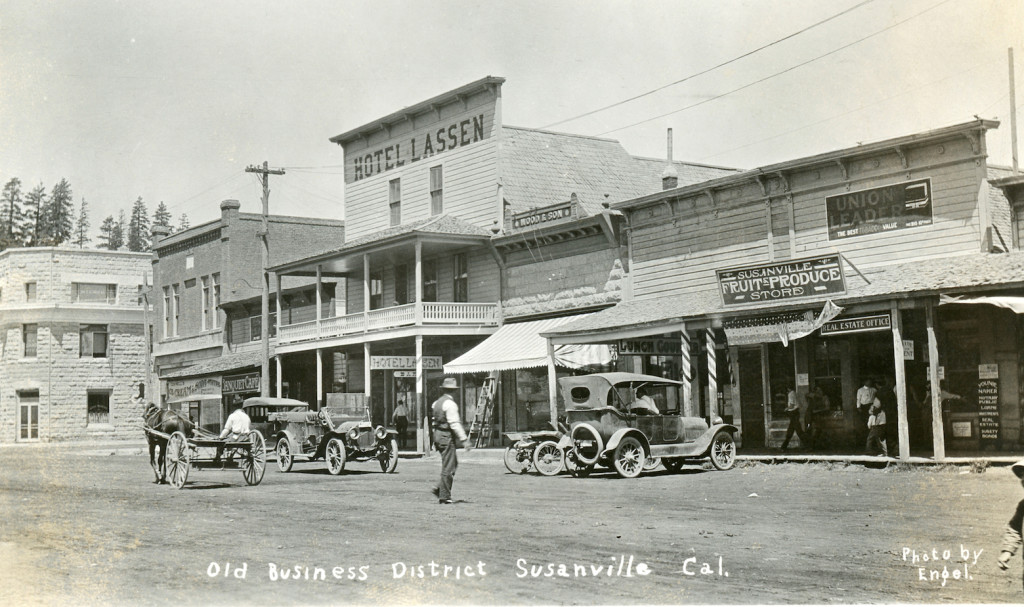
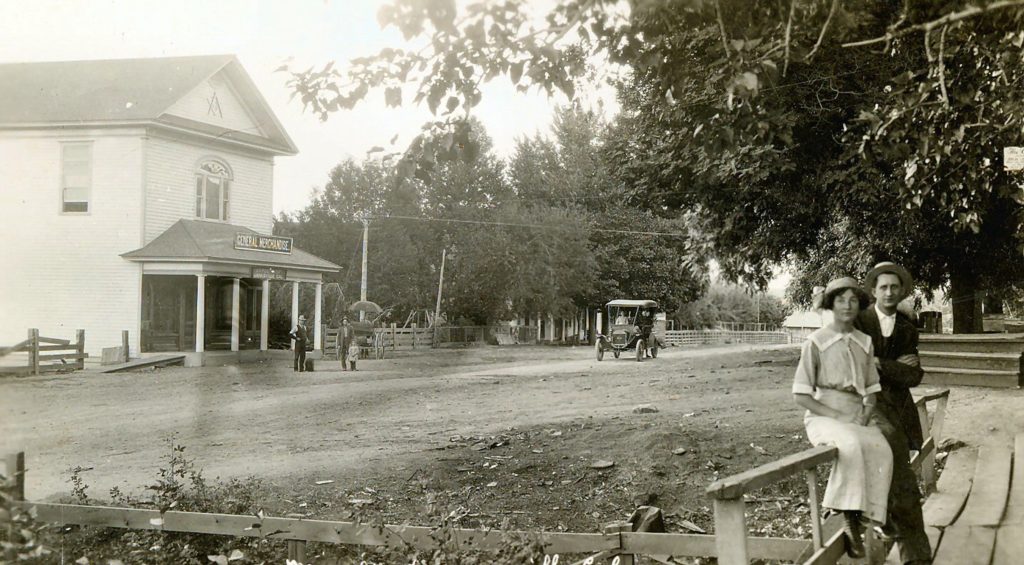
Main Street, Janesville, 1911. Courtesy of Betty Barry Deal

It was on November 5, 1923 when the post office name at Janesville was finally restored. It was on July 2, 1914, when the post office name was changed to Lassen. This was done by a real estate promoter with the arrival of the railroad in the Honey Lake Valley. It was deemed there were too many towns ending with “ville.” Some thought the suffix carried a stigma of a small village. This did not set well with many of the town’s residents. After all the town’s name did not change, nor its voting precinct or school. The residents did not like it and petitioned the Postmaster General to restore the name, but it was denied. In 1923, the residents once again petitioned the postal authorities to restore the name.  It was granted on September 22, 1923, but it was not until November 5 when official change occurred.

Tim

Who Killed Peter Lassen?

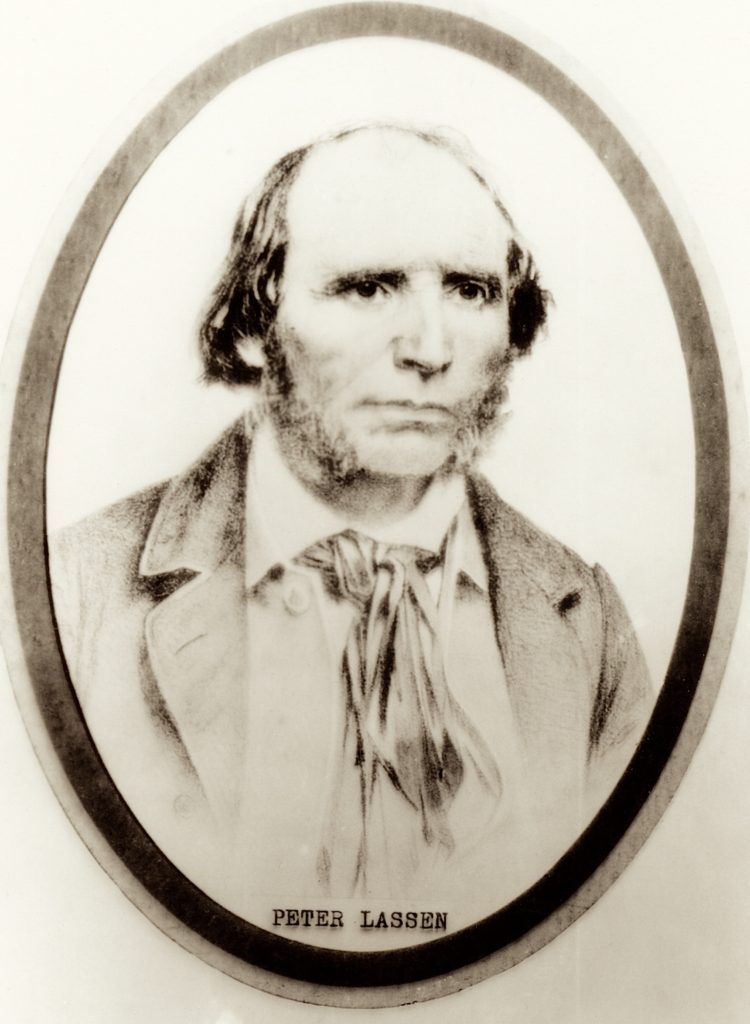
The infamous Peter Lassen, a name well known throughout Northern California

The events surrounding Peter Lassen and his mining companion Edward Clapper deaths has always been a bit sketchy. For starters, W.N.Davis, Jr. wrote an interesting piece, and somewhat abridged than other versions. This is what Davis wrote:

”On April 25, 1859, Peter Lassen and his two prospecting companions made their evening camp near Clapper Creek, about twenty miles northwest of Black Rock and some 125 miles northeast of Susanville, expecting that on the next day they would join William Weatherlow and the three other miners of the party and commence examining the area for silver. On the morning of the 26th, Lassen rose with the dawn and was sitting placidly smoking his pipe as was his habit when the stillness was shattered by gunfire. Edward Clapper, one of the miners, was killed where he lay sleeping. Lassen leaped to his feet and shielding his eyes from the sun was endeavoring to locate the assailant when he too received a bullet. The old pioneer fell mortally wounded. The third member of the group, Lemericus Wyatt, seeing the fate of his partners, ran for the horses, only to find that they had pulled their picket ropes and were fast disappearing across the plain. The sixty year old Wyatt had never been in a tougher spot. Then one of the animals stopped, turned about, and galloped to the desperate man. Wyatt mounted in haste, and after a painful four day ride bareback gained the safety of Susanville. A search party went out to examine the site of the attack and Chief Winnemucca was questioned for information as to the culprit, but the assassin was never identified. All that was ever learned from the circumstances of the murders was that the perpetrator was almost certainly an Indian.”

Notice that Davis wrote “almost” but not conclusive. He has not been the only person that leaves some doubt. When one delves into the documentation, there are a lot of points to ponder, a good defense attorney representing a defendant in the matter could have a field day.

Donate

Some 1923 Automobile Trivia

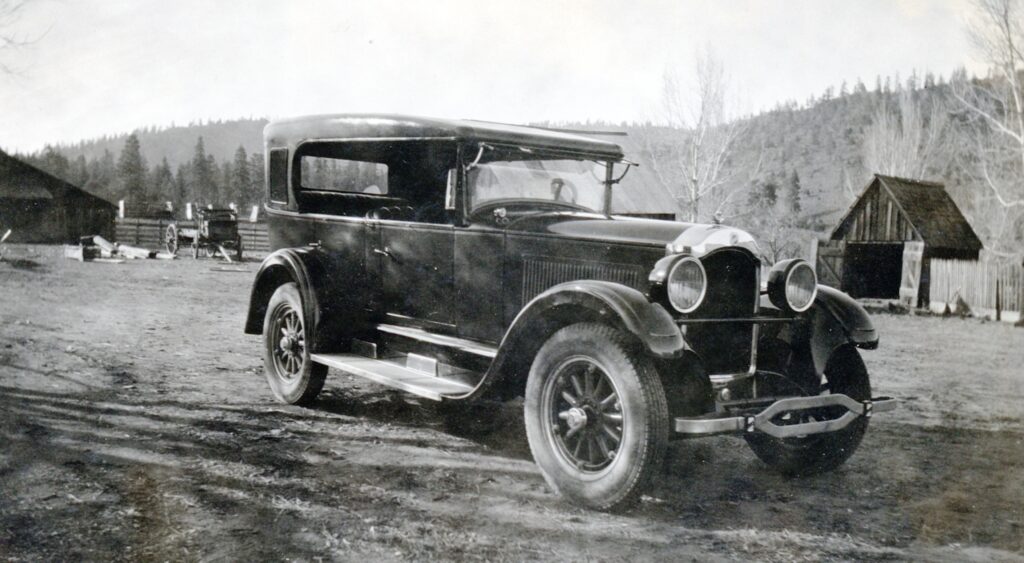
Murrer Ranch, Spring, 1925–Lola Tanner

The following report was published in the Lassen Advocate of October 26, 1923, “Figures received by the Chamber of Commerce from the Division of Motor Vehicles of the state show that 1,941 automobiles are registered in Lassen County. There are also forty-two trucks; thirteen motorcycles and one trailer. The total number for the state is 322,518. Lassen County holds the forty-third place among the fifty-eight counties. The semi-annual statement for apportionment of motor vehicle receipts shows that Lassen County has turned in $8,995 for automobile licenses.”

Tim

Hill Lonkey Land & Livestock Company

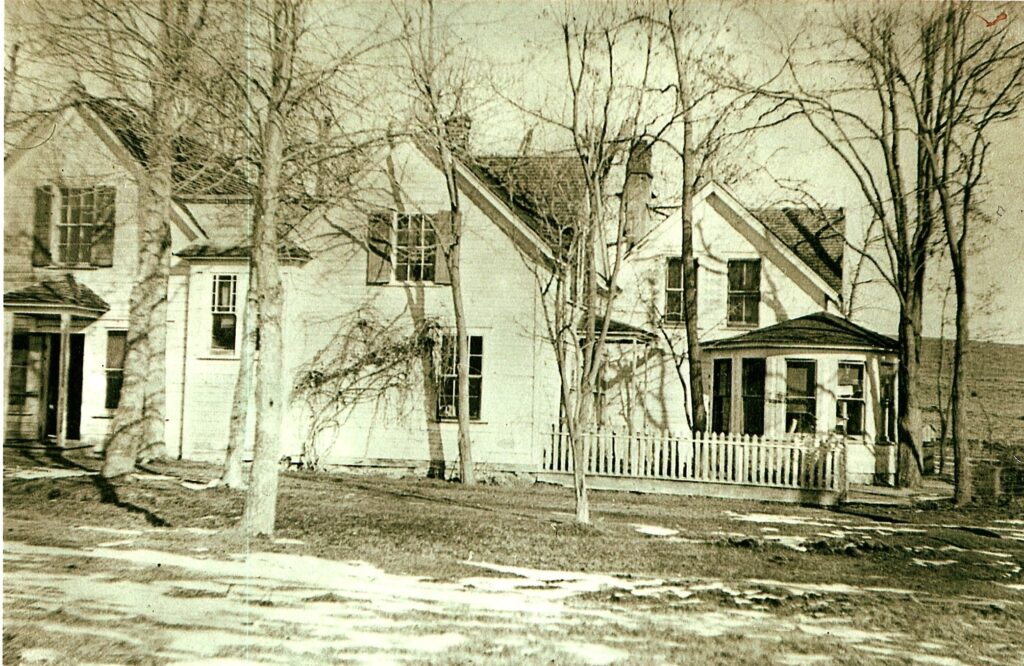
The Hill Ranch, Willow Creek Valley—Donna Perez

This may have been one of the shortest lived corporations in Lassen County. On January 11, 1908, the Hill Lonkey Land & Livestock Company was organized. The principles were Nevada ranchers Thomas Hill, Mary Hill, George W. Mann, Camille Lonkey and George T. Crosby. The purpose was the purchase of the two largest ranches in Willow Creek Valley, just north of Susanville at an estimated cost of $100,000. The two ranches were Folsom and the San Francisco Ranch. Folsom known is the Willow Creek Wildlife Area and the San Francisco Ranch is Five Dot Land & Cattle Company.

The Hill family consisted of Thomas and Mary Hill and their eleven children—Cleveland, Archibald, Jessie, Sadie, Maude, Thomas Gay, Christine, Joseph Hubert, Florence, Lawrence and Robert. The Folsom Ranch had plenty of room to accommodate the family, as one observed quipped in 1920 that it looked like it was built on the installment plan.

Lonkey Ranch, 1911. C.R. Caudle Collection

Meanwhile, Camille and Georgianna. and their three daughters—Irma, Joyce and Verdi—took possession of the San Francisco Ranch. Like the Folsom place, Lonkey’s had plenty of room, too.

In 1910, Hill Lonkey dissolved the corporation. The ranches were divided accordingly. Why, I have never been able to ascertain and I interviewed members of both families, and they could not provide any insight. In 1924, the Lonkey Ranch sold to Rees T. Jenkins, but in 1937, but due Jenkins financial issues took back the ranch and searched for new buyers.  The Hill Ranch  was sold in 1927 to Patrick Walsh.

Tim

A Strange Case Indeed

Weatherlow’s headstone, 1978

Over the years, I have sifted through all kinds of records conducting research. It is a slow, tedious process, but then one comes across those hidden gems, it makes it worth while.  Alas, it is also becoming a lost art. I have found that too many people rely upon the internet for their research.  Okay, enough of my opinion.

Prior to 1997’s California’s Trial Court Act, there was a justice and a superior court—and in more populated counties multiple courts—including municipal. Early day justice courts provides an interesting glimpse into ordinary affairs of the community—whether civil or criminal.

This brings to the 1865 case People of the State  vs. William Weatherlow that was filed in the Honey Lake Justice Court. This was just your typical delinquent property tax case. A unique situation occurred in this case when Constable E.R. Nicholls attempted to serve Weatherlow with a summons for $46.30 in back taxes  Nichols noted on the summons of his attempted service of February 7, 1865 that he was unable serve Weatherlow as he “. . .  cannot be found in the County.” If only Nichols, who doubled as County Surveyor, had toured the Susanville Cemetery, he would have located Weatherlow’s grave, as he died on July 22, 1864. and thereby a permanent resident of Lassen County. It wasn’t as though Nichols was unaware of who Weatherlow was—he being prominent in the affairs of the Honey Lake Valley—but Nichols had sued him in 1861 over a mining claim in the Black Rock Desert.

Donate

Tuesday Tidbit Delayed

Susanville, 1919
Susanville, 1919

Some technical difficulties with scanning transfers has re-appeared. Today’s scheduled feature was about Henry Dobyns renaming the Johnston House to the Hotel Lassen, at one time Susanville’s most significant hotel. The illustration that was scheduled to appear, is one of the scanning transfer issues. The article  will appear at a future date.

In the meantime, I am busy at work on the  2024 Calendar, which will be late this year. Also, in queue, where some interesting topics addressed in the Ask Tim post. I am working on those, too, but it might be awhile before they appear.

Tim

P.S. As interest declines in calendars, as more people go digital, if you are interested just let me know. However, if you are a regular calendar type, no need to reply, because I have you taken care of. Thanks.

A Different Kind of Party

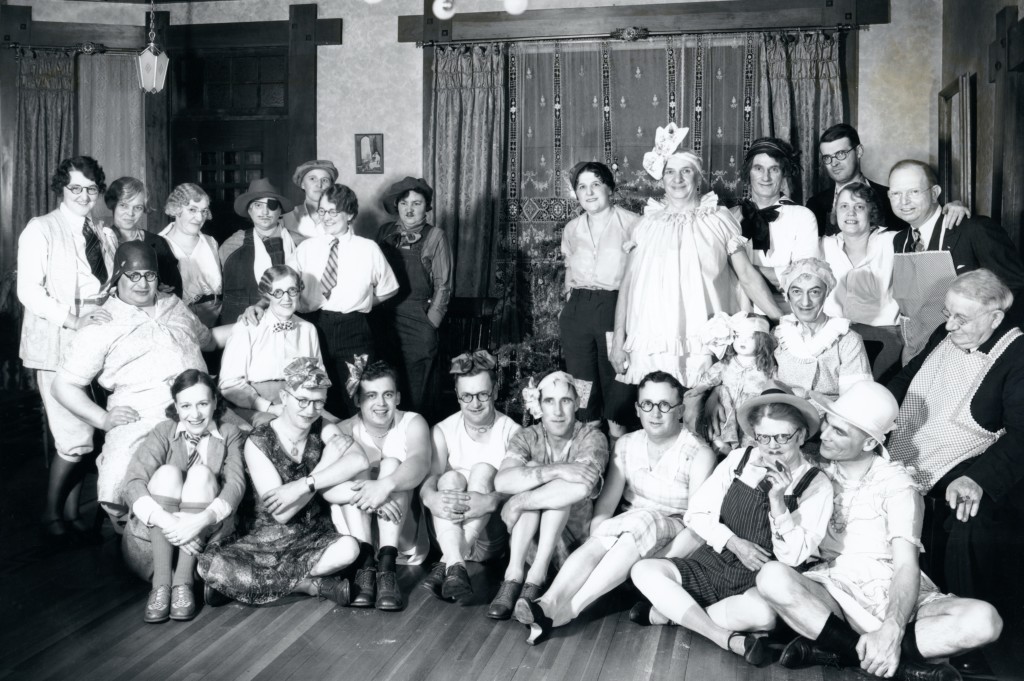
Who needs Halloween when you can have a freak party?—B.R. Zimmerman Collection

Note: Seasoned readers may recall this article from several years ago. However, it being Halloween, current readers might enjoy the same. These parties were popular in the teens and twenties of a century ago. They were held early in the year to break the winter doldrums.

Olga Wemple who wrote the Society page of the Lassen Weekly Mail reported on a special party that occurred on March 3, 1916. She wrote: “A freak party given by Mr. and Mrs. Jules Alexander (145 North Roop St., Susanville) proved to be the most unique and original that Susanville Society has seen for a long time. Every one was requested to come dressed in freakish costumes. Those who were invited responded with such enthusiasm in designing their queer attire that wide spread interest was caused not only among the lucky ones, but also among their friends who eagerly aided with their ideas. The home of the hosts was decorated in keeping with the plan of the evening. The living room was brightened with strings of oranges, lemons, apples with gayley colored balloons hung from the chandeliers and freakish pictures of all descriptions ornamated the walls. When every one had arrived each drew a caricature cleverly drawn by E.J. Feher to find “yourself” which table to be seated at.

This 1931 gathering was held at the home of Blanche & Ike Knoch, frequent hosts of such events. Courtesy of Hank Martinez

“At midnight all entered the dining room which was decorated with onions, turnips, and beets. The large table was bountifully laden with all kinds of goodies. At each place a card upon whichwas tied a minature knife, fork and spoon and also the initials F.W.M.B.F were painted. All were asked to guess the meaning of the initials and Mrs. C.M. (Maybelle) MacDonald proved the clever one and guessed the meaning which was “Fingers were made before forks.”

Donate


The Saga of Edward Laird

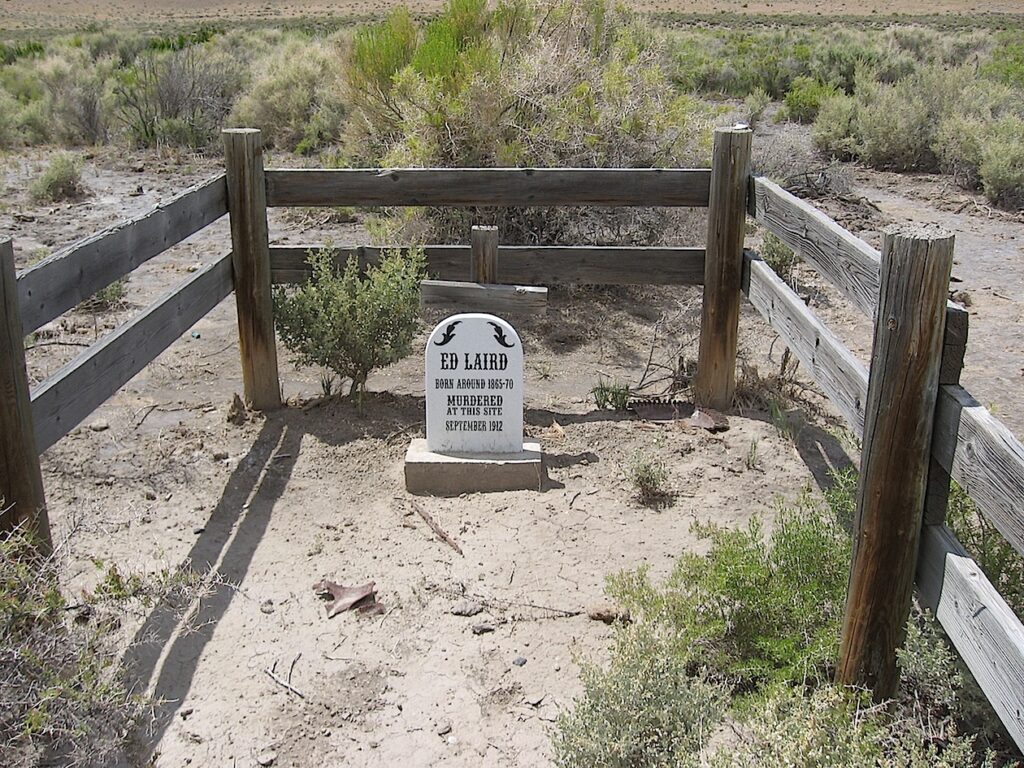
The grave of Edward Laird, Smoke Creek Desert, June 26, 2023

Last year, I wrote about Laird Spring and the spring’s namesake. It was my original intention to include a photograph of the grave, but good intentions did not occur. In 2004, was the last time I was there. Then, there was just a wooden enclosure and a wooden cross. Who placed the stone monument, I do not know, but as you will read below there are problems with dates on this marker.

Numerous springs in the Intermountain West are named for wranglers and itinerant sheepman. Laird Springs is one, that has an interesting story, and one of which is still an unsolved murder.

Edward Laird was born in 1862, the eldest of three children, his two siblings Margaret born 1863, and brother Warren in 1864. They were  orphaned at an early age and raised in an orphanage in Carson City, Nevada. As young men, Ed and Warren went to work on various ranches in Northeastern California. By the late 1890s, they had settled in the North Warner Valley, Lake County, Oregon. Warren would remain in Lake County for the rest of his life.

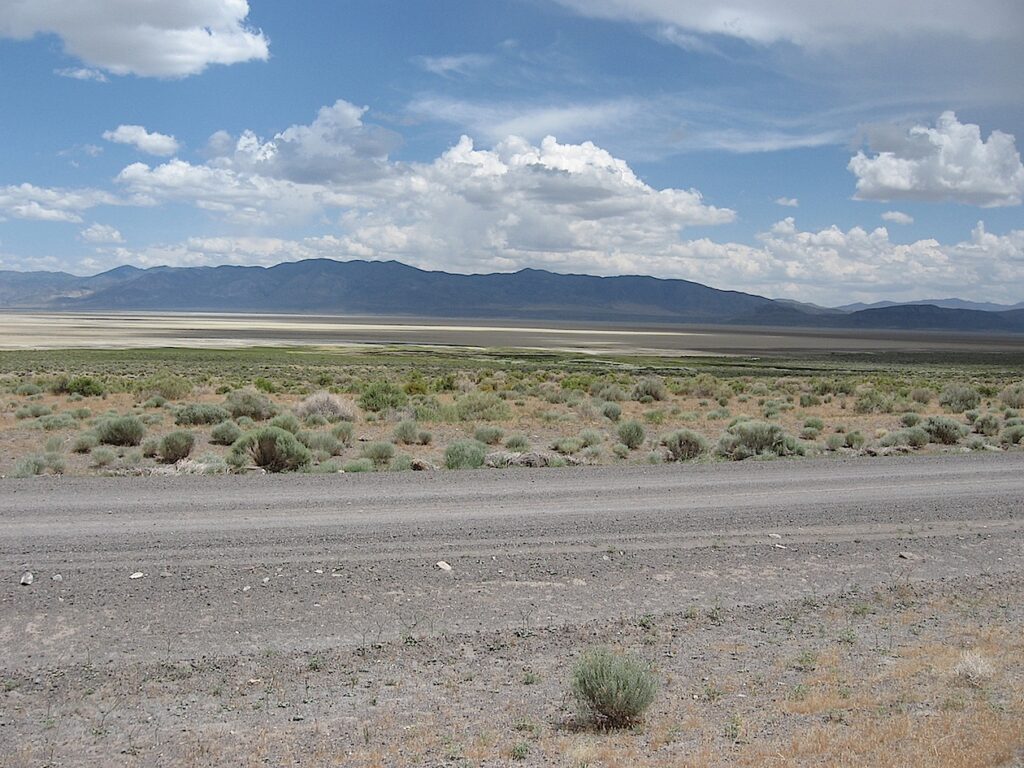
View of Laird’s old homestead site  from the Smoke Creek Road, June 26, 2023

In the early 1900s, Edward Laird worked as a ranch hand at Round Hole, Smoke Creek Desert, also known as Bonham Ranch. The owners William and Martha Bonham Ross, were in-laws to Laird’s sister, Margaret Sutcliffe.

Very little is known of Laird’s activities on the Smoke Creek Desert. Sometime after 1910, Laird filed a “squatter’s claim” to eighty acres, three miles north of Round Hole. There was a spring on the claim where he built a cabin. Edward Laird was murdered there on or about August 20, 1917. Details of his murder are sketchy. According to newspaper reports, his body was marked with two shot gun wounds and he was found dead in his cabin. On August 29, 1917 the Nevada State Journal had a caption, “Revenge Believed to Have Been the Cause of Killing With Shotgun near Round Hole.”  However, the newspaper did not provide any details. A week later area ranchers offered a $500 reward for information leading to the arrest and conviction of the party who murdered Laird. That was basically the end of the case. Cook Laird, Warren’s grandson, told me that Edward was a red head who was known to be hot headed with a mean temper.

Edward Laird was buried 50 yards east of where the spring bears his name, though there is another spring further east of his grave.

Support


An Ode To Secret Valley

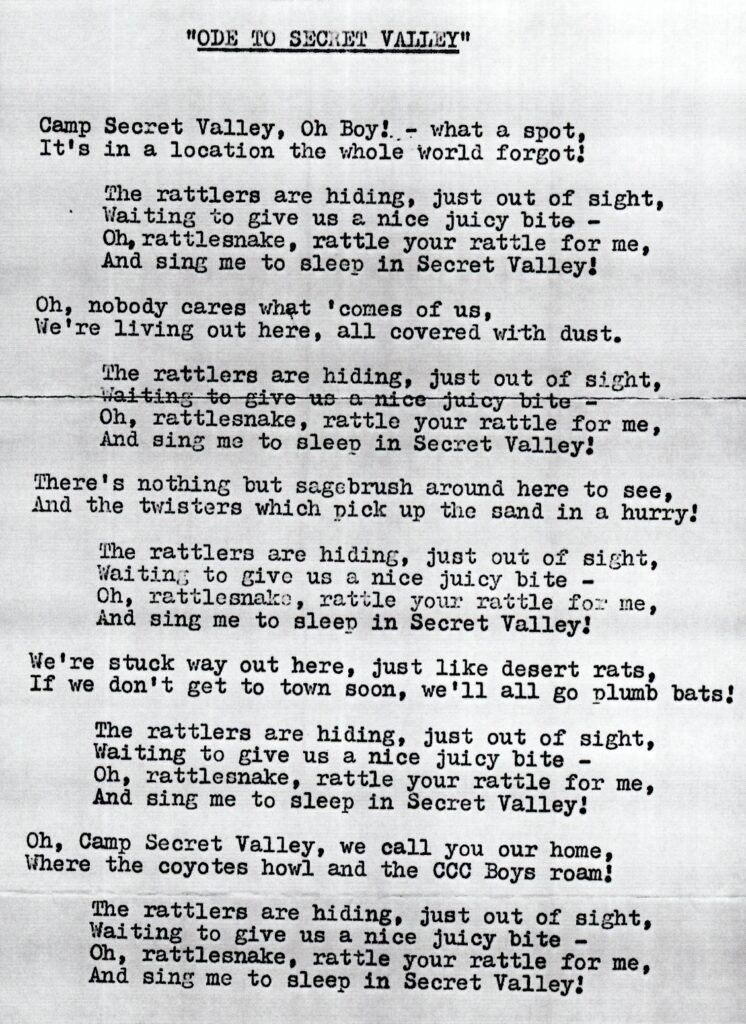
Ode to Secret Valley, Author unknown

Time flies, and it has been four months of weekly Secret Valley CCC camp tales. I hope everyone has enjoyed. There are a few scheduled in November since they are related to Veteran’s and Thanksgiving Days.

Fast, forward. The author of the balladeer above ditty is not known. However, we do know this. It was written by a CCC enrollee who was in Co. 1246, the first occupant of Camp Secret Valley, but his name no one could recall. The composer while in the rec. hall would play his guitar and. sing the melody and the entire company would sing the refrain—usually loud enough to scare away all of the rattlesnakes and coyotes.

Tim

Exploring Lassen County's Past