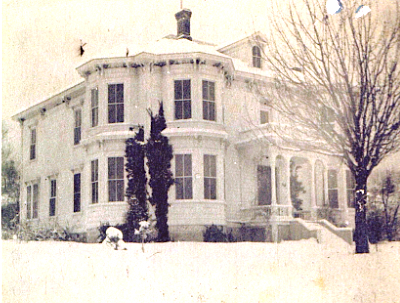
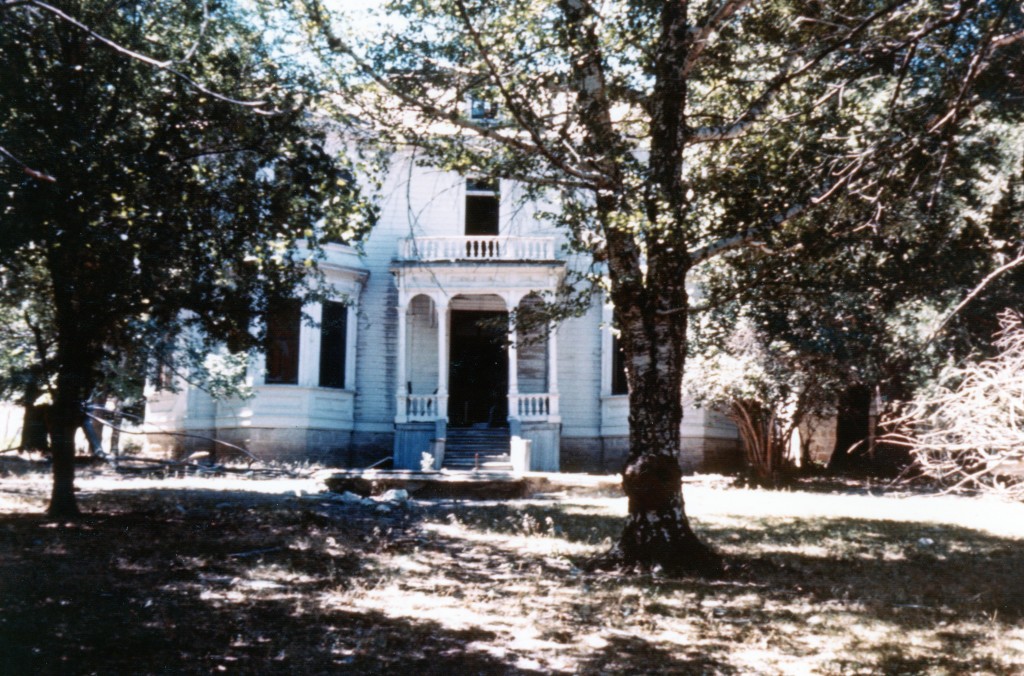
In 1863, Albert Elijah Ross (1836-1911) located on what would be later named Constantia. In 1884, Ross constructed a 17-room mansion there at a cost of $14,000. This residence and well-known landmark was simply referred to as the White House. In the early 1890s, Ross moved to San Jose to benefit his children’s education and eventually sold the property in 1898. The ownership of Constantia would change several times until it became a part of the Pyramid Land & Livestock Company. In 1922, that Company filed bankruptcy and the Galeppi family purchased the Constantia Ranch. The Galeppi’s, for various unknown reasons, did not reside in the famed White House. Fred Galeppi stated that during World War II, the house was still in good shape, and even had furniture. During the construction of Sierra Army Depot during this time, Galeppi stated soldiers used the house for recreation, but over the years it slowly began to be vandalized. In the early 1960s, most recall 1963, the house burned down. The cause of the fire remains unknown, though various residents of the region have their own story.
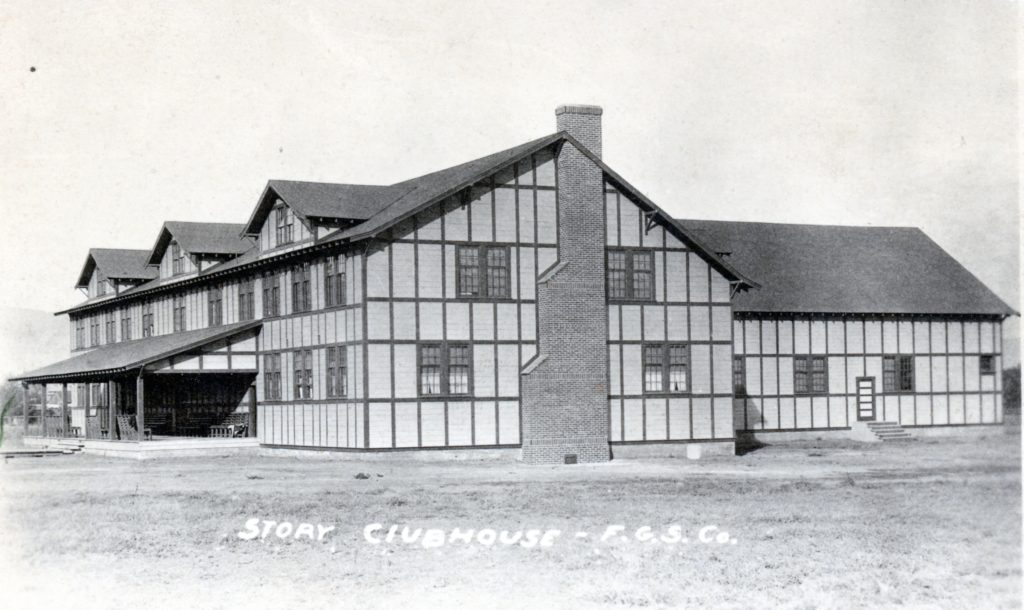
The Fruit Growers Supply Company operated a lumber mill in Susanville from 1921 to 1963. When it was sold it became the foundation for Sierra Pacific Industries.
In 1910, Fruit Growers found itself as a mill operated at Hilt. It should be noted Fruit Growers is a purchasing agent co-operative for citrus growers known today as Sunkist. This was an era when produce was shipped in wooden boxes, hence the need for lumber. Continue reading Fruit Growers – Story Club→
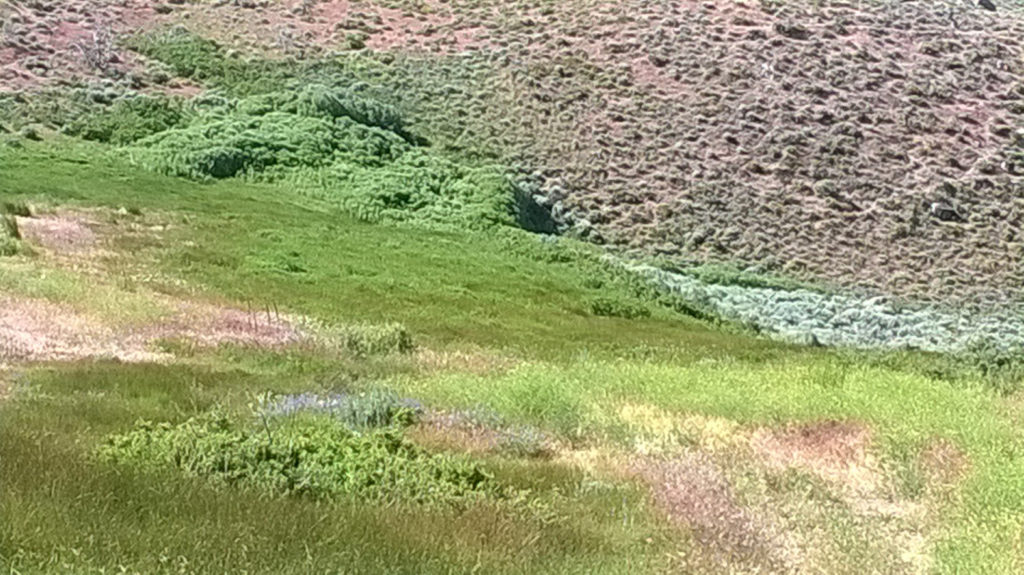
Jesus Spring, June 10, 2016. Courtesy of Shaun Giese
In the mid-1980s, I taught a course for a couple of years in Research Techniques in Local History at Lassen Community College. The students ranged in age from 18 to 78. The students received hands on training with visits to the Lassen County Courthouse to research records, and numerous other places during the course. They were always an enthusiastic bunch, and it was more the normal, the class would run over an additional hour or two. Continue reading Lassen County – Jesus Spring→
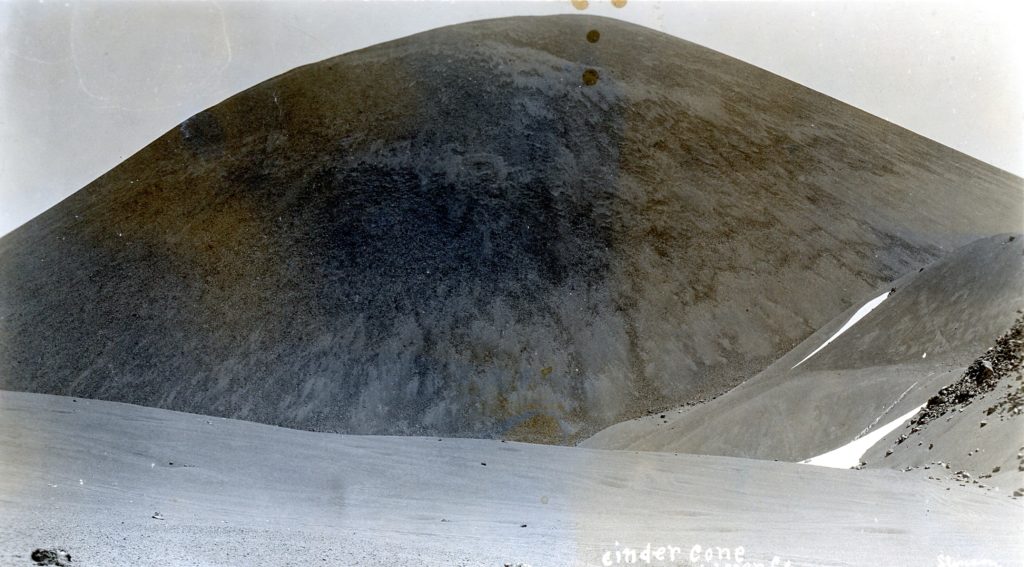
Cinder Cone, 1911. Mather considered unworthy to be part of a national park, though he had never seen the feature. Photo courtesy of B.R. Zimmerman collection.
When Congressman John E. Raker was diligently working on the establishment of Lassen Volcanic National Park, it was not the only item on his agenda. During the time when Raker introduced bills to establish Lassen Park, he had also authored proposals for the creation of a bureau of national parks. In 1914, Stephen T. Mather was recruited to create a separate agency inside the Department of the Interior whose sole purpose would be the administration of the national parks.
Raker and Mather, however, who sought for the same goal, had issues, namely in regards to that of Hetch Hetchy, which Mather opposed. In 1913, Raker sponsored a bill to dam this glacial valley in Yosemite National Park for San Francisco’s water supply. The fight over it had been going on for a decade before Raker took office, though a century later Raker is branded as one of the main culprits, since his name is attached to the bill. There were many players in the field. One that is rarely mentioned is Franklin Lane, Secretary of the Interior. Lane was appointed to that position when President Wilson was elected in 1912. Prior to that Lane was the City Attorney of San Francisco who had a conflict of interest in Hetch Hetchy.
Whatever the case may be, one hundred years ago today, (August 25, 1916), President Woodrow Wilson approved the creation of the National Park Service, and Mather was made its first director.
Tunison’s advertisement in the 1937 Westwood Chipmunk
In the mid-1930s, Bill and Jeanette Tunison established very popular bar, restaurant and gas station five miles east of Westwood near Goodrich Creek. Tunison, it should be noted had been a Westwood resident since 1916. The establishment became very popular in a short order, known for its good food and hospitality. As Marian Hull Herrick recalled, “People would call ahead to see if they serving were Jeanette’s Rum pie that night. People raved about the fried chicken and biscuits. Jeanette confided in me that they were made with Bisquick.”
In the last half of the 1800s there were two groups one would not necessarily thought to have a presence in the Lassen region–Chinese and Jews. In future posts we will explore both and their influence on the region.
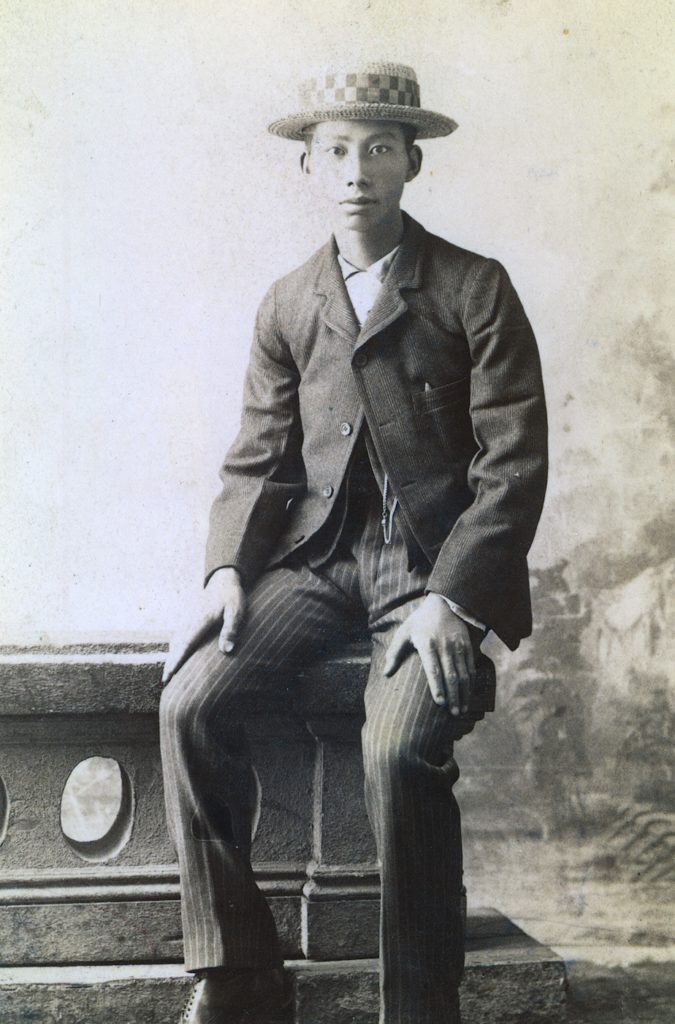
Today, is the story of Chin Sin Yu, known to many as Chinaman Joe Folsom. Joe worked as the cook on the Folsom Ranch, in Willow Creek Valley, north of Susanville and now a State Wildlife Refuge. Joe possessed many skills. As Mary Dale Folsom recounted, “It amazes me how Joe found time to do all the things he did. Not only was he the cook, but he had a garden and raised chickens and ducks. He made feather pillows from the duck and goose down. When they were shorthanded he would also get on a horse and help cowboy.” However, he was also known for his skills as a telegraph/telephone operator. In the spring of 1892, Med Folsom had a telephone line constructed to the family ranch.
In 1902, the trade journal, Telephony published a profile concerning Chin Sin Yu: “Joe, as he is known by the operators, is well like by all who know him. He is accommodating and pleasant on the line, always willing to render any assistance possible and when the lines are working hard to do all in his power to get business along. Joe can read and write and can take any telegraphic message that is sent him. He, of course, is not familiar with all the words of our language, but will receive them as sent and copy them correctly delivering the message verbatim as transmitted. The Folsom ranch office is equipped with a set of Atkinson repeaters and it falls to Joe’s duty to attend them at times. These he understands thoroughly, and anyone operating them with him would be surprised (if they did not know) to learn that they were telegraphing with an ordinary Chinaman. One particular feature in Joe’s operating is that he has all the peculiarities of his teacher, Melvinna Folsom, in his sending, and it is hard to distinguish one from the other in writing. Chinamen are noted for their ability to imitate.
“Joe is just as good on the telephone and understands the working of the instruments, switches, etc. He built a local telephone line with two instruments connected and manipulates this entirely by himself. He is proficient in the manipulation of all instruments, batteries, switchboards, connected with the telegraph and the telephone.
“Melvinna Folsom, the manager of the Folsom ranch office, deserves the credit of being tutor of this remarkable Chinaman. When she started to teach him she thought it would be an impossibility to get him to distinguish the difference between sounds, more particularly when he began to learn the letters of the alphabet. He could distinguish no difference between the articulate sounds of the letter b and n. After he had overcome this difficulty to some extent it seemed almost an utter impossibility to get him distinguish between the sounds of the words horse and house. But she labored persistently until she brought him to the perfection he has now attained.”
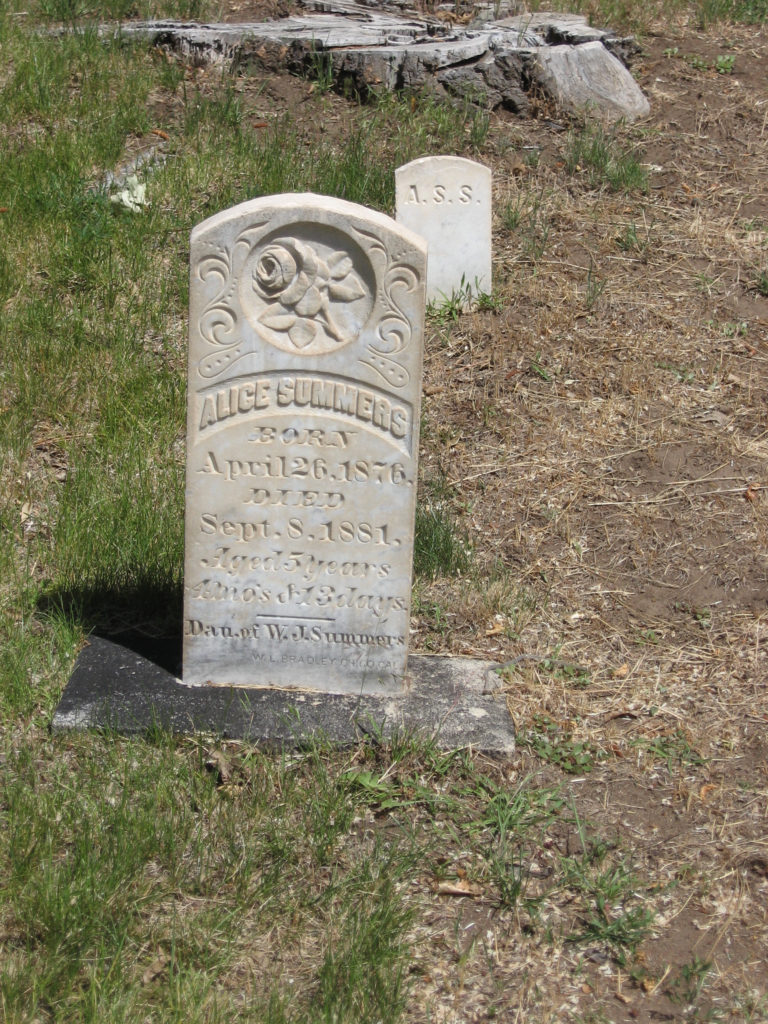
The grave of Alice Summers, Susanville Cemetery, June 11, 2016.
During the St. Patrick’s Cemetery tour, an attendee made an inquiry about small stones with initials. Before I go any further, it should be noted the small stone in question, had been moved from Louise Strong’s grave to Patrick Bagin’s grave, both in the same row of plots. Unfortunately, this happens a lot. Continue reading Cemetery Foot stones→
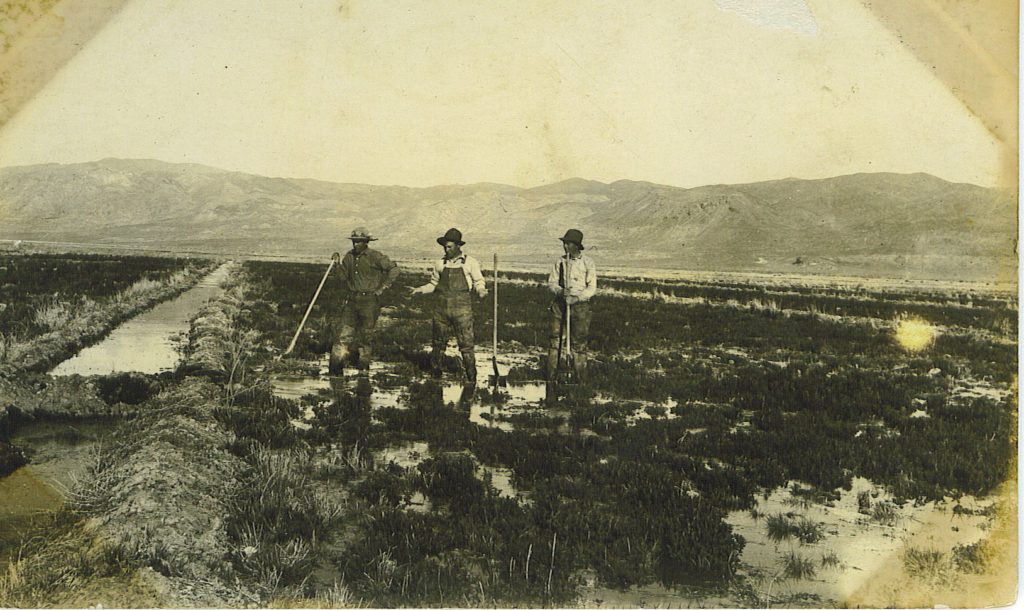
The Zarbock Brothers on their desert homestead near Stacy. Courtesy of Pam Zarbock Bell
In 1910, the Nevada Sugar Company of Fallon, Nevada came courting Honey Lake Valley farmers in the Standish district, as well those homesteaders on the east side of Honey Lake to plant sugar beets. One of the reasons, was the Nevada Sugar Company was in the midst of constructing a $600,000 factory at Fallon.
As an enticement the company stated it would build a second factory at Standish if production was successful and needed transportation facilities. In 1912, with the announcement of Fernley & Lassen Railroad to be constructed through this section of the Honey Lake Valley solved that transportation issue.
It should be noted that in 1911 was the first irrigation season of the Standish Water Company’s pumping plant on Honey Lake’s eastern shore. In that year they provided water for 1,000 acres that was planted in sugar beets, with the Nevada Sugar Company providing the seed. No one locally knew anything about growing sugar beets, but they learned quickly. One of the biggest problems encountered with beet production was the amount of labor required. The problem was compounded as there was a local labor shortage, and then there were those who did not want to work in beet fields. To alleviate the problem 25 Japanese laborers were brought in to assist. Their tenure was brief, even though it was reported they worked twice as fast at a cheaper price.
There were two other problems that ended the experiment. First there was not an adequate water supply and the beets were substandard. It was not only a problem locally, but in Fallon as well for in 1917 the beet factory there closed.
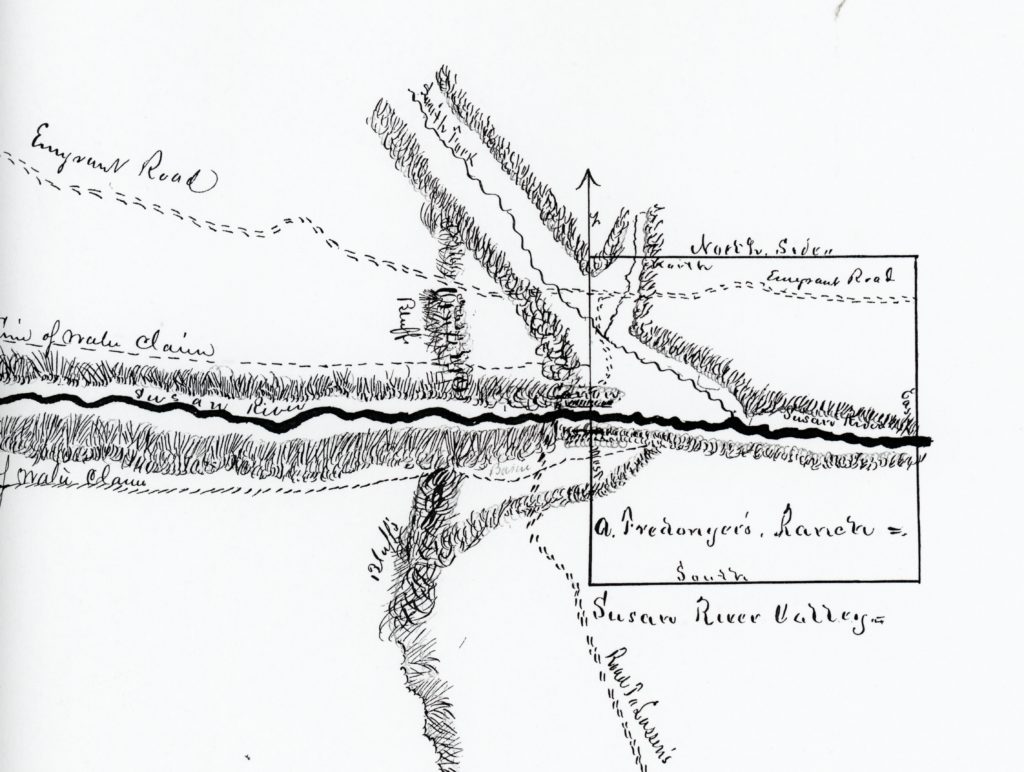
Recently, while researching early water right filings, I had the above document copied to share with everyone.
It should be noted, that in the spring of 1856, news reached the outside world of rich gold discoveries in the Honey Lake Valley and that brought an influx of miners to the region. It ultimately led to the development of a village at Roop’s trading post. At first, the settlement was known as either Roops or Rooptown. In September 1857, twenty of the residents gathered to select a name for the village. Two names were proposed, Nataqua and Fredonyer City, the latter was approved. That proclamation was more or less ignored and the place was simply referred to as Rooptown.
Before that event, however, on April 11, 1857 Atlas Fredonyer had not only filed a claim to the land that Roop had, but also became the first claimant to water rights of the Susan River. It was his intent to build a dam, to power a sawmill, but a flour mill as well. Fredonyer ultimately never proved title to the claim. On the other hand, Isaac Roop never proved title, either. Roop eventually plotted out the town of Susanville and did quite well selling lots to property he did not own. In 1872, it literally took an act of Congress to correct the situation. All the town’s property was deed to over to the Lassen County District Judge, who in turn re-deeded the property to current owner.
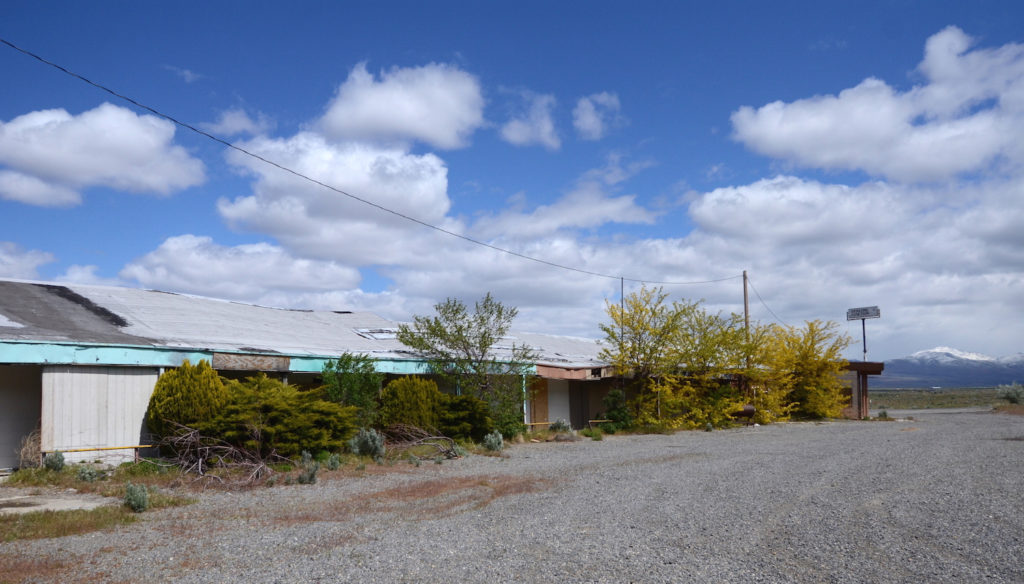
Herlong Junction, April 25, 2016. Courtesy of Oliver Grosz
Sometimes what appears a simple research project, becomes a challenging one. Herlong Junction is a perfect example. Prior to the establishment of Herlong nothing existed on this segment of the highway. Yet, when the nearby Sierra Army Depot was established in 1942, it provided entreprenauers with possibilities.
The first to arrive on the scene was Ray and Connie Langley. On February 6, 1948, they purchased a small parcel from Zoa Clayburg. As the story goes, they had a restaurant at Milford and wanted to move the building to this location, however the highway officials would not give them a permit. It was one of those mysterious in the middle of night happenings, that somehow the building transported itself to the new location, and thus the establishment of The Mark.
Before you knew it, on the opposite side of the highway a new building appeared. This consisted of an outpost of Susanville’s Royal Grocery, along with a restaurant. While Royal Grocery no longer exists, its successor does, namely Idaho Grocery.
A lot of changes have occurred over the years, and while the businesses on the east side of the highway have shuttered, The Mark continues on.
In the meantime, I will work on researching this further, and will provide updates on my findings.
Never miss a story, subscribe for as a little as five dollars month. To learn more, click here.