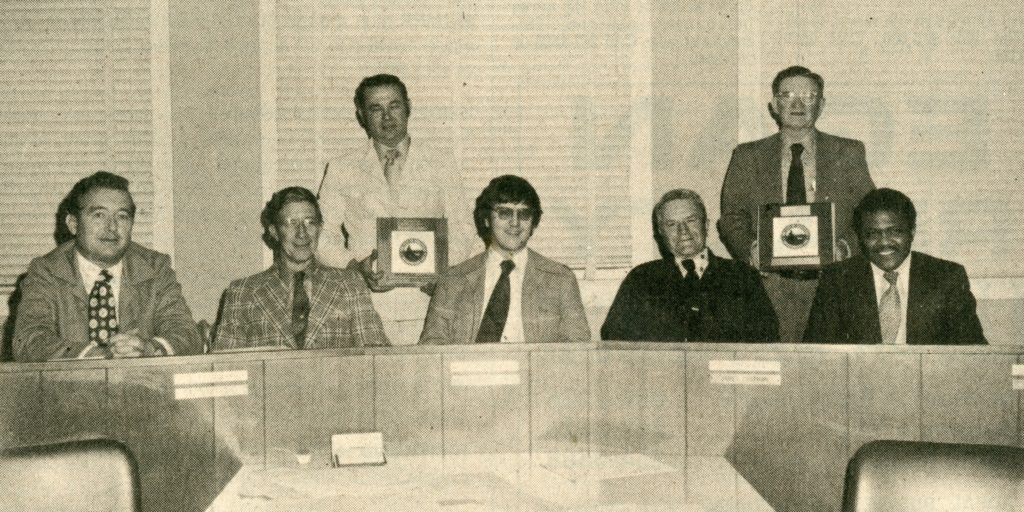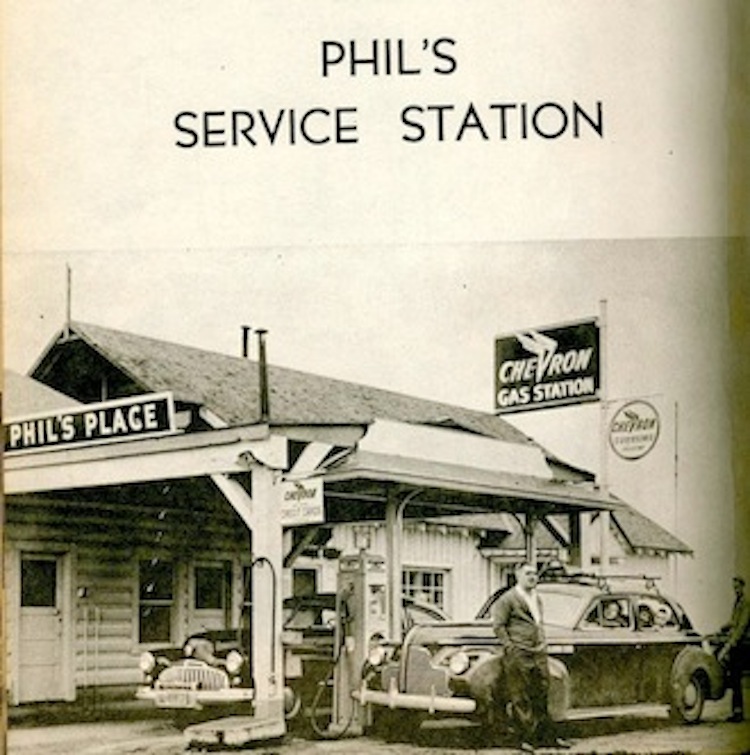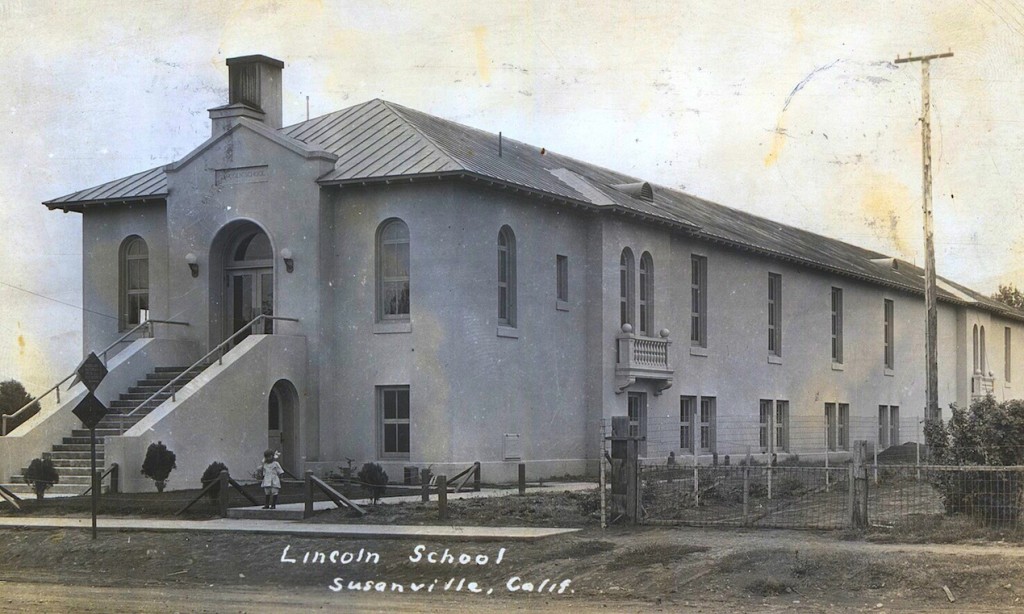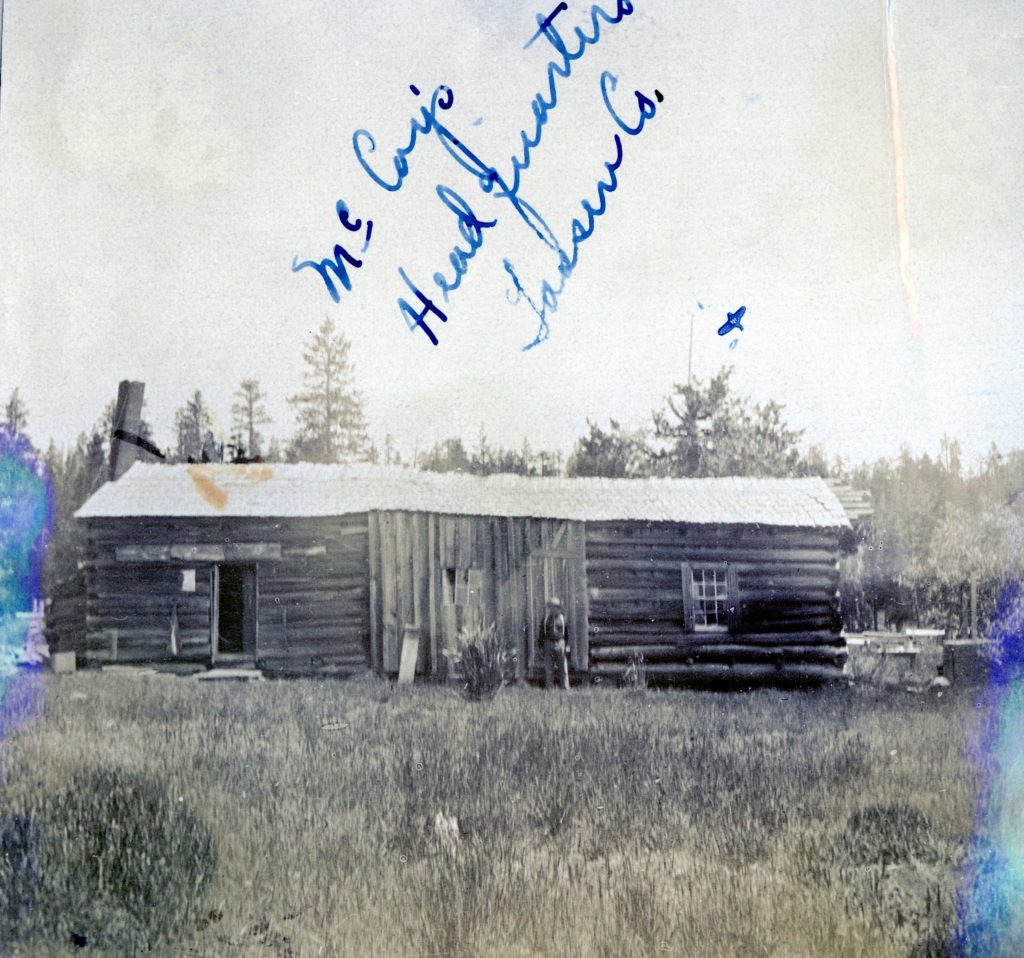
Lassen County Courthouse, circa 1890s. Assembled are county officials, along with the grand jury.Those who attended the Centennial Cemetery Tour learned that the first courthouse was held on rented property known as the Magnolia Saloon. In 1867, Henry C. Stockton, one of the original County Commissioners (now Supervisors) voted to award the contract to build the first courthouse to his best friend William Williams for $9,850. Now, we know why public officials file conflict of interest statements. While the amount may seem paltry in today’s dollars, it was a tidy sum then. Money was scarce while the country slowly recovered from the effects of the nation’s Civil War.
Red River Lumber Company’s Westwood Box Factory, 1915.One hundred years ago, the major component of the lumber mills was the box factory. It is rather a misnomer, since what was actually manufactured was box shook. Box shook were the various sized wooden slats that are used to make wooden crates, which was how the nation’s fruits and vegetables were then shipped. The shook was shipped to packing houses were they were assembled. To understand the enormity the amount of lumber used to make these boxes, was that during the early 1930s of the great depression over half of lumber produced in the United States was used for box shook. It was not until after World War II that the cardboard box would slowly become the preferred shipping container. In the future we will explore this topic further.
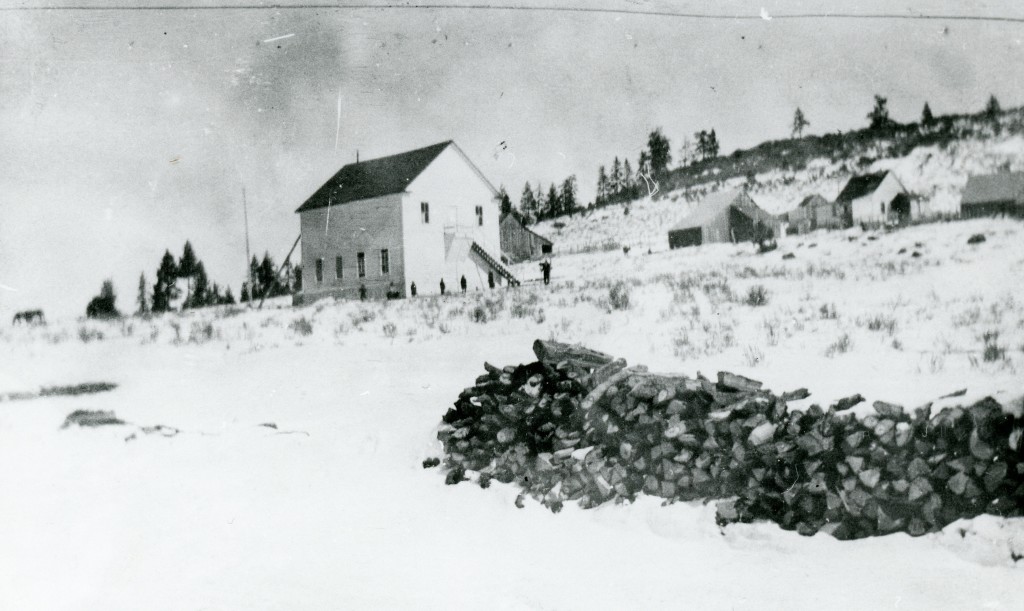
Johnstonville School, 1916Yesterday marked the 1,000th post that started on February 12, 2015. One of those posts concerned Johnstonville School. It was one of the original Lassen County school districts established in 1864, but was originally named Susan River School District. In February 1878, the name was changed to Johnstonville. On January 20, 1961, a groundbreaking ceremony was held to build a new school to replace the old one. School board members, Harry Reuck, Mary Barr and Leroy Cramer, broke the ground for a new four-room schoolhouse which would cost the district $134,518. When completed the old school house located on an adjoining parcel was sold and converted into a private residence.
Donate!
It’s a wonderful day to get lost in some delicious daydreams, as you use creative visualisation to help you set goals and plan for the future. Don’t dream small … make sure you go for gold!
With that in mind, and since odometer on this model just marked another year, I am taking the day off.
Murrer Ranch, 1950s.In the summer of 1863, saw the establishment of Leesburg in the Willow Creek Valley. The Lee family located at the upper end of the valley and built several cabins, providing the nucleus of the community. While Leesburg’s existence was brief, the County of Lassen recognized the settlement. In 1864, the county created its initial voting precincts. The Willow Creek precinct was established and Leesburg was the designated polling place. In 1865, a German immigrant, Ben Neuhaus, located on the abandoned Leesburg outpost and it should be noted that his family still retains ownership, though it is better known as the Murrer Ranch.
Norma at Eagle Lake. Courtesy of Wyn WachhorstWhat would Eagle Lake be like if it were not for Norma? It is something that crossed my mind as I scan the Gallatin photograph collection. Norma Virginia Harvey was born in 1910 at San Francisco, the only grandchild of Malvena Gallatin. It was because of Norma, that Malvena built the first summer home at Eagle Lake in 1913, which she dubbed the Cedar Lodge, but is better known as Gallatin House. For the remainder of that decade the extended Gallatin clan were frequent visitors at Eagle Lake. At that the time the house was constructed Eagle Lake kept rising to historic high levels and this troubled Malvena. After all, a portion of her timberland along the lakeshore was flooded. In 1914, she invited a civil engineer by the name of Leon Bly to Eagle Lake to see about reviving the failed attempts to tap Eagle Lake for irrigation, that at the same time would regulate the level of the lake. Bly’s tunnel and a twenty year drought would greatly reduce the water level of the lake. By the 1920s, the Gallatin’s visits were few and far between. In the 1930s, Malvena attempted to sale her Eagle Lake property to a developer, but it failed due to the low water level of the lake. In 1944, Norma passed away, and that Christmas Malvena returned to Cedar Lodge for the last time. In 1946, Malvena sold all of her Eagle Lake holdings except for her summer home that eventually would be given to Norma’s son. Thus, Norma’s birth led to an interesting chain of events at Eagle Lake.
601 Cottage Street. Courtesy of JoAnn UptegroveIn all honesty, there is no 601 Cottage Street anymore, because it is now a parking lot of LMUD, though the house that was originally there was moved a short distance to 607 Cottage Street in 1939. Built in 1901, it was the Koken residence for many years. In 1939, Safeway began construction of a new grocery store on Roop Street. They had the residence to moved to its current location and it was J.R. Packwood who added the second story.
Bank of America demolition.It only seems fitting to provide a photograph of the demolition of Bank of America’s first building. After all there is no doubt that the Susanville branch changed the character to Susanville’s uptown business district.
Bank of America, 1971.Today, the Susanville branch of Bank of America closes. The nearest branches are now in Red Bluff and Reno. It was in the summer of 1928 when the bank began negotiations with the Lassen Industrial Bank to take over that troubled institution, which you will note that it was before the 1929 stock market crash. The Lassen Industrial Bank was noted for its liberal loan policies, but that was not the entire problem. Leon Bly’s failed Eagle Lake project took a major toll on the agricultural community and numerous farmers and ranchers defaulted on their loans. The bottom line, on December 1, 1928, Bank of America took over the Lassen Industrial Bank and its iconic two-story brick building on the corner of Main and Gay Streets.
Susanville Cemetery entrance prior to the February 5, 2015 windstormThis is just a pet-peeve of mine. What really galls me is it origins are the Lassen County Historical Society, of all institutions. It seems as there is an individual(s) who refer to the Susanville Cemetery as the Pioneer Cemetery and from time to time it gets picked up by the local media using that reference It is not, nor will it ever be the Pioneer Cemetery, nor is there a cemetery in all of Lassen County that has that distinction. Furthermore, if you use Asa Fairfield’s definition of pioneer, he refers that the pioneer era for the region ended in 1870. Thus, more than ninety percent of those interred there are not from the pioneer era.