In the beginning of time, the school’s colors were not purple and gold. I know that sounds almost sacrilegious. Back in the earliest years of the school’s history, it was the seniors who chose the colors for the year. The first graduating class of 1907 selected the colors of green and gold and this proved popular for the next few years. The Class of 1911 were a bit more rebellious and opted for blue and white. By the end of the decade purple and gold were adopted, and its been that way ever since.
On November 6, 1956, Jeanette Worley sold the Knoch Building to Tony and Hersoula Legatos for $69,500. It marked the end of era of the Knoch family’s influence in Susanville history.
It all began in 1864, when her grandfather David Knoch opened a general mercantile store at 722 Main Street. In 1877, Knoch made Jules Alexander, a junior partner in the business. Eleven years later, Alexander married Knoch’s only daughter, Rae. They had two children; Jeanette who married Jesse Worley and Edythe who married Justh Fehr. Continue reading The Knoch – End of an Era→
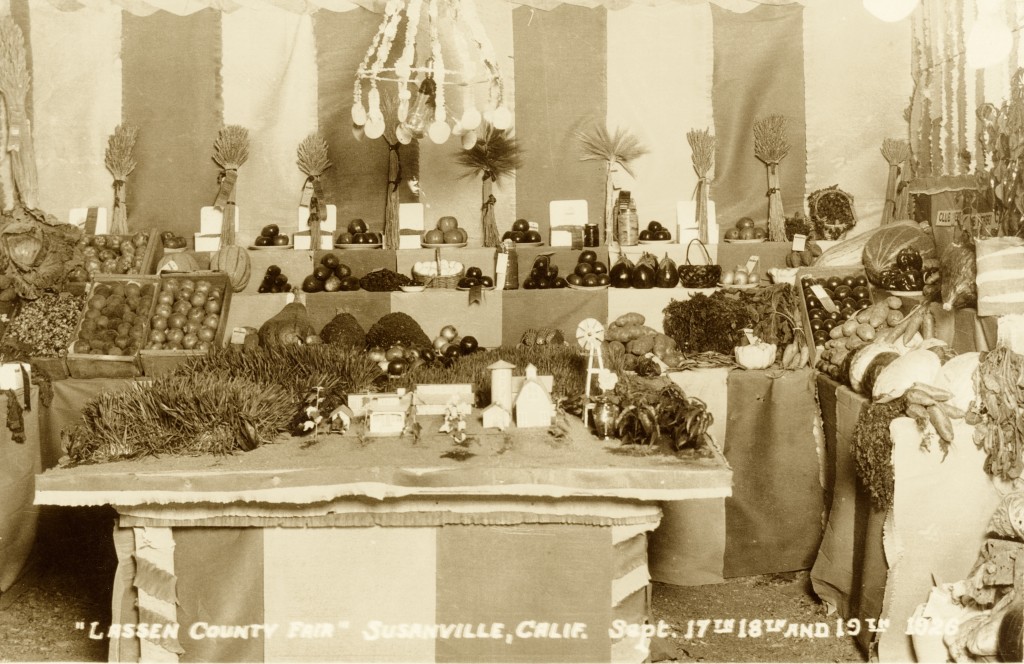
Tomorrow marks the return of the farmer’s market in Susanville. Please note the location has changed and it is on Pancera Plaza, Main and South Gay Streets, and not the Susanville Depot. When the big lumber mills were established it was a bonanza to the local agricultural community. In 1924, the Fruit Growers Supply Company purchased the following for its workforce.
300 pounds of fresh apricots
25,000 pounds of apples
500 pounds of asparagus
5,000 pounds of beets
4,000 pounds of green beans
21,000 pounds of cabbage
3,540 pounds of cucumbers
1,270 pounds of sweet corn
10,400 pounds of carrots
10,500 pounds of cauliflower
2,200 pounds of celery
5,200 pounds of grapes
12,600 pounds of watermelon
17,560 pounds of other melon
11,600 pounds ofgreen onion
50,000 sacks of dry onions
13,400 pounds of peaches
100 pounds of pears
1,000 pounds of peppers
13,800 pounds of tomatoes
89,200 pounds of beef
24,500 pounds of veal
33,600 pounds of pork
2,200 pounds of turkey
3,860 pounds of poultry
1,300 cases of eggs
21,800 pounds of butter
14,220 pounds of ham & bacon
117,500 pounds of flour
Never miss a story, click here to subscribe and support.
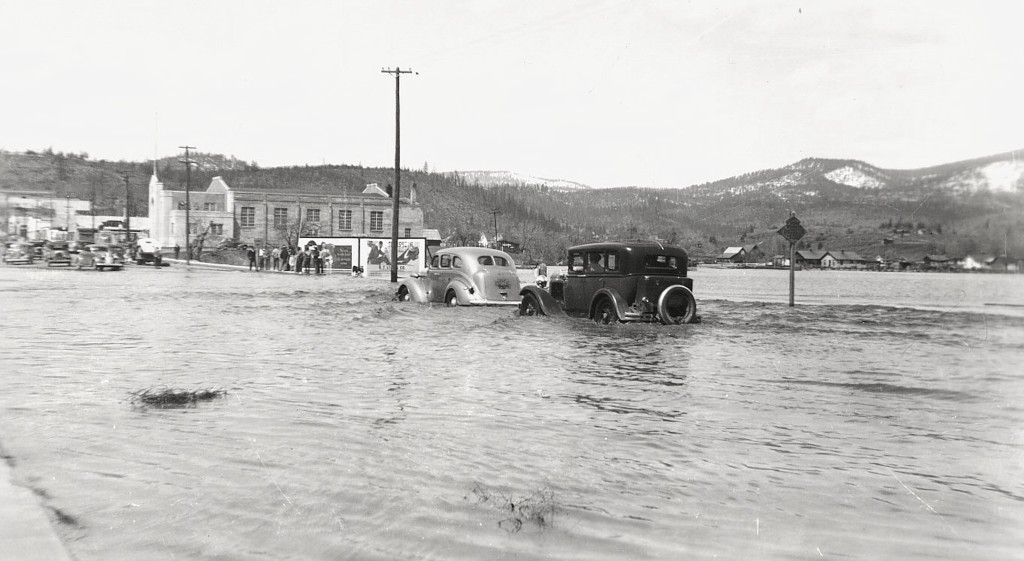
Piute Creek flood of April 9, 1938. Courtesy of Margaret A. Purdy
In February, I inaugurated a book-of-the-month, that featured Sagebrush Reflections. After all proceeds from book sales not only help support operations, but help finance future publications, in this case the stories behind the brands of the Pioneer.
With that in mind, how well do you think you know Susanville? This book is a comprehensive look of one of the oldest communities of the western Great Basin may have you thinking twice. Weather is a universal topic, yet do you know what year there was only one winter storm or the other extreme with a record 36.7 inches of precipitation? This is the tip of the iceberg of topics explored.
Of course, major historic events from its fires that led to the creation of the city to when lumber was king and with its decline, the prison industry became a hot topic. Interspersed are fascinating tidbits—telephones introduced in 1911 to the last passenger train in 1933.
To learn more about this book and to order, simply click here.
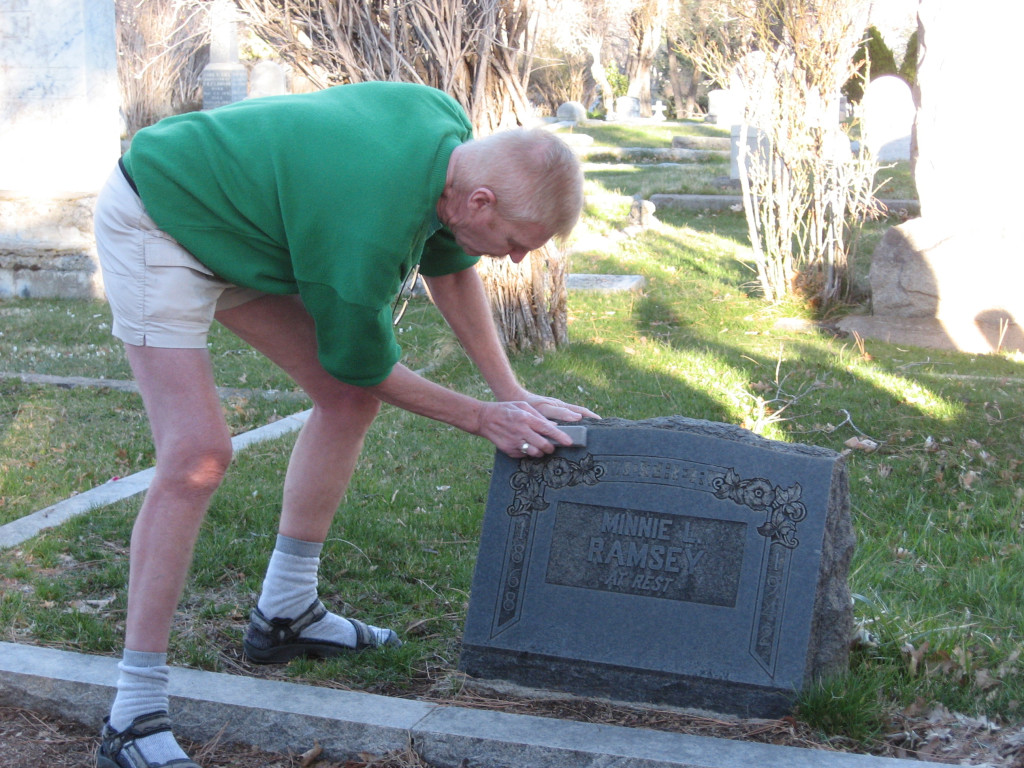
Demonstration cleaning a headstone during the St. Patrick’s Cemetery Tour, 2016.
I may never forgive Congress when they corrupted holidays to make three-day weekends. One of the victims was Memorial Day. As it was the custom, prior to the change, everyone went to the cemeteries on that day. Now, it is whenever you get around to do it, though unfortunately time has taken its toll and fewer people observe the original intent of the holiday.
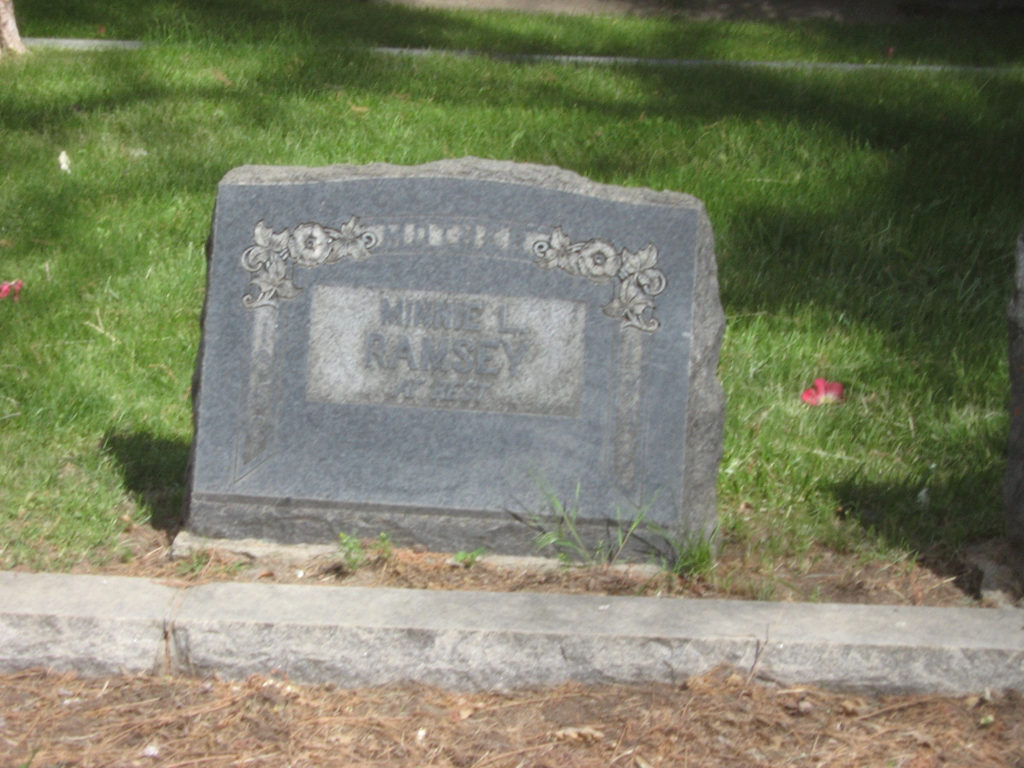
However, I still follow tradition. Actually, it takes me several weeks to take care of everything. One project that I am slowly working on is the polishing of headstones. It is slow and tedious but the final result is worth the effort. During the St. Patrick’s Cemetery Tour I did a brief demo on the grave of Minnie Ramsey. The technique is simple, a pumice stone and lots of elbow grease. One can spray the surface with water, but that is a messy procedure, and dissolves the pumice stone quickly. If you want to go the extra mile, once the grime is removed, spray with WD 40. Let it sit for awhile ten minutes or so, and then use a damp cloth to do the final cleaning. This removes any residue of the WD 40, which is necessary otherwise dust, etc would cling to the stone.
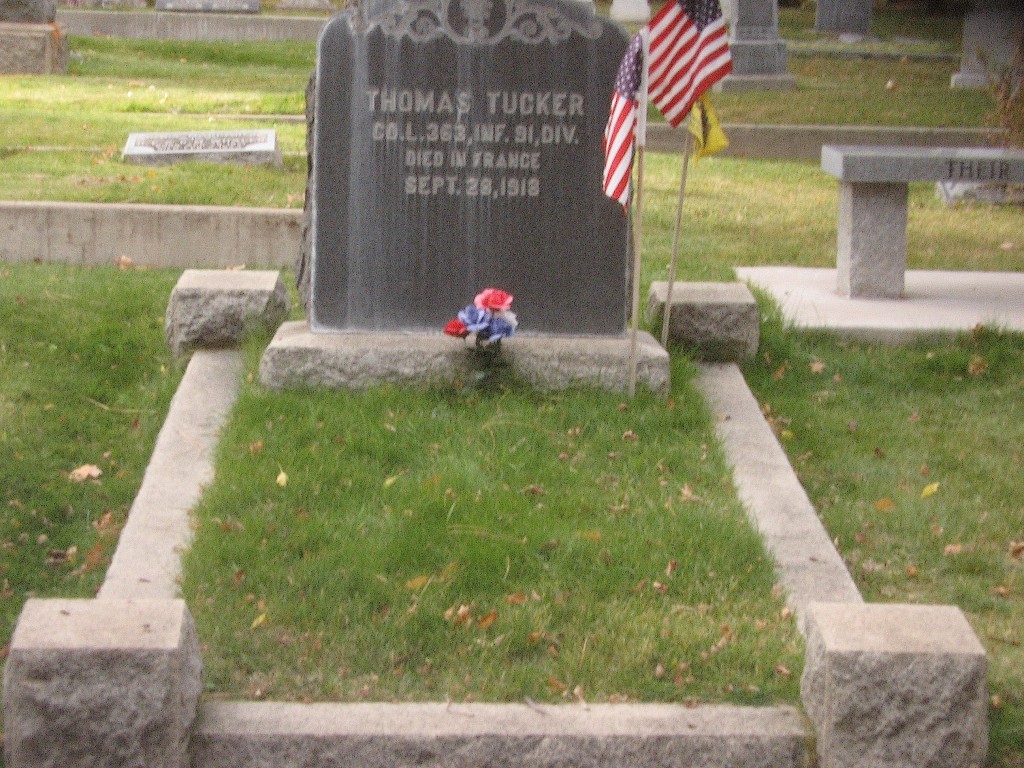
Thomas Tucker’s headstone prior to cleaning, November 2014.
Thomas Tucker, a Maidu born at Big Meadows (now Lake Almanor) in 1895 and moved to Susanville at an early age, where he was raised by his aunt and uncle Cap and Emma DeHaven. He first attended the Greenville Indian School, where he excelled in his studies. He was noted for his gifted vocals in singing, as well as his athletic abilities. When the U.S. entered World War I, he enlisted. On the fateful day September 28, 1918 he was killed in action in France, becoming the first casualty from Susanville in the War. His comrades held him in high esteem and when the local American Legion Chapter was formed in 1920, it was named in his honor, Thomas Tucker Post No. 204. In 1940, a tree was planted in his memory at the Lassen County Courthouse, and a small marker placed with his name. Continue reading Thomas Tucker→
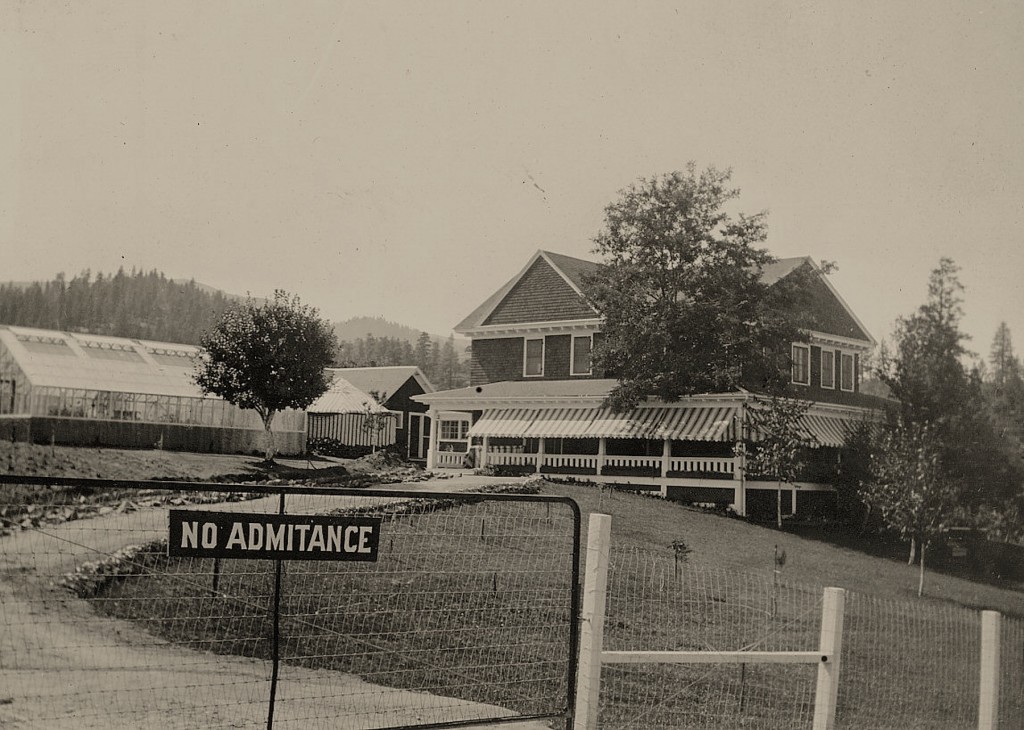
Susanville Country Club, 1931. Courtesy of Fred and Alyce Bangham
In the spring of 1924 witnessed the development of Susanville’s first golf course. It was an outstanding success that gave birth to the Susanville Country Club. For the new organization the timing was exquisite. It just happened that in the summer of 1924, the Lassen Lumber & Box Company purchased George Wingfield’s summer home some eight miles south of Susanville along the base of Diamond Mountain. Equally important one of the lumber company’s executives, A.G. Breitwieser was a big proponent of golf.
In the fall of 1924, not only had the local “duffers” outgrown the first golf course, that a golden opportunity came there way. The Lassen Lumber & Box offered the Wingfield property to the Susanville Country Club at a bargain price of $20,000. It was reported that Wingfield had spent $335,000 to develop the property.
To finance the purchase the club offered an exclusive 100 resident membership and 50 non-resident. The cost $250. that, however, included a lot to build a personal cottage. In addition, there was a a five dollar monthly dues. This was not a deterrent and within a few short weeks, the club had a full charter membership.
In the fall of 1931, L.R. Cady and Frank Coffin purchased the property, thus ending a chapter in the Susanville Country Club.
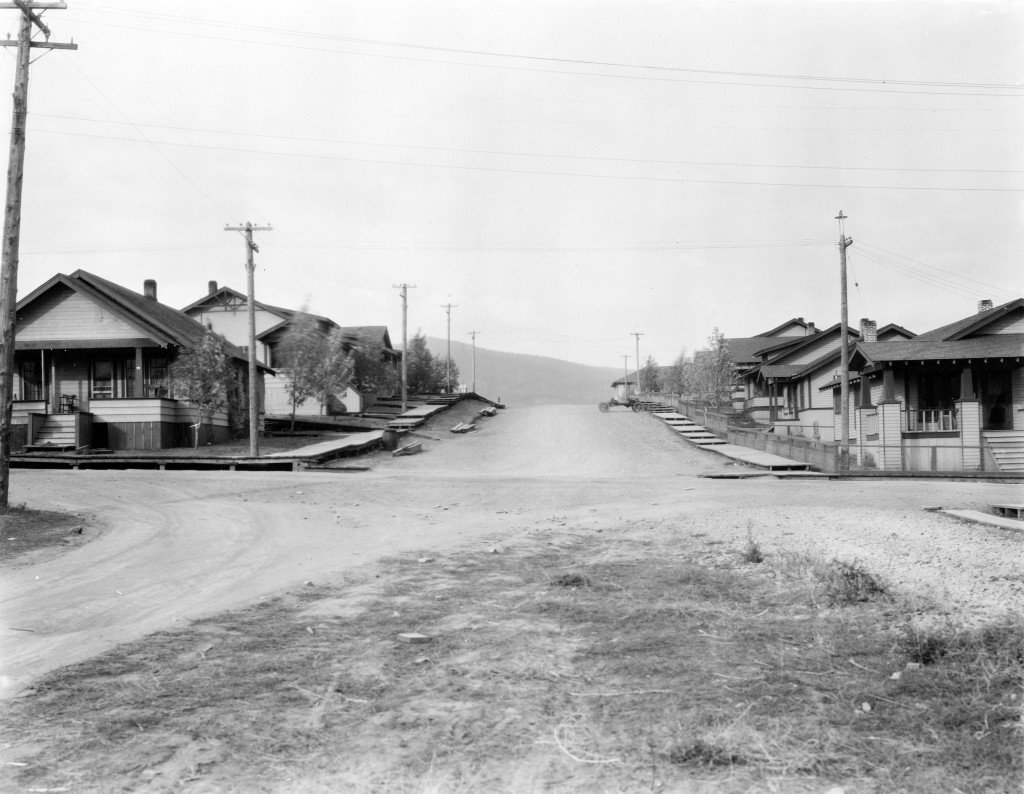
When Lassen Townsite’s unveiled its massive subdivision to the south of Susanville, there was a task of naming all the streets. The streets on the northside of the railroad tracks were named after investors such as Knoch, Pardee and Minckler. The streets to the south of the railroad tracks were named after California counties. When the Lassen Lumber & Box Company established its plant in 1918, they constructed their employee housing on the south side of the railroad tracks, it being adjacent to their mill.
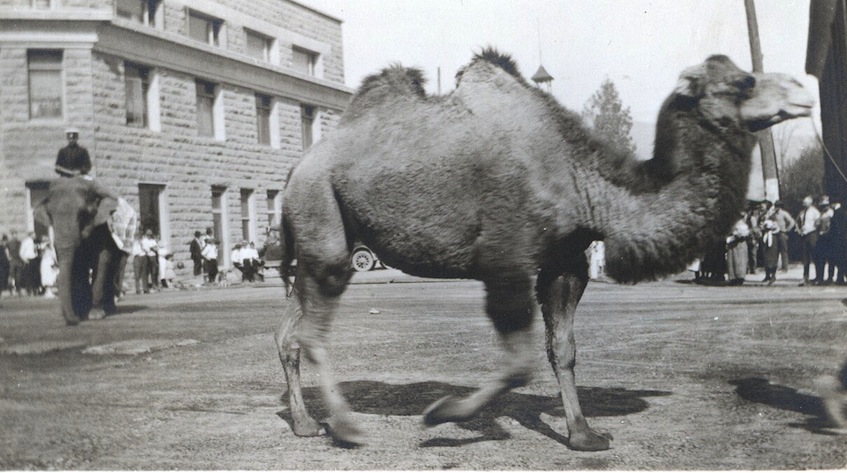
That is right, a camel at the intersection of Main and Lassen Streets. B. Dorsey Collection
In 1916, the Al G. Barnes Circus advertised that his “The Only Real Wild Animal Show on Earth! was coming to Susanville. It was announced that there would be 65 animal acts and exotic animals from around the world. The circus never arrived, as the circus train derailed near Flanigan, Nevada.
Two years later, Barnes’ circus finally did make it to town. On May 8, 1918 crowds lined Main Street for a mile-long parade with exotic animals. At Halltown tents were set up for the performances. The only problem encountered this time was the typical erratic spring weather witnessed a few snow flurries during the day.
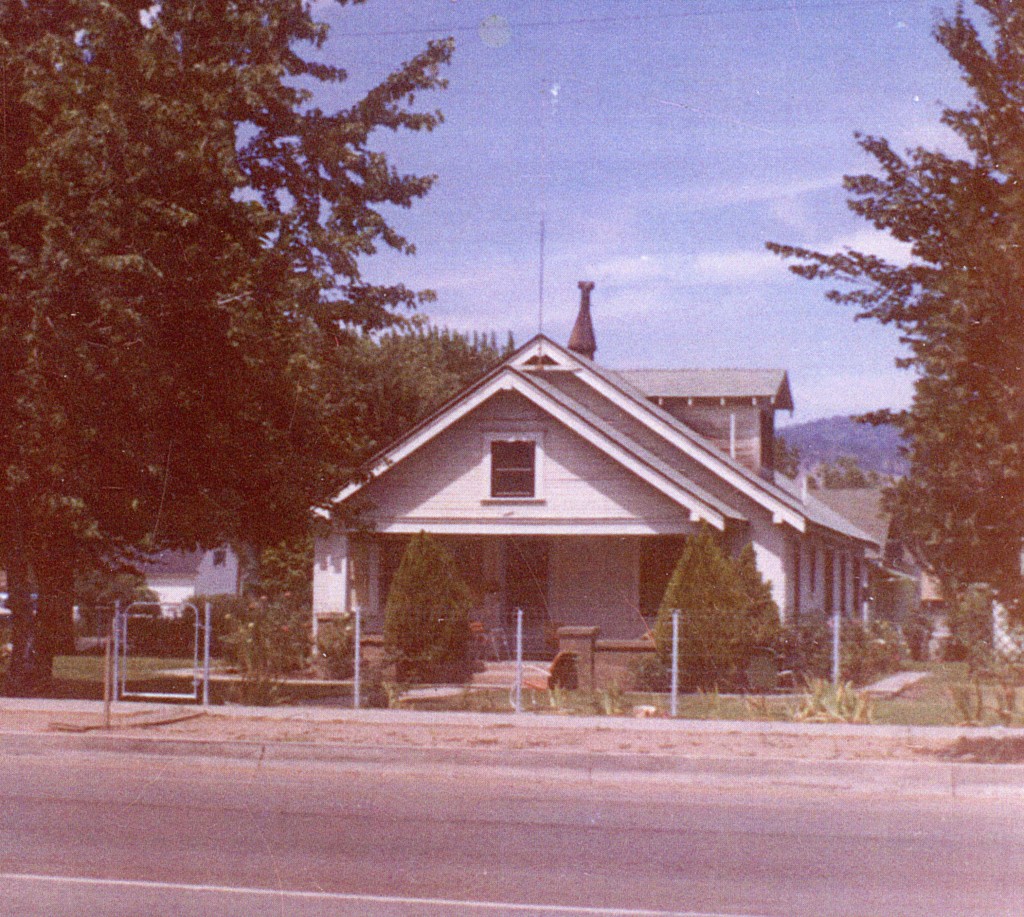
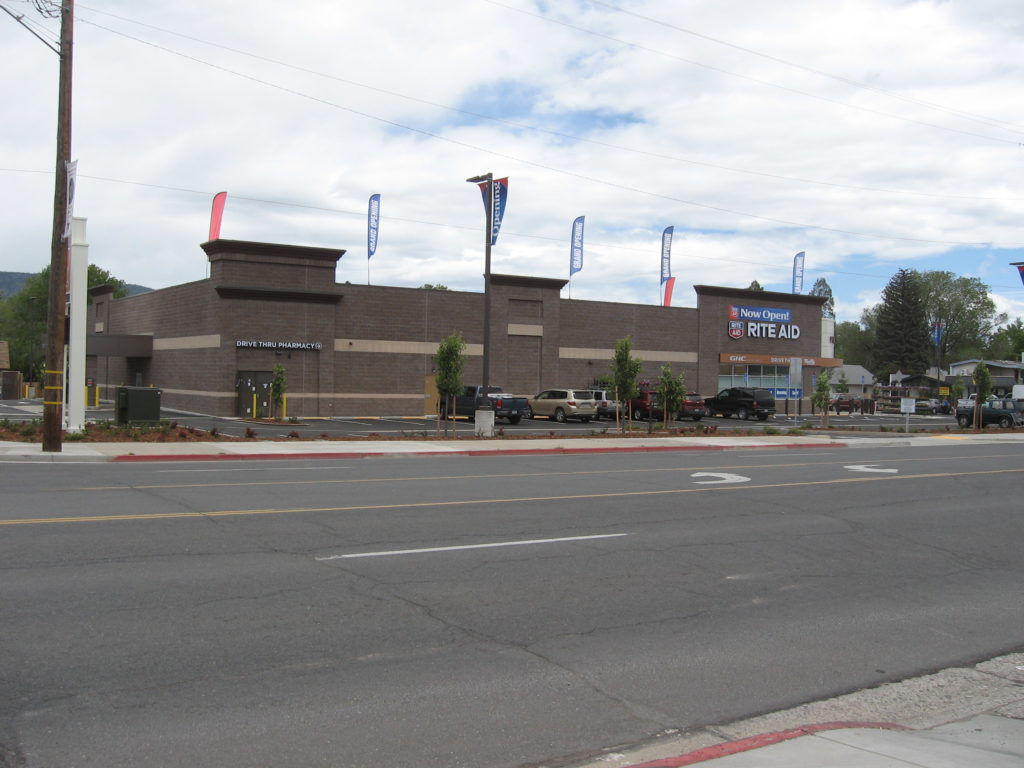
Between 1930 and 1960 the majority of Susanville’s population was either born at Potter’s Maternity Home or Riverside Hospital. Potter’s was located on the 1600 Block of Main Street on the corner at Park. In 1966 the house was moved to South Street, as United California Bank acquired the property for a new location. The bank building was torn down in August 2015 and was replaced with a Rite Aid store, which opened in May 2016.
This is what the entire block looks like on May 14, 2016.