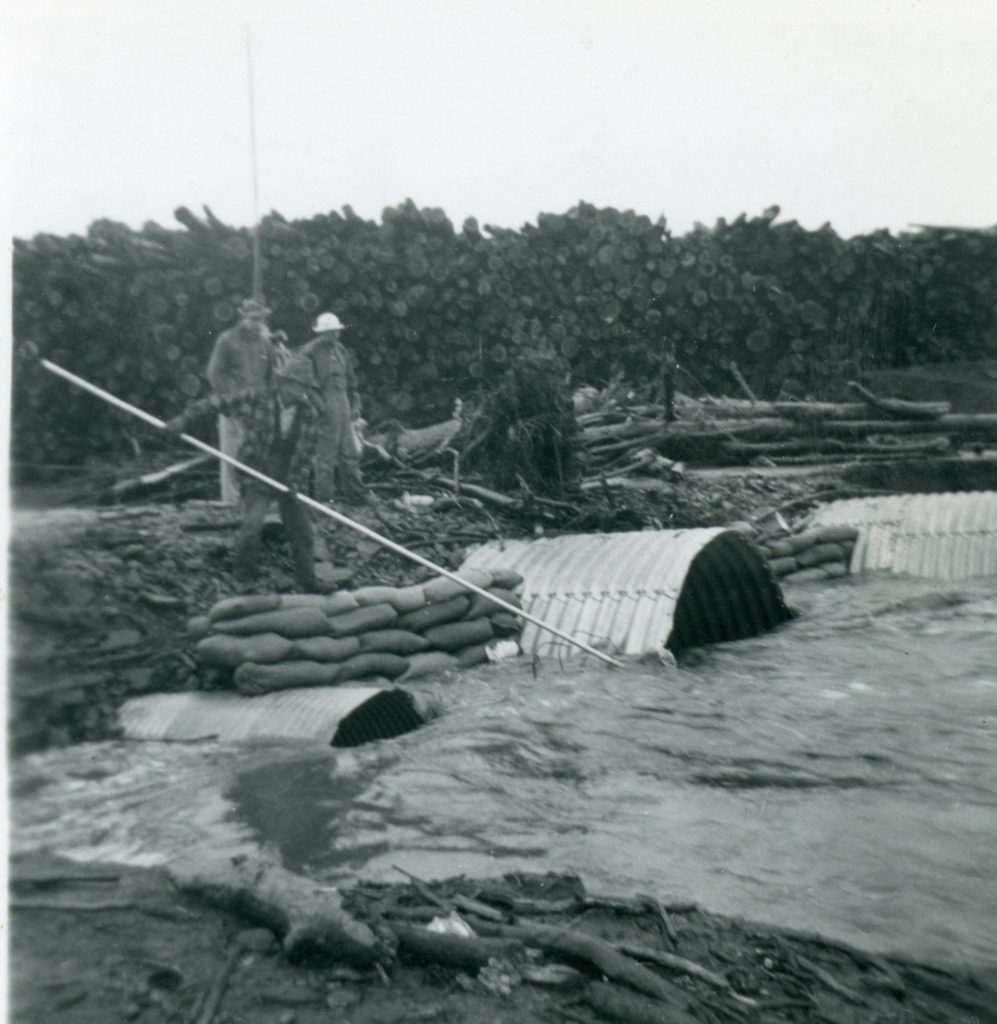
Riverside DriveWhile it is officially the first day of winter, some in the meteorological field considered the seasonal change on the first of the month, as the weather conditions have already changed. Anyhow, remember last year’s flooding. Today’s photograph is of the flood of 1955 of Susan River on Riverside Drive. You will note back then there was not a bridge but culverts. After the flood, the culverts were replaced with a bridge. Of note, in the background is the log deck of Fruit Growers Supply Company.
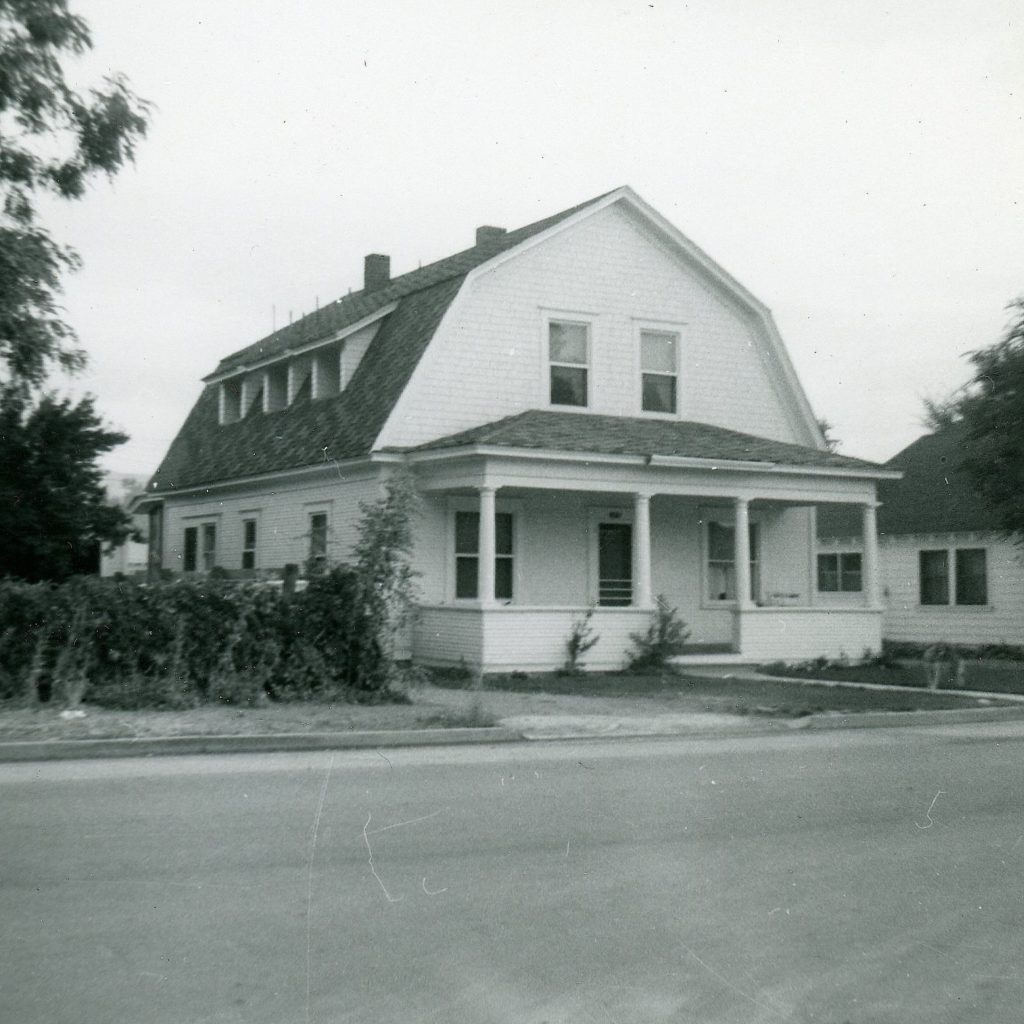
1415 North Street, Susanville, 1955. Courtesy of Wendell LaugheadLately, we have explored how old buildings were recycled such as the County Hall of Records reincarnated as the Susanville City Jail. When it comes to old homes, some times instead of being demolished to make way for a new building, they get s second life and are moved to another location. A perfect example is that of the A.J. Mathews home, originally located at 501 Main Street. Mathews father-in-law, John Cahlan had the house constructed in 1911. In 1954, it was moved to 1415 North Street to make way for a J.C. Penny store, which has a new life as Uptown Cinemas.
Lassen County Courthouse and Hall of Records, 1907. Courtesy of Gil MorrillVarious fires in Susanville’s early history, naturally shaped its image. Most of the devastating fires were located along Main Street and the town’s business district. In 1887, the County of Lassen as a preventative precaution decided to construct a small stone building on the north side of the courthouse. Known as the Hall of Records it was to store valuable county documents such as deeds. The building was torn down in 1917 to make way for the new courthouse. Yet, the building would be recycled and the City of Susanville used the native stone to build a small City Jail next to City Hall on Lassen Street. The jail remained in use until the 1950s when it was finally closed and was converted into a garage. It was torn down 2001 to make room for an addition to City Hall.
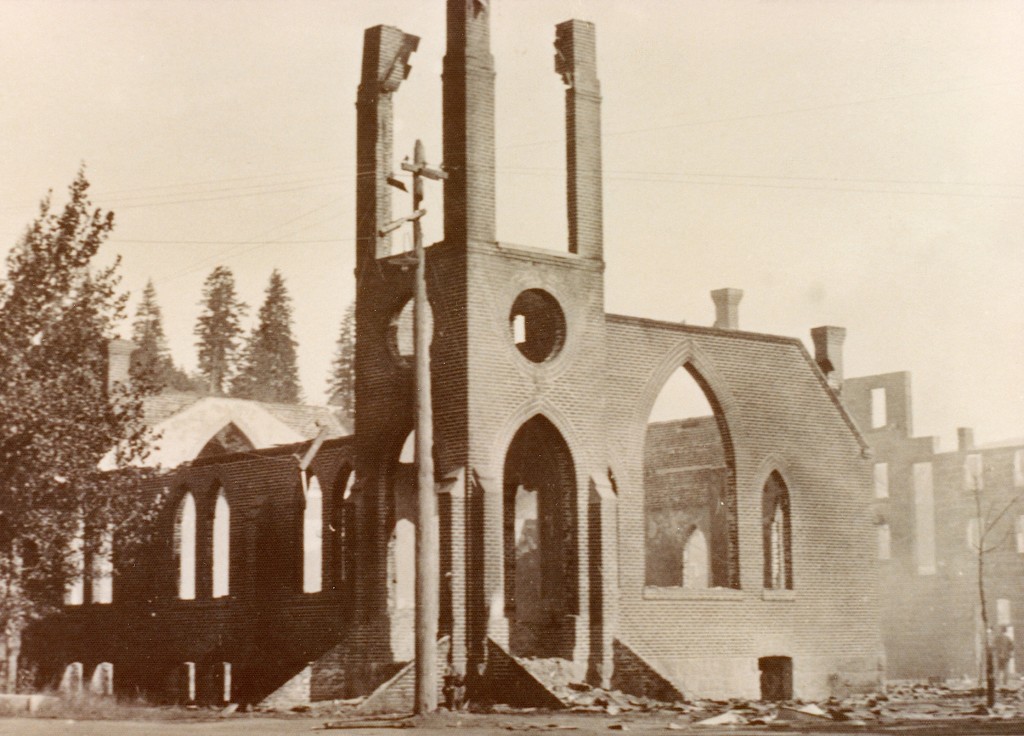
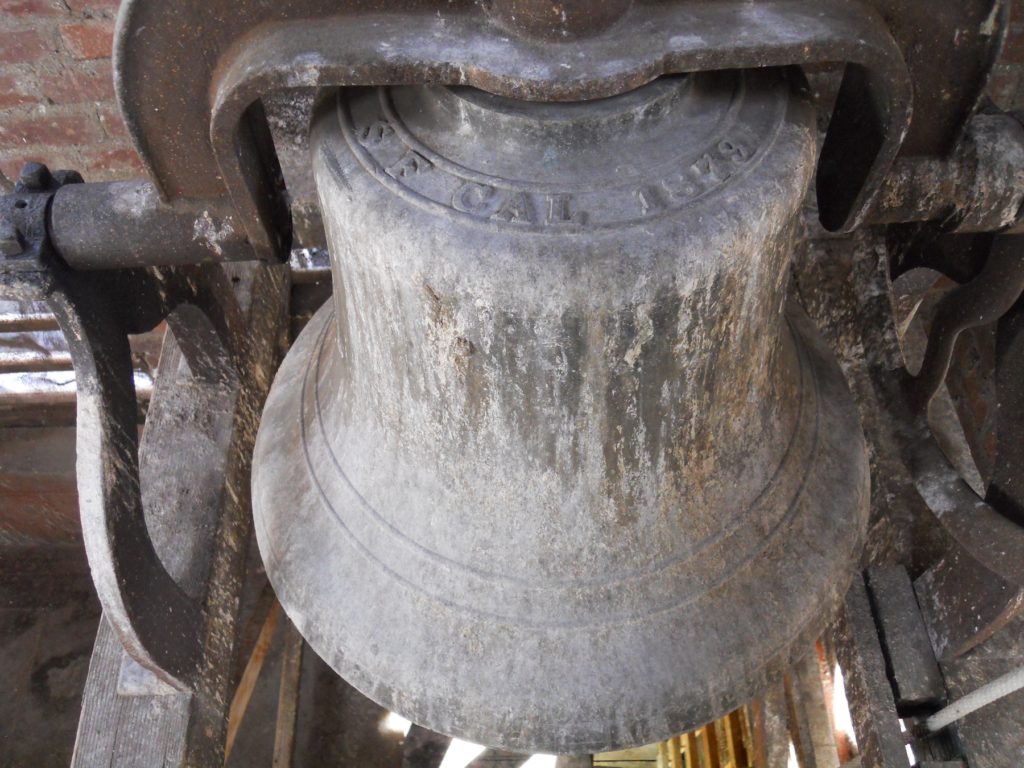
The aftermath of the 1915 fire.On October 29, 2017 I wrote a story about the first bell of the Methodist Church that was destroyed in the 1915 fire. It was a devastating blow to the congregation emotionally as well as financially. The church was insured for $5,000, but they would need an additional $3,000 to rebuild, and that included using the existing walls. The Rev. J.H. Westervelt who was the pastor at the time was a resourceful fellow such as holding a Kirmes Festival as a fundraiser. In 1916, an opportunity for a bell arose when Lassen County was in the midst of The infamous bell. Courtesy of Martin Baldingconstructing a new courthouse. The old courthouse, which was built in 1867, along with other items were auctioned off and sold at a bargain, and Westervelt acquired the bell that was used in the original courthouse, for his church. That bell is still used to this day.
South side of the 700 block of Susanville’s Main Street, 1901The City of Susanville was incorporated in 1900, and with any new institution there was a lot of foundation work to be done. Take for instance speed limits. In 1902, the city passed an ordinance for speeding, the limit set an eight miles per hour whether motorized or not. However, an automobile had yet to grace the streets of Susanville. Bicycles were all are the rage then, some considered them a nuisance. In 1911, the city increased the speed limit to fifteen miles per hour, but it went ignored. On January 10, 1913 the Lassen Advocate noted: “Another man’s dog got under the wheel of a gasoline juggernaut this week. Sooner or later it will be somebody’s child that will fall victim to the speedomaniac’s disregard of the law. Then (maybe) our officers will recognize the difference between forty and twelve miles per hour.”
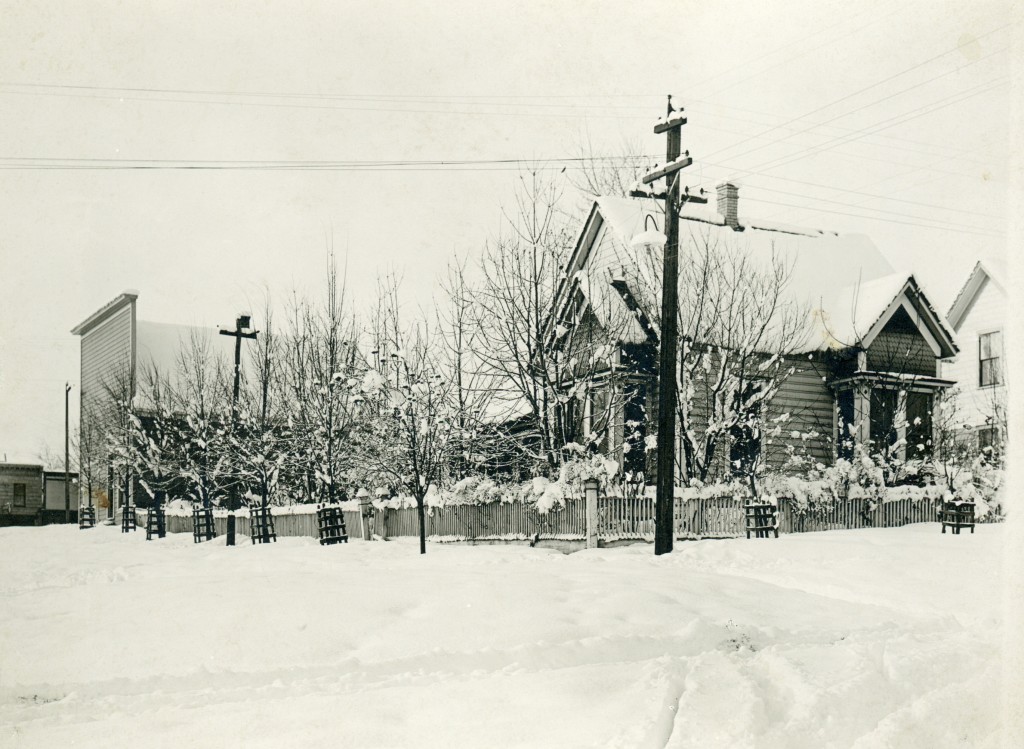
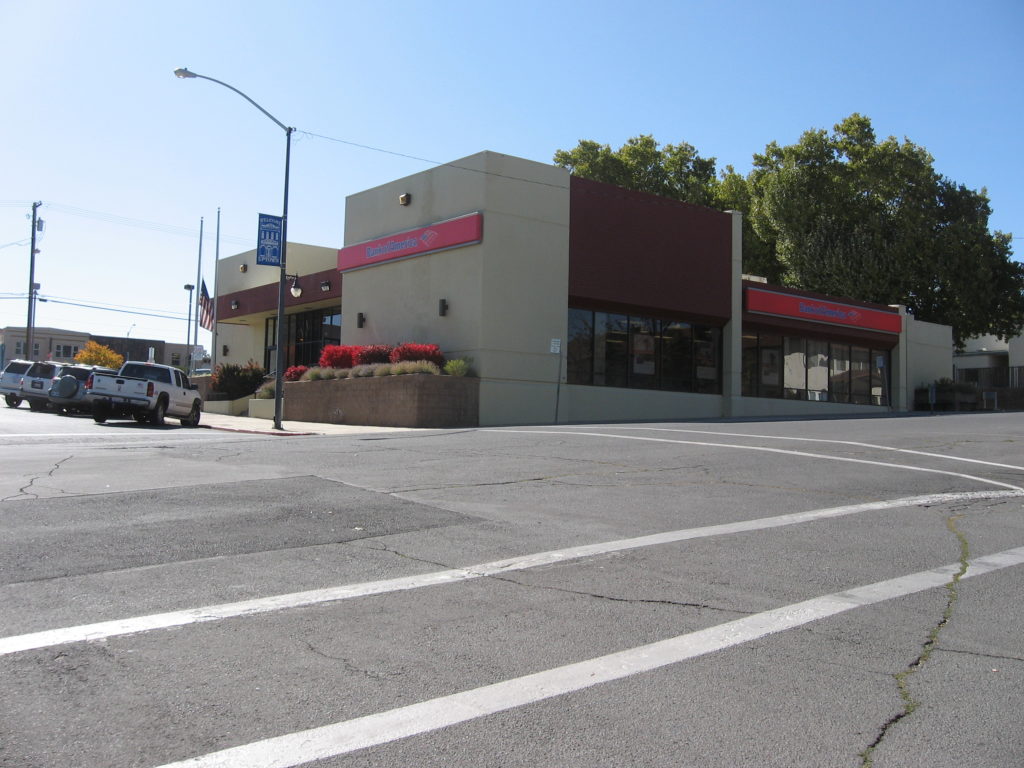
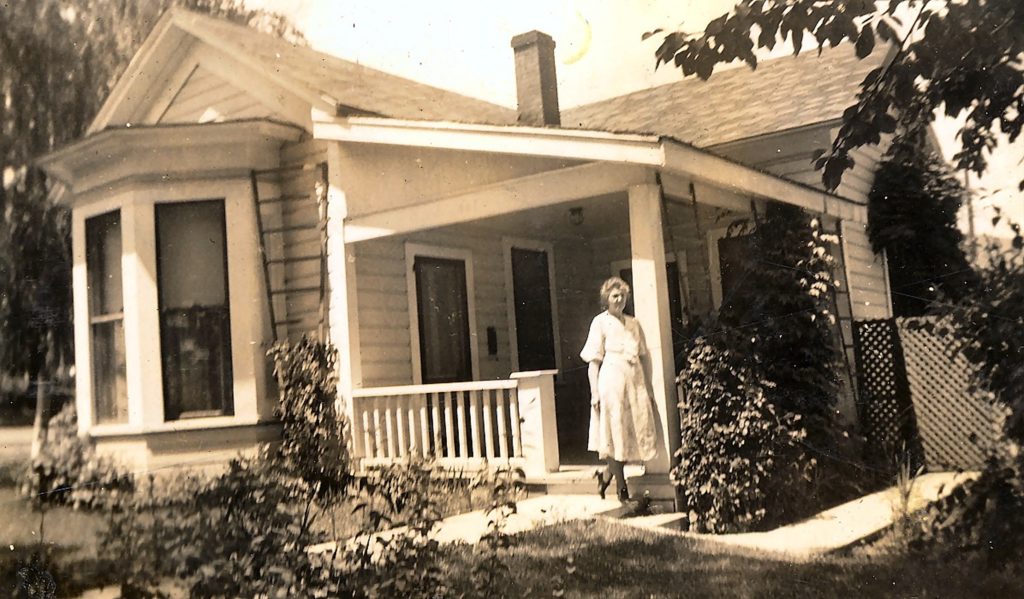
50 North Gay Street as it appeared in 1919. Courtesy of Leona F. ByarsThe Italianate home was moved to North Roop Street in 1979 to make way for the current Bank of America building. What will become of this corner location now that the bank branch has closed is anyone’s guess.50 North Gay Street, October 12, 2017.
Inspiration Point, 1930s.In 1930, the City of Susanville acquired Inspiration Point to become its first municipal park. However, with the nation’s financial crisis, city did not have any spare funds to make improvements. Some relief would come the federal government’s various relief programs, such as the Civil Works Administration. In an effort to put people to work, a project required that sixty-five percent of it be devoted to labor. Under the guidance of B.R. Zimmerman was in charge of crew funded by the C.W.A. to make improvements to Inspiration. This included graveling the road, clearing debris and constructing a retaining with seating arrangements.
601 Cottage Street. Courtesy of JoAnn UptegroveIn all honesty, there is no 601 Cottage Street anymore, because it is now a parking lot of LMUD, though the house that was originally there was moved a short distance to 607 Cottage Street in 1939. Built in 1901, it was the Koken residence for many years. In 1939, Safeway began construction of a new grocery store on Roop Street. They had the residence to moved to its current location and it was J.R. Packwood who added the second story.
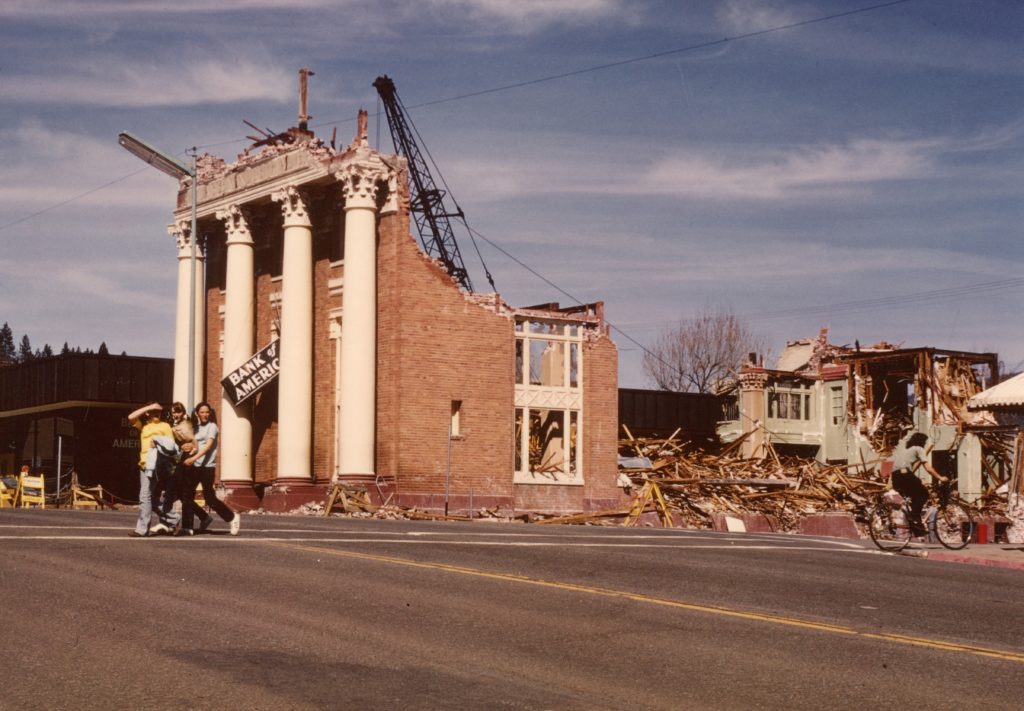
Bank of America demolition.It only seems fitting to provide a photograph of the demolition of Bank of America’s first building. After all there is no doubt that the Susanville branch changed the character to Susanville’s uptown business district.
Bank of America, 1971.Today, the Susanville branch of Bank of America closes. The nearest branches are now in Red Bluff and Reno. It was in the summer of 1928 when the bank began negotiations with the Lassen Industrial Bank to take over that troubled institution, which you will note that it was before the 1929 stock market crash. The Lassen Industrial Bank was noted for its liberal loan policies, but that was not the entire problem. Leon Bly’s failed Eagle Lake project took a major toll on the agricultural community and numerous farmers and ranchers defaulted on their loans. The bottom line, on December 1, 1928, Bank of America took over the Lassen Industrial Bank and its iconic two-story brick building on the corner of Main and Gay Streets.