Many people do not realize that Susanville has three cemeteries–Indian Heights, Lassen and Susanville.
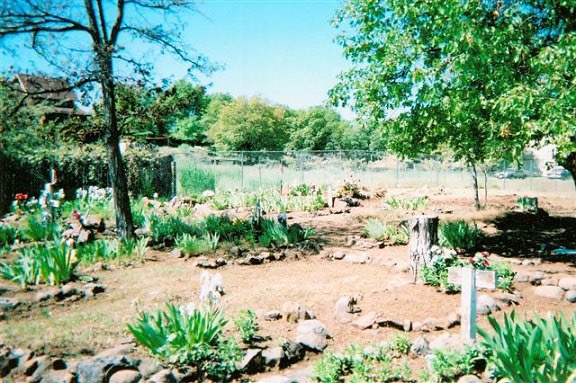
Indian Heights Cemetery located on Paiute Lane and is a Native American cemetery.,. The earliest known internment is for the wife of George Peconum who died on September 5, 1905 and buried there on September 6, 1905 . This makes its the second oldest cemetery, as Lassen Cemetery on Chestnut Street was not established until 1919.
This cemetery contains numerous graves that do not have the traditional type of Anglo headstone, and provides no indication of the internments. In addition, it should be noted that many Native Americans are buried in the nearby Lassen Cemetery ..
The cemetery was so named as it was in the Indian Heights Subdivision that was created in 1912. It should be noted that the half-acre parcel that the cemetery is located was owned for many years by Clifton and Betty Cramer. On June 6, 1975, the Cramer’s signed Quit Claim to the cemetery to the Bureau of Indian Affairs to hold into trust for the Susanville Indian Rancheria. It should noted that even the oldest of the Anglo cemeteries were located on private property, and that during the late 1890s the County of Lassen began negotiations to acquire them.
It did not take much for the City of Susanville to abolish its Planning Commission. On May 21, 2025, the City Council passed a resolution to make a commission a relic of the past. The Council will now serve in that role.
For me, personally, it sends a mixed message. On the one hand the City is seeking ways for economic development, yet, by getting. rid of the commission on the face of it, the City is less optimistic for its future growth.
For the record the Planning Commission was established on June 13, 1921. The first members were L.R. Cady, C.E. Emerson, J.J. Woodward, F.H. Bangham and R.M. Cook.
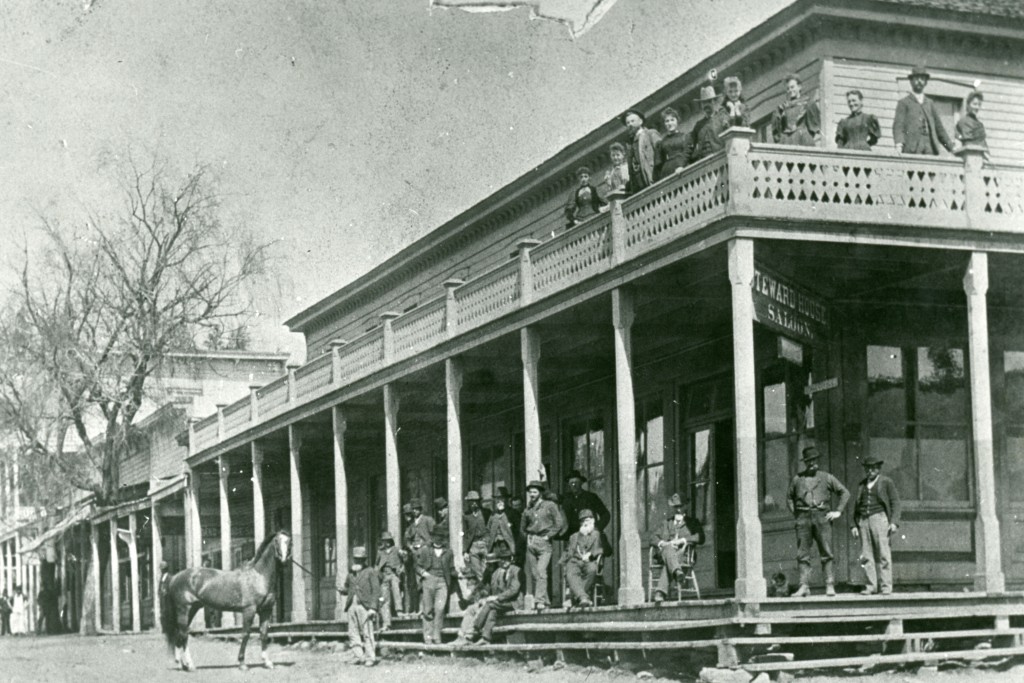
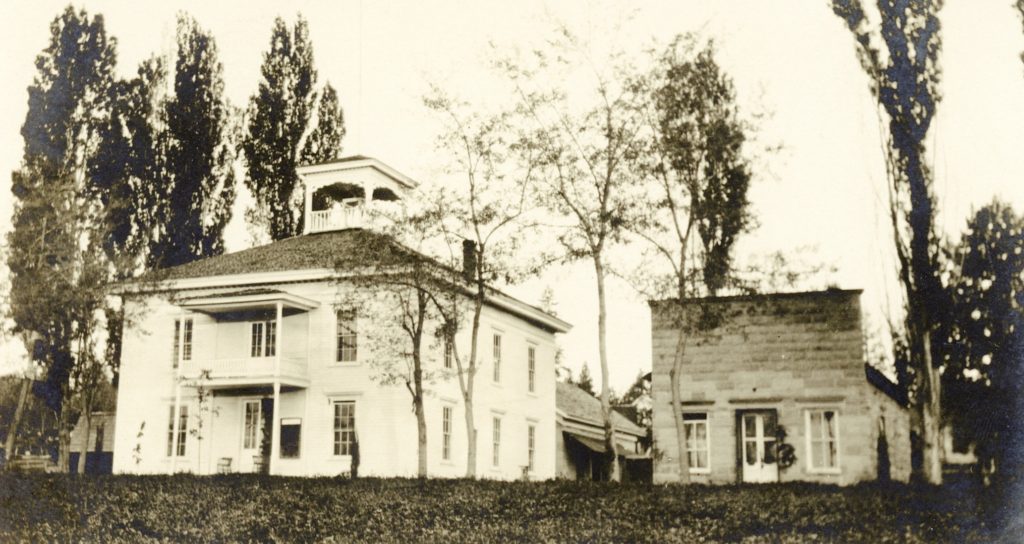
Susanville’s Steward House, 1881. Courtesy of Dallas & Joyce Snider
Old Susanville Boy Gets Write-up
The San Francisco Daily News of August 8, 1914 after decanting upon education and its application to the real affairs of life of some length, elects as an illustration an old Susanville boy, who has climbed in the commercial and social circles of San Francisco.
“Mr. Abraham Lincoln Peyser, president of S.N. Wood & Co., is as fine an illustration of the theories advanced alone could wish to meet.
Born in 1865 and brought up in Lassen County, 170 miles from a railroad, by all fair rules he should have been a grand rube performer; and far beat from the purpose of this chronicle to deny that once upon on a time he was–howbeit, this will an give an unneeded opportunity for the perpetration of his standard joke that Heaven lies about folks in their infancy, while everybody lies about them when especially successful in business.
“Coming well-heeled to San Francisco at 16 to attend college, he went broke seeing the sights, and remembering well the admonitory effectiveness of certain parental willow switches, he forthwith annexed a job in Loomis Plaza store and began that pursuit of knowledge which has resulted in landing him at the head of one the greatest mercantile establishments on the coast; making him one of the leading exemplars of highly ethical business methods; and at the same time producing that unusual combination–a thoroughly educated and polished man who never passed a day inside a college wall.”
Note: His father, Samuel Peyser came to Susanville in 1861 and was that town’s first Jewish merchant. In the 1880s he owned the Steward House Hotel in Susanville.
On July 6, 1925, J.H. McClure in charge of the Southern Pacific’s district freight and passenger service headquartered in Reno was a guest speaker at the Lassen County Chamber of Commerce monthly banquet meeting. Just days’ prior to the meeting he had come to Susanville to do an inspection of the region. McClure was not pleased.
As to the passenger service he said, “Running a five car train with buffet observation car and the very best equipment, that the train would and many days carry but three or four passengers and not receiving that should be accorded it. While the stage lines between Susanville and Reno were loaded each trip.”
When asked about the tonnage, McClure was critical of the agricultural community. He stated the farmers should get “busy” with some real farming instead allowing so much of their acreage to provide wild hay that had no market value.
McClure’s assessment would never improve. In 1933, the passenger train service was discontinued.
South side of the 700 block of Susanville’s Main Street, 1901
On August 20, 1900, the City of Susanville became an incorporated municipality. After the devastating fire of June 6, 1900, residents gathered to discuss to incorporate the town as means to have control of fire suppression. They petitioned for the Lassen County Board of Supervisors to hold a special election, which the board obliged. On August 15, the voters approved the measure for incorporation by 61 to 20. Five days later the City became a reality.
Elected to serve as the first Trustees (now Council) were Charles E. Emerson, John E. Humphrey, Howard W. Meylert, Julien E. Pardee and John. Riley. Also elected were W.H. Edwards, Town Marshall, W.T. Masten as Clerk and M.F. Schmidt, as Treasurer. The first meeting was held on August 28, 1900, and Pardee was selected as President (now mayor).
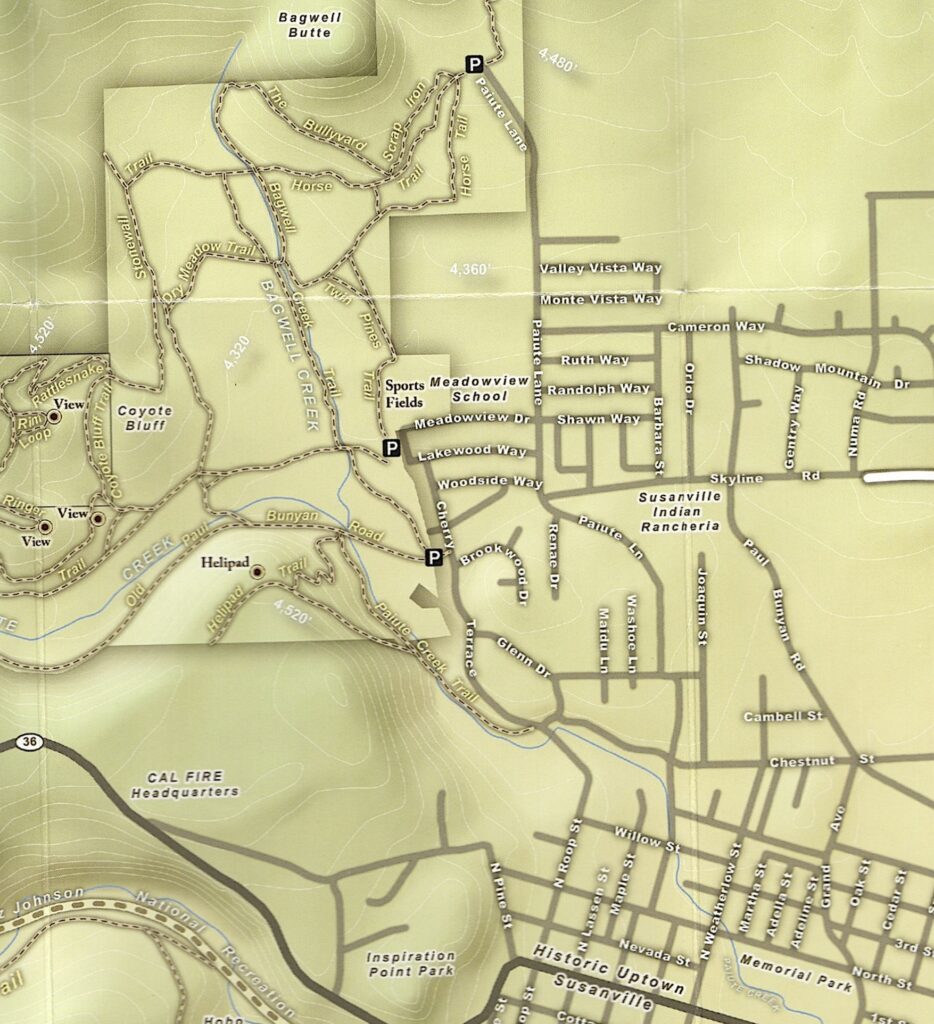
Partial Map of Susanville Ranch Park,showing the helipad.
Since, I do want overlook any unturned stones, so to speak, I am reaching out to the readers for assistance. In July there was a question regarding the Ask Tim post. Some one wanted to know about the helipad located on the rim of the Paiute Creek Canyon, overlooking Susanville Ranch Park, and a short distance from the California Division Forestry (CDF) headquarters.
It is one those crazy research challenges. To begin with the concrete helipad was located on private property belonging to the California Pacific Utilities, later to be known as CP National, the local power and water company. I could not find any recorded agreement between the company and the CDF or any other fire fighting agencies. In 1984, when CP National donated what is Susanville Ranch Park to Lassen County, there was no reference as to the helipad.
The helipad was constructed in the 1960s. CDF has a photograph that it was used ever so briefly in the early 1970s. Does any one know some one, who may have worked as seasonal firefighter during that time? On the other hand, may be some one who worked at the power company at the time. I need to ask George Sargent about that,
It should be noted that in 1987 Lassen Municipal Utility District purchased CP National, but since the latter company had operations elsewhere, they probably retained their records.
Whatever the case may be, I am open for suggestions. Some times, I have been known over think the topic at hand, and overlook the obvious.
Yes, that is right folks, the City of Susanville even had its own jail. For the casual observer of local politics the County of Lassen and the City of Susanville has through years been a frosty relationship. It has been ongoing since 1900 and personally I do not think it will ever change, or least in my lifetime.
Initially, when one committed a misdemeanor crime in Susanville, the Lassen County Sheriff would obliged to house the person in the county jail. When the County built in a new jail in 1911, it would no longer accept the City’s inmates. A temporary solution was found. The County offered to rent the City its old jail for $17.50 a month. How long the City could use the facility was unknown, since it had been condemned once by the State. In the summer of 1914, Guy P. Jones of the California Department of Public Health arrived to check out the sanitary conditions. He said overall conditions in Susanville were good, except for one–the City Jail. Jones found it deplorable, and wrote, “To confine any human being in such a horrible place is nothing short of inhumane.”
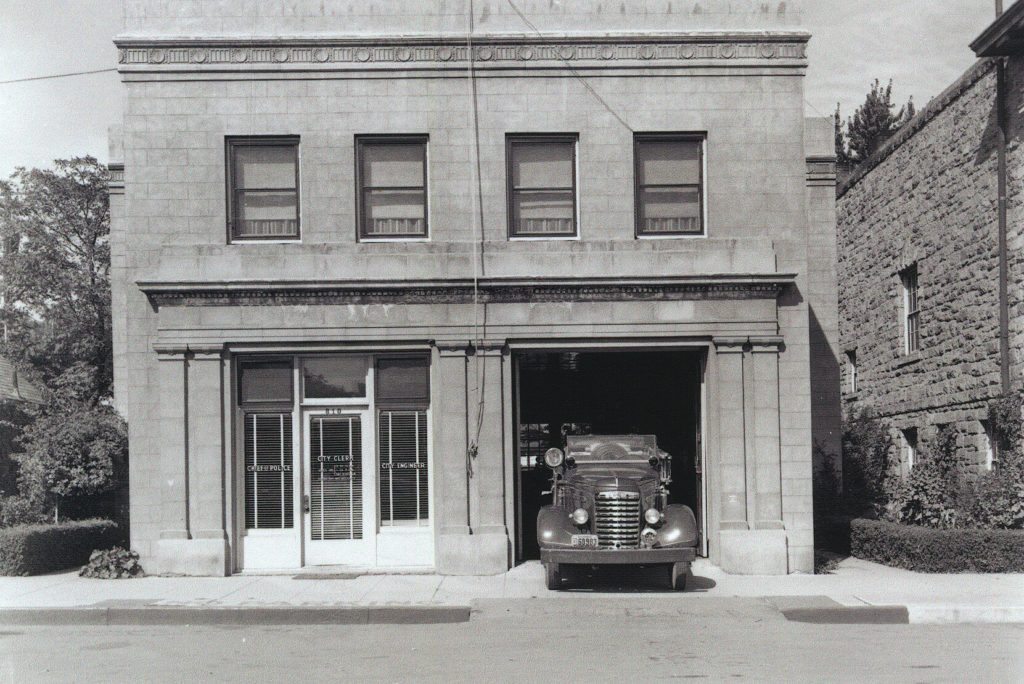
In 1915, the State condemned the City’s use the old County Jail.. This forced the City to build a jail, one that would have to be approved by the State. First, a site had to be selected. The City purchased a small lot behind the City/Fire hall from William D. Minckler. In January 1916, the City hired George C, Sellon as the architect, as het met State qualifications. Sellon was in Susanville to oversee the construction of his latest project, Lassen County Courthouse. The State specified the building be of masonry. It was decided that the exterior would constructed with native stone.
Lassen County Courthouse and Hall of Records, 1908–David Zoller
The City did get a good deal for the stone.In 1887 the County had a small native stone building constructed next to the courthouse. It was known as the Hall of Records. This building had to be demolished to make way for the new courthouse. The County offered the stone from that building to the City for free. The County’s old Hall of Records was recycled into the City’s new jail.
On August 5, 1917, Henry Krueger was awarded the contract to construct the City Jail for $907. The City urged him to build it as quickly as possible, since they were without jail and the County would not let them to use their jail. Kroeger started on the jail the next day. In December 1917 the new jail was completed and furnished–it consisted of two beds and a stove.
In the mid-1950s, the City Jail was closed. The structure was converted into a garage, and later used for storage. In 2001, it was demolished to make room for the new addition to City Hall. If any one has a picture of the structure, please let me know.
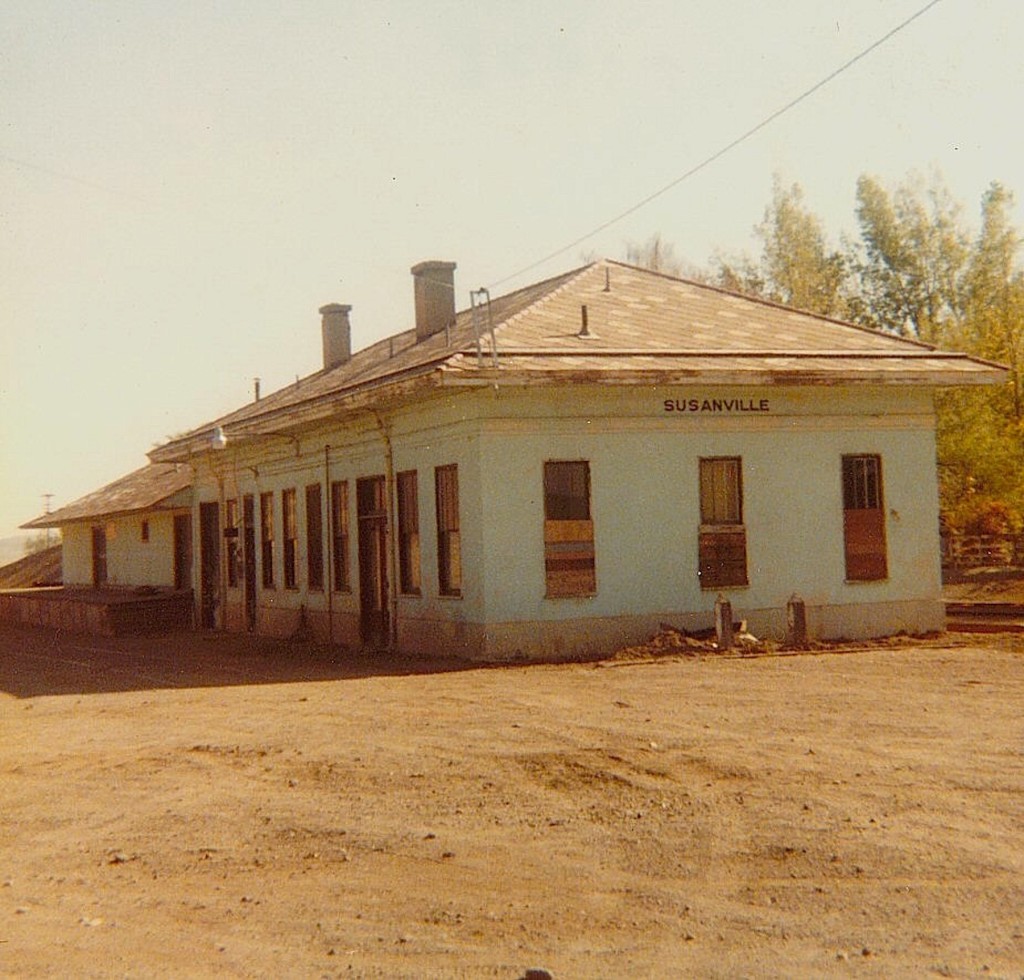
In 1979, the Southern Pacific Railroad Depot at Susanville closed its doors. In the ensuing years, the Susanville Fire Department deemed the abandoned building a public safety hazard. In June 1987, Susanville Fire Chief John Malmquist entered into an agreement with the Southern Pacific to torch the. building as part of a firefighting practice session. When the matter was revealed to the City Council, concerned citizens voiced their concerns. The City Council gave the building a reprieve to August 3, to allow those to come up with a solution. Malmquist reminded everyone the Southern Pacific had no intention of relinquishing the property, and it would be costly to move the depot to another location. That did not prevent the concerned citizens in their effort to save the depot. In November, 1988, a Memorandum of Understanding had been agreed by the Trust for Public Lands and the Southern Pacific to transfer the property to the Trust. Restoration began slowly and in 1994 a grand reopening of the Depot was held. In 2001, the Depot gained landmark status when it was placed on the National Register of Historic Places.
The July, Ask Tim post only generated two inquiries. May be it is so-called dog days of summer. Here is the first question and I am working on the next, stay tuned.
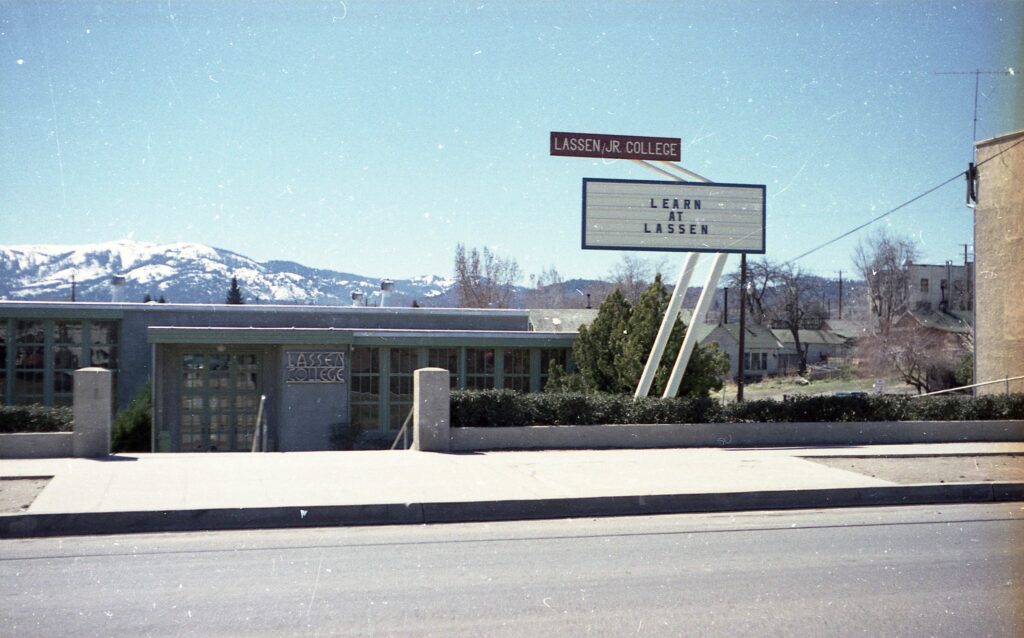
Lassen College Graduation Photographs. Were there any pictures taken of the last Jr, college graduation in the quonset-hut on the Lassen High School property?
It has been my experience that historical documents and photographs of Lassen College’ are rarer than the proverbial “hen’s teeth.” It should be noted that I served on the Lassen College board from 2011-2020. Towards the end of my tenure, it was relayed to me by college personnel that there was secret cache of old college annuals and photographs that had been discovered. I was not privileged to examine those records. In May of this year marked the 100th anniversary of the college’s founding, but the administration ignored this historic milestone. If anything surfaces, I will let everyone know.
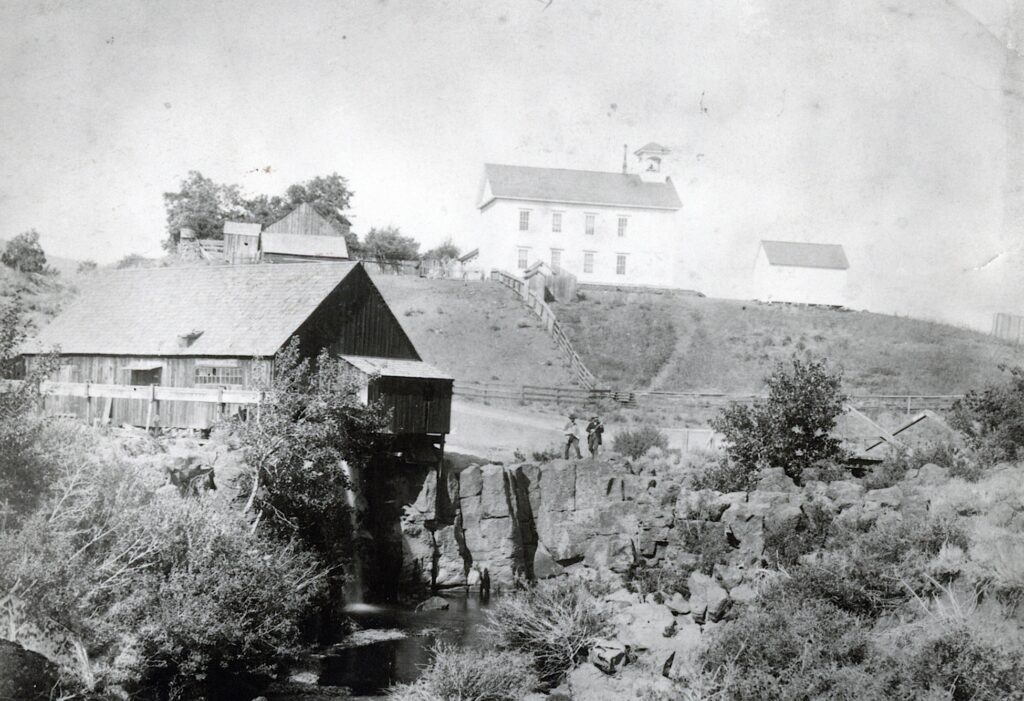
Arnold Planing Mill, 1878-Courtesy of Marge Hansen
Some man made landmarks stand the test of time, others do not. The other category usually consist of one three factors: 1) Demolish in order to modernize 2) Abandoned and deteriorate and 3) Fire, whether accidental or arson.
Arnold Planing Mill, circa 1905. Courtesy of Philip S. Hall
Built in 1873, the Arnold Planing Mil was the first of its kind in Susanville. Located adjacent to the Richmond Road, and perched upon a small cliff on the Susan River, it ws a favorite scene for photographers. On August 6, 1914, at approximately two in the morning, the residents of Susanville were awakened from their slumber by alarm of fire. The Arnold mill had caught fire. Due to the mill’s location on the edge of the fire district, little could be done to save it or the adjoining lumber yard. It was a severe blow to Leroy Arnold, the owner. His loss estimated at $10,000, and was not covered by insurance. The cause was never determined, but it was believed a hobo had slept there. He built a fire for a meal, and never extinguished it.