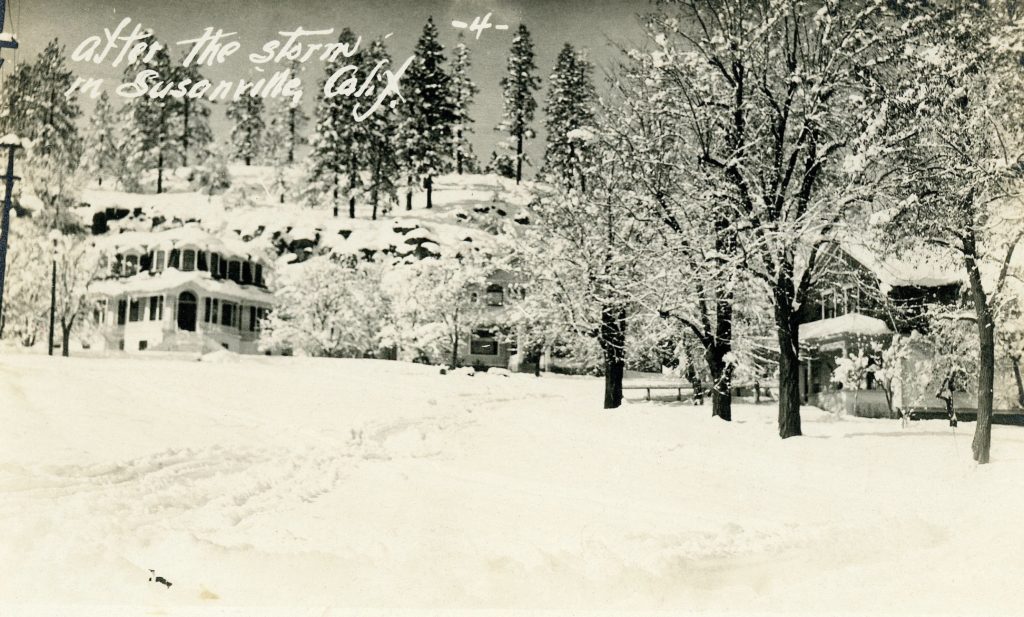
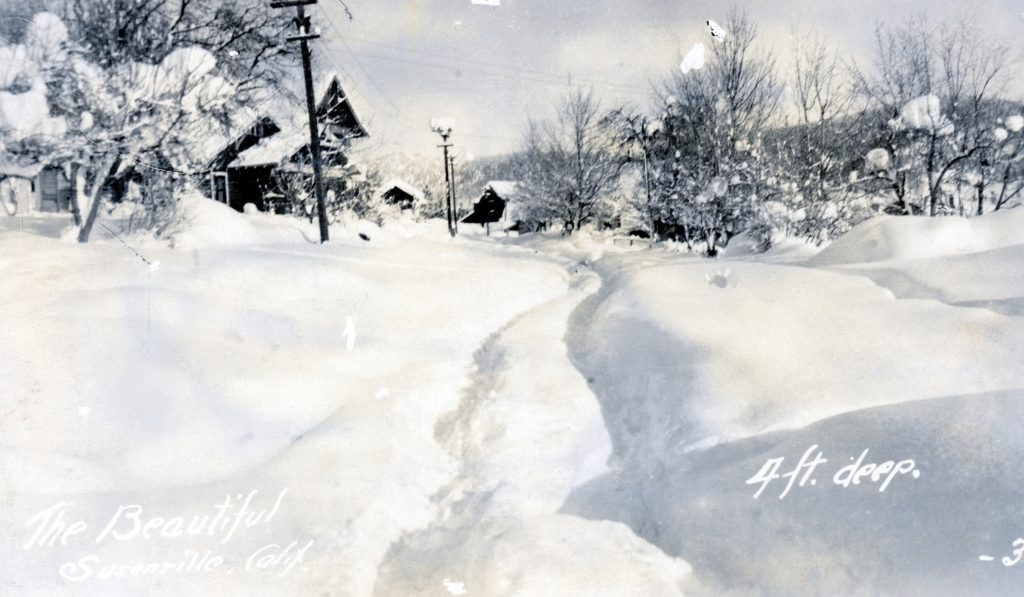
While in the past I have noted the January 1916 snowstorm, followed by a very cold spell. For the record here are the statistics for that month observed at the Susanville station.
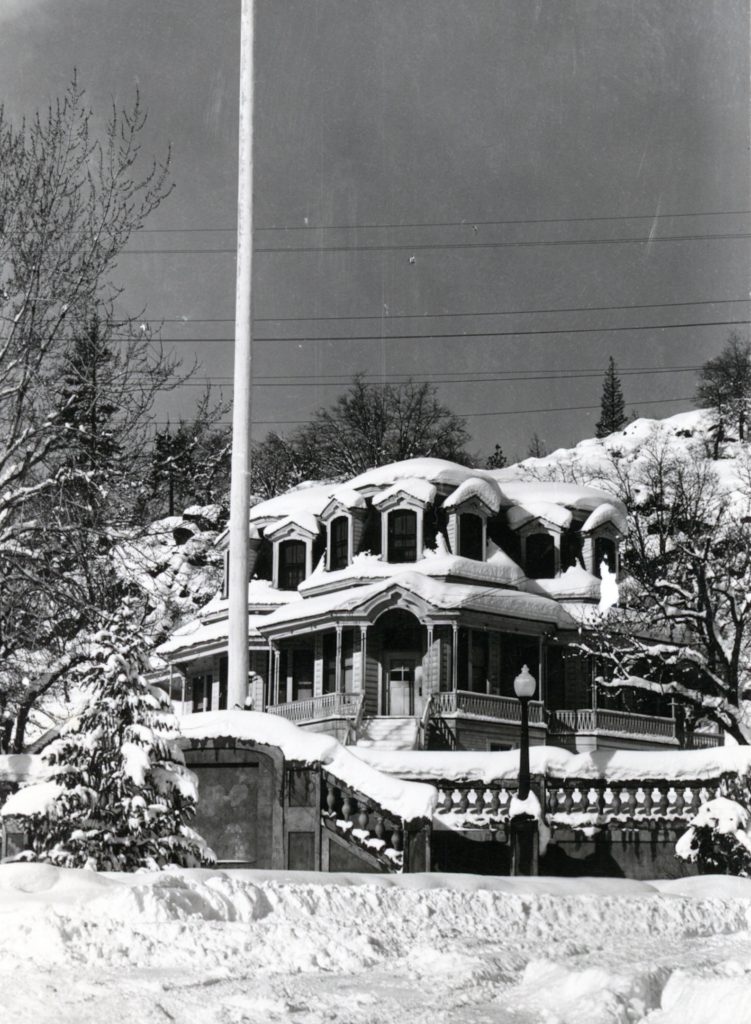
North Pine Street, January 1916. Courtesy of Dolores Gasperoni
The average maximum temperature was 35 degrees and the average low of 12. On January 23, the record high for the month was 50 degrees and on January 30 saw a record low of -14 below zero. It was a snowy month with 104 inches and on January 2 the greatest amount of snow in one day was 32 inches.
While working on a self guided mural walking tour, one item that I want to incorporate is to highlight something about the building they adorn. On the west facing side of the building is the ranching mural.
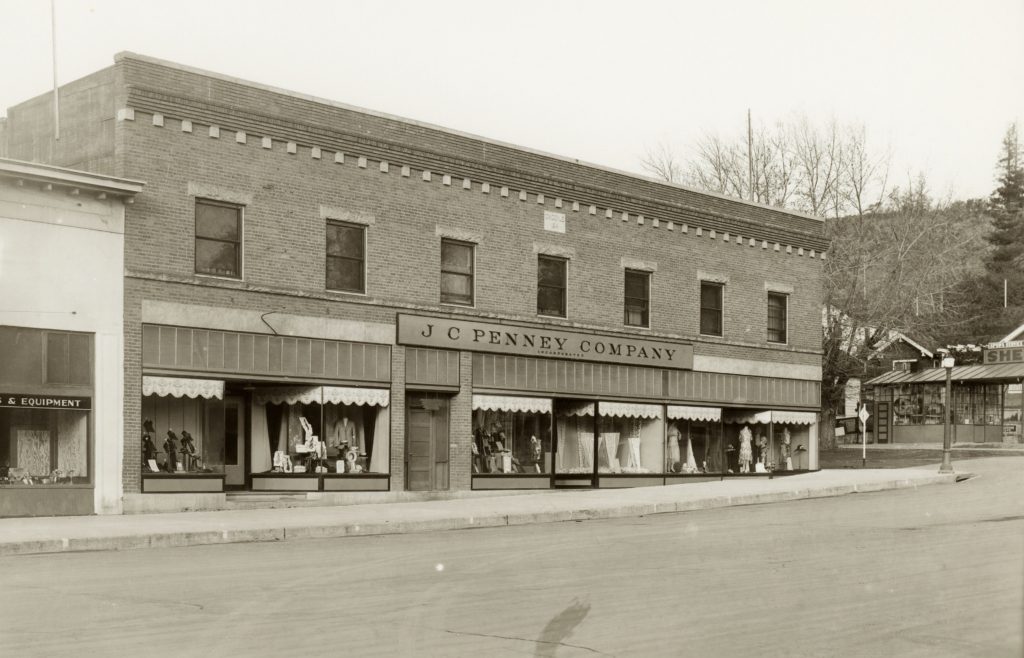
In 1914, O.M.Doyle constructed a two-story brick building on the southeast corner of Main and Roop Streets, to be known as the Del Mar. It was designed by well known Nevada architect F.J. Delongchamps. It should be noted Delongchamps had previously designed the Lassen County Jail in 1911 and at the same time of the Del Mar Building he also designed the St. Francis Hotel and the Star Hotel. There were several commercial buildings constructed that year, all which had basements. The problem arose what do with all this dirt. Some clever person, we may never know the identity, came with an interesting solution. The area where Piute Creek crossed Main Street was very low, and prone to flooding in the winter. The dirt from the excavated basements used to fill in some of that area.
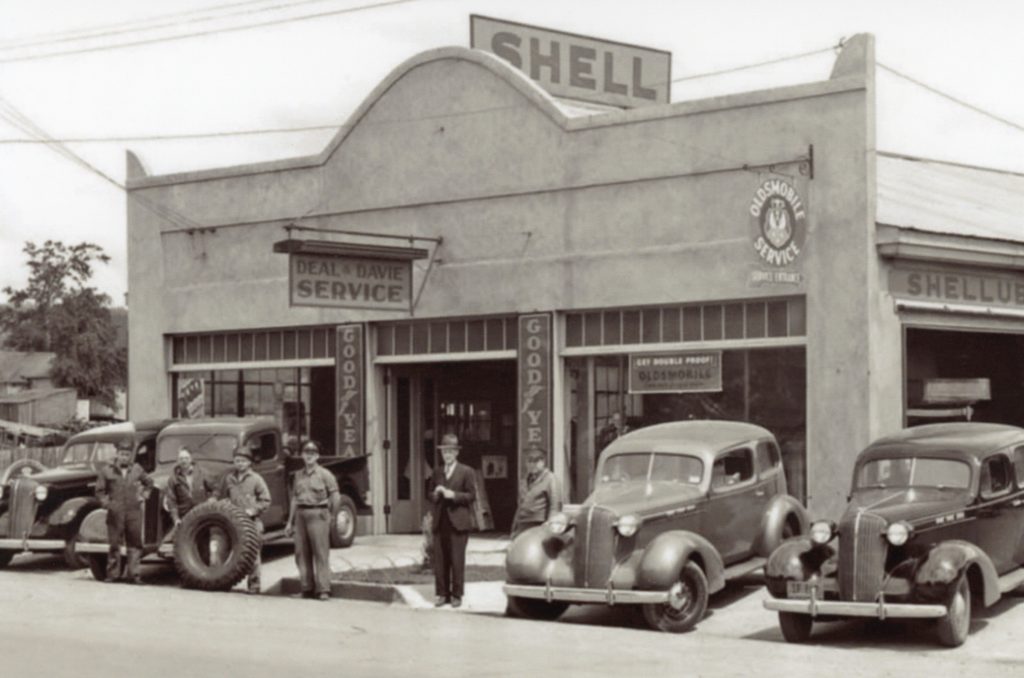
Deal & Davie dealership, the longest lasting of the auto row.
Awhile back, I wrote about Susanville’s Auto Row. The building featured in the photograph was known for decades as Deal & Davie. The structure was built in the fall of 1926 for Felix Poulin & Son—a Dodge Dealership.
Here it is the second day of 2022, and the first Sunday of the New Year. I am bit sluggish so bear with me, while I prod myself to get things up and running.
For those who have the 2022 Private Reserve Calendar, you are no doubt familiar with the above photograph. There is not a lot to indicate when it was taken. My hunch is December 1937, which would be the beginning of one of the wettest winters on record. What intrigues me, it is a postcard that I bought on Ebay last spring. In all my years of research, I had never seen this image before. So I bought it. There were red crayon marks, and I was not delighted. Two days later, another one appeared on Ebay, and it was in much better condition. So that is my story.
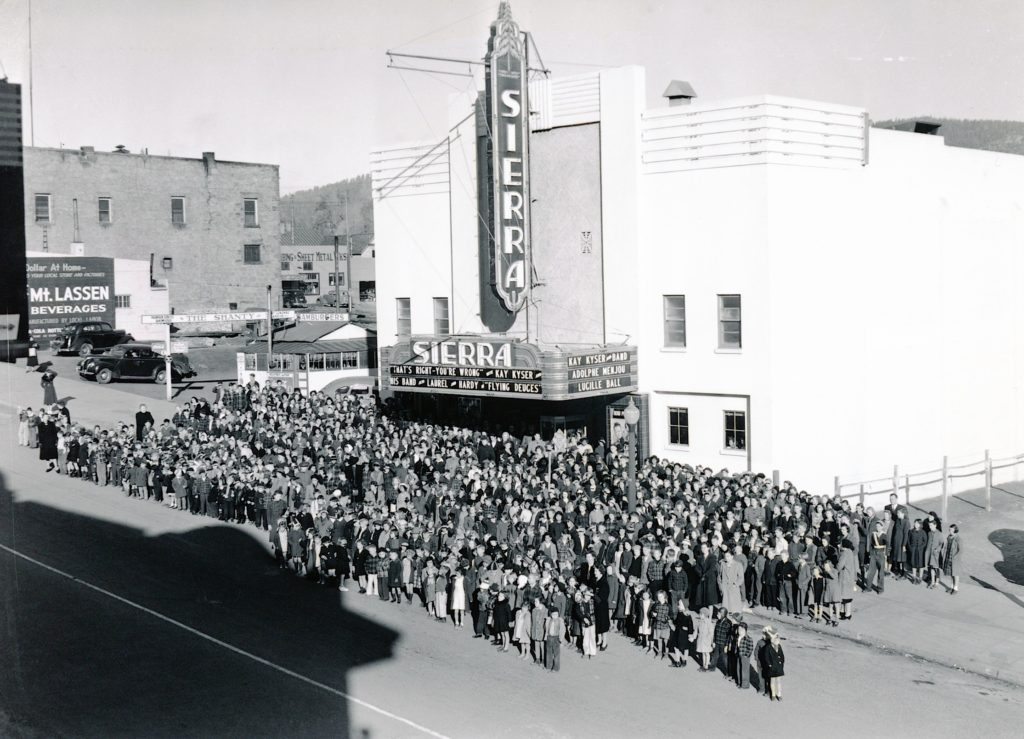
A year or two after the newly constructed Sierra Theater opened its doors in 1935, an annual Christmas event transpired. It was a special “Kiddies Day at the Matinee.” It was opportunity for all the school children of Susanville to have a special morning showing of movies, and given Christmas treats, as well. Various groups and businesses supported the event. This custom carried on for several decades.
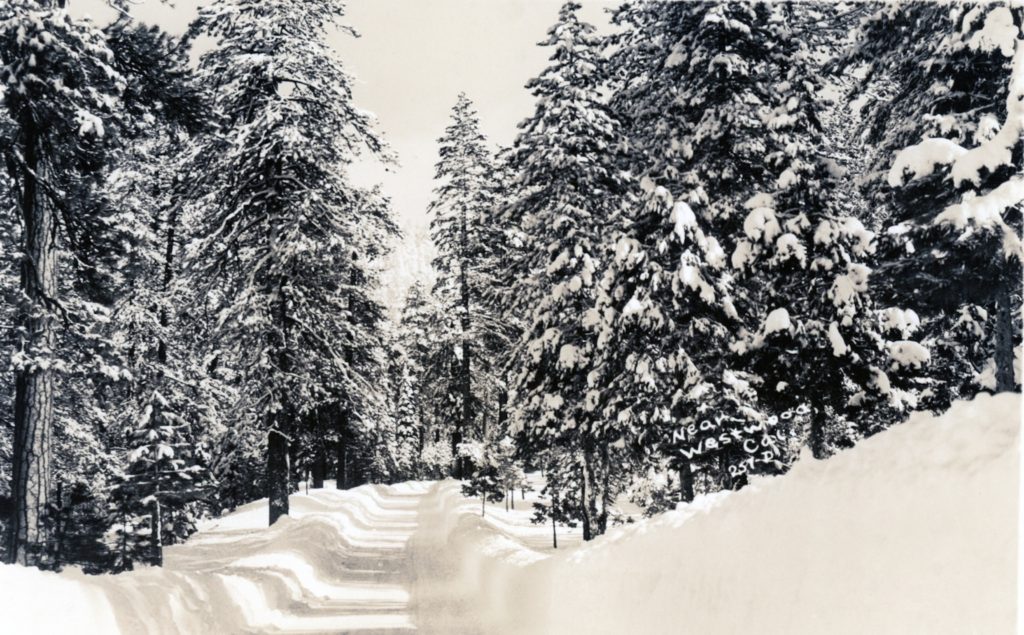
The road has been plowed, but what do you do if there is an oncoming vehicle?
The caption states taken “near Westwood,” but when it was taken remains unknown. When winter snows arrived on the east slope of the Sierra, travel across the mountains came to an abrupt halt. It was that natural barrier why east slope residents since the 1850s sought for their own self governance.
What is intriguing about this photograph is the road is plowed. In the late 1910s when Westwood was established, there was a competition with that community and those in Susanville to see who would be first to cross over Fredonyer in the spring. In addition, no doubt with a ting of spring fever, the two communities led a joint effort to clear each other’s side of the mountain of the snow.
When Highway 36 was completed between Susanville and Red Bluff in the late 1920s, when winter arrived the California Highway Department closed the highway. After intense lobbying, in 1929 the state agreed to plow the road for snow removal, thought initially it was sporadic.
Model Laundry, 435 N. Roop Street, April 1938–Betty B. Deal
A lot of people have been curious about stone and cement work at the intersection of Roop and Cherry Terrace in Susanville. It was the original home of the Susanville Creamery. Then it was transformed into Model Laundry which remained there until 1950, when it relocated into their new building on the northeast corner of Main and North Spring Street. You can learn more about the original post at Roop Street Remnants. However, the original post did not include a picture of the building, hence this update.
435 Roop Street and the remains of Model Laundry., September 3, 2018
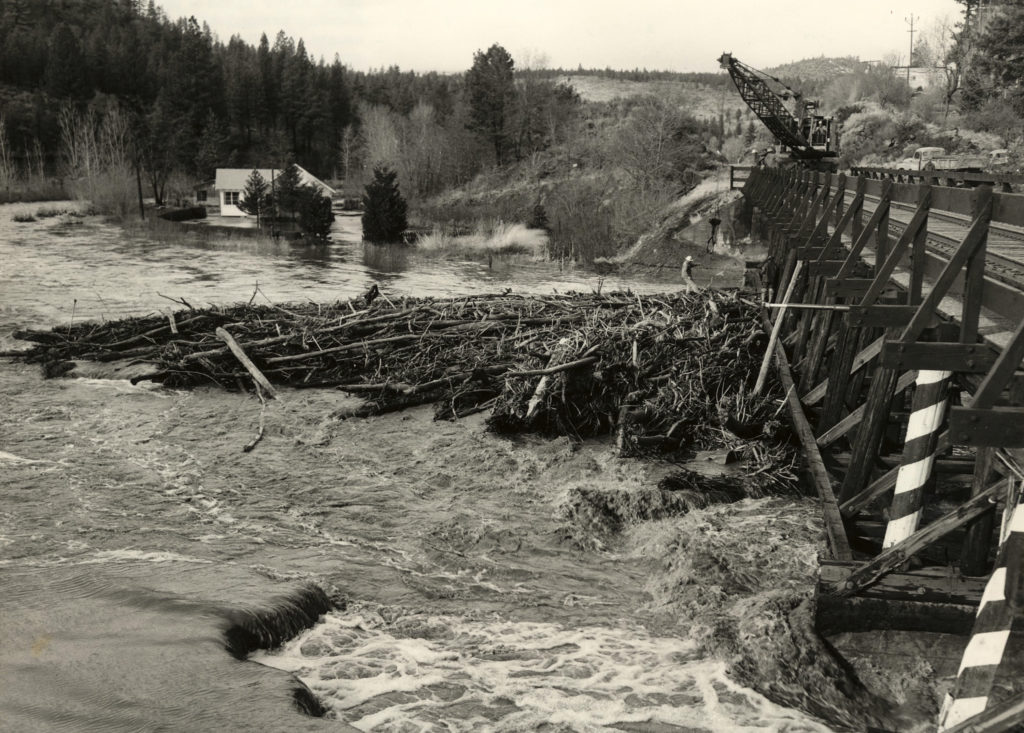
Southern Pacific’s railroad trestle at South Lassen Street, December 1955.
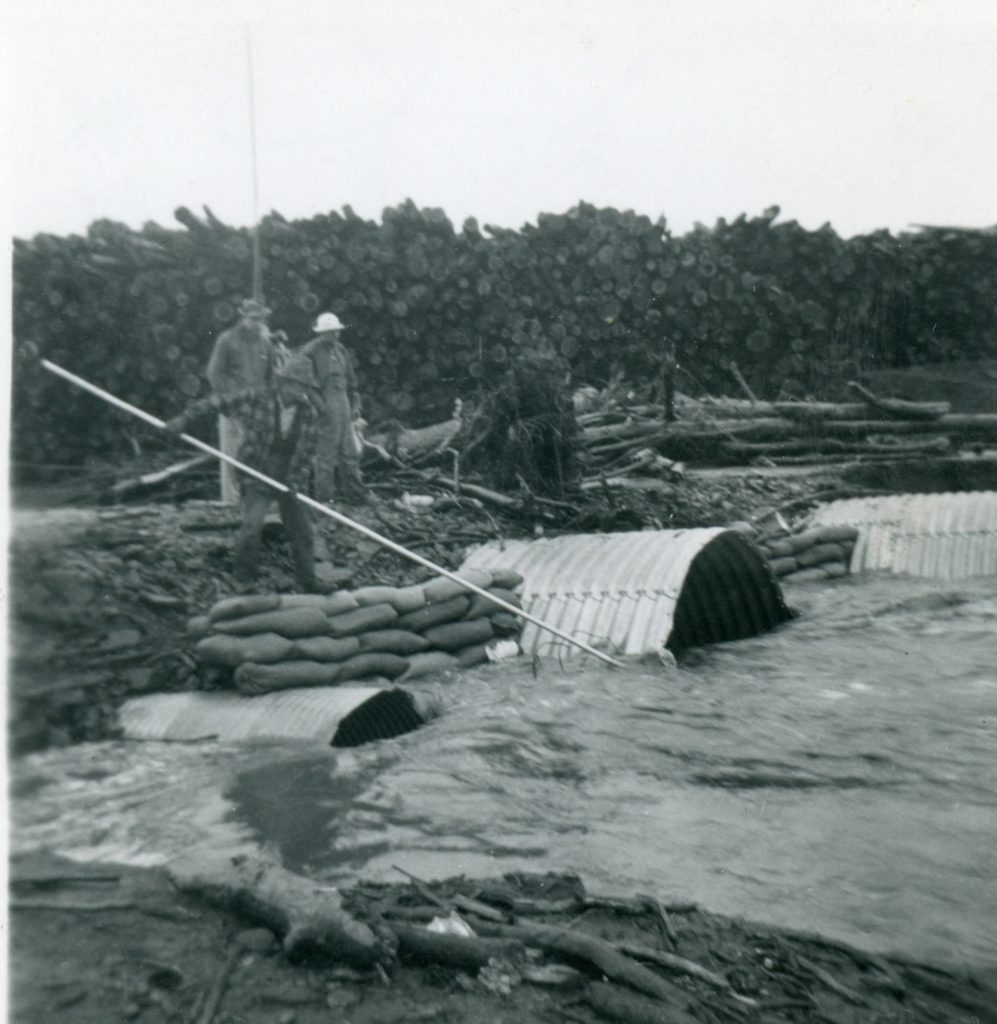
The floods of December 1955, locally and throughout California was a notable event to say the least. It began with warm rains on December 15th and by December 20th, 4.41 inches had fallen in Susanville. The snow elevation remained high, and on December 20th there was 21 inches of snow on Fredonyer summit. The rain continued turning the Susan River into a raging menace. Conditions worsened as the river brought assorted debris with the floodwaters. The debris became a major obstruction when it collided with the Southern Pacific’s railroad trestle at Susanville’s Lassen Street. On December 23rd Marvin D. Coltran, a member of Southern Pacific’s bridge gang fell into the water there. Efforts were made to reach him, but the river’s swift current swept him away.
Riverside Drive, Susanville, December 1955
Relief from the rains arrived in the form of snow on December 28, when four inches fell in Susanville. In December 13.03 inches of rainfall was recorded in Susanville.
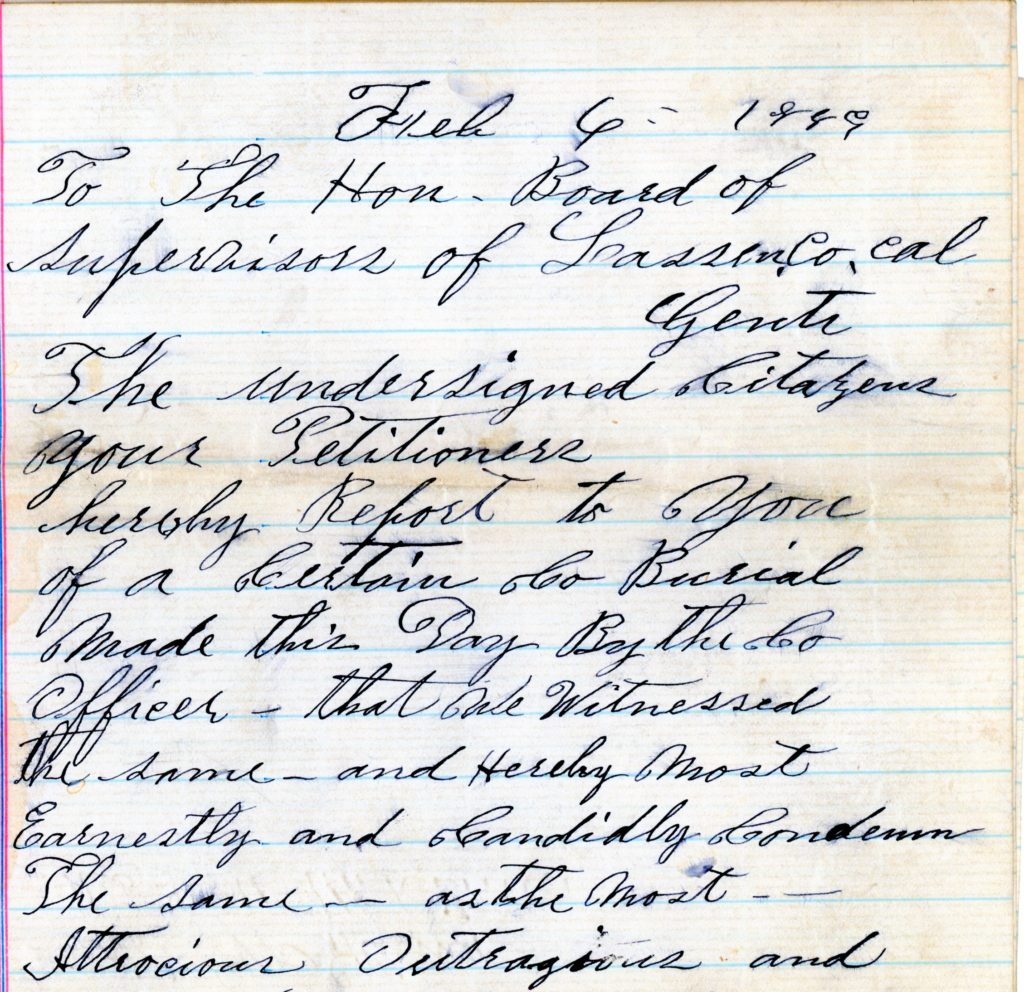
This is a tragic tale of a indigent burial in the Susanville Cemetery. It incensed those in attendance to petition the Lassen County Board of Supervisors to make sure it never happened again. The petition, which is transcribed below, fails to mention the deceased. Who that person was, we might never know. California law did not require that births and deaths be recorded until 1905. There are gaps in the local newspaper, so that avenue could not shed any light on the subject. The minutes of the Board of Supervisors might have information, but those early records are in storage during the courthouse renovation process.
February 6, 1889 — To The Honorable Board of Supervisors of Lassen County
”The undersigned citizens, your petitioners, hereby report to you of a certain burial made this day by the County Officer that we witnessed the same day and hereby most earnestly and candidly condemn the same—as the most atrocious, outrageous and indecent ever by us witnessed. There being no box nor covering for the coffin and the dirt thrown on the coffin lid and the treatment before burial of the corpse. The most inhuman barbarous and disgraceful. We therefore ask that hereafter the person who shall bury the county dead give bonds for at least a decent burial.”
Finally, it should be noted that of twenty-six people who signed the petition, nineteen of them would eventually be buried in the Susanville Cemetery.
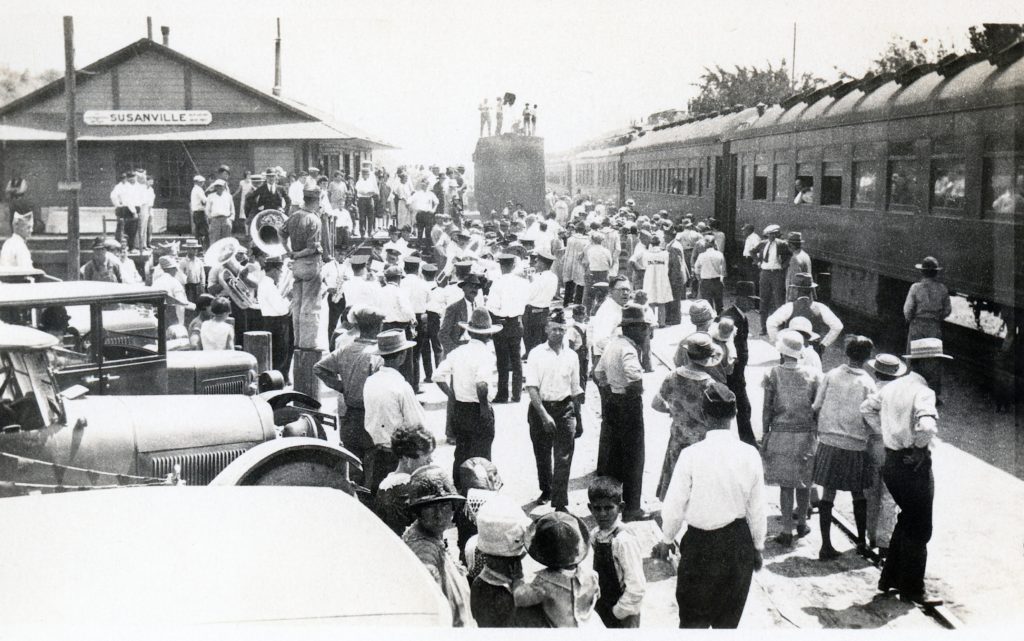
1926 American Legion Convention delegates arriving at the Susanville Depot. Courtesy of Nellygrace Stoll.
Yesterday, the topic was about the chamber of commerce wanting a new Susanville Depot, instead all they got was an addition to the existing depot.
The world was changing rapidly. Between the affordability of the automobile and the construction of highways changed the way the public traveled. The automobile provided freedom to go places whenever a person wanted to do so, and no longer restricted to train schedules. The golden era of passenger train travel was drawing to a close.
The increased use of automobiles and trucks began to take its toll on railroads. In 1933, Southern Pacific railroad officials studied those impacts on the Westwood Branch. To eliminate mail and passenger service it was estimated it would save the railroad $25,000 annually.
On September 29, 1933 a two-day public hearing was held to abandon passenger service. In the late October it was approved by the Interstate Commerce Commission. There was one stipulation. In times when highways were closed by winter storms, the railroad would be obligated to provide passenger service. The last passenger train left Susanville on November 30, 1933.
Susanville Depot, 1929—Hank Martinez
It should be noted, while regular passenger service was discontinued, there were on occasion into the 1950s were exceptions ,made and passengers rode in the caboose.