Linguistics, especially local terminology, changes over time, with not only an older generation passing on, succeeded by a new one, mixed with new arrivals making for a blended community. Some local designations retain their original names, others abandoned.
Susanville’s Winchester Hill is a perfect example. This steep hill is located on Mill Street between South Gay and Weatherlow Streets. It was so named for George and Fannie Winchester who in the fall of 1914 built a house at 205 South Gay Street, on the south east corner of Gay and Mill. It was also one of the first houses built in the Brashear Tract subdivision, that had a deed stipulation that all homes constructed must at a least cost a thousand dollars.
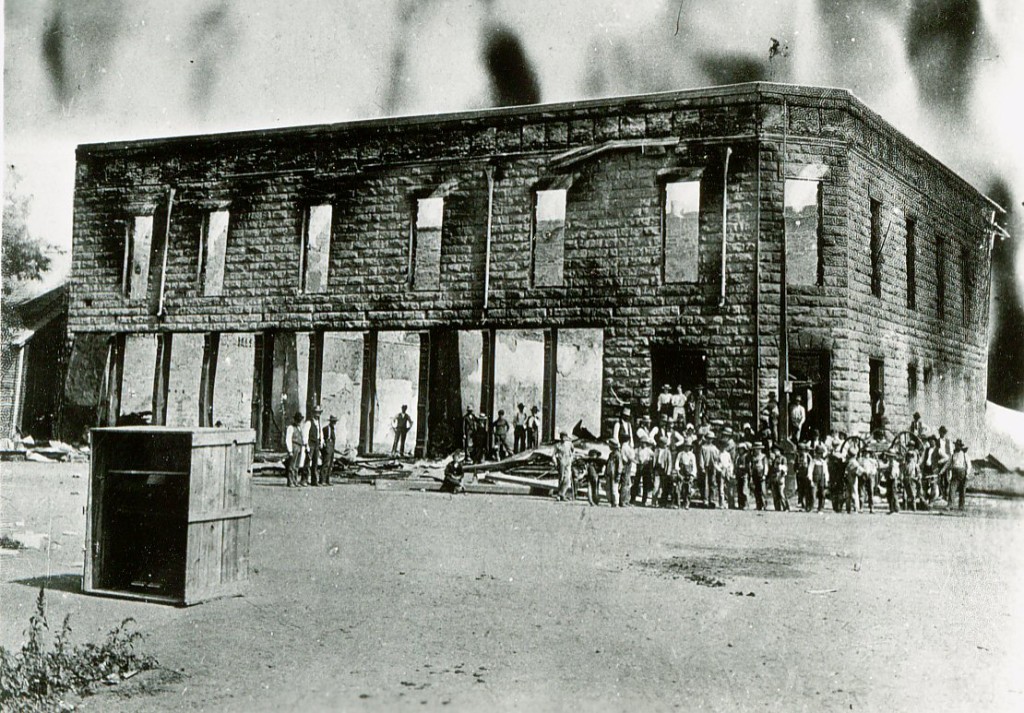
During Susanville’s early history the community was plagued by some devastating fires such as in 1882 and 1893. In each instance efforts were made to correct the situation, but to no avail. Then came fire of June 6, 1900 and everything changed. All the wooden structures on the south side of Main Street from Roop to Union were destroyed, some forty in all and the estimated loss at $100,000. It served as a catalyst for the incorporation movement for Susanville.
On June 13, 1900 a citizens meeting was held to discuss the legal requirements to incorporate the town. After some debate it was decided to move forward. A petition was circulated and signed by sixty-five registered voters requesting the Lassen County Board of Supervisors to call for a special election to decide the incorporation issue. The board obliged. On August 15, 1900 the voters went to the polls and improved the incorporation by 61 to 20. Elected to serve as trustees were Charles Emerson, John Humphrey, Howard Meylert, Julien Pardee and John Riley. The first city council meeting was held on August 28, 1900.
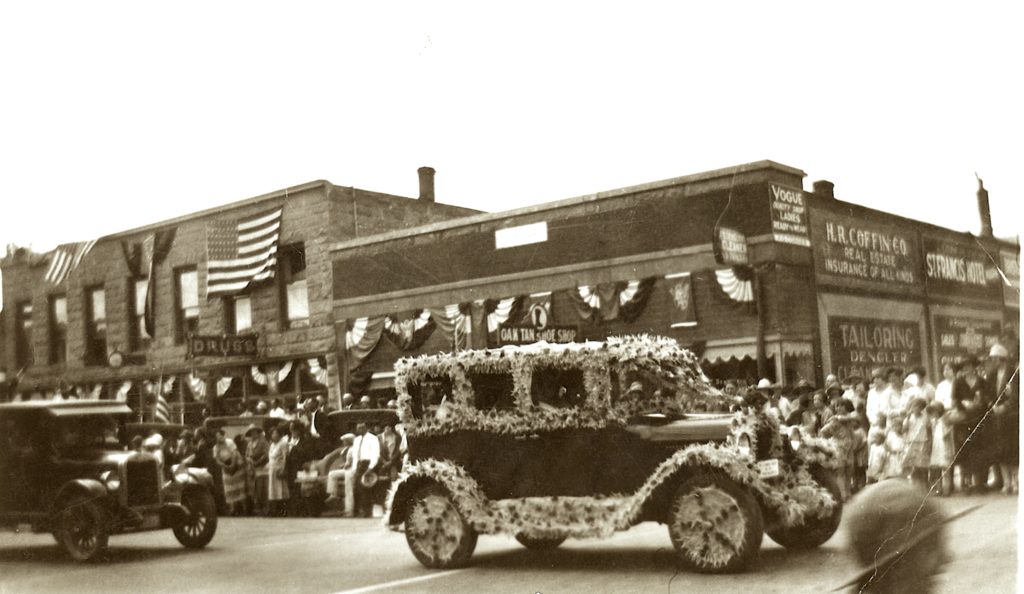
American Legion Parade, Susanville 1926—Margaret Purdy
During August 16-21, 1926, Susanville was a festive place. It was the host of the statewide American Legion Convention. That was a tremendous feat by the local American Legion Post named after Thomas Tucker, a Maidu, and Susanville’s first casualty in World War I.
The community gave the some 3,000 attendees the proverbial red carpet treatment. Buildings were decorated with patriotic bunting or adorned with the American Flag, and some times both. Two parades were held that week. The first one was mid-week in the convention, which featured numerous floats, decorated cars and an assorted lot. There were the Santa Barbara Legionnaires, dubbed the “bathing beauties” with the men wearing gunny sacks, displaying their knobby knees. The second parade was a bit more dignified with the veterans marching down Main Street from the Elks Lodge to the newly constructed Veteran’s Memorial Building.
On Tuesday morning, September 9, 1919, the first airplane flew over Susanville. Who the unknown aviator was has never been determined. It was believed by some to have been a Forest Service plane used to spot fires.
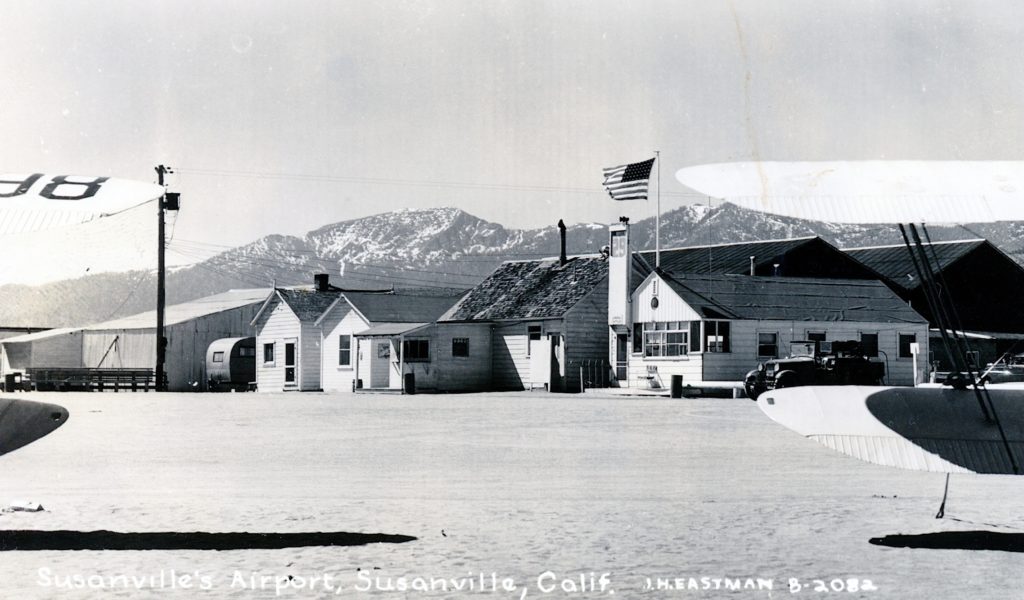
By the 1920s, pilots were regularly visiting Susanville. An impromptu airstrip was developed in the Milwood section, at the north end of Spring Street. By the late 1920s it had become apparent that an airport was needed. E.G. Scammon, Robert M. Cook and Charlie Bridges were appointed to a special aviation committee to locate suitable site for an airport. They selected the Hanford Tract near Johnstonville. It met several criteria, as the property was inexpensive and required a small expenditure to construct an airport. In addition, there was plenty of open space for expansion and equally important few homes in the area. Aviators, on the other hand, complained that it was too far from Susanville. Yet, it met the approval of federal aviation officials.
On July 17, 1928, the Lassen County Board of Supervisors met in special session to discuss the airport. At the conclusion of the meeting it was agreed to purchase the property. On August 22, the County bought the 60-acre Hanford Tract from W.V. Warren for $1,700. In 1929, the City of Susanville bout 40 adjoining acres from May Hemler for $400 to extend the runway. On April 8, 1932 the County assigned all of its interest in the airport to the City.
The years 1931-32 witnessed significant changes at the airport. First was the oiling of the runways. That was followed by a fuel station and beacon light. In 1932, the City moved a two-room cottage on the premises. This was occupied a by a caretaker, whose main responsibilities were maintenance, i.e. no stray cattle on the runway and tending to the needs of the pilots who arrived at the airport.
In 1939, the Susanville Flying Club was organized, and it had a major impact on the airport. It employed the services of licensed flying instructor, Al Reese and flying lessons were now available. In 1940, additional improvements were made at the airport. That year Lassen Junior College offered civilian pilot training, with initial enrollment of twenty-two students. In September, the Civil Aeronautics Board rated Susanville seventh out of 183 California airports. The airport was earmarked with $371,000 for immediate improvements as part of the national defense program. In 1942, the U.S. Navy Department took control of the airport for flight training of cadets. The Navy retained control of the airport until the conclusion of World War II.
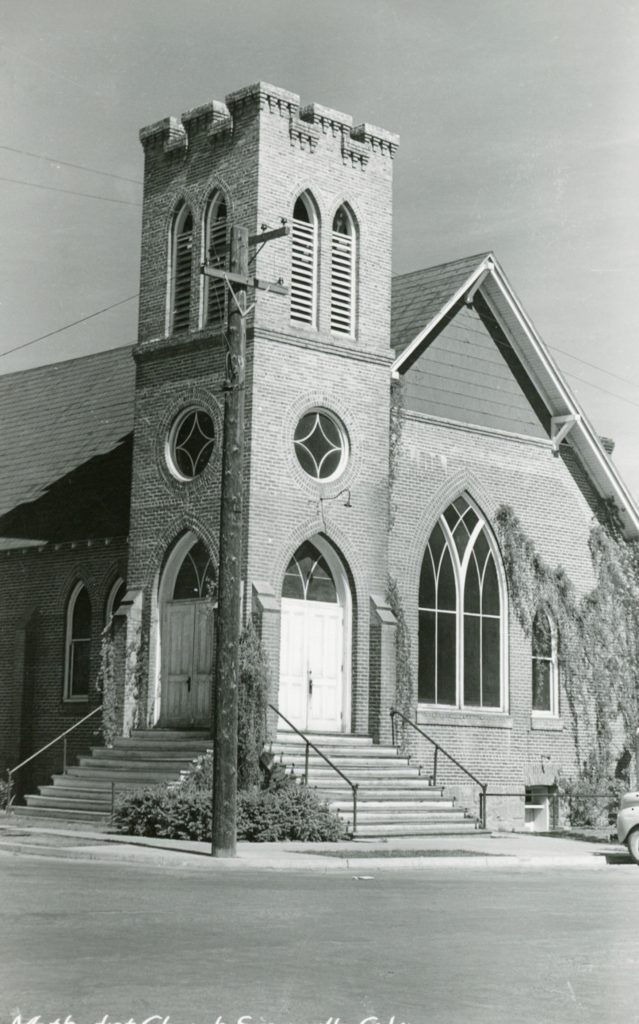
Someone deserves bonus points for creativity thinking out of the box for this social event—a Waist Social. That is correct, waist as in the human figure and not waste as in rubbish. To attend the function at Susanville’s United Methodist Church, the admission fee was probably the most unique I have ever come across in all my years of research and this was clever. To gain admission, a person’s waist was measured, for every inch cost one cent.
The entertainment was noteworthy, too. One feature was a “colored” wedding, wherein James Crawford was the bride, James Compton, the groom and Maynard Buckles as the minister. All this hi-jinx was done in part to welcome the Rev. D.D. Edwards, the new minister of the Methodist Church in October 1926.
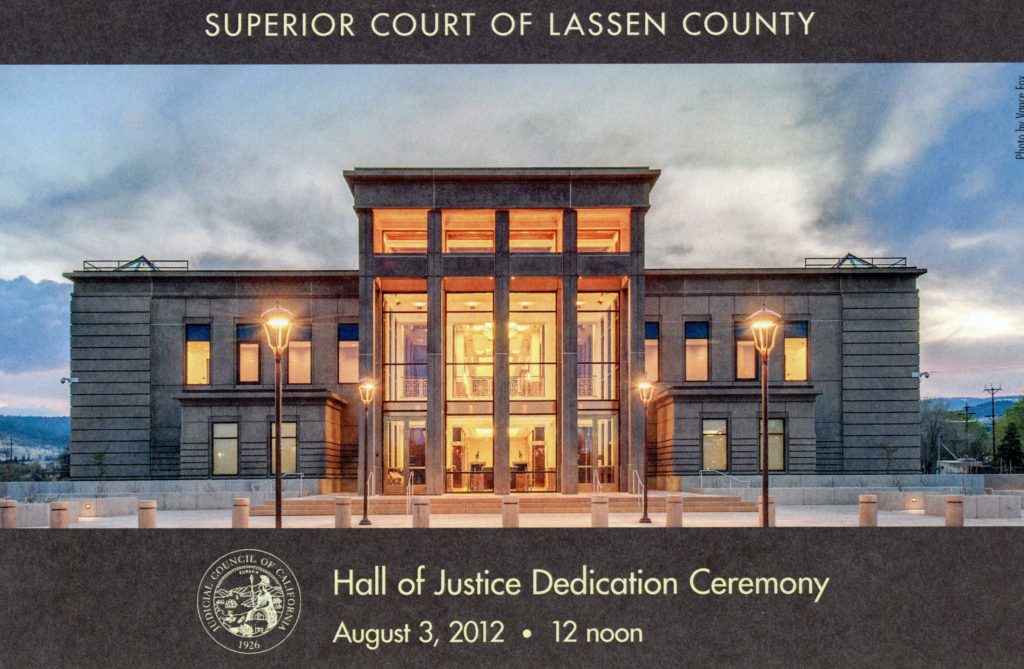
It has been ten years to the day when the Lassen County Hall of Justice was dedicated. However, first some background. In 1997, the California Legislature passed the Trial Court Funding Act. In essence, the state would take over the courts, where in the past it was a county function. In Lassen County the transition was slow.
In early 2000s, planning began on a separate facility for the Lassen County courts. There was debate as to where to build it. The site selected was on Riverside Drive. When the $38.9 million building was completed it was the most expensive public works project in Lassen County.
The original superior courtroom in the Lassen County Courthouse remained intact, and used primarily for ceremonial functions. Once the current courthouse renovation project is completed it will become the meeting room for the Lassen County Board of Supervisors.
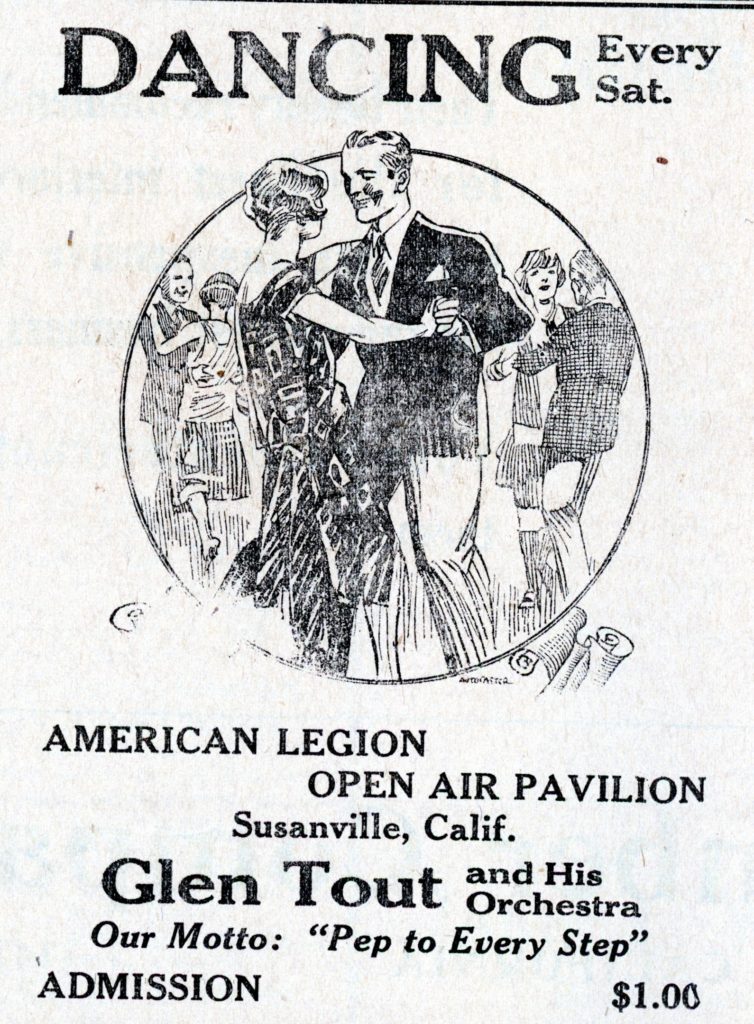
During the summer of 1926 Susanville was full of energy preparing for the upcoming State American Legion Convention. There were lots of fundraising activities to be had. After all, the local post thought the cost for being host would be around $5,000. In June, they had raised $3,000.
One fund raising venue was the construction of an open air dance pavilion. On Saturday night, July 10, 1926 the grand opening dance was held. Glen Tout’s orchestra furnished the music, with its slogan “Pep to Every Step.” There was certainly a lot pep in those steps as the Tout orchestra played its final tune on Sunday morning at 4:45 a.m. The dances continued every Saturday night through the summer.
Finally, it should be noted, the local legion post ended up with a $4,000 debt after the convention. On the bright side, not only was Susanville put on the map, but the attendees spread the word of the royal treatment they received from the community throughout the state.
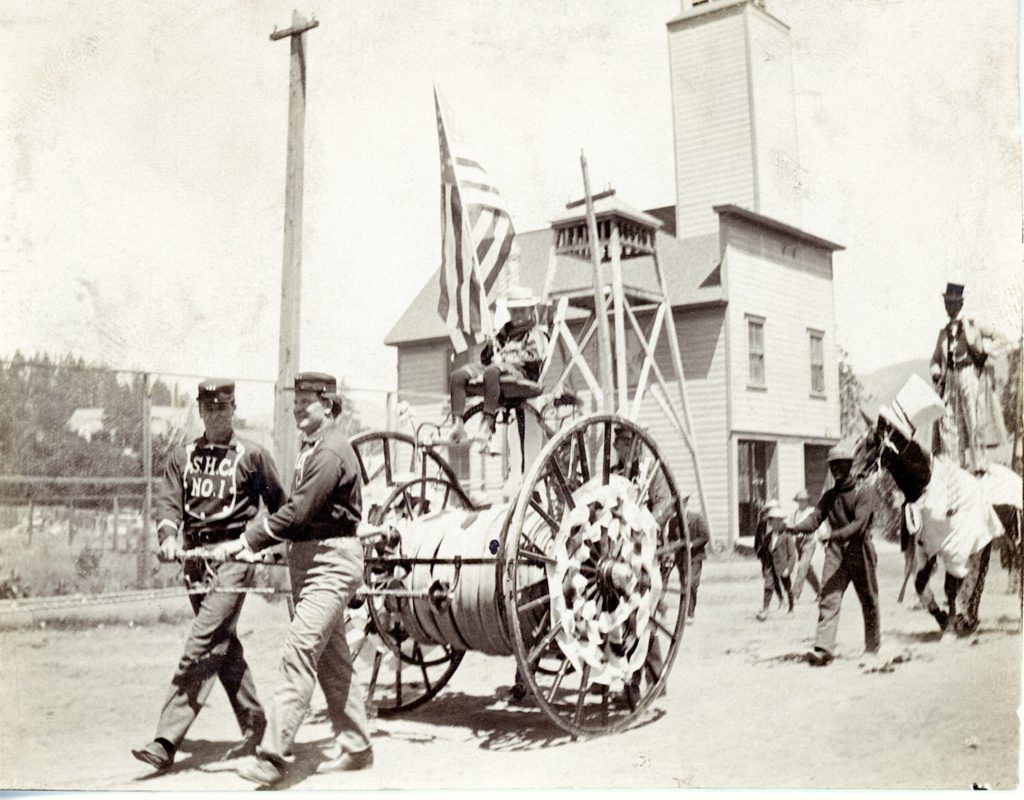
On January 21, 1885, the Susanville Hose Company No. 1 was organized to become the town’s first official fire department. The officers consisted of C.M. Stoll, foreman, A.E. Blum, secretary and Henry Bereman as Treasurer. Besides the initial officers eighteen men comprised the company. The volunteer firemen met weekly for practice sessions with the hose cart.
They were initially a ambitious lot. In July 1885 they held their first election for commissioners and David Knoch, Noble McKinsey and Hiram Skadan were elected. On June 6, 1887.the commissioners held. special election to levy for an $500 assessment for the purchase of additional equipment. It was approved 71 to 3.
In the fall of 1891, the company sought to acquire a permanent home. On November 19 they purchased a lot from James P. Keener on Lassen County, which is now the current site of Susanville’s City Hall. A fire hall was built with a fifty-foot bell tower, becoming the town’s tallest landmark. It was designed specifically that way so when the bell was rung it could be heard throughout the town.
Like all volunteer organizations they have their peaks and valleys, but the organization continued for several decades when it would reorganized as the Susanville Volunteer Fire Department.
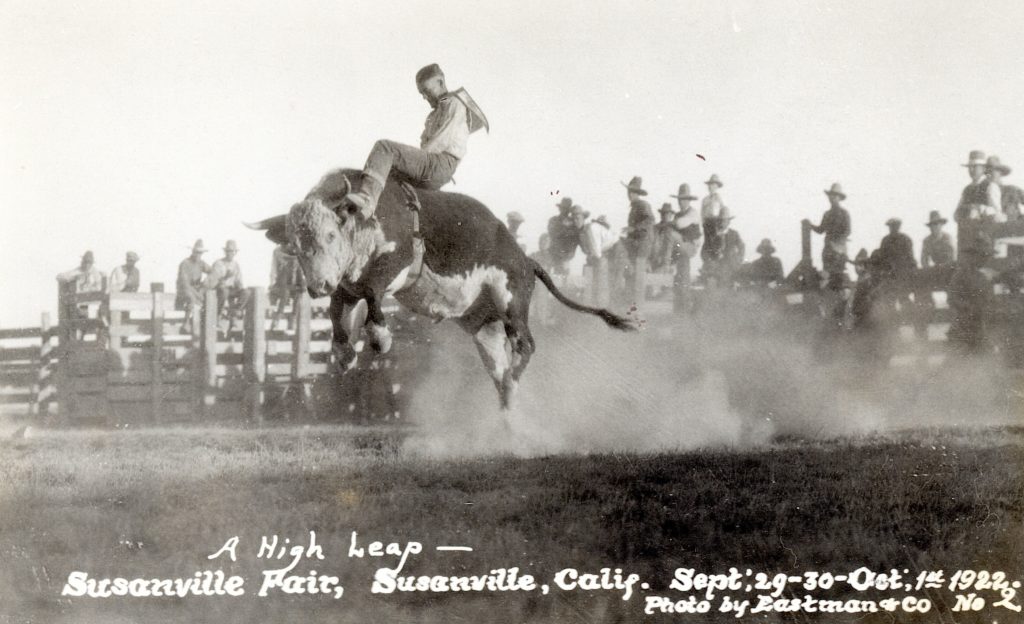
This is not only Lassen County Fair Week, but it is the fair’s centennial. In the summer of 1922, Bert Jensen, Russell Brownell, C.E. Lawson, L.E. DeForest and H.H. Riddels formed the Lassen County Fair Association. It had been sixteen years since the last fair, and these ambitious men were not only going to correct that, but make the county fair an annual event.
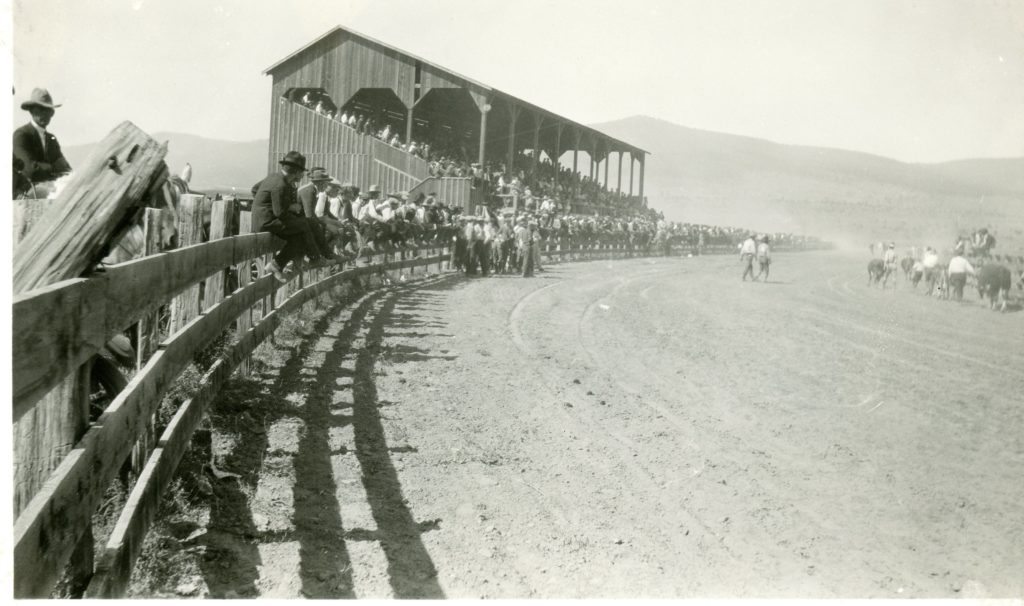
They wasted no time to put together a fair, but a permanent fairgrounds as well.. Twenty acres of land were acquired which is still the present Lassen County Fairgrounds. In July the Association announced its plans to construct a substantial grandstand, along with a race track. There was plenty community support for a fair as merchants and the agricultural community raised $4,000. In early August Susanville contractor, J.J. Woodward was hired to build the grandstand for $3,256.44.
Lassen County Fair, 1922. Courtesy of Lola L. Tanner
On Friday, September 29, 1922, large crowd assembled for the opening day of the fair. A lively time was had by all. However, it was not a financial success. The entire cost was $12,500. Receipts from all sources was $8,700. While there was a $4,000 deficit, it was duly noted that the Association made substantial permanent improvements that would not be incurred in the future.
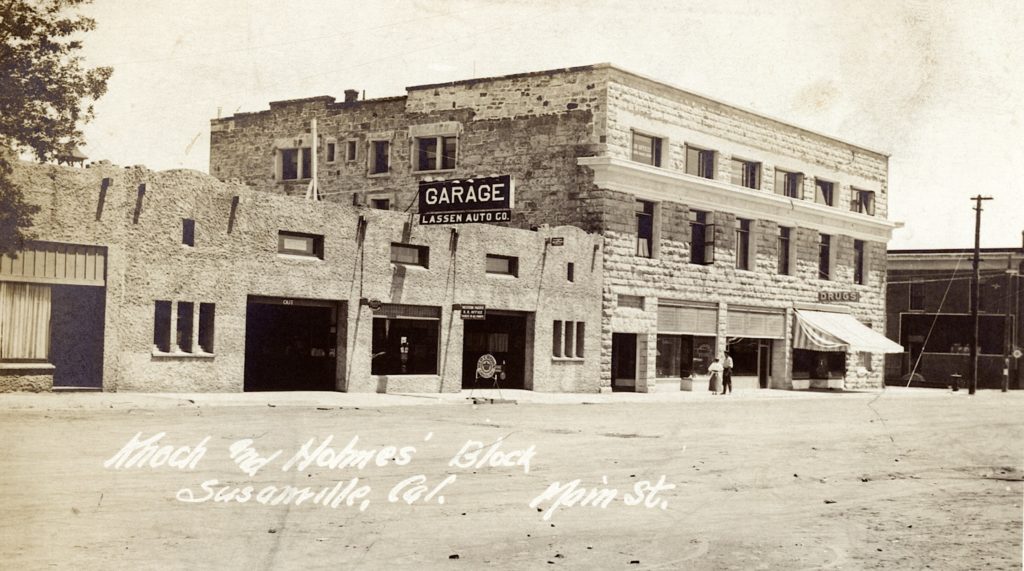
Doyle & Hunsinger and Lassen Auto Building, Susanville, circa 1927
On January 23, 1926, Doyle & Hunsinger Motor Company held a grand opening celebration in their new building on the 600 block of Main Street. Their Ford dealership occupied the west side of the building. The eastern side of the building was the home of B.R. Holmes Lassen Auto Company. Holmes had acquired the property that for many years was the location of Hi Skadan’s Livery Stable. Over the course of several years, Doyle would acquire Hunsinger’s interest and then eventually buying out Holmes to own the entire building.