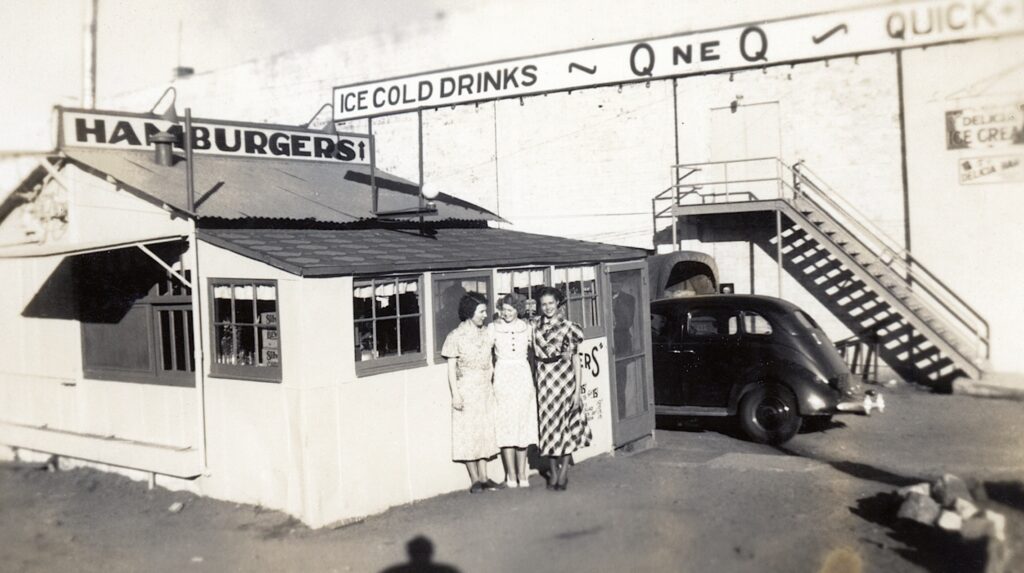
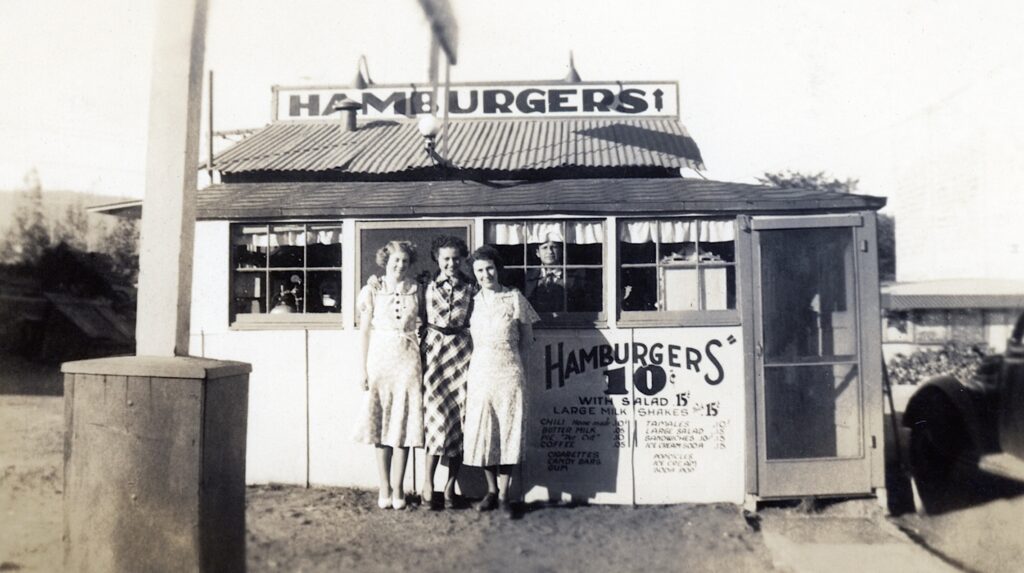
This was an interesting photograph by C.H. Bennett of the Secret Valley CCC Camp. The only thing I know is what Bennett wrote was Mary Buckner, was the owner. I have no idea where it was located, but in. background is a two-story cement building, that I am unable to place. Label this post as a work in progress.
October 7, 1937–C.H. Bennett Collection
Fortunately, Susanville still has its own “hamburger shack” known today as the Frosty Mill on North Ash Street. The food is great, prices you can not beat. Something one does hear much about, the establishment is now in its third generation of ownership.
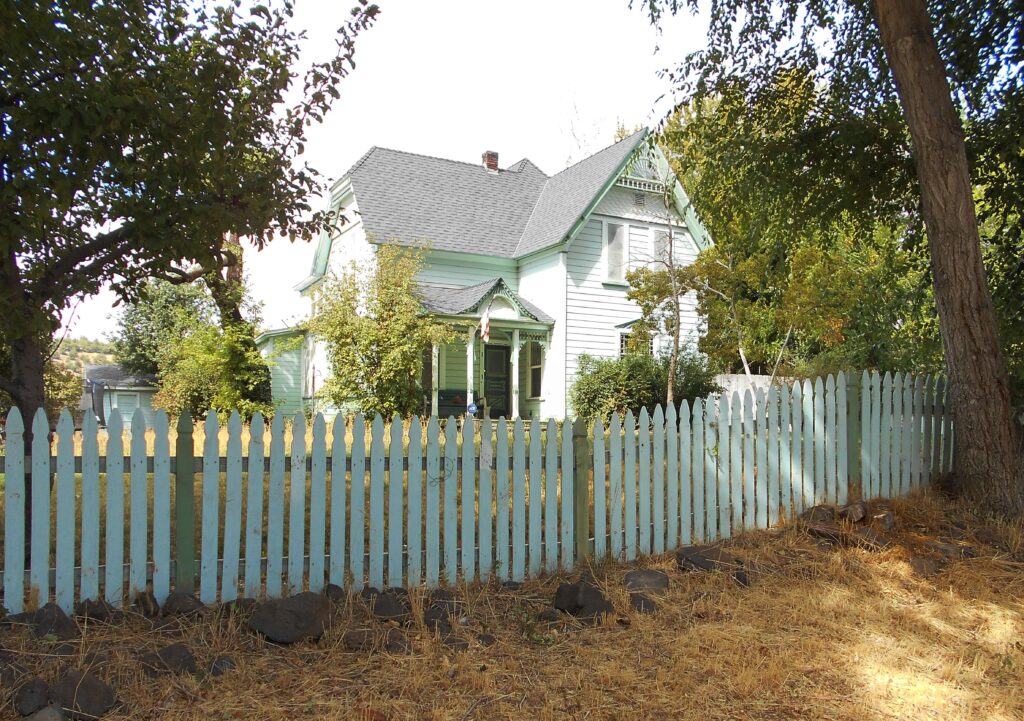
The former Compton House,North Weatherlow Street, Susanville—Jere Baker
Compton Park name implies it is a recreational facility, when in a fact it is a small housing tract. It is located along Chestnut and Weatherlow Streets. On November 1st, 1945 the Compton family took possession of the 110-acre Taylor Ranch, which comprised a region on North Weatherlow Street. It was soon after that, Claude Compton and his son James began to subdivide the property for homesites. It did garner attention, as it was the first subdivision in Susanville since 1922. On January 15, 1946 the Compton Park subdivision was approved containing twenty-three lots.
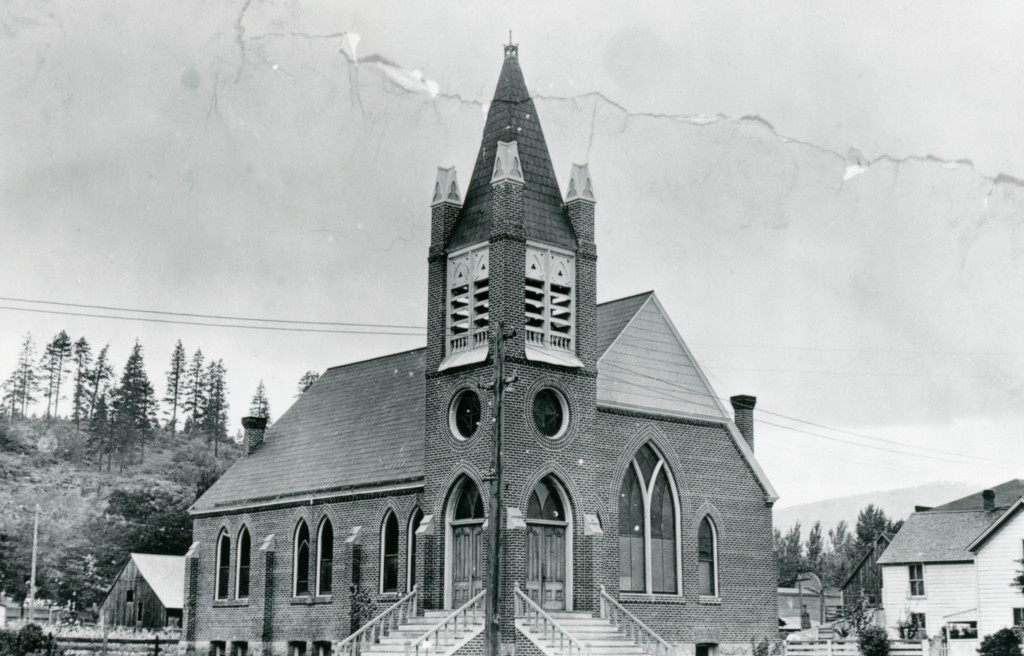
In January 1908, the Rev. N.M. Parsons of the Susanville Methodist Church began the first official prohibition movement in the town. The issue had informally been discussed since the early 1880s when there was a local chapter of the Women’s ChristianTemperance Union. Parson began his campaign by focusing on the social ills caused by alcohol. He circulated petitions to have the issue placed on the next municipal election ballot, scheduled for April 11, 1908. The City Trustees accepted Parsons’ petitions and placed the matter before the voters. There was one stipulation: it would be an advisory measure as to whether saloons should be banned.
It was a widely debated topic. The 1908 budget for the town was $3,498. There were two main revenue sources. One was the property tax assessment and it generated $1,815. The other was the liquor licenses which provided $1,424 to the town’s treasury. The town was operating on very lean times, with no spare funds for civic improvements.
Once thse figures were revealed, Parsons’ ballot measure was doomed. After all, if the City lost the money generated from liquor licenses, the only alternative to make up for the loss would be to increase property taxes. That appeared to be the voter’s consensus. The issue generated the highest voter turnout to date with 157 votes cast. The results: 110 votes to remain “wet” and 47 “dry.”
The following account appeared in the Lassen Advocate’s Christmas Edition of December 14, 1923 that I thought some people may find of interest.
”About two years ago a small band of stray Elks got together in Susanville and decided that to properly carry out the wonderful principles of Elkdom a campaign would have to be launched to increase the little band’s numbers. This was done and a class of about forty good fellows were then taken into the Reno Lodge. A year later another class was taken in about the same size.
”Shortly after this the Antlers Club was organized and this property was purchased for the Antlers Clubhouse. The general plan of the building and the wonderful location, together with street improvements made it an ideal proposition to the purpose. It is admired by all city visitors and lately has become the social center of any events of the County.
”The fondest dreams of the members of the Antlers Club are about to be realized by turning their clubhouse into a Elks home. A charter has been applied for to the Grand Exalted Ruler, and has 162 members that are located here have signed the petition agreeing that as soon as the charter for a lodge in Susanville to demit from the Lodge which they belong and become charter members of a Susanville Lodge. In addition, about 100 good fellows are ready to join the herd.”
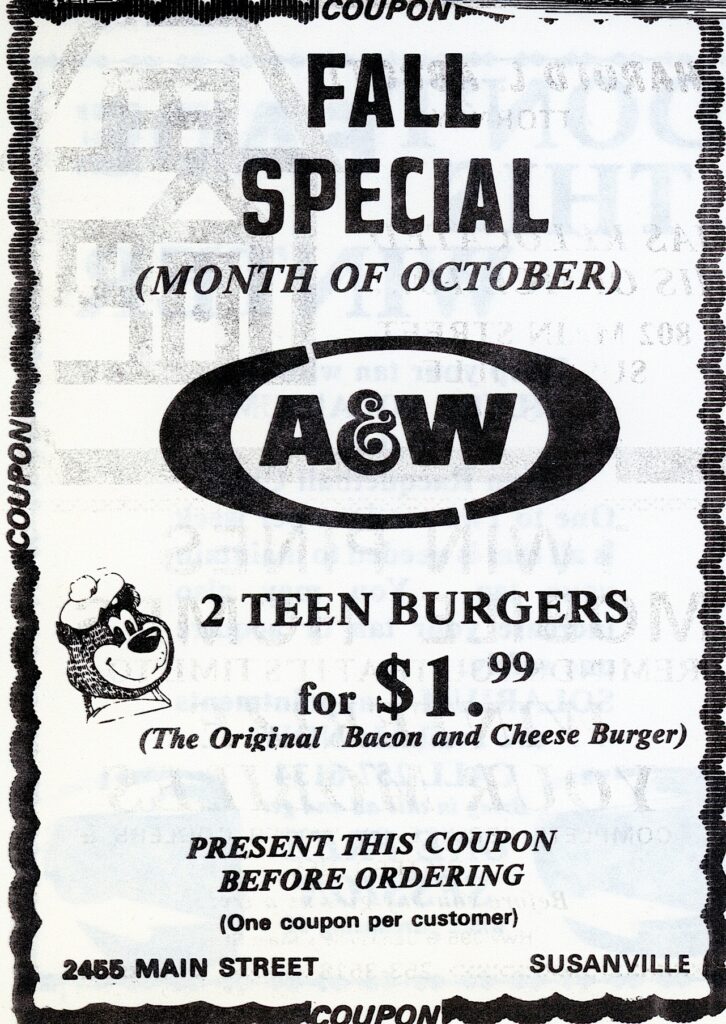
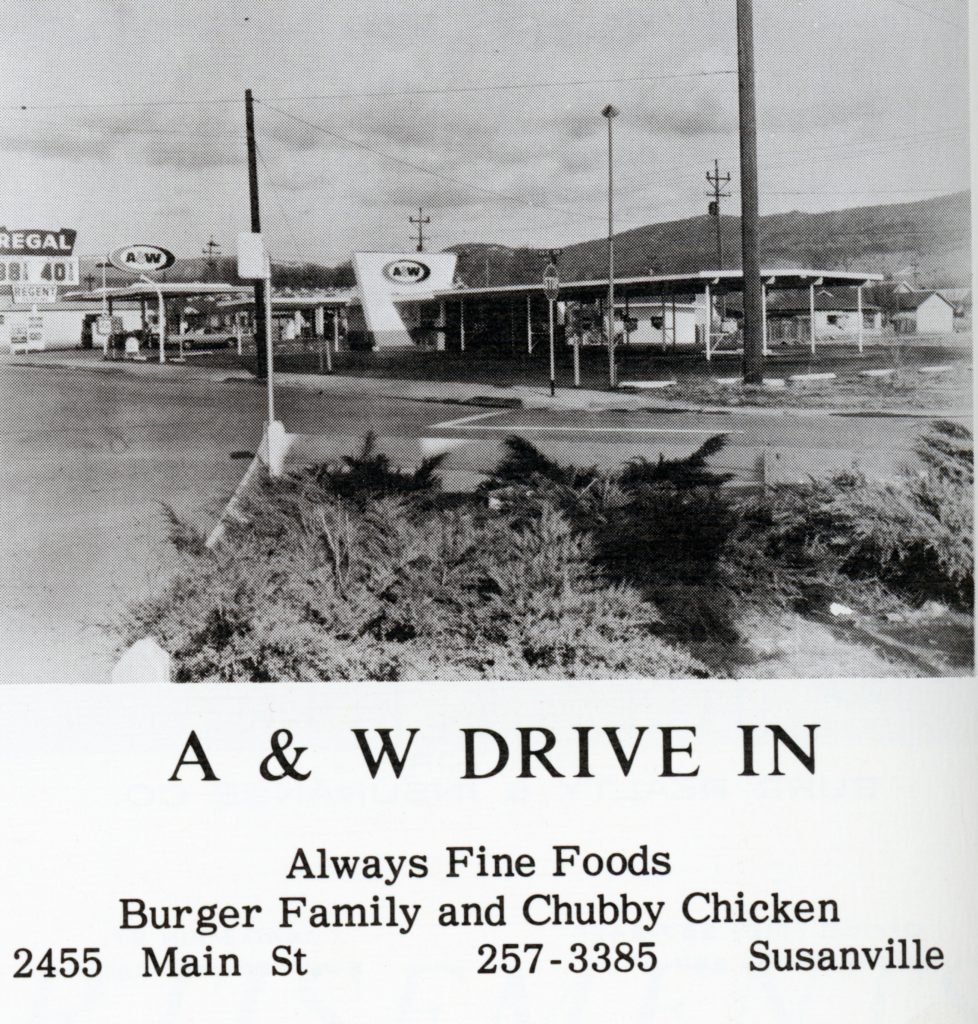
In 2019, I published an A&W advertisement, that a number of people emailed me about fond memories of the establishment. With that in mind, I thought I would do another. I am also including the advertisement from the past files.
1971 Advertisement in the Lassen Cougar Yearbook. Courtesy of Jim Chapman
A&W opened in 1961. I do not know when it closed. If anyone knows, please inform me of the same. A&W still exists, the nearest one is located as 1311 Baring Blvd, Sparks, Nevada. In the above ad, take note of Regal Gas Station gas prices.
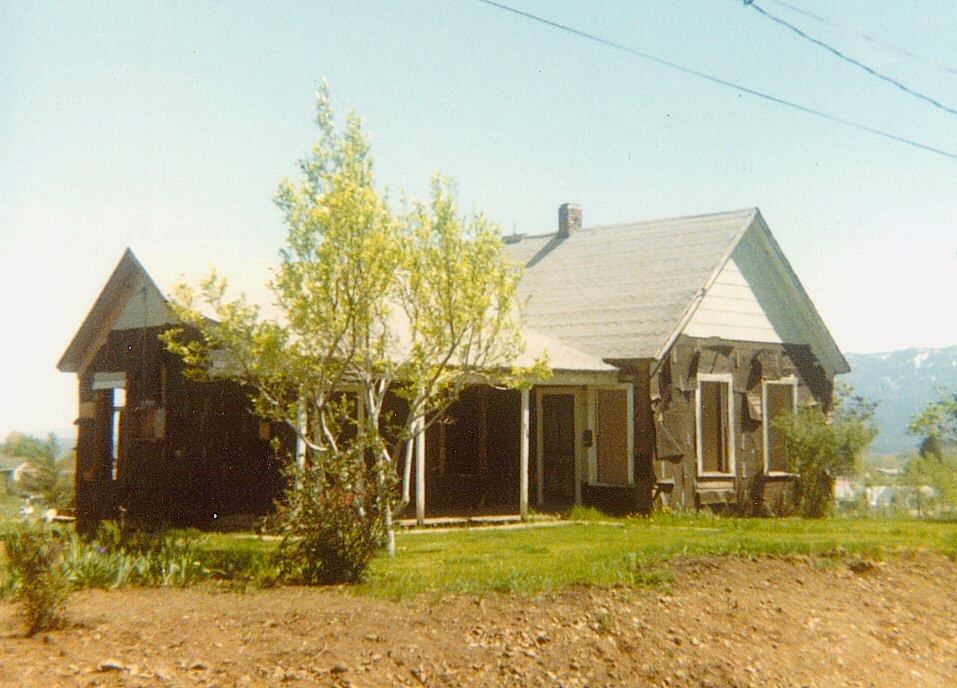
The Brashear Residence on the corner of South Lassen & Brashear Streets. Taken on June 11, 1979 when the house was being torn down.
In 1906, Brashear Street became the first new street inside the original town plat. There would be only three other streets inside the original city limits to be created. The others were Hill, Maple and Quarry..
William Brashear came to the Honey Lake Valley in 1863 and moved to Susanville where he purchased all of Block 32 and segments of Blocks 24 and 31, near the Lassen County Courthouse. These had never subdivided into lots. Creating the street was one matter, and the subdivision a different story. I will be doing a follow up, when I able to due a file transfer, using a one of the local library’s computer.
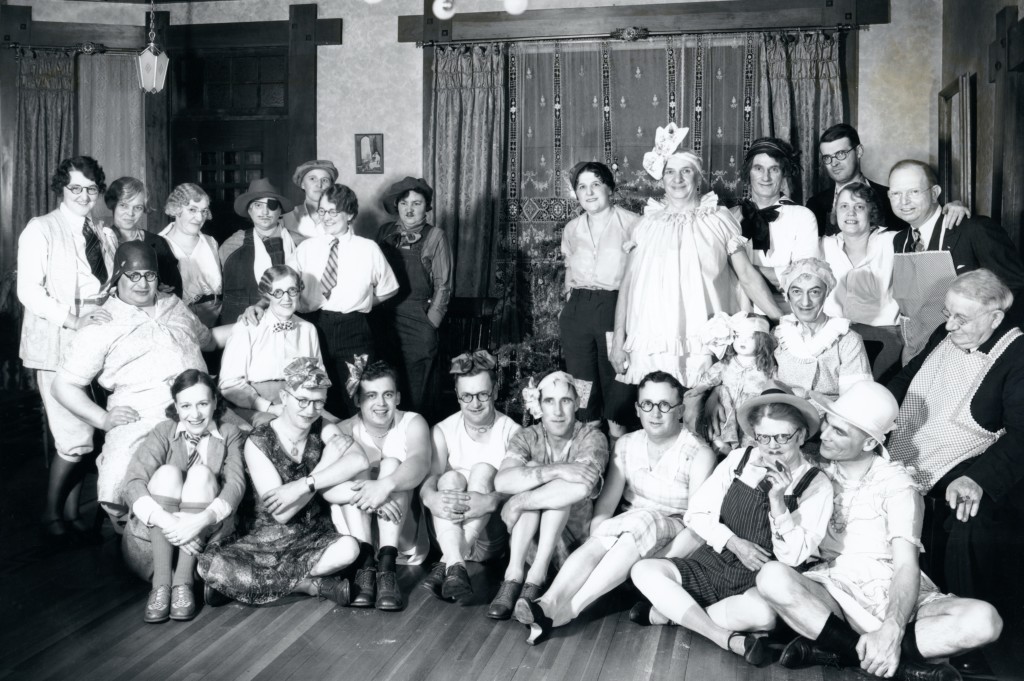
Who needs Halloween when you can have a freak party?—B.R. Zimmerman Collection
Note: Seasoned readers may recall this article from several years ago. However, it being Halloween, current readers might enjoy the same. These parties were popular in the teens and twenties of a century ago. They were held early in the year to break the winter doldrums.
Olga Wemple who wrote the Society page of the Lassen Weekly Mail reported on a special party that occurred on March 3, 1916. She wrote: “A freak party given by Mr. and Mrs. Jules Alexander (145 North Roop St., Susanville) proved to be the most unique and original that Susanville Society has seen for a long time. Every one was requested to come dressed in freakish costumes. Those who were invited responded with such enthusiasm in designing their queer attire that wide spread interest was caused not only among the lucky ones, but also among their friends who eagerly aided with their ideas. The home of the hosts was decorated in keeping with the plan of the evening. The living room was brightened with strings of oranges, lemons, apples with gayley colored balloons hung from the chandeliers and freakish pictures of all descriptions ornamated the walls. When every one had arrived each drew a caricature cleverly drawn by E.J. Feher to find “yourself” which table to be seated at.
This 1931 gathering was held at the home of Blanche & Ike Knoch, frequent hosts of such events. Courtesy of Hank Martinez
“At midnight all entered the dining room which was decorated with onions, turnips, and beets. The large table was bountifully laden with all kinds of goodies. At each place a card upon whichwas tied a minature knife, fork and spoon and also the initials F.W.M.B.F were painted. All were asked to guess the meaning of the initials and Mrs. C.M. (Maybelle) MacDonald proved the clever one and guessed the meaning which was “Fingers were made before forks.”
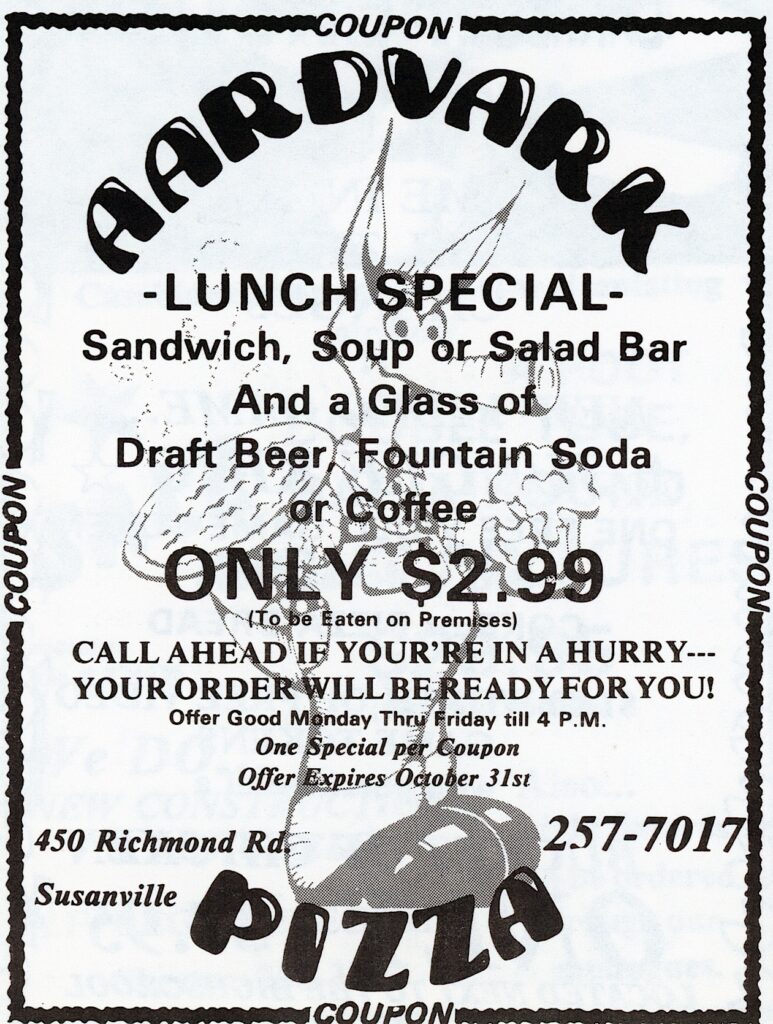
Very seasoned residents will remember this location as Borghi’s on Richmond Road. On one side was a grocery store and deli, the other a bar known as the S.P. Club. After the brutal murder of Jennie Borghi in 1973, the placed closed down.
In the early 1980s it was brought back to a new life as Aardvark Pizza and became a popular gathering place. When the business moved to 1535 Main Street, now the location of Mazatlan, it just did not have the same appeal as its original location and eventually closed.
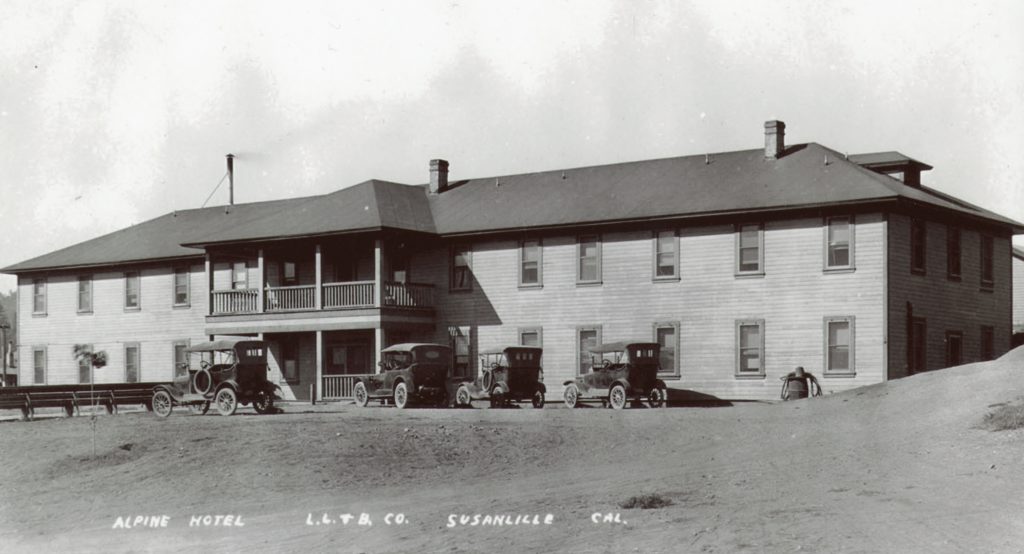
Alpine Hotel was a dormitory for the employees of the Lassen Lumber & Box Company
Along the same vein as Westwood’s Hotel Saville, in Susanville there was the Alpine Hotel. It was located on the west side of the 700 block on Alexander Avenue, across the street from Lassen Lumber & Box Company. It was built in 1919 to provide dormitory housing for the single men employed at Lassen Lumber.
Lassen Lumber’s glory years were brief and in 1935 the Alpine Hotel found a new life as a dormitory for Lassen College. The college used the building throughout the 1940s. It was by the way, where the forestry students were housed. Other than that, I know very little about the Alpine Hotel. May be one day, I will get lucky and uncover some of its history.
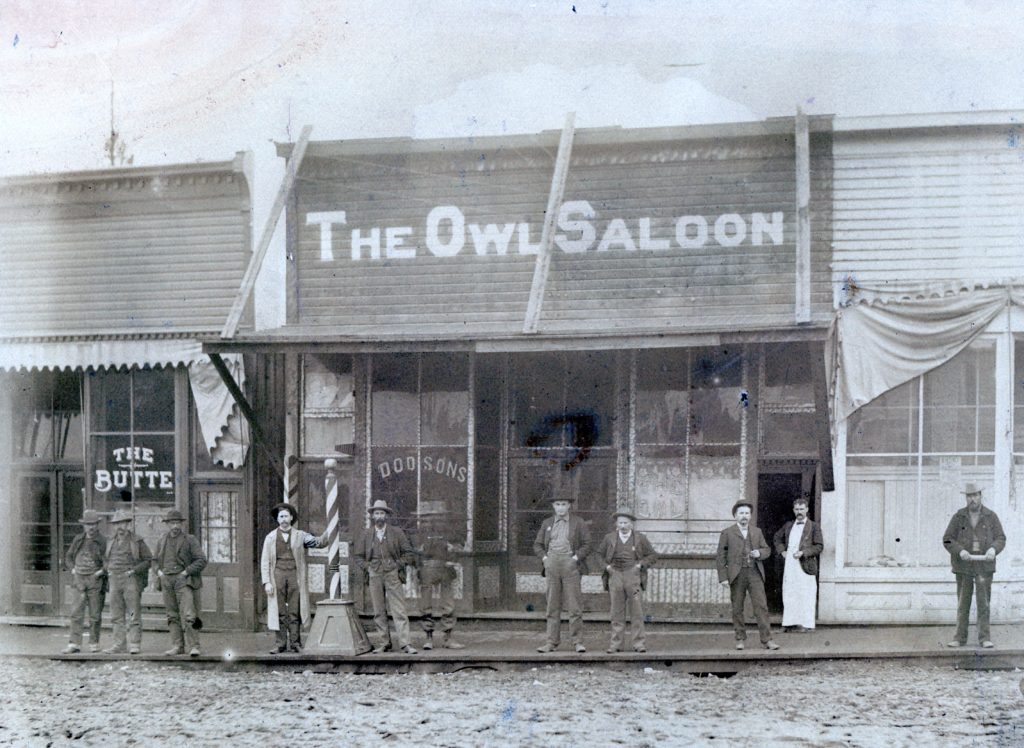
Susanville’s Owl Saloon circa 1907. Ironically, this establishment burned down only six weeks after Prohibition took effect in 1919. Courtesy of Del & Diane Poole
When Susanville was incorporated as a city in 1900, it had one glaring problem—it had no funding mechanism in place. During the debate whether to incorporate, proponents made it clear there would be no property tax. It was their belief that the City could operate on revenues generated from business license fees, especially the lucrative fees set by the state on saloons. Lassen County still collected the liquor license fees on the five saloons in Susanville. The County fathers were not going to give up this money without a fight, and they did.
It was a messy legal battle. It would force the City to impose a property tax assessment until the liquor license issue was resolved. In August 1903, the City imposed a tax levy of 40 cents per $100 assessed value.Of course, there were critics and even talks of disincorporation.
Relief would soon arrive. On August 25, 1904, the California Supreme Court ruled in Susanville v Zimmerman, et al that the town’s saloon owners had to pay the license fees to the City.