Tag Archives: Secret Valley Civilian Conservation Corp

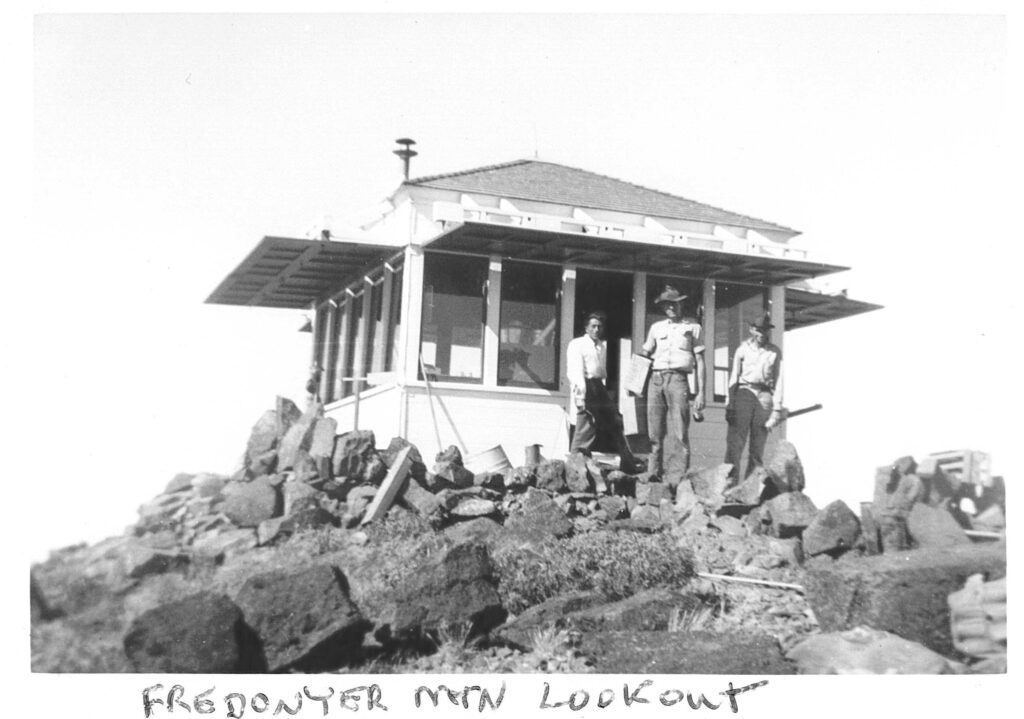
Fredonyer Peak Lookout

Courtesy of California Division of Forestry, Lassen-Modoc Unit

In the spring of 1937, the Lassen County Board of Supervisors were in communication with the California Division of Forestry to have a fire lookout placed on Fredonyer Peak,  just north of Eagle Lake. While, M.B. Pratt of the forestry was supportive and deemed it a worthwhile project, they did not have the funds. However, as a possible alternative, Pratt contacted Chester Hunt, Regional Manager of the Emergency Conservation Work. Thus, the wheels were moving in a cooperative effort to make the Fredonyer Peak Lookout a reality. Hunt stated  if the State Forestry and Lassen National Forest would provide the building materials, the Secret Valley CCC Camp would provide the labor. Everyone agreed. The CCC men had a lot of work to accomplish. First, they had a build a road from Horse Lake to the summit. (This is not the road used today.) A telephone line from Long Ranch at Horse Lake would also be extended to the summit. Finally, there was the construction of the lookout itself. Needless to say, the job got done.
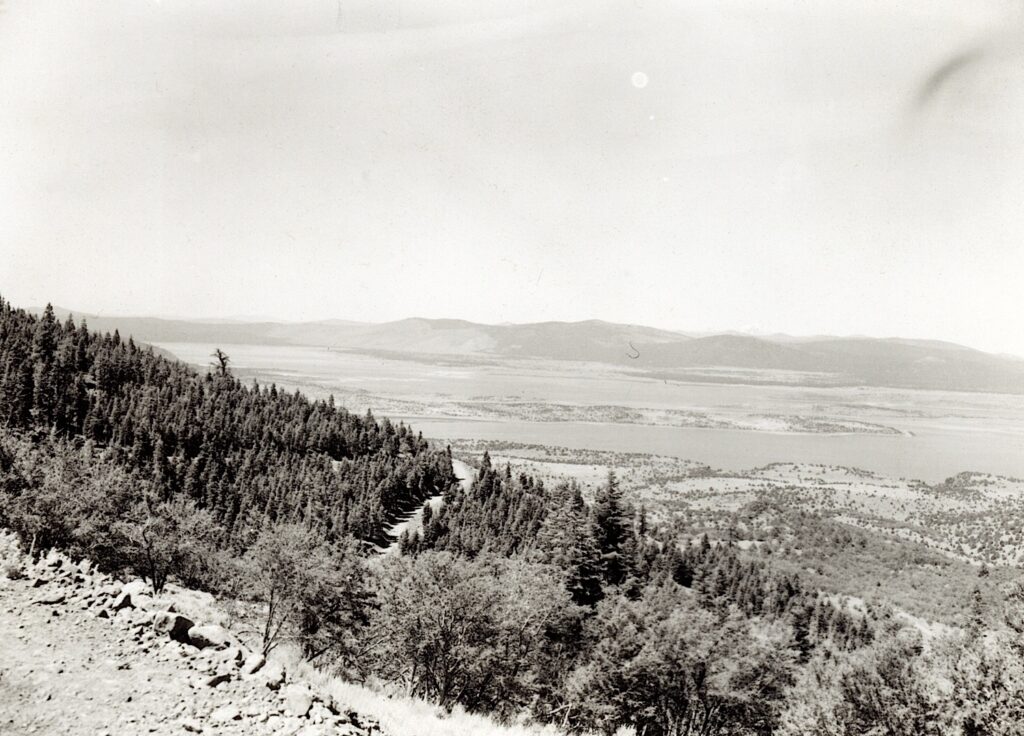
View of Eagle Lake from Fredonyer Peak, circa 1960

This lookout is still manned. At an elevation of 7943’ provides stunning views of the region.

Support by subscribing.
 

Baxter Creek Siphon Update

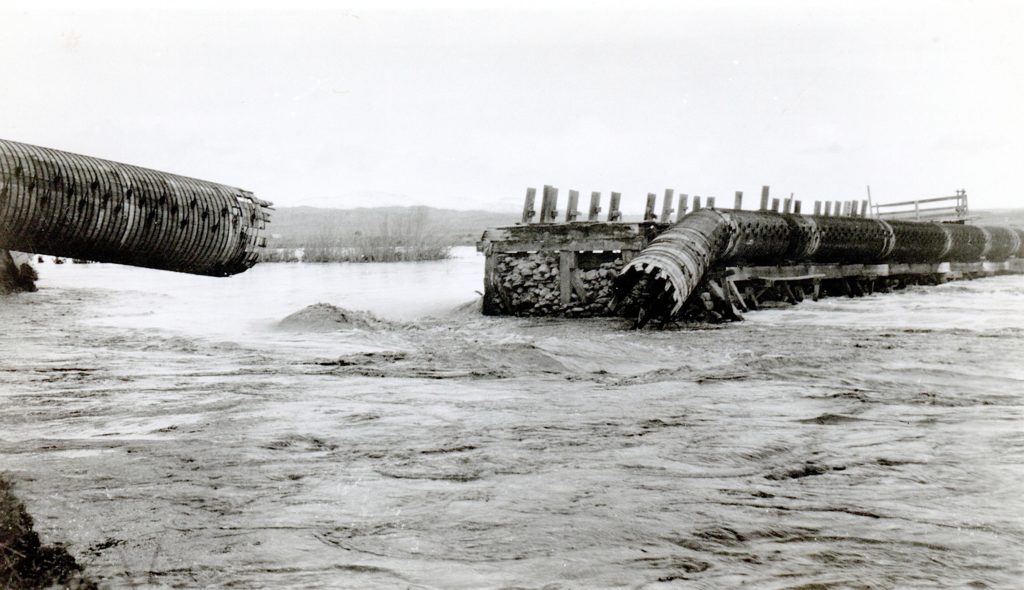
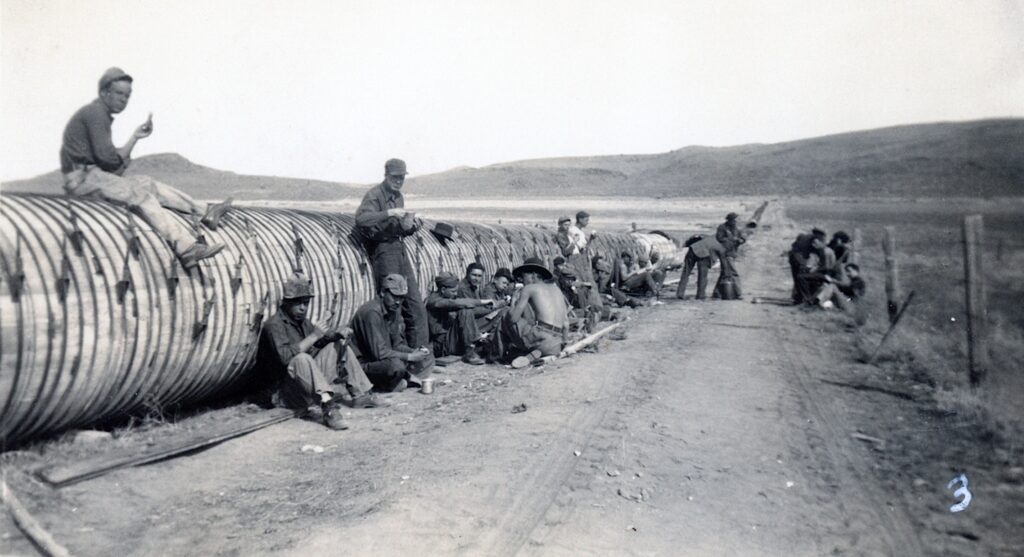
Secret Valley CCC’s doing repair work on the Baxter Creek siphon, 1936—C.H. Bennett Collection

Last year, I briefly wrote about the Baxter Creek Siphon.  Since then I do have some additional information. First a little background. The siphon was portion of the Baxter Creek & Tule Irrigation district’s distribution of water from the Bly Tunnel at Eagle Lake. A siphon was needed to convey water over the Susan River, then to a canal along Bald Mountain to Baxter Creek.

The siphon made of redwood and a diameter of 52 inches. The main siphon was three miles in length. In 1935, a flood damaged a portion of siphon where it crossed Susan River.

Susan River, 1935 — Lola L. Tanner

What is puzzling about the first photograph is why CCC’s were working on repairs to the siphon, as Bly Tunnel had been abandoned due to low water levels in 1935. May be some one was optimistic that water would flow again from Eagle Lake.

Tim

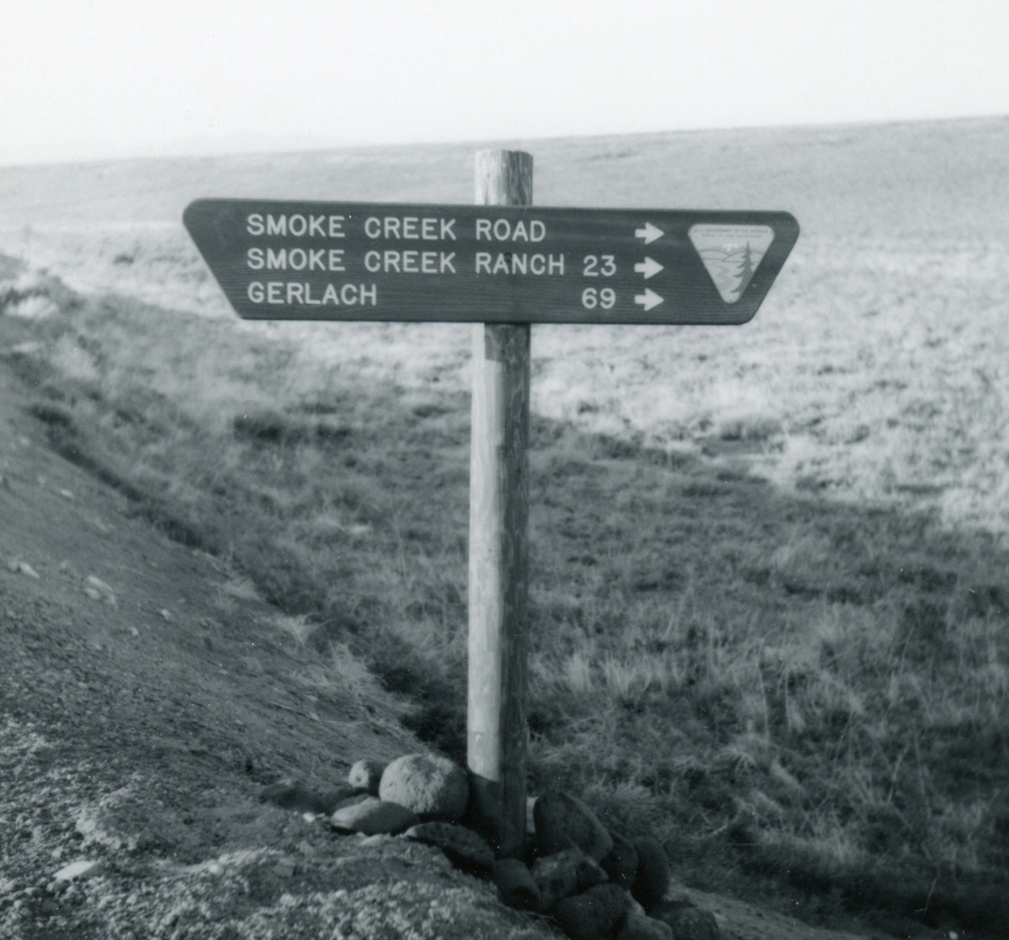
Smoke Creek Road

Viewland, 1974. Photograph by and courtesy of D.B. Martin

The turn off for this road, for those not acquainted, is a right turn off Highway 395 north between Viewland and Mud Flat. The first road in that section going to Nevada was Noble’s Emigrant Trail of the 1850s. Over the years, the route was slowly modified. The road we know today was constructed by the Secret Valley CCC camp in 1937. These men also did significant work on the road across Mud Flat, as well as road work between Ash Valley and Madeline.

Tim

The Fire Gong

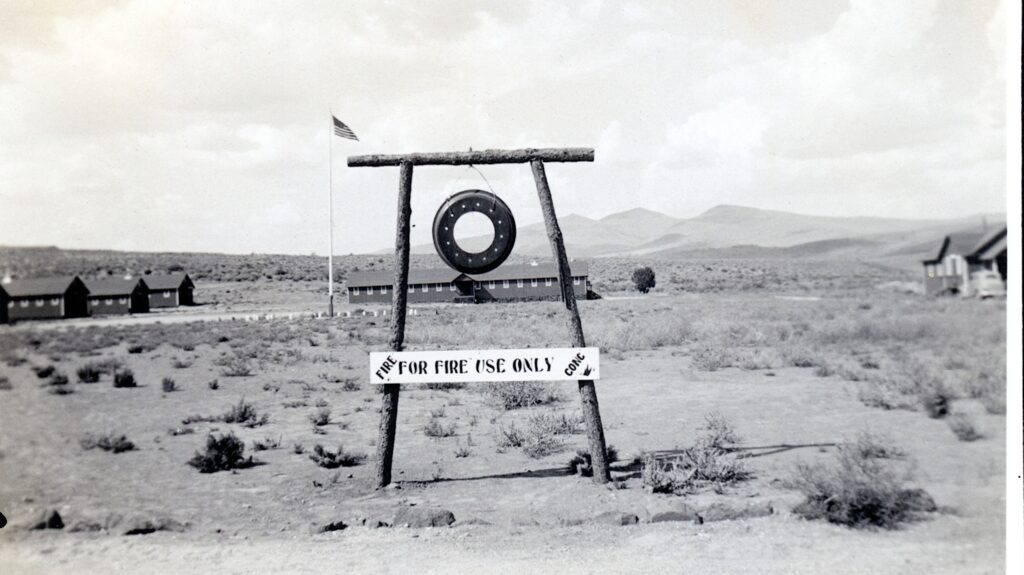
The Fire Gong at the Secret Valley CCC Camp—-C.H. Bennett Collection

There was a fire gong at the Secret Valley CCC camp. This is new territory for me and until I saw this photograph, I did not even know a fire gong existed. Fires, at that time, were not that common in eastern Lassen County, so it probably did not receive that much use. If anyone can shed more light on the fire gong, it would be welcomed.

Tim


“Three Sisters” and Turtle Mountain

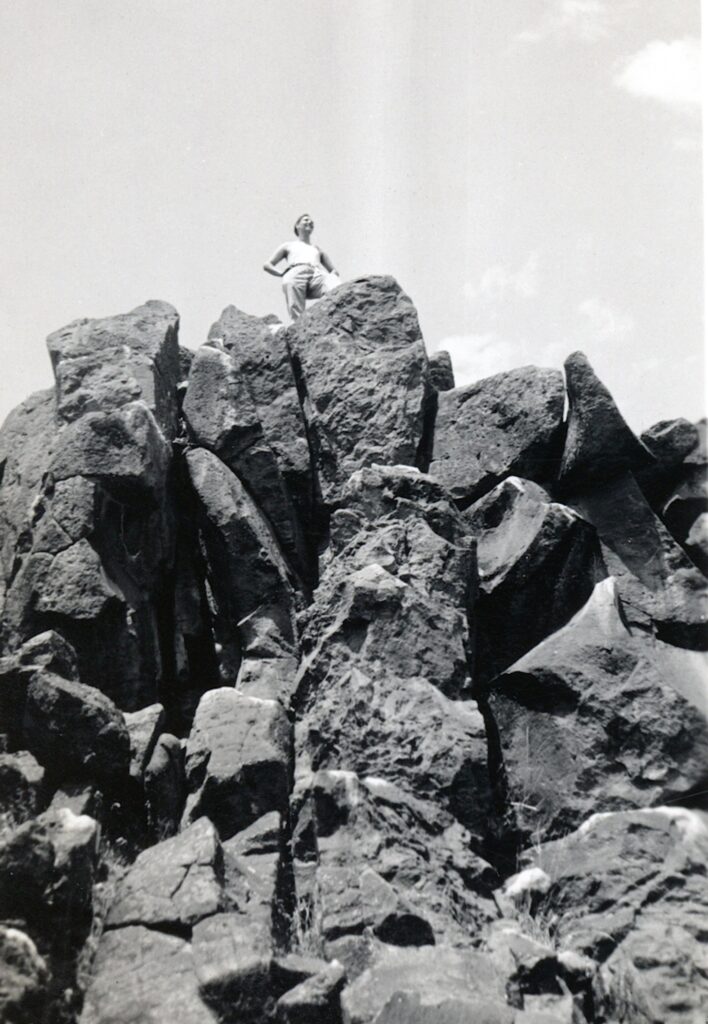
Secret Valley CCC Company Clerk on top of Three Sisters, August 1936—C.H. Bennett Collection

While you probably never heard of Shinn Peaks  referred to as the Three Sisters, the men stationed at the Secret Valley CCC camp gave it that name. After all these young men, were from the Midwest, so all the region was foreign to them, and Secret Valley so remote where there was not even a small village or outpost to glean local knowledge. Their view of Shinn Peaks shows three distinct peaks, hence the Three Sisters. Of course, some of the men were so intrigued by the mountain that they climbed to the top.

Another landmark Turtle Mountain, at the lower end of the Honey Lake Valley, which is a prominent extension to Fort Sage Mountain never had a name attached to it for many years. According to Philip Hall (1909-1996), who spent most of his life in nearby Long Valley stated it was “new comers” who arrived when the Sierra Army Depot at Herlong that was established in the early 1940s, when the point was named.

Tim

The Secret Valley CCC Boys and Willow Creek Valley

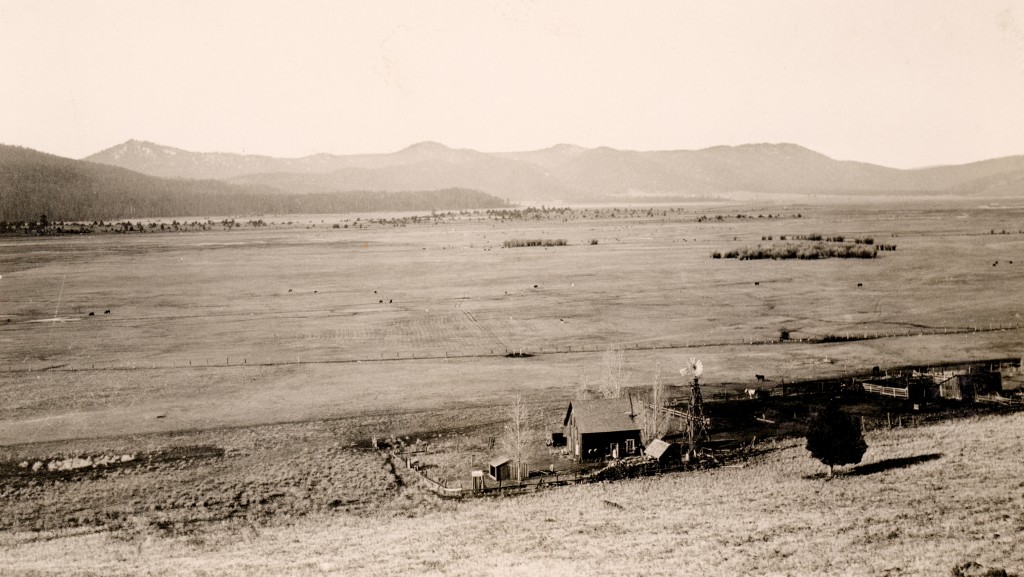
Lower portion of Willow Creek Valley, 1926. Courtesy of Lola L. Tanner

The Civilian Conservation Corp camps generally had a population of roughly 200 men. For some outposts, such as one of Secret Valley, they encompassed a lot of territory. It was not uncommon to establish a seasonal spike camp, comprising between 40-50 men. In In May, 1936, one of these spike camps was located in the Willow Creek Valley, some twelve miles north of Susanville.

This Willow Creek Camp had three main objectives—rebuild the existing telephone line, 20 miles road work and spring development. Work was done on three springs, Hagata, Morgan and Pete’s. They. noted that Hagata Spring had a flow of seven to ten gallons per minute. Of a somewhat interesting footnote, woodpeckers caused great damage to the telephone poles.

Tim

Welcome Company 740, CCC, Secret Valley

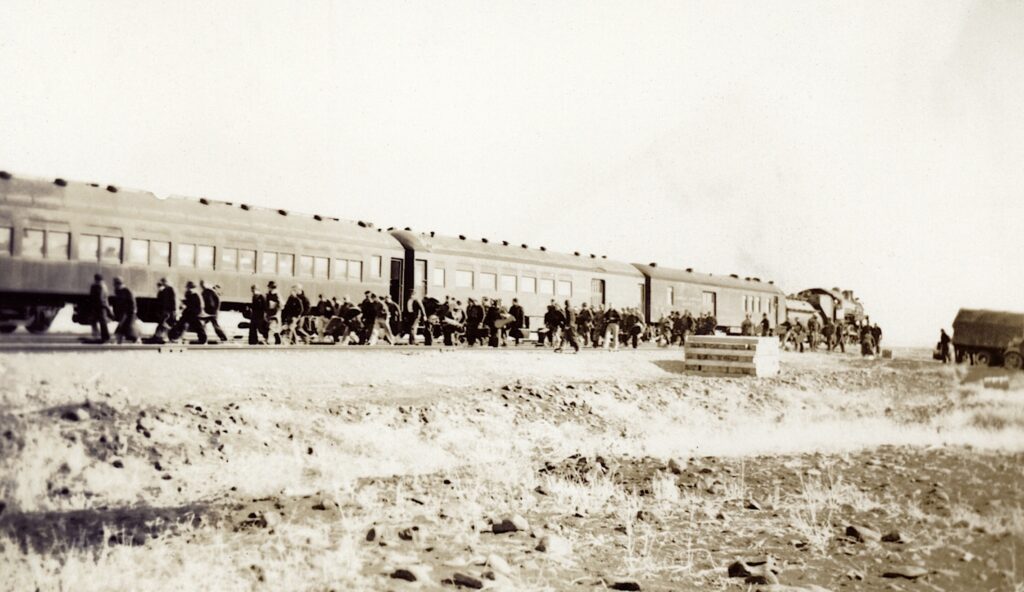
A train picking picking up CCC departures at Secret Valley, April 4, 1936—C.H.Bennett Collection

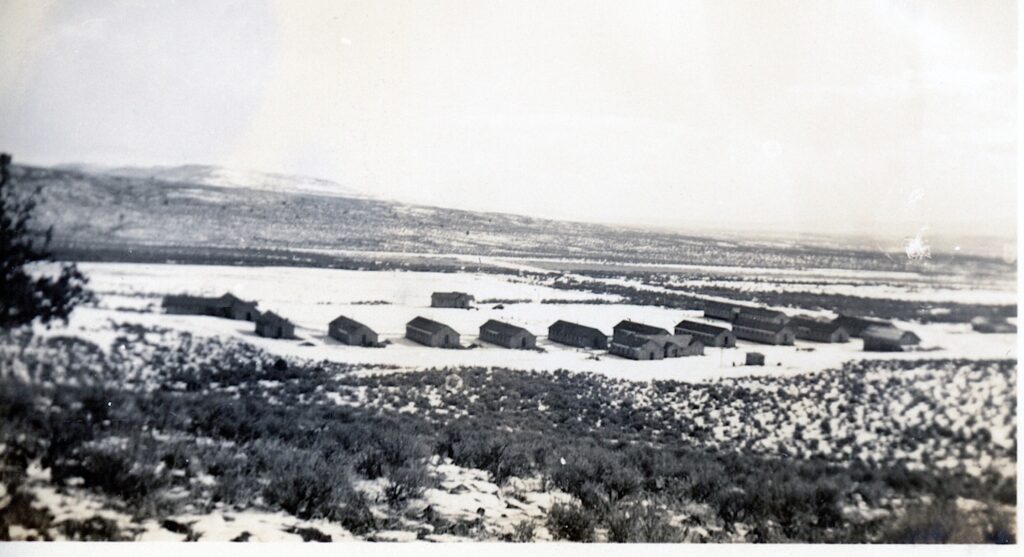
Once a week for the next several months we will explore the Civilian Conservation Corp Camp at Secret Valley, partially through the photographs of Charles H. Bennett, Company Clerk, who was stationed there from 1936 to 1938. Before the CCC camp was established at Secret Valley, there was a much smaller camp at the Fleming Ranch, known today as the Fleming Unit of the Honey Lake Wildlife Refuge. This consisted of approximately thirty men. It served two-fold. One for the men to get acquainted with the area to formulate what work would need to undertaken. Fleming Ranch had ample housing accommodations while the Secret Valley was being constructed. On August 20, 1935 the Secret Valley Civilian Conservation Corp Camp opened some thirty-five miles northeast of Susanville. One hundred and sixty-one young men arrived on a special 14-car train. The men came from New York and New Jersey. It was reported that it was quite a shock for them seeing this new environment of sagebrush and sand. These men would be sent to other camps, and Secret Valley became the home of Company 740 from men transferred from Piedmont, Missouri. The Secret Valley camp was also referred to District Grazing Camp No. 13. In future posts we will explore some of the work they did and during their short days off, some of their excursions.

When one enrolled into the CCC program one could enlist for six months and re-up to serve a maximum of two years.

Support

Tuesday Tidbit—A Railroad Question

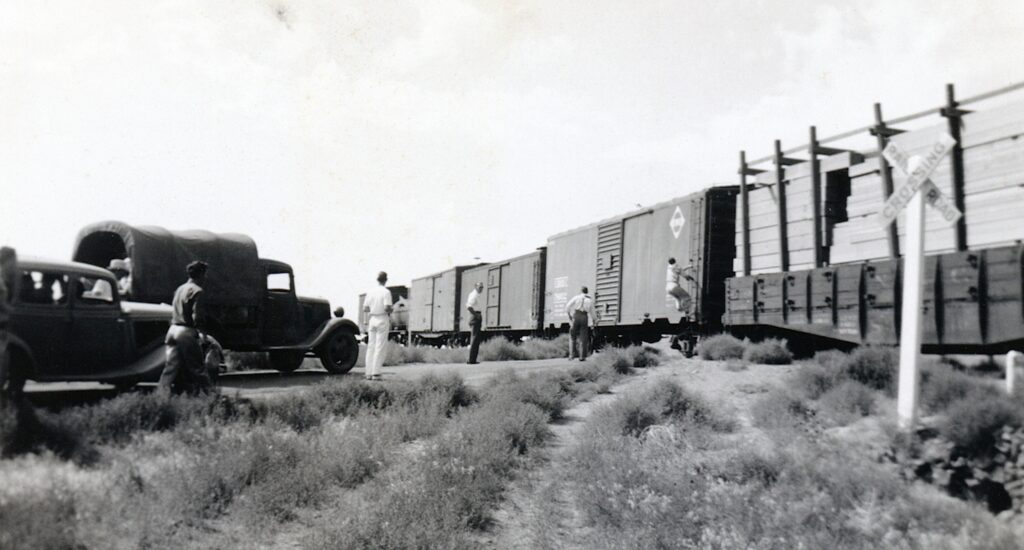
Southern Pacific train, Secret Valley, 1936—C.H. Bennett Collection

Secret Valley CCC Company Clerk, C.H.Bennett provided the following caption of this photograph, “It would happen.”

Now, I am not sure what he meant. There are subscribers, who have a lot more knowledge about train movement, rolling stock, etc., than I will ever possess. It appears, that may be the train is stalled, though I am not sure what the activity is going on. Can anyone enlighten?

By the way, starting next week I will begin a series of articles concerning the varied activities of the Secret Valley CCC camp, which played an interesting role of the region’s history during the 1930s and I can attest there will be some surprising stories, including Lassen County’s first culinary school!

Tim

CCC Discovery of Petroglyphs

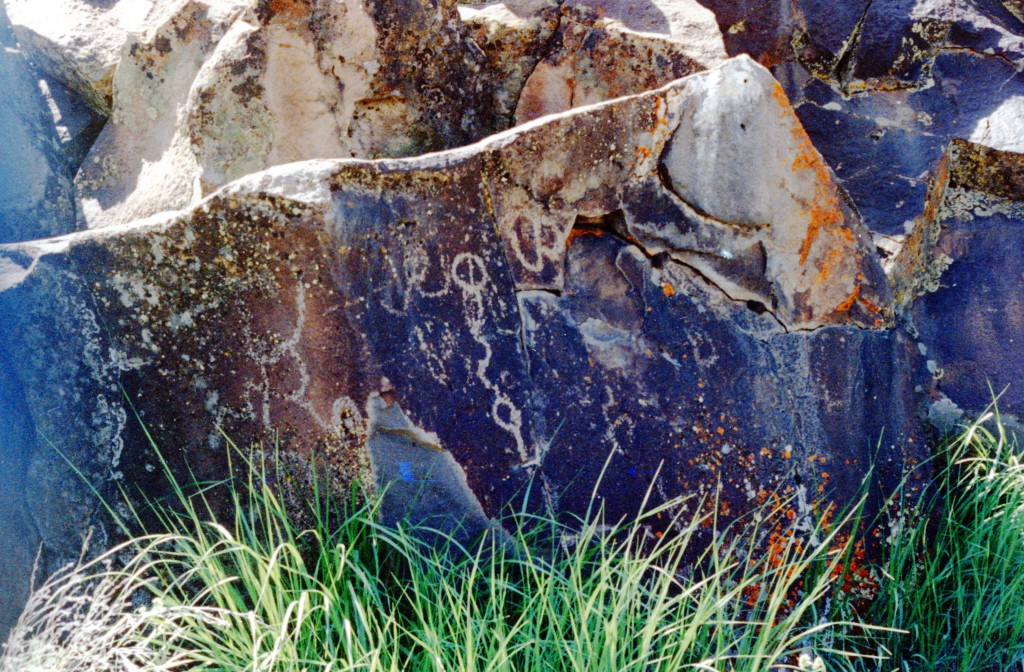
One of many glyphs to be seen along Upper Smoke Creek.

In the Happy Days CCC newspaper of September 11, 1937 carried a brief article of the Secret Valley CCC’s discovery of nearby petroglyphs. The following was a brief description: “What looks like childish scrawls are the latest known discoveries in petroglyphs, ancient rock drawings, found by the men of Co. 740, Litchfield, Calif., and now attracting the attention of scientists in this and other countries.”

This was not the first reported discovery of petroglyphs by the Secret Valley CCC’s. The Lassen Mail of March 13, 1936 reported:

”CCC workers in the Secret Valley camp are wondering this week if they have discovered ancient Indian inscriptions or merely run across the work of some amateur cartoonist who was whiling away his time with little stone hatchet.

Sunrise Chamber, 2015, Belfast

”An aged Indian revealed several inscriptions to camp workers, carved in rocks in the vicinity of the CCC camp claiming that said marks are relics of the dim and distant past. Photographs were taken of the inscriptions and are now in the possession of the foreman of the camp.“

On a final note, neither article gave the location, however, it should be noted that there two petroglyph sites near the Secret Valley CCC that being Petes Creek and Stoney Creek.

Support by subscribing.

Tuesday Tidbit – Secret Valley CCC Update

Secret Valley CCC Camp,January 1938—C.H. Bennett Collection

I am slowly scanning the photographs of Company Clerk C.H. Bennett who was stationed at Secret Valley from January 1936 to January 1938. If all goes well, in about a month, I will be posting the photographs and various work undertaken by the CCC and there is a lot. In the always learning something new category, the California Division of Forestry enlisted the aid of the Secret Valley Camp to build the road and fire lookout on Fredonyer Peak.

Tim