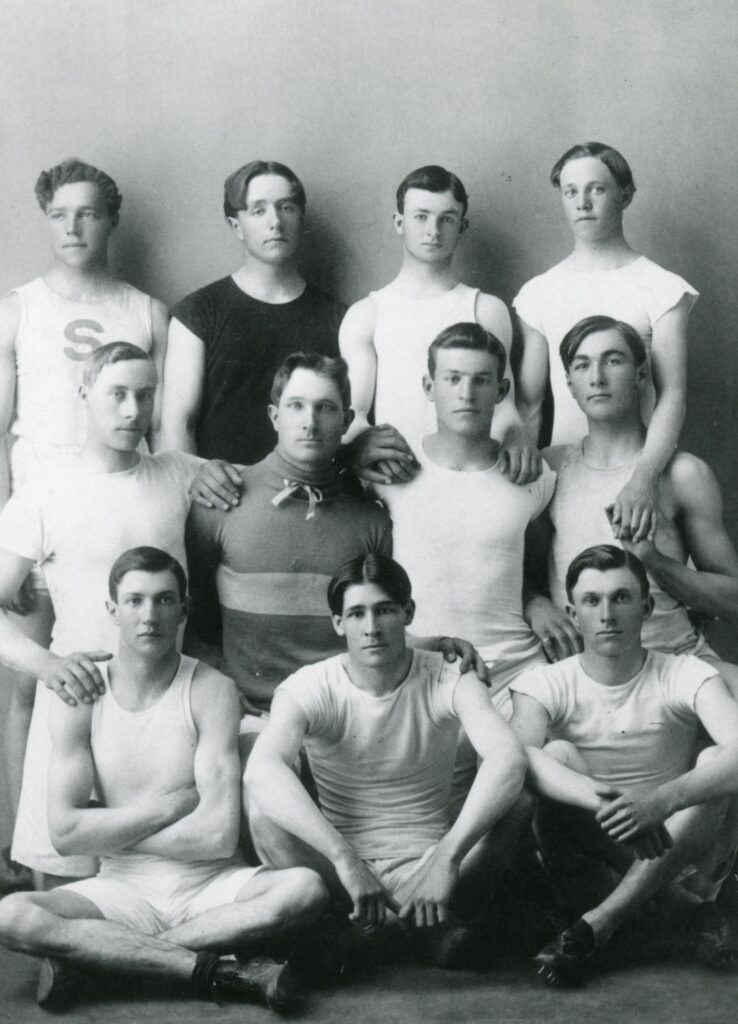
Lasssen High’s 1907 Track Team. Top Row: Barney Kingsbury, Harry Pearce, Ivor Clark and Fred. Kelley. Second Row: Ralph Taylor, Med Arnold, Finn Barry and Tro Emerson. Bottom Row: Roy Ramsey, Percy Holmes and Will Hall—-Courtesy of Betty Barry Deal
While Lassen County High School had been in existence for only a few years it had a remarkable track team from its inception. In the spring of 1907 Lassen High invited Reno High for a track competition. It was rescheduled twice and finally held at Lassen High on May 10, 1907. Lassen more than excelled beating Reno 100 to 17.
The pole vault competition was an interesting one, and Lassen could have conceded. This was due to their rude equipment of fence rails and pine limbs used as the pole. However, Reno did bring the proper equipment. Like most of the day’s competition Lassen walloped Reno in the pole vault with Barney Kingsbury; first Tro Emerson, second and Reno’s Chester Patterson coming third.
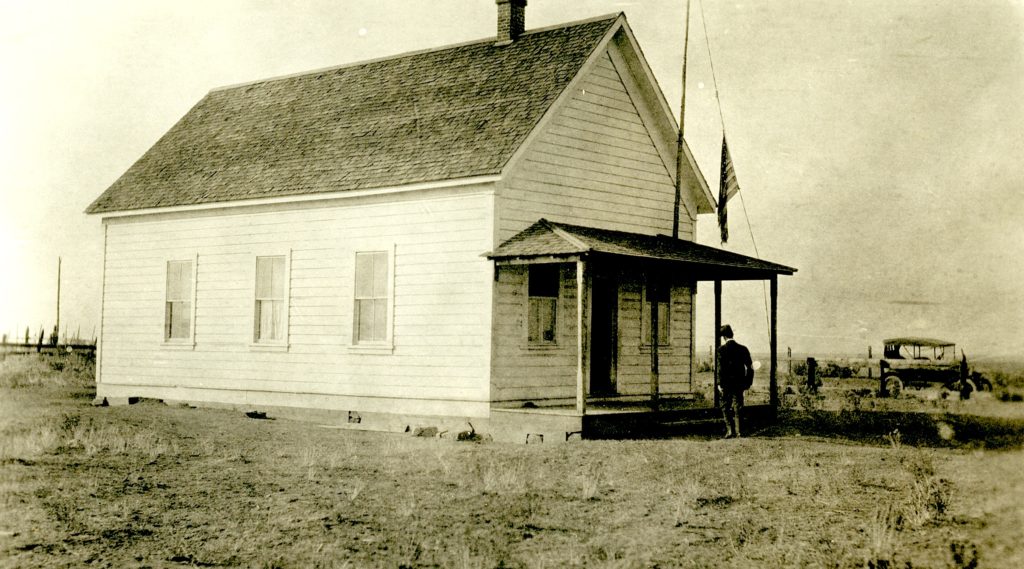
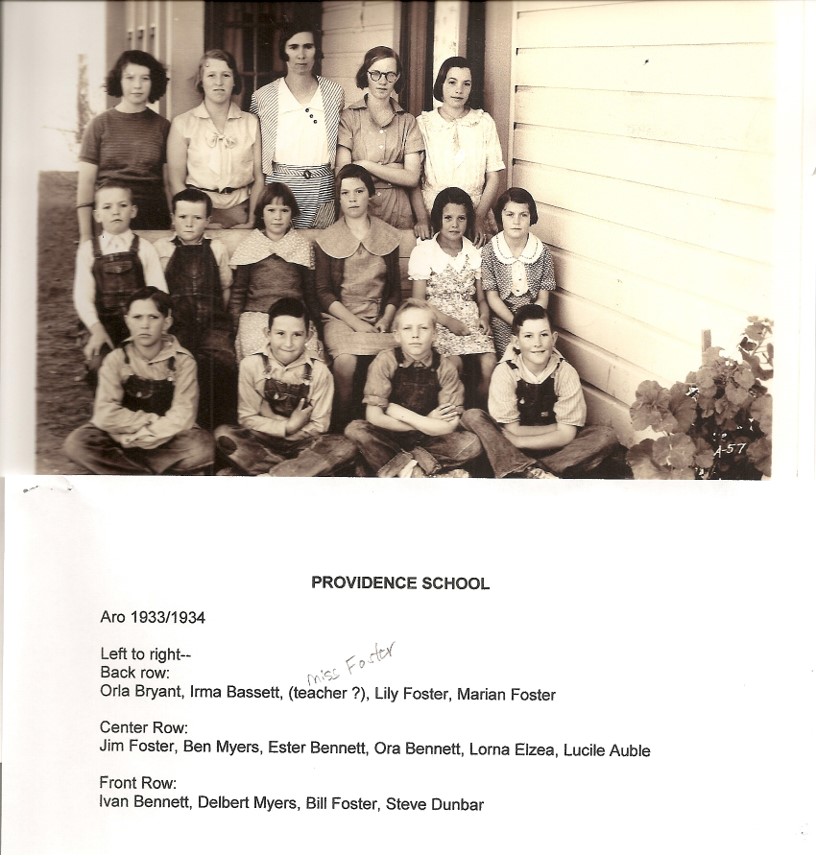
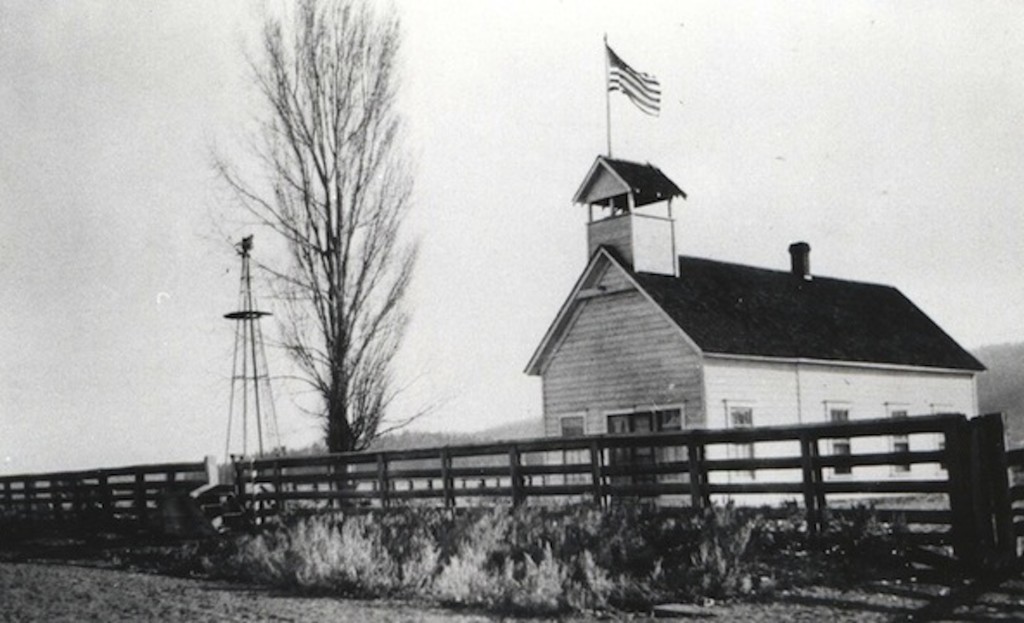
In 1871, the residents of Big Valley on the Lassen County side, petitioned the Lassen County Board of Supervisors for a school district there. While there was a public school in Adin, that was under the jurisdiction of Siskiyou County, as Modoc County had not yet been created. The Big Valley residents were included the Willow Creek Valley School District and that school house was nearly forty miles away. With that thought in mind, the petition stated, “It is frequently impossible for their children to attend school on account of high water, deep snows muddy roads, etc.” The petition was signed by seventeen residents and combined they had twenty children eligible for school. The Board obliged and created the Providence School District on November 10, 1871. A school house was built two miles south of Adin.
Courtesy of Beth Walls
One person is under the impression that sometime, possibly in 1920s, that the school was moved to its current location. However, I am unable to locate any information on that event. If anyone cn shed some light on this, it would be appreciated
In 1953, the school was annexed to the Adin Joint Unified District. The school house then became the property of the Providence Farm Bureau and the farm bureau still owned it in 2002, but I do not know its current status.
One of the most common deed restrictions years ago included a clause prohibiting race and alcohol. In 1914, when John Spalding subdivided his property on the west shore of Eagle Lake. The deed stated no person of African or Mongolian descent would be allowed to occupy, own rent or lease the premises and that no type of alcoholic beverages would be allowed on the premises with an exception for medicinal purposes. Should the owner not abide by these regulations, the property would revert back to Spalding. It was not much of an issue, since Spalding sold only one lot.
Another type was a reversion clause. On August 11, 1877, John Dobler donated the land that the Willow Creek School, was built on with the provision that when no longer used for a school, the property would revert back to him or his heirs. In 1950, when the Willow Creek School District was dissolved, the provision was ignored. The same thing happened with the Lake School, since the property was donated by Epley family with the revision clause that was ignored. This case was a bit unusual since the Janesville School District annexed the Lake School deemed it surplus property. However, the school trustees deeded the school property to the Bailey family, because they assumed the family donated it in the first place.
In 1864, when Isaac Roop sold a Susanville city block to Lassen County for a courthouse, it included a reversion clause. This caused quite a stir back in the late 1970s when the county purchased property on North Mesa Street for a possible new courthouse complex. That is an interesting tale in itself, but as many know it never transpired.
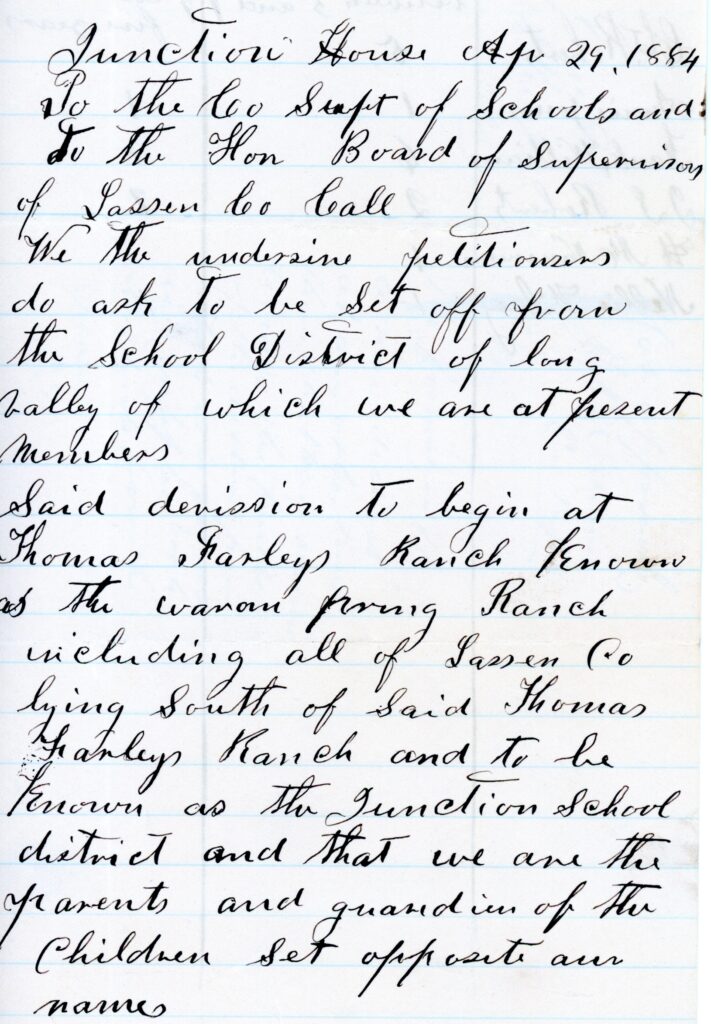
A movement began in the fall of 1870 to form a school district in the
extreme south end of the County. The Junction School district was finally established in March 1871. It later closed, though the records do not indicate when that occurred.
In the spring of 1884, Jonathon C. “Chat” Roberts, along with his neighbors, requested the formation of another Junction School District. Roberts wrote: “I have built a school house at my own expense and we are entitled to a district.” E.A. Williams, Lassen County Superintendent of Schools, echoed that sentiment to the Lassen County Board of Supervisors. Williams noted that they had spent nearly $400 to build and furnish the school. In addition, they had hired a teacher and the school was in operation with sixteen students. Williams concluded: “Ás the financial guardians of the County you can determine the expediency of forming this new district, as to the justice of their claim, there can be no question.” It was approved. It should ber noted Junction, in the present vicinity of Hallelujah Junction, with the establishment of the NCO’s railroad station, that would be named Chat.
After the NCO Railroad moved onward there was a population decline. In 1898, the school was abandoned and annexed to Long Valley School (Doyle).
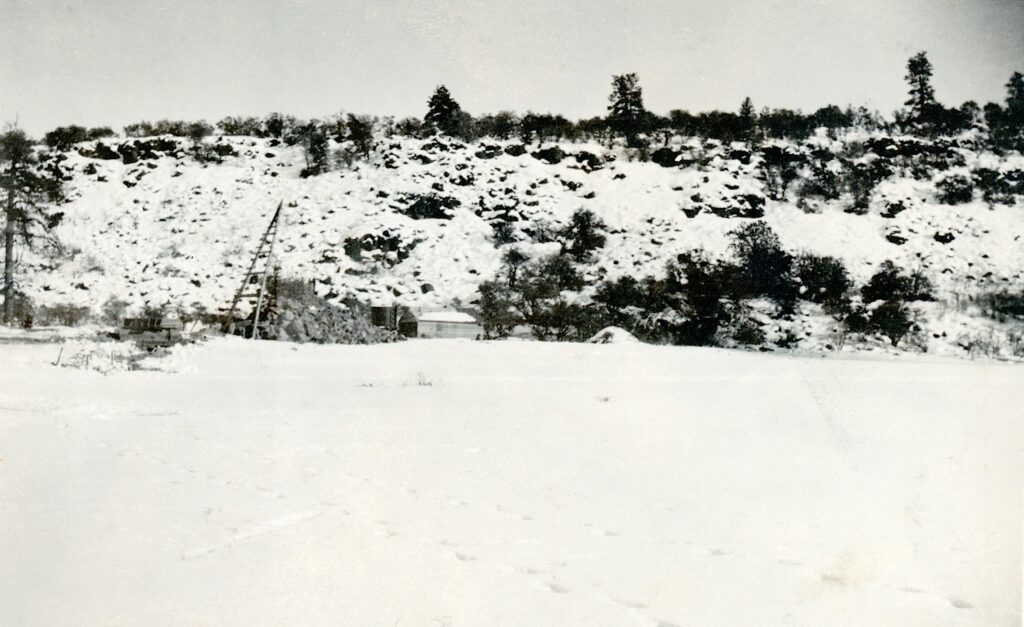
The initial set up for construction of the Bly Tunnel, Inlet December 1921–Lola L. Tanner
While the photograph does not look like much, what it depicts is the initial stages of construction work of the inlet of the Bly Tunnel at Eagle Lake. It would be another year, before major work on the tunnel was started from the lakeside.
In 1962, Lassen County received some BLM land just north of Bly Tunnel. Thus, was the humble beginning of the Lassen County Youth Camp, though it take years to construct the facilities, a lot done by donations and volunteer labor.
In 1964, the Eagle Lake Biological Field Station of California State University, Chico relocated on BLM property between the Lassen County Youth Camp and the Bly Tunnel.
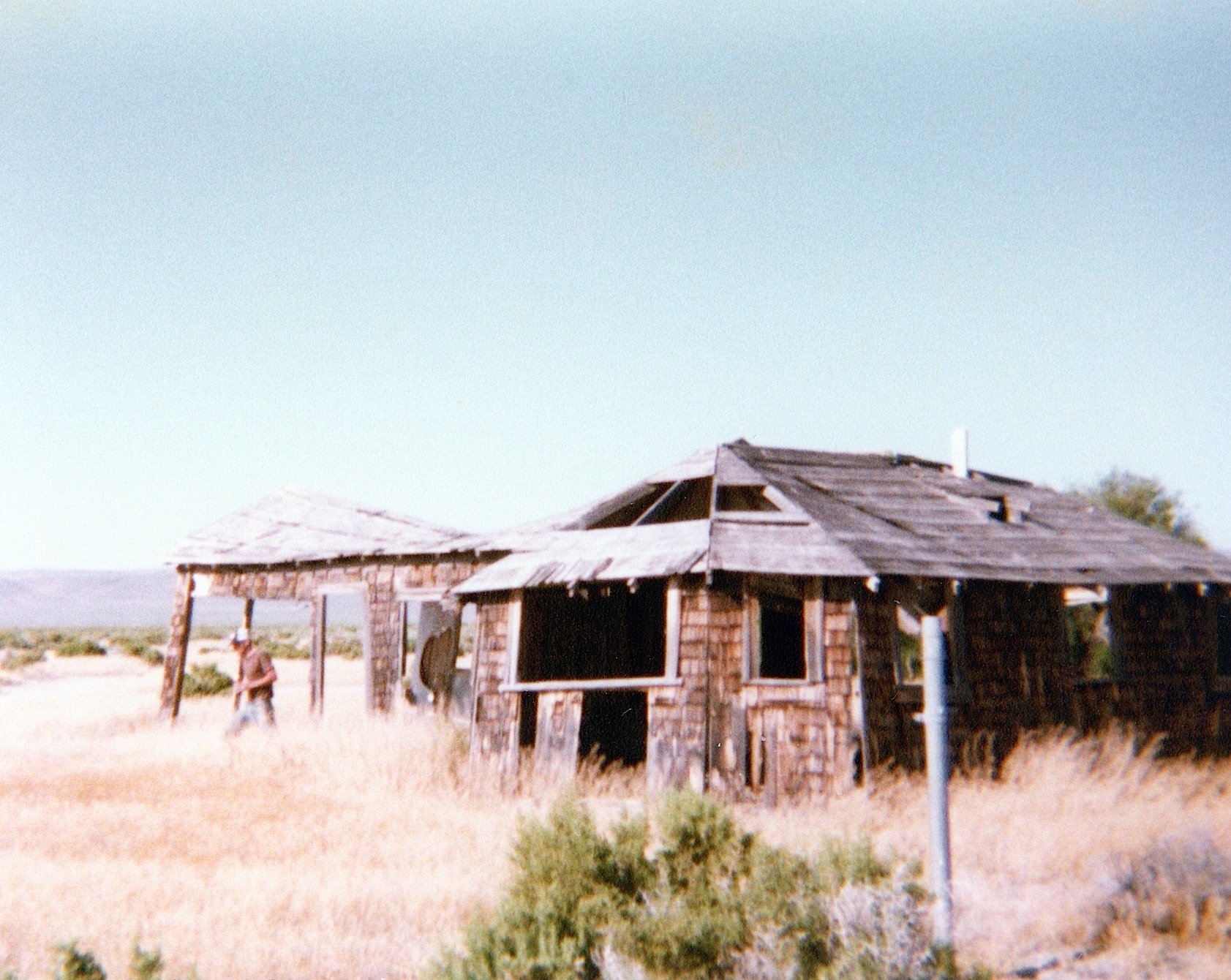
The abandoned Montgomery homestead, eastern Honey Lake Valley, 1983
Every region throughout time has various colorful characters—some passing through, others become part of a community’s fabric. One such notable was the famed Midwest Farmer Artist, Alfred Montgomery (1857-1922). According to folklore, it was attributed that Montgomery’s painting of corn was so realistic that birds would swoop down and peck at his canvass.
In the Midwest, Montgomery, like many a struggling artist, travelled around a lot. In 1911, when traveling back home to his family in Illinois, he was accompanied by a lady friend. His. wife, not pleased with the surprised guest, filed for divorce. All of sudden, Montgomery packed his bags and relocated to Los Angeles. Before he was settled in Southern California, he was looking at a homesite on the east side of Honey Lake. In the fall of 1911, Montgomery did two things in Lassen County—he located a desert land claim south of Amedee, and he held a lecture series at Lassen High School, which he had display of paintings worth $10,000 as part of an exhibit. There was a twenty-five cent admission, with all the proceeds going to the school to establish an art department.
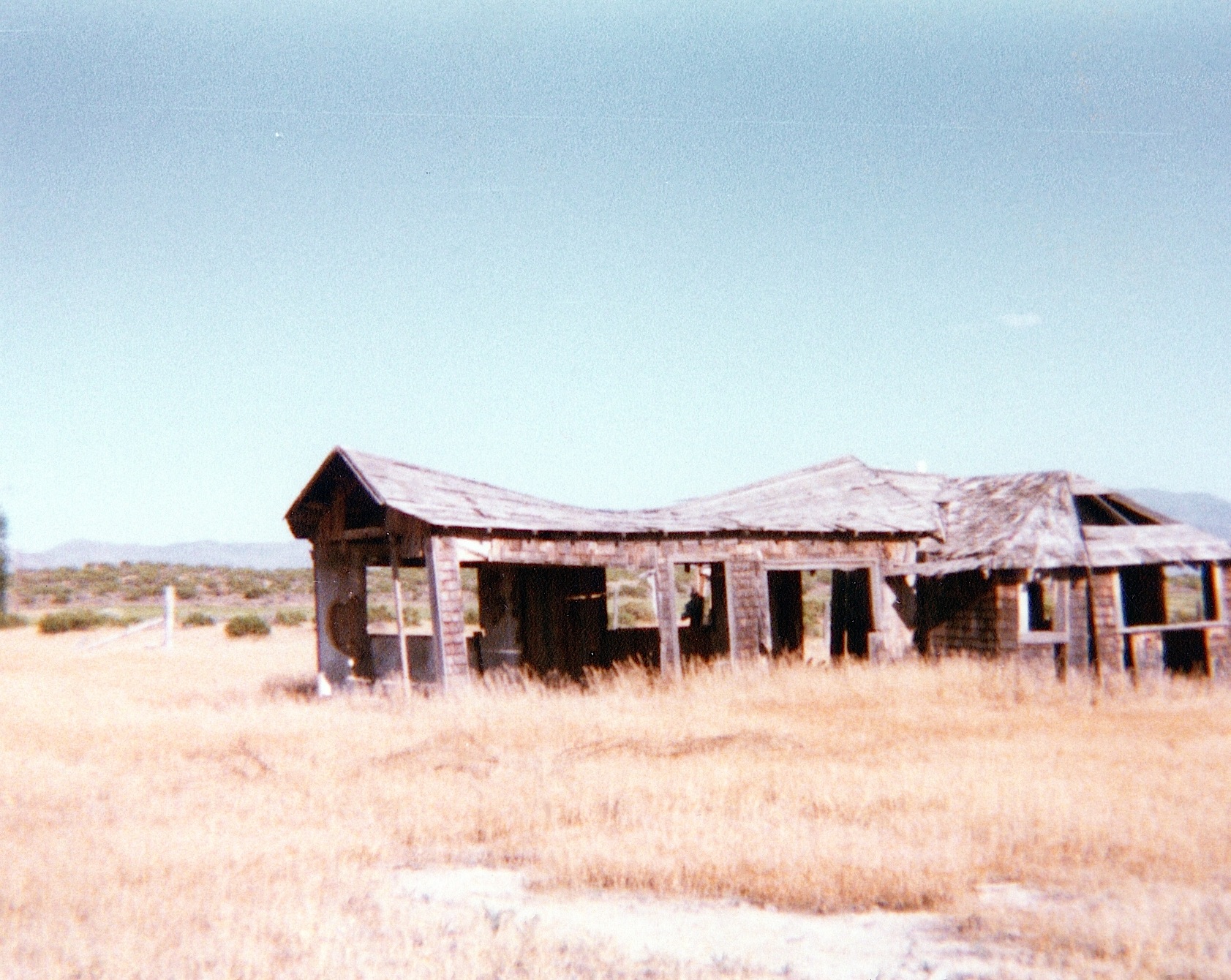
Another view.
In the spring of 1912, Montgomery hired local contractor Fred Rummel to construct a home on his place he dubbed Nowhere. Montgomery, like in his days in the Midwest, would come and go as he saw fit. However, on June 6, 1919, the Lassen Mail reported: “A. Montgomery, ‘the painter who farms and the farmer who paints’ arrived recently from Los Angeles and will spend the summer at his claim south of Amedee. He is now conducting a series of experiments to determine the kind of vegetables best adapted to the soil in that locality. He is firmly convinced that peas, brans, Soudan grass, pumpkins and barley will prove successful, but admits with regret. that is old favorite, pie plant, cannot be raised there on the amount of the mineral salts in the soil.”
After this there is no record of Montgomery returning. When he passed away in 1922, a number of accounts referred to his place at death at Nowhere, which confused a lot of people, when in fact he died in Los Angeles.
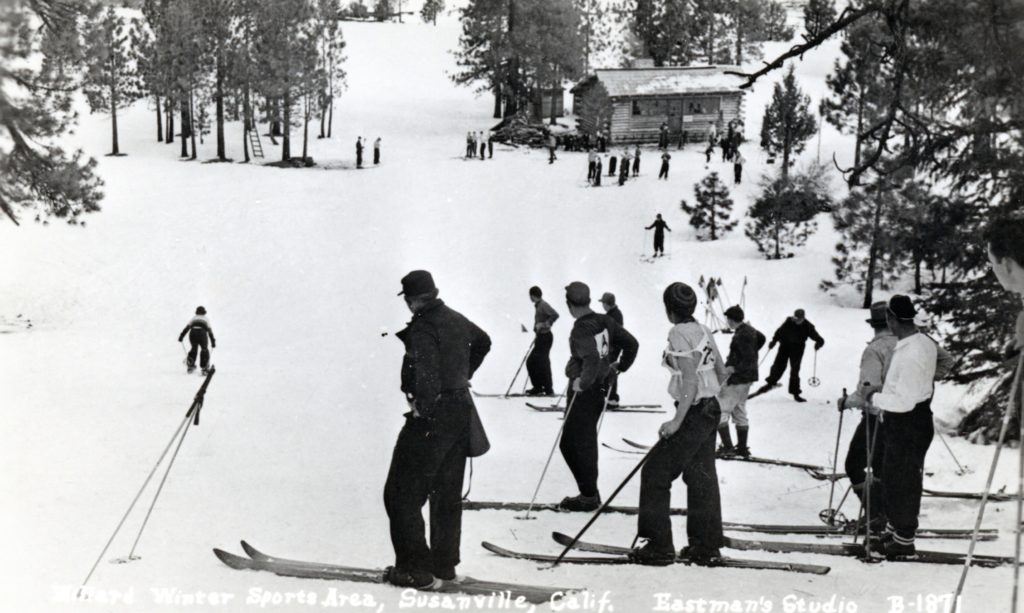
Willard Hill located some six miles west of Susanville was a popular winter sports venue. Its initial development came about through Lassen College’s Forestry Program inconjunction with the National Youth Administration. The latter provided each forestry student with not only academic training but to work in related forestry jobs. For their part-time work the students were paid $30 a month, however $20 a month was deducted for room and board in the converted Alpine Hotel dormitory. Continue reading Willard Hill, Lassen County→
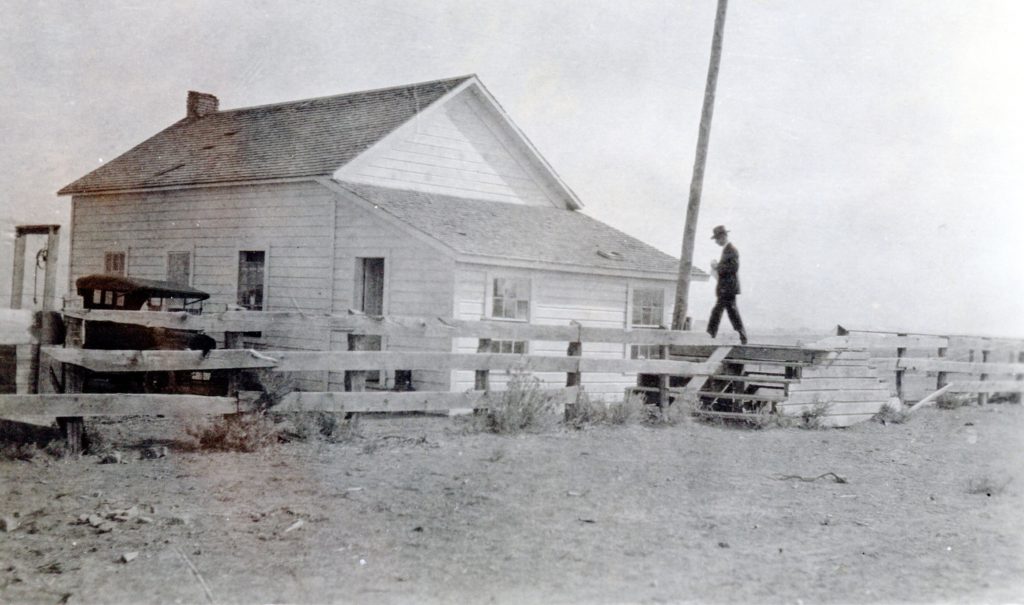
This Big Valley School District was established on June 7, 1880. It was not until 1883 that a school house was constructed. That structure, it seemed was inadequate. In 1891, the trustees approved to hold a special bond election for a new school, the cost $800. On May 16, 1891, the bond election was held, the vote was twelve yes and three no. A complaint about the election was filed with the Lassen County Board of Supervisors, who had the final authority, rejected the vote. The Board cited one paragraph in the ballot proposal did not state that it was a tax assessment. The Board concluded that a new election would be required. Time passed and it would be a decade later before another bond election was held. On June 5, 1903, the voters approved a second bond proposal for $300 and the bonds were issued, without any problem. After World War II, saw the consolidation/unification of rural school districts—Center would be one. In 1951, the Center School students attended school at Bieber. Shortly afterwards the district was dissolved. The old schoolhouse was sold and converted into a private residence, that in 2003 was still in existence.
Richmond was one of the original six school districts established in 1864. The first classes were held in Shaffer’s warehouse. In 1865, the first schoolhouse was built through the efforts of Margaret Streshly and Mary J. Drake, who solicited donations of both building materials and money for furnishings. Continue reading Richmond School, Lassen County→
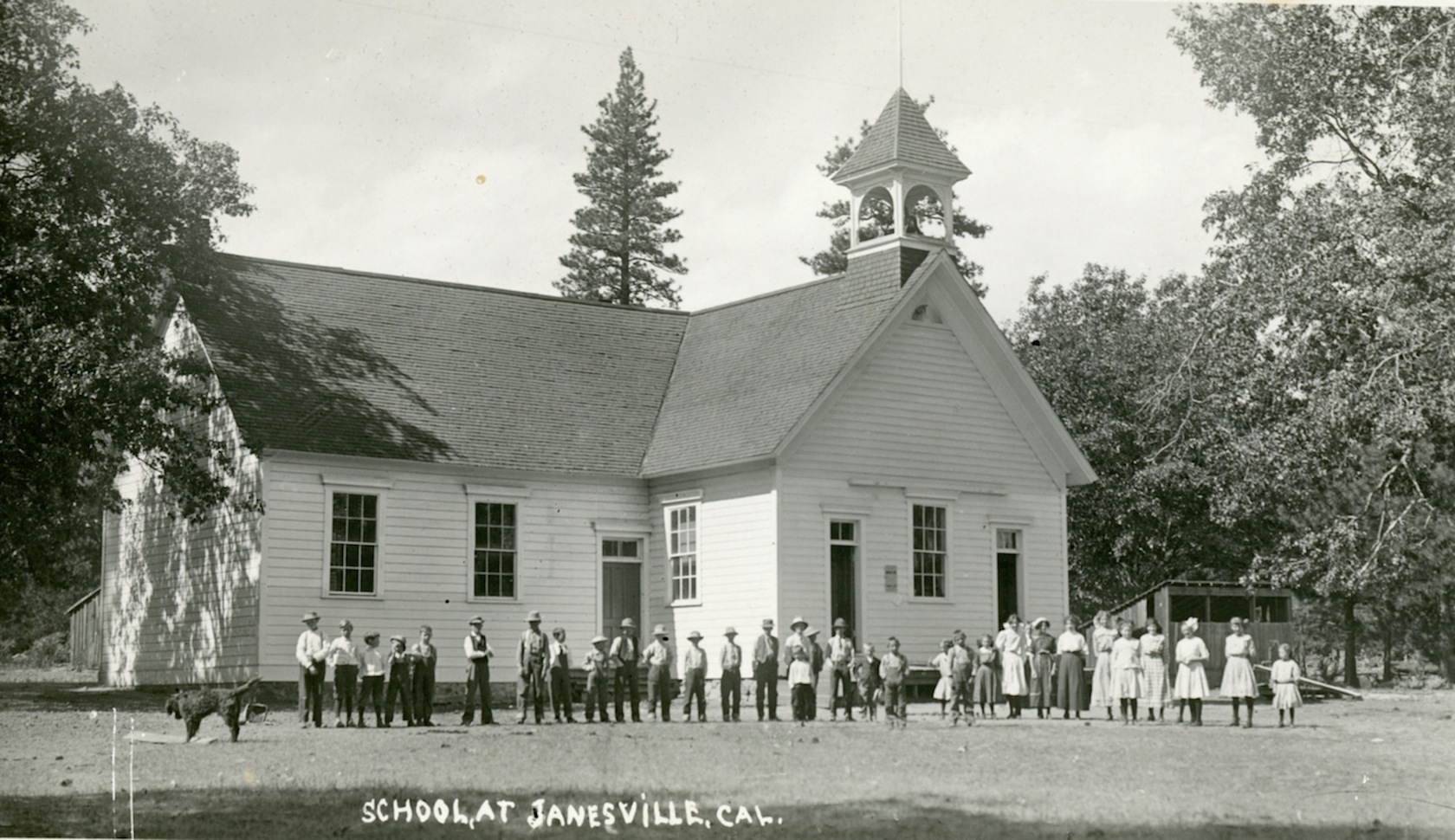
On November 3, 1951 the Janesville School Board sold its old schoolhouse to Al Row for $350. Row then moved the structure to his property. It should be noted that in 1948, the Janesville voters had approved a bond measure to build a new school.
The sale of old schools was common back in the day. In 1901, Fred Hall purchased the old Susanville school, dismantled it and then used the lumber to build his ranch house near Standish. When Poplar School located on Mapes Lane, near present day Dakin Unit of Fish & Game, closed in 1935, Orlo Bailey purchased it and moved it the family ranch and it was used as a bunkhouse. In 1971, the old Bonham School at Flanigan was purchased by Standish resident Ed Bass and he moved it to his property. Then in other instances old schools become converted into residences such as Bird Flat, Honey Lake, Johnstonville, Lake, Milford, and Richmond.
 A movement began in the fall of 1870 to form a school district in the