First of all, a friendly reminder tomorrow is Election Day and please exercise your civic duty. Having been an election official for many years, voter turnout is high priority in more ways than one. There is considerable amount work months prior for this one special day, and months afterwards. Now, I will get off my soap-box. Continue reading The 1864 Election→
While there has always been a lot of talk over the years of dividing up California, there is lesser known movement of annexing parts of California to Nevada. This, of course, is much more realistic than splitting the Golden State.
In 1907, Nevada took the lead to attempt to annex Alpine, Inyo, Mono, Lassen and Modoc Counties. Measures in support of the annexation passed in both the Nevada Assembly and Senate. It was their contention that the residents of those counties desired annexation to Nevada. In addition, they were tied to Nevada, geographicaly, socialy and politicaly, while they were ignored by California. Nevada requested that California allow the voters in the affected counties to vote on the annexation question. California said no.
While there are the rumblings to attempt to split the state, there have been from time to time attempts to split counties. After all, Lassen County was originally part of Plumas and Shasta Counties. Take for instance, from that on occasions Big and Fall River Valleys wanted to succeed from their respective counties and form a new county. In 1889, Susanville’s Lassen Advocate was annoyed by the rumors about this particular split and noted that it would not occur as those places did not have a sufficient population to support a new county.
Fredonyer’s Claim to what would become Susanville.
On April 26, 1856, twenty settlers in the Honey Lake Valley gathered at Roops cabin and held a “mass convention” to establish a territory of their own. After all, the group concurred, they were not residents of California and they did not want to be under Mormon domination of the Utah Territory whose boundaries extended to the eastern boundary of California. They named their new government Nataqua Territory. Nataqua, or Natauga as it is sometimes spelt, purportedly, was a Paiute word for woman. Their land grab was grand to say they least. They carved out a territory, 240 miles long and 155 miles wide, almost two-thirds the size of the State of Nevada. Ironically, the legal description of their new sovereign state, excluded themselves. Roop’s home, for instance, was located 35 miles west, outside the their western boundary. The Nataqua Territory, in essence, served as a form of local government to provide an avenue to protect their rights and to handle local land affairs. The territory served as a foundation until a more formal government was established. In 1857, the Nataqua Territory was abandoned when an attempt was made to form the Territory of Sierra Nevada.
In 1892, when the local Catholics deemed it was time to build a house of worship, they selected a site on Richmond Road. The town’s two newspapers were critical of the location, since just across the river was the area’s Chinatown. Thus, the local press chastised the Catholics choice to associate with the “heathen Chinese.” In 1909, the church was moved to Nevada and Union Streets, the current site of Sacred Heart. It should be noted that was Susanville’s Chinatown district of the 1860s.
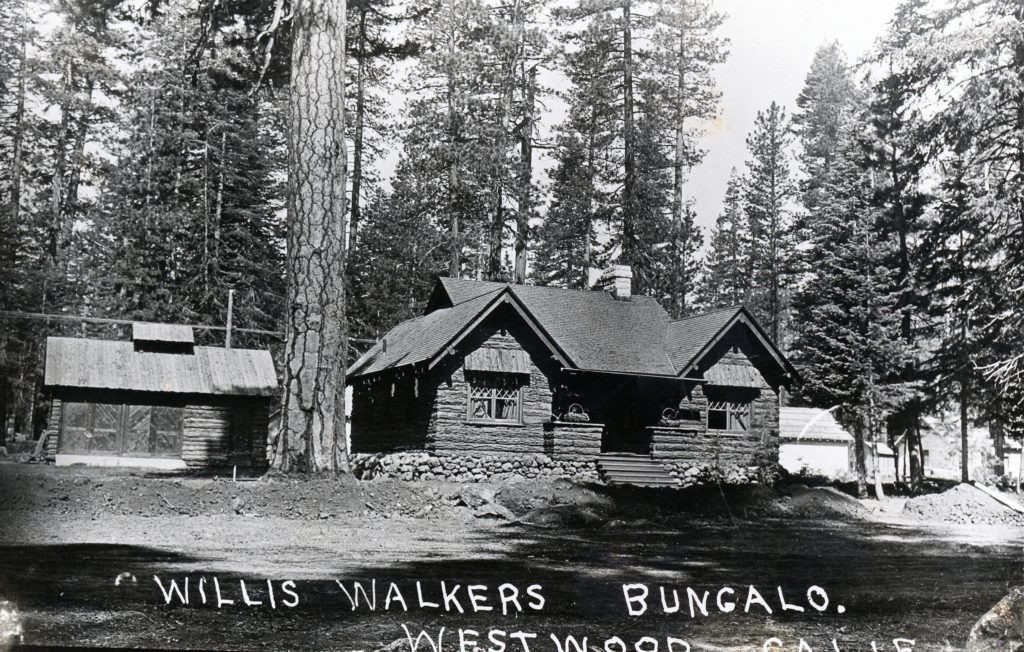
The Willis Walker residence, circa 1915. It should be duly noted that Willis also resided in San Francisco.
When Red River Lumber Company established its company town in Lassen County many were thankful for the prosperity it brought with it, especially the Fernley & Lassen Railroad. However, the honeymoon would not last long. Red River would exert its influence over so many aspects of life. Certain member’s of Susanville’s business community had a code name for the company: the Red Octopus. After all, in 1920, Red River purchased the town’s local power company, Lassen Electric. They advertised their Big Store specials in the Susanville newspapers, hoping to lure away customers. In 1922, when Red River purchased the Milwood Tract east of the city limits, they were able to block any annexation effort by the city until 1947, which by then Red River was going through a dissolution process.
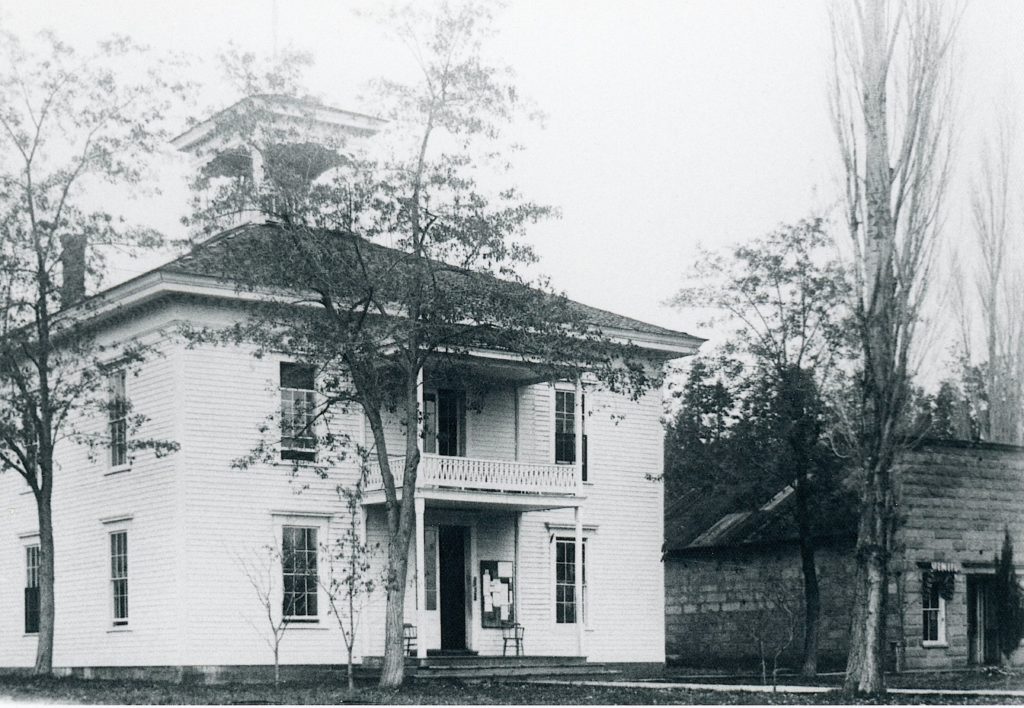
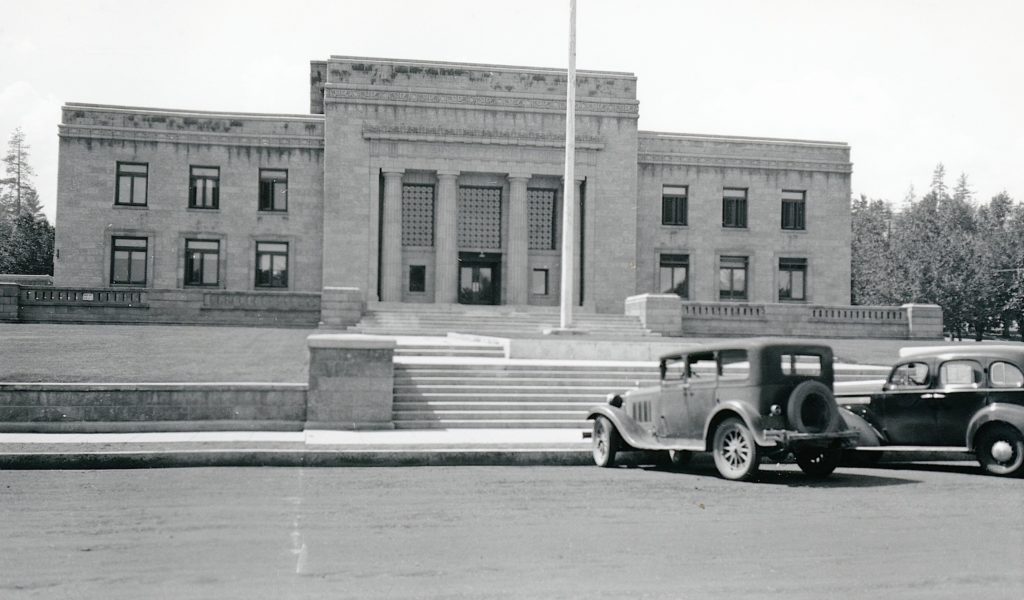
Lassen County Courthouse and Hall of Records, 1907. Courtesy of Gil Morrill
This being Election Day, I thought I pass along some local election folklore. One of which that at one time, Hayden Hill was in contention to become the county seat. Only once was there was some rumbling of moving the county seat from Susanville. In 1893, after the town’s business district was destroyed by fire, there was some talk to relocate the county seat to Amedee.
In 1864, when the election was held to organize Lassen County, the county seat question was on the ballot—Janesville or Susanville. That was a tricky election and it took some time to count the ballots. After all, the county had a polling precinct at Fort Crook (Shasta County) and one for all of Surprise Valley (Siskiyou County). Those votes were finally rejected and Susanville won the county seat by seventy-one votes.
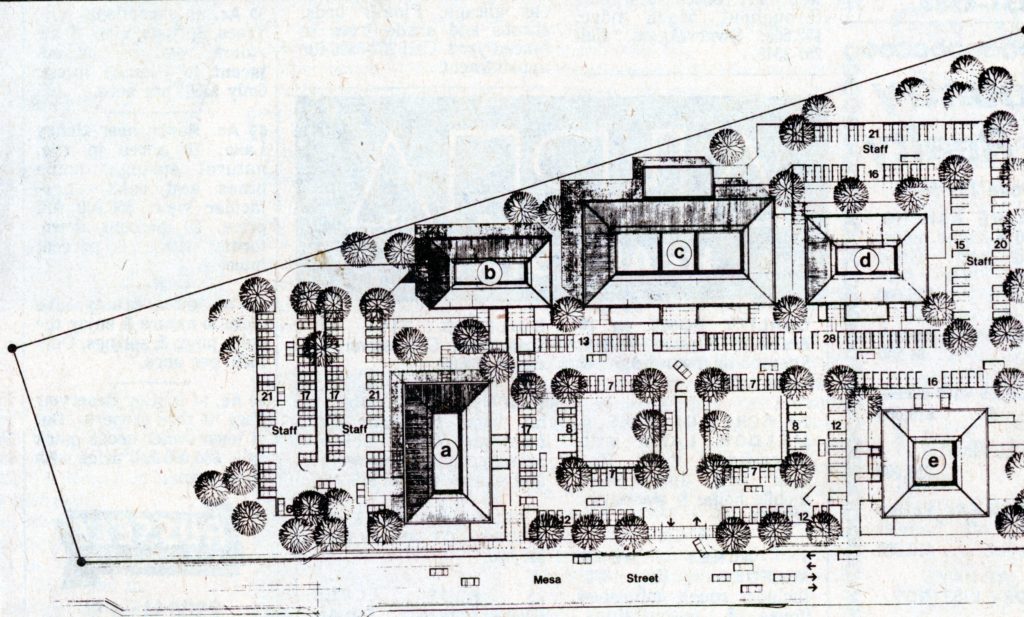
In 1975, when the Lassen County Public Works Department proposed a new building on the north side of the courthouse that was shot down, the department did not give up. In the spring of 1976, a proposed Lassen County Master Plan was unveiled. A site of 10 acres had already been selected adjoining North Mesa Street. Construction would be done in phases with the ultimate goal of a county courthouse complex.
On September 7, 1976, the county board of supervisors approved the purchase of the Mesa Street property from the Paul Bunyan Lumber Company for $45,000. There was opposition with over 100 people in attendance against the measure. Susanville attorney, Joseph B. Harvey representing the Lassen County Tax Payers Association presented a petition signed by 889 registered voters opposing the purchase and that the matter be put to vote.
While the county went ahead with the purchase, no county complex would be constructed there.
Now that election season is in full swing, there was a movement in 1930 to reduce the number of elected officials. Los Angeles County took the lead which officials stated that Sacramento had so much control over counties that there was no longer a need to have so many county elected officials. They proposed besides the supervisors, the only elected officials would be the assessor, district attorney and sheriff. All other positions would be appointed by the supervisors. Lassen County opposed it.
There have been a lot of things proposed for the Honey Lake Valley, some good and some well not so desirable. In the late 1960s, the City of San Francisco chose the Honey Lake Valley as ideal place to send their garbage. One reasons why Honey Lake Valley was that the garbage could shipped by rail making it economical.
Of course the locals were not amused and opposition mounted. The debate lasted nearly a decade. In letter to Lassen Advocate’s Open Forum, an incensed Milford resident, Audrey Stevens wrote:
”Lassen County should be declared a disaster area with every citizen joining in a mass to protest the greedy senseless plan to buy 4,500 acres of land east of Herlong for $100,000 (our money) to be used as a dumping ground for San Francisco garbage, which includes rats, disease, smell and ugliness for as long as this earth survives.”