Tag Archives: Nevada

The Country Store—Milne Grocery

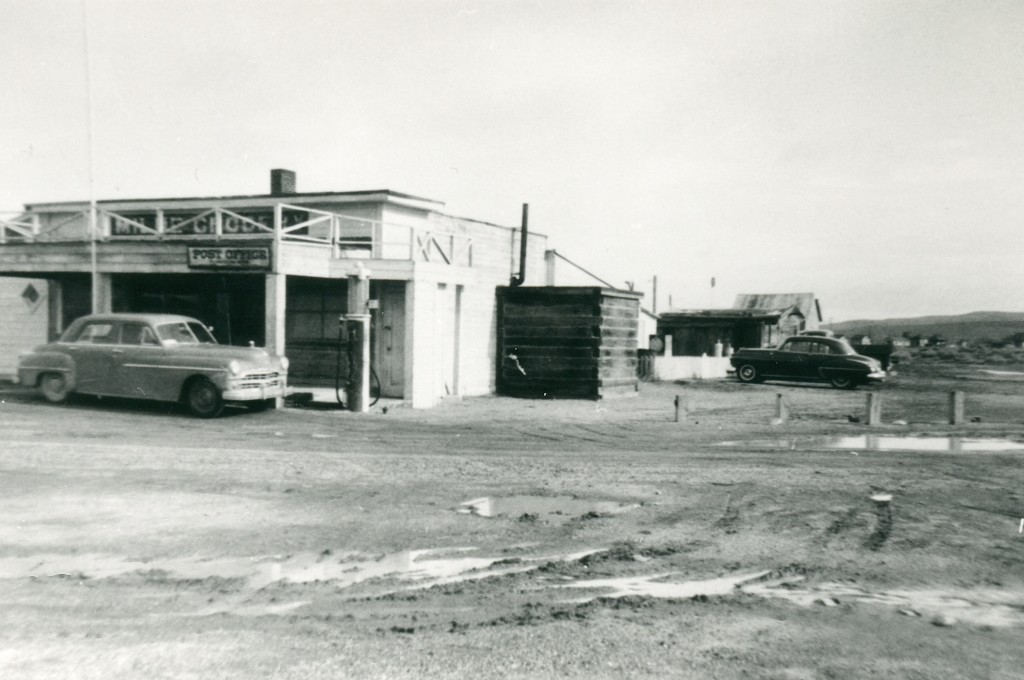
Milne Store
Milne Store

In small communities, the lone country store was its social hub. They varied in size and offerings depending on the location. Many housed the local post office, and in some cases the back portion included the living quarters for the proprietors.

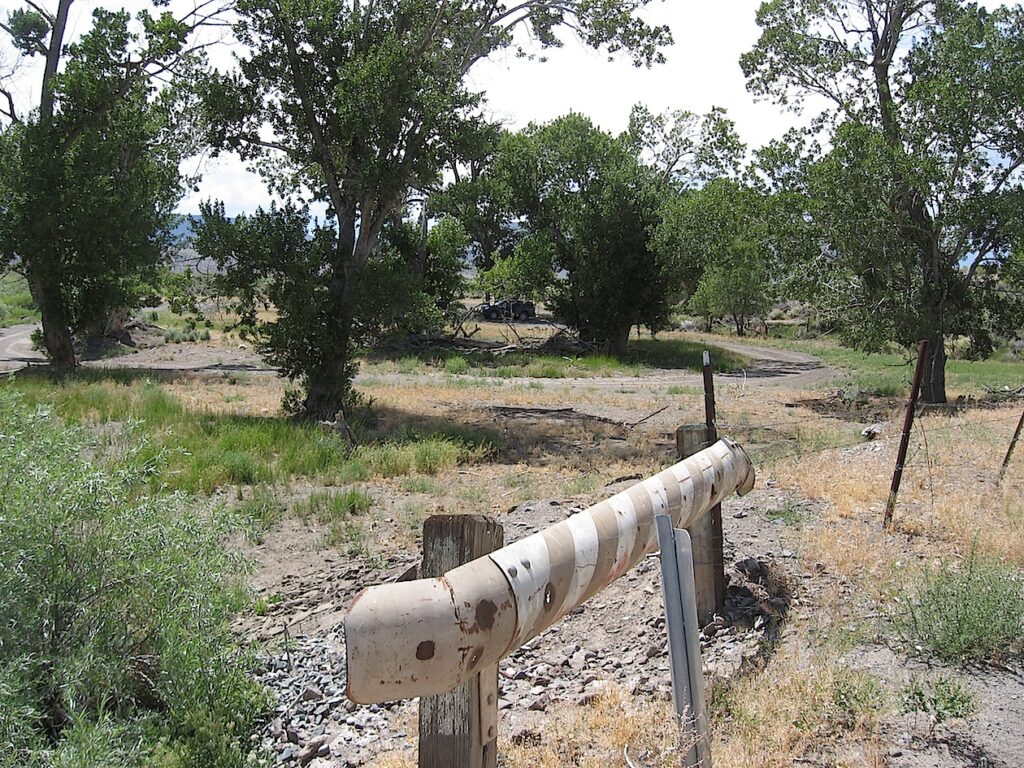
Flanigan, was a former railroad town in eastern Honey Lake Valley. Its country store—Milne Grocery—was a prime example. In 1915, the store was established as the Flanigan Mercantile Company.

In 1930, the one-room school at Flanigan, known as Bonham, was in need of a teacher. Gertrude Milne, who at the time was living in Yerington, applied and got the job. Her husband, William then packed up and moved to Flanigan. In 1934, Orlando and Victoria Gasperoni, owners of the Flanigan Mercantile Company, sold the store, the old hotel and some rental cabins to William and Gertrude Milner for $1,000. The Milne’s changed the name to Milne Grocery. William who not only took the operation of the store. but succeeded Victoria, to become the town’s postmaster.

In 1945. William Milne passed away. This left Gertrude to juggle her duties as school teacher, store operator and postmistress. Flanigan continued with its quiet existence until the late 1950s. In 1958, Gertrude retired from Bonham School, though when needed served as a substitute. In 1959, the Southern Pacific eliminated its section crew at Flanigan. Thus, with even less traffic, Gertrude decided to no longer stock the store. The store remained open to sell non-perishable food items, and equally important it was the town’s social hub since it also served as the post office.
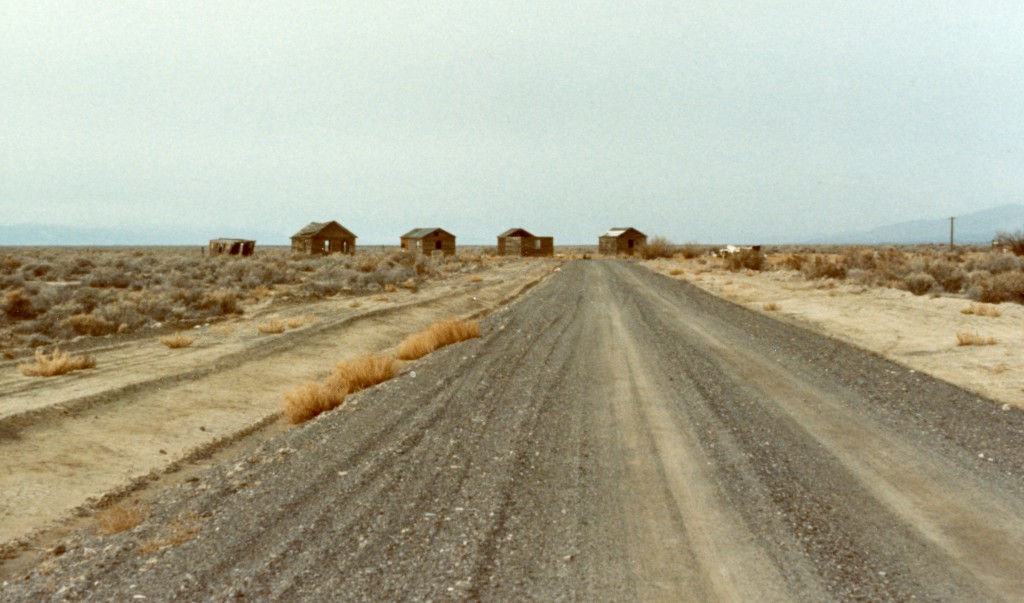
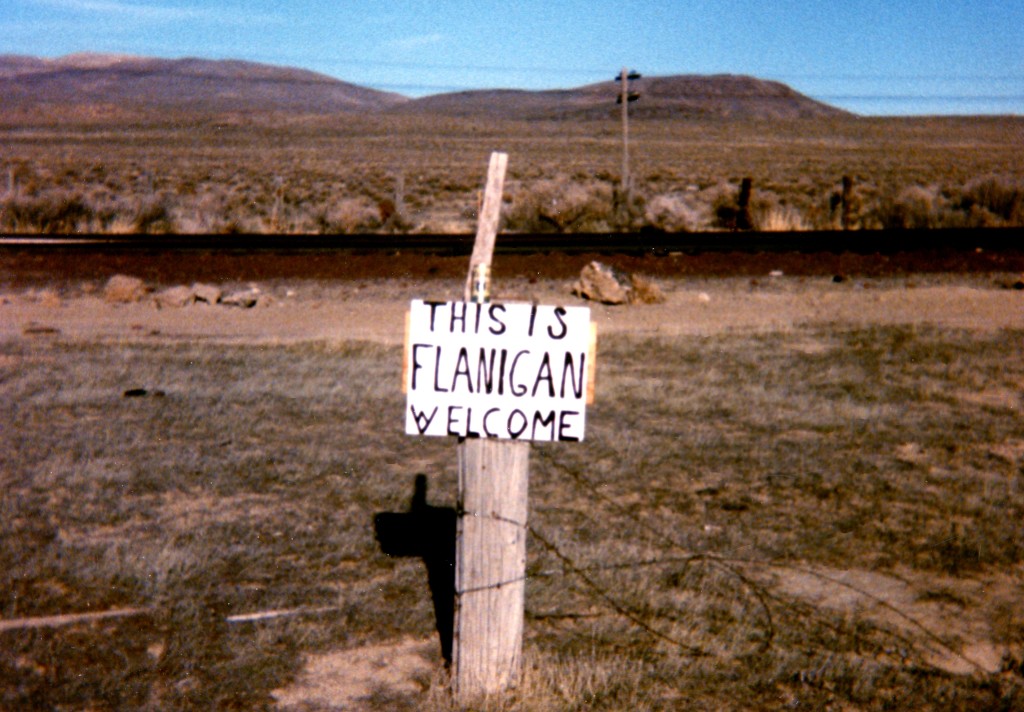
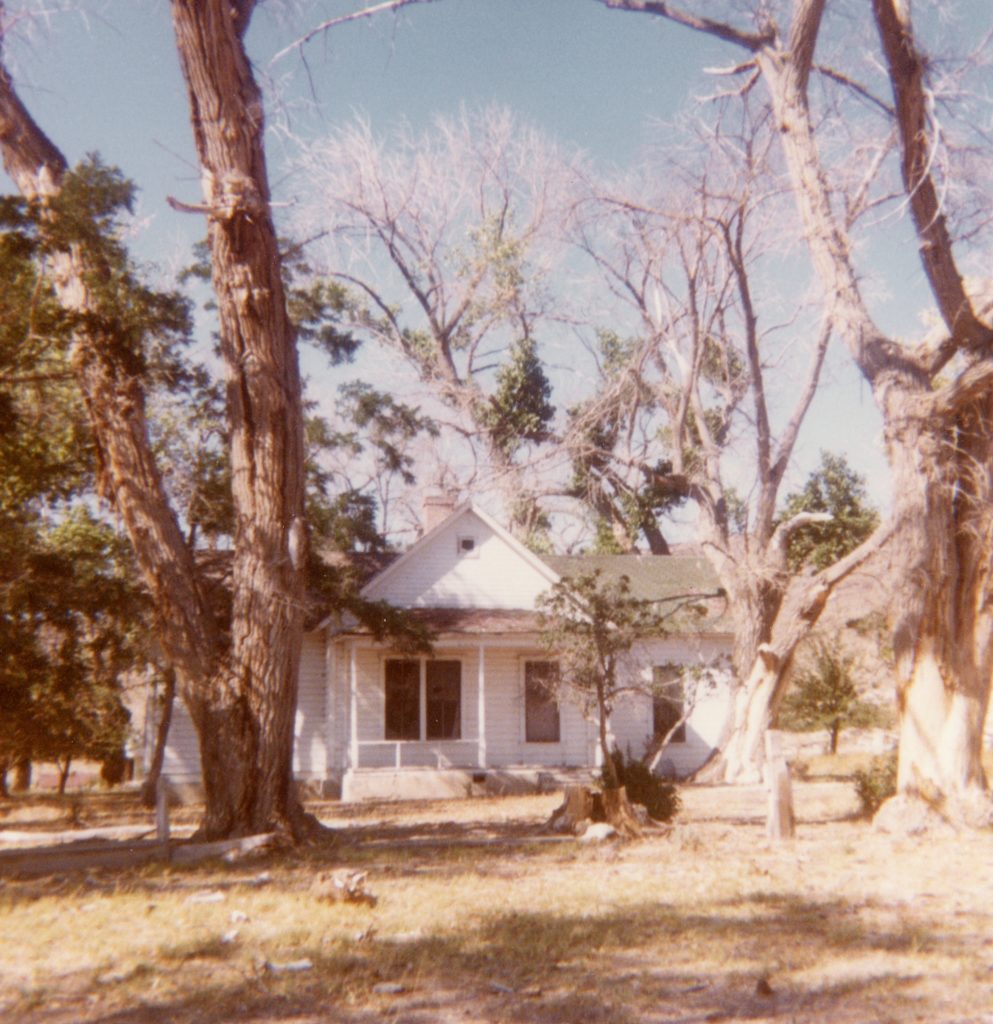
Flanigan, 1976
Flanigan, 1976, courtesy of Christopher Moody

In 1960, a reporter from the Reno Evening Gazette paid a visit to Flanigan. It was duly noted the town’s population consisted of one—Gertrude Milne. On March 31, 1961 activity at Milne Grocery more or less ceased to exist with the closure of the Flanigan Post Office. While many would have moved on Gertrude stayed. On January 2, 1969, Gertrude while on a social visit to Fish Springs Ranch, her beloved store and home burned down.  Gertrude was bound and determined to stay in Flanigan. and moved into one of her own cabins.  In June 1969, another tragedy for Gertrude, was the closure of Bonham School, where she spent four decades teaching. In 1971, the school was sold and moved to Standish.

Yet, Gertrude stubbornly clinged on and would not move. Finally, she conceded to  her family’s urging, in 1973, and moved to nearby Sutcliffe where she passed away later that year at the age of eighty-four.

Subscribe

Black Rock Toll Road Company

Black Rock Road
Stockton’s recorded map of his proposed toll road.

Early toll roads were just not feasible around these parts. One could easily make a short detour to avoid paying fees. Where attempts to put one in, the road network was already in use by the public. This did not stop Lassen County resident, H.C. Stockton to propose a Honey Lake/Black Rock Toll Road. His one page description of his road was quite vague to say the least.  A portion of the route consisted of the Nobles Emigrant Trail. He did propose a new section of road starting at Wall Spring, and instead of following the old road and going around the base of the Granite Mountains, much like today’s road, he dreamed up some route over these rugged mountains. It should be noted he filed his claim and that was recorded in Humboldt County, Nevada on March 2, 1866.  Nothing ever materialized.

Stockton dabbled in many things in the Honey Lake Valley. In 1865 he built the first Milford Schoolhouse, which still stands, as a converted residence. He operated a sawmill, as well as a flour mill. Seasoned residents may have known two of his great grandsons—Abe Jensen and Jud Jensen.

Support

.

Buffalo Meadows Salt Works

The salt works, January 1980.

First of all, it boggles my mind, how B.F. “Frank” Murphy and Marion “Comanche George” Lawrence discovered and claimed the salt marsh in the summer of 1864 in the Smoke Creek Desert. For most of its existence Murphy was the main operator of the Buffalo Salt Works. Two types of salt was produced. The first being table salt that was 99.8% pure. A lesser grade was sold to mining operators with a smelting plant that utilized the salt.  The salt was obtained from wells, the brine pumped into vats, and left to dry.  In 1888, it was reported that 200 tons of salt was produced annually.

Continue reading Buffalo Meadows Salt Works

Where Are We—Smoke Creek

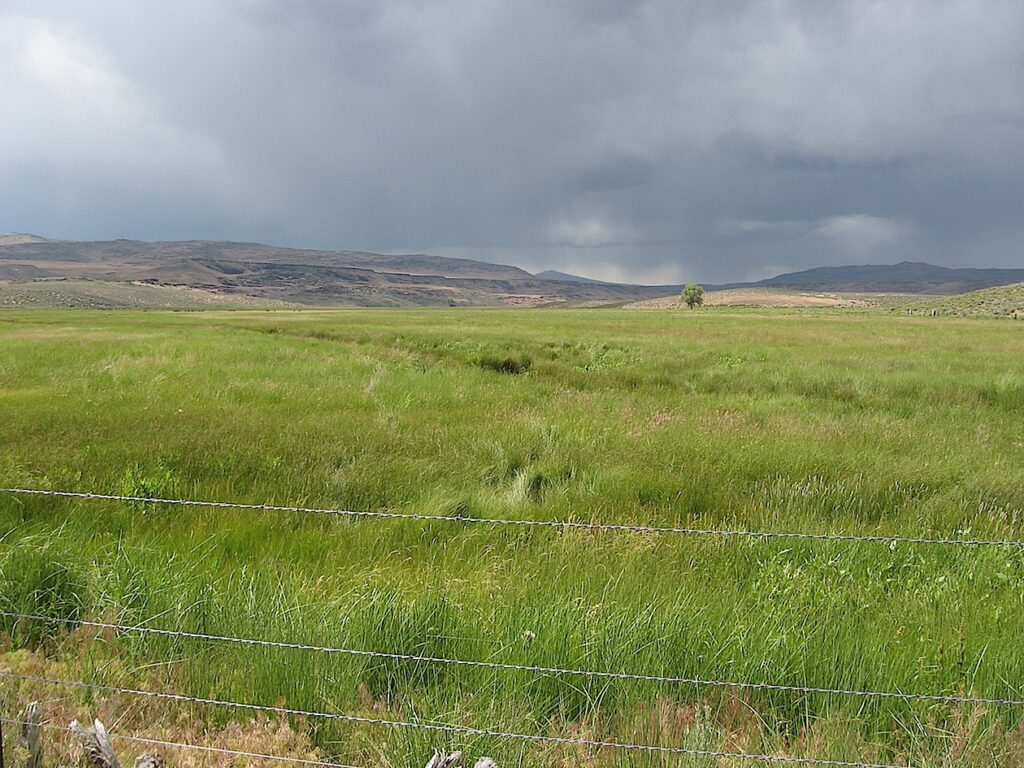
Upper Smoke Creek
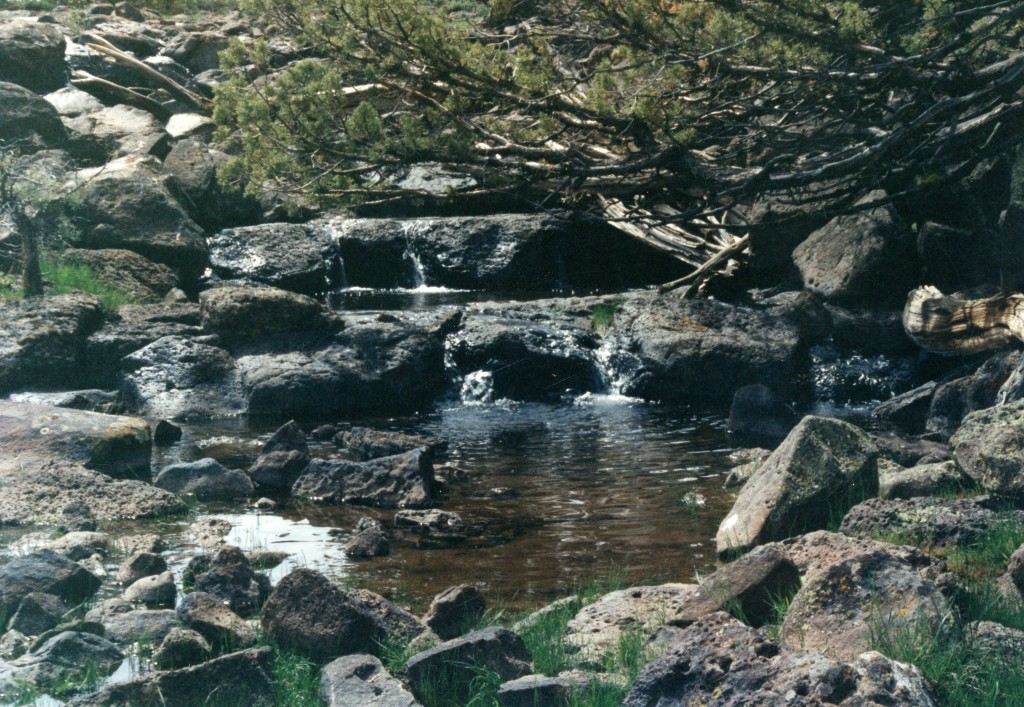
A small feeder stream to upper Smoke Creek

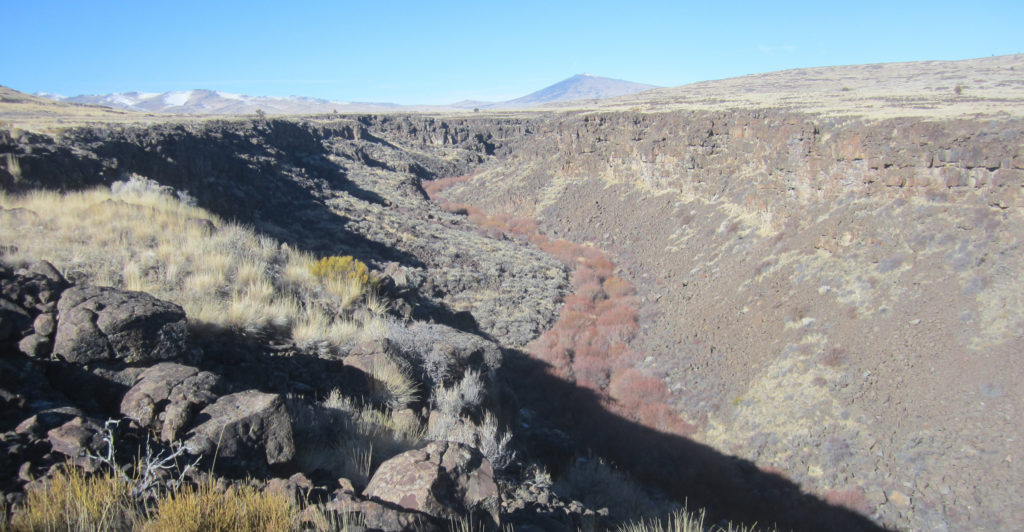
Smoke Creek is a desert stream that is approximately twenty-six miles in  length with an equal portion in California and Nevada. Its headwaters is Big Springs at the southern base of Observation Mountain.  The creek descends into a small canyon that early day explorer J. Goldsborough Bruff in 1850 dubbed as Hierioglyphic Creek, due to the numerous petroglyphs on the canyon walls. From there the stream  enters a much larger deeper canyon.

Smoke Creek Canyon, January 2020—Greg Johnso

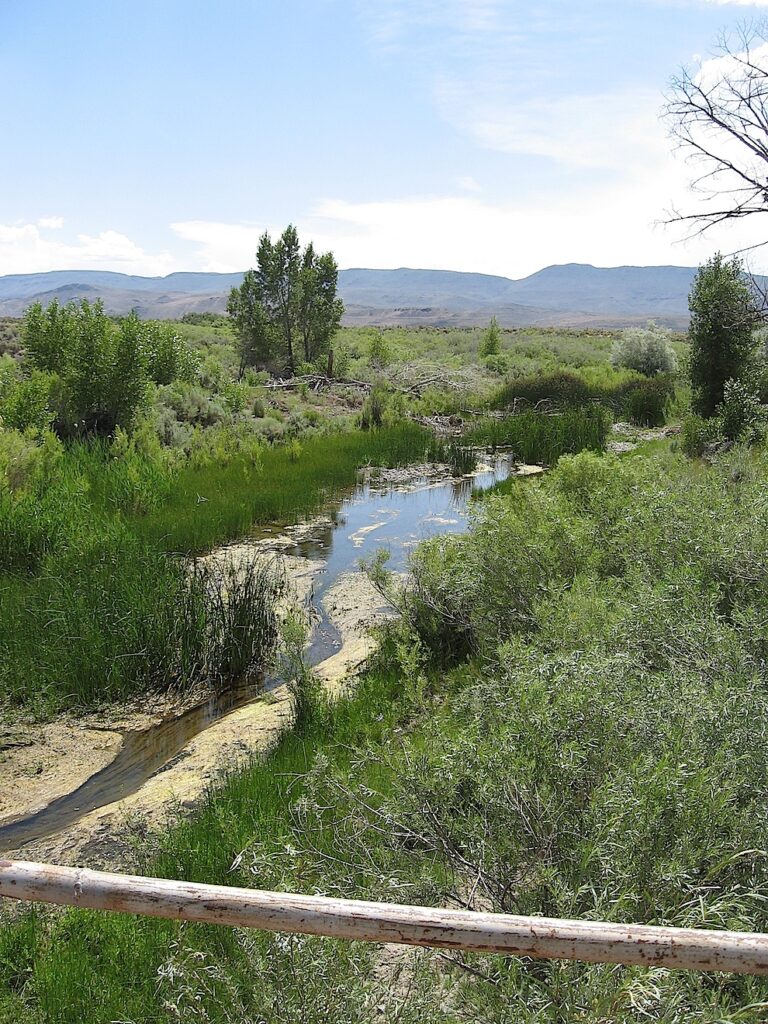
On the Nevada side, the lower end of the creek was a welcomed sight for weary travelers of the 1850s and 1860s on the Nobles Emigrant Trail. The water flow decreases the closer one gets to the Smoke Creek Desert.

June 26, 2023
Smoke Creek Golf Course, 1996

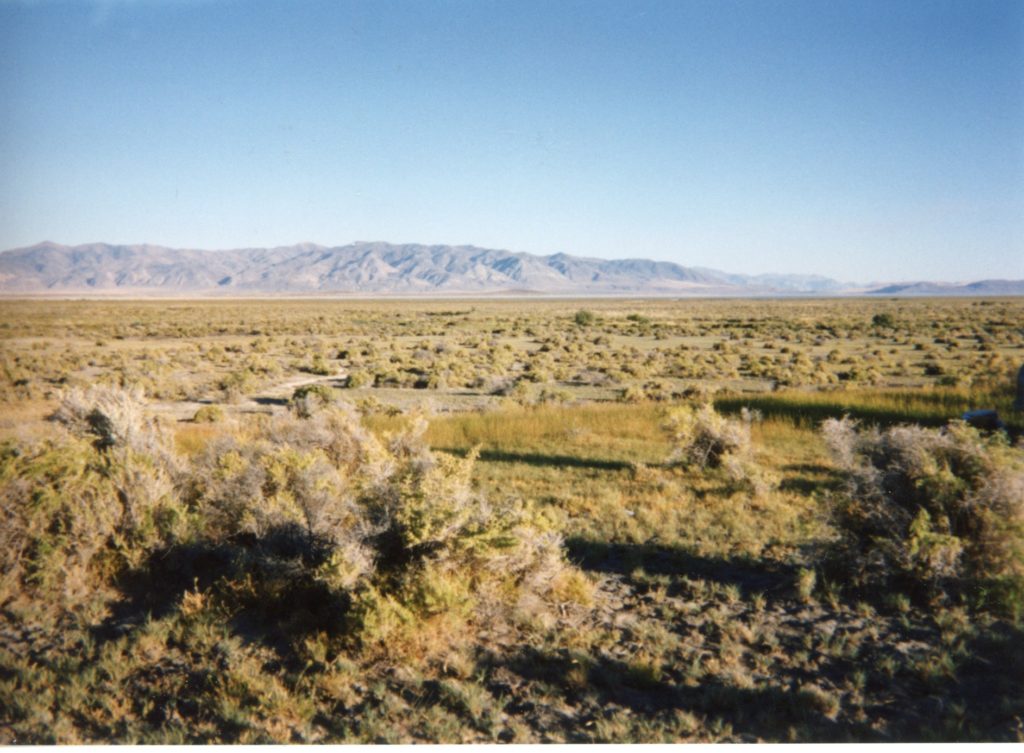
The terminus of the creek varies as to the kind of water year. It can spread over the scrub brush terrain. I can attest since I played at a golf  tourney there over Labor Day Weekend. One of the course’s many hazards were the mosquitos, and they were a hungry lot.

Tim


Moon Valley – 2024

Flanigan, 1984
Flanigan Real Estate Promotion sign, 1984

Moon Valley Ranch was just one of many sudivisions throughout the State of California that forced the State to take preventive measures to prevent this type of future subdivision—namely the California Subdivision Act of 1971. Its a perfect example why there are disclosure laws in the real estate industry today. Numerous folks still invest in that property, purchasing parcels site unseen, only to realize that they bought a lot on a sagebrush plain or a rocky hillside covered with juniper trees. However, there are others that find its pristine setting magical, and buy a parcel as a special get away. Of course, Moon Valley, is a temporary home for illegal marijuana grows.

Abandoned townsites are a matter of there own. There have been speculators to revive the same to make a quick buck. The town of Flanigan, in eastern Honey Lake Valley, was a shining example. Some Reno realtors purchased the majority of the vacant town lots. This venture happened in the early 1980s, but never got quite off the ground. It was their intention to donate lots to such celebrities as John Wayne and Clint Eastwood. They would then advertise to prospective buyers, that could be neighbors to these famous personalities. These novelty lots would be priced at around $200 to $300. They had not anticipated a federal law that put an end of their enterprise. This was the Interstate Land Sales Full Disclosure Act of 1968. The law mandated improvements such water, streets, sewers, utilities, etc would be required for any lot sold for over $100, and that it meets the criteria of the Department of Housing and Urban Development. End of story.

Subscribe

Where Are We—Sheepshead, Nevada

Smoke Creek Picnic, 1915. Courtesy of Fred Nuckolls

Sheepshead, Nevada was a stage stop in the Smoke Creek Desert dating back to the 1870s. It was so named as a big horn sheep’s head was nailed to a cottonwood tree there. It should be noted that the last big horn sheep in that vicinity was killed on Skedaddle Mountain in 1881. Sheepshead was a popular gathering place for the residents of Smoke Creek, due to the creek flowing through, along with the cottonwood trees, made for an ideal setting. It should be noted that the Sheepshead Post Office operated from 1879 to 1926, and upon its closure the duties were transferred to Flanigan.

June 26, 2023

Donate

Review, Washoe County

Stacy Depot
Stacy Depot. The town was named for Stacy Yoakum Spoon, wife of Grover Franklin Spoon, one of the town’s developers and its first postmaster.

One of the side effects of a new railroad was real estate promotion and/or speculation some might say. When the Fernley & Lassen Railroad was being constructed during 1912-13, it witnessed some new towns along its railroad line in the Honey Lake Valley–Stacy, Litchfield and Leavitt.  Of course, exisiting railroad communities such as Flanigan, Amedee and Wendel benefitted from the new railroad. In 1913, a town to be named Review  was proposed along the Fernley & Lassen Railroad between Flanigan and Stacy, but it was never developed.

Subscribe!

Mott’s Mine—Smoke Creek Desert

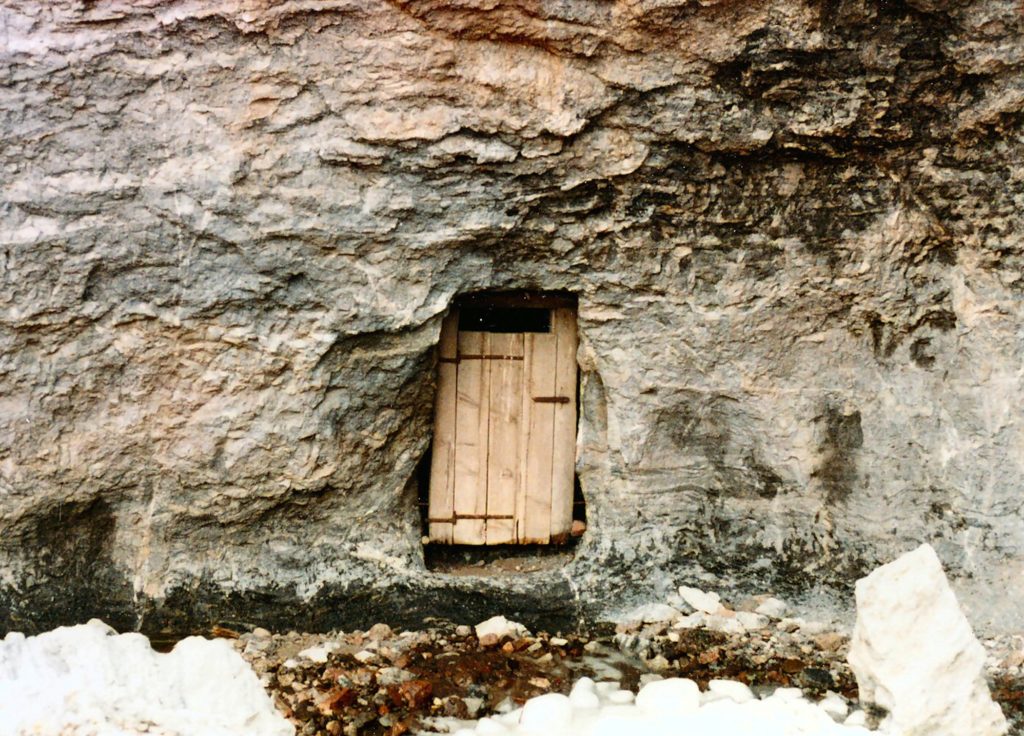
Mott’s Mine

My Dad’s family were avid rock collectors. I was exposed to some interesting out of the way places.  One of these adventures was to the Apache tears mine in the Smoke Creek Desert. According to the late Jack Bonham, the mine dates back to World War I. Smoke Creek resident Gordon Mott while exploring a small canyon came across a mica deposit. He developed a tunnel and a vertical shaft hoping that he would find gold. What he did find was small pieces of obsidian embedded in the soft mica, sometimes referred to as Apache tears or Black Diamonds.

Tim

Where Are We—Smoke Creek Ranch

Smoke Creek Ranch, June 26, 2023

The Smoke Creek Ranch located near the California-Nevada border is one of the oldest ranches in Nevada. On May 30, 1857, T.T. Kingsbury claimed the property. In the 1860s, he followed by W.V. Kingsbury  (no relation) who had a trading post there. Business was brisk because of not only located along the Noble Emigrant Trail, but there was also military encampment nearby.

Smoke Creek Ranch, September 29, 1979

Theodore Winters an early settler of Washoe Valley, Nevada acquired Smoke Creek as part of his ranching empire. In 1884, his son, George Winters purchased the Shinn Ranch located on the upper portion of Smoke Creek. One of the next owners were the Pon Brothers. Then there was Patrick Flanigan and Rees T. Jenkins outfit among others. In 1949, Albert Freeman, had the reservoir constructed on Smoke Creek that straddles the stateline, not that farm from the ranch house compound. Of course, I am always seeking information about this place as well as the Smoke Creek Desert in general.

It should be duly noted that this was the location of the Roop Post Office that operated from 1894 to1924, when operations were transferred to Wendel.

Tim


The Saga of Edward Laird

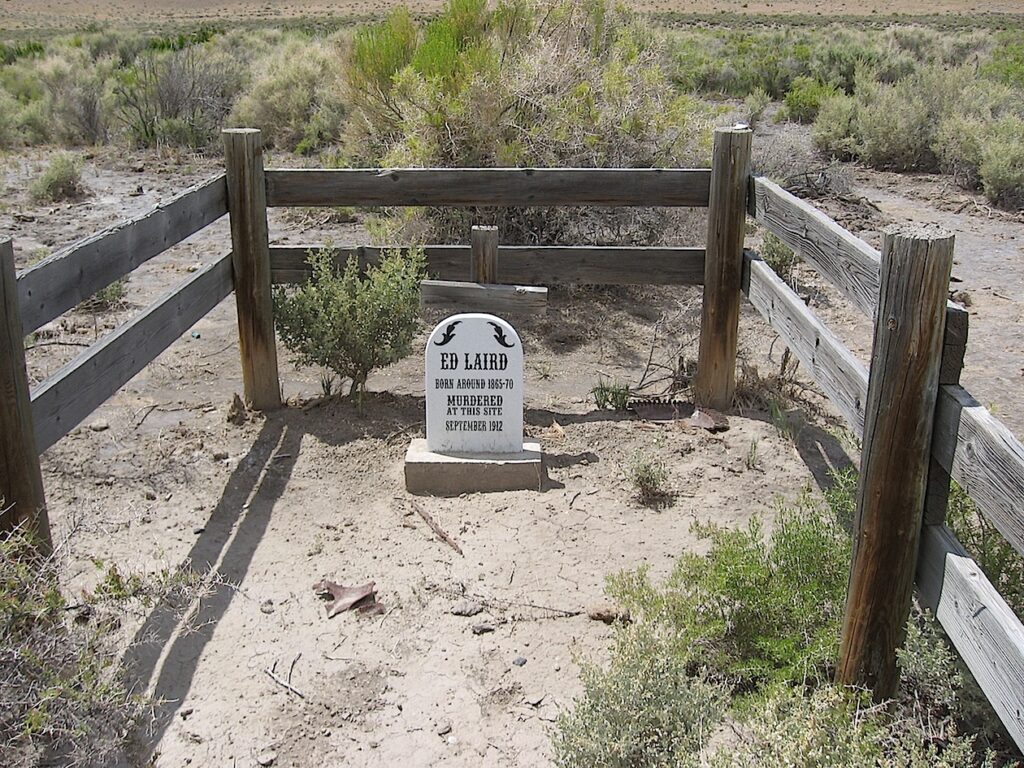
The grave of Edward Laird, Smoke Creek Desert, June 26, 2023

Last year, I wrote about Laird Spring and the spring’s namesake. It was my original intention to include a photograph of the grave, but good intentions did not occur. In 2004, was the last time I was there. Then, there was just a wooden enclosure and a wooden cross. Who placed the stone monument, I do not know, but as you will read below there are problems with dates on this marker.

Numerous springs in the Intermountain West are named for wranglers and itinerant sheepman. Laird Springs is one, that has an interesting story, and one of which is still an unsolved murder.

Edward Laird was born in 1862, the eldest of three children, his two siblings Margaret born 1863, and brother Warren in 1864. They were  orphaned at an early age and raised in an orphanage in Carson City, Nevada. As young men, Ed and Warren went to work on various ranches in Northeastern California. By the late 1890s, they had settled in the North Warner Valley, Lake County, Oregon. Warren would remain in Lake County for the rest of his life.

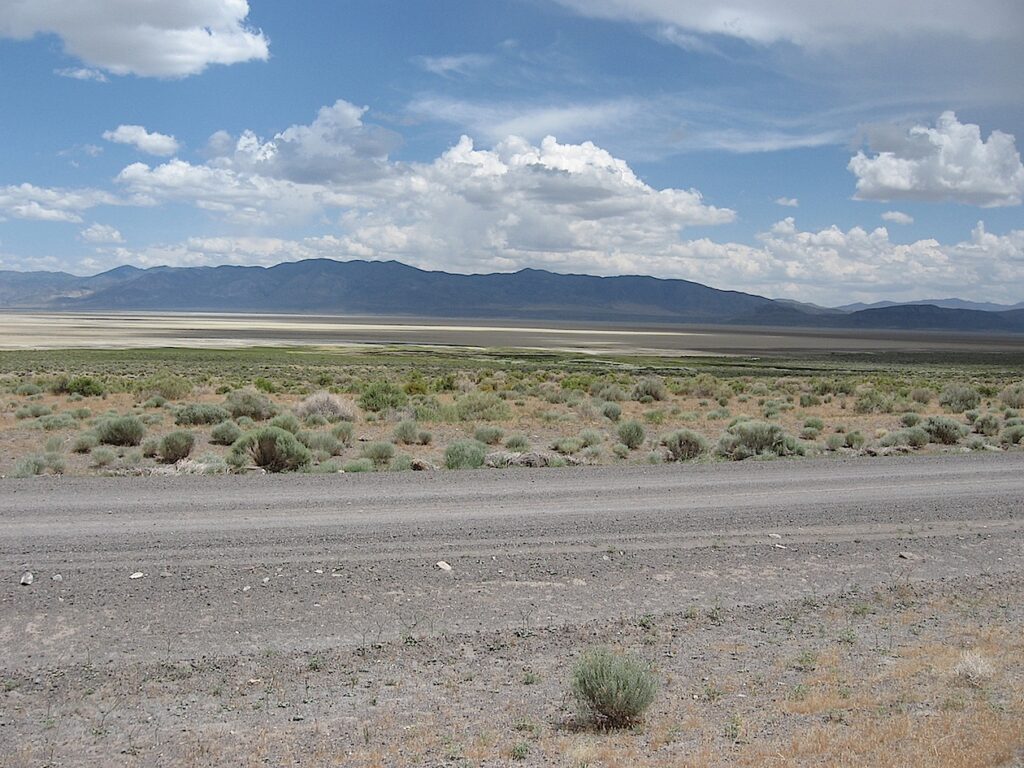
View of Laird’s old homestead site  from the Smoke Creek Road, June 26, 2023

In the early 1900s, Edward Laird worked as a ranch hand at Round Hole, Smoke Creek Desert, also known as Bonham Ranch. The owners William and Martha Bonham Ross, were in-laws to Laird’s sister, Margaret Sutcliffe.

Very little is known of Laird’s activities on the Smoke Creek Desert. Sometime after 1910, Laird filed a “squatter’s claim” to eighty acres, three miles north of Round Hole. There was a spring on the claim where he built a cabin. Edward Laird was murdered there on or about August 20, 1917. Details of his murder are sketchy. According to newspaper reports, his body was marked with two shot gun wounds and he was found dead in his cabin. On August 29, 1917 the Nevada State Journal had a caption, “Revenge Believed to Have Been the Cause of Killing With Shotgun near Round Hole.”  However, the newspaper did not provide any details. A week later area ranchers offered a $500 reward for information leading to the arrest and conviction of the party who murdered Laird. That was basically the end of the case. Cook Laird, Warren’s grandson, told me that Edward was a red head who was known to be hot headed with a mean temper.

Edward Laird was buried 50 yards east of where the spring bears his name, though there is another spring further east of his grave.

Support