There are anniversaries, and then there are anniversaries. It was a year ago, today, when I broke my hip and became a Nevada resident for six weeks.
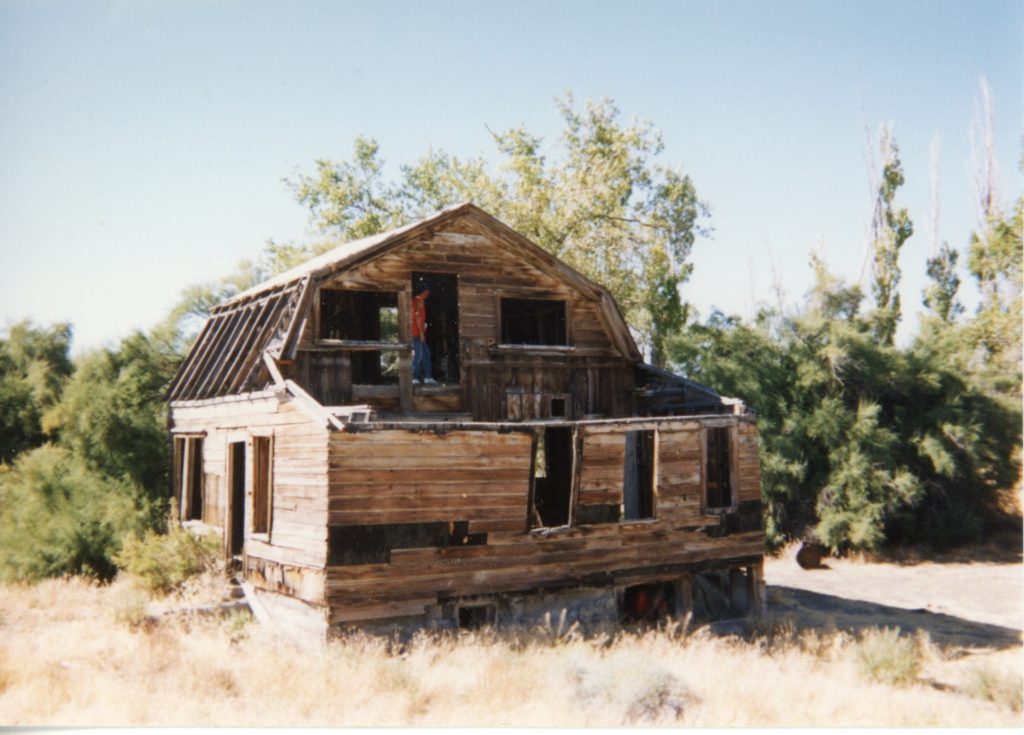
Some may remember back in the early 1990s, the Bureau of Land Management (BLM) and myself hosted prehistoric/historic tours. However, there were always issues as to historic sites, and BLM always said no. One of those was Great Basin Architecture of abandoned ranches and homesteads, and they said h-ll no. Since BLM staff were paid, and I was a volunteer and after three years, I decided I had enough. Continue reading Great Basin Architecture→
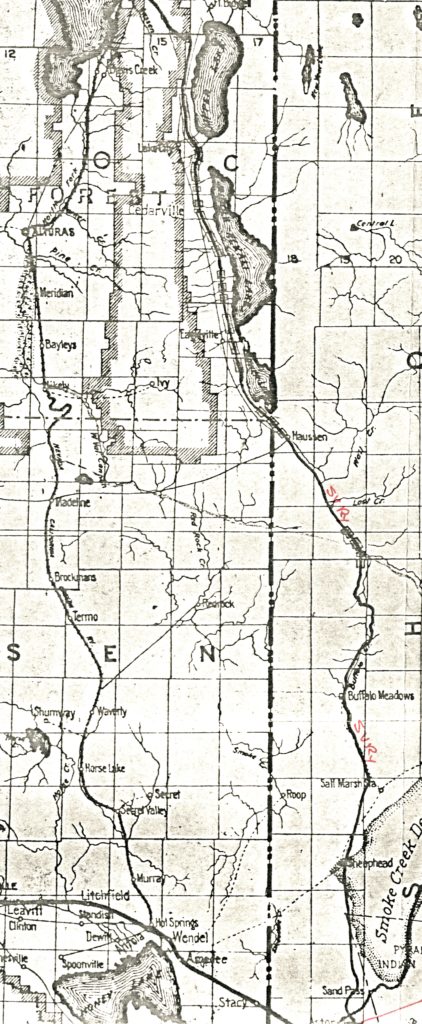
In the fall of 1915, Robert Strahorn brought new life to the project. Strahorn had a reputation for developing these type of projects. One of the biggest changes was the line would start at Flanigan, Nevada, on the eastern edge of the Honey Lake Valley and its terminus at Cedarville, California. By the spring of 1916, it appeared real progress had been made with right-of-ways secured from the Department of Interior and many of the landowners. In addition, it was announced that Lakeview, Oregon would be the new terminus. For those familiar with the country the railroad now had the daunting task to to cross the Warner Mountains at Fandango Pass. First a grandiose three-mile tunnel was proposed, but was reduced to a 4,820-foot tunnel, which still alleviated 700 difference from the top of the summit. Continue reading Surprise Valley Railroad – Part II→
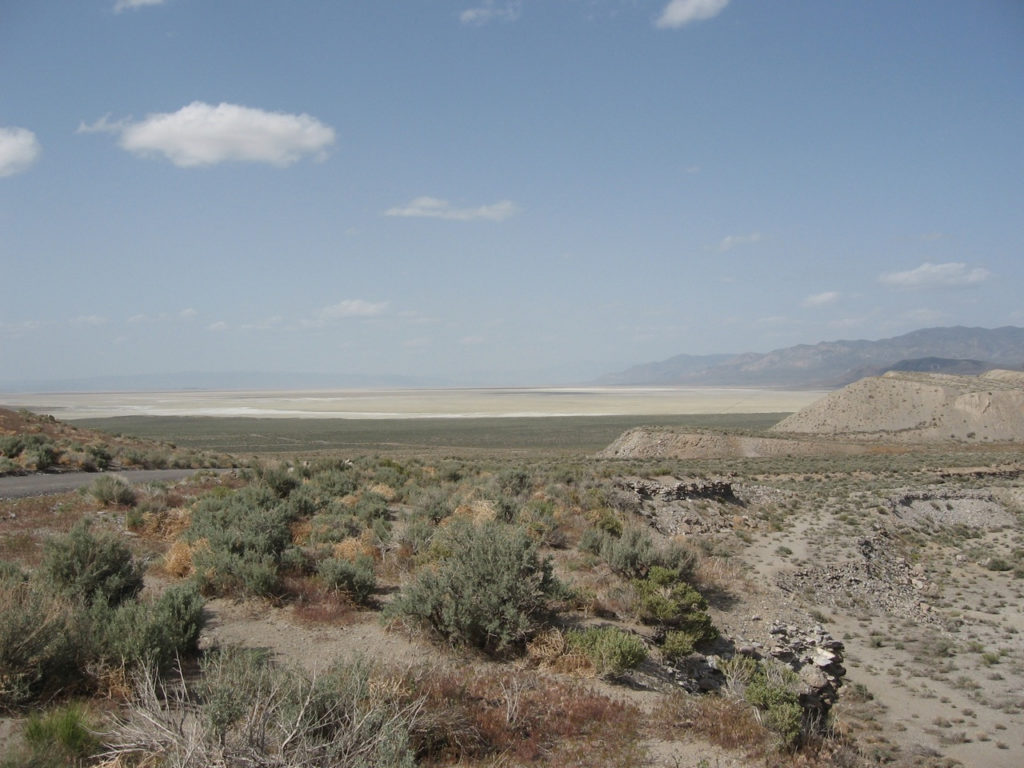
Sand Pass, Washoe County, Nevada, looking north at the Smoke Creek Desert, 2008.
In 1903, the Western Pacific Railway was incorporated with its main goal to build a 810 mile line from the San Francisco Bay Area to Salt Lake City. They were successful in one aspect. On November 1, 1909, the last spike was driven on Western Pacific’s line at Spanish Creek Bridge near Quincy, California. When the railroad was incorporated, it proposed to build twelve branch lines. These “feeder” lines were extremely important to generate rail traffic, which would provide necessary revenue for the fledging railroad. One of these proposed lines called for a Surprise Valley Railroad. Continue reading Surprise Valley Railroad – Part I→
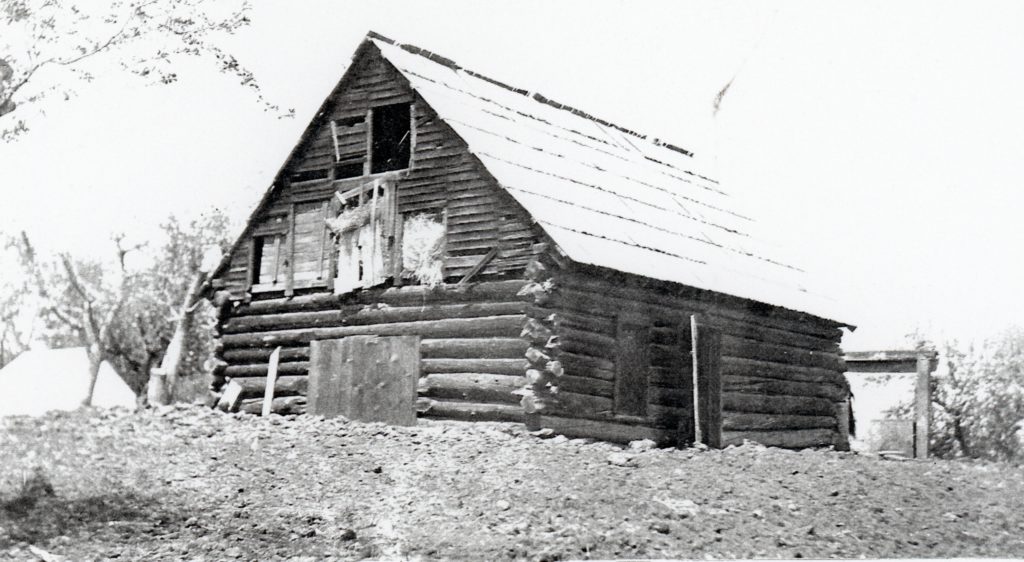
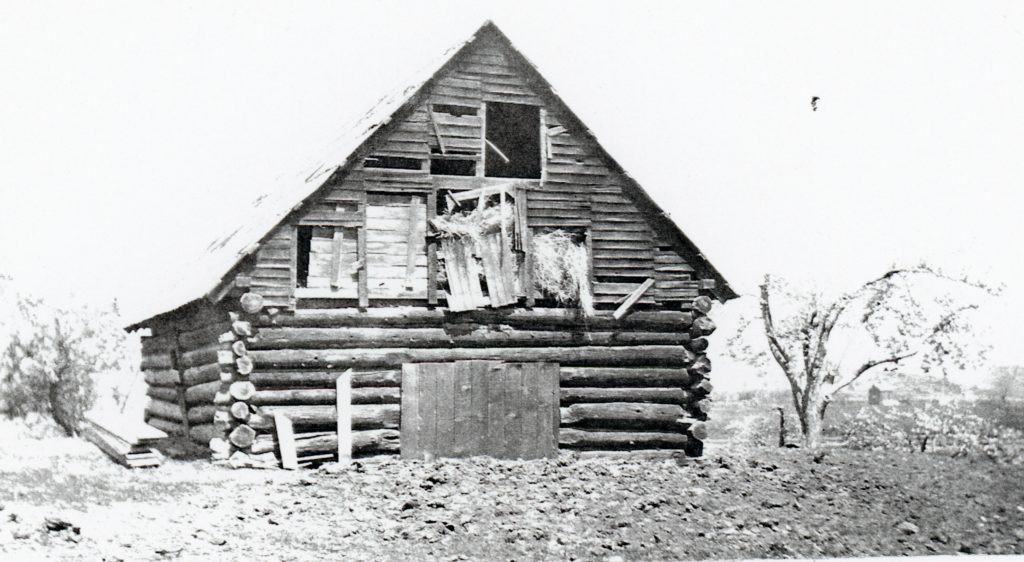
While working on an article about the Ramsey family and ranch operations, I came across the above photograph in the Ramsey file that I had forgotten about. About fifteen years, or so ago, I went to Reno visit with Keston Ramsey. Keston was born in Susanville on August 1, 1908, the son of Max and Lola Hunsinger Ramsey. It should be noted among Keston’s many activities was that in 1945 he built and opened the Sky Tavern, the first ski resort on Mount Rose. He was also a co-cofounder of the Reno Junior Ski Program.
Roop’s Fort. Courtesy of Keston Ramsey
Anyhow, back to the topic at hand. Some of the photographs Keston shared with me was that of Roop’s Fort. Keston always referred to it as the old apple house. In should be noted that in 1863, Isaac Roop gave the property to his three children which he referred to it in the deed as the old Homestead place.
I thought some people might be interested in these two views, in light of the recent completion of Roop’s Fort Restoration program. It should also be noted, the original structure did not have a high pitched roof. It was modified by the Arnold family for the storage of apples and hay.
Never miss a story, click here to support and subscribe.
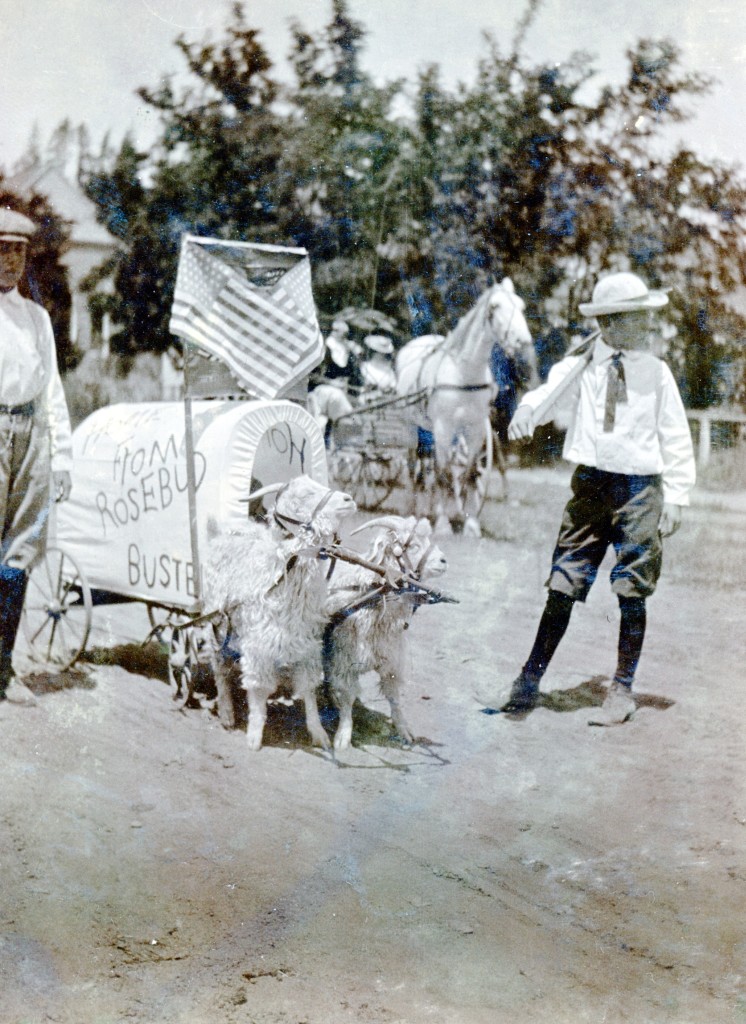
A 4th of July 1908 entry in the parade held in Susanville. Note the writing on wagon “Home from Rosebud Busted” Courtesy of Lola L. Tanner
In 1906, for the first time since the 1860s, Honey Lakers were excited about mining in Nevada. Of course, one Honey Laker, E.C. Brown had done very well in Goldfield. It was not the new mining discoveries of Goldfield and Tonopah, but one due east of the Honey Lake Valley on the eastern edge of the Black Rock Desert–Rosebud, in Pershing County.
It all began in August 1906 when three prospectors from Goldfield, Nevada discovered a gold vein in the Kamma Mountains that purportedly assays ranged from $1,500 to $30, 000 per ton. A mineral report issued from Humboldt County would later state: “This was followed by a senseless boom, in which, as usual, folly played eagerly into the hands of fraud.” Continue reading Rosebud, Nevada→
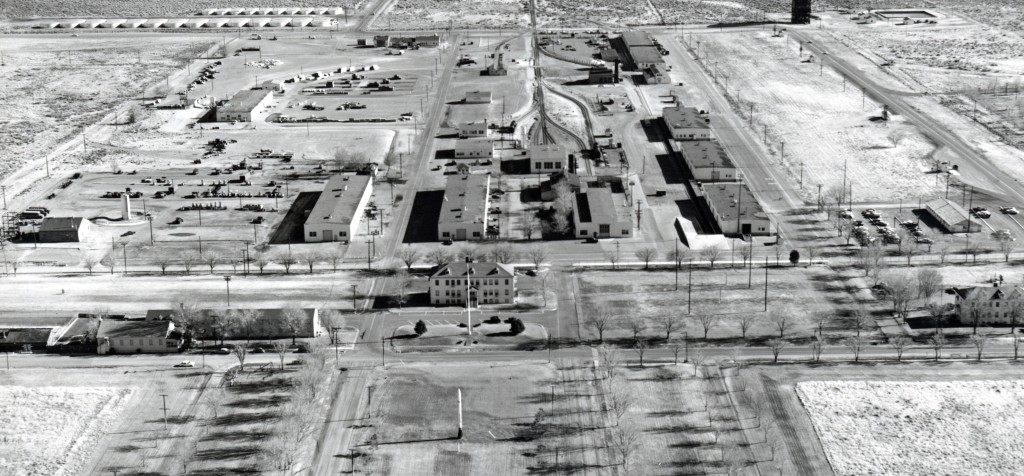
The Lassen County business community courted the military over the years. During World War I attempts were made to establish a military training camp at Hackstaff, while that failed that location was not forgotten. In 1926, the Lake Denmark Naval Ammunition Depot in New Jersey was destroyed, the cause of a lightning strike. Twenty-one people were killed, and the damage in today’s dollars about a billion.
This changed everything when the government sought a location for a munitions depot in the west. The two important criteria was it to be an isolated location, but have railroad access. The top three sites examined were Secret Valley, Flanigan and Hawthorne. In 1928, Hawthorne, Nevada was the victor. When World War II came along, saw the need for another Army Depot, and the army selected Hackstaff in the Honey Lake Valley and it was subsequently renamed Herlong, after the first Ordnance officer killed in World War I.
Never miss a story, click here to subscribe and support.
Diamond Mountain, circa 1940. Courtesy of Margaret A. Purdy
In the works in progress of future topics is that of the mining activities of Diamond Mountain. After all it was in 1855 with the discovery of gold at Hills Creek, along the base of the mountain, that was responsible for the initial influx of the Anglo settlers. During those early years one of the main routes to and from the Honey Lake Valley was via Gold Run. To refresh one’s memory you may want to go back and review the Gold Run Road Company. The route also received extensive use in the 1920s to the Engel’s Copper Mine on the other side of mountain near Taylorsville. That, too, will be featured in the future. In addition, the Wild Horse Mines of the Smoke Creek Desert will be featured as it is intertwined with the mining at Diamond Mountain. Finally, this topic was discussed on the Inspiration Point Tour. Stay tuned!
Never miss a story, click to support and subscribe here.
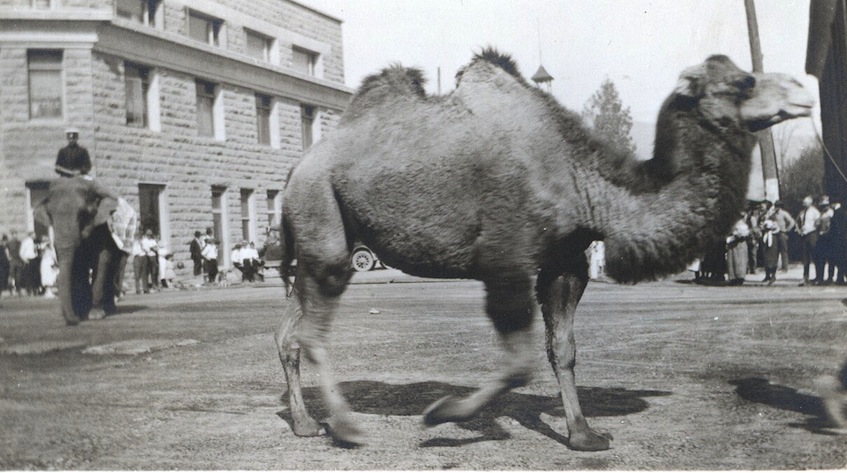
That is right, a camel at the intersection of Main and Lassen Streets. B. Dorsey Collection
In 1916, the Al G. Barnes Circus advertised that his “The Only Real Wild Animal Show on Earth! was coming to Susanville. It was announced that there would be 65 animal acts and exotic animals from around the world. The circus never arrived, as the circus train derailed near Flanigan, Nevada.
Two years later, Barnes’ circus finally did make it to town. On May 8, 1918 crowds lined Main Street for a mile-long parade with exotic animals. At Halltown tents were set up for the performances. The only problem encountered this time was the typical erratic spring weather witnessed a few snow flurries during the day.
Since we live in age of conspiracy theories, one reader was curious about the circumstances of Peter Lassen’s death. Continue reading Peter Lassen’s Demise→
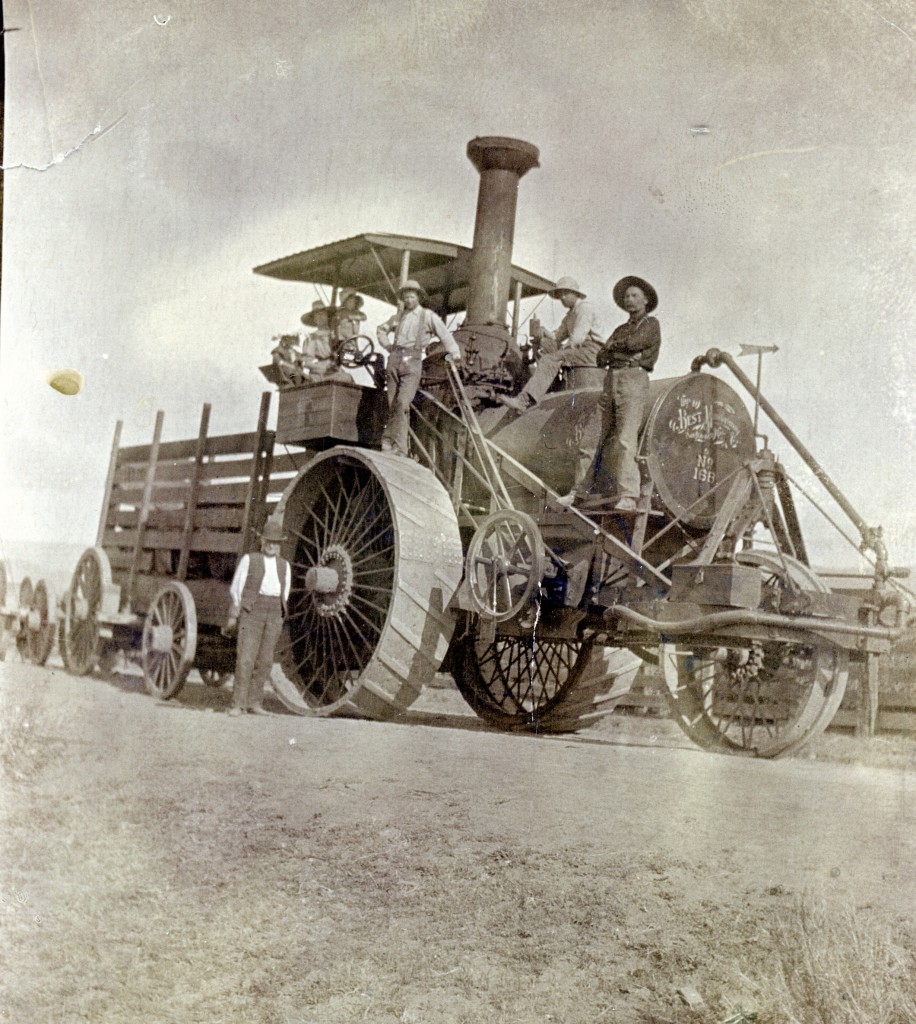
Harrison’s “mighty beast.” Courtesy of Lola L. Tanner
1907 was a a most interesting one in certain circles. There was a national financial crisis, but California and Nevada were experiencing a building boom. For the Golden State it was still in the midst of rebuilding the San Francisco Bay region from the previous year’s earthquake. For the Silver State, a mining bonanza it had not experienced since the discovery of the Comstock. These two episodes created a lumber shortage. Lassen County’s timber resources had basically remained untapped due to the lack of a railroad infrastructure to develop it. Continue reading Harrison’s Traction Engine→