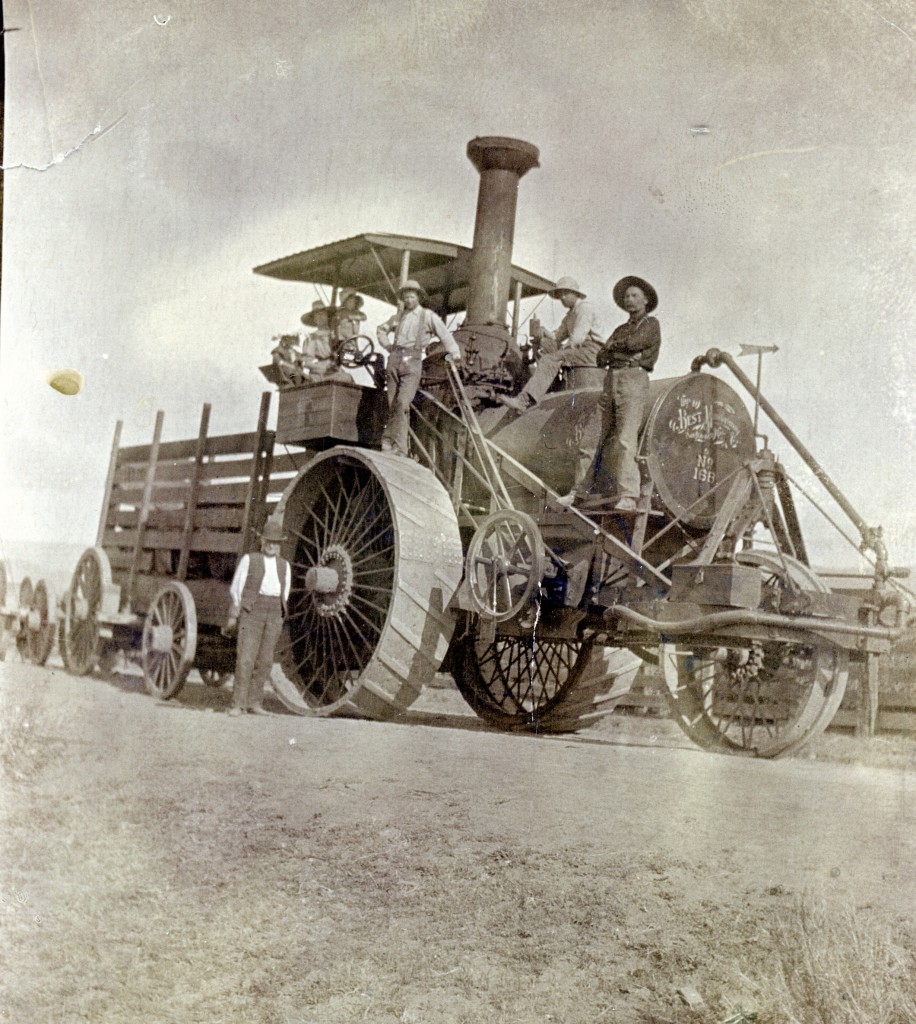
Harrison’s “mighty beast.” Courtesy of Lola L. Tanner
1907 was a most interesting year. in certain circles. There was a national financial crisis, but California and Nevada were experiencing a building boom. For the Golden State it was still in the midst of rebuilding the San Francisco Bay region from the previous year’s earthquake. For the Silver State, a mining bonanza it had not experienced since the discovery of the Comstock. These two episodes created a lumber shortage. Lassen County’s timber resources had basically remained untapped due to the lack of a railroad infrastructure to develop it. Continue reading The 1907 Timber Bonanza→
The Nevada-California-Oregon Railway (NCO) was never a profitable enterprise, but somehow it found away to carry on. Finally, the Moran family, owners of the beleaguered railroad had enough. On November 21, 1921, the N.CO. petitioned the Interstate Railroad Commission to abandon its entire line, due to substantial operation losses. After several public hearings the Commission denied the request. The Commission cited that the railroad could reduce its cost by operating a tri-weekly service, instead of a daily; eliminate the president’s $10,000 a year salary and close its New York City office.
At the same time, the Western Pacific Railroad had offered to buy the line for $1,100,000 the equivalent of $6,000 a mile. The NCO’s President, Charles Moran, insisted on a higher price of $10,000 a mile, an $800,000 difference. Moran, however, testified that the junk value of the railroad was $300,000.
The Commission did make one concession—it allowed for the abandonment of sixteen miles of the line between Wendel and Rayl (the latter to be known as Herlong). On October 31, 1922, the last NCO train left Rayl, passed through Amedee, and now Wendel was the terminus
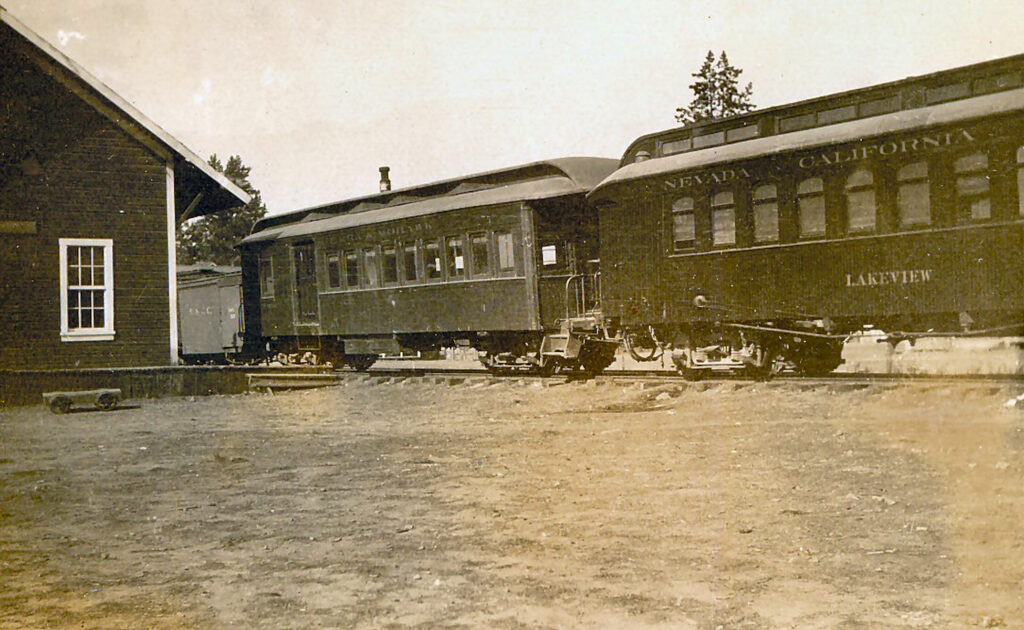
Back in early February was a Tuesday tidbit about the Nevada California Oregon Railroad’s Lakeview car. At the time, I noted my notes were not handy, and they still are not. I am just not mentally prepared to sift through my extensive NCO file that date backs to the 1970s.
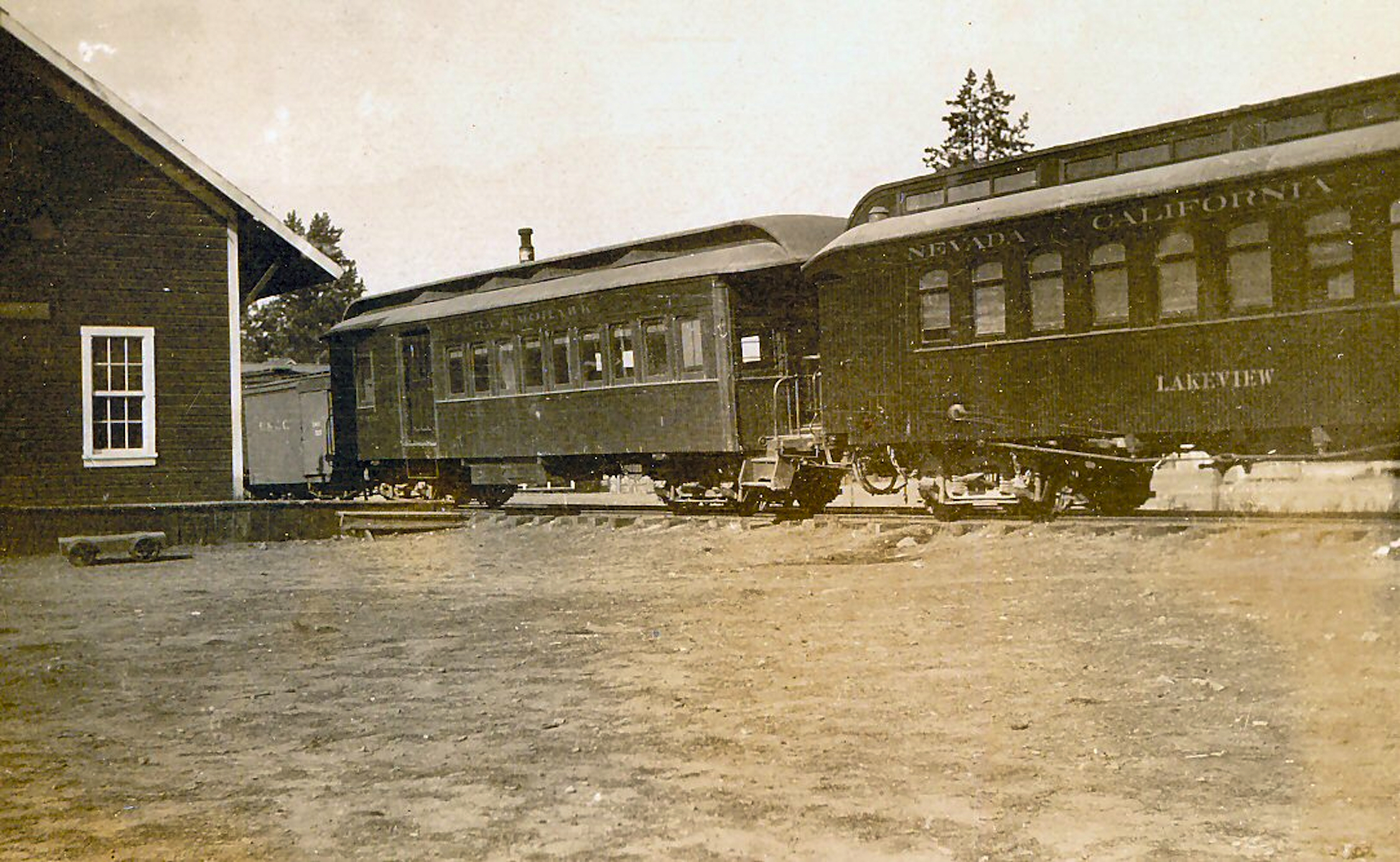
Anyhow, the following was relayed to me. The Lakeview was originally a narrow gauge car owned by the Union Pacific which was used as a business car. The Union Pacific converted it to standard gauge. When the NCO purchased it from the Union Pacific, at the NCO’s Reno shop the Lakeview was once converted back again to narrow gauge.
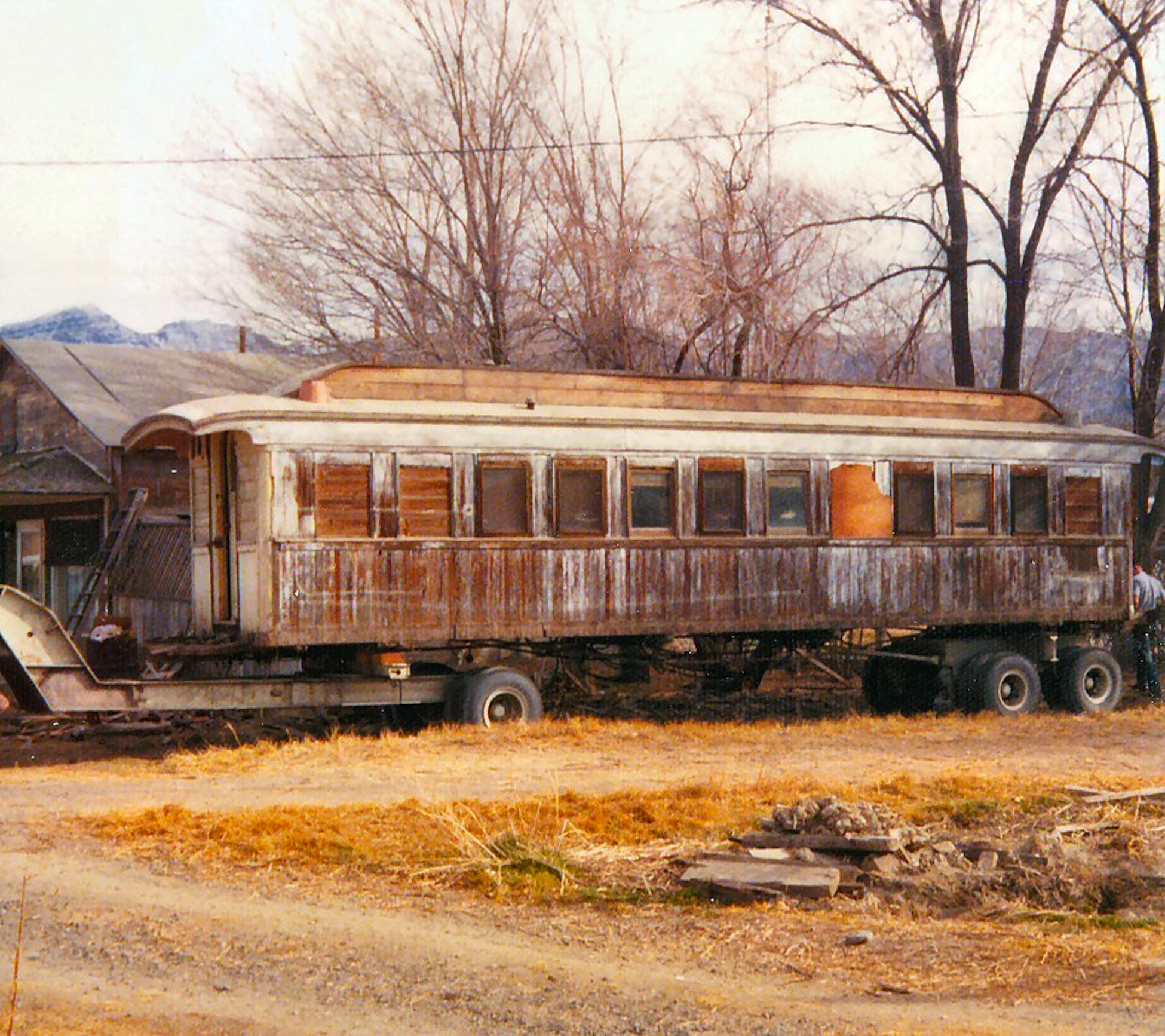
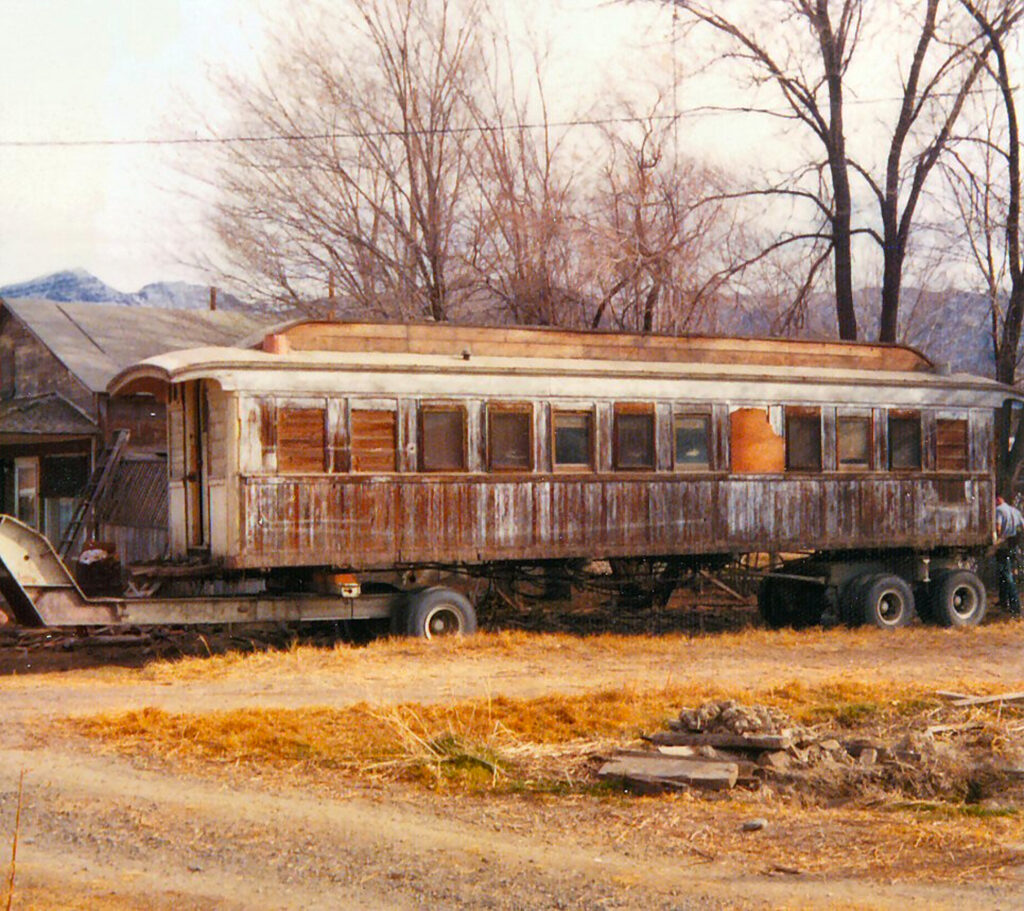
An NCO passenger car at Wendel being prepared to move, 1974—Tom Armstrong
As to the above passenger car it was sold to the Huckleberry Railroad, a narrow gauge railroad near Flint, Michigan where it was restored and put into use. This is a tourist railroad that operates in summer months.
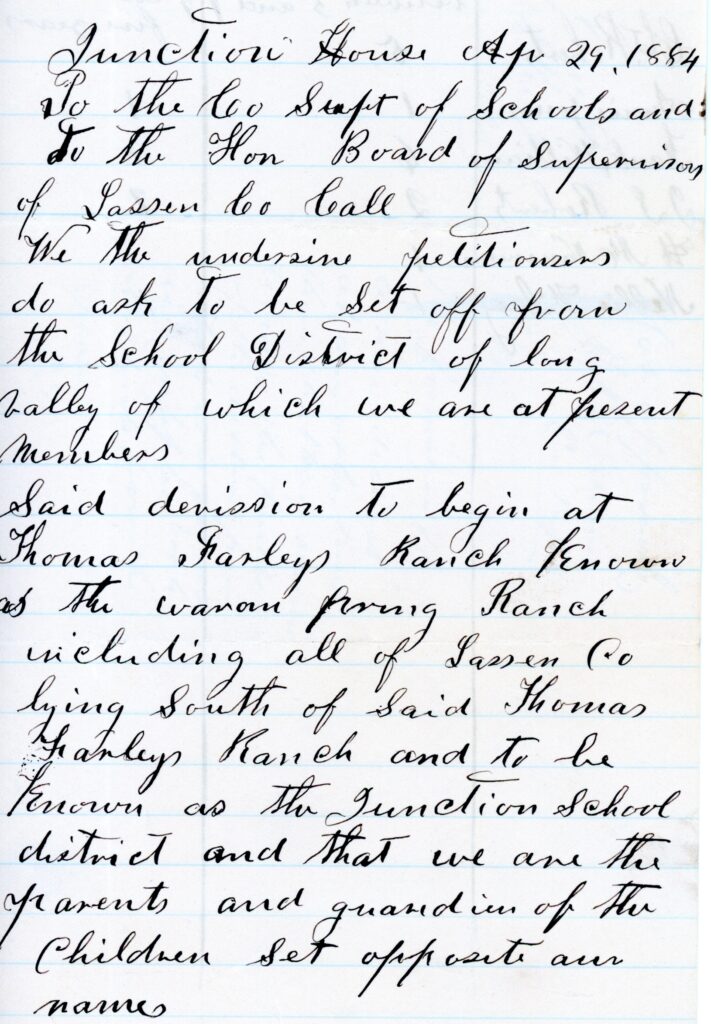
A movement began in the fall of 1870 to form a school district in the
extreme south end of the County. The Junction School district was finally established in March 1871. It later closed, though the records do not indicate when that occurred.
In the spring of 1884, Jonathon C. “Chat” Roberts, along with his neighbors, requested the formation of another Junction School District. Roberts wrote: “I have built a school house at my own expense and we are entitled to a district.” E.A. Williams, Lassen County Superintendent of Schools, echoed that sentiment to the Lassen County Board of Supervisors. Williams noted that they had spent nearly $400 to build and furnish the school. In addition, they had hired a teacher and the school was in operation with sixteen students. Williams concluded: “Ás the financial guardians of the County you can determine the expediency of forming this new district, as to the justice of their claim, there can be no question.” It was approved. It should ber noted Junction, in the present vicinity of Hallelujah Junction, with the establishment of the NCO’s railroad station, that would be named Chat.
After the NCO Railroad moved onward there was a population decline. In 1898, the school was abandoned and annexed to Long Valley School (Doyle).
Known today as Herlong, and it was the one-time junction of
Nevada-California-Oregon (NCO) and Western Pacific (WP) railroads. In 1915, Stanley G. Rayl arrived on the scene. When Rayl petitioned to establish a post office, he proposed the name Rayl—the NCO opposed it. Charles Moran, President of the NCO, wanted the post office named Hackstaff—in honor of his mother-in-law, Clara Hackstaff Adams. After five months, the Postmaster General decided upon the name of Rayl, instead of Hackstaff. This delighted Robert M. Cook, editor and publisher of the Lassen Weekly Mail, Cook wrote: “ The NCO wanted a monument to an uncle of the wife of Moran, the New York capitalist behind the NCO. Hackstaff was never in Lassen County and no one here knows anything about him.”
When Rayl left in 1921, he assigned the postmaster duties to Cyrus Helman. Those two men had a disagreement and fought that battle in court. In the end, the Rayl post office closed. On March 18, 1922, the Hackstaff Post Office was established with Helman as postmaster. It did not last long and the post office closed on December 30, 1922. In 1927, Hackstaff’s meager population
was wiped out when the WP moved its section crew to Doyle. The
location continued to be known as Hackstaff until the Sierra Army
Ordinance Depot was established in 1942.
Amedee, January, 1916 courtesy of Marie Herring Gould
Recently, I received an inquiry concerning the railroad trackage of the NCO & Western Pacific Railroads as it especially relates to Long Valley. Even in the best of times, the NCO struggled financially, but for decades it did not have competition. That changed in 1909 with the completion of the Western Pacific Railroad through southern Lassen County that siphoned off business. In 1914, the Southern Pacific’s Fernley & Lassen Branch added more financial distress to the NCO.
Western Pacific had its own financial problems as well. It had hoped to build feeder lines to increase its freight tonnage. One market that WP had its sight on was Reno, Nevada. Yet, the WP did not want to build a duplicate line with that of the NCO. Negotiations between the NCO & WP began and in certain ways it was the best of both worlds for the two railroads. The NCO needed a major cash infusiion to pay bond debt and the WP would get its Reno connection. On June 11, 1917 the NCO not only sold a 64 mile segment of its line from Rayl (now Herlong) to Reno, but also its Sierra Valley Railway to Clio, Plumas County. The transaction cost WP $700,000. Since the WP did not need the segment of NCO’s line from Plumas Junction to Rayl, it was pulled up and scrapped. Trivia, for some, the Hackstaff Road from Doyle to Herlong is the old NCO railroad bed.
An NCO passenger car at Wendel being prepared to move, 1974—Tom Armstrong
If you recall a Tuesday tidbit of two weeks ago, I wrote about the
NCO private car the Lakeview. In this instance, like the earlier, the handy notes are not handy on this railroad car . In November 1974 Tom Armstrong took this photograph. The defacto mayor of Wendel for many decades was the grand dame, Aldah Reisenman. Aldah had many rentals in Wendel and for a time this old NCO passenger car, was one, which she sold and was being hauled away when Tom captured the moment.
I have received some new information about the Lakeview which I will post in an update in the near future.
This Tuesday tidbit will be albeit brief. The NCO Railroad had two private cars the Esmeralda and the Lakeview. While the above photograph is hardly the best, some of the rail fans on this site will enjoy it nevertheless. I thought I had some handy notes on the Lakeview, but alas they are not so handy when I need them. When they do surface, I can always update the post, and if someone out there has information to share about the Lakeview that would be appreciated as well.
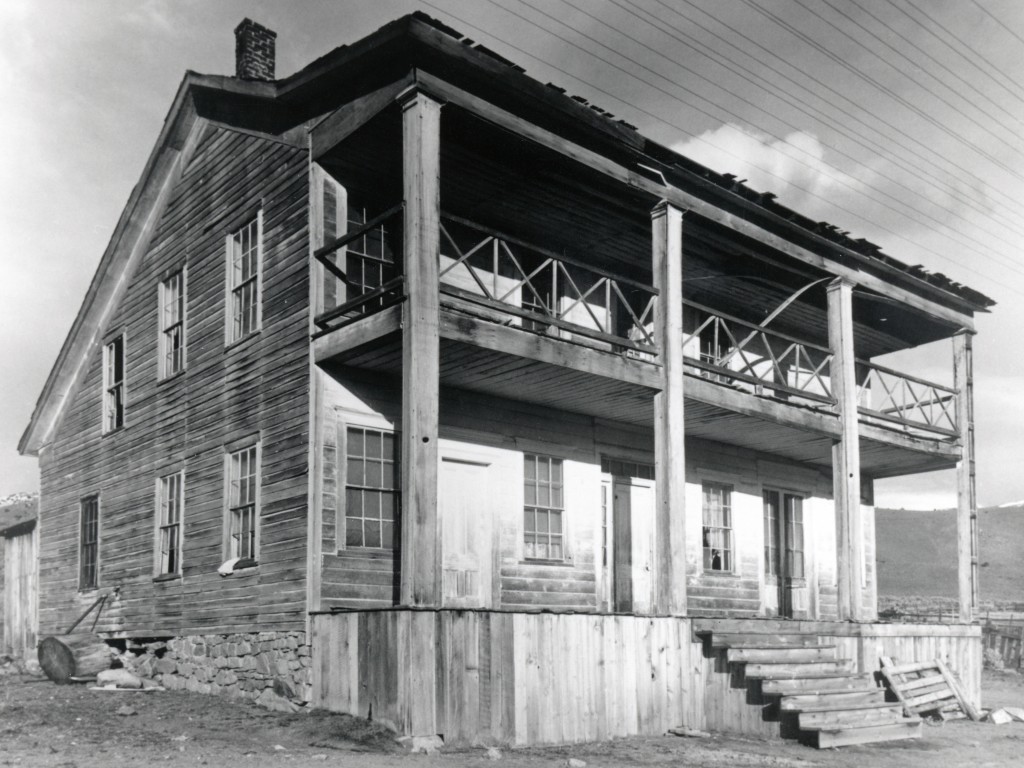
The Antelope Station, date unknown. Courtesy of Nevada Historical Society
It was a popular stage station in the upper end of Long Valley on the Susanville–Reno Road. It was established in the mid-1860s by Jonathon C. Roberts. In 1873, Roberts sold to David F. Evans and for many years it was known as the Evans Ranch. In 1882, when the Nevada-California-Oregon (NCO) constructed its railroad there, they established a station named Oneida, for the Sierra County Township of Oneida. On June 6, 1889, a post office was established there named Purdy—for Solomon Purdy who came to Sierra County in 1852, from Oneida, New York and eventually sold to David F. Evans. In 1891, the Purdy Post Office was moved to a site known today as Bordertown. Travelers of U.S. Highway 395 between 1931 and 1976 will know the location of the old Antelope Station as the first site of the California Agricultural Inspection “Bug” Station.
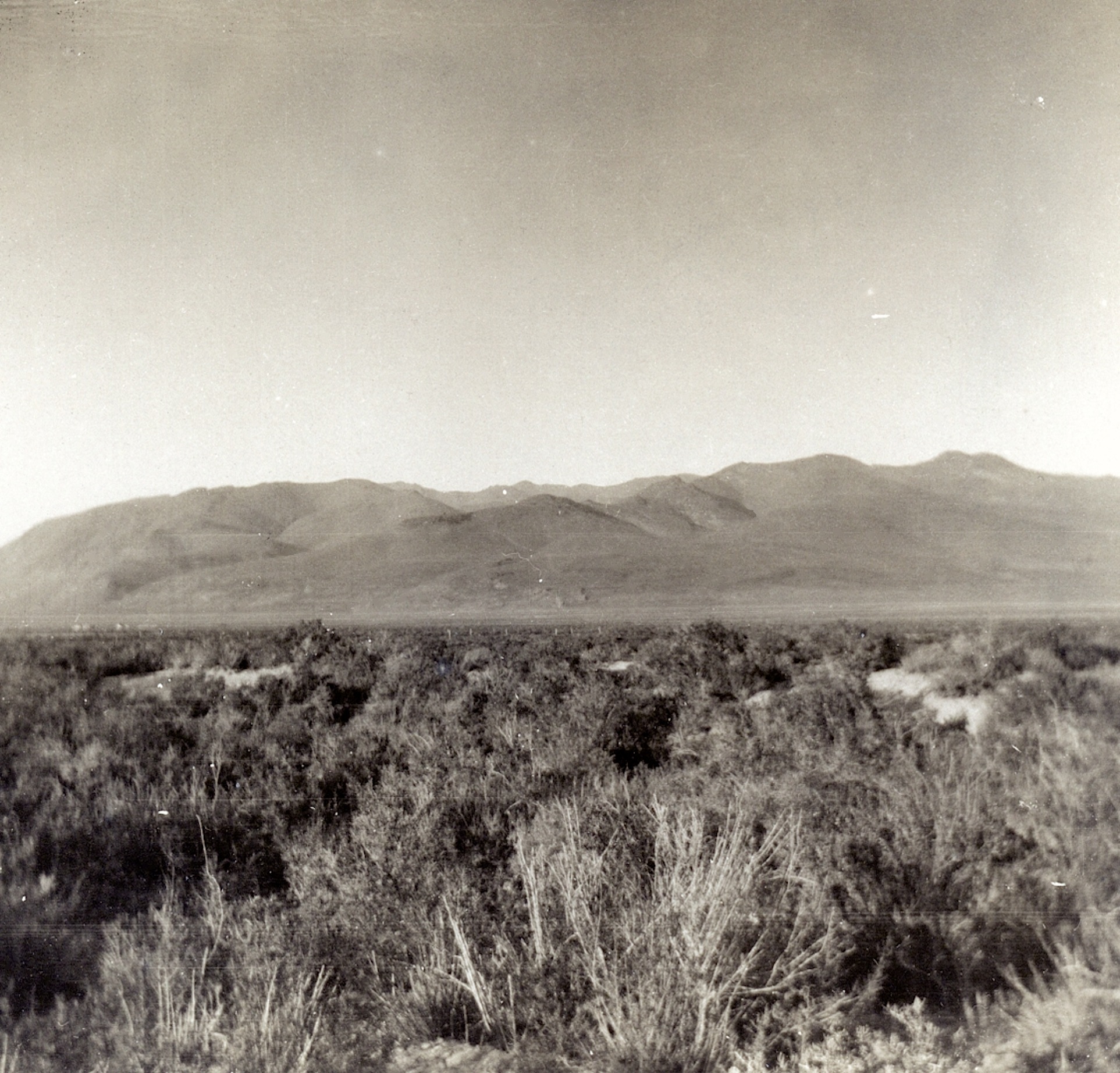
Eastern Honey Lake Valley , near Stacy, 1911—C.R. Caudle
The Nevada-California-Oregon Railroad (NCO ) was such a colorful enterprise and how it managed to exist for nearly a half of a century is mind boggling.
In 1884, the NCO’s line extended thirty miles north of Reno, at the old Antelope Ranch, and they named it Oneida. At the same, Edgar Heriot was brought in as general manager and under his leadership made numerous beneficial improvements.
At the end of 1884, the NCO extended its line five miles north to Junction House (near present day Hallelujah Junction. Heriot had ambitious plans. On March 31, 1887 Heriot announced that work would commence on a 45-mile extension from Junction House to Brubeck’s Ranch at Lower Hot Springs on the east side of Honey Lake. This did not set well with Susanville or the communities on the west side of the valley. However, there were delays due to litigation with landowners over rights-of-way in Long Valley. This was a considerable expense and Moran’s owners of the NCO fired Heriot. He was replaced with the cantankerous Erasmus Gest.
No matter how hard Susanville lobbied the Morans, dealing with Gest was an exercise in futility. Gest had made up his mind. He was determined to build the line as quickly as possible to the Oregon border, on the most direct route. Gest feared competition from the north, and it was his desire to have the railroad built to eliminate rival lines. Gest informed the Morans of his decision to stay with the original plans. Gest stated it was a waste of money to build to Susanville, referring to it as a “no place.” Later management called Gest’s judgment to bypass Susanville as “ . . . one of the most monumental blunders, I have ever known a sane man to commit.”

 A movement began in the fall of 1870 to form a school district in the