Tag Archives: Natural History

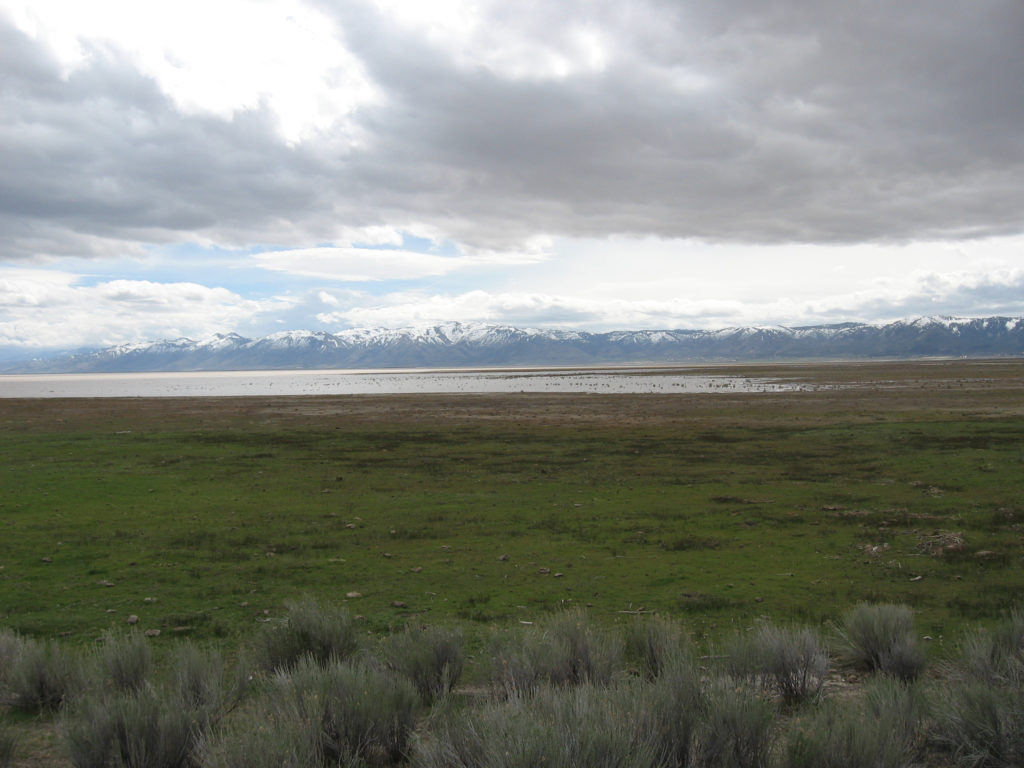
Honey Lake

Honey Lake from Tanner Ranch, March 18, 2017

First of all, I want to thank those who stopped by and checked out Saturday’s Estate Sale.  It should be duly noted that there will be a Phase Two Sale, since there is still more to assort through.

Instead of being at the sale for numerous reasons, I journeyed out to the family (Tanner) ranch to have a glimpse of Honey Lake. There are various features there, that provides a good indicator of the level of the lake.
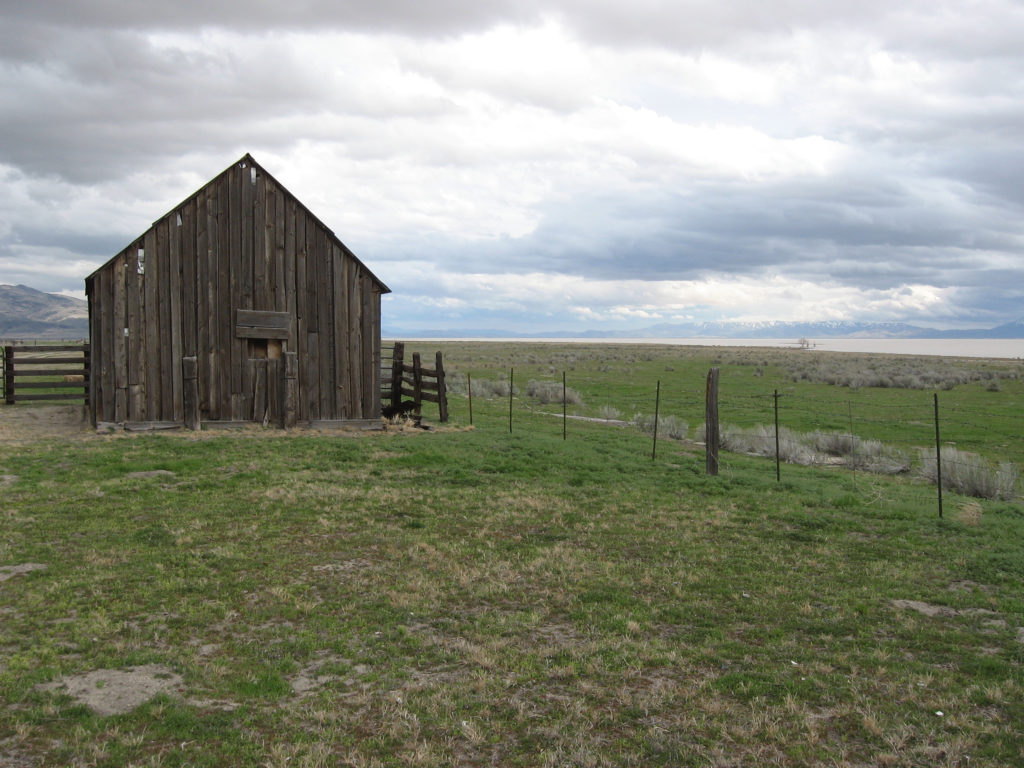
The blacksmith shop, near the lake, March 18, 2017.

While there is considerable water in the lake, it still has a way to go before it reaches historic levels.  This evident of the above and below photographs, both showing the blacksmith shop.
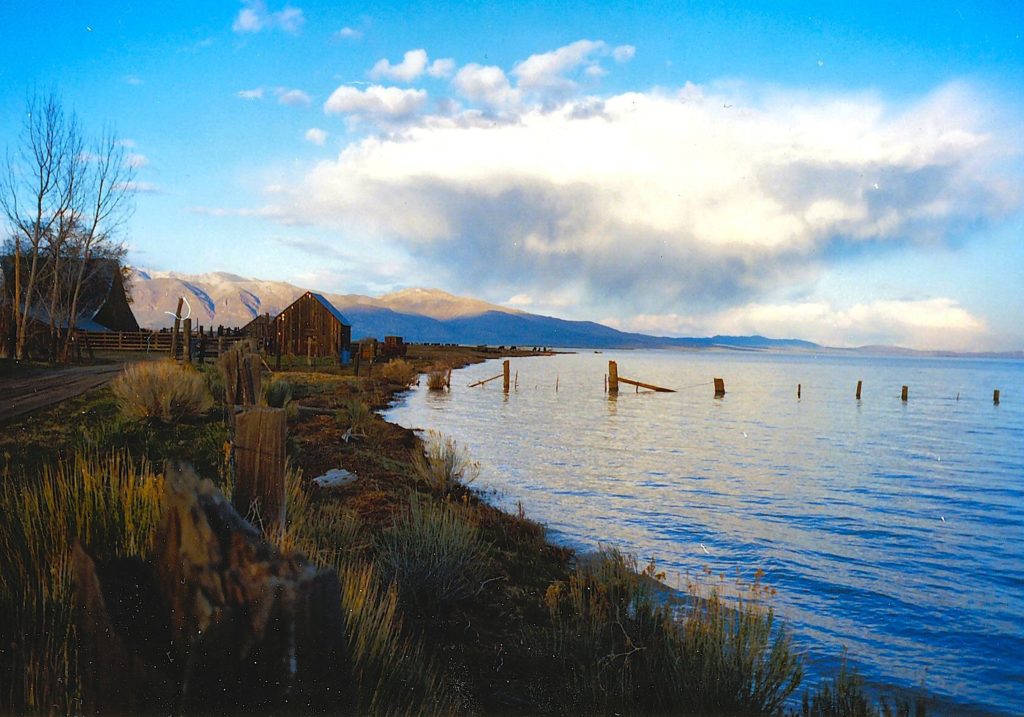
Honey Lake, from Tanner Ranch, January 1997.

However, for some people, seeing water in Honey Lake is something they have never seen. I am currently working on a future post about the tugboat that was originally used in the San Francisco Bay, that plied the waters of Honey Lake from 1907-1915. In addition, if you want to learn more about the history of the lake, you can purchase a copy of my book Sagebrush Reflections: The History of Amedee and Honey Lake.

Subscribe!

Wild Horses

Wild Gatheres
In 1978, the Sierra Club published The Wild Horse Gatherers. It is an illustrated story of BLM’s wild horse round-up locally.

Note: Margie’s Book Nook has received a couple copies of The Wild Horse Gatherers. First come, first serve. There are some other out of print books that the store has recently received.

A hundred years ago, the wild horse population was kept under control by out of work wranglers. During the winter months, it was not unusual for ranches to let go extra help, especially single men. A number of these men, would take a 160 acre desert homestead to make a home, especially properties with unclaimed springs. To make some extra money, they would catch wild horses and break them. By spring they would sell the horses, and pocket the money. Continue reading Wild Horses

The Eagle Lake Earthquake of 1889

Bucks Bay, Eagle Lake, 1921. Courtesy of Lola L. Tanner

The Eagle Lake we know today was created by fault blocking, so its no wonder that earthquakes occur in the region. On June 19, 1889, a substantial earthquake was felt in the region, which was followed by twenty-eight aftershocks. Initially, it was believed that the quake originated from Mount Lassen, but upon  further investigation it was determined the epicenter was at Eagle Lake.

The most remarkable finding of this earthquake was the lake dropped by two feet. Yet, the water flow of Bunnell, Cady and Willow Creek springs experienced increased water flows. The Lassen Advocate noted these springs:  “had a soapy appearance, feeling oily to the touch.”

Thomas Ford, editor of Bieber’s Mountain Tribune newspaper traveled to Susanville at the time of the earthquake and wrote:  “Arriving at Susanville at six o’clock in the evening, we found things pretty shaky; experienced four shocks that night, and was told that had not been a very good night earthquakes either. . . . Many were the accounts or what happened since the shaky season began–such as Eagle Lake sinking two feet, the waters of Willow Creek being higher than ever before.”

Spread the word, encourage a friend to subscribe.

Deer Hunting

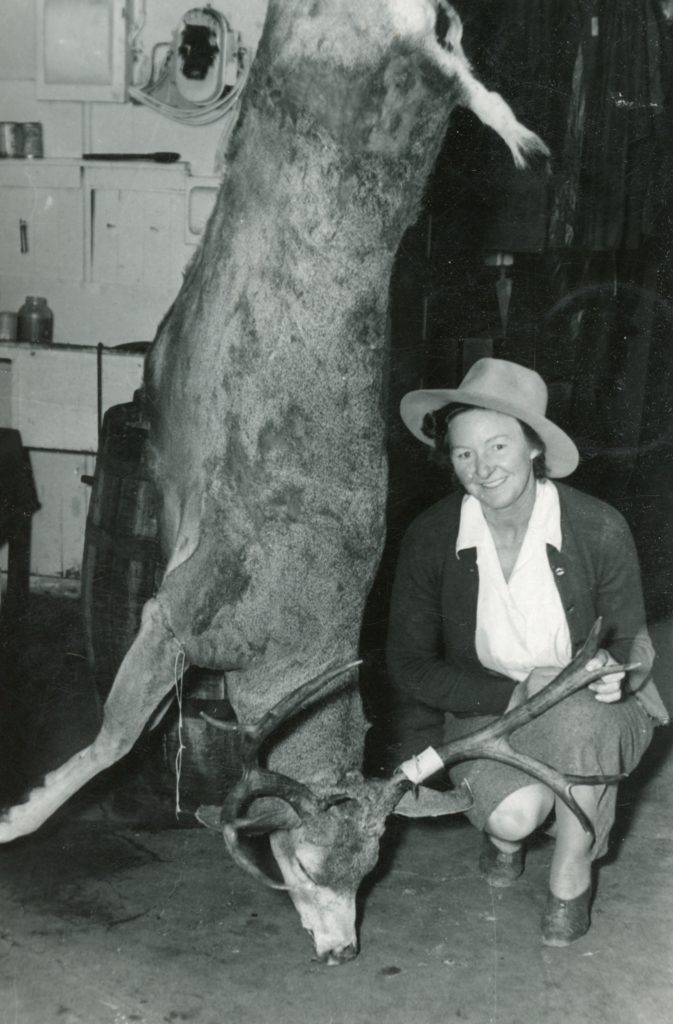
Margaret Purdy with her trophy buck 211 pounds dressed, September 24, 1947.

Once upon a time, a person was not confined to deer hunting in a particular zone. By the 1940s with significant improvements to highways and automobiles opened a lot of territory to hunters, once the domain of locals.

The Fruit Growers Supply Company operated lumber mills in Hilt, Susanville and Westwood. While researching its history, I always came across some interesting material. Fruit Growers’ Annual Reports are a wealth of information. Before you think I am losing my sanity writing first about deer hunting and then lumber mills, there is a common thread.

The following is a most interesting excerpt from Fruit Growers’ 1946 Annual Report:

“Much of the country in which Company timber is located is considered to have good deer hunting, and the deer season opens at a time when the woods are in the driest conditions and when the fire hazard is the greatest. The handling of the large influx of people into the general Northern California area during the deer hunting season constitutes a very serious problems to all owners and agencies interested in timberlands. In 1946, hunters and their parties were registered as they entered Lassen County area, and during one week’s time, close to 5,000 automobiles and 13,000 individuals registered as potential deer hunters. Thus more hunters were checked into Lassen County than its normal population. Despite this, the Company was fortunate in its 1946 experience with forest fires.”

Subscribe and support this site for little as $4.17 a month.

Eagle Lake’s Gallatin Peak

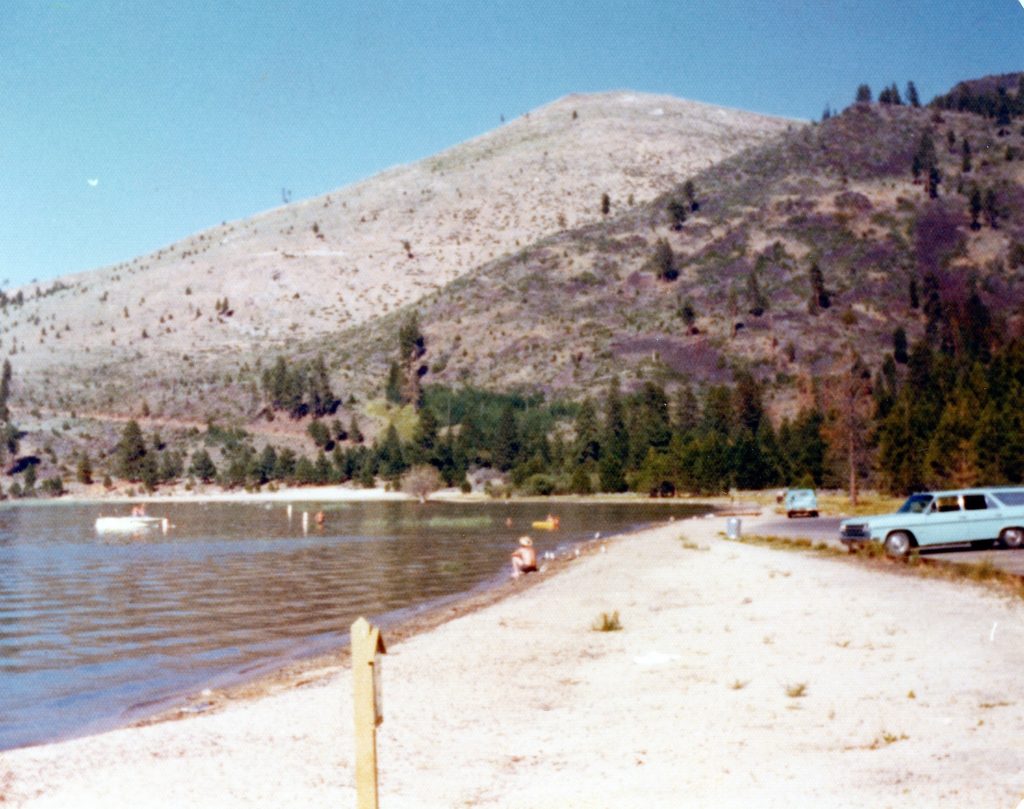
Gallatin Beach and Peak, July 22, 1974.

Gallatin Peak, with an elevation just shy of 7,000 feet is one of the most prominent features at the south end of Eagle Lake. It is interesting that it is of granite composition, while the surrounding mountains are basalt.  Actually, the peak’s original name was Granite, and it was not until the early 1900s that it began to be referred to as Gallatin, after the largest property owner at Eagle Lake.

For those who attended the Inspiration Point Tour, or received the narrative thereof, a geology lesson was given.  Four major land masses converge in the Susanville region–Cascade, Great Basin, Modoc Plateau and the Sierra Nevada.  This influence at the southeast corner of Eagle Lake is evident.

Because of granite and quartz composition of Gallatin Peak and extending over to nearby Round Valley, caught the interest of gold seekers.  From the 1870s until 1942, when President Roosevelt by executive order halted gold mining during World War II, there was considerable gold mining in this isolated pocket.

Never miss a story, click here to subscribe.

A Honey Lake Valley Earthquake

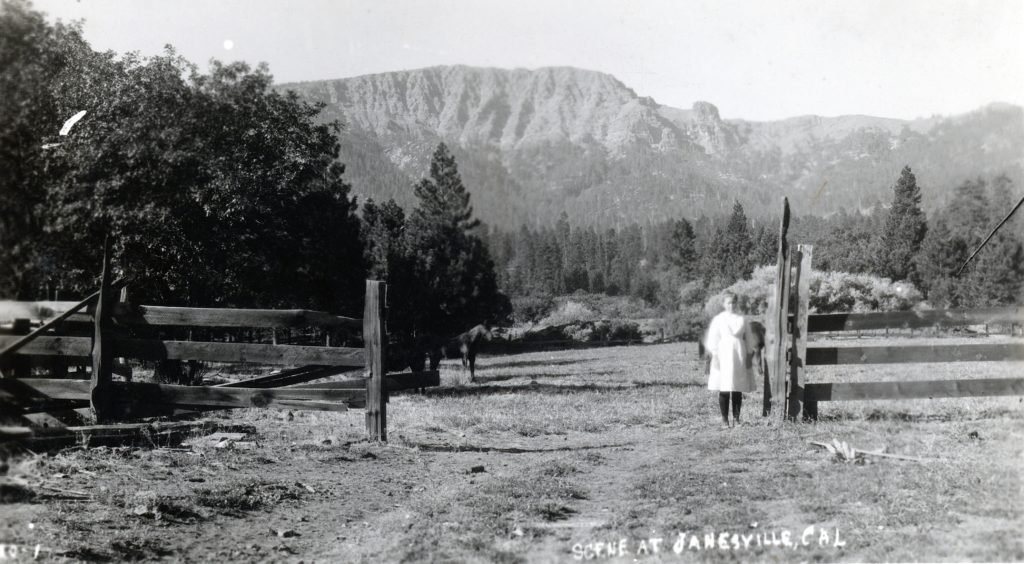
Thompson Peak, 1911.
Thompson Peak, 1911. It should be noted that Thompson Peak, and the Diamond Mountain Range is a part of the Honey Lake Fault Zone.

Some may recall that back in January I wrote about Sylvester Daniels. For a brief refresher Daniels arrived from Iowa in the spring of 1874 and spent time with his sister, Polly Parks, who resided just east of Buntingville. He kept a journal of his experiences that he wrote specifically for his daughter, Viroqua and the rest of his family who remained in Iowa. The following is his account of the first earthquake he experienced.

“Sunday, January 24, 1875 – Well, we are all alive yet. Now, I will tell you why I started as I did. You have heard of earthquakes I suppose. Well, I will tell on the sly that there was a live one came along here this morning early about 4 o’clock. It awoke me very suddenly, then such a crash. I thought the house was all breaking to pieces and it seemed to roll  back and forth in bed. At any rate it shook things up pretty lively, while it lasted. But it was not near as long as I have written about. It seemed to roll back and forth and jar terribly. It seemed to pass towards the Mountain from the Valley.

The hens flew and cackled and the pigs squealed. Polly Parks said it shook every bottle and everything in the house. She said the cream was disturbed on every pan. So you see there was quite a commotion for a time. All the damage that I have heard of as of yet, is some chimneys are slightly rent and some were frightened. I have not heard anyone express themselves to wish it repeated.  Polly and Elisha Parks say they are not as near as afraid of them as they used to be of thunderstorms and tornadoes in the East.”

Never miss a story, click here to subscribe.

Lassen Park – Butte Lake

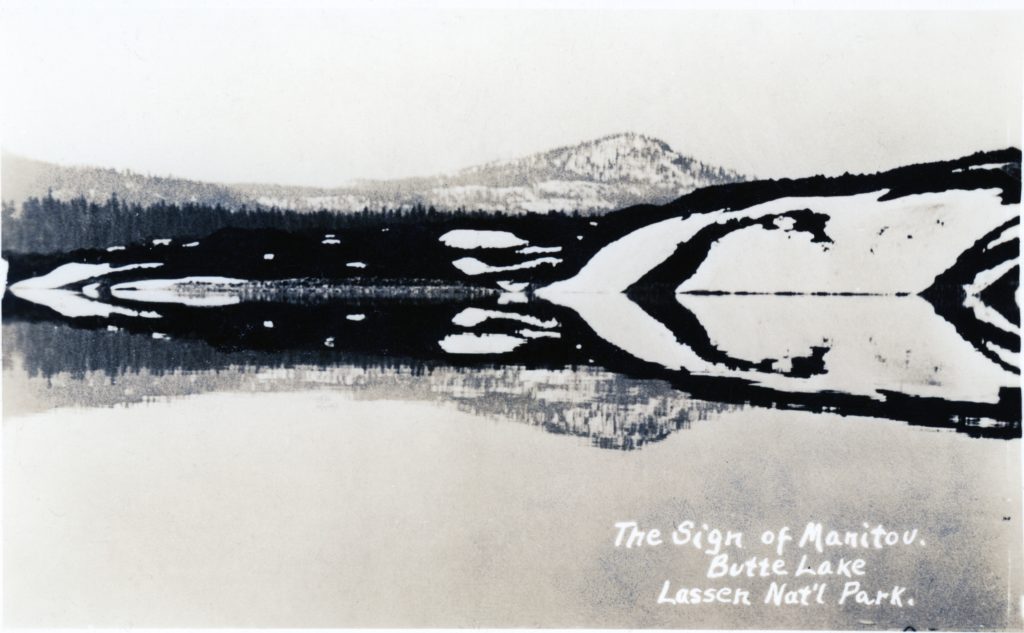
Butte Lake, circa 1920. Roy Sifford, of Drakesbad fame wrote: "The sign of the Manitou which means the sign of God. The shadows in the water made a long arrows which the Indians thought that was a sign of the Great Spirit (Manitou) or God gave them. Courtesy of the Sifford Collection.
Butte Lake, circa 1920. Roy Sifford, of Drakesbad fame wrote: “The sign of the Manitou which means the sign of God. The shadows in the water made a long arrows which the Indians thought that was a sign of the Great Spirit (Manitou) or God gave them. Courtesy of the Sifford Collection.

This lake in the northeast portion of  Lassen Park was originally referred as Black Butte Lake and Lake Bidwell. J.S. Diller named it Lake Bidwell in honor of General John Bidwell who came to California in 1841 and founded the town of Chico. The official name dates back to 1883 and no doubt received its name from two surrounding landmarks, Cinder Butte and Black Butte.

The French Canadian trappers of the Hudson Bay Company introduced the term “butte” to Western Americana. It was used to designate a landmark for an isolated peak, but not high or large enough to be a mountain.

Never miss a story, click here to subscribe for as little as five dollars a month.

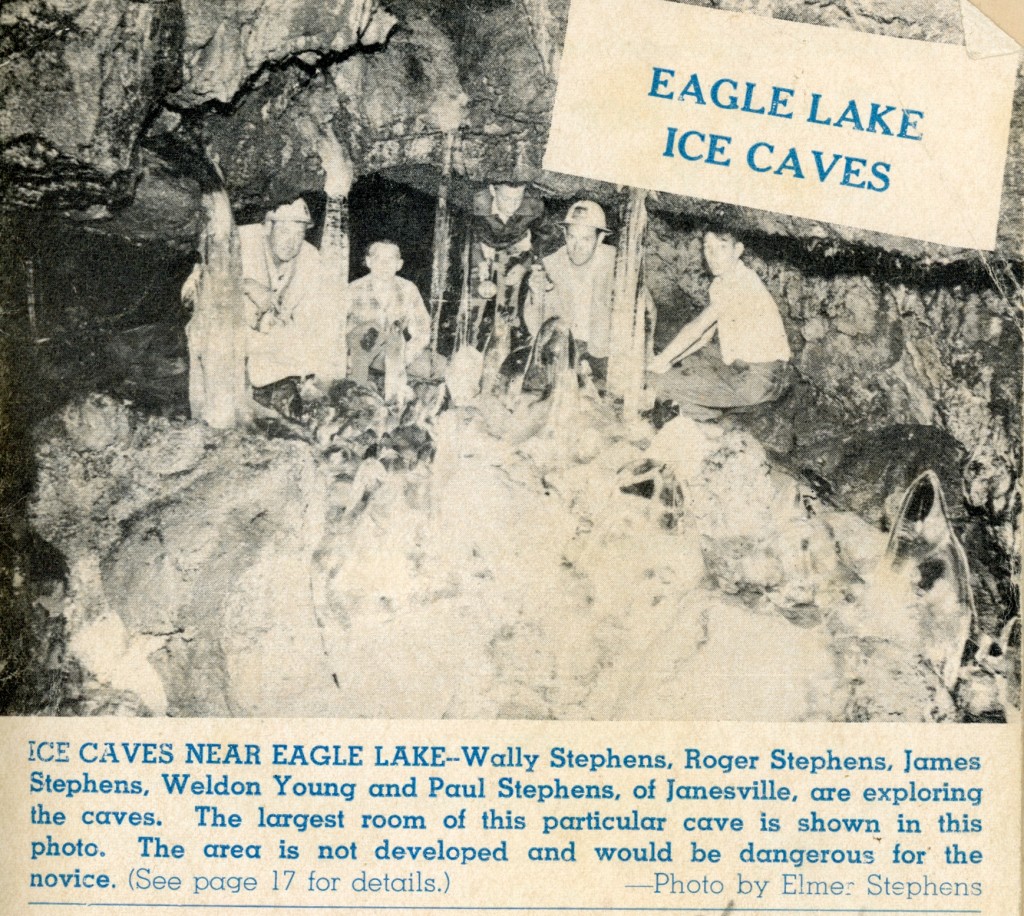
Eagle Lake Ice Caves

Ice Caves
The ice caves was featured on the cover of Susanville’s weekly TV guide, August, 1965

Note: This brought back by popular demand. Remember at the upper right hand corner there is a search feature, where one can insert a topic.

Exploring lava beds, which there is plenty around Northeastern California, there is no telling what a person might find. The Brockman Flat Lava Beds on the west side of Eagle Lake is no exception. Continue reading Eagle Lake Ice Caves

Go Exploring

Cady Springs Overflow, Susan River Canyon, October 1972.

With summer weather upon us, it is an ideal time to check out the many wonders that surround the residents of the Lassen Region. The editorial from the Lassen Advocate of June 21, 1929 is a time less piece worthy of republishing. After all, August will be here before you know it and the summer days begin to wane. Take the paper’s advice and go exploring.

Know Your Country

If you were wondering what to do with your weekends this summer, have you ever given any thought to the fact that you don’t know your own county and the wonderful lake and mountain country immediately contiguous.

Within a few hours of Susanville there are numerous beautiful lakes as well as some beautiful streams and excellent camping spots.

How many have been to Drakesbad and to the top of Mount Lassen? How many have been to the ice caves near Eagle Lake and Wilson Lake?

There are many trips that can be taken from Susanville in the morning returning the same evening and traversing in the meantime a lot of new country that you have never seen before. Beauty spots near a mountain stream with clear sparkingly water are numerous where one may have their picnic lunch.

Try and see your own neck of the woods this summer. You will find many a pleasant day in store for you.

Never miss a story, click here to support and subscribe.

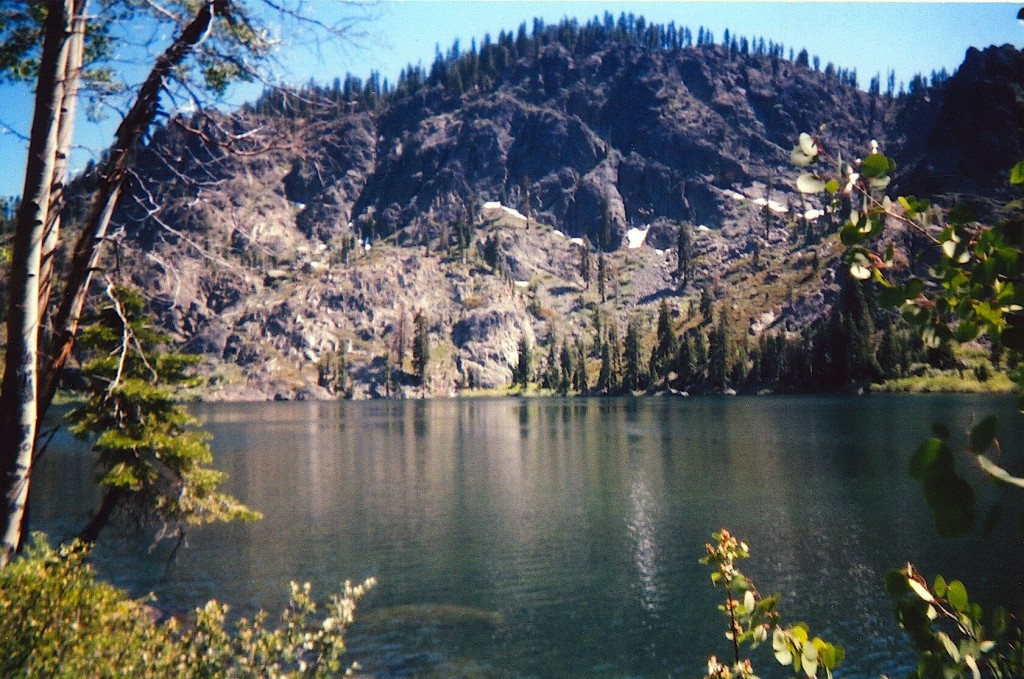
Homer Lake

Homer Lake, July 2007

It is one of three lakes on Keddie Ridge, the other two being Hidden and Deerheart.  The origin of the name is not known.  On December 24, 1878, G.A. Chipman and J.D. Anthony referred to it as Moon Lake when they claimed its waters for use on their Rising Star Mine. By 1881, it was being referred to as Homer Lake. In 1916, Frank Cady, who was deputy fish and game warden, first learned of the lake, and had trout planted there that year.

It is never too late, subscribe today and enjoy tomorrow with daily notifications. You can also surprise someone with a gift subscription