Tag Archives: Natural History

1929 Lassen National Forest Fire Report

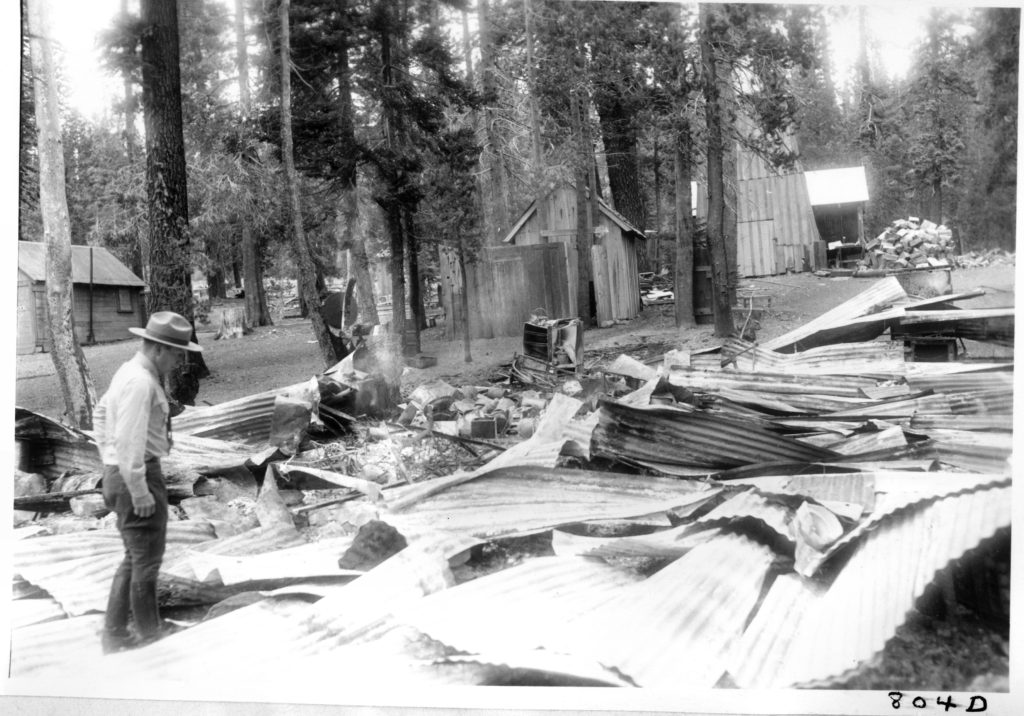
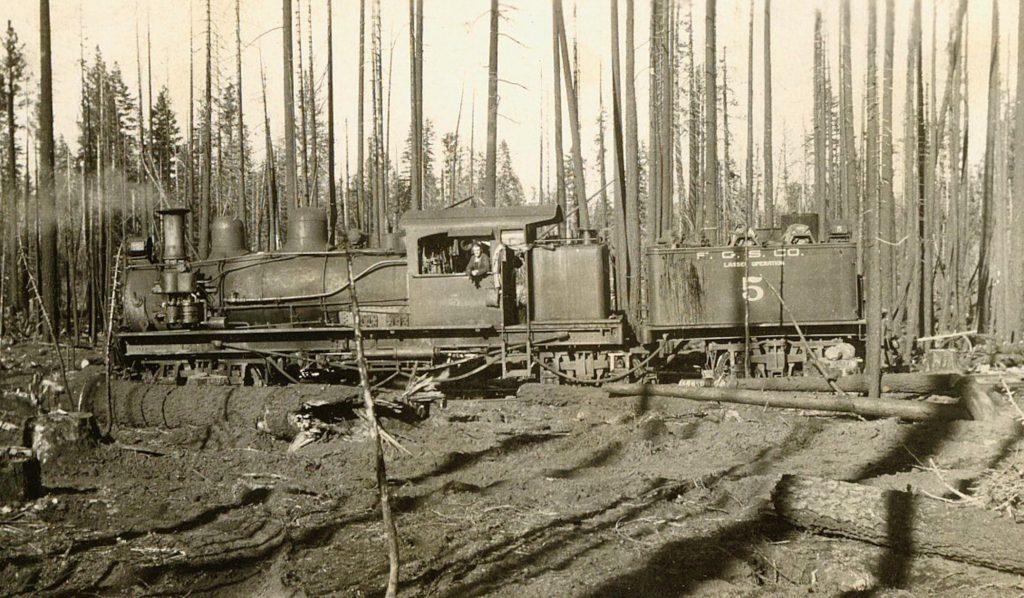
The.aftermath of the fire at Camp D, 1924 —-FGS Co.

After a good cool rain storm over Northern California, W.G. Durbin, Supervisor of the Lassen National Forest declared that on the Lassen the fire season was over on October 11, 1929. At that time the fire protection force, save for two men with lookout duties, were laid off.

Durbin provided some interesting statistics comparing the 1928 and 1929 fire seasons. In 1928 there were 109 fires and 49 in 1929. In 1928 fires consumed 31,634 acres; in 1929 only 3,492 acres. Another noticeable fact was suppression costs $34,674 to $4,168.

Lightning and careless smokers attributed to the bulk of the fire origins for those two years.

Fast forward to 2021 the suppression costs of the Dixie Fire is mind boggling being pegged at nearly $600 million.

Support
 

Early Day Fish & Game Wardens

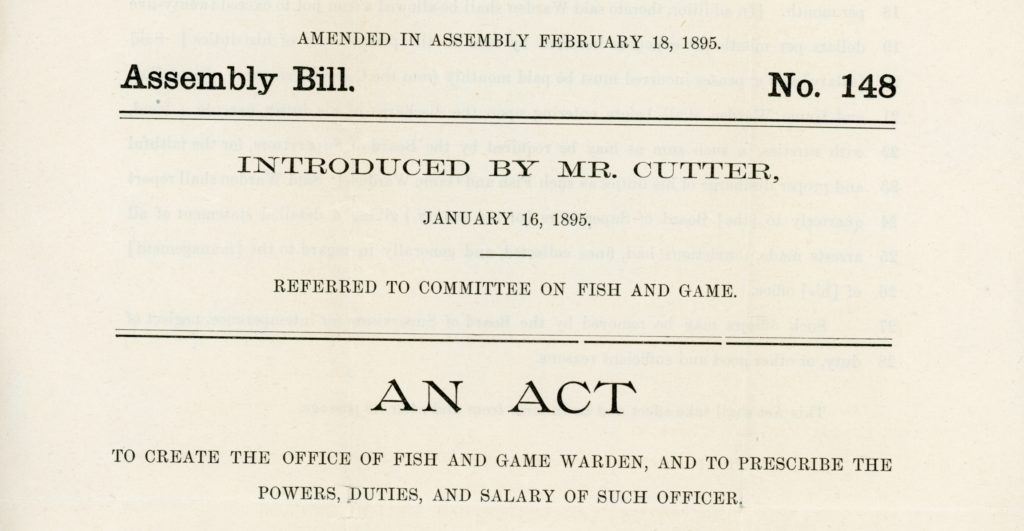
We are now in prime time hunting season, so I thought this would be a appropriate topic. Many may not realize there was a time when Fish & Game Wardens were a appointed county employee. In 1895, California Assembly Bill. No. 148 was passed that the Board of Supervisors of each county may appoint a Fish & Game Warden, to serve a two-year term. Depending on the county’s classification determined the salary. For most of the state the salary was fifty dollars a month. One of the requirements is that the game warden provide quarterly reports to the Board of Supervisors giving a detailed statement of all arrests made, convictions had, fines collected and any other matters. Frank P. Cady served as the Lassen County Fish & Game Warden for many years. However, I have never come across the quarterly reports. Yet, on the other hand I have located County Horticultural Reports, Medical Officers Report. After World War I Assembly Bill 148 was repealed, wherein the local game warden was done through the State.

Spread the word, and encourage a friend to subscribe

Susanville Research Center

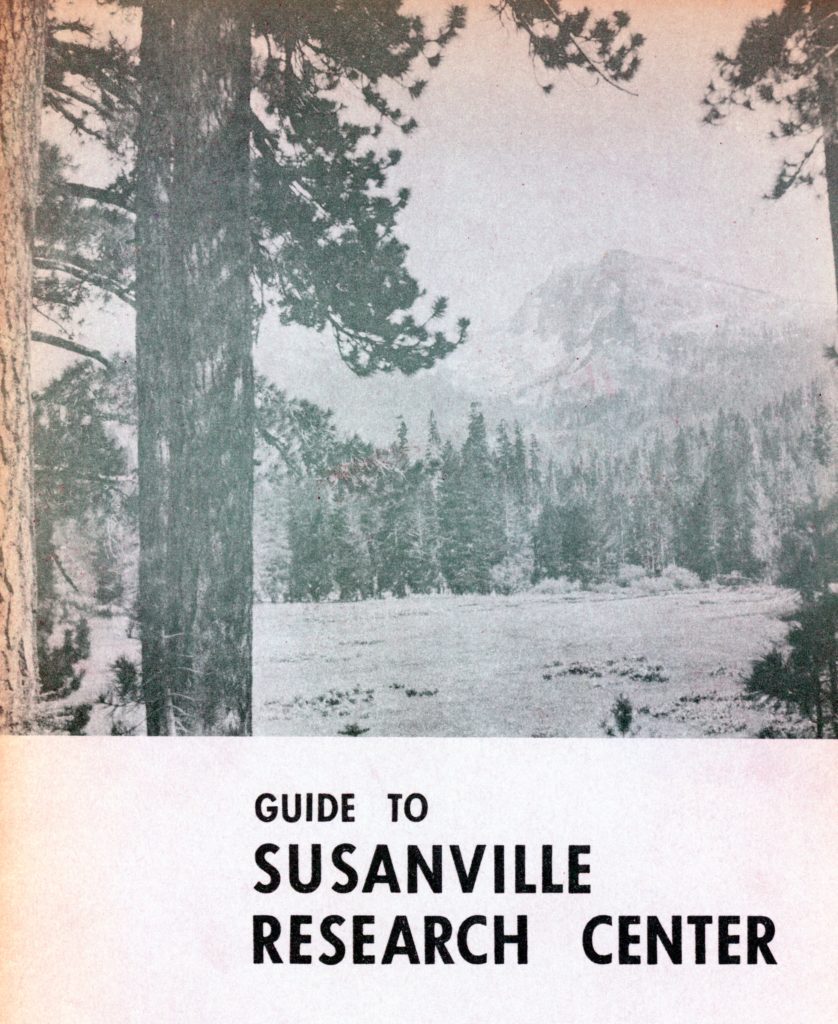
Susanville Research Center 1959 Bulletin

The Susanville Research Center was established in 1956. It was a unit of the Pacific Southwest Forest and Range Experiment Station, headquartered in Berkeley. It was one of nine maintained by the U.S. Forest Service throughout the United States.

Research work in the area had been well under way with grazing experiments in Harvey Valley in 1936 and more about that in a future post. In addition, there was the Blacks Mountain Experimental Forest near Halls Flat that was established in 1937. The latest addition was the Swain Mountain Experimental Forest, north of Westwood. An item of focus at Swain was the management of red and white fir forests. It should be noted that originally fir had no economic value, but with the depletion of pine trees, thinking had to be adjusted.

The center’s research covered a variety of aspects including watershed management to wildlife habitat improvement.

Never miss a story, click here to subscribe.

Pumpkinseed Sunfish

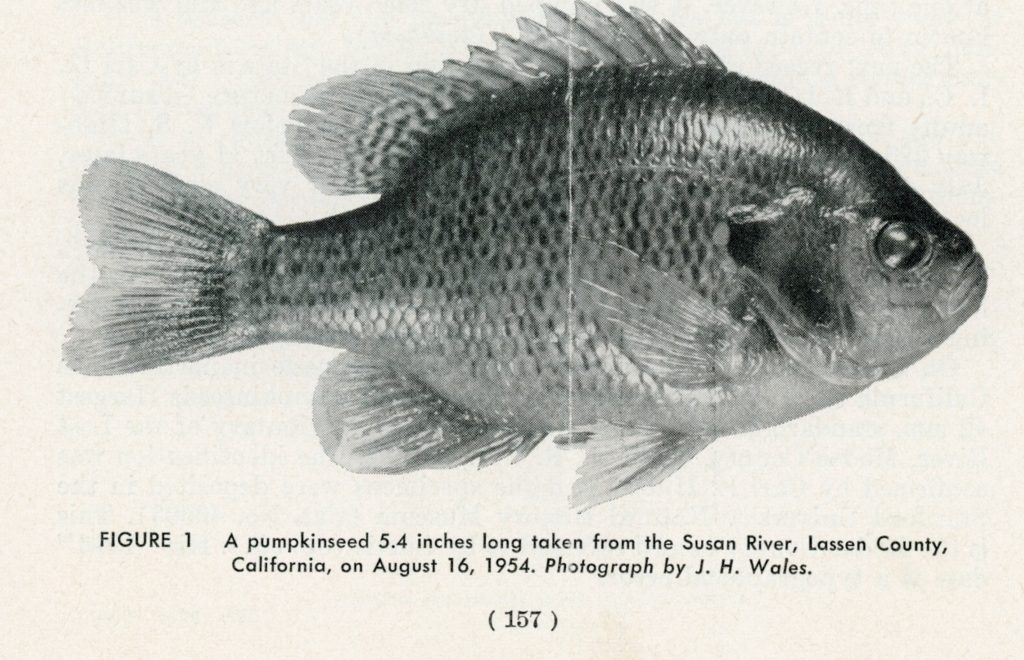
Local anglers may find this is of interest. The sunfish is a non-native species of California. In certain ways, introduced late. The first one found was in a private reservoir in Mecca, Riverside County in 1939. Its origins were believed was introduced by a Mr. Sheets who obtained the fish from the East Coast. What came next baffled fishery biologist. The next catch occurred on July 4, 1942 when members of the Tubbs family caught seven in the Susan River near Litchfield. From that time forward the fish slowly were found in other waters of California.

Spread the word, and encourage a friend to subscribe

The odd Fate of the Juniper Lake Lodge

Inspecting the lodge remnants—National Park Service

By mid-September 1937, C.P. and Cora Snell closed the Juniper Lake Lodge for the season to return their home in San Francisco. In mid-October 1937, Park Ranger Barton went on a routine inspection of Juniper Lake. What he had found was Snell’s lodge had been destroyed by fire. The area had recently received an electrical storm that was probably the cause of the fire. The lodge had a galvanized iron roof and it was believed lightning struck it, igniting the fire. In the aftermath, the lodge was reduced to ash and rubble.

Not to be undaunted the Snell’s built another. There was a major change in the operation, as the Snells leased it. This remained the status quo for a long time. In 1950, the Snell’s granddaughter, Leslie, along with her husband, Ray Hanson decided to “rejuvenate the resort.” As Leslie recalled, “We had eight cabins and a small store. We rented boats and campsites and quite a few of the vacationeers returned year after year.”

The Hanson’s stint of being operators would be short-lived. In 1955, the National Park Service filed a “friendly” condemnation suit against the Snell family to acquire some 400 acres of private property inside the park. At that time the Hanson’s closed the lodge and in 1957 the park acquired ownership of the property.

Sage Hens Scarce, Whiskey Not

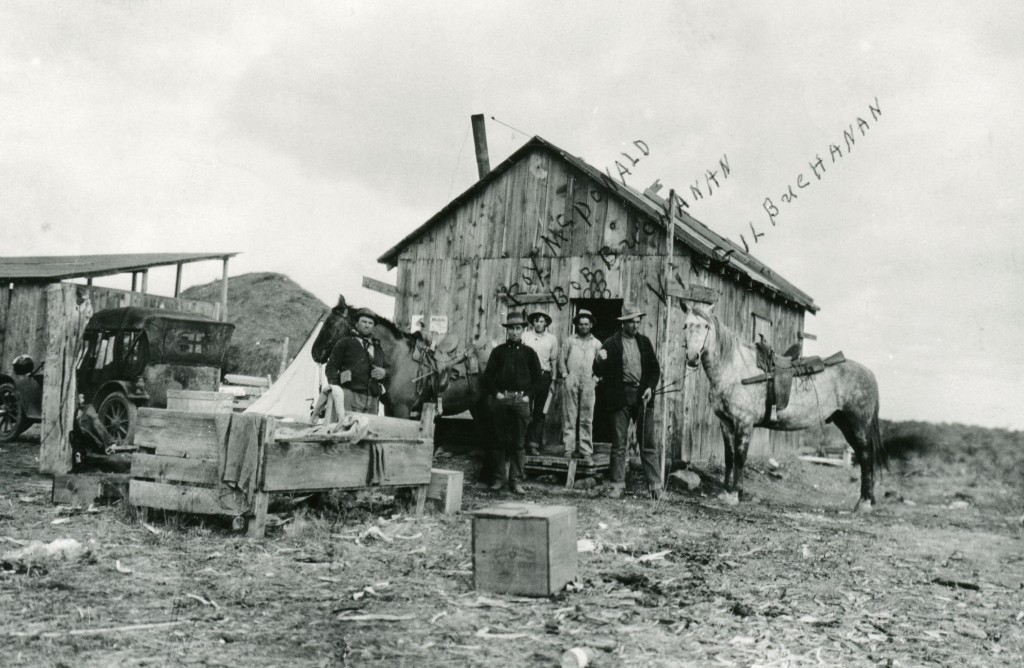
Painters Flat, 1914

Hunters, and fishermen, too, can be prone to have tall tales about their adventures. Then there are times when truth is stranger than fiction.

In this particular instant, involved two sage hen hunters at Painters Flat in 1929. For those not familiar with the location, it is a remote area in the northeastern part of Lassen County, not far from the Nevada border. The two men had not seen a bird all morning long. They decided to take a lunch break at the deserted cabin at Painters Flat. It was not long when they detected the odor of fermenting mash. After some sleuthing, the men found a complete still with a fifty gallon capacity. They also found four barrels full of mash and four empty barrels lying the creek being soaked. The two men contacted the Lassen County Sheriff’s office of their discovery., which the sheriff’s office seized the still.

Support

Where Are We—Crazy Harry Gulch

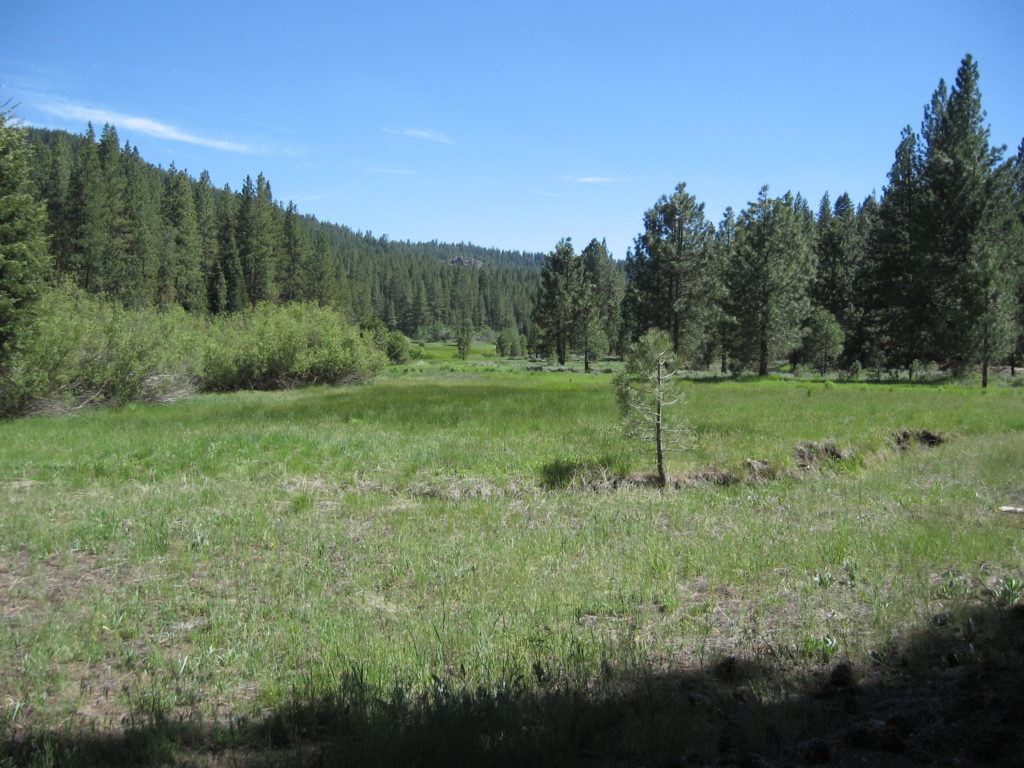
Crazy Harry Gulch, June 4, 2020

Crazy Harry Gulch is a small Susan River tributary located between Devil’s Corral and Goumaz, on the north side of Fredonyer. The place’s unique name  is derived from Harry Miles, (1832-1882), a Scotchman, who was referred to by the local inhabitants as Crazy Harry for his drinking habits. Miles first appeared in the territory in the mid-1870s. During the winter and spring he worked as a sheepherder in the foothills of Tehama County. In the summer months he spent his time prospecting. Eventually, he located a gold bearing quartz ledge near the gulch and built a cabin there as his home. In the fall of 1882, Miles indulged in a three day drinking spree in Susanville. Upon his departure he purchased some provisions. Peg leg Johnson, the Mountain Meadows mountain man, stopped by to check on Crazy Harry. However, Crazy Harry’s dog would not let him inside the cabin, though the door was partially ajar. Johnson saw Crazy Harry’s body, but no sign life. Johnson rode to Susanville and summoned the Coroner and a jury to examine the situation. Again, the dog refused anyone entry into the cabin. One of the men in the group climbed onto the roof and broke through the ceiling. The distraction enabled him to lasso the dog and then they were able to examine Crazy Harry’s dead body. Since there had been no disturbance of his recently purchased provisions or any other evidence of malice, the jury concluded that Crazy Harry returned home, passed out and died of natural causes. He had no known relatives and was buried adjacent to the cabin.

Spread the word, encourage a friend to subscribe.

Lassen Volcanic National Park Boundaries

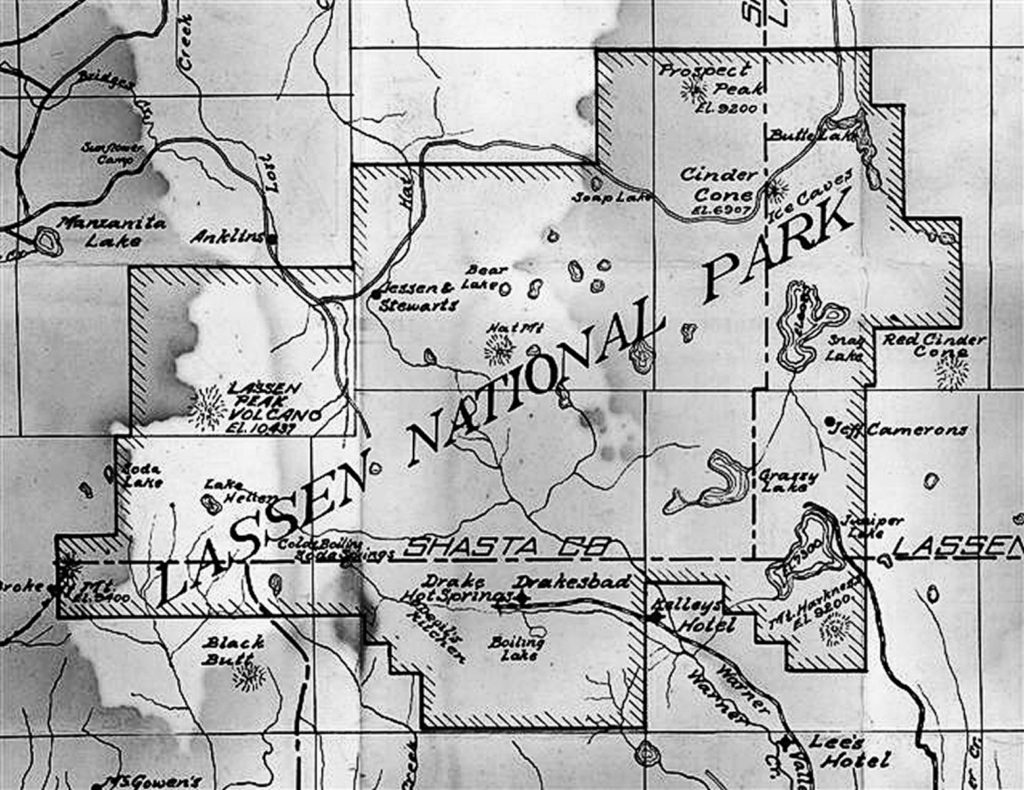
A 1919 map of Lassen Park

When the park was created in 1916 it would go through numerous changes over the years. The park’s original territory was some 80,505 acres and today the park now covers 106,452 acres. It should be duly noted there were initially there 5,680 acres of private lands inside the park. Those included Drakesbad, Juniper Lake, Sulphur Works among others. In addition, one of the most photographed spots in the park is Manzanita Lake, with Lassen Peak in the background. It was not even in the park, as the above map indicates. It was not until 1931 when the park service purchased the 280-acre parcel the contains the lake from Pacific Gas & Electric Company for $15,000.

Subscribe

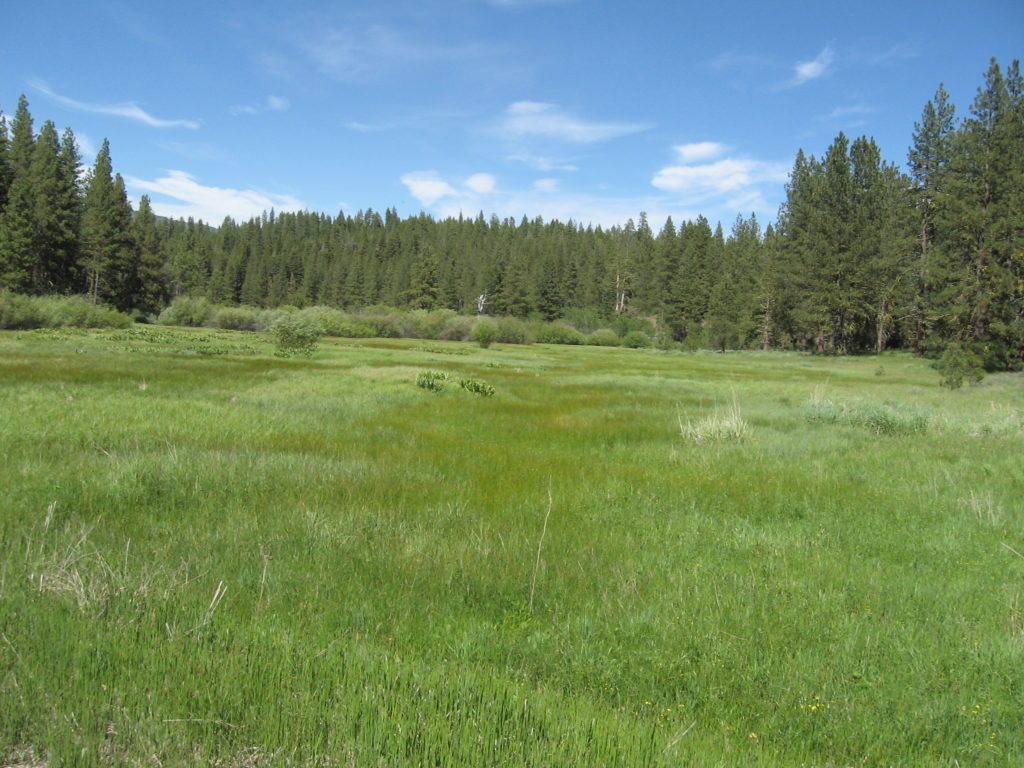
Where Are We?

June 4, 2020

There are so many picturesque nooks and crannies in this region, that are really not very far off the beaten track. Yet, at the same time rarely visited. Of the various times I have been to this place, I have never encountered another person. One would think otherwise, the location being between Susanville and Westwood.

Support

Where the Mastodons Roamed

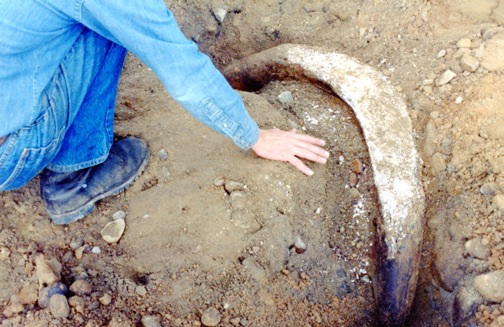
A Mastadoln find at the Lassen County Road Department’s Standish Pit—R.F. Davis

The area from Standish-Litchfield fanning out towards Honey Lake and Wendel from time to time has unearthed a number of prehistoric dinosaur bones. In 1923, Fred Williams was examining the newly constructed Eagle Lake ditch for the Bly project spotted a large twenty-two pound bone. It was later determined that it was a prehistoric mastodon bone.

The Lassen County’s Road Department Standish Pit has witnessed over the years a number of of prehistoric bones. The specimens in turn were donated to the Museum of Paleontology at the University of California, Berkeley. J.H. Hutchison of the museum informed the county that finds of mastodons are fairly rare.

Spread the word, and encourage a friend to subscribe